
Are Cockroach Droppings Dangerous? Health Risks and How to Clean Safely
Cockroach droppings are genuinely dangerous, and you shouldn’t ignore them. They carry 33 types of bacteria, trigger serious allergic reactions, and can contaminate your food with pathogens like Salmonella and E. coli. If you or your kids have asthma, the airborne particles make it considerably worse. Cleaning them safely requires a HEPA vacuum, protective gloves, and an EPA-registered disinfectant. Keep scrolling to discover exactly what risks you’re dealing with and how to protect your household.
Key Takeaways
- Cockroach droppings contain allergenic proteins and carry 33 types of bacteria, parasitic worms, and pathogens that pose serious health risks.
- Exposure can trigger asthma attacks, allergic reactions, and illnesses like salmonellosis, dysentery, and staph food poisoning.
- Droppings resemble coffee grounds or black pepper, commonly found in kitchens, bathrooms, and near plumbing fixtures.
- Children, elderly, and immunocompromised individuals face the highest risk of severe complications from cockroach dropping exposure.
- Safe cleanup requires rubber gloves, a HEPA respirator, HEPA vacuum, EPA-registered disinfectant, and proper disposal of all cleaning materials.
Are Cockroach Droppings Actually Dangerous?
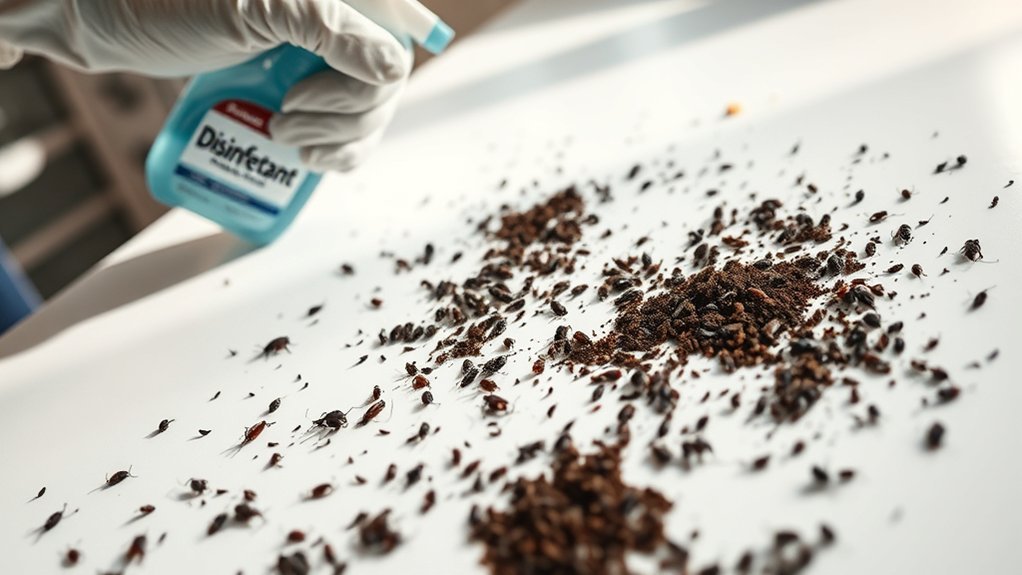
Cockroach droppings are far more dangerous than most people realize. They contain allergenic proteins that trigger allergies and asthma attacks, particularly in children. When dried feces crumble, microscopic particles become airborne through everyday activities like breathing, sweeping, or vacuuming, putting you at constant risk of inhaling harmful substances.
Beyond respiratory threats, cockroach droppings serve as a breeding ground for dangerous pathogens. Cockroaches spread 33 types of bacteria, six varieties of parasitic worms, and seven types of pathogens. Their feces can carry E. coli, Salmonella, Staphylococcus, and Mycobacterium species, among others.
If droppings contaminate your food or food-preparation surfaces, you’re at serious risk for foodborne illnesses like salmonellosis, which causes diarrhea, fever, and abdominal cramps. Those with compromised immune systems face even greater danger. In poorly ventilated spaces, airborne particles from droppings carry bacteria and fungi that cause additional respiratory complications. Poor ventilation significantly worsens exposure risks, as inadequate airflow allows harmful pathogens from droppings to accumulate and linger in your living environment.
How to Spot Cockroach Droppings in Your Home
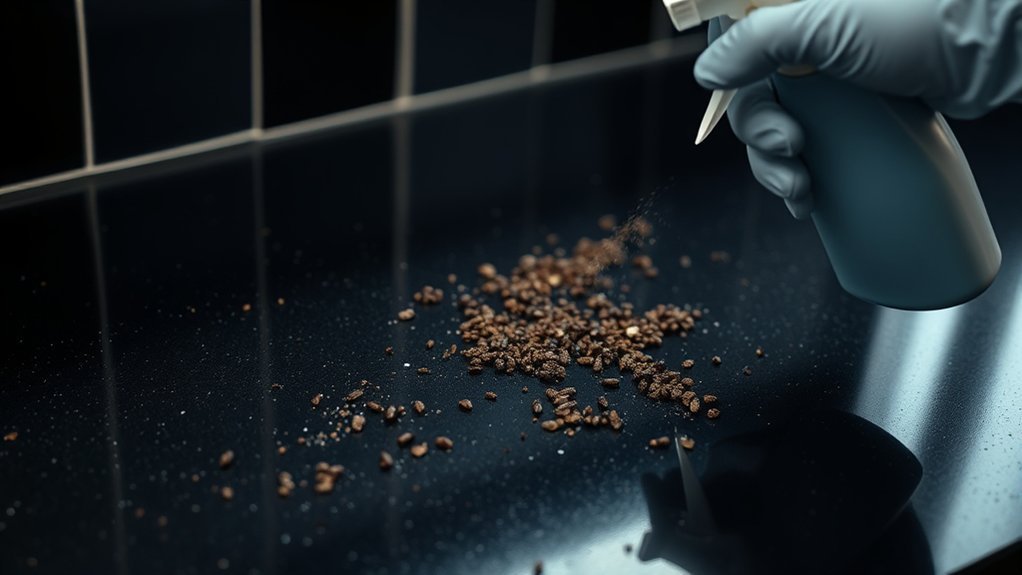
Knowing that cockroach droppings carry serious health risks makes spotting them early all the more important. They resemble coffee grounds or black pepper specks and appear in clustered groups, never isolated. Smaller species like German roaches leave dark, rice-grain-sized droppings, while larger species produce coarser, black-pepper-like specks.
In kitchens, check behind stoves, inside cabinet corners, under sinks, and beneath large appliances. Bathrooms require attention around plumbing, cabinet corners, and moisture-prone cracks. You’ll often find droppings alongside dark smear marks and visible stains.
Trust your nose, too. Cockroach droppings emit a strong musty or oily odor that intensifies with a growing infestation. If you’re spotting droppings in multiple locations, noticing daytime roach sightings, or finding dark brown egg cases nearby, you’re likely dealing with a serious, active infestation requiring immediate action. Female cockroaches produce dark brown egg capsules called ootheca, each capable of releasing 25 to 40 nymphs, signaling a rapidly escalating problem.
What Diseases Can You Get From Cockroach Droppings?
Those small, scattered droppings aren’t just unsightly—they’re active carriers of dangerous pathogens that can make you seriously ill.
Cockroach feces spread bacteria, viruses, and parasites across your food, utensils, and surfaces. Here’s a breakdown of the most serious threats:
| Disease | Pathogen | Key Symptoms |
|---|---|---|
| Salmonellosis | Salmonella bacteria | Diarrhea, fever, abdominal cramps |
| Dysentery | Shigella dysenteriae | Severe bloody diarrhea, shiga toxins |
| Staph Food Poisoning | Staphylococcus aureus | Rapid vomiting, heat-resistant toxins |
Beyond these, droppings also carry E. coli O157:H7, Bacillus cereus, hepatitis A, rotavirus, and even Cryptosporidium parvum. Cockroaches mechanically transfer these pathogens—their digestive systems harbor bacteria for months, continuously shedding them through feces.
Young children, elderly individuals, and immunocompromised people face the highest risk of severe complications, including liver damage, internal bleeding, and gut perforations from typhoid fever alone. Cockroach feces also contain mold spores and allergens that can trigger chronic respiratory issues like wheezing and persistent coughing in sensitive individuals.
How Do Cockroach Droppings Trigger Allergies and Asthma?
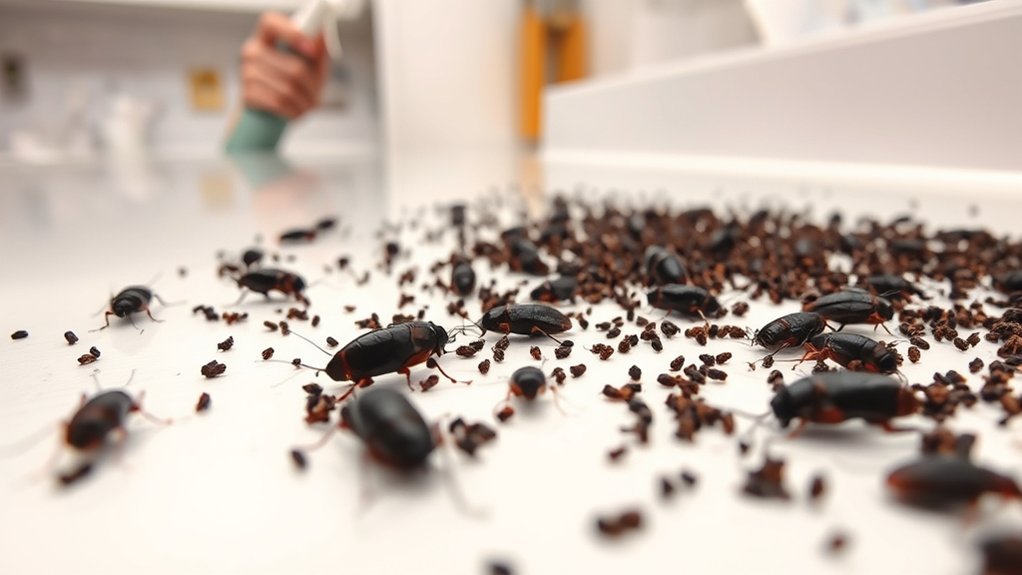
Beyond the immediate threat of bacterial infection, cockroach droppings also fuel a separate but equally serious health problem: chronic allergic disease. Cockroach feces contain proteins like Bla g 1, Bla g 2, and tropomyosin that your immune system can identify as threats. Once sensitized, repeated exposure drives ongoing airway inflammation.
Here’s how it progresses: dropping particles break into sizes small enough to become airborne. You inhale them, they bypass your natural defenses, and they reach deep lung tissue. Your airways constrict, producing wheezing, coughing, chest tightness, and shortness of breath. Severe reactions escalate into full asthma attacks.
The risk isn’t minor. One in five U.S. children is severely sensitive to cockroach allergens, and early-life exposure—within the first three months—links directly to repeated wheezing. Inner-city children bear the worst of this burden, with cockroach allergens outpacing dust mites and pet dander as asthma triggers. Beyond children, individuals with weakened immune systems face a heightened vulnerability to these allergens, making cockroach infestations especially dangerous in households where immune-compromised people reside.
How to Clean Cockroach Droppings Without Getting Sick
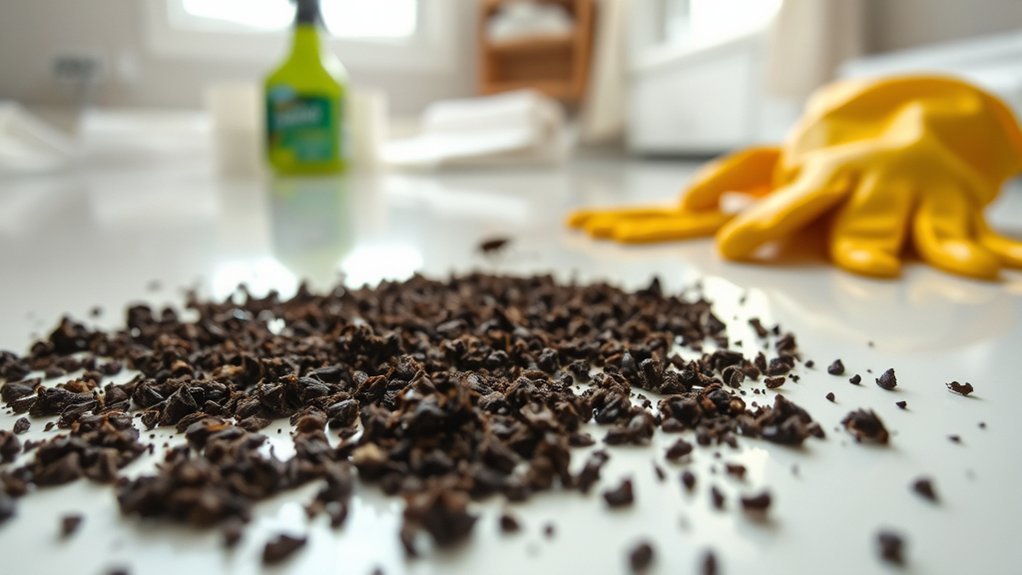
Cleaning cockroach droppings safely requires the right protective gear before you touch anything. Wear rubber gloves and a dust mask or HEPA filter respirator to block bacteria and airborne particles. Change gloves after handling waste to avoid spreading contamination.
Before touching cockroach droppings, protect yourself with rubber gloves and a HEPA respirator to block harmful bacteria.
Start by vacuuming droppings with a HEPA-equipped vacuum, beginning at high surfaces like cabinet tops before working down to floors. Never sweep — it launches allergens into the air. Seal the vacuum bag immediately in a plastic bag.
Next, spray EPA-registered disinfectant on all affected surfaces and let it sit for 10 minutes before wiping. Use hot soapy water or a bleach mixture, and apply degreaser on stubborn spots. Reapply disinfectant after scrubbing.
Dispose of all sponges, cloths, and cleaning materials after a single use. Double-bag waste from heavy infestations to contain pheromones. Cockroach droppings can contaminate food and surfaces with dangerous bacteria like Salmonella and E. coli. Finally, seal cracks, store food properly, and monitor for new droppings.
Frequently Asked Questions
How Long Do Cockroach Allergens Remain Dangerous After an Infestation Is Eliminated?
Cockroach allergens can remain dangerous for months or even years after you’ve eliminated an infestation. They’ll persist in your home until you’ve thoroughly cleaned all surfaces, as dried droppings continue releasing harmful airborne particles.
Can Cockroach Droppings Cause Health Problems Through Skin Contact Alone?
Yes, cockroach droppings can cause health problems through skin contact alone. You’ll experience itchy rashes, infections, or allergic reactions when fecal proteins penetrate your skin, especially if you’ve got open wounds or broken skin.
Which Cockroach Species Produce the Most Dangerous or Toxic Droppings?
German cockroaches produce the most dangerous droppings you’ll encounter. Their tiny feces become airborne easily, trigger asthma, and they reproduce rapidly. However, American and Oriental cockroaches also carry Salmonella and E. coli in their larger deposits.
Are Children and Elderly People More Vulnerable to Cockroach Dropping Dangers?
Yes, children and elderly people are more vulnerable to cockroach dropping dangers. Children face higher asthma risks, while the elderly can’t fight off severe infections like Salmonella, dysentery, or cholera as effectively.
Can Pets Become Sick From Exposure to Cockroach Droppings at Home?
Yes, your pets can get sick from cockroach droppings. They’re exposed through grooming, eating contaminated food, or inhaling allergens. Consult your vet if you suspect your pet’s had contact with cockroach droppings.
Conclusion
You’ve now got a clear picture of why cockroach droppings aren’t something you should ignore. They can trigger allergies, worsen asthma, and spread dangerous pathogens throughout your home. If you spot them, don’t touch them bare-handed—suit up and clean them properly. More importantly, tackle the infestation itself, because droppings will keep appearing until the roaches are gone. Your health and your family’s health depend on acting fast.
