
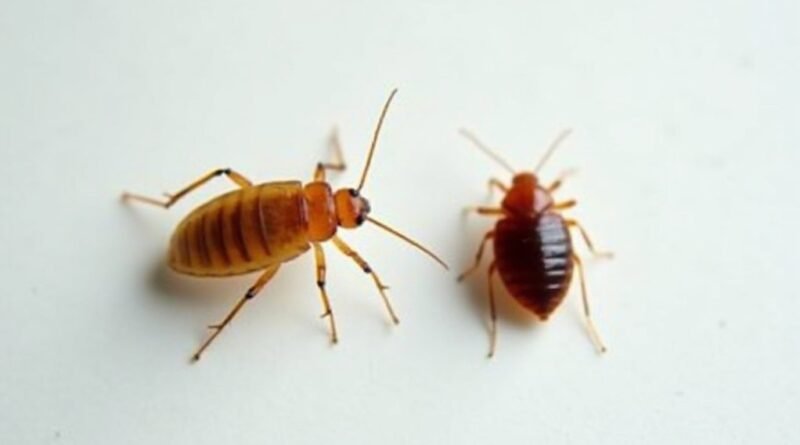
Baby Cockroach vs Bed Bug: How to Tell the Difference
You can tell a baby cockroach from a bed bug by checking body shape, size, and antennae. Baby cockroaches have a cylindrical, elongated body with long, thread-like antennae, while bed bugs are flat, oval-shaped with short, stubby antennae. Cockroaches also grow much larger and eat almost anything, whereas bed bugs feed exclusively on blood. Their droppings and hiding spots differ too. Keep going, and you’ll be able to identify exactly which pest you’re dealing with.
Key Takeaways
- Baby cockroaches have cylindrical, elongated bodies, while bed bugs are flat and oval-shaped, making body shape a reliable identifier.
- Baby cockroaches have long, thread-like antennae nearly matching body length, whereas bed bug antennae are short, stiff, and four-segmented.
- Bed bugs feed exclusively on blood and turn reddish after feeding, while cockroaches eat decaying organic matter and food scraps.
- Cockroach droppings are dry, solid pellets, while bed bug droppings appear as tiny dark ink-like spots that smear when touched.
- Baby cockroaches hide near food and moisture in kitchens and bathrooms, while bed bugs cluster near mattresses and sleeping areas.
How Big Baby Cockroaches Get Compared to Bed Bugs
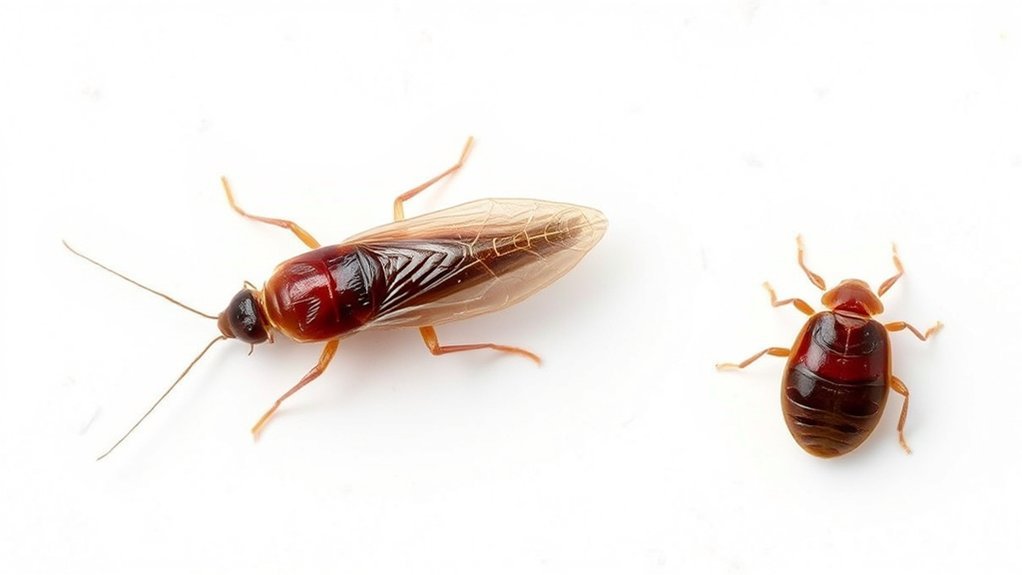
Baby cockroaches measure between ¼ and ½ inch long, which already puts them at or beyond the maximum size of an adult bed bug. Bed bugs top out at ¼ inch, or roughly 4-5 mm, about the size of an apple seed. They stay that size throughout their entire life cycle.
A baby cockroach, on the other hand, typically reaches 3/8 inch early in its development. That’s already larger than most adult bed bugs. As it matures, it’ll grow to 1-2 inches, far exceeding anything a bed bug ever reaches.
This size difference works in your favor when you’re trying to identify which pest you’re dealing with. Even if a newly hatched cockroach nymph looks similar in size to a bed bug, you won’t be confused for long. Cockroaches outgrow bed bugs quickly, making size one of the most reliable visual clues you have. The American cockroach, commonly found in the Southern U.S., can grow up to 2 inches as an adult, dwarfing a bed bug by several times over.
Body Shape Is the Fastest Way to Tell Them Apart
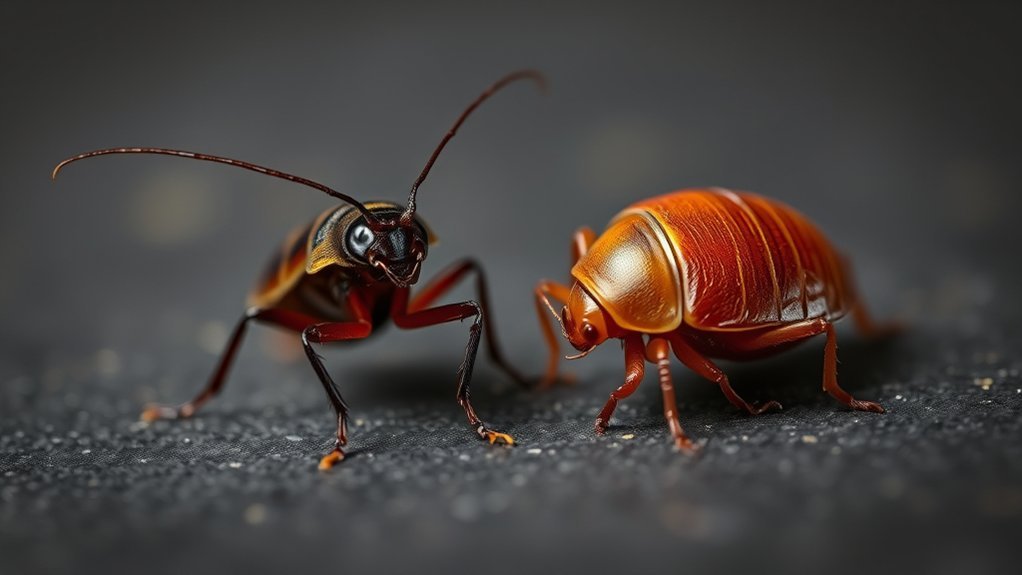
Body shape gives you the fastest visual distinction between these two pests. Baby cockroaches have a cylindrical, elongated body with a harder shell that looks robust even at a glance. Bed bugs, by contrast, display a flat, oval shape that appears rounder and noticeably flatter than any cockroach nymph.
You don’t need to get close to notice the difference. A cylindrical profile immediately points to a baby cockroach, while a flat, oval silhouette confirms a bed bug. This contrast outperforms size comparison as a quick identifier because shape stays consistent regardless of the insect’s age or feeding status.
Bed bugs remain flat even after feeding, and their lack of wings reinforces that distinctive oval look. Cockroach nymphs, meanwhile, maintain their cylindrical form uniformly across all nymph stages. Once you know these two profiles, you’ll separate them instantly every time. Bed bugs are approximately the size of an apple seed, making their flat oval shape even more recognizable when spotted against light-colored surfaces like mattress fabric.
Baby Cockroach Antennae vs Bed Bug Antennae: A Dead Giveaway
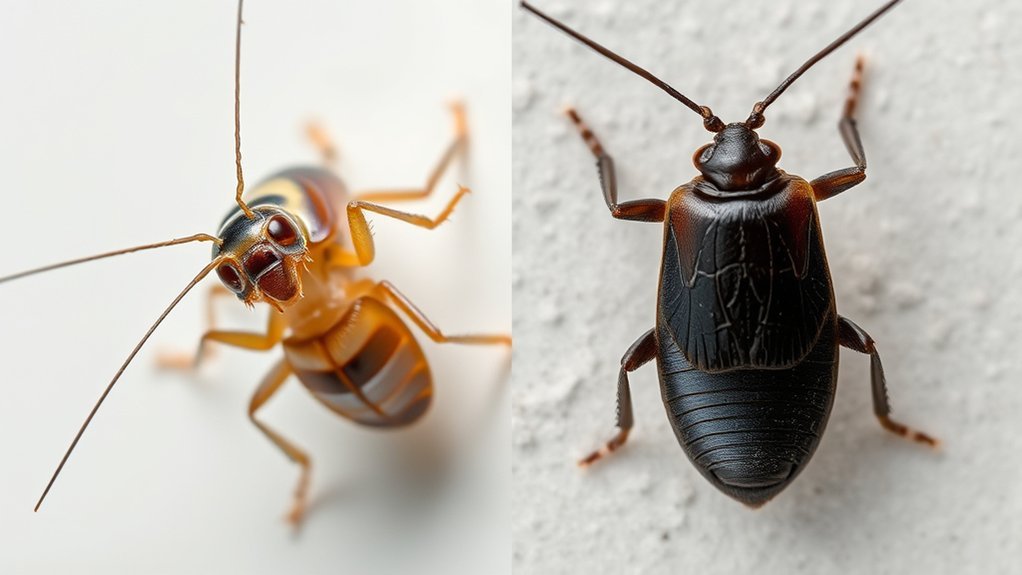
Shape gets you started, but antennae close the case. A baby cockroach has long, thread-like antennae that nearly match its body length, constantly twitching as it searches for food and water. Bed bug antennae are short, stiff, and proportionally tiny — four segments with almost no visible movement.
You don’t need a lab to spot the difference. A quick look under magnification tells you everything within seconds.
Here are three antenna characteristics that instantly separate the two:
- Length — Cockroach nymph antennae reach nearly body length; bed bug antennae are markedly shorter proportionally.
- Movement — Cockroach antennae twitch and probe constantly; bed bug antennae stay relatively static.
- Segmentation — Cockroach antennae are multi-segmented and filamentous; bed bug antennae have only four segments and appear stubby.
Since young cockroaches lack wings, antennae become your most reliable identification tool. Unlike cockroaches, bed bugs bite humans and leave behind itchy welts, making accurate identification especially critical for protecting your household.
What Droppings and Shed Skins Reveal About Which Bug You Have
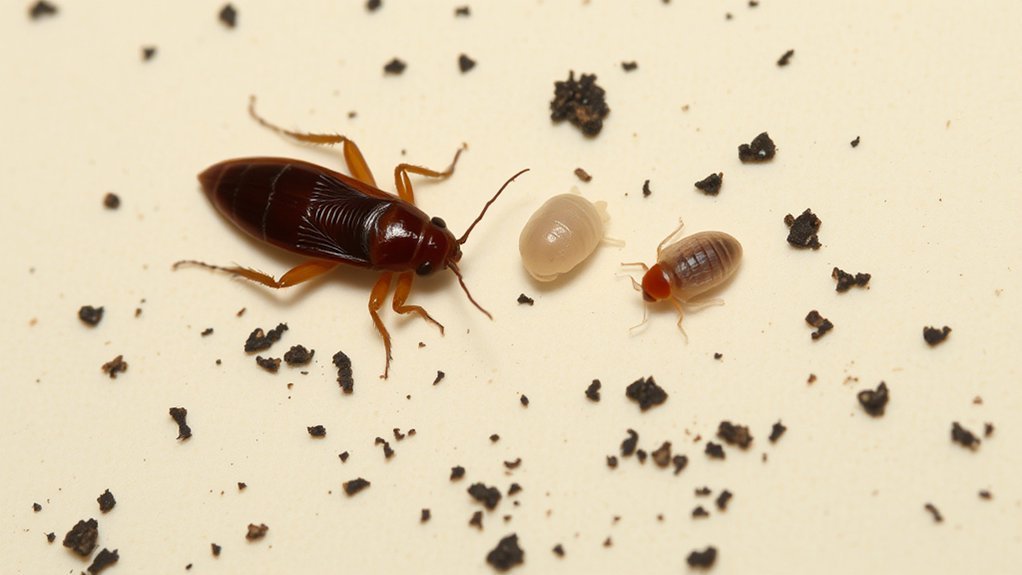
Droppings and shed skins don’t lie — they leave behind a biological signature that confirms exactly which pest you’re dealing with.
Bed bug droppings appear as tiny dark ink-like spots that soak into fabric and smear when wiped with a damp cloth. You’ll find them near mattresses, headboards, and pillowcases. Cockroach droppings are solid, dry pellets resembling coffee grounds that don’t smear — located in kitchens, bathrooms, and pantries.
Shed skins tell a similar story. Bed bug skins are flat, translucent ovals found near sleeping areas. Cockroach skins are cylindrical, miniature adult replicas scattered near warm, moist hiding spots.
| Feature | Bed Bug | Cockroach |
|---|---|---|
| Dropping texture | Liquid, smears | Solid, dry pellets |
| Dropping location | Mattresses, bedding | Kitchens, pantries |
| Shed skin shape | Flat, oval | Cylindrical |
Multiple shed skins signal a growing infestation — don’t ignore either clue. When bed bugs spread beyond the bedroom to baseboards, electrical outlets, and upholstered furniture, it indicates that an active infestation has taken hold and requires immediate professional attention.
Where Baby Cockroaches and Bed Bugs Hide in Your Home
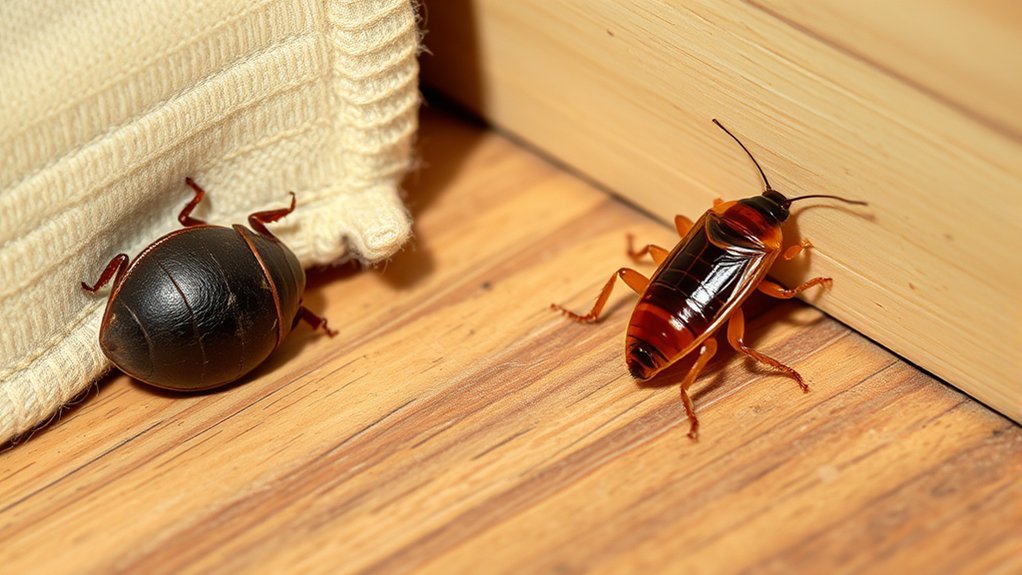
Knowing where each pest hides helps you target your search and confirm which invader you’re dealing with. Baby cockroaches gravitate toward warm, humid kitchen and bathroom areas, squeezing into appliance motor housings, cabinet hinges, wall voids, and gaps around plumbing fixtures. Bed bugs, by contrast, cluster near where you sleep, tucking themselves into mattress seams, bed frame cracks, upholstered furniture, and even electrical receptacles along bedroom walls. Baby oriental and American cockroaches, however, deviate from this pattern by preferring cooler, damper areas such as basements and crawl spaces rather than the warm kitchen zones typically associated with German roaches.
Cockroach Preferred Hiding Spots
Cockroaches gravitate toward tight, humid, and dark spaces where food and moisture are close by. You’ll find them clustering in kitchens and bathrooms most often, but they’ll exploit any warm, damp gap they can squeeze into.
Their top hiding spots include:
- Kitchen appliances – Check behind and under refrigerators, stoves, and dishwashers, including drip pans, motor housings, and drawer slides.
- Bathroom plumbing areas – Inspect under vanity sinks, behind toilets, around drain penetrations, and inside wall voids near pipes.
- Basements and crawl spaces – Look around floor drains, utility rooms, and water heaters, especially if moisture levels are high.
Cluttered cardboard boxes, unsealed trash bins, and gaps behind baseboards also give cockroaches ideal shelter throughout your home.
Bed Bug Infestation Locations
Bed bugs exploit five main zones in your home: bed components, furniture, walls and floors, household items, and public spaces where infestations spread.
They’ll hide in your mattress piping, box spring crevices, bed frame joints, and headboard cracks. Upholstered chairs and couches harbor them in seams and cushions, while drawer joints and electronics provide additional cover. Along your walls, they tuck behind baseboards, loose wallpaper, and picture frames. Carpets near baseboards and wall-ceiling junctions also attract them.
Your luggage, clothing, curtains, and electrical outlets give them even more hiding spots.
Bed bugs spread aggressively through shared spaces. Apartments report infestations 89% of the time, single-family homes 91%, hotels 68%, nursing homes 59%, and schools 47%. Once they enter your home, they establish themselves quickly across multiple zones.
Why Bed Bugs Only Feed on Blood While Roaches Eat Anything
When it comes to diet, bed bugs and cockroaches couldn’t be more different. Bed bugs are strict blood feeders, while cockroaches will eat almost anything they find.
Bed bugs depend entirely on blood because:
- They’ve evolved as ectoparasites — all Cimicidae family members feed exclusively on blood, with humans as their preferred hosts.
- Blood serves every biological function — it’s their only hydration source, and adults and nymphs need it to reproduce and molt successfully.
- Feeding triggers are highly specialized — they locate you using your body heat and carbon dioxide, then feed for 5-10 minutes every 3-10 days.
Cockroaches, by contrast, thrive on decaying organic matter, food scraps, grease, fungi, paper, and even soap. This dietary flexibility lets them survive in far more diverse environments than blood-dependent bed bugs ever could. If you’re dealing with either pest, understanding their diet helps you identify them faster.
Color and Markings That Separate Baby Cockroaches From Bed Bugs
Diet isn’t the only way to tell these two pests apart. Color and markings reveal clear differences between baby cockroaches and bed bugs.
Baby cockroaches range from pale white to light brown, darkening gradually as they grow. They maintain uniform coloration without red tones, even in later nymph stages. You’ll also notice their long thread-like antennae, wide rounded heads, spiny legs, and two stubby cerci at their rear abdomen.
Baby bed bugs follow a completely different color progression. They start white or translucent, shift to yellowish-white, then turn reddish after feeding on blood. Once they digest a meal, they darken to brown. You won’t find long antennae or spiny legs on bed bugs. Instead, they have smooth, thin legs, a flatter oval body, and visible blood streaks across their abdomen after feeding.
These distinctions make identification straightforward once you know what to look for.
Frequently Asked Questions
Can Baby Cockroaches and Bed Bugs Infest the Same Home Simultaneously?
Yes, baby cockroaches and bed bugs can infest your home at the same time. They’ll occupy different areas, with cockroaches in kitchens and bathrooms while bed bugs concentrate in your sleeping areas.
How Quickly Do Baby Cockroaches Grow Into Adults Compared to Bed Bugs?
German cockroaches you’re dealing with mature in 50-60 days, while bed bugs complete their lifecycle faster than most cockroach species. American cockroaches take considerably longer, requiring 6-12 months to reach adulthood.
Are Baby Cockroaches or Bed Bugs More Dangerous to Human Health?
Bed bugs are more dangerous to you directly, as they’ll repeatedly bite you while you sleep, causing itchy welts and potential infections. Cockroaches pose indirect risks through contamination and allergens over time.
What Attracts Baby Cockroaches and Bed Bugs to Enter Your Home?
Baby cockroaches are attracted to your food crumbs, spills, and moisture, while bed bugs follow your body heat, carbon dioxide, and blood. You’re fundamentally inviting both pests in through poor sanitation and secondhand items.
Can You Eliminate Both Infestations Using the Same Treatment Method?
You can’t eliminate both infestations using the same treatment method. Cockroaches require sanitation and moisture removal, while bed bugs need heat or chemical treatments targeting hiding spots near sleeping hosts.
Conclusion
Now that you know what to look for, you can tell the difference between a baby cockroach and a bed bug without second-guessing yourself. Check the body shape, antennae, and color first since those clues work fast. Don’t forget to inspect hiding spots and droppings for confirmation. Once you’ve identified which pest you’re dealing with, you’ll be able to choose the right treatment and get rid of the problem quickly.
