
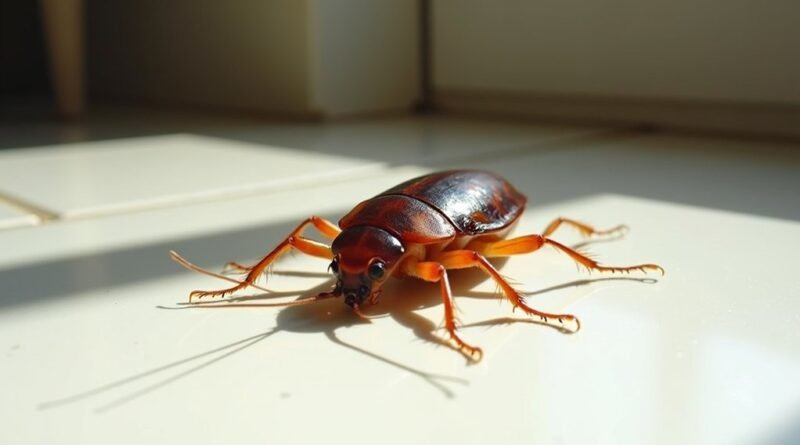
Big Cockroach: What Large Species Are Common in Homes
If you’re spotting large cockroaches in your home, you’re likely dealing with one of a few common species. The American cockroach is the biggest, growing up to 2.1 inches long. The smokybrown cockroach sneaks in from outdoor areas, while the Oriental cockroach favors dark, damp spaces. Each species leaves behind distinct signs like droppings, smear marks, and musty odors. Keep going to find out exactly which species you’re dealing with and where they’re hiding.
Key Takeaways
- The American Cockroach, measuring 1.4″–2.1″ long and reddish-brown in color, is one of the most common large species found in homes.
- Smokybrown and Oriental Cockroaches are other large species frequently invading homes, each with distinct habitats and behaviors.
- Large cockroaches typically hide in kitchens, bathrooms, basements, wall voids, and cluttered areas like garages and crawl spaces.
- Signs of infestation include cylindrical droppings, dark smear marks, and a musty odor in basements or crawl spaces.
- Large cockroaches are nocturnal scavengers that enter homes through small cracks, plumbing fixtures, and gaps in structures.
What Size Makes a Cockroach “Big”?
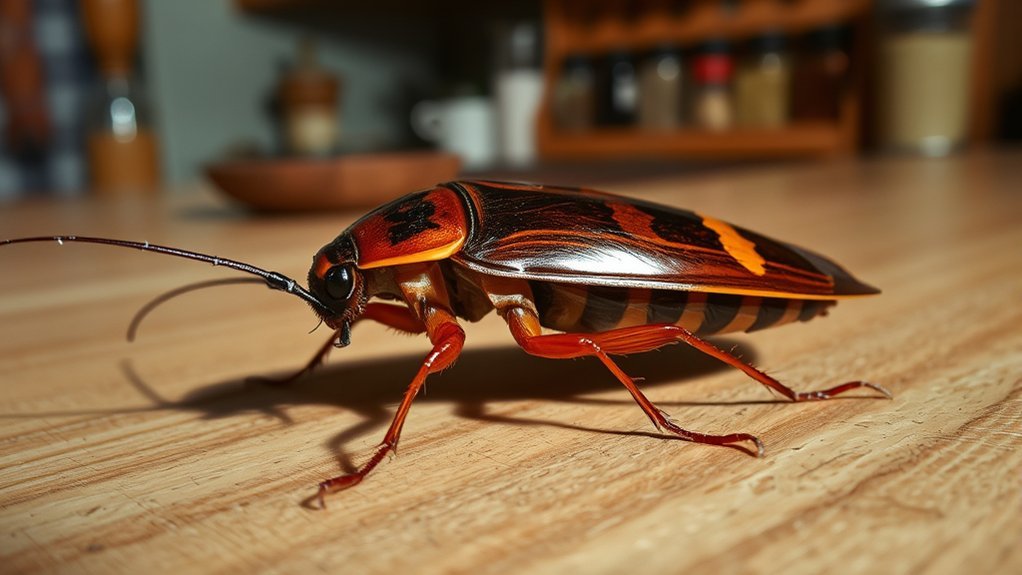
When most people think of a “big” cockroach, they’re picturing something around 1.5–2 inches long—roughly the size of a cucumber slice. That description fits the American cockroach, one of the most common large species you’ll encounter indoors.
In general, cockroaches over 1 inch qualify as “big” by household standards. Pest species typically stay under 5 cm, so anything pushing past that threshold stands out immediately. For comparison, the German cockroach measures just 1.6 cm, and the brownbanded cockroach is roughly half an inch—about the size of a blueberry. Neither registers as large.
True giants exist in nature. The giant burrowing cockroach reaches 75–80 mm and weighs up to 35 grams, making it the world’s heaviest cockroach species. You won’t find those in your kitchen, though. Found across subtropical Queensland between Rockhampton and Cooktown, this species lives in 18 known geographical populations and stays firmly rooted to its underground burrows. The “big” roaches entering your home are almost always outdoor species crossing the 1-inch mark.
American Cockroach: The Largest Home Invader
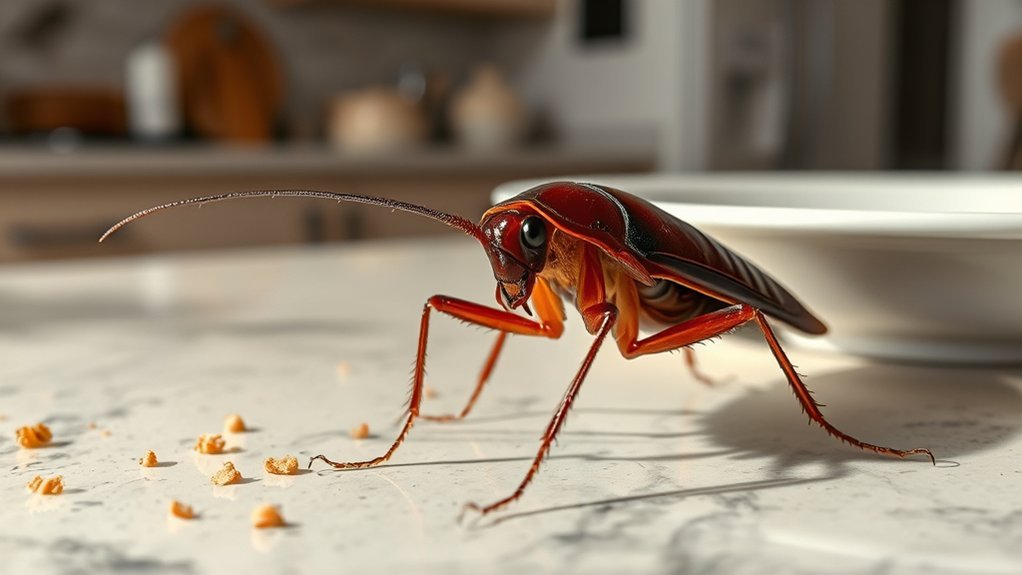
If you’ve ever spotted a reddish-brown cockroach stretching nearly two inches long with prominent wings and long antennae, you’ve encountered the American cockroach, the largest species commonly invading homes. You’ll typically find it thriving in warm, humid spaces like kitchens, bathrooms, and basements, where it hides in wall voids, under appliances, and in cluttered areas. It’s a nocturnal scavenger that runs fast, flies in warm months, and can live over a year, making it a persistent and difficult intruder to eliminate. A distinctive yellowish figure-eight pattern on its pronotum makes this species visually identifiable from other large cockroaches you might encounter indoors.
Size and Physical Traits
Although often described simply as “big,” the American cockroach’s size sets it apart from every other cockroach species you’re likely to find in your home. Adults typically measure 1.4″ to 2.1″ long, dwarfing German and Oriental cockroaches markedly. Their flat, oval bodies help them squeeze through surprisingly tight cracks.
Key physical traits you’ll notice include:
- Coloration: Reddish-brown body with a yellowish band outlining the pronotum
- Body height: Only about 7mm tall despite their considerable length
- Wings: Both sexes carry full wings; males’ extend slightly past the abdomen
- Cerci: Both sexes have fingerlike appendages at the abdomen’s tip; males also have styli between them
Nymphs look similar but remain smaller and wingless until reaching adulthood. They are also the largest house-infesting roach species found in the United States, making them a particularly notable pest in urban environments.
Preferred Habitat Locations
Because American cockroaches thrive wherever warmth and moisture converge, you’ll find them in predictable hotspots both inside and outside your home. Indoors, they favor basements, bathrooms, laundry rooms, and kitchens, where humidity and water sources are consistently available. They also hide in garages and near plumbing fixtures, bathtubs, and drains that connect to outdoor sewer systems.
Outside, they shelter in hollow trees, woodpiles, mulch beds, and flowerbeds, particularly in warm climates. Storm drains and sewers are major harborage sites, offering constant humidity and organic food waste.
In commercial settings, you’ll encounter them in restaurants, food processing plants, breweries, and hospitals. They enter structures through small cracks, basement windows, and pipes, then settle into dark, sheltered spots during daylight hours. Their long, sensitive antennae allow them to detect environmental changes quickly, helping them locate new harborage sites with favorable conditions.
Behavior and Lifespan
Knowing where American cockroaches hide is only half the picture — understanding how they behave tells you why they’re so difficult to eliminate.
They’re nocturnal, emerging at night to scavenge for food while staying hidden during the day. They’ll eat almost anything, from decaying matter to soap and paper. Females can produce up to 90 egg cases in a lifetime, making infestations escalate quickly.
Their key behavioral traits include:
- Thigmotaxis — they constantly seek tight surface contact above and below
- Rapid movement — they sprint when disturbed at night
- Broad diet — they consume organic waste, cloth, cardboard, and smaller insects
- Resilience — adults survive two to three months without food
Unlike German cockroaches, American cockroaches can fly, allowing them to travel greater distances and access entry points that ground-level pests cannot reach. These traits combined make early detection and consistent treatment essential.
Smokybrown Cockroach: The Outdoor Intruder
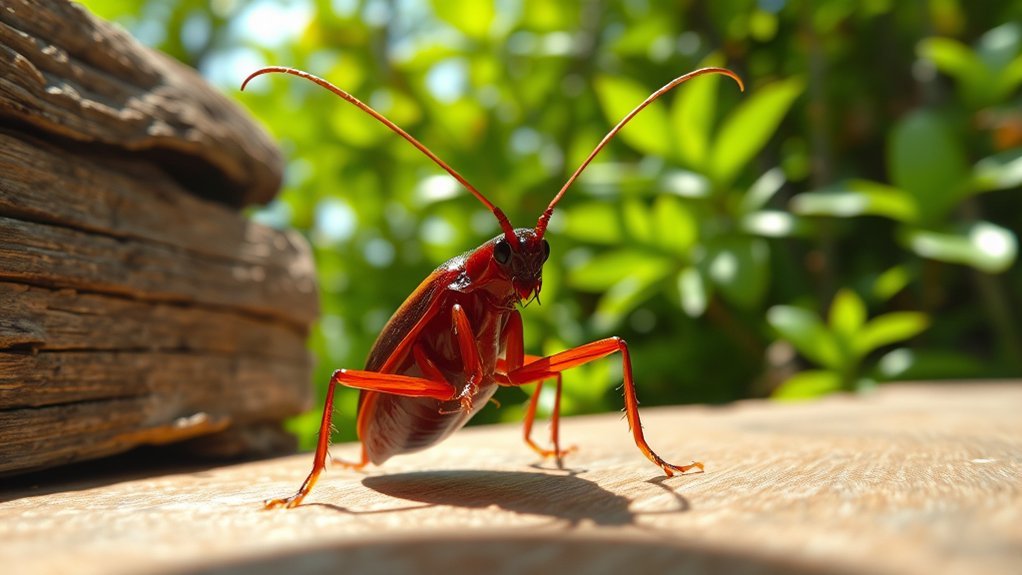
If you’ve spotted a large, shiny mahogany-colored cockroach near your woodpile or mulch beds, you’re likely dealing with a smokybrown cockroach. This species thrives in warm, humid outdoor environments like tree holes, leaf litter, and gutters, making your yard a prime habitat. However, it’s prone to dehydration, so it’ll push indoors when it needs moisture, targeting areas like leaky roofs, damp basements, or standing water near your foundation.
Outdoor Habitat Preferences
Unlike its indoor-dwelling relatives, the smokybrown cockroach thrives outside, where it gravitates toward shaded, damp environments that hold consistent moisture. You’ll find it in spots that offer both cover and humidity, since it loses moisture rapidly through its cuticle and dies quickly in dry conditions.
Common outdoor hiding spots include:
- Vegetation zones – mulch beds, leaf litter, woodpiles, and dense ground cover
- Structural gaps – gutters, roof eaves, shingles, siding, and block walls
- Organic waste areas – near garbage cans, storm drains, and leaky faucets
- Natural shelters – tree bark, tree holes, and hollow trees where eggs get laid
These preferences make warm, humid regions like Florida, Texas, and the Gulf Coast prime territory for smokybrown cockroach activity.
Moisture-Seeking Indoor Behavior
When the smokybrown cockroach wanders indoors, it’s not searching for food—it’s desperate for moisture. Without consistent access to water and high humidity, it dehydrates quickly and dies. You’ll often find dead ones indoors simply because they couldn’t locate a reliable water source.
Once inside, they gravitate toward your bathrooms, laundry rooms, kitchens, and basements—anywhere humidity stays elevated. Attics and crawlspaces also attract them, offering both moisture and undisturbed shelter. They enter through cracks, plumbing voids, broken door sweeps, and gaps in your siding or soffits, typically on warm, humid evenings.
During the day, they stay hidden in dark, moist areas. After dark, they forage for water, food scraps, and organic material, contaminating your surfaces as they move through your home.
Oriental Cockroach: The Dark, Damp-Loving Species
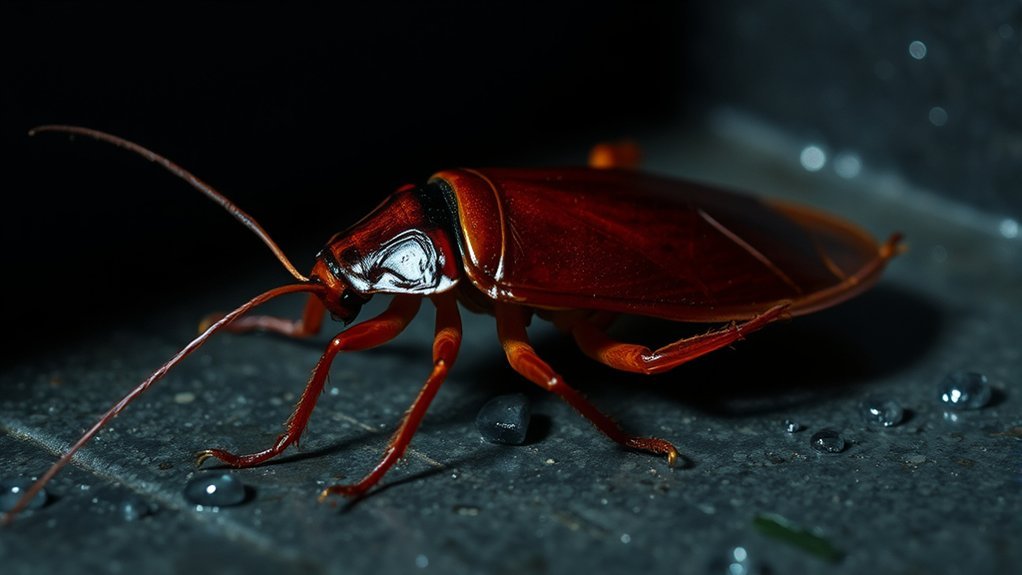
Oriental cockroaches are one of the larger home-invading species you’ll encounter, measuring around 1 inch (22–27 mm) in length and sporting a distinctively dark brown to black, glossy body. Despite having wings, they can’t fly, and they rarely climb walls, staying close to ground level.
They gravitate toward your home’s dampest, coolest areas, particularly during drought or cold weather. Watch for them in these locations:
- Basements and crawl spaces with elevated moisture
- Around toilets, bathtubs, sinks, and leaking pipes
- Near garbage, decaying organic matter, and debris piles
- Along drains, air ducts, and ventilation entry points
Their nocturnal habits make daytime detection difficult, so infestations often go unnoticed until populations grow. Peak activity runs from May through July. Since they feed on decaying matter and contaminate surfaces they contact, spotting one signals you need to address moisture problems immediately.
Droppings, Smear Marks, and Other Signs of Large Cockroaches
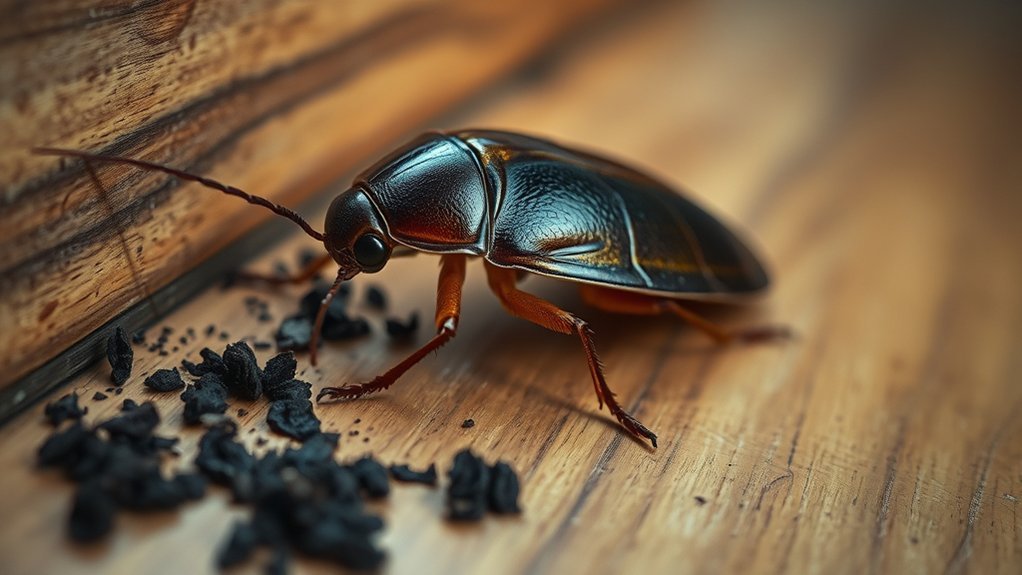
Spotting an oriental cockroach is one thing, but most infestations reveal themselves through evidence long before you see an actual roach. Large roaches leave cylindrical, ridged droppings about ¼ inch long with blunt ends—darker than mouse droppings and loaded with pathogens from garbage, sewage, and carrion.
You’ll find these droppings clustered under appliances, inside cabinets, and in damp zones like basements and bathrooms. Dark brown smear marks and a musty, oily odor accompany heavy infestations.
| Sign | Location | Health Risk |
|---|---|---|
| Cylindrical droppings | Kitchen cabinets, pantries | Bacterial contamination |
| Smear marks | Feeding and nesting zones | Pathogen spread |
| Musty odor | Basements, crawl spaces | Airborne allergens |
Fecal debris dispersed through HVAC systems triggers asthma and allergies. Never handle droppings without protective gear—direct exposure increases your infection risk considerably.
Where Large Cockroaches Hide Inside Your Home
Large cockroaches rarely expose themselves in the open—they exploit the darkest, dampest corners of your home and disappear before you notice them. They gravitate toward heat, moisture, and food debris, making certain spots almost guaranteed harborage zones.
Large cockroaches thrive in the darkest, dampest corners of your home—drawn to heat, moisture, and food debris.
Check these high-risk hiding areas first:
- Kitchen appliances – Behind refrigerators, stoves, and dishwashers where warmth and grease accumulate
- Bathroom plumbing – Under sinks, behind toilets, and inside wall voids near dripping pipes
- Furniture and cabinets – Inside food cabinets with spilled particles, behind wardrobes, and along furniture corners where eggs get laid
- Structural gaps – Behind baseboards, inside wall voids, and beneath rubber mats where cracks give them easy access
Cluttered storage areas like garages, crawl spaces, and laundry rooms also attract large species. The more moisture and darkness a space offers, the more likely you’ll find them settled in.
How Large Cockroaches Move, Fly, and Feed Indoors
Understanding how cockroaches move, feed, and fly helps you anticipate where they’ll turn up next. Large species like American cockroaches reach speeds of 1.5 meters per second, making them difficult to catch. Their flattened bodies let them squeeze through cracks as narrow as 1/16 of an inch, so no tight space is truly off-limits.
Flight adds another challenge. American cockroaches can fly, though individual capability varies. Asian cockroaches fly up to 120 feet at a time, while German cockroaches rarely use their wings despite having them.
Cockroaches eat nearly anything available. They prefer meat, sugary foods, and starchy items but will also consume paper, book binding adhesives, soap, leather, and toothpaste when preferred food runs out. You’ll most often spot them near kitchen and bathroom areas where food and water are accessible. Finding one during daylight hours typically signals a larger hidden population nearby.
Why Large Cockroaches Still Get Misidentified
Even when you know where to look and what behaviors to expect, correctly naming what you’ve found is another challenge entirely. Several overlapping features keep misidentification common, even among experienced homeowners.
Large roaches share traits with other insects and with each other, making visual confirmation tricky:
Large roaches look alike—and like other insects—making confident visual identification surprisingly difficult, even for experienced eyes.
- Beetles confusion: Ground beetles and Asian long-horned beetles mimic roach coloration and body shape but have shorter antennae and visible segmentation.
- Palmetto bug overlap: That term covers Florida Woods Cockroaches, American cockroaches, and Smokybrown cockroaches—three distinct species sharing one nickname.
- Species similarity: American, Australian, brown, and Smokybrown cockroaches all reach roughly one inch and share reddish-brown tones.
- Domestic vs. peridomestic mix-up: Spotting a large roach indoors doesn’t confirm infestation—American and Asian cockroaches prefer outdoors and enter accidentally.
Getting the species right matters because your response should match the actual threat you’re dealing with.
Frequently Asked Questions
Can Large Cockroaches Survive in Cold Climates or Only Warm Regions?
Large cockroaches mostly prefer warm climates, but you’ll find American cockroaches almost anywhere in the U.S. They survive indoors by seeking dark, damp, warm spots like your basement, even in colder regions.
Do Large Cockroaches Pose Greater Health Risks Than Smaller Species?
No, large cockroaches don’t pose greater health risks than smaller ones. You’ll find that infestation density and habitat proximity to food drive disease spread more than size, making German cockroaches riskier despite being smaller.
How Long Can a Large Cockroach Survive Without Food or Water?
You’re dealing with a tough survivor! Large cockroaches, like American cockroaches, can last 2-3 months without food and about one month without water, especially in cool, humid environments that slow their metabolism.
Are Large Cockroaches Harder to Eliminate Than Smaller German Cockroaches?
No, you’ll actually find large cockroaches easier to eliminate than German cockroaches. German cockroaches reproduce rapidly, resist treatments effectively, and concentrate in kitchens, making them the most challenging indoor pest you’ll likely encounter.
What Attracts Large Cockroaches to Enter Homes in the First Place?
Large cockroaches enter your home when you’ve got accessible food scraps, moisture from leaky pipes, and warm shelter. They’re drawn to cluttered spaces, unsealed pantry items, and humid areas that’ll sustain their survival.
Conclusion
Now that you know what you’re dealing with, you can take action faster. Whether it’s the reddish-brown American cockroach, the dark Oriental species, or the outdoor-loving smokybrown, identifying your intruder correctly makes all the difference. Don’t ignore the signs—droppings, smear marks, and hiding spots all tell a story. The sooner you recognize which large cockroach you’re facing, the sooner you’ll stop it from taking over your home.
