
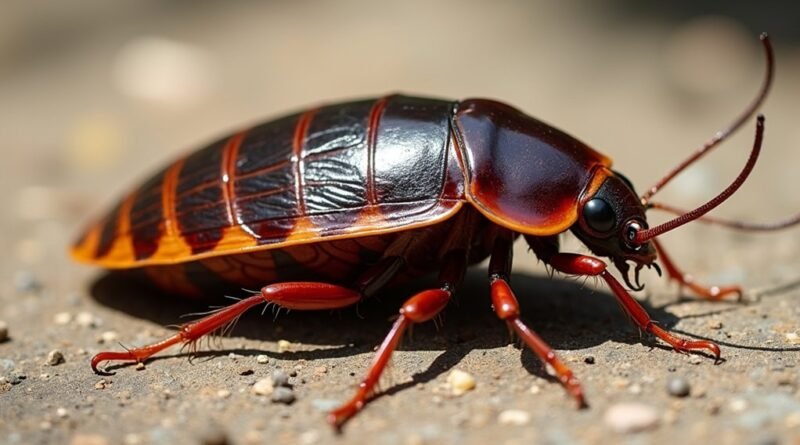
Biggest Cockroach in the World: Scientific Name and Facts
The world’s biggest cockroach is *Megaloblatta longipennis*, a species found in the tropical rainforests of Central and South America. It can reach nearly 10 cm in length and spread its wings up to 20 cm wide — about the size of a standard sheet of paper. Its name literally means “large, long-winged cockroach” in Greek and Latin. There’s a lot more to this record-breaking insect than its impressive size alone.
Key Takeaways
- *Megaloblatta longipennis* is the world’s largest cockroach by length and wingspan, reaching 9.7 cm long with wings spanning up to 20 cm.
- The species belongs to the family Ectobiidae and order Blattodea, with its genus name meaning “large cockroach” in Greek.
- It inhabits tropical rainforests of Central and South America, thriving in warm, humid conditions in Colombia, Ecuador, and Peru.
- The record-holding specimen, preserved in Yamagata, Japan, measures 97 mm long, 45 mm wide, verified by Guinness World Records.
- While *Megaloblatta longipennis* holds length and wingspan records, the heaviest cockroach title belongs to *Macropanesthia rhinoceros*, exceeding 30 grams.
What Is the Biggest Cockroach in the World?
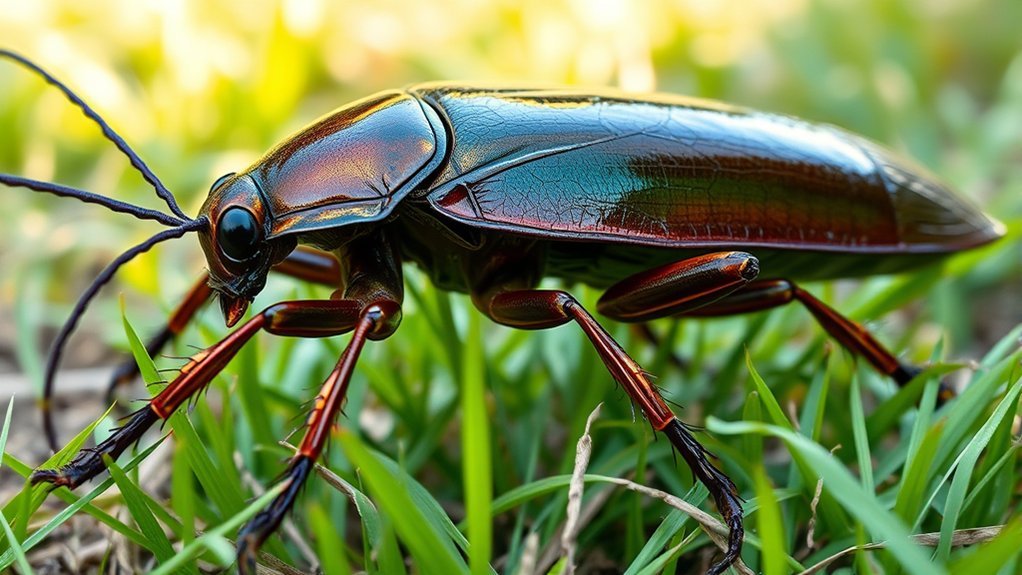
The largest recorded female measures 97 mm long and 45 mm wide, with a wingspan reaching up to 20 cm. That’s roughly the width of a standard sheet of paper.
Taxonomist Dohrn originally named this species based on specimens collected from Peru and Panama. It belongs to the family Ectobiidae and falls under the order Blattodea within the class Insecta. The genus Megaloblatta was established by Heinrich Dohrn in 1887.
How Big Does the World’s Biggest Cockroach Actually Get?
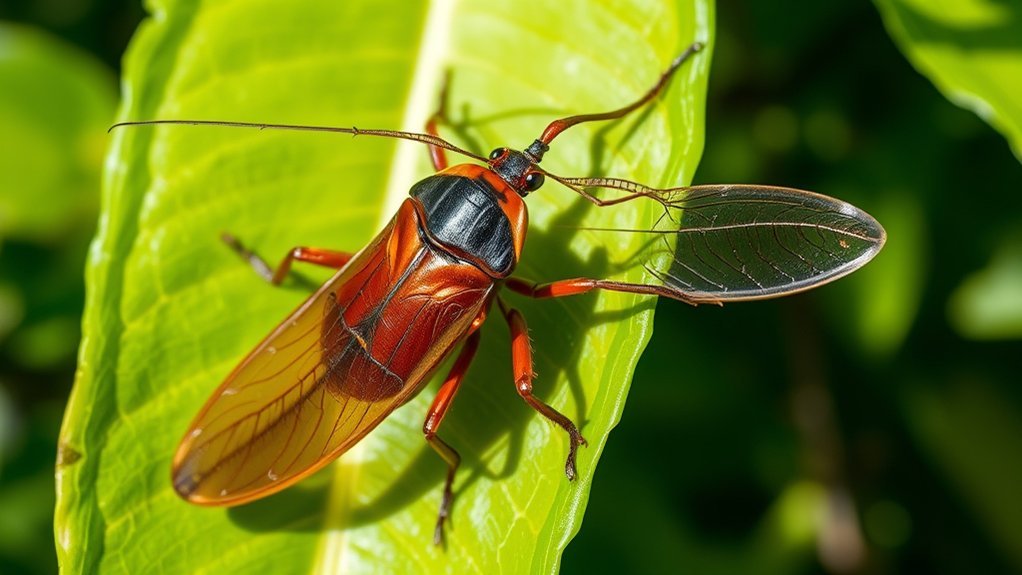
The record-holding specimen, a preserved female from Akira Yokokura’s collection in Japan, confirms these dimensions officially through Guinness World Records. Females consistently reach the largest sizes within the species, with males typically falling shorter.
To put this in perspective, adult body lengths range from 4 to 9.7 cm (1.6–3.8 in), already far exceeding the common cockroach’s typical 0.6–7.6 cm range. It also surpasses well-known large species you might recognize, including the Madagascar hissing cockroach at over 7 cm and the rhinoceros cockroach exceeding 8 cm. The American cockroach, which you’d consider large in most households, reaches only about 4 cm. Beyond its body length, the wingspan of this remarkable species can reach up to 20 cm (8 in), making its overall presence even more imposing than its body measurements alone suggest.
What Does Its Scientific Name Actually Mean?
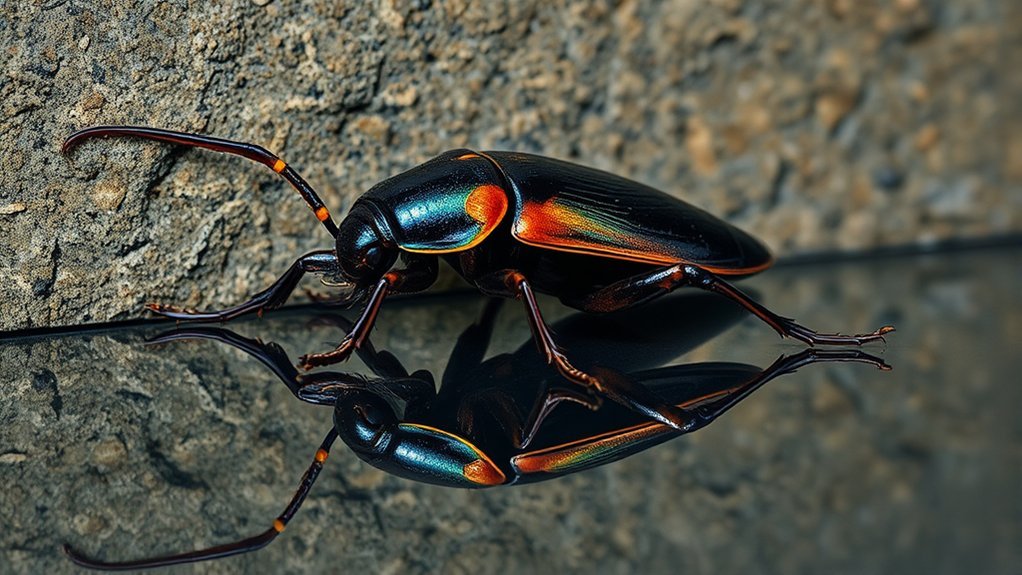
When you break apart *Megaloblatta longipennis*, you’ll find a name that tells you exactly what you’re dealing with. The genus name combines the Greek words *megas* (large) and *blatta* (cockroach), so you’re fundamentally just looking at “large cockroach” in ancient Greek. The species name *longipennis* pulls from Latin, pairing *longus* (long) with *pennis* (wing), pointing directly to the elongated wings that set this species apart from its relatives. These long wings enhance flying efficiency, giving this already remarkable insect an added advantage in navigating its environment.
Breaking Down “Megaloblatta”
- “Mega” — means “large” or “great” in Greek
- “Blatta” — the Greek word for “cockroach”
- Combined — you get “large cockroach,” a fitting label
- Purpose — the name directly reflects the genus’s exceptional size
That’s it. No mystery, no complex symbolism. The scientists who named this genus wanted you to know exactly what you were dealing with — a cockroach that earns the “mega” prefix. With specimens reaching 97 mm long and wingspans stretching to 20 cm, *Megaloblatta* lives up to every letter of its name. A closely related species, *Megaloblatta blaberoides*, shares similarly impressive dimensions but differs in morphological features.
Meaning of “Longipennis”
Put both halves together, and you’ve got “large cockroach, long-winged.” That’s exactly what *Megaloblatta longipennis* is. Latin and Greek may be ancient languages, but they gave this insect a name that still holds up under a magnifying glass. The species was first described in 1887 by German entomologist Hinrich Dorne, making the name itself a piece of scientific history.
What Does the World’s Biggest Cockroach Look Like?
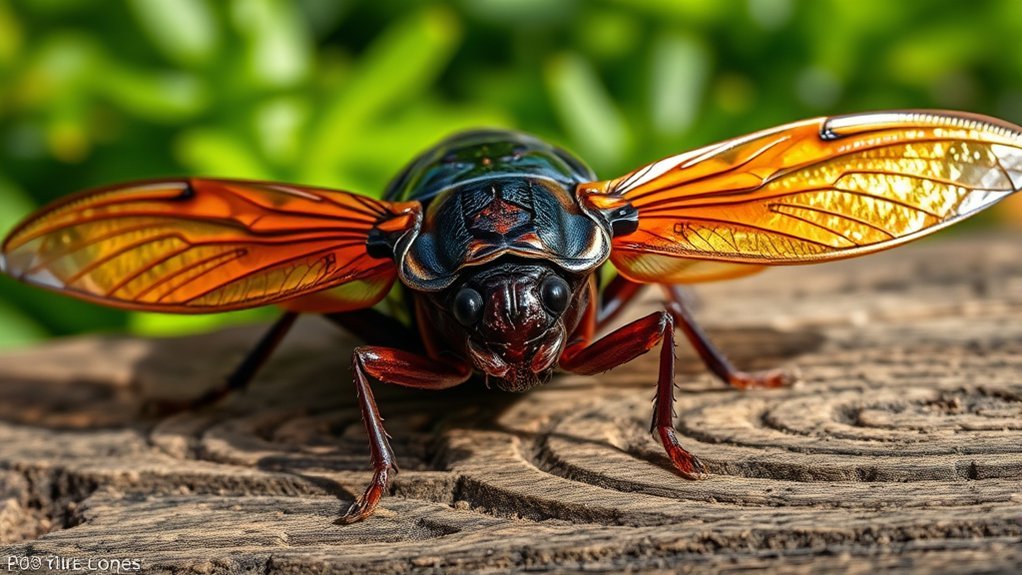
- Elongated body — The extended form runs the entire length of the insect, setting it apart from other cockroach species.
- Flattened profile — The compressed build lets it slip through narrow environmental niches with ease.
- Broad, fully developed wings — Adults display impressive wing spans that define the species’ formidable appearance.
- Hardened exoskeleton — A durable exterior typical of the Ectobiidae family covers the entire body.
Females typically grow larger than males, reflecting the sexual dimorphism common throughout the *Megaloblatta* genus.
Where Does the World’s Biggest Cockroach Live?
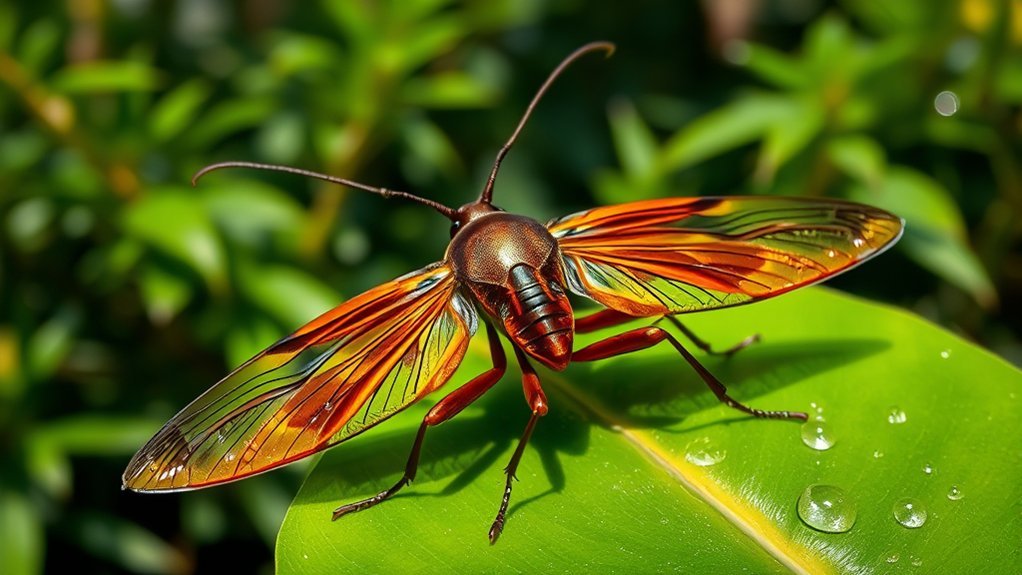
If you want to find the world’s biggest cockroach, you’ll need to head to the tropical forests of Central and South America. *Megaloblatta longipennis* calls the rainforests of Colombia, Ecuador, and Peru home, thriving in the warm, humid conditions these ecosystems provide. You won’t spot this giant in dry or temperate climates, as it depends on the dense canopy cover and moisture-rich environment that only tropical rainforests can offer.
Native Tropical Forest Regions
Three countries in South America—Colombia, Ecuador, and Peru—make up the confirmed native range of *Megaloblatta longipennis*. You’ll find this species exclusively within tropical rainforest ecosystems, where warm, humid conditions support its survival. Peru serves as the primary source for scientific specimens, including the record-holding 97 mm female.
Key habitat characteristics include:
- Dense canopy cover — the species concentrates in upper rainforest layers, particularly where male specimens spend most of their time
- Lowland to foothill elevations — Ecuador’s populations span multiple elevation bands within tropical zones
- Amazon Basin conditions — wetter, nutrient-rich forests produce the largest individuals
- No island populations — unlike related species, *M. longipennis* doesn’t inhabit Caribbean islands or non-continental territories
Rainforest Habitat Conditions
These forests deliver three non-negotiable survival factors:
| Condition | Feature | Benefit |
|---|---|---|
| Humidity | Consistently damp floors | Supports moisture-dependent activity |
| Temperature | Stable tropical warmth | Powers bacterial gut symbiosis |
| Microhabitat | Bark, hollows, leaf litter | Shelters slim, flexible bodies |
You’ll find larger individuals in wetter forests—moisture directly influences body size. Dense canopy locks in heat and humidity simultaneously, creating the stable environment this species demands. Without that combination of warmth, darkness, and persistent dampness, *Megaloblatta longipennis* simply wouldn’t reach record-breaking dimensions.
How Does It Compare to Other Large Cockroach Species?
Here’s how they compare:
- Longest wingspan — *Megaloblatta longipennis* wins at 20 cm, surpassing *Megaloblatta blaberoides* at 18.5 cm and leaving *Periplaneta americana* far behind at under 10 cm.
- Heaviest body — *Macropanesthia rhinoceros* takes this title, exceeding 30 grams due to its stout, wingless build.
- Greatest length — *Megaloblatta longipennis* leads at 9.7 cm, edging out *Macropanesthia rhinoceros* at over 8 cm and *Gromphadorhina portentosa* at over 7 cm.
- Widest body — *Megaloblatta longipennis* reaches 4.5 cm width, while *Gromphadorhina portentosa* measures 2.5 cm.
You’re fundamentally comparing specialists — each species evolved for dominance in different physical dimensions.
What Does Guinness World Records Say About It?
When comparing these species across physical dimensions, official recognition matters — and that’s where Guinness World Records draws a clear line. The organization separates the largest winged cockroach from the heaviest, giving each title to a different species.
*Megaloblatta longipennis* holds the record for the largest winged cockroach. A preserved female specimen in Akira Yokokura’s collection in Yamagata, Japan, measures 97 mm (3.8 in) in length and 45 mm (1.75 in) across, with a wingspan reaching up to 20 cm (8 in). Guinness verified these measurements directly from that specimen.
*Macropanesthia rhinoceros*, native to eastern Queensland, Australia, holds the heaviest cockroach title. The heaviest recorded specimen weighed 33.45 g — nearly double the species’ normal weight. It’s wingless and burrow-dwelling, so length isn’t its defining record.
You can see that Guinness focuses on precision, distinguishing wingspan and length from mass when classifying these record-holders.
Can You Encounter the World’s Biggest Cockroach Outside South America?
However, *Blaberus giganteus*, one of the largest cockroaches overall, ranges well beyond South America. You can encounter it across:
- Central America — Mexico, Guatemala, Costa Rica, and Panama
- Caribbean islands — Trinidad and Tobago, Cuba, and Hispaniola
- Northern South America — Colombia, Venezuela, Ecuador, and Guyana
- Preferred habitats — limestone caves, tree hollows, and damp rainforest floors
Frequently Asked Questions
What Does the World’s Biggest Cockroach Eat in the Wild?
You’d find the world’s biggest cockroach eating decaying plant material, dead insects, bat guano, carrion, and rotting fruit. It’s a nocturnal scavenger that forages jungle and cave floors for decomposing organic matter.
How Long Does Megaloblatta Longipennis Typically Live?
You’re looking at a lifespan of roughly 8-12 months in the wild and 12-18 months in captivity. Females typically outlive males, surviving up to 15 months, while nymphal development adds another 9-15 months total.
Does the World’s Biggest Cockroach Pose Any Danger to Humans?
You don’t have much to worry about with *Megaloblatta longipennis*. It’s not venomous, doesn’t bite, and it can’t transmit diseases. Its remote rainforest habitat means you’re unlikely to ever encounter one.
How Does Megaloblatta Longipennis Reproduce?
Megaloblatta longipennis reproduces by forming an ootheca, or egg case, internally. You’d find all the offspring contained within this single structure, which the female’s wider body and larger abdomen are specially adapted to carry.
Are There Any Conservation Concerns for Megaloblatta Longipennis Currently?
You won’t find any documented conservation concerns for *Megaloblatta longipennis* currently. It’s not IUCN-listed, there’s no recorded habitat loss threat, and enthusiast breeding projects suggest it’s maintaining a stable, viable population.
Conclusion
Now that you’ve learned about the world’s biggest cockroach, you can impress others with your knowledge of *Megaloblatta longipennis* and its incredible size. Whether you’re a bug enthusiast or simply curious about extreme creatures, this South American giant stands in a league of its own. You’re unlikely to encounter one outside its natural habitat, but knowing it exists makes the world’s biodiversity feel even more fascinating and extraordinary.
