
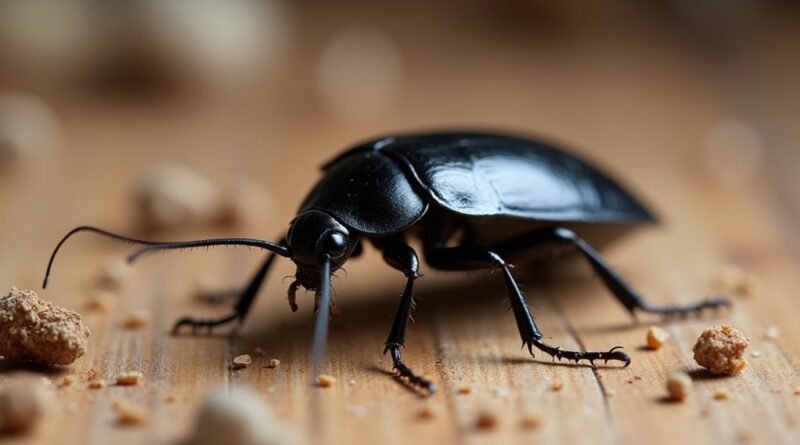
Black Cockroach: Species Identification and Control
If you’ve spotted a shiny, black, oval-shaped insect near your drains or basement, it’s likely an Oriental cockroach (*Blatta orientalis*). You can identify it by its glossy dark body, short wings on males, and slow ground-level movement. It thrives in damp, dark spaces and migrates indoors when temperatures drop. To control it, you’ll need to seal entry points, eliminate moisture, and use targeted treatments. Stick around — there’s much more to uncover about stopping these invaders for good.
Key Takeaways
- The black cockroach (*Blatta orientalis*) is shiny dark brown to black, measuring 18–29 mm, with males having short wings and females having wing stubs.
- Unlike the larger, reddish-brown American cockroach, black cockroaches are smaller, cannot fly, and live only up to six months.
- They prefer damp environments like sewers, basements, and crawl spaces, migrating indoors seasonally during cold, dry, or hot weather.
- Infestation signs include black droppings resembling coffee grounds, musty odors, bean-shaped egg cases, and daytime roach sightings indicating severe overcrowding.
- Control involves sealing entry points, eliminating moisture, maintaining cleanliness, applying residual sprays or gel baits, and using Insect Growth Regulators for persistent infestations.
What Is a Black Cockroach?
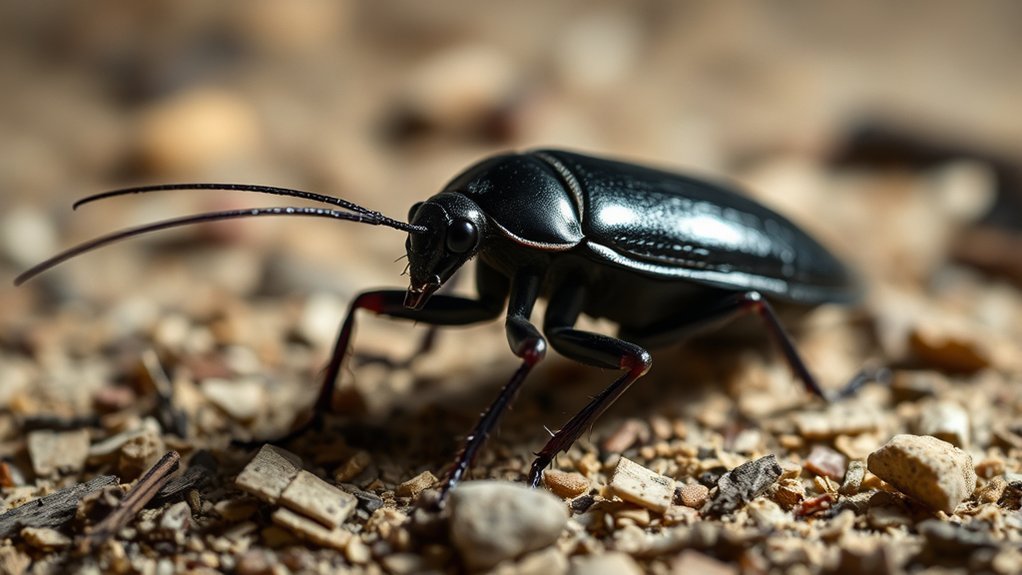
The black cockroach (*Blatta orientalis*), commonly called the Oriental cockroach or waterbug, is one of four cockroach species you’re most likely to find infesting homes across the United States. It belongs to the order Blattodea, an ancient insect group dating back over 300 million years, and the family Blattidae.
You can recognize this species by its shiny dark brown to nearly black, oval body with a glossy, beetle-like appearance. Adults carry threadlike antennae and six legs. Males measure 18–29 mm, while females range from 20–27 mm. Both sexes have wings, but neither flies. Males have shorter wings that cover less than half the abdomen, while females have only small, non-functional wing stubs.
Originally from the Crimean Peninsula and surrounding Black Sea and Caspian Sea regions, this species has since spread worldwide and established itself as a common household pest. It is commonly found in sewers and drains, making it a frequent invader of homes through pipes and other openings.
How to Identify Black Cockroaches by Sight
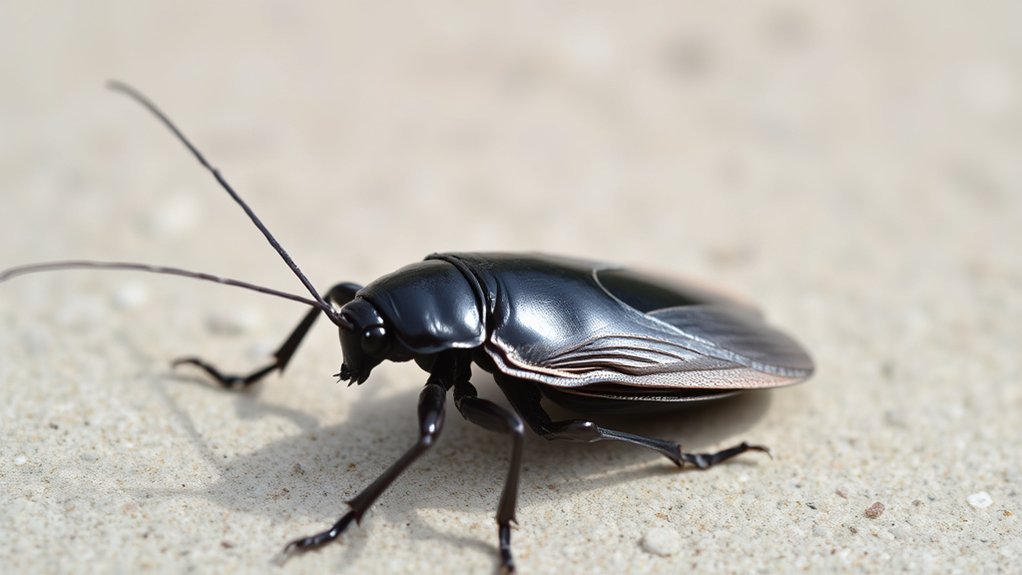
When you spot a black cockroach, look for its dark brown to nearly black, glossy oval body, which measures between 18-32 mm depending on sex. You can distinguish it from beetles by its long, prominent antennae and segmented body, even though its shiny exoskeleton makes it look strikingly similar to one. You’ll also notice that females are larger and wingless, while males carry wings covering about three-quarters of their abdomen, yet neither can fly. This species is also commonly referred to as the shad roach or black beetle.
Physical Appearance Traits
Spotting a black cockroach comes down to recognizing a handful of consistent physical traits. You’re looking for a shiny, dark brown to black body with a glossy texture—never matte. Adults have oval, flattened builds that let them squeeze into tight spaces, and their long antennae match or exceed body length.
| Trait | Male | Female |
|---|---|---|
| Body Length | 18–29 mm | 20–27 mm |
| Abdomen | Narrow | Broad and rounded |
| Wings | Covers ¾ of abdomen | Vestigial or absent |
Six spiny legs handle ground-level movement, though these cockroaches don’t climb well. Adults show no distinguishing markings—just a uniform dark sheen that makes species like the Oriental cockroach immediately recognizable. Despite possessing wings, Oriental cockroaches rarely fly, making ground-level sightings the most reliable indicator of their presence.
Distinguishing Features Explained
Identifying a black cockroach by sight relies on a few key features that set it apart from lookalikes. You’ll notice its flat, oval body with a shiny, glossy surface and long, flexible antennae that nearly match its body length. These antennae immediately separate it from beetles, which have shorter, thicker ones.
Look for these three key visual cues:
- Body shape — flat and oval, not rounded or dome-shaped like a beetle.
- Wings — males have partial wings covering three-quarters of the abdomen; females appear nearly wingless.
- Legs — six spiny legs built for maneuvering tight, damp spaces.
You’ll typically spot them at night, staying low on floors near kitchens, bathrooms, or basements. Adults range in size, measuring 17 to 30 mm in length, making them large enough to identify with the naked eye without needing to get particularly close.
Black Cockroach vs. American Cockroach: Key Differences
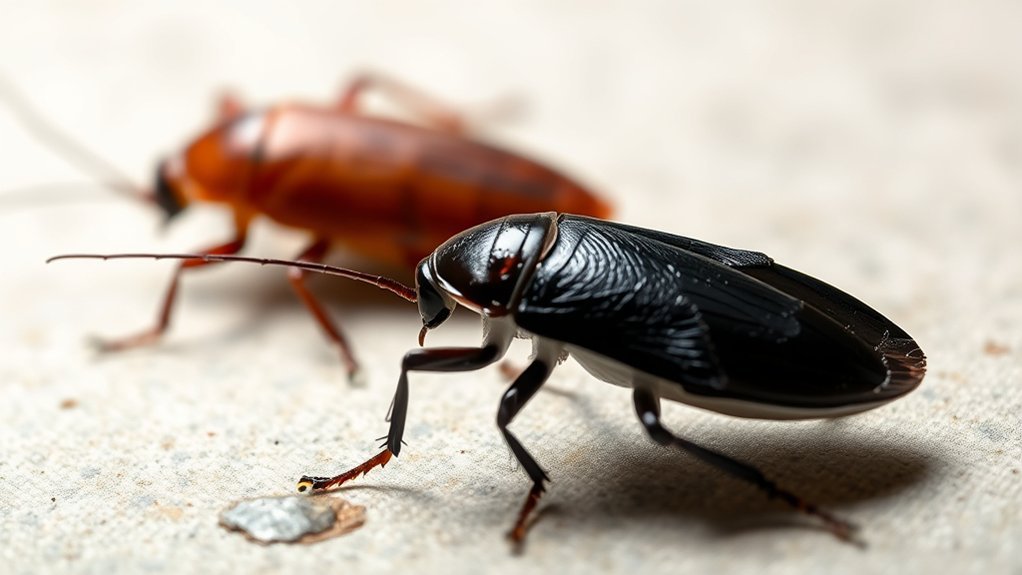
Though they’re often confused, black cockroaches and American cockroaches differ in several distinct ways. The black cockroach displays a glossy dark-brown or black uniform body, while the American cockroach shows reddish-brown coloration with a yellowish figure-8 pattern on its head.
Black and American cockroaches look strikingly different—one uniformly dark and glossy, the other reddish-brown with a distinctive yellowish marking.
Size is another clear distinction. Black cockroaches average 25 mm, whereas American cockroaches reach 40-53 mm, making them the largest house-infesting species.
Their wings tell a revealing story. Black cockroach males have only short wings, females have none, and neither can fly. American cockroaches, however, both sexes carry fully developed wings and can fly short distances, particularly when temperatures exceed 85°F.
Lifespan and reproduction also separate them markedly. Black cockroaches live up to 6 months and produce roughly 128 eggs over one yearly generation. American cockroaches live up to 2 years, producing an average of 150 young per female throughout their lifespan. American cockroaches are also found globally, appearing on nearly every continent and establishing themselves in a wide range of environments.
Where Do Black Cockroaches Live?
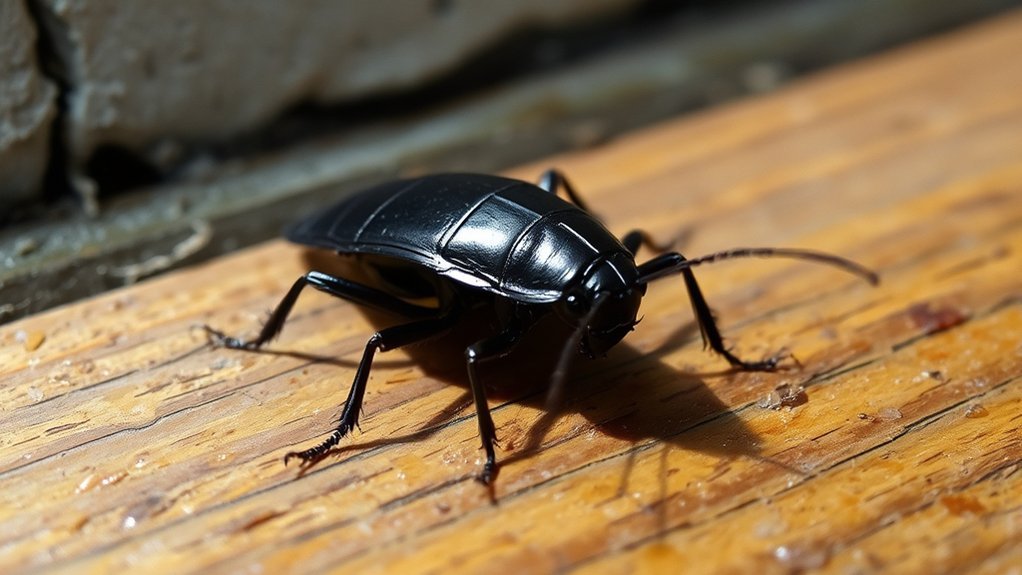
You’ll find black cockroaches thriving in damp, shady outdoor spaces like sewers, leaf litter, mulch beds, and debris piles near trash cans. Indoors, they gravitate toward basements, crawl spaces, and areas near pipes, drains, and toilets where humidity stays high. As temperatures drop in winter, they migrate inside seeking warmth, with infestations peaking in spring when cool, moist conditions favor their activity.
Preferred Outdoor Habitats
Black cockroaches prefer outdoor habitats that are cool, dark, and consistently damp. You’ll typically find them establishing populations in these three key locations:
- Woodpiles and mulch beds – Stacked firewood traps moisture and creates dark, sheltered hiding spots, while mulch beds maintain the damp conditions these pests need to thrive.
- Drain systems and water sources – Sewer lines, floor drains, clogged gutters, and leaky pipes near foundations attract black cockroaches and serve as migration routes into your home.
- Vegetation and compost areas – Compost bins, ivy, ground cover, and decorative planter boxes provide both shelter and moisture-rich soil.
Crawl spaces, tree hollows, and undisturbed areas under decks also support outdoor populations by offering consistent moisture and protection from predators.
Common Indoor Hiding Spots
Once black cockroaches move indoors from their preferred outdoor habitats, they seek the same conditions they left behind—warmth, moisture, and darkness. You’ll find them behind refrigerators, stoves, and dishwashers, where grease, crumbs, and warmth accumulate. They hide inside cabinets under sinks, near leaky pipes, and around plumbing lines that supply the moisture they need.
Check behind baseboards, inside wall voids, and around electrical wiring gaps where colonies can grow undetected. Bathrooms attract them too—behind toilets, inside drains, and near cracked tiles all offer damp refuge.
Don’t overlook storage areas, crawl spaces, and cluttered garages with low foot traffic. Inside kitchen cabinets, pantry corners, and furniture frames, they’ll build food debris and establish themselves long before you notice their presence.
Seasonal Migration Patterns
As temperatures shift throughout the year, black cockroaches follow predictable migration patterns that explain why you’ll spot them outdoors in summer and suddenly inside your home by fall.
During warm months, they thrive in mulch, leaf litter, drains, and shaded damp areas. Once conditions change, movement becomes deliberate:
- Summer drought pushes them indoors through plumbing pipes, crawl spaces, and foundations when outdoor humidity drops.
- Fall temperatures at 68°F or below trigger mass indoor migration, particularly into bathrooms and basements throughout October.
- Unseasonably cool weather causes large-scale movement under doors, window jams, and air ducts faster than typical seasonal shifts.
Understanding these triggers helps you anticipate when infestations are likely, so you can seal entry points before migration begins.
Why Do They Invade Homes?
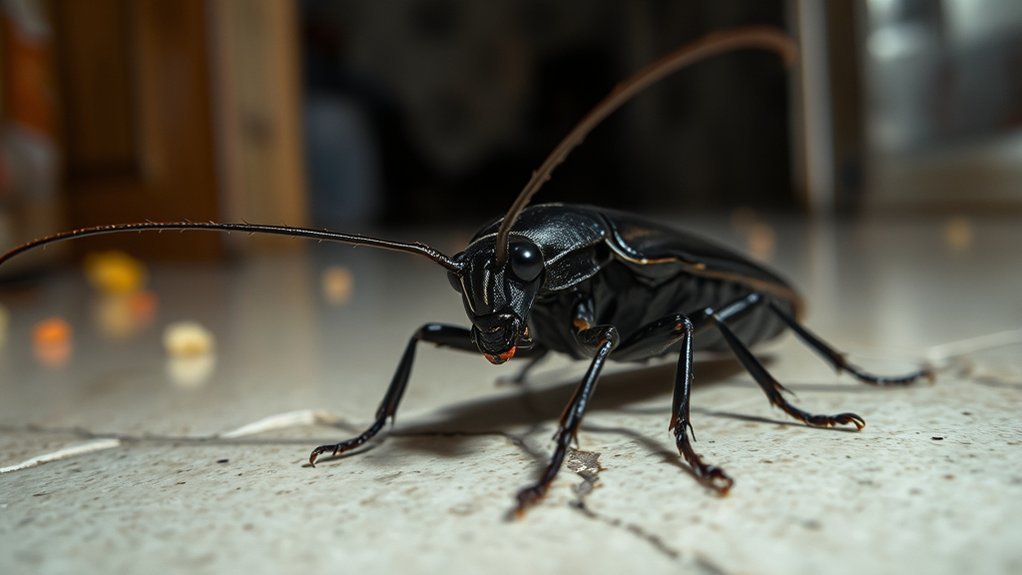
Oriental cockroaches don’t invade homes by accident—they’re driven inside by a combination of environmental pressures and basic survival needs. Weather extremes, overcrowding in outdoor harborages, and seasonal temperature shifts outside their preferred 68–84°F range all push them toward your home.
Once they’re moving, moisture becomes their primary target. They can’t survive more than a couple of weeks without water, so they’re drawn to damp basements, leaky pipes, floor drains, and any area where moisture accumulates around sinks or appliances.
Food availability keeps them there. They’ll scavenge garbage, pet food, decaying organic matter, and virtually any accessible food crumbs. Unsealed food storage makes your home especially attractive.
They enter through crawl space openings, pipe gaps in walls, door thresholds, utility lines, and open drains. Once inside, cool, dark spaces like basements and wall voids give them the sheltered conditions they need to establish themselves.
How the Black Cockroach Life Cycle Works
Understanding the black cockroach’s life cycle explains why infestations grow so quickly and why eliminating them takes more than killing the adults you see.
Black cockroaches develop through three distinct stages:
- Egg Stage – Females deposit an ootheca containing up to 50 eggs in hidden locations. Eggs hatch within 20–60 days depending on temperature and humidity.
- Nymph Stage – Hatchlings molt through multiple instars over several months, gradually growing from 3mm into near-adult size. Warmer, humid conditions speed this process considerably.
- Adult Stage – After the final molt, adults develop wings and reproductive capability, living up to 15 months while producing new oothecae repeatedly.
Because all three stages coexist simultaneously, you’re never dealing with just one generation. Treating only visible adults leaves eggs and nymphs behind, allowing the population to rebuild quickly.
Signs You Have a Black Cockroach Infestation
Knowing the life cycle helps, but catching an infestation early depends on recognizing what black cockroaches actually leave behind. Start by checking kitchen cabinets, pantry shelves, and baseboards for small black specks resembling coffee grounds. Fresh droppings reappearing after cleaning confirm ongoing activity. You’ll also notice dark brown, bean-shaped egg cases tucked into cracks or moist areas, each capable of producing up to 40 nymphs.
A musty, oily odor in kitchens, bathrooms, or basements signals roach secretions and worsens with heavier infestations. Spotting a live roach during daylight hours is serious — it indicates severe overcrowding. Beyond sightings, look for translucent shed skins in hidden areas, brown smear marks along walls, and damage to paper, cardboard, or fabric. You might even hear rustling at night. Health risks, including E. coli and asthma triggers, make early detection critical.
How to Get Rid of Black Cockroaches for Good
Getting rid of black cockroaches for good requires hitting them on multiple fronts — sealing entry points, eliminating food and water sources, and applying targeted treatments both inside and out.
Start by blocking their access and removing what attracts them:
Cut off their entry points and eliminate every resource that keeps cockroaches coming back for more.
- Seal cracks, gaps around doors, windows, and pipe openings, and trim overhanging trees near your attic to cut off entry routes.
- Fix leaking pipes, dry stagnant water, and dispose of garbage immediately — cockroaches can’t thrive without moisture and food.
- Apply a 3–6 foot residual spray like Avesta CS around your home’s perimeter, and place gel baits like Apex Cockroach Gel Bait indoors along baseboards and cabinet cracks.
For persistent infestations, combine baits with residual insecticides to reach nests in sewers or crawl spaces. Retreat every three months during peak season, and consider hiring a professional for a thorough inspection and treatment plan.
How to Keep Them From Coming Back
Once you’ve driven out black cockroaches, keeping them gone comes down to denying them the three things they need most: moisture, food, and entry points. Fix leaky pipes, run dehumidifiers in damp areas, and dry any standing water. Seal cracks in walls, baseboards, and foundations, then install door sweeps and weather stripping to block reentry. Apply barrier sprays along baseboards and entryways for protection lasting up to 12 months.
In the kitchen, store food in airtight containers, wipe up spills immediately, and remove pet food after feeding. Outdoors, clear debris, wet mulch, and firewood from your foundation, and apply perimeter insect killers regularly.
For long-term control, use Insect Growth Regulators (IGRs) to disrupt reproduction and deploy insecticide baits every four to six feet. Vacuum consistently with a HEPA-filter vacuum and monitor for early signs of activity before populations have a chance to rebound.
Frequently Asked Questions
Can Black Cockroaches Survive Underwater or Flooding in Their Habitat?
Yes, black cockroaches can survive underwater for up to 30 minutes and withstand toilet flushing. They’ll hold their breath, float, and play dead, making them incredibly resilient to flooding in their habitat.
Do Black Cockroaches Bite Humans While They Sleep?
Yes, black cockroaches can bite you while you sleep, though it’s rare. They’ll target your exposed skin, like your face and hands, especially if you’ve got food residues on your skin or there’s a heavy infestation.
Are Black Cockroaches Dangerous to Pets if Ingested?
Yes, black cockroaches can be dangerous to your pets if ingested. They carry bacteria, parasites, and possible pesticide traces that’ll cause vomiting, diarrhea, or lethargy. Monitor your pet closely and contact your vet if symptoms persist.
How Long Can a Black Cockroach Live Without Its Head?
You’d be surprised—a black cockroach can survive without its head for up to one week. Dehydration’s the ultimate killer since it can’t drink water, while its decentralized nervous system keeps its body moving throughout.
Can Black Cockroaches Climb Smooth Vertical Surfaces Like Glass?
Yes, black cockroaches can climb smooth vertical surfaces like glass! They’ve got special adhesive pads on their feet that let them scale glass walls easily, so you’ll need secure lids without gaps on your enclosure.
Conclusion
Dealing with black cockroaches isn’t something you want to put off. Once you’ve identified the species, located their hiding spots, and understood what’s drawing them inside, you’re already ahead of the problem. Use the control methods that fit your situation, stay consistent with prevention, and don’t let small signs turn into full infestations. You’ve got the knowledge now—put it to work before these pests make themselves at home.
