
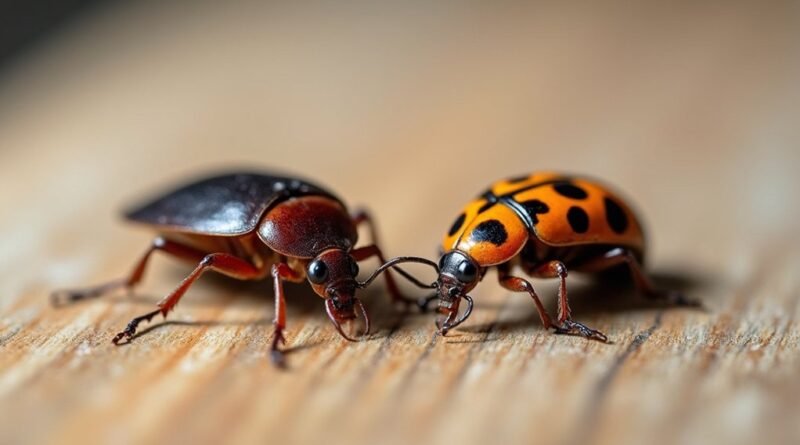
Bugs That Look Like German Cockroaches: How to Tell Them Apart
German cockroaches are light brown or tan, about ½ to ⅝ of an inch long, with two dark stripes behind their heads. Several bugs can fool you, including ground beetles, June bugs, water bugs, and crickets. Each one has distinct differences in size, body shape, antennae length, and behavior that make them easier to tell apart once you know what to look for. The details ahead will help you identify exactly what you’re dealing with.
Key Takeaways
- Ground beetles have rounder, segmented bodies and shorter antennae, while German cockroaches are flat, oval, and have long, constantly twitching antennae.
- June bugs have stockier bodies, short antennae, and wings tucked under a hard shell, unlike the flat, long-antennae cockroach.
- Water bugs are significantly larger (2–4 inches), have thick pincer-like front legs, and nearly invisible antennae compared to German cockroaches.
- Crickets have slim, cylindrical bodies, large hind legs, and jump, whereas cockroaches are flat, have uniform legs, and scurry in straight lines.
- German cockroaches are year-round indoor pests leaving pepper-like droppings, while look-alike insects typically enter homes accidentally or appear seasonally.
What Does a German Cockroach Actually Look Like?
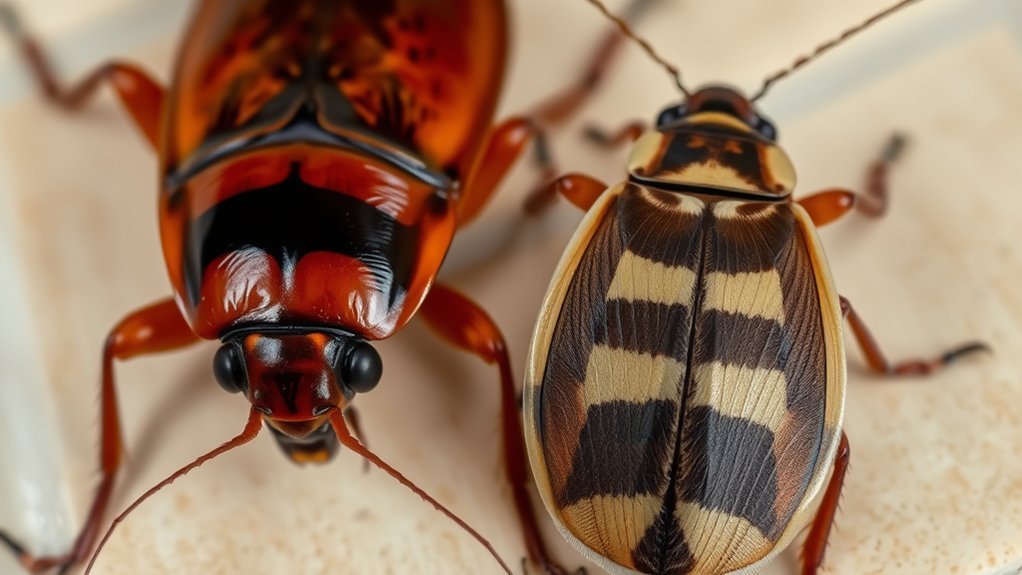
German cockroaches are small, flat insects measuring between ½ and ⅝ of an inch long — roughly the size of a penny. You’ll recognize them by their light brown or tan bodies marked with two dark parallel stripes running along the pronotum, just behind the head.
Adults have an elongated, oval shape, though males and females differ slightly. Males carry a narrow, cigar-shaped abdomen, while females have a broader, more rounded rear end and appear darker overall. Both sexes have wings that cover their abdomens, but don’t expect them to fly — they strongly prefer running.
Nymphs look similar but smaller, wingless, and darker, ranging from dark brown to nearly black. All life stages share long antennae and six legs built for speed. If you disturb one, it’ll release a distinct foul odor — one of the most reliable ways to confirm what you’re dealing with. They are also nocturnal by nature, so spotting one during the day often signals a heavy infestation nearby.
Ground Beetles vs. German Cockroaches
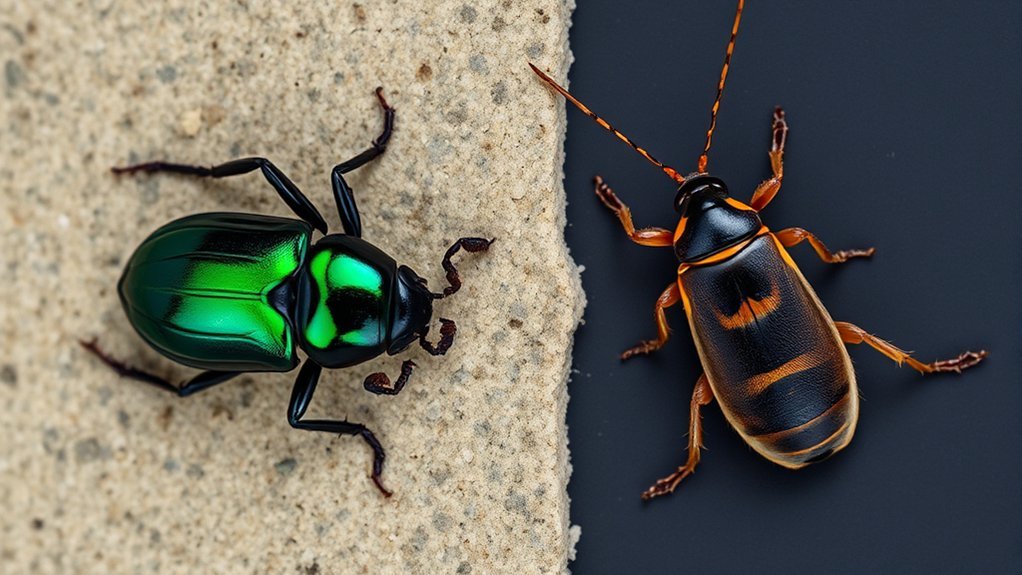
Ground beetles are one of the most common insects mistaken for German cockroaches, and it’s easy to see why — both are small, fast-moving, and brownish-black in color. However, key differences help you tell them apart quickly.
Start with body shape. Ground beetles have rounder, harder bodies with visible segmentation, while cockroaches are flat and oval, allowing them to squeeze into tight cracks. Cockroaches also show two dark stripes on their head shield — beetles display long stripe-like lines running down their bodies instead.
Check the antennae next. Cockroach antennae extend the full body length and twitch constantly, whereas beetle antennae are shorter and less mobile.
Behavior reveals the biggest clue. Ground beetles wander indoors from outside, appearing near porch lights, and they don’t breed indoors. If you’re spotting multiple insects in your kitchen at night with pepper-like droppings nearby, you’re dealing with cockroaches, not beetles. German cockroaches are indoor pests, while ground beetles typically find their way inside by accident from the surrounding environment.
June Bugs vs. German Cockroaches
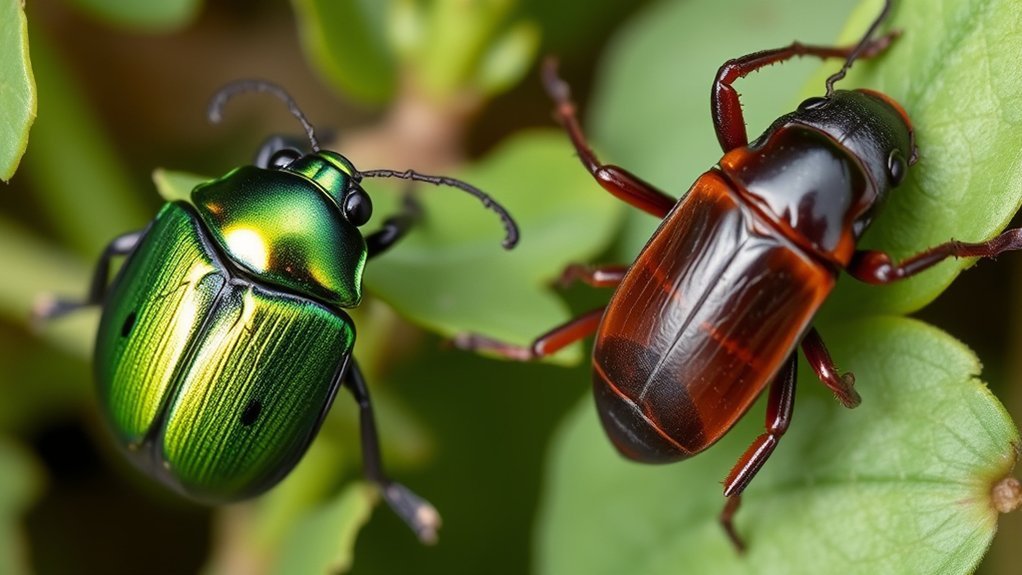
June bugs are another insect commonly mistaken for German cockroaches, especially since both share similar reddish-brown coloring and overlap in size. However, several key differences make them easier to tell apart once you know what to look for.
June bugs have harder, rounder, stockier bodies, while German cockroaches appear narrower and flatter. June bugs also have short antennae, whereas German cockroaches sport long ones. You’ll notice a German cockroach’s wings sit on top, while a June bug’s wings tuck neatly beneath a hard outer shell. German cockroaches also display a distinctive yellow figure-eight marking on their heads, which June bugs lack.
Behavior separates them further. June bugs only appear seasonally outdoors in late spring and early summer, buzzing around lights at night. They don’t infest homes. German cockroaches live indoors year-round, hiding in kitchens and bathrooms. If you’re seeing bugs inside, it’s likely not a June bug. If you suspect a German cockroach infestation, contact the site owner or a pest control professional to help identify and resolve the problem.
Water Bugs vs. German Cockroaches
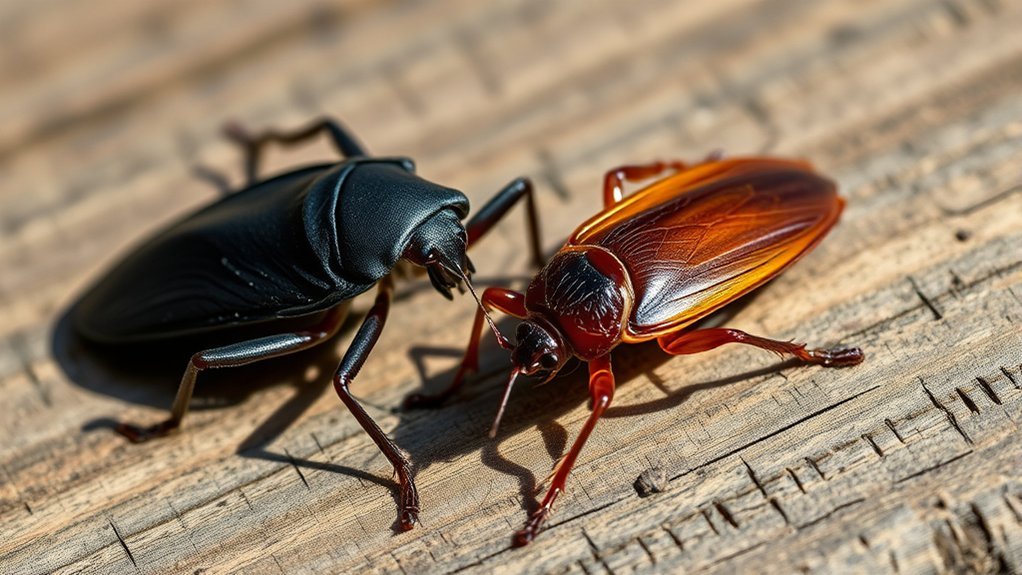
Water bugs often get confused with German cockroaches, but size alone gives them away. Water bugs measure 2–4 inches long, while German cockroaches only reach ½–1 inch. That’s a significant difference you’ll notice immediately.
Look at the antennae next. Water bugs have short, nearly invisible stalks, whereas German cockroaches sport long, whip-like antennae extending past their heads. Color also helps — water bugs display a matte grayish-brown, while cockroaches show tan or light brown with two distinct back stripes.
Their legs tell the story too. Water bugs have thick, pincer-like front legs built for catching prey, while cockroaches have six thin, spiny legs designed for quick escaping.
Finally, consider where you spotted the bug. If it’s near a pool or pond, it’s likely a water bug. If it’s fleeing across your kitchen floor, you’ve got a cockroach. Unlike water bugs, German cockroaches carry allergens and harmful bacteria that can trigger asthma and cause serious illness in your household.
Crickets and Earwigs vs. German Cockroaches
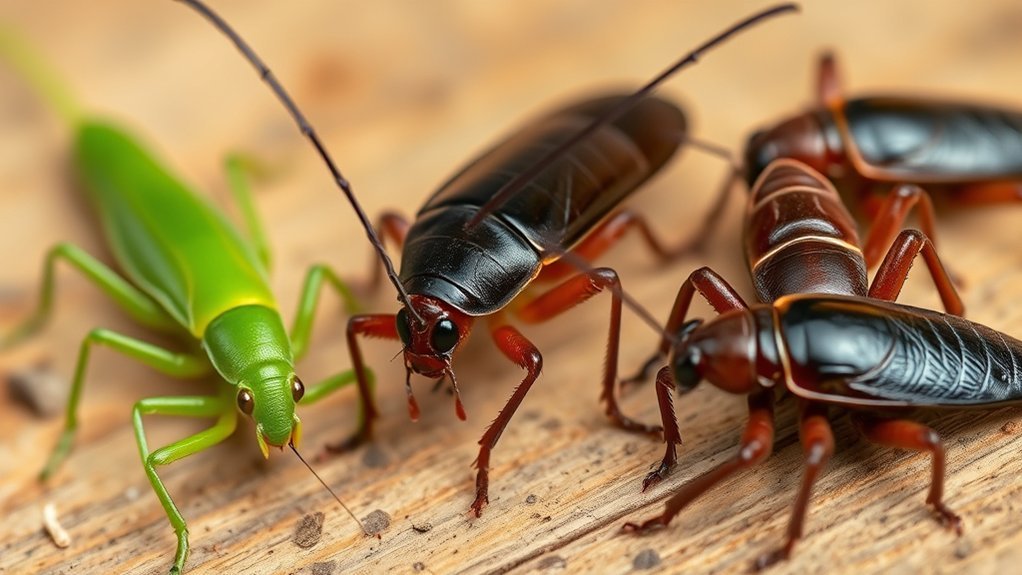
Crickets and earwigs share enough surface-level traits with German cockroaches to cause real confusion, but a few key differences make identification straightforward.
When comparing crickets to German cockroaches, watch for these distinctions:
- Body shape: Crickets have slim, cylindrical bodies, while German cockroaches are flat and oval-shaped
- Legs: Crickets have two large hind legs that rise above their bodies; cockroach legs are nearly uniform in length
- Movement: If it jumps, it’s a cricket — cockroaches can’t jump and instead scurry in quick, straight lines
- Sound: Male crickets chirp loudly; German cockroaches stay nearly silent
Beyond appearance, behavior tells you a lot. Crickets are outdoor wanderers that rarely infest homes in large numbers, while German cockroaches invade kitchens and bathrooms, reproducing rapidly into infestations of hundreds or thousands. Cockroaches also carry diseases and trigger allergies, making correct identification critical for your household’s health. Crickets can also appear in a range of colors including red, green, brown, and black, whereas German cockroaches are typically brown or tan, which can help narrow down which insect you’re dealing with.
Brown-Banded Cockroaches vs. German Cockroaches
Among the trickiest look-alikes for German cockroaches is the brown-banded cockroach — a species so similar in size and color that even experienced pest controllers occasionally mix them up. Both average about ½ inch long, but you can tell them apart by their markings. German cockroaches have two dark parallel stripes behind the head, while brown-banded cockroaches display light tan bands across their wings and abdomen.
Their habits also differ considerably. German cockroaches stick to warm, humid areas like kitchens and bathrooms, traveling on bags and appliances. Brown-banded cockroaches prefer warmer, drier spots — think attics, furniture, television sets, and picture frames.
Reproduction sets them apart too. German cockroaches carry their egg cases until hatching and develop from egg to adult in just 50-68 days. Brown-banded females glue their egg cases to surfaces early, with a life cycle stretching up to 276 days.
German Cockroach Confirmed: Your Next Steps
Once you’ve confirmed a German cockroach infestation, act fast by vacuuming up roaches, egg capsules, and debris with a shop vac, then move items away from baseboards and seal food in airtight containers. Skip the bug bombs and aerosols—they scatter roaches and make professional treatment less effective. Contact a licensed pest control professional immediately, since full elimination typically takes three weeks to two months with expert intervention.
Immediate Containment Steps
Confirming a German cockroach infestation means you need to act fast across 5 fronts: isolating the infested area, enhancing sanitation, sealing entry points, deploying bait traps, and applying growth regulators.
Start by closing off the infested room immediately. Then:
- Isolate — Shut all doors and windows, place towels at door bottoms, and remove all food from the zone.
- Sanitize — Wipe surfaces, fix leaky pipes, remove trash, vacuum thoroughly, and store all food in sealed containers.
- Seal — Caulk baseboards, pipes, outlets, and cabinet edges; apply weather stripping to close gaps.
- Bait and regulate — Place gel baits every 12-18 inches in high-activity areas and deploy insect growth regulators in cabinets and drawers to sterilize nymphs and break the reproduction cycle.
Professional Extermination Options
When your DIY containment efforts aren’t enough to stop a German cockroach infestation, it’s time to bring in professional-grade solutions. Orkin offers local inspections and customized removal estimates—call 877-819-5061 for a service quote from your nearest branch.
If you prefer handling it yourself, the ePestSupply German Cockroach Control Kit includes everything you need for a thorough DIY treatment. Professionals typically start by vacuuming roaches and egg capsules with a Shop-Vac before applying any chemical treatments, a step Arrow Pest Service strongly recommends.
From there, exterminators combine baits like Maxforce Impact or Advion with IGRs such as Novacide or Alpine WSG to eliminate adults, nymphs, and disrupt the reproduction cycle, delivering both immediate knockdown and long-term population control.
Frequently Asked Questions
Can German Cockroaches Survive Outdoors in Cold Weather Conditions?
German cockroaches can’t survive outdoors in cold weather. They’ll seek indoor refuge when temperatures drop below 50°F, and they can’t overwinter outside in freezing conditions without shelter or a consistent food source.
How Quickly Do German Cockroach Populations Grow Inside Homes?
You’re dealing with rapid growth—a single pair can reach 2.6 million within 100 days. Females produce up to 35,000 offspring yearly, with populations exceeding 30,000 in just six months under favorable indoor conditions.
Do German Cockroaches Carry Diseases That Affect Human Health?
Yes, German cockroaches can seriously harm your health. They’ll spread Salmonella, E. coli, and other bacteria by contaminating your food and surfaces, causing food poisoning, dysentery, and gastroenteritis while also triggering allergies and asthma attacks.
What Smells or Scents Naturally Repel German Cockroaches Effectively?
You can repel German cockroaches using peppermint oil, oregano oil, or eucalyptus oil. Citrus hystrix oil’s 100% repellency makes it highly effective. You’ll also find bay leaves, cinnamon, and catnip work naturally against them.
How Long Can German Cockroaches Live Without Food or Water?
You’re dealing with resilient pests! German cockroaches can survive up to 30 days without food but they’ll die within 7-12 days without water, making dehydration their biggest vulnerability.
Conclusion
Now that you’ve learned how to tell German cockroaches apart from their lookalikes, you’re better equipped to handle whatever’s crawling around your home. If you’ve confirmed you’re dealing with German cockroaches, don’t wait—they reproduce fast and infestations grow quickly. Contact a pest control professional immediately, seal up entry points, and eliminate food and moisture sources. The sooner you act, the better your chances of getting rid of them for good.
