
Can a Cockroach Bite Kill You? What You Need to Know
A cockroach bite won’t kill you, but it’s not something you should brush off. The bite itself isn’t venomous, yet it can trigger serious complications like bacterial infections, allergic reactions, and even anaphylaxis in sensitive individuals. Cockroaches carry over 33 types of bacteria, making secondary infections a real concern. If you scratch the bite, you risk introducing pathogens like MRSA into the wound. There’s plenty more you need to know to protect yourself.
Key Takeaways
- Cockroach bites are not venomous and rarely cause fatal outcomes, but secondary complications can develop if left untreated.
- Severe allergic reactions from bites can trigger anaphylaxis in sensitive individuals, which is potentially life-threatening without immediate treatment.
- Cockroaches carry over 33 types of bacteria, increasing serious infection risks when bites are scratched or left untreated.
- Vulnerable groups, including immunocompromised individuals, infants, and the elderly, face heightened risks from cockroach-related bacteria and allergens.
- Prompt wound cleaning, disinfection, and monitoring for infection signs significantly reduce the risk of dangerous complications from bites.
Can a Cockroach Bite Actually Kill You?
Cockroach bites aren’t venomous, and they don’t directly transmit diseases, so a bite alone won’t kill you. In most cases, bites pose no serious threat to your health, and fatal outcomes are extremely rare.
However, secondary complications can make things dangerous. If you scratch the bite, you introduce bacteria, which can lead to infections like gastroenteritis, salmonellosis, or dysentery. Cockroaches carry over 33 types of bacteria, so an infected wound isn’t something you should ignore.
The bigger risk comes from allergic reactions. If you’re sensitive to cockroach allergens, a bite could trigger anaphylaxis, causing low blood pressure, shortness of breath, and shock. Repeated exposure only worsens these responses. Cockroach bites exert a force 50 times their body weight, making them capable of breaking skin and increasing the risk of these complications.
When Is a Cockroach Bite Most Likely to Happen?
Now that you know a cockroach bite is unlikely to kill you, understanding when bites are most likely to happen can help you take the right precautions. Cockroaches are nocturnal, so they’re most active at night while you’re sleeping. Your stationary body and exposed skin make you an easy target during these hours.
Bites become far more probable during severe infestations. When roach populations grow overcrowded, they exhaust normal food sources like crumbs and grease, forcing them to forage on humans instead. If you’re spotting cockroaches during daylight, that’s a strong sign your infestation has reached a dangerous level.
Your risk also increases if you have food residues or moisture on your skin. Sweat, grease, or even food particles left on your hands or face can attract cockroaches overnight. Sleeping in an infested area with exposed skin puts you at the highest risk. Cockroaches primarily use their chewing mouthparts on decaying matter and crumbs, making human skin an uncommon but possible target when other food sources run out.
What Does a Cockroach Bite Look Like and Feel Like?
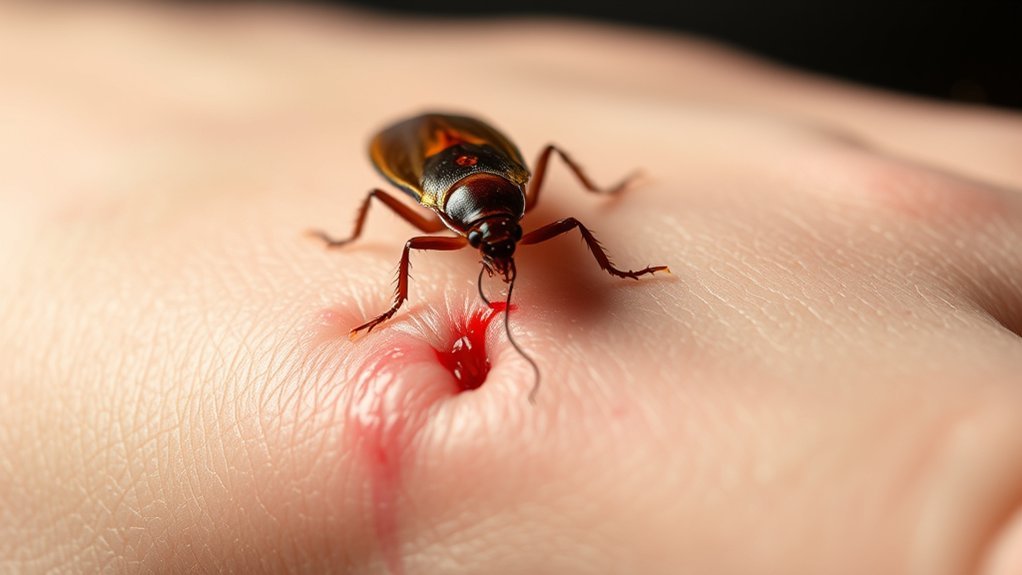
If you’ve been bitten by a cockroach, you’ll likely notice a bright red, raised bump measuring between 1 and 4 millimeters wide — slightly larger and more swollen than a typical bed bug or mosquito bite. You’ll most commonly find these bites on exposed areas like your hands, fingers, face, and feet, often appearing overnight near sleeping areas. At the moment of the bite, you may feel a short, sharp pinching pain, though some people don’t notice it at all, with mild itching and irritation typically setting in afterward. Unlike bed bugs, cockroaches typically bite only once, making the single, isolated appearance of the bump a key clue in identifying the source.
Bite Appearance and Size
When a cockroach bites you, it leaves a small, bright red, raised bump on your skin—roughly 1 to 4 millimeters in diameter, making it slightly larger than a bed bug bite but comparable in size to a mosquito bite. The welt may appear slightly swollen, and without proper care, it can develop a scab or rash.
Unlike bed bug bites, which cluster in lines or groups, cockroach bites appear individually, most often near your hands, fingers, or feet. They don’t leave a distinct puncture mark like spider bites do. If you notice color changes, increased swelling, or enlargement around the bite, it may signal an infection that requires medical attention. Acting quickly helps prevent complications from worsening.
Some bites may cause a brief pinching sensation upon contact, though others may go entirely unnoticed at the moment of the bite.
Sensations After Being Bitten
Most people don’t feel a cockroach bite as it happens—cockroaches typically strike while you’re asleep, when your sensory awareness is at its lowest. If you’re awake during an attack, you’ll notice only a mild, brief “ouchy” sensation that fades quickly, even without treatment.
After the bite, though, itching becomes your biggest complaint. It can persist for several days, and scratching only makes things worse by risking secondary bacterial infections. If you’re sensitive to cockroach saliva proteins, expect increased itching and swelling. Antihistamines help manage the itch effectively.
Swelling and redness develop around the bite area but typically resolve within a few days with proper care. Ice packs or cold compresses reduce inflammation fast, and the overall discomfort rarely escalates into anything serious. Bite marks are commonly found on the hands, face, and mouth, as these areas are most exposed and accessible while you sleep. Bite mark location can be a useful clue when trying to distinguish cockroach bites from those of other insects.
What Diseases Can You Get From a Cockroach Bite or Exposure?
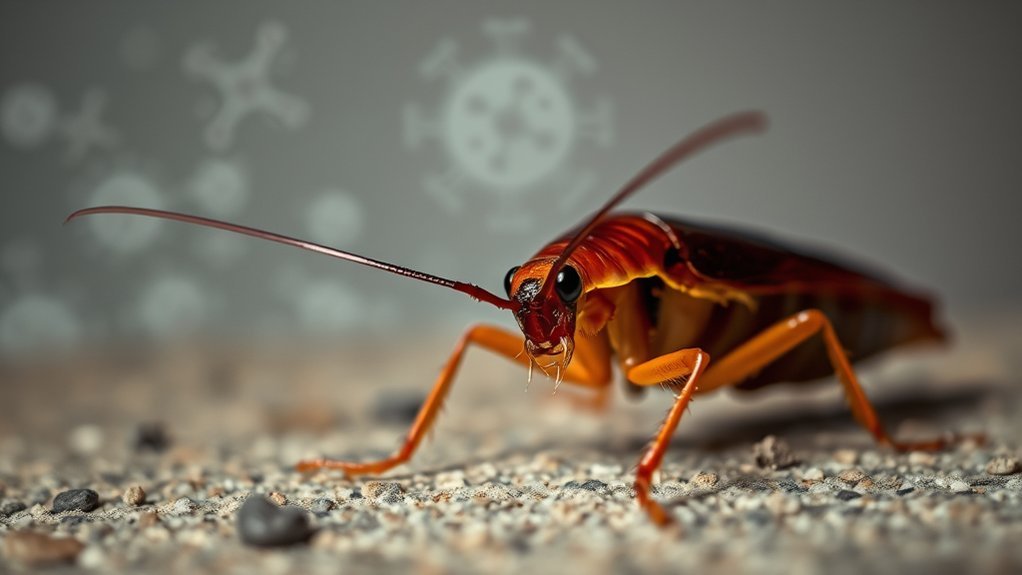
When a cockroach bites you or crawls across your food and surfaces, it can expose you to over 33 types of bacteria, six parasitic worms, and seven known pathogens. You’re also at risk of contracting serious illnesses like salmonellosis, typhoid fever, cholera, and even MRSA if the roach carries multidrug-resistant bacteria. If you’re already sensitive to allergens, roach saliva, feces, and shed body parts can trigger severe asthmatic responses or even life-threatening anaphylaxis.
Bacteria and Pathogens Spread
More seriously, cockroaches vector *Salmonella Typhi*, causing life-threatening typhoid fever, and carry *Shigella dysenteriae*, triggering severe dysentery epidemics. The WHO directly links cockroaches to cholera and diarrhea transmission.
Allergens Triggering Severe Reactions
Cockroach allergens don’t just come from bites — proteins in their saliva, feces, shed skins, secretions, and egg casings all trigger reactions, and these particles become airborne when disturbed, reaching your lungs and nasal passages.
These allergens affect 17–41% of Americans, with severe consequences for vulnerable groups:
- Children: One in five U.S. children has severe cockroach allergen sensitivity, and exposed asthmatic children face higher hospitalization rates.
- Inner-city residents: Up to 80% of asthmatic inner-city children are sensitized, making cockroach allergens their number one asthma trigger.
- Cross-reactive individuals: If you’re allergic to shrimp, dust mites, or crabs, cockroach allergens may trigger reactions too.
Even dead cockroaches remain allergenic, so exposure doesn’t require a live insect nearby.
What Serious Health Risks Can a Cockroach Bite Trigger?
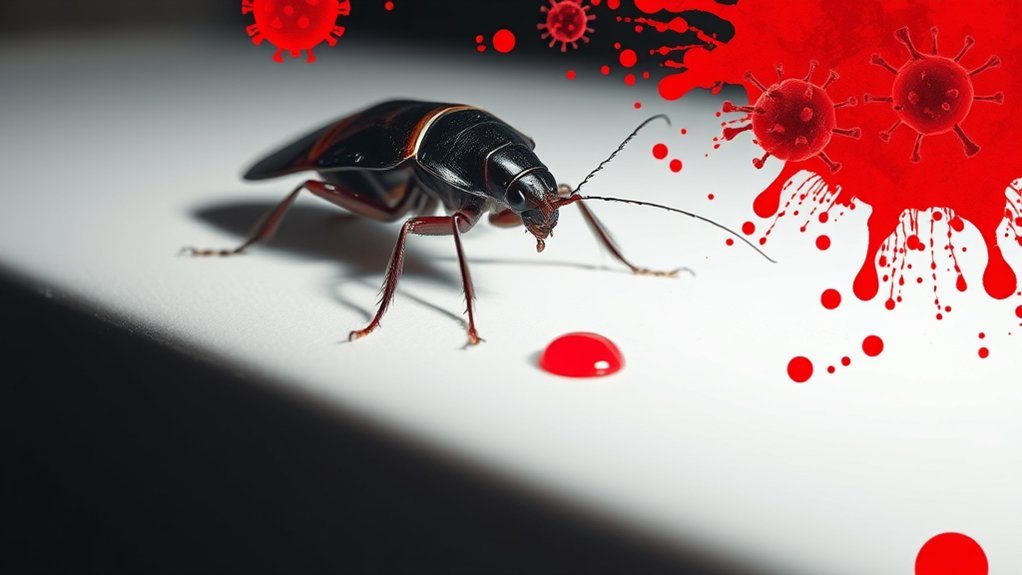
Although cockroach bites are rare, they can trigger serious health risks that range from mild skin irritation to life-threatening reactions. When a roach bites you, you’ll likely experience immediate redness, swelling, and itching that persists for several days. Scratching worsens your condition by introducing bacteria like Staphylococcus, Streptococcus, or even MRSA, leading to painful infections with pus and increased inflammation.
If you’re allergic, the stakes rise considerably. You could face severe swelling, respiratory distress, or full anaphylaxis with dangerous drops in blood pressure. Cockroaches also carry pathogens that contaminate your food and surfaces, exposing you to Salmonella, E. coli, dysentery, and gastroenteritis.
You’re especially vulnerable if you have a weakened immune system, asthma, or belong to high-risk groups like infants or the elderly. In these cases, exposure to cockroach saliva, droppings, and shed skin can escalate minor reactions into serious medical emergencies.
How to Treat a Cockroach Bite and Stop It Happening Again
Knowing the risks a cockroach bite carries makes treating one quickly all the more important. Start by pinching the wound to force out bacteria, then wash it thoroughly with warm soap and water. Follow up with rubbing alcohol on a cotton swab, then apply an antibiotic ointment like Neosporin or Bacitracin.
To manage pain, swelling, and itching, use these targeted treatments:
- Cold compress – Wrap an ice pack in cloth and apply it for several minutes to reduce swelling and local discomfort.
- Calamine lotion or hydrocortisone cream – Apply either to relieve itching and irritation directly at the bite site.
- Oral antihistamines – Take Benadryl or Zyrtec to block histamine and ease allergic symptoms.
Resist scratching, and monitor the wound for redness, pus, or fever. If symptoms worsen, see a doctor. To prevent future bites, address cockroach infestations professionally and keep a stocked first aid kit ready.
Frequently Asked Questions
How Long Does a Cockroach Bite Take to Heal Completely?
Your cockroach bite’ll typically heal completely within 3-7 days with proper care. If you scratch it and cause infection, expect healing to take 1-2 weeks or longer if you experience allergic reactions.
Can Cockroaches Bite Pets Like Cats or Dogs?
Yes, cockroaches can bite your cats or dogs, especially when they feel threatened. They’ll nibble at wounds or food bowls and, in extreme cases, feed on your pet’s outer skin when they’re hungry.
Are Children More Vulnerable to Cockroach Bites Than Adults?
Yes, your children are more vulnerable to cockroach bites than adults. Their thinner skin, weaker immune systems, and developing lungs make them susceptible to infections, allergic reactions, and diseases from roach exposure.
Can Cockroach Bites Occur During the Daytime?
Yes, cockroach bites can occur during the daytime, but they’re rare. If you’re seeing roaches in daylight, it signals a severe infestation, increasing your bite risk and requiring immediate professional intervention.
Do Cockroaches Intentionally Target Sleeping People at Night?
No, cockroaches don’t intentionally target you while you’re sleeping. They bite opportunistically when they’re foraging for food and you happen to be nearby. They’d actually prefer to avoid you entirely when possible.
Conclusion
While a cockroach bite won’t kill you directly, you shouldn’t ignore it. It can trigger serious allergic reactions, spread dangerous diseases, and worsen conditions like asthma. You’re most at risk if you’re sleeping or have food residue on your skin. Clean any bite immediately, monitor your symptoms, and seek medical help if things escalate. Most importantly, tackle any cockroach infestation in your home before it becomes a bigger problem.
