
Cockroach Egg Sack: What Oothecae Look Like and Where to Find Them
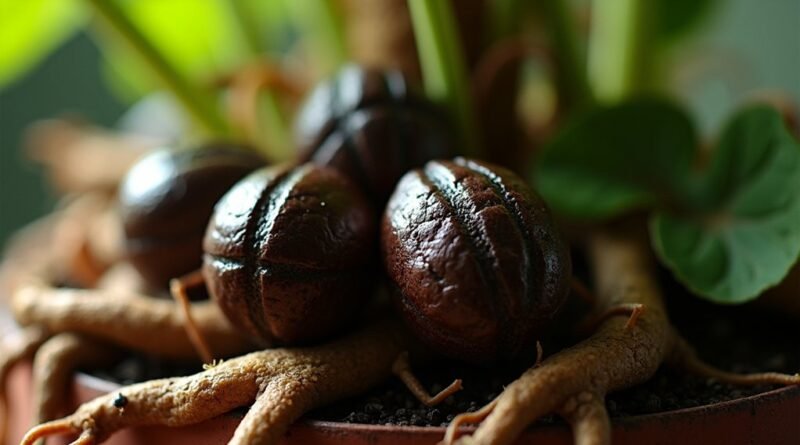
Cockroach egg sacks, called oothecae, are brown, ridged capsules that look like tiny dried kidney beans or miniature purses. They range from 5–12 mm depending on the species and have a visible seam running along the top. You’ll typically find them tucked into dark, protected spots near food sources — think kitchen cabinets, bathroom corners, and storage areas. Each one can contain up to 40 eggs, so there’s a lot more you’ll want to know.
Key Takeaways
- Oothecae are brown, capsule-shaped casings with a ridged texture, resembling tiny purses or dried kidney beans, ranging from 5–12 mm in size.
- Color varies from light tan to dark reddish-brown, with a smooth surface and a visible seam running along the top.
- Species identification is possible by size: German cockroach cases measure 6–9 mm, while brown-banded cases are smaller at 5 mm.
- Oothecae are typically hidden in dark, protected crevices near food sources, commonly found in kitchens, bathrooms, and storage areas.
- Active oothecae appear plump and firm, while empty ones look shriveled; finding one case suggests others are likely nearby.
What Does a Cockroach Egg Sack Actually Look Like?
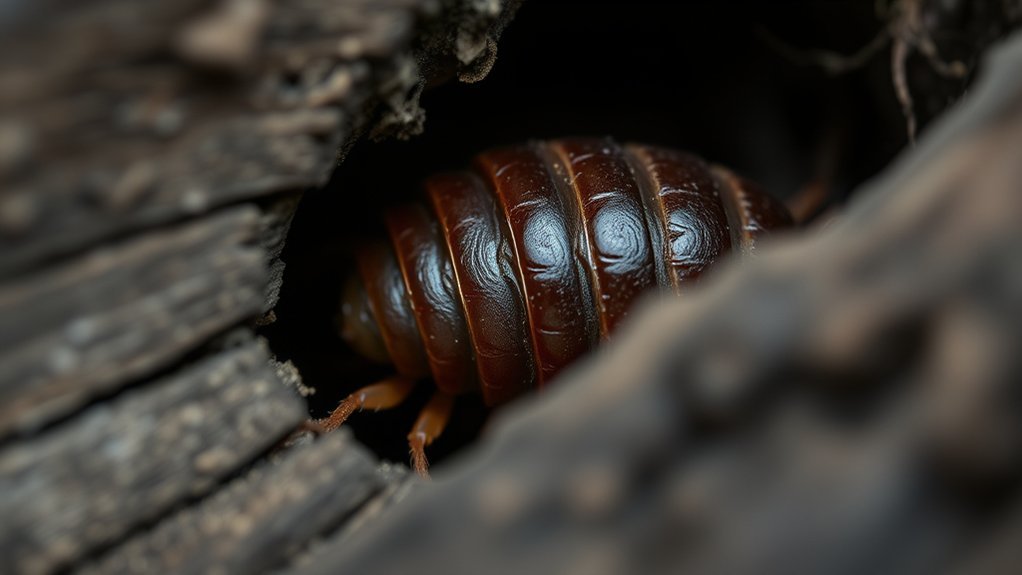
Cockroach egg sacks, formally called oothecae, are brown, capsule-shaped casings that hold multiple eggs or developing nymphs. You’ll notice they’re long and thin with striations running down their length, giving them a ridged appearance. A smooth texture with a visible seam along the top is common, though some species show more pronounced ridges.
The protein substance forming the casing hardens into a tough, protective shell. Color ranges from light tan to dark reddish-brown depending on the species. You might compare the shape to a tiny purse, dried kidney bean, or coffee bean.
When full, an ootheca looks like a ripe pea pod — bulbous, firm, and stuffed. Once the nymphs hatch, they split open the case, leaving it hollow. The empty casing remains in place, secured by the female’s saliva, giving you a clear sign that eggs have already hatched nearby. German cockroach egg cases are distinctly long, thin, and amber brown, making them easier to identify compared to other species.
How Big Is a Cockroach Egg Sack?
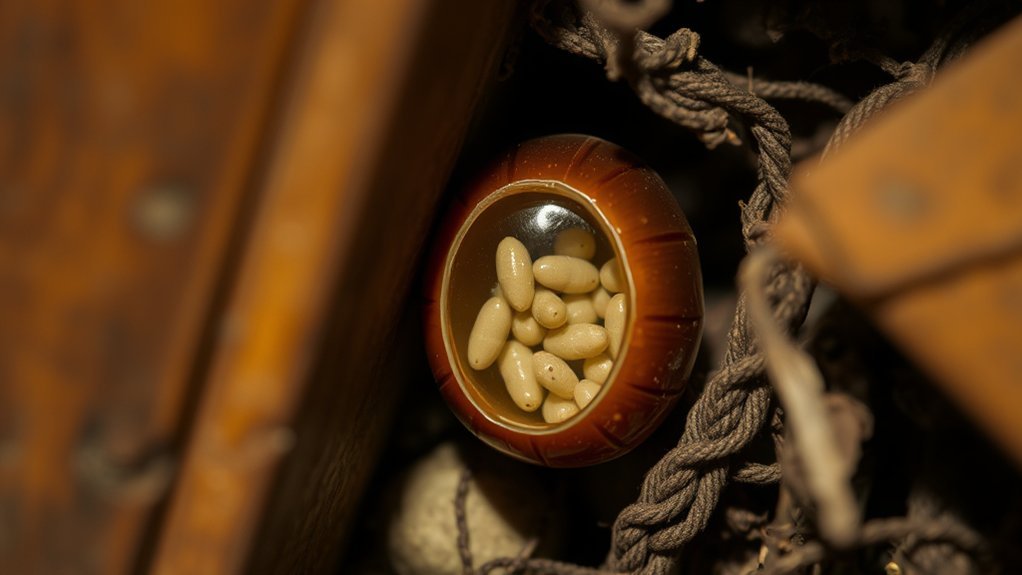
While oothecae look small to the naked eye, their size varies noticeably by species. Most fall within a 5–12 mm range, roughly equivalent to ¼ inch, but each species has a distinct measurement you can use for identification.
German cockroach cases measure 6–9 mm, while American cockroach cases average around 8 mm — making them nearly identical in size. Oriental cockroach oothecae are slightly larger, reaching 8–10 mm, and you’ll notice their dark coloration intensifies as they age. Brown-banded cockroach cases are the smallest of the common species, measuring approximately 5 mm.
These size differences matter when you’re trying to identify which species has infested your home. A case closer to 5 mm points to a brown-banded cockroach, while anything approaching 10 mm likely belongs to an Oriental cockroach. Measuring what you find gives you a practical starting point for accurate identification. The number of eggs contained within each case also varies by species, giving you an additional clue about the scale of a potential infestation.
Which Cockroach Species Left That Egg Sack?
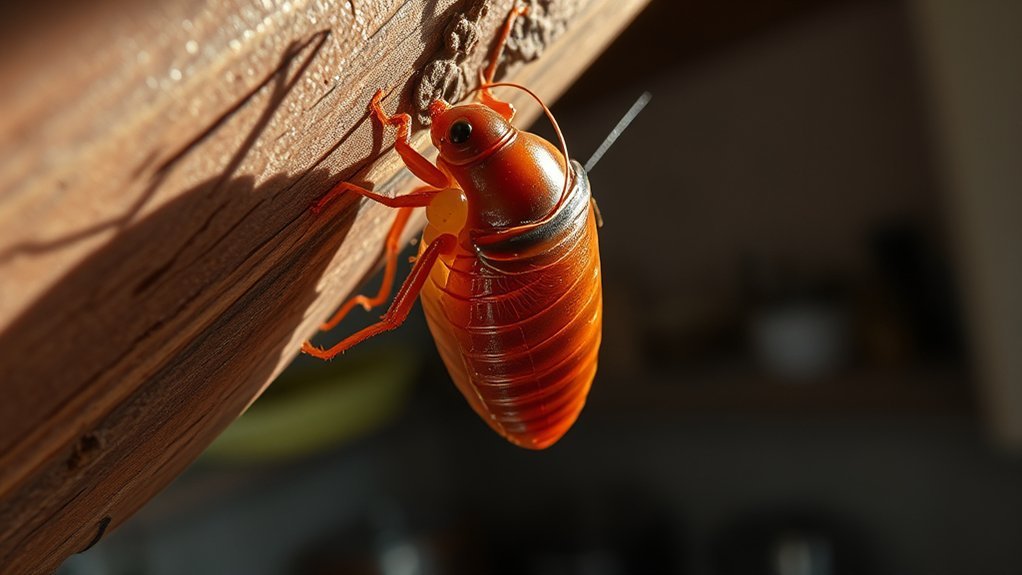
Identifying which species left an egg sack behind comes down to a few key traits: size, color, texture, and where you found it.
American cockroach oothecae are dark brown and average 8 mm long. The female glues them in hidden spots using her saliva, so check sheltered areas. Oriental cockroach oothecae look similar in color but measure 8 to 10 mm and have a smooth, slightly inflated capsule shape. Fresh ones appear reddish-brown and darken to near black over time.
American cockroach oothecae are dark brown and 8 mm long, while Oriental types grow slightly larger and darken over time.
German cockroach oothecae share a similar shape but feature a ridged texture, making them easy to distinguish from the smooth Oriental type. A single German cockroach ootheca can contain up to 50 eggs, making early detection especially important.
Brown-banded oothecae are smaller at around 5 mm and appear light reddish-brown.
When you’re unsure, combine the egg sack’s traits with its discovery location for the most reliable identification.
How Many Eggs Are Inside One?
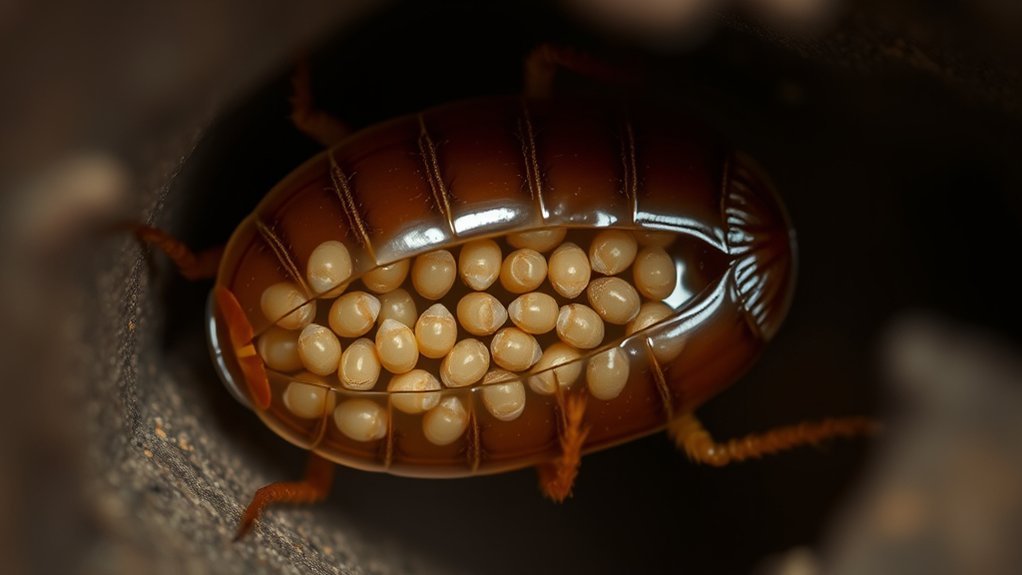
When you crack open the topic of cockroach egg counts, the numbers vary considerably by species — German cockroaches pack 30-40 eggs into a single ootheca, while American, Oriental, and most other common species average around 16. Brown-banded cockroaches carry 14-17 eggs per case, though you’ll typically only see about 12 hatch successfully. Over a lifetime, a single female can deposit 50 or more egg cases, meaning one cockroach can be responsible for hundreds of offspring. Inside each ootheca, the eggs are neatly arranged in two equal rows, with approximately 8 eggs per row.
Egg Counts by Species
The number of eggs inside a cockroach egg sack varies by species, and knowing these differences can help you gauge how fast an infestation might grow. German cockroaches pack the most eggs per ootheca, typically 30–48, making them the fastest-spreading species. Smoky brown cockroaches carry around 20–26 eggs per case. Oriental cockroaches average about 16 eggs per ootheca, with some cases holding up to 18. Brown-banded cockroaches produce similarly sized batches of 14–18 eggs despite having a much smaller ootheca than most species. American cockroaches, despite their large size, carry the fewest eggs at just 14–16 per case. Australian cockroaches produce the highest lifetime egg totals, with females capable of generating up to 30 oothecae in a lifetime. If you’re dealing with German cockroaches, their high egg counts mean you’ll need to act faster than with any other species.
Lifetime Egg Production
While a single egg sack tells part of the story, a cockroach’s lifetime egg production reveals just how fast an infestation can spiral. One German cockroach female can produce around 400 nymphs in just six months. Australian cockroaches take it further, generating 240–720 eggs over a lifetime across 12–30 oothecae.
Asian cockroaches produce a more modest 120–264 eggs total, while smoky brown cockroaches contribute 20–26 eggs per case across multiple cases throughout their lives. Females can remain reproductive for 160–450 days, meaning production doesn’t stop after one or two cases.
What makes these numbers critical for you is the compounding effect. Each surviving nymph becomes a reproducing adult, turning a small cockroach problem into a full-scale infestation faster than you’d expect.
Where Do Cockroaches Hide Their Egg Sacks?
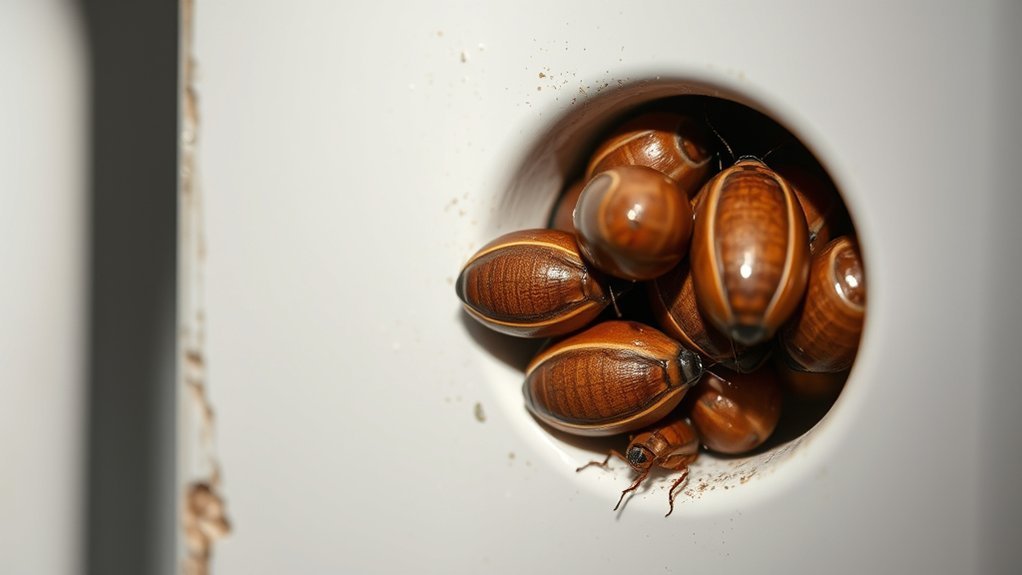
Knowing where cockroaches hide their egg sacks can help you locate and eliminate an infestation before it spirals out of control. Females deposit oothecae in dark, protected crevices near food sources, avoiding open areas entirely.
In kitchens and bathrooms, check under sinks, behind drawers, inside cabinet recesses, and near pipes. German cockroaches deposit oothecae almost anywhere indoors, while American cockroaches prefer attics, compost piles, and outdoor wood piles. Oriental cockroaches select favorable environments after a short carrying period, often near garbage or structural crevices.
In storage areas, look inside cardboard boxes, behind wooden dresser drawers, and within cluttered spaces where roach odors absorb into materials like paper and wood.
During severe infestations, oothecae become easier to spot because overcrowding forces roaches into less concealed spots. You’ll also find them alongside feces and shed skins in homes with poor sanitation.
Is That Egg Sack Still Active?
Determining whether a cockroach egg sack is still active comes down to a few visual and tactile clues. An active ootheca looks plump, firm, and slightly inflated, much like a small stuffed pod. An empty one appears deflated, shriveled, or split along its seam.
If you’re comfortable handling it, wear gloves and apply gentle pressure. A firm case signals live eggs inside. A soft, yielding case means the eggs have already hatched. Empty cases also release no fluid when squeezed.
Color can help too. Some species, like the Oriental cockroach, darken after hatching.
If the case feels active, destroy it immediately. Each ootheca can release between 14 and 40 nymphs depending on the species. Finding even one case likely means others are nearby, so treat the discovery as confirmation of an active infestation requiring prompt attention.
Frequently Asked Questions
How Long Does It Take for Cockroach Eggs to Fully Hatch?
Cockroach eggs’ hatching time depends on the species you’re dealing with. German cockroaches hatch in 28-60 days, American ones in 24-38 days, Brown-banded in 50 days, and Oriental cockroaches in about 60 days.
How Many Egg Sacks Can One Female Cockroach Produce in Her Lifetime?
Depending on the species, you’ll find that one female cockroach can produce anywhere from 1 to 90 egg sacks in her lifetime, with American cockroaches producing the most and Oriental cockroaches producing the fewest.
Do Cockroaches Always Carry Their Egg Sacks With Them?
No, cockroaches don’t always carry their egg sacks. It depends on the species. German cockroaches carry them until hatching, while American and Oriental cockroaches deposit theirs in hidden spots after just hours or days.
How Quickly Can a Cockroach Population Grow From a Single Egg Sack?
From a single German cockroach egg sack, you’re looking at up to 50 nymphs. With each female producing up to 20 oothecae, your infestation can explode into thousands within just a few months.
Where Do Cockroaches Intentionally Place Egg Sacks to Help Their Offspring?
You’ll find cockroaches intentionally placing egg sacks in warm, humid, hidden spots like behind appliances, under sinks, inside cabinets, along baseboards, and near food sources, where they’re protected and have easy access to moisture and nutrients.
Conclusion
Finding a cockroach egg sack means you’ve got a bigger problem than a single roach. You’re looking at dozens—sometimes hundreds—of potential new invaders. Don’t ignore what you’ve found. Check the common hiding spots, identify the species, and determine if it’s still active. The sooner you act, the better your chances of stopping an infestation before it spirals out of control.
