
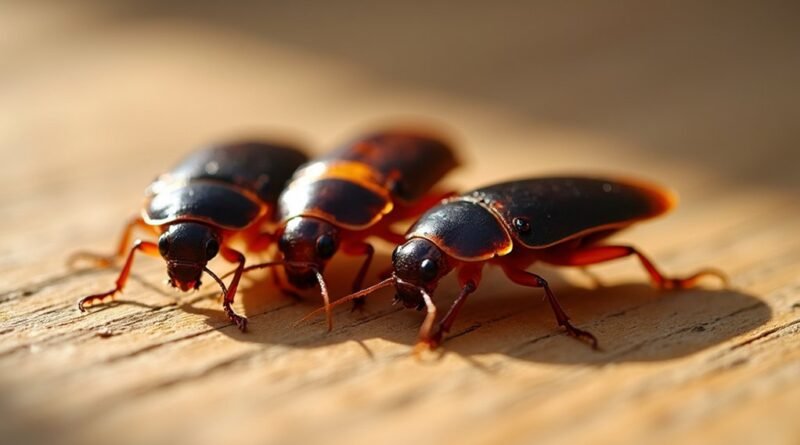
Cockroach Identification: How to Tell What Kind of Roach You Have
To identify what kind of cockroach you have, start by noting its size, color, and where you’re finding it. German cockroaches are small and tan, preferring kitchens. American cockroaches are large and reddish-brown, lurking near drains. Oriental cockroaches are dark and glossy, favoring damp basements. Brown-banded roaches hide in dry, elevated spots. Getting the species right matters because each one responds differently to treatment methods. Keep going and you’ll have everything you need to make a confident ID.
Key Takeaways
- German cockroaches are small, light brown, and prefer kitchens; American cockroaches are large, reddish-brown, and thrive in warm, damp areas like sewers.
- Oriental cockroaches are glossy black, about 1 inch long, prefer cool damp spaces, and emit a strong musty odor.
- Brown-banded cockroaches are tiny (10–14mm) with distinctive lighter bands across their wings and prefer dry, elevated locations away from water.
- Smokybrown cockroaches are mahogany-brown strong fliers, while Australian cockroaches are distinguished by their yellow body markings.
- Place sticky traps along walls and corners to capture specimens; examine their size, color, and shape to confirm species identification.
Why Getting Cockroach ID Right Changes Everything
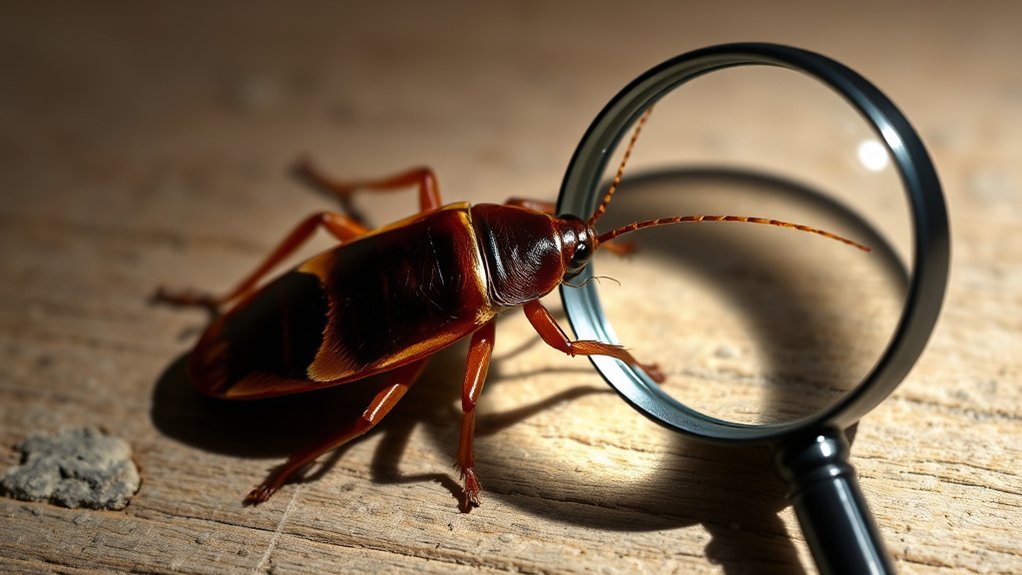
Identifying the exact cockroach species invading your home isn’t just a matter of curiosity — it directly shapes every treatment decision you make. Each species responds differently to control methods, so using the wrong approach wastes time and money while the infestation grows.
Take baits, for example. They work well against German cockroaches but won’t reliably eliminate Oriental cockroaches, which need sewer and drain treatments targeting their entry points. Brown-banded cockroaches hide on ceilings and upper walls, so applying treatments at floor level simply misses them.
The wrong treatment doesn’t just fail — it buys cockroaches time to multiply while you fall further behind.
Habitat matters just as much. German cockroaches cluster in kitchens and bathrooms, while Oriental cockroaches favor cool, damp basements. If you’re treating the wrong zones, you’re not solving the problem.
Misidentification also causes you to underestimate how fast a population grows. German cockroaches reproduce far more aggressively than Oriental cockroaches, meaning a delayed or incorrect response can turn a small problem into a serious one fast. The American cockroach lifespan can stretch up to two years, giving a misidentified infestation far more time to expand before you realize the treatment isn’t working.
Cockroach Body Features That Separate Them From Similar Bugs
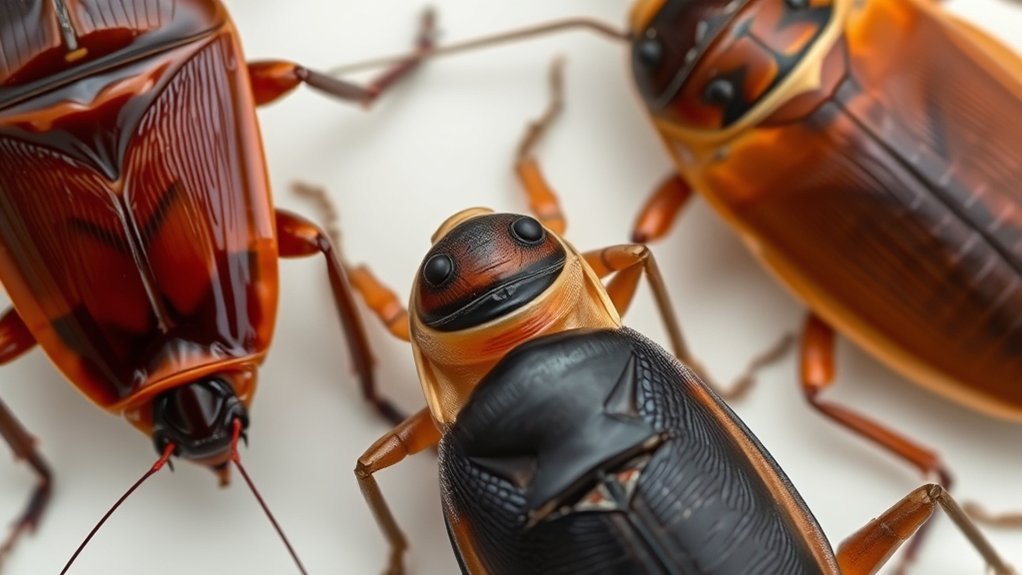
Before you can tell a cockroach apart from a cricket, water bug, or beetle, you need to know what you’re actually looking at. Cockroaches have elongated, segmented bodies with an oval outline and a distinctly flattened, dorso-ventral compression that sets them apart from similar insects.
Their bodies divide into three regions: head, thorax, and abdomen. A thick exoskeleton made of hard sclerites with a waxy coating gives them that characteristic oily, shiny appearance. You’ll notice three pairs of jointed legs, one per thoracic segment, increasing in size from front to back—each ending in hook-like tarsi that let them climb walls and walk ceilings.
Adults carry two pairs of wings, though many can’t fly. A single pair of antennae extends from the head, while cerci—fingerlike appendages—protrude from the abdomen’s tip. Together, these features create a profile unlike anything else you’ll encounter indoors. Their large compound eyes, composed of roughly 2000 hexagonal ommatidia, provide high sensitivity to movement and are especially suited for detecting activity in low light conditions.
Is That Actually a Cockroach? How to Tell the Difference
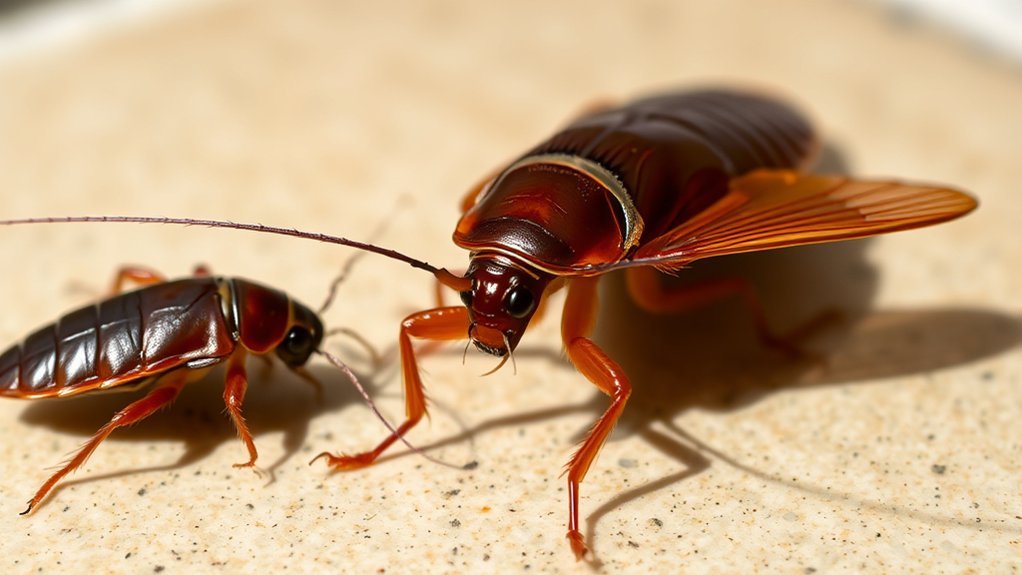
When something skitters across your kitchen floor, how do you know you’re dealing with a cockroach and not a beetle, cricket, or water bug? Start by checking the body shape. Cockroaches have flat, oval bodies with a shield-like pronotum that hides their head from above. Beetles look thicker and rounder, often with long stripe-like lines along their bodies.
Next, look at the antennae. Cockroach antennae match their body length and twitch constantly. Beetle antennae are shorter and barely move.
Then examine the legs. Cockroaches have six long legs covered in visible spines that help them grip smooth surfaces. Beetle legs lack those prominent spikes.
If you’re still unsure, look for supporting evidence. Cockroach droppings resemble black pepper or rice grains. You might also find small, pill-shaped egg casings near sinks or fridges, or detect a musty odor that grows stronger with larger infestations. You can also observe how the insect moves, as cockroaches scatter away quickly from light while beetles tend to move slowly and deliberately.
How to Identify an American Cockroach
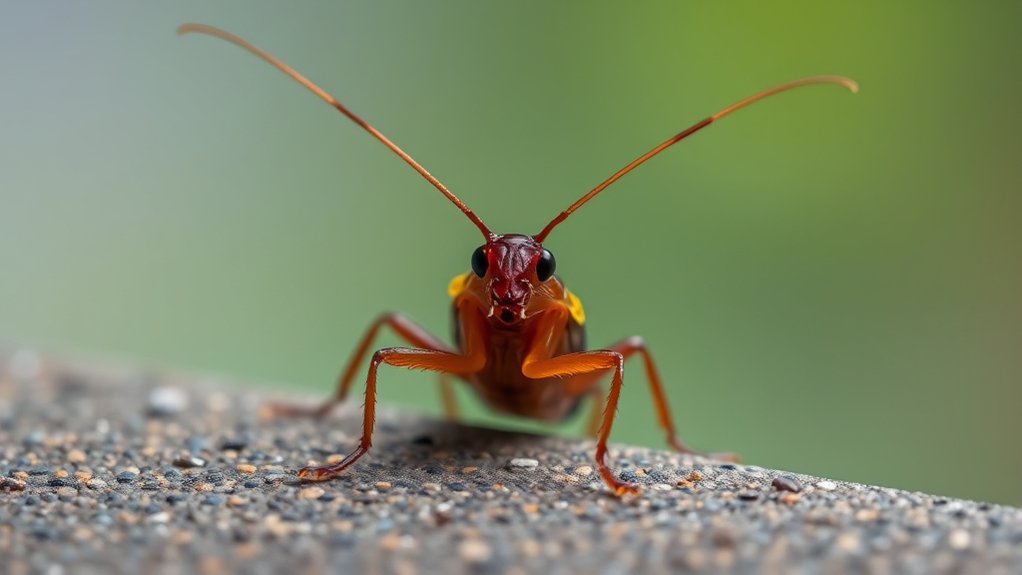
If you spot a large, reddish-brown insect with a yellowish figure-eight band on its pronotum, you’re likely looking at an American cockroach. At 1.5 to 2.1 inches long, it’s the largest common house-infesting cockroach, with a flat, oval body that lets it squeeze into tight spaces. You’ll typically find it in warm, damp areas like sewers, basements, and kitchens, where it scavenges for food at night. Both males and females have fully developed wings, though they are not considered strong fliers and rely more on their impressive ground speed to move around.
Physical Appearance and Size
American cockroaches are one of the largest cockroach species you’ll encounter, measuring between 1¼ and 2⅛ inches (32–54 mm) long, with some reaching over 2 inches. Their flat, oval bodies have a distinct reddish-brown color with these identifying markings:
- A pale brown figure-eight pattern on the back of the head
- A yellowish margin outlining the pronotum (shield-like plate covering the head)
- Faded yellow edges along the thorax
Both males and females have fully developed wings covering the abdomen, though males’ wings extend slightly beyond the abdomen tip. Their oily-looking exoskeleton, six spiny legs, and long antennae—often exceeding their body length—make them recognizable. In Pennsylvania, the American cockroach holds the distinction of being the largest cockroach species, reaching approximately 1½ inches long. Spotting these features helps you confirm you’re dealing with an American cockroach rather than another species.
Habitat and Behavior Patterns
Knowing where American cockroaches prefer to live and how they behave makes them easier to identify. Outdoors, you’ll find them near drains, garbage bins, woodpiles, sewers, and storm drainage systems. Indoors, they gravitate toward basements, garages, kitchens, and bathrooms. In institutional buildings, check boiler rooms and steam tunnels.
They’re primarily nocturnal, foraging at night for food and water. Unlike German cockroaches, they’re less skittish in light. Watch for them traveling along wall edges and congregating in corners. During warm months, they migrate between buildings in northern regions, entering through drains, cracks, and gaps.
They’ll eat almost anything, preferring sweets, fermenting materials, and pet food, but they’ll also consume paper, soap, leather, and dead insects when necessary.
How to Identify a German Cockroach
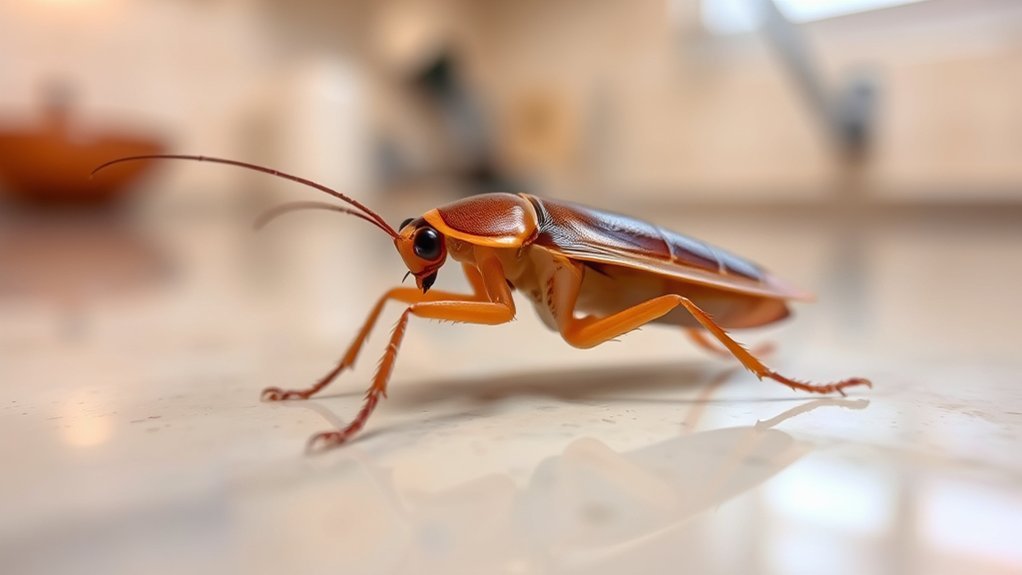
German cockroaches are one of the most common indoor pests in the United States, so knowing what to look for can help you identify them quickly. They’re light brown to tan, measuring ½ to ⅝ inch long, with two dark parallel stripes behind their head. Females appear darker than males.
Watch for these key indicators:
- Droppings: Small, dark pepper-like specks on countertops, drawer interiors, and door tops
- Fecal staining: Dark spots or smears in corners and cracks near kitchens and bathrooms
- Odor: A foul smell released when they’re disturbed
You’ll typically spot them in warm, humid areas like kitchens and bathrooms, since they prefer temperatures around 70°F. They’re nocturnal and fast-moving, so if you see one during the day, you likely have a significant infestation on your hands.
How to Identify an Oriental Cockroach
Unlike the German cockroach, the Oriental cockroach has a glossy, dark-brown or black body that can resemble a beetle at first glance. Adults average about 1 inch long, with females growing up to 1.25–32 mm and males staying under 25 mm.
You’ll notice that males have wings covering three-quarters of their abdomen, while females only have small wing stubs. Neither sex can fly, despite having wings.
Oriental cockroaches prefer cool, damp spaces like basements, drains, and sewers, and they’re most active at night. You can identify an infestation by their strong, musty odor. They move slower than other species and struggle to climb smooth surfaces.
Females produce up to eight egg cases, each holding 16 eggs. If you spot a male, look for styli between the cerci—a key identifying feature that distinguishes them from females.
How to Identify a Brown-Banded Cockroach
The brown-banded cockroach is one of the smallest invasive species you’ll encounter, measuring just 10–14 mm long. Its tan-to-light-brown body features two distinctive lighter bands across the wings and abdomen, though these may appear broken or irregular on adults.
Males and females look noticeably different:
- Males have fully developed wings extending past their pointed abdomen and fly readily when disturbed
- Females appear wider and darker with underdeveloped wings that don’t fully cover the abdomen
- Nymphs display more prominent banding than adults, making them easier to identify
Unlike German cockroaches, brown-banded cockroaches don’t need moisture to thrive. You’ll find them in dry, elevated locations throughout your home—inside electronics, picture frames, furniture, and light switch plates. They’re rarely near sinks or drains. Since they’re nocturnal and avoid light, daytime sightings are uncommon.
Smokybrown and Australian Cockroaches: Less Common but Worth Knowing
Two cockroaches you’re less likely to encounter—but should still recognize—are the smokybrown and Australian cockroaches.
The smokybrown cockroach measures 35–38mm and has a uniform, shiny mahogany-brown color with no markings. It’s a strong night flier attracted to lights and prefers outdoor environments but enters homes seeking moisture. You’ll mostly find it along the Gulf Coast, Florida, and the eastern seaboard.
The smokybrown cockroach is a shiny, unmarked mahogany flier that sneaks indoors at night chasing moisture.
The Australian cockroach is slightly smaller at 25–40mm but looks more ornate. It has a reddish-brown body with a yellow line around its head, yellow markings on its thorax, and yellow-streaked wing edges. It’s an excellent flier and favors plants and starchy materials, often nesting in roof spaces.
The easiest way to tell them apart: if you see yellow markings, it’s Australian. No markings at all means smokybrown.
Where Cockroaches Hide When They’re in Your Home
Knowing what a cockroach looks like only gets you so far—you also need to know where they’re hiding. Cockroaches gravitate toward warmth, moisture, darkness, and food debris, making certain spots in your home prime real estate for infestations.
Here are the most common areas to inspect:
- Kitchens and bathrooms: Behind appliances, under sinks with leaky pipes, inside cabinets, and around cracked caulking near tubs and showers
- Electronics and appliances: Inside toasters, microwaves, and coffee makers where food debris collects, and around warm devices like TVs and game consoles
- Furniture, basements, and storage areas: Beneath couches and beds, inside wardrobes, behind baseboards, and in cluttered crawl spaces or utility areas
If you spot a roach during the day, that’s a red flag—they’re nocturnal, so daytime sightings typically signal a large, crowded infestation forcing them into the open.
How Sticky Traps Confirm Which Cockroach You Have
Once you’ve spotted signs of cockroaches, placing sticky traps along walls, in corners, and near suspected harborage sites helps you confirm exactly which species you’re dealing with. You’ll get the most useful results by positioning traps where different surfaces meet, since cockroaches naturally travel these edges. When you check your traps, examine the captured specimens closely, because size, body shape, and coloring will point you toward a specific species and reveal details about the infestation’s age and scope.
Trap Placement Strategies
Sticky traps don’t just catch cockroaches—they tell you where those cockroaches are living. Strategic placement transforms a simple glue trap into a diagnostic tool that pinpoints harborages and travel routes.
Focus your placement on these high-priority zones:
- Along baseboards and walls near water sources like pipes and under sinks
- Behind appliances such as refrigerators where humidity and darkness attract roaches
- Near incoming goods that may introduce new infestations
Once traps are down, date every one and track what they catch. Mostly adults? Move traps toward entry points. Catching small nymphs? You’re close to the harborage. Replace traps every few weeks or immediately after catches. This data tells you exactly which species you’re dealing with and where they’re concentrated.
Identifying Captured Specimens
A trapped cockroach is your best identification tool. Once you’ve caught one, examine these key physical traits:
| Species | Size | Color | Key Marker |
|---|---|---|---|
| *Blattella germanica* | ~1 inch | Light brown | Two dark pronotal stripes |
| *Periplaneta americana* | Large | Reddish brown | Largest common indoor species |
| *Blatta orientalis* | Large | Dark brown/black | Found near damp areas |
| *Supella longipalpa* | ~0.5 inch | Dark brown | Tan bands on body/wings |
| All species | Varies | Varies | Oval body, six legs, long antennae |
Beyond species ID, check what else the trap tells you. Snapping antennae mean the specimen died days ago; flexible bodies indicate death within 24 hours. Multiple nymph sizes signal a severe, multi-capsule infestation requiring immediate action.
Frequently Asked Questions
Can Cockroaches Survive Without Food for Extended Periods of Time?
Yes, cockroaches can survive without food for extended periods. Depending on the species you’re dealing with, they’ll last anywhere from 20 to 90 days, using stored fat reserves and slowing their metabolism considerably.
Are Cockroaches Dangerous to Pets Living Inside the Home?
Yes, cockroaches are dangerous to your pets. They’ll spread bacteria like Salmonella, trigger allergic reactions, cause respiratory issues, and stress your pets with their nocturnal activity, leading to serious health complications.
How Quickly Can a Cockroach Infestation Grow Out of Control?
A cockroach infestation can spiral out of control within 4-6 months. You could start with one roach and end up with 30,000 or more, as a single female produces hundreds of offspring rapidly.
Do Cockroaches Bite Humans While They Are Sleeping?
Yes, cockroaches can bite you while you’re sleeping. They’re most active at night and’ll target food residue near your mouth, hands, or feet, though bites remain rare unless you’re dealing with a severe infestation.
Can Cockroaches Develop Resistance to Commonly Used Pesticides Over Time?
Yes, cockroaches can absolutely develop resistance to commonly used pesticides over time. They’ve built resistance to over 60 active ingredients, so you’ll need integrated pest management and rotating different pesticide modes of action for effective control.
Conclusion
Now that you know what to look for, you’re better equipped to handle a cockroach problem the right way. Getting the identification right isn’t just satisfying — it’s what makes your treatment strategy actually work. Use sticky traps to confirm what you’re dealing with, match the species to its habits, and you’ll stop wasting time on approaches that won’t work for your specific invader.
