
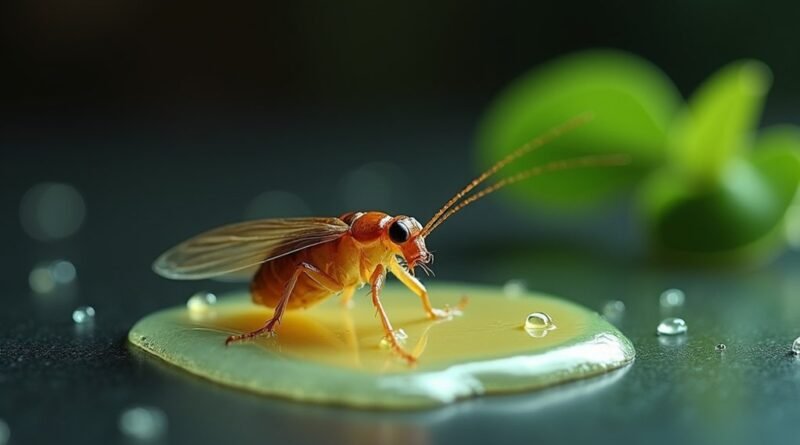
Cockroach Milk: What It Is and Why People Talk About It
Cockroach milk comes from *Diploptera punctata*, the only cockroach species that nurses its young like a mammal does. It’s a nutrient-dense fluid that crystallizes into protein-packed compounds, containing three times more protein than cow’s milk, all nine essential amino acids, and beneficial fatty acids. It’s also completely lactose-free. Despite its buzz in nutritional science, you can’t buy it yet — and there’s a fascinating reason why. Stick around to find out what’s really going on.
Key Takeaways
- Cockroach milk is a nutrient-dense fluid produced by *Diploptera punctata*, the world’s only viviparous cockroach, to nourish its developing embryos.
- It contains all nine essential amino acids, making it a complete protein with three times more protein than cow’s milk.
- The milk is lactose-free, calorie-dense at roughly 700 calories per cup, and rich in beneficial fatty acids.
- People discuss it as a potential sustainable superfood, requiring less land, water, and feed than conventional dairy farming.
- Commercial viability remains limited due to labor-intensive extraction, poor yields, high costs, and insufficient safety data for consumers.
What Is Cockroach Milk, Really?
Despite its unsettling name, cockroach milk isn’t what you’d typically imagine. It’s a protein-rich, crystallized secretion produced exclusively by *Diploptera punctata*, the only known cockroach species that gives birth to live young. Unlike traditional milk, it’s a nutrient-dense fluid that female cockroaches produce to nourish their developing embryos internally.
Here’s what makes it fascinating: the yellowish fluid solidifies into protein crystals inside the embryos’ midguts, allowing for slow, sustained nutrient release. Think of it as nature’s time-release nutrition capsule.
Scientists use the term “milk” loosely because it functions similarly to mammalian milk — it’s a complete food source. It contains protein, carbohydrates, fats, and essential amino acids, but it’s entirely lactose-free.
You won’t find it on grocery store shelves yet, but researchers are paying close attention to this unconventional substance for its remarkable nutritional potential. Notably, cockroach milk contains all nine essential amino acids, making it a rare complete protein source among nondairy alternatives.
The Only Cockroach Species That Produces It
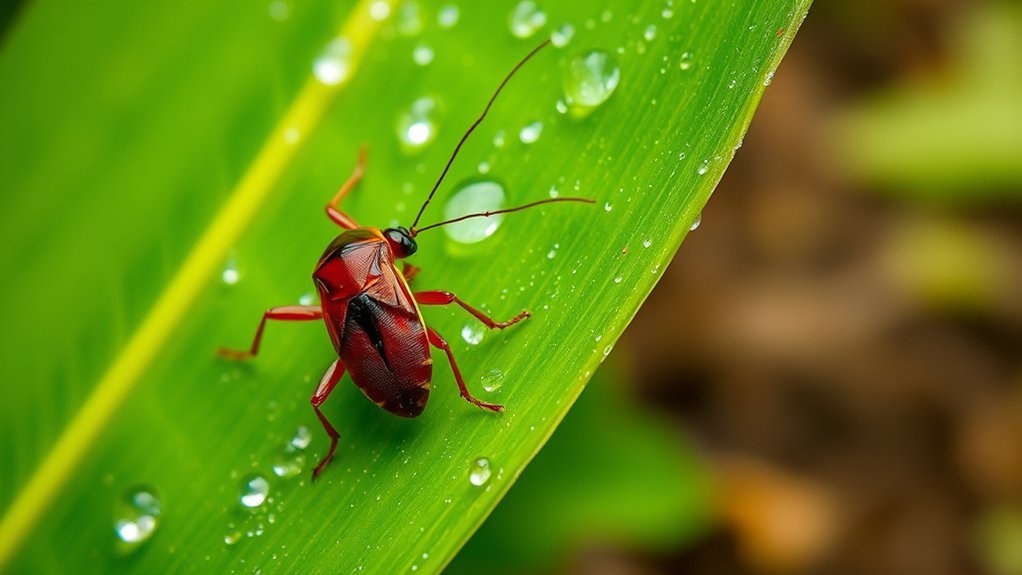
You’ll find this species most commonly in Hawaiian landscapes, where it’s adapted to tropical environments. Researchers also rear it in laboratories specifically to study its unusual reproductive biology.
What makes it truly unique is how it nourishes its embryos. Instead of relying on a yolk-filled egg, the mother secretes a liquid directly into a brood sac — fundamentally an insect uterus — where embryos feed and develop until birth. This secretion is what scientists call cockroach milk. No other cockroach species comes close to replicating this process.
The Pacific Beetle cockroach is the only viviparous cockroach species known to science, meaning it gives birth to live young rather than laying eggs.
How Cockroach Milk Stacks Up Against Regular Milk
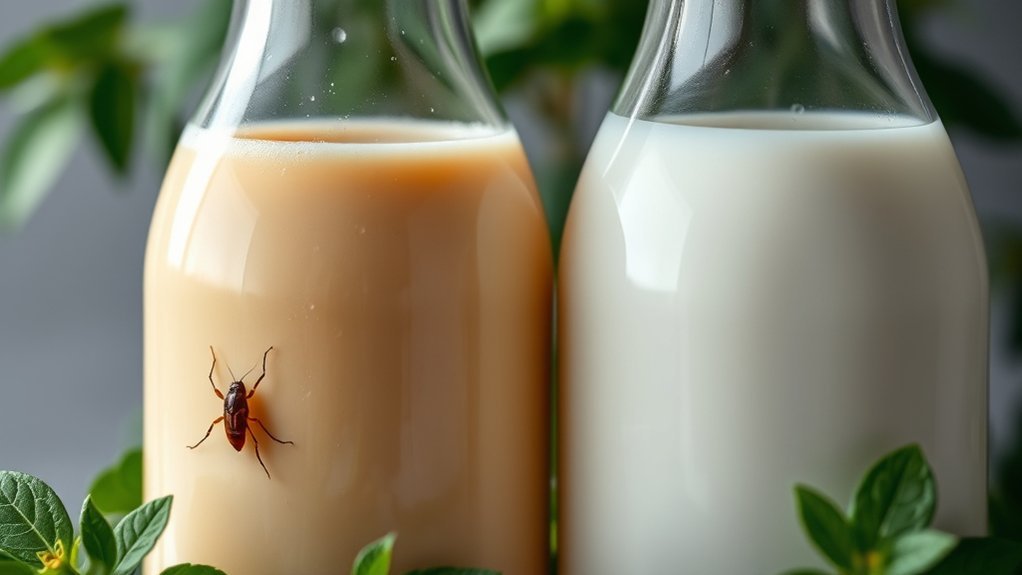
If you’re comparing cockroach milk to regular cow’s milk, the numbers are striking — one cup delivers around 700 calories versus cow’s milk’s 150-200, with three times the protein and a richer fatty acid profile. You also get all nine essential amino acids, making it one of the few non-meat sources to offer a complete protein package. Better yet, cockroach milk is completely lactose-free, putting it ahead of traditional dairy for anyone with lactose intolerance and outpacing alternatives like almond, soy, and coconut milk in overall nutrient density. Unlike conventional dairy farming, insect farming requires less land, water, and feed, making cockroach milk a compelling candidate for more environmentally sustainable nutrition.
Nutritional Content Comparison
When you stack cockroach milk up against conventional dairy, the nutritional gap is striking. It delivers roughly 700 calories per cup, more than triple what cow’s milk offers. It’s also a complete protein, supplying all nine essential amino acids — something most plant-based alternatives can’t claim.
| Nutrient Category | Cockroach Milk |
|---|---|
| Calories (per cup) | ~700 |
| Protein Composition | 45% |
| Carbohydrates | 25% |
| Fat | 16–22% |
Cow’s milk averages around 150 calories per cup, while buffalo milk — previously the most calorie-dense mammalian milk — contains only 236. Cockroach milk surpasses both. Beyond calories, it contains omega-3 fatty acids, oleic acid, linoleic acid, and essential vitamins and minerals, making it one of the most nutrient-dense substances identified. Unlike conventional dairy, cockroach milk comes from the Pacific beetle cockroach, the only roach species known to produce milk for its live-born young.
Lactose-Free Milk Alternative
Cockroach milk is naturally lactose-free, making it a viable option if you’re among the 65% of people worldwide who struggle to digest dairy. Since it’s classified as a nondairy product, it skips the bloating, gas, diarrhea, and stomach pain that lactose intolerance triggers.
It’s also free of dairy proteins, including beta-lactoglobulin, a common allergen in children. So if you or your child has a cow’s milk allergy, cockroach milk eliminates that concern entirely.
Compared to plant-based alternatives like soy, almond, or rice milk, it delivers more protein, fatty acids, and nutrients like oleic acid and omega-3s. However, no human testing exists, so its actual tolerability remains unknown despite its promising nutrient profile. The milk is produced by female Pacific Beetle cockroaches to nourish their offspring before it solidifies in the young insects’ stomachs.
What’s Inside Cockroach Milk That Makes It Nutritionally Unique?
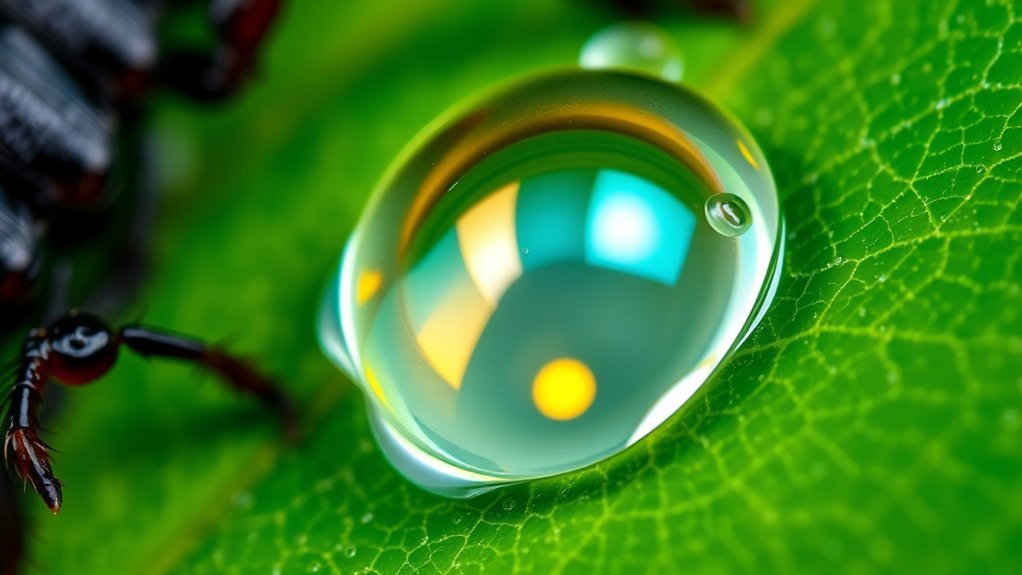
Though it might sound unusual, cockroach milk’s nutritional profile is surprisingly complex. Inside each crystal, you’ll find a dense combination of macronutrients that outperforms conventional dairy in several measurable ways.
Here’s what makes it stand out:
- Protein – At 45% protein composition, it contains all nine essential amino acids, delivering three times more protein energy than cow’s milk.
- Carbohydrates – Making up 25% of the crystal, carbohydrates bind directly to proteins through glycosylation, creating a structurally integrated nutrient package.
- Fats – Lipids range from 16–22%, including oleic acid, linoleic acid, omega-3 fatty acids, and conjugated linoleic acid.
- Free Amino Acids – A separate 5% comes from free amino acids, releasing essential nutrients continuously during digestion.
You’re also getting vitamins, minerals, and roughly 8.8 kcal per 100 grams — a caloric density that surpasses both cow’s and buffalo’s milk.
What Cockroach Milk Could Actually Do for Your Health
Understanding what’s inside cockroach milk is one thing — knowing what it could actually do for your body is another. Its caloric density alone makes it worth considering if you struggle to meet daily energy needs. With three times more calories than buffalo milk and a micronutrient density exceeding cow’s milk, buffalo milk, and human breast milk, it delivers serious nutritional value in smaller quantities.
Its 45% protein content, complete with all nine essential amino acids, supports muscle development and cellular repair — something most plant-based sources can’t offer alone. The fatty acid profile, including oleic acid, linoleic acid, and omega-3s, contributes to cardiovascular health and inflammation management.
If you’re lactose intolerant, cockroach milk eliminates the digestive complications tied to conventional dairy. Add melatonin for sleep support and N-acetyl-D-glucosamine for joint health, and you’ve got a surprisingly broad range of potential health benefits packed into one unconventional source.
How Cockroach Milk Is Harvested
If you’re curious about how scientists actually get cockroach milk, the process is as hands-on and painstaking as you’d expect. You start by selecting pregnant Pacific beetle cockroaches at peak lactation, killing them carefully to keep the abdomen intact, then surgically opening them to access the midgut crystals stored inside the embryos. From there, you either dissect the embryos directly or insert filter paper into the brood sac to absorb the crystallized substance before dissolving it for use.
Extraction From Cockroaches
Harvesting cockroach milk is nothing like milking a cow. Since the crystals form inside embryos stored in a brood sac, you can’t squeeze anything externally. The process is lethal and surgical.
Here’s how extraction actually works:
- Kill the female without crushing her abdomen, preserving the internal brood sac intact.
- Open the abdomen to access embryos during the lactation phase, roughly 40 days into the cockroach’s life.
- Insert filter paper into the brood sac to absorb liquid milk before it crystallizes.
- Cut open young roaches to retrieve fully formed gut crystals after crystallization occurs.
Because each cockroach yields so little, you’d need over 1,000 cockroaches to produce just 100 grams of material.
Crystal Harvesting Process
Once the female cockroach is opened and the embryos are accessed, the actual crystal retrieval begins. You’d extract the crystals directly from the midgut of the embryos, carefully removing them without crushing the insect. To collect the milk-like substance, you’d insert filter paper into the brood sacs, allowing it to soak up the liquid before it crystallizes.
Once collected, you’d dissolve the crystals to prepare them for denaturing sodium dodecyl sulfate polyacrylamide gel electrophoresis, a process that helps analyze their protein composition. The result is shiny, nutrient-dense crystals pulled directly from the embryos’ digestive tracts. It’s a delicate, precise process, but it’s the only way to access cockroach milk in its most concentrated, nutritionally valuable crystalline form.
Why You Can’t Buy Cockroach Milk Yet
Despite the buzz surrounding cockroach milk’s nutritional potential, you won’t find it on store shelves anytime soon. Several hard realities explain why:
- Killing required: Extracting crystals means killing pregnant female cockroaches one by one, entirely by hand.
- Terrible yields: You’d need over 1,000 roaches just to produce 100 grams, making scaling nearly impossible.
- No safety data: Researchers haven’t established it’s safe to consume, and even scientists studying it refuse to drink it themselves.
- No commercial path: Production remains lab-only, costs are prohibitive, and biotechnological replication through yeast is still undeveloped.
Beyond logistics, public perception works against it too. Most people aren’t rushing to try a cockroach-derived product, and without an established taste profile or safety clearance, there’s no consumer base to justify investment. Until science and ethics catch up, cockroach milk stays firmly off the menu.
What It Would Actually Take to Scale Cockroach Milk
Scaling cockroach milk to commercial viability would demand breakthroughs on multiple fronts simultaneously. You’re looking at extraction, breeding, and biotechnology all needing significant advancement before any product reaches shelves.
Currently, milking one cockroach takes half a day, and 1,000 insects yield only 3.5 ounces. That math doesn’t work at commercial scale without radical intervention.
| Challenge | Current Reality | Required Breakthrough |
|---|---|---|
| Extraction Speed | Half a day per cockroach | Automated harvesting systems |
| Yield Volume | 3.5 oz per 1,000 insects | Selective breeding to C2 generation (+20%) |
| Scalability | Lab-stage biotech only | Yeast-based synthetic replication |
Selective breeding offers a 20% yield boost by the second generation, and optimized diets push production further. However, biotechnology presents the most realistic path forward. Synthesizing the protein sequence through yeast eliminates insect farming entirely, making scalability genuinely achievable without the labor-intensive extraction process slowing everything down.
Frequently Asked Questions
Does Cockroach Milk Taste Like Anything Recognizable to Humans?
You’d likely find it unfamiliar, as no verified human taste tests exist. Researchers haven’t documented its flavor profile, though its nutrients might suggest a mildly savory or subtly sweet taste.
Are There Any Known Allergic Reactions Associated With Cockroach Milk?
You’d find no documented allergic reactions to cockroach milk specifically, but if you’re allergic to cockroaches or milk proteins, you’d likely want to avoid it, as cross-reactivity between cockroach allergens and milk allergies does exist.
Is Cockroach Milk Considered Ethical by Animal Welfare Standards?
You’ll find cockroach milk doesn’t clearly meet animal welfare standards. Killing thousands of insects per serving raises ethical concerns, and no specific welfare guidelines currently exist to regulate insect farming practices for this purpose.
Could Cockroach Milk Be Used in Cooking or Food Products?
You could use cockroach milk in cooking, as it’s reported to have a neutral taste. It’s been suggested as a wheat flour supplement up to 5%, and it could work in cookies, tonics, or malnourished diets.
Has Any Government Approved Cockroach Milk for Human Consumption Yet?
No government has approved cockroach milk for human consumption yet. You won’t find it in markets, and agencies like the FDA haven’t endorsed it. It’s still far from meeting regulatory standards as of 2025.
Conclusion
Cockroach milk isn’t something you’ll find at your grocery store anytime soon, but it’s clearly more than just a strange internet rumor. You’re looking at a nutritionally dense substance that scientists are genuinely excited about. Whether it ever becomes a mainstream superfood depends on solving some serious production challenges. For now, you can follow the research and decide for yourself if this unlikely source of nutrition is worth watching.
