
Cockroach Poop on Walls: What It Means and How to Clean It
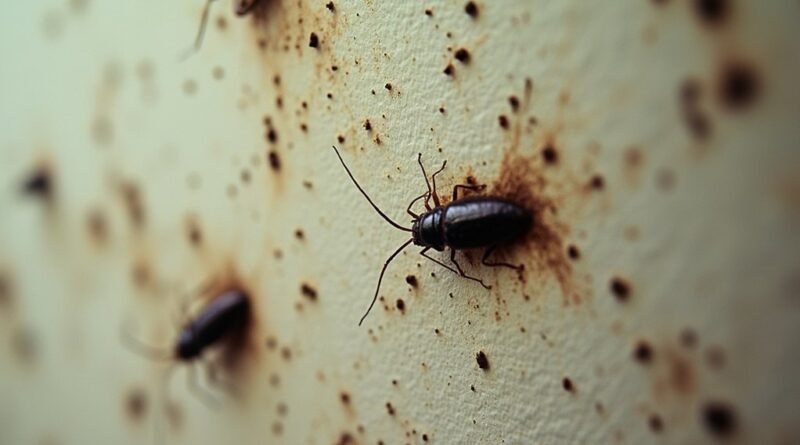
Cockroach droppings on your walls look like small, dark specks resembling coffee grounds or black pepper, and they’re a sure sign you’ve got an infestation. You’ll typically spot them in kitchens, bathrooms, and other humid areas. To clean them, vacuum with a HEPA filter, apply a household disinfectant, and scrub stubborn stains with soap and water. There’s a lot more you’ll want to know to tackle this problem effectively.
Key Takeaways
- Cockroach droppings appear as small, dark specks resembling coffee grounds or cylindrical pellets, found near kitchens, bathrooms, and hidden wall spaces.
- Roaches are attracted to walls with moisture, warmth, structural gaps, and poor ventilation, making these areas prime infestation sites.
- Infestation severity ranges from a few roaches to over 25, with health risks including respiratory issues, allergies, and bacterial contamination.
- To clean, wear gloves and a mask, vacuum droppings with a HEPA filter, and work systematically from highest points downward.
- Disinfect stained areas with household disinfectant, let it sit 10 minutes, scrub stubborn stains, and seal cracks to prevent re-entry.
What Does Cockroach Poop on Walls Actually Look Like?
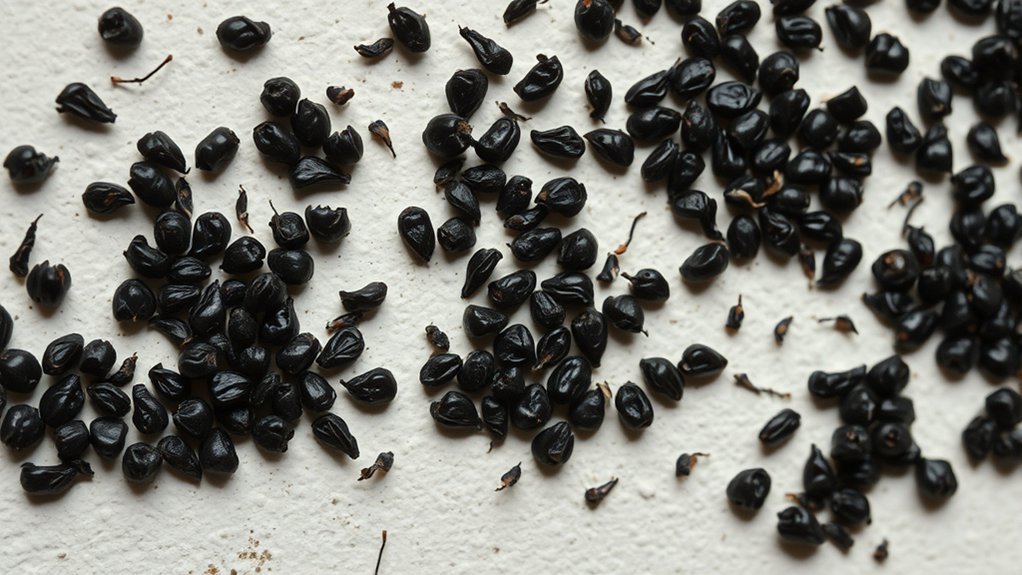
Cockroach poop on walls typically looks like small, dark specks — similar to coffee grounds or black pepper. The droppings are dark brown or black, with cylindrical or pellet-like shapes featuring ridged sides and blunt ends. Some may leave a slight sheen depending on the cockroach’s diet.
Species affect what you’ll see. German cockroaches leave thin, coffee-ground-like specks, while American cockroaches produce larger, cylindrical droppings. Oriental cockroaches deposit dark brown or black pellets, and brown-banded cockroaches leave smaller fecal matter.
Fresh droppings appear dark and glossy, smudging easily when touched. Older droppings dry out, lighten, and crumble. You might mistake them for dirt, mold, or debris.
Don’t confuse cockroach droppings with mouse or termite waste. Mouse droppings have pointed ends and measure about 1/4 inch. Termite frass has six concave sides. Cockroach droppings smudge easily, while mouse droppings don’t. You may also notice smear marks along walls where cockroaches have traveled frequently.
Where Do Cockroaches Leave Droppings on Walls?
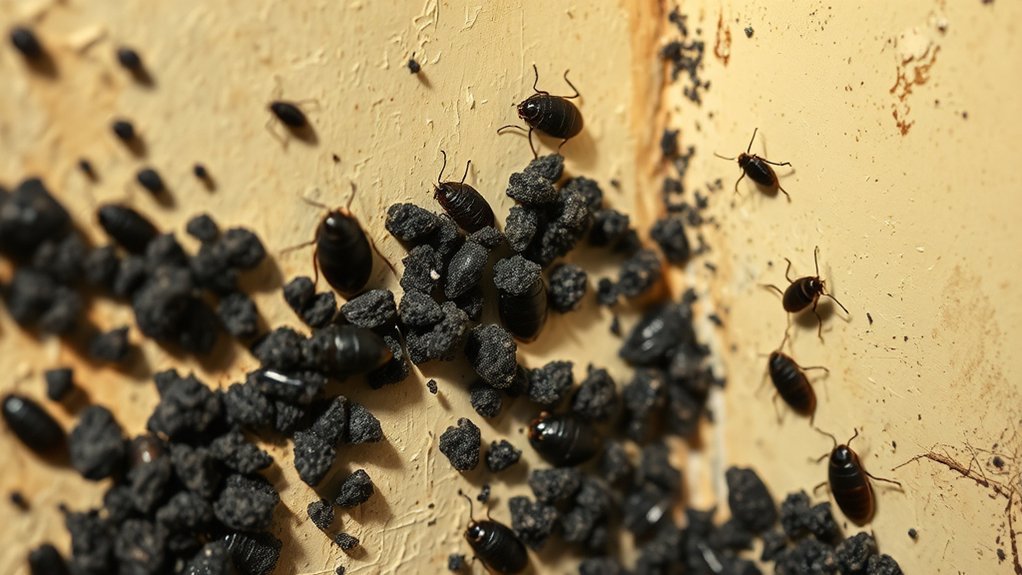
Where you find cockroach droppings on walls depends largely on where roaches nest, feed, and travel. Check kitchen areas first — behind refrigerators and stoves, inside cabinets, along baseboards, and under sinks where pipes create moisture. Pantry walls nearby are also common spots since roaches feed close to food sources.
Bathrooms are another hotspot. High humidity attracts roaches, so inspect walls near plumbing fixtures, along baseboards, in corners, and around drains that give them easy access.
Beyond kitchens and bathrooms, look along baseboards and wall corners throughout your home. Roaches leave droppings in hidden wall spaces, behind furniture touching walls, and along pheromone trails they repeatedly travel.
Don’t overlook storage and utility spaces. Closets, laundry rooms, basements, and cluttered storage areas all provide the dark, humid conditions roaches prefer. These spaces often show heavy dropping concentrations along the walls where roaches shelter. The droppings themselves contain pheromones that attract even more cockroaches to the same areas, which is why early detection in these spaces is so important.
Why Are Your Walls Attracting Cockroaches?
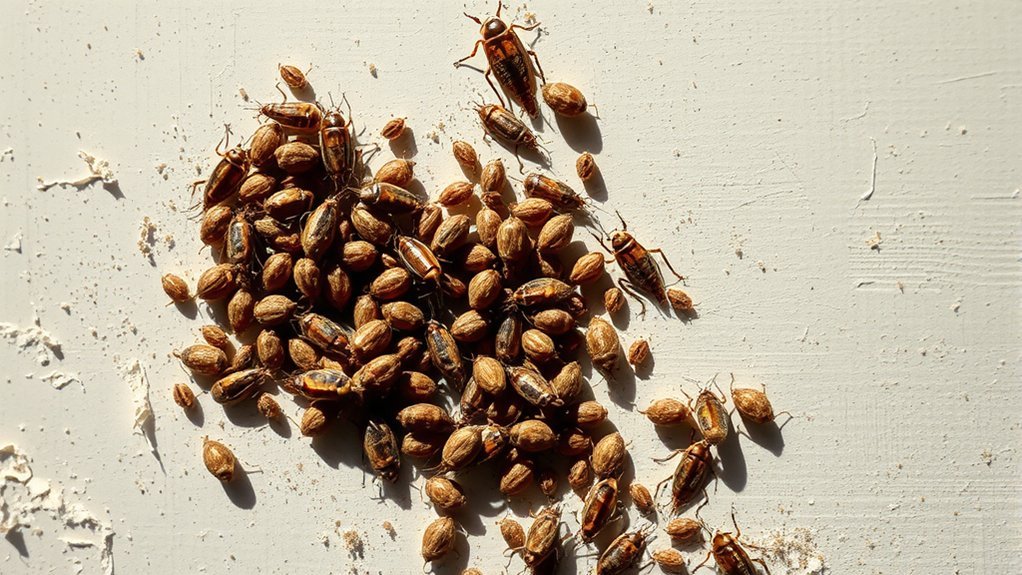
Understanding why your walls attract cockroaches starts with recognizing what roaches need to survive: moisture, warmth, food, and shelter. Your walls often provide all four simultaneously.
Walls attract cockroaches by offering everything they need to survive: moisture, warmth, food, and shelter, all in one place.
Damp walls from dripping pipes, wet drywall, or condensation create reliable moisture sources. Exposed pipes releasing warm condensation are especially attractive. Poor ventilation in bathrooms or laundry rooms compounds the problem considerably.
Temperature matters too. Spaces behind wall-mounted water heaters, inside electrical outlets, and switch plates generate consistent warmth, keeping roaches comfortable year-round, particularly during cooler months.
Your walls’ structural gaps give roaches easy access. Cockroaches compress their bodies through openings as small as 1/16 of an inch, slipping behind baseboards, into wall seams, and around pipe gaps effortlessly. Filling cracks with caulk can eliminate these entry points and deny roaches the hidden pathways they rely on to move through your walls undetected.
Paper products stored against walls, including stacked cardboard and paper piles, absorb cockroach pheromones and provide food. Wet cardboard is particularly problematic since its soft fibers become a direct food source.
How Bad Is Your Cockroach Infestation?
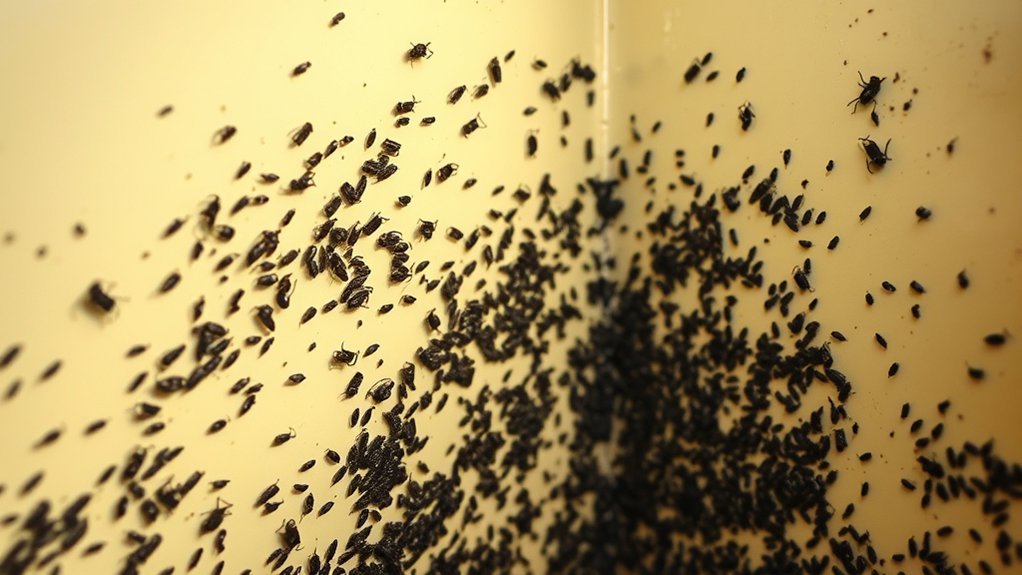
Once you spot cockroach poop on your walls, you need to assess how far the infestation has spread. If you’re finding droppings confined to one area, you’re likely dealing with an early-stage or concentrated problem, but droppings scattered across multiple rooms signal a large, spread-out infestation. The distribution of those droppings is one of the clearest indicators of how severe your situation actually is. Common locations to check include kitchen cabinets, behind appliances, and crawl spaces.
Identifying Infestation Severity Levels
Cockroach infestations fall into four severity levels, and knowing which one you’re dealing with shapes every decision you make going forward.
At Level 1, you’re seeing fewer than five roaches, only at night, with no widespread signs. Level 2 means 10–25 sightings, droppings, smear marks, and a mild musty odor. Level 3 confirms breeding — you’re spotting roaches during the day, finding egg sacs and molted skin, and noticing persistent oily or ammonia-like smells. Level 4 is severe: more than 25 roaches, strong pheromone odors, and spread into appliances and cabinets.
Call a professional if you notice structural damage, respiratory symptoms, German cockroaches near food, or feces quantities suggesting a long-term infestation. Don’t wait — every level escalates fast without action. At Level 4, roaches are causing visible structural damage such as chewed wires and hollowed wood that signals an immediate emergency requiring professional intervention.
Droppings Spread Across Rooms
Knowing your infestation’s severity level is only half the picture — where you’re finding droppings matters just as much as how many roaches you’re seeing. When droppings appear across multiple rooms, you’re dealing with a spread or advanced infestation that’s already expanding its territory.
Watch for these key spread indicators:
- Multiple-room droppings — finding feces in kitchens, bathrooms, and basements simultaneously signals active room-to-room movement.
- Egg cases alongside droppings — each ootheca produces 25–40 nymphs, meaning your population’s growing fast.
- Daytime roach sightings — overcrowding forces roaches out during daylight hours, confirming the infestation has outgrown its hiding spots.
Don’t overlook shed skins, smudge marks, or dead bodies accompanying widespread droppings — they’re all confirming what you already suspect.
Can Cockroach Droppings on Walls Make You Sick?
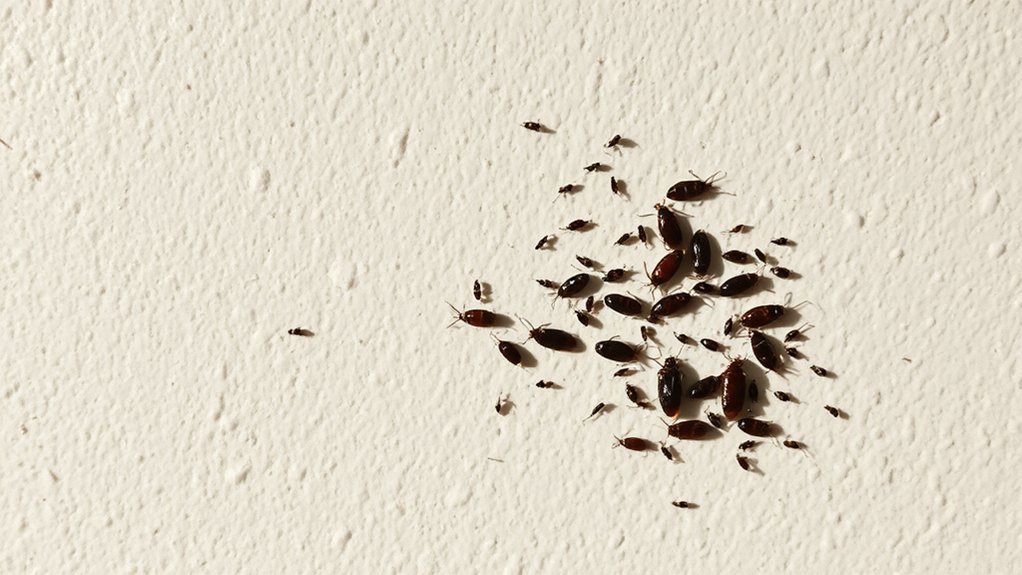
Yes, cockroach droppings on walls can absolutely make you sick. The bacteria, allergens, and airborne particles they release create serious health risks for everyone in your home.
| Health Risk | Effect on You |
|---|---|
| Airborne particles | Respiratory issues from prolonged exposure |
| Allergens | Triggers asthma attacks and allergic rhinitis |
| E. coli & Salmonella | Causes diarrhea, fever, and abdominal cramps |
| Surface contamination | Bacteria transfers to food prep areas |
| Gastroenteritis | Leads to vomiting and diarrhea |
Children, elderly individuals, and people with weakened immune systems face the greatest danger. Cockroach allergens rank among the leading indoor asthma triggers in children, and these allergens can linger in your home for years after roaches are gone.
Touching contaminated walls and then touching your face or mouth can also lead to accidental bacterial ingestion, making prompt cleanup essential.
How Do You Clean Cockroach Droppings Off Walls?
Now that you know the health risks, cleaning cockroach droppings off your walls quickly and safely is your next priority. Start by wearing disposable gloves and a mask, then vacuum loose droppings using a HEPA-filter vacuum and hose attachment. Always work from the highest points downward to avoid spreading contamination.
- Disinfect first: Spray household disinfectant on stained areas and let it sit for at least 10 minutes before wiping with a disposable cloth.
- Scrub stubborn stains: Use a brush with soap and water, adding baking soda to eliminate odor. For tough marks, apply 3% hydrogen peroxide, wait 5 minutes, then blot clean.
- Repeat disinfection: After scrubbing, apply disinfectant again for thorough sanitation.
Seal any cracks you find during cleaning to block re-entry. Dispose of vacuum bags immediately in sealed outer bags outside your home.
Frequently Asked Questions
How Long Do Cockroach Droppings Remain Dangerous After the Infestation Ends?
Cockroach droppings can remain dangerous for years after you’ve eliminated the infestation. Without proper cleaning, you’ll still face allergens, bacteria, and airborne particles that trigger respiratory issues and allergic reactions indefinitely.
Can Cockroach Droppings on Walls Damage Paint or Wallpaper Permanently?
Yes, cockroach droppings can permanently damage your paint and wallpaper. Their acidic compounds corrode surfaces, while secretions seep deep into paint layers. On wallpaper, they’ll weaken adhesives and cause staining you can’t remove without replacing it entirely.
Do Cockroach Droppings Smell, and Can You Detect Them by Odor?
Yes, cockroach droppings do smell, and you can detect them by odor. You’ll notice a musty, oily, slightly sweet scent that intensifies near harborages and grows stronger as the infestation’s population increases.
Should You Wear Protective Gear When Cleaning Cockroach Droppings off Walls?
Yes, you should wear protective gear when cleaning cockroach droppings. Put on gloves, an N95 mask, and protective eyewear. You’ll also want long-sleeved clothing to shield your skin from allergens and harmful pathogens.
Can Pets Get Sick From Exposure to Cockroach Droppings on Walls?
Yes, your pets can get sick from cockroach droppings on walls. They’ll pick up bacteria like E. coli and Salmonella by sniffing, licking, or walking through contaminated areas, causing vomiting and diarrhea.
Conclusion
Finding cockroach poop on your walls isn’t just gross — it’s a serious warning sign you can’t ignore. You’ll need to clean the affected areas thoroughly and tackle the infestation at its source. Don’t wait, because the longer you let it go, the worse it gets. Take action now by sealing entry points, eliminating food sources, and using proven treatments to keep cockroaches from turning your walls into their bathroom.
