
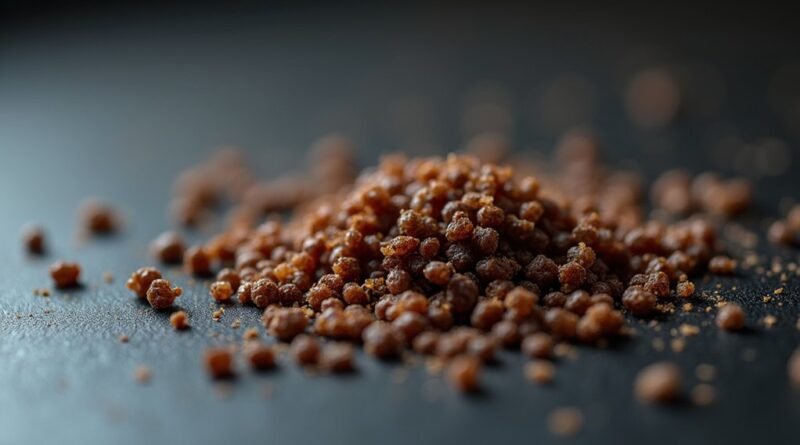
Cockroach Poop Pictures: Visual Guide to Identifying Droppings
Cockroach droppings vary depending on the species you’re dealing with. German roach droppings look like tiny black pepper specks or coffee grounds, while American roach droppings are small, dark cylinders with ridged sides. You’ll typically find them in kitchens, bathrooms, and along baseboards. They carry serious health risks, including bacteria like Salmonella and E. coli. Keep scrolling to get the full picture on identifying, locating, and safely eliminating them from your home.
Key Takeaways
- German cockroach droppings resemble black pepper or coffee grounds, measuring 1-2mm, while American cockroach droppings are dark cylinders measuring 2-3mm.
- Fresh droppings appear dark and glossy, while older droppings dry out, harden, and may crumble over time.
- Common locations include kitchen cabinets, behind appliances, under bathroom sinks, behind toilets, and along baseboards.
- Cockroach droppings carry dangerous bacteria like Salmonella and E. coli, triggering asthma and causing serious foodborne illnesses.
- Heavy droppings accumulation, egg cases, shed skins, and musty odors indicate a severe infestation requiring immediate action.
What Do Cockroach Droppings Look Like?
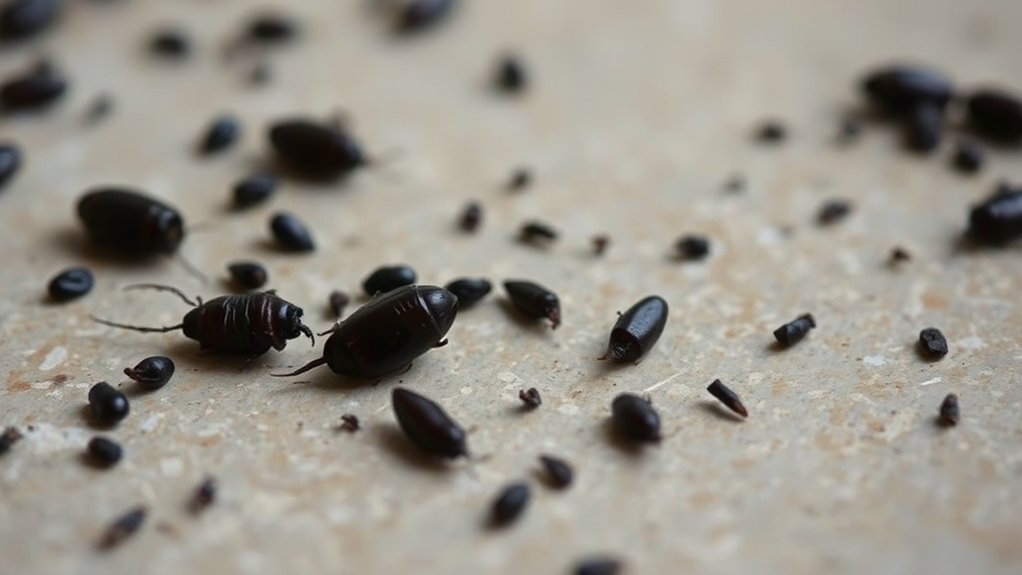
Cockroach droppings vary in appearance depending on the species, but a few key traits make them identifiable. German roach droppings measure 1-2mm and resemble ground black pepper or coffee grounds. You’ll notice dark brown to black smears or spots along corners and edges rather than distinct pellets. American roach droppings are larger at 2-3mm, forming small dark cylinders with ridged sides and blunt ends on both sides.
Fresh droppings appear dark and glossy, while older ones dry out and crumble easily. You might initially mistake them for dust specks or spilled spices. Their texture ranges from granular to elongated shapes, and they often scatter randomly across surfaces.
Knowing these traits helps you distinguish roach droppings from other pests. Unlike mouse droppings, which form solid pointed pellets measuring 6-10mm, roach droppings stay smaller, blunt-ended, and may smear on contact. Oriental roach droppings are mid-sized and tend to appear in damp areas like basements and utility spaces.
Where Cockroach Droppings Show Up Most in Your Home
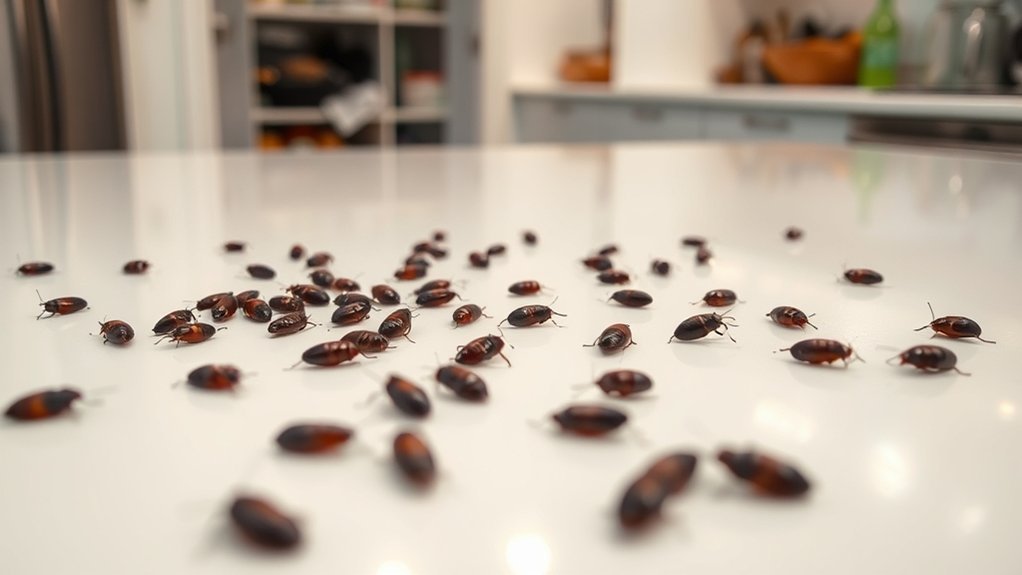
Cockroaches gravitate toward warmth, moisture, and food, so you’ll find their droppings concentrated in kitchens and bathrooms first. In your kitchen, check inside cabinets, behind the refrigerator, under the stove, and near the dishwasher for small dark specks or smear marks. Your bathroom is equally vulnerable, with droppings commonly appearing under the sink, behind the toilet, and around any moist plumbing areas. Beyond these two rooms, droppings also turn up along baseboards and room corners, as roaches use these pathways to travel throughout your home.
High-Risk Kitchen Areas
Your kitchen harbors five high-risk areas where cockroach droppings concentrate most heavily, and knowing exactly where to look can mean the difference between catching an infestation early and letting it spiral.
| Zone | Primary Attractant | Key Action |
|---|---|---|
| Countertops & cutting boards | Food residue, crumbs | Daily cleaning |
| Cabinets & drawers | Stored food proximity | Regular inspection |
| Appliance perimeters | Warmth, grease buildup | Seal entry points |
| Under-sink areas | Moisture, organic waste | Fix leaks promptly |
Beyond these zones, dirty dishes and improperly sealed containers sustain roach populations overnight. Check cabinet corners, appliance undersides, and plumbing gaps consistently. Droppings near these areas signal active infestation, so don’t dismiss small dark specks as dirt. Cockroaches also carry harmful bacteria like Salmonella that can contaminate the very surfaces and food storage areas where their droppings are found.
Common Bathroom Hiding Spots
Bathrooms rank among the most overlooked infestation zones in any home, yet cockroaches thrive there precisely because you’re less likely to scrutinize every corner. Check behind your toilet first—condensation and constant dampness create perfect survival conditions, while the dark gap between the base and floor hides droppings and shed skin. Under your sink, leaky pipes and mold give roaches both water and food, and cabinet voids offer prime egg-laying territory. Your drains aren’t just entry points—clogged pipes trap hair, soap residue, and organic debris that cockroaches actively feed on. Don’t overlook cracked tile grout, deteriorating caulk around your tub, and gaps along baseboards. Even medicine cabinets and bathroom storage areas harbor colonies when humidity stays elevated and items sit undisturbed for extended periods. Older plumbing systems that leak consistently raise moisture levels throughout the bathroom, creating breeding conditions that allow infestations to grow undetected for months.
German Roach Droppings: Tiny Specks That Hide in Plain Sight
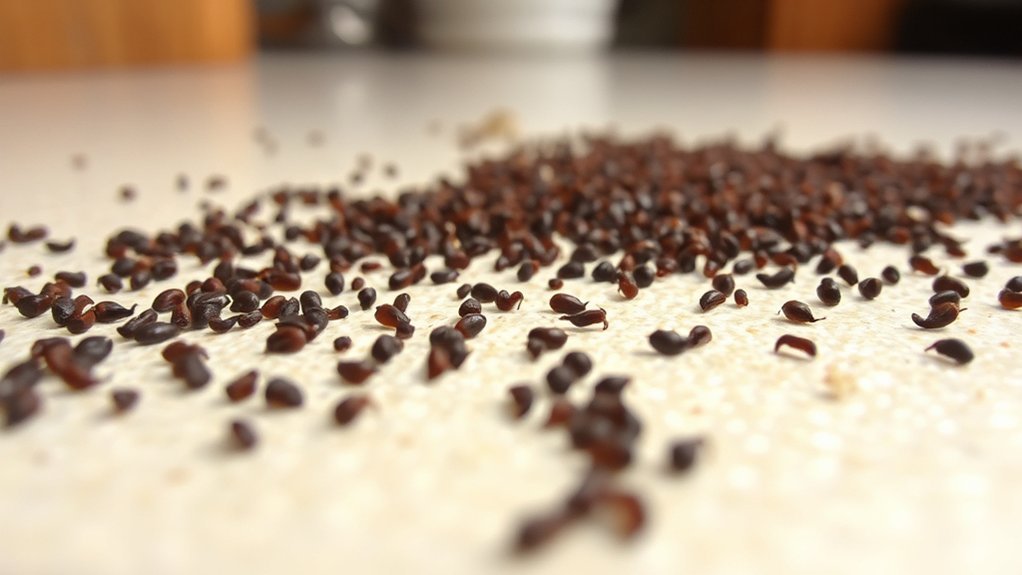
German roach droppings are tiny dark specks about 1mm in size, resembling black pepper or coffee grounds, and you’ll often overlook them as food particles or dirt. You’ll commonly find these minuscule smears in kitchen cabinets, along countertop edges, inside appliance motors, and within drawer tracks where German roaches travel and feed. Don’t underestimate what you’re seeing, because these droppings carry bacteria like Salmonella and E. coli, trigger asthma attacks, and spread allergens that seriously compromise your household’s health. German cockroaches can produce new generations in weeks, meaning a small problem can rapidly escalate into a full-blown infestation if left unaddressed.
Identifying Tiny Dark Specks
Tiny dark specks scattered across your kitchen shelf or cabinet drawer might look like spilled pepper or coffee grounds—but they could be German roach droppings. These droppings measure only 1–2mm, appearing as slightly elongated granules that are dark brown to black when fresh. Unlike mouse droppings, they have blunt ends and won’t roll like solid pellets.
You’ll often spot them clustered near infestation sites rather than scattered randomly. Check cabinet hinges, drawer tracks, and baseboards, where accumulation creates dark smears or ink-like stains. Their small size makes them easy to dismiss as ordinary dirt or dust.
If you’re finding these specks in multiple areas, that signals a serious infestation. Don’t sweep them dry—airborne particles carry allergens that trigger asthma and allergic reactions.
Common Hiding Spots Found
Because German roaches thrive where it’s warm, dark, and close to food or water, their droppings turn up in some surprisingly specific spots. Check cabinet hinges, drawer tracks, and shelving corners first—these tight spaces collect clustered fecal dots that range from brown to black.
Behind and beneath appliances like refrigerators, ovens, and dishwashers also harbor heavy dropping concentrations, since heat and humidity draw roaches in and keep them there. You’ll find similar evidence under sinks, along plumbing connections, and near water heaters where moisture is constant.
Don’t overlook baseboards, wall-floor junctions, and crown molding gaps. Roaches squeeze into these structural crevices during daylight hours and leave droppings throughout. Pantry shelves and food packaging near stored items are contaminated frequently as well.
Health Risks They Pose
Those tiny specks German roach droppings leave behind aren’t just unsightly—they’re a genuine health threat. The proteins in their feces, saliva, and shed skins become airborne, directly triggering allergic reactions and worsening respiratory conditions, especially in children.
Here’s what you’re actually dealing with:
- Asthma attacks — droppings provoke airway inflammation, causing wheezing and severe episodes
- Bacterial exposure — E. coli survives in feces up to 8 days; Salmonella transfers directly to food surfaces
- Foodborne illness — heat-resistant toxins persist even after cooking contaminated food
- Serious infections — pathogens spread include Staphylococcus, Streptococcus, and disease-causing organisms linked to salmonellosis, dysentery, and gastroenteritis
A single contact with contaminated surfaces transfers these pathogens, making quick identification and elimination critical.
American Roach Droppings: Larger, Ridged, and Easier to Spot
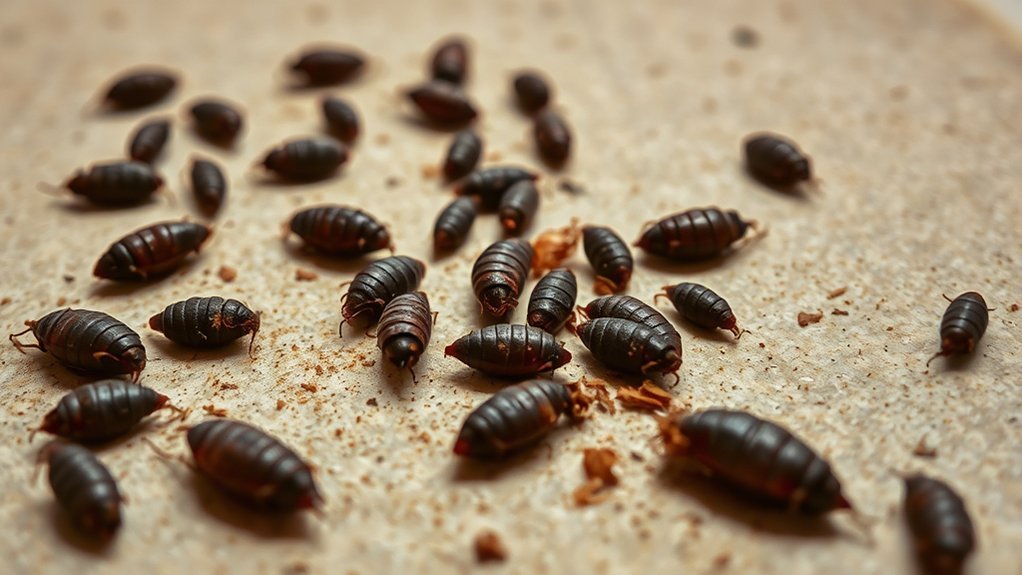
American cockroach droppings are among the easiest to identify because they’re noticeably larger than those of other species, measuring between 1/8 and 1/4 inch long—roughly comparable to mouse droppings. They appear as dark brown to black, cylindrical pellets with blunt ends and distinct ridges running lengthwise. Fresh droppings look slightly moist but dry and harden over time.
You’ll typically find them in damp, hidden spots—under sinks, near plumbing leaks, along baseboards, and inside cabinets.
| Feature | American Roach | German Roach |
|---|---|---|
| Size | 1/8–1/4 inch | Smaller specks |
| Shape | Cylindrical, blunt ends | Coffee ground-like |
| Color | Dark brown to black | Dark brown |
| Texture | Ridged, firm | Granular, smeared |
Nymphs produce smaller pellets, but adult droppings are large enough to spot with the naked eye, making infestations easier to detect early.
Cockroach vs Mouse Droppings: How to Tell the Difference
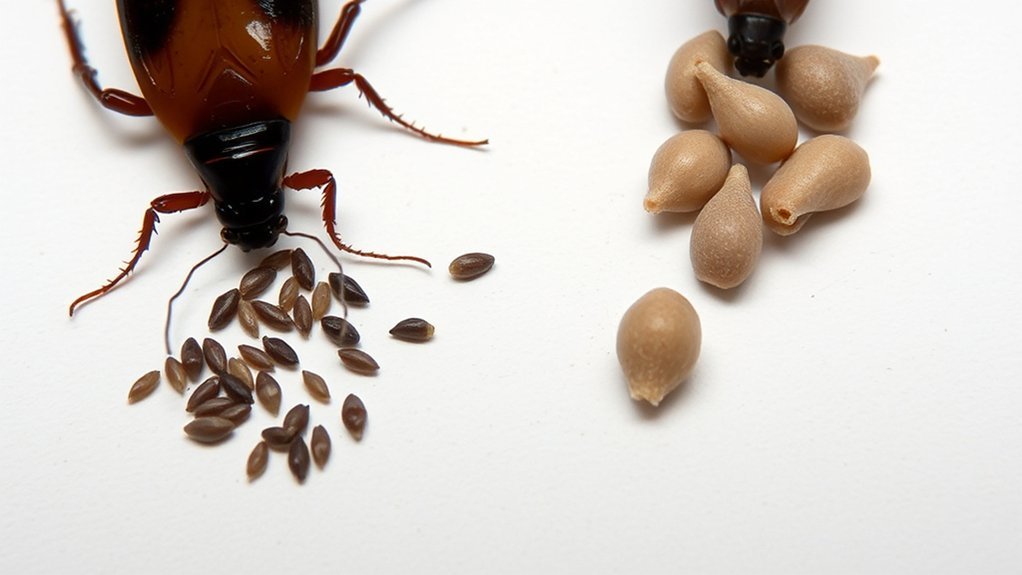
Finding droppings in your home can be unsettling, but correctly identifying the pest is critical before you treat the problem. Both mouse and cockroach droppings appear dark brown to black, so you’ll need to examine them closely.
Here’s what to look for:
- Shape: Mouse droppings have pointed ends; cockroach droppings have blunt, rounded ends.
- Size: Mouse droppings measure 3–6mm; German cockroach droppings reach only 1mm.
- Texture: Mouse droppings feel smooth and solid; roach droppings show lengthwise ridges and smear when touched.
- Color over time: Mouse droppings fade from shiny black to dull gray-brown; roach droppings stay consistently dark and non-shiny.
Location also helps. You’ll find mouse droppings in uniform trails along travel paths, while roach droppings cluster in tight hiding spots near food, water, and shelter. Identifying these differences helps you choose the right treatment fast.
How Many Cockroach Droppings Signal a Serious Infestation?
Once you know what cockroach droppings look like, the next question is how many are too many. Pest professionals classify infestations by roach count, and the droppings reflect those numbers directly. Five or fewer roaches signal a light infestation, while 10 to 25 indicate a moderate problem. Beyond 25, you’re dealing with a heavy infestation and significant dropping accumulation throughout the home.
Here’s the catch: spotting just a few roaches doesn’t mean only a few exist. Up to 40 or 50 may be hiding while you see only a handful, all producing droppings continuously due to their high metabolism.
Location matters as much as quantity. Droppings scattered across multiple areas suggest a settled population, not occasional wanderers. When you combine heavy dropping evidence with egg cases, shed skins, or a musty odor, that confirms an aggressive infestation requiring immediate professional treatment.
The Right Way to Clean Up Cockroach Droppings
Cleaning up cockroach droppings involves more than grabbing a paper towel—you’re dealing with allergens, bacteria, and pathogens that become dangerous if disturbed incorrectly.
Before starting, gear up with gloves, a mask, and protective eyewear. Then follow this process:
- Vacuum first using a HEPA filter vacuum, starting at elevated surfaces like cabinet tops and refrigerators, then working down to baseboards.
- Wash surfaces with soap and warm water, scrubbing in small circular sections to guarantee thorough contact.
- Disinfect thoroughly using Lysol, an all-purpose disinfectant spray, or a 50/50 white vinegar and water solution left on surfaces for several minutes.
- Dispose of everything by sealing used sponges and vacuum bags in plastic bags before discarding.
Removing droppings also eliminates pheromone markers that attract more roaches. After professional pest control treatment, avoid wiping treated surfaces—you’ll remove the applied chemicals.
Frequently Asked Questions
Can Cockroach Droppings Stain Furniture or Walls Permanently?
Cockroach droppings can permanently stain your furniture and walls if you don’t act quickly. You’ll need hydrogen peroxide for furniture and OxiClean for plastic, while spray cleaners easily tackle painted walls before stains set.
Do Cockroach Droppings Smell, and Can You Detect Them by Odor?
Yes, cockroach droppings do smell. You can detect a musty, oily, slightly sweet odor near infested areas. The scent intensifies with larger populations, making kitchens and bathrooms the strongest detection points in your home.
How Quickly Do Cockroaches Produce Droppings After Eating?
Cockroaches produce droppings almost immediately after eating. You’ll notice they defecate directly on food sources while feeding, and bacteria from ingested material appears in their feces right away, creating instant contamination risks.
Can Pets Get Sick From Ingesting Cockroach Droppings Accidentally?
Yes, your pets can get sick from ingesting cockroach droppings. The feces contain harmful bacteria and pathogens that’ll cause vomiting, diarrhea, and gastrointestinal upset. Keep your pet’s food sealed and areas clean.
Do Cockroach Droppings Look Different Depending on What They Ate?
Yes, what cockroaches eat directly affects their droppings’ appearance. If they’ve consumed grease, starch, or garbage, you’ll notice variations in color, texture, and consistency, ranging from dark smears to cylindrical pellets.
Conclusion
Now that you’ve learned how to identify cockroach droppings, you’re better equipped to spot an infestation early. Don’t ignore those tiny dark specks or ridged pellets—they’re your first warning sign that roaches have moved in. Act quickly by cleaning up droppings safely and calling a pest control professional if you’re seeing large amounts. The sooner you address the problem, the easier it’ll be to eliminate these unwanted houseguests for good.
