
Cockroach Removal: When to DIY and When to Call a Professional
You can handle minor cockroach problems yourself using boric acid, borax-sugar baits, or diatomaceous earth — especially if you’re only spotting the occasional roach at night. But once you’re seeing roaches during the day, finding droppings, or noticing egg cases, it’s time to call a professional exterminator. DIY sprays and foggers often make infestations worse by scattering pests. Knowing the difference between the two situations can save you serious time, money, and frustration — and there’s a lot more to unpack here.
Key Takeaways
- Minor infestations with occasional sightings can be handled using DIY methods like boric acid, borax-sugar baits, or diatomaceous earth.
- Daytime roach sightings, droppings, egg cases, or oily odors signal a severe infestation requiring professional intervention.
- DIY sprays and foggers only kill visible roaches and fail to eliminate hidden colonies or prevent resistance.
- Professionals use concentrated insecticides, species-specific baits, and follow-up visits to ensure long-term, comprehensive infestation control.
- A single professional treatment ($100–$400) is often more cost-effective than repeated failed DIY attempts and potential property damage.
Can You Handle Cockroach Removal Yourself?
Wondering if you can tackle cockroach removal on your own? The short answer is yes — for moderate infestations, DIY methods can work surprisingly well. Boric acid, borax-sugar baits, and diatomaceous earth are proven options that eliminate roaches effectively when applied correctly.
DIY cockroach removal works — boric acid, borax-sugar baits, and diatomaceous earth eliminate roaches effectively when applied correctly.
Placement matters most. Target high-traffic areas like under refrigerators, behind stoves, inside cabinet backs, around pipes, and under sinks. For heavy infestations, place five to six bait caps in the kitchen and two to three in bathrooms.
Here’s the reality though — DIY approaches have clear limitations. Homemade sprays only kill on contact and won’t prevent future infestations. Bait traps reduce activity but rarely eradicate colonies completely. Identifying every cockroach travel area is challenging, and maintaining consistent application takes commitment.
If you stay diligent, a well-executed DIY strategy can eliminate roaches within two weeks and remain effective for up to a year. To make your own bait, simply mix equal parts of powdered sugar, cornmeal, and borax for a cost-effective and non-toxic solution.
Signs You’re Dealing With a Minor Cockroach Infestation
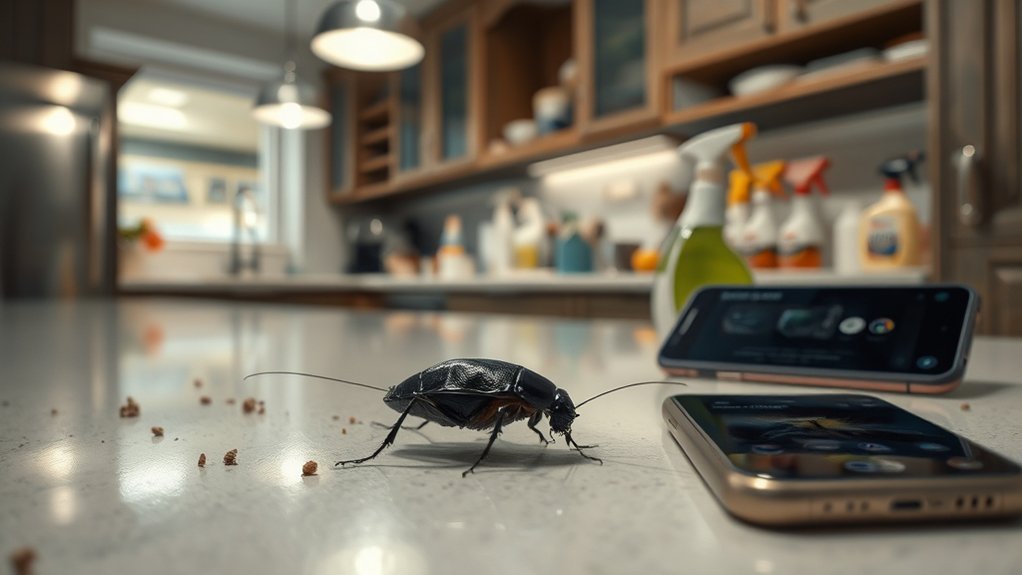
If you’re dealing with a minor cockroach infestation, you’ll likely spot roaches only occasionally, usually at night when they venture out to forage. You won’t see them during the day, and when you do catch one in the light, it’ll dart quickly out of sight. The activity you notice stays confined to one or two specific areas, like a kitchen cabinet or bathroom corner, rather than spreading throughout your home. A few scattered droppings may simply indicate a scout cockroach exploring your space rather than a full-blown colony taking hold.
Occasional Sightings Only
Spotting a single cockroach doesn’t automatically mean your home is overrun. If you’ve seen only one roach near a door, drain, or entry point without any repeat appearances, it’s likely a hitchhiker that wandered in rather than a sign of an established colony.
Pay attention to the pattern of sightings. Minor infestations typically show activity only at night, confined to dark, damp spaces. If you’re not seeing roaches during the day, there’s no overcrowding pushing them into the open.
Check for supporting evidence before panicking. Without droppings, shed skins, egg cases, or a musty odor, that single sighting probably reflects a minor issue. Monitor the area closely, but one roach alone isn’t cause for alarm. Roaches are primarily drawn to environments that offer food, moisture, and shelter, so eliminating these conditions reduces the likelihood that a lone wanderer will stay and establish a presence.
Limited Infestation Areas
Even if you’ve seen only one or two roaches, certain physical signs can confirm whether you’re dealing with a minor but active infestation. Check specific locations for these clues:
| Sign | What You’ll Find | What It Means |
|---|---|---|
| Droppings | Pepper-like black specks | Minor activity nearby |
| Egg cases | Brown, bean-shaped capsules | Active breeding present |
| Shed skins | Translucent, papery shells | Nymphs are maturing |
Smear marks — greasy brown streaks along baseboards or pipes — often appear before heavier signs develop. You might also notice a faint musty odor in cabinets or behind appliances before spotting anything visible. These early indicators, especially when confined to one or two rooms, suggest a limited but growing problem that still needs immediate attention. Early detection can prevent the infestation from worsening and help you maintain a cleaner, healthier living environment before the problem requires more intensive intervention.
DIY Cockroach Removal Methods That Actually Work
When it comes to eliminating cockroaches without calling an exterminator, natural ingredient-based baits are among the most reliable options you can make at home. Mix equal parts powdered sugar, yellow cornmeal, and borax, then place the mixture in bottle caps throughout high-activity zones like under refrigerators, behind cabinets, and near water sources. This approach can remain effective for up to a year when stored properly.
For vertical surfaces and wall cavities, combine boric acid with rice flour and Karo syrup to create a paste that won’t spill. If you prefer a non-toxic option safe for kids and pets, mix two tablespoons each of baking soda and sugar inside a container with a small hole punched in the side.
Boost any bait’s effectiveness by using a flashlight to locate roach feces and harbor areas first, then distribute five to six stations in the kitchen and two to three in bathrooms. Sealing cracks and crevices around windows, doors, and plumbing can further reduce cockroach activity by blocking the entry points they use to access your home.
The Real Limitations of DIY Cockroach Control
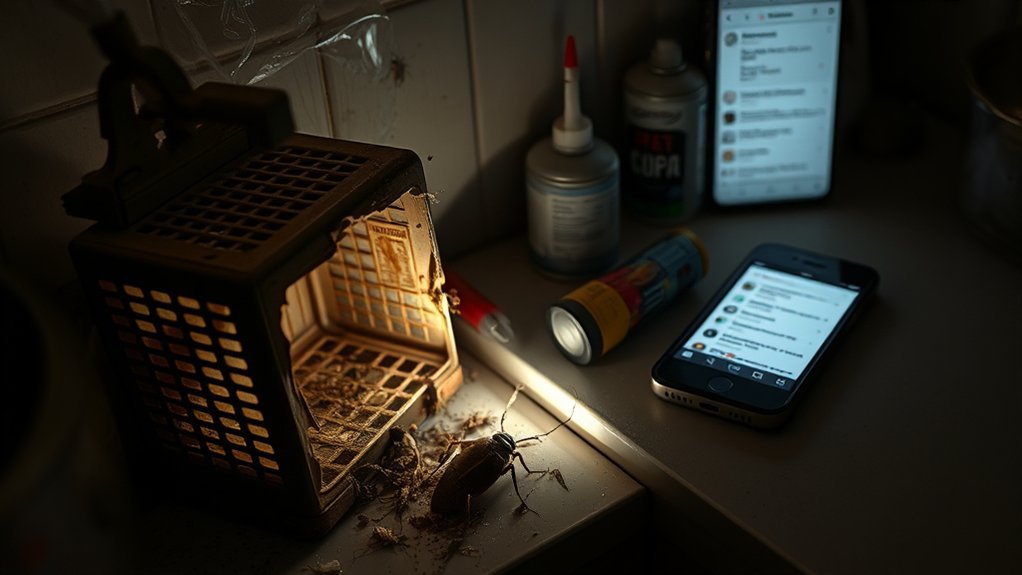
While DIY cockroach removal methods can deliver short-term wins, they come with serious limitations that often let infestations bounce back. Bombs, foggers, and sprays can’t reach deep cracks, wall voids, or hidden nests where cockroaches actually breed. You’re fundamentally treating the surface while the real problem grows out of sight.
Most store-bought products kill adult roaches but leave eggs and nymphs completely untouched. Since egg capsules stay hidden in concealed spots, new generations hatch and restart the cycle. Bait stations help but only work when placed precisely near nesting sites — improper positioning wastes both time and money.
DIY methods also carry real health risks. Misusing sprays, boric acid, or insecticides can harm you, your pets, and your home. Chemical staining, lingering odors from decaying roaches, and repeated product costs add up fast. Without targeting root causes, you’re managing symptoms rather than solving the problem.
Signs It’s Time to Call a Cockroach Exterminator
When DIY methods fail to reduce the cockroach population, you’re likely dealing with a large, established colony that requires professional intervention. You’ll also need an exterminator if you can’t identify the species, since treatment strategies vary considerably between German, American, and Oriental cockroaches. Recognizing these signs early prevents the infestation from spreading further into your home.
Large Colony Detected
Spotting a single cockroach during the day is a strong signal that your home may already house a large infestation. Roaches are nocturnal and gregarious, so when you see one in daylight, it means their hiding spots are full, pushing them into the open. Hundreds could already be nesting nearby.
Look for supporting signs: coffee-ground droppings in corners and under appliances, rice-grain pellets near cabinets, and dark bean-shaped egg casings close to pipes or the refrigerator base. Each casing holds 20–50 eggs, and multiple casings confirm rapid reproduction. If you’re also detecting a persistent musty, oily odor throughout your home, that’s aggregation pheromones at work—actively drawing more roaches in. At this stage, DIY methods won’t cut it. Call a professional exterminator immediately.
DIY Methods Failed
Many homeowners reach a frustrating turning point: they’ve treated their home repeatedly, yet cockroaches keep coming back. Store-bought sprays only kill visible roaches, missing hidden colonies entirely. Foggers don’t penetrate walls or appliances, and roach bombs actually scatter pests into new areas, worsening your problem.
| DIY Method | Why It Fails |
|---|---|
| Sprays | Repel roaches deeper into walls |
| Foggers | Miss cracks and hiding spots |
| Baits | Low doses don’t impact full colonies |
Cockroaches also develop resistance to over-the-counter pesticides over time, making repeated applications increasingly ineffective. If you’re seeing roaches during the day or noticing activity after multiple treatments, your infestation has surpassed what DIY methods can handle. It’s time to call a professional.
Species Identification Needed
Knowing which cockroach species you’re dealing with changes everything about how an exterminator approaches treatment. Different species hide, breed, and respond to treatments differently, so misidentification wastes time and money.
Watch for these distinguishing signs:
- Dropping size and shape — Small roaches leave coffee ground-like feces, while larger species produce cylindrical, ridged pellets.
- Egg casing locations — Some species deposit casings in wall voids; others leave them near food sources or appliances.
- Activity timing — Nocturnal movement versus daytime sightings helps narrow down the species and infestation severity.
- Odor intensity — Certain species produce stronger oily, musty smells than others, signaling both type and population size.
If you can’t confidently identify what you’re seeing, call a professional immediately.
Why Professional Cockroach Treatments Work Better Than Store-Bought Products
When store-bought sprays and traps fail to eliminate a cockroach infestation, it’s usually because consumer products can’t match the potency or precision of professional-grade treatments. Pest control professionals access concentrated insecticides and restricted-use pesticides unavailable in stores, along with gel baits proven to achieve over 93% mortality in lab trials compared to 84% for consumer alternatives.
Professionals also apply species-specific baits and growth regulators that disrupt reproduction, targeting future generations—not just the roaches you see. Their application methods reach cracks, wall voids, and nesting zones that DIY products simply miss.
Beyond potency, professional treatments combat resistance by rotating multiple products with different modes of action. Since roaches develop resistance to common store-bought chemicals, this strategy matters. Ongoing monitoring and follow-up visits guarantee long-term control, making professional services more cost-effective than repeatedly purchasing ineffective consumer products.
What a Professional Cockroach Inspection Actually Finds
Professional cockroach treatments succeed largely because technicians know exactly where to look—and what they’re looking for goes well beyond the roaches you can see. A trained inspector uncovers evidence you’d likely miss entirely, building a complete picture of how severe your infestation actually is.
The roaches you can see are only part of the problem—trained inspectors know exactly where to look for the rest.
During a professional inspection, here’s what gets documented:
- Harborage sites — wall voids, motor housings, door frames, and cabinet interiors where roaches cluster in dark, humid conditions
- Physical evidence — fecal droppings resembling coffee grounds, shed nymph skins, and pill-shaped egg casings tucked into crevices
- Entry points — gaps around pipes, utility lines, and foundation cracks that allow continuous re-entry
- Infestation severity — glue boards placed strategically reveal population size, with 150+ captures indicating a heavy infestation
This mapped intelligence tells technicians which species they’re dealing with, where to treat, and how aggressively your situation demands action.
Is Professional Cockroach Removal Worth the Cost?
Whether professional cockroach removal justifies its cost depends on what you’re actually comparing. A single professional treatment runs $100–$400, while DIY products cost $50–$200 per round—but that’s rarely one round. Failed attempts mean repeat purchases, wasted weekends, and a prolonged infestation that causes food contamination, property damage, and mounting health costs.
Professionals bring specialized knowledge, pro-grade products, and tailored treatment plans that consumer-grade solutions can’t match. They identify root causes rather than surface symptoms, reducing the likelihood you’ll need repeated treatments. Many services also include free follow-up visits if pests return.
Consider the broader picture: untreated infestations worsen allergies and asthma, contaminate food with salmonella, and can escalate into structural damage costing thousands. Annual professional pest control runs $300–$800—far less than a $3,000 termite repair or cumulative DIY spending that never fully solves the problem.
How to Cockroach-Proof Your Home After Treatment
Getting rid of cockroaches is only half the battle—keeping them out requires deliberate, ongoing effort. Once treatment’s complete, your habits and home maintenance determine whether they return.
Follow these four essential steps:
- Seal entry points. Inspect gaps around trim, doors, windows, plumbing, and electrical lines. Use silicone caulk for small gaps and expanding foam for larger ones.
- Maintain cleanliness. Wipe countertops after meals, store food in airtight containers, vacuum regularly, and remove pet food at night.
- Eliminate moisture. Fix leaks under sinks and around pipes, use dehumidifiers in humid areas, and wipe kitchen surfaces dry promptly.
- Conduct ongoing inspections. Check baseboards and crown molding for split caulking, monitor bait consumption, and reapply gel bait with IGR as needed.
Combining these habits consistently prevents reinfestation and protects your investment in professional treatment.
Frequently Asked Questions
How Long Does It Typically Take for Cockroach Eggs to Hatch?
Cockroach egg hatching times vary by species. You’re looking at 28 days for German, 44 for American, 50 for Brown-Banded, and up to 60 days for Oriental cockroaches to hatch.
Can Cockroaches Travel Between Apartment Units Through Shared Walls?
Yes, cockroaches can travel between your apartment units through shared walls. They’ll squeeze through tiny cracks, gaps around pipes, and wall voids, making it easy for them to spread from one unit to another.
Are Certain Geographic Regions More Prone to Specific Cockroach Species?
Yes, where you live greatly affects which cockroach species you’ll encounter. If you’re in Florida or Texas, you’ll face tropical species, while Oregon’s residents mostly deal with German, Oriental, and American cockroaches.
Do Cockroaches Pose Direct Physical Dangers Beyond Spreading Bacteria and Allergens?
Cockroaches don’t bite you, but their heavy leg spines can scratch your skin, risking bacterial infection. You’re also at risk from accidental physical contact during their movement across your body.
Can Cockroaches Develop Resistance to Professional-Grade Treatments Over Time?
Yes, cockroaches can develop resistance to professional-grade treatments over time. They’ve evolved to survive doses up to 10 times the lethal amount, and treatments can actually select for stronger resistance within just months.
Conclusion
Cockroaches aren’t a problem you want to ignore or underestimate. If you’re catching one or two occasionally, a solid DIY approach can work. But when you’re seeing them regularly, finding egg cases, or noticing damage, it’s time to call a professional. Don’t let a manageable problem turn into a full-blown infestation. Act quickly, choose the right solution for your situation, and take the prevention steps seriously once treatment is done.
