
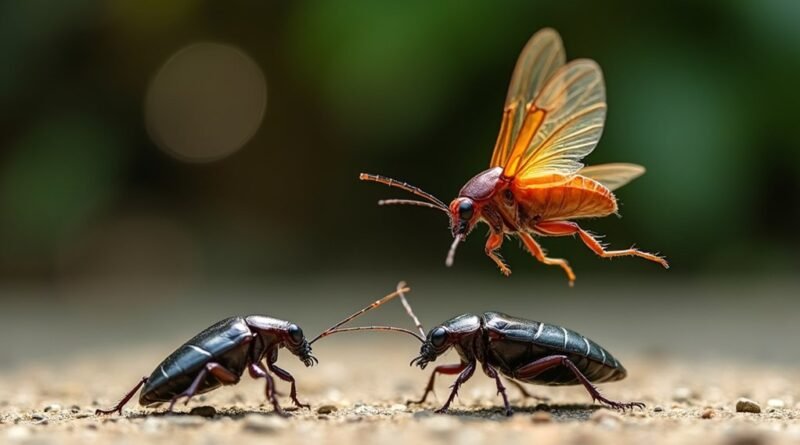
Flying Roach vs Cockroach: Are Flying Cockroaches a Different Species?
Flying cockroaches aren’t a different species — they’re just adult roaches that have finally grown their wings. They belong to the same order as their crawling counterparts, but they’ve completed their final molt. Not all species fly equally well, though. Some are strong fliers, while others only glide short distances. They also carry the same pathogens and pose identical health risks. Stick around, and you’ll uncover everything you need to know about these winged pests.
Key Takeaways
- Flying cockroaches are not a separate species; they are simply adult cockroaches that have developed functional wings after their final molt.
- Most cockroach species have wings, but not all fly; some, like the American cockroach, glide rather than achieve true powered flight.
- Strong-flying species include the Asian, Smokybrown, and Australian cockroach, while German and Oriental cockroaches rarely or never fly.
- Warm temperatures above 85°F and humidity above 60% are key environmental triggers that stimulate cockroach flight activity.
- Flying and non-flying cockroaches carry identical pathogens and pose the same health risks, including salmonellosis and respiratory illnesses.
What Is a Flying Cockroach? It’s Just an Adult Roach
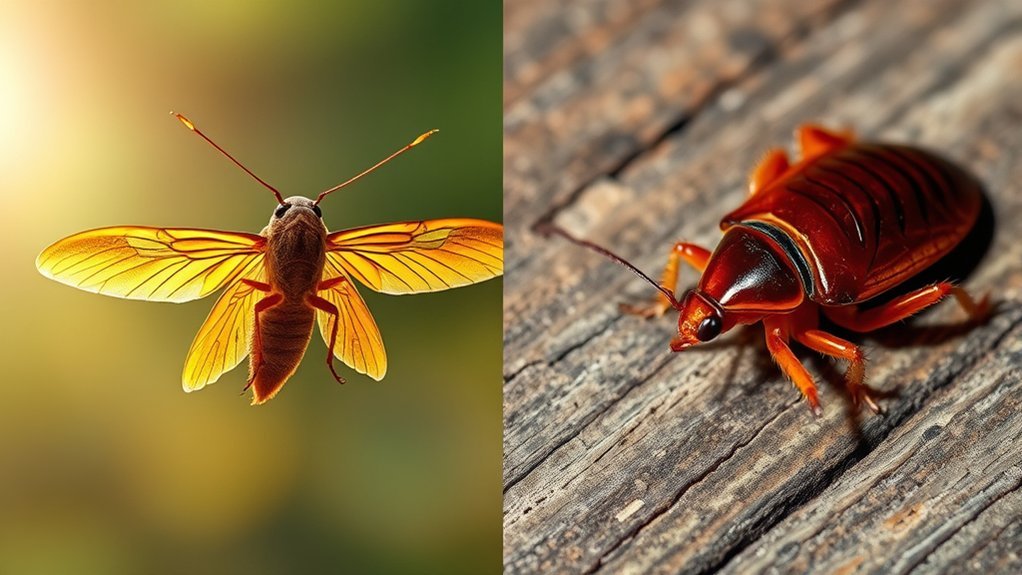
When you spot a cockroach taking flight, you’re not looking at a unique species — it’s simply an adult roach that has reached full maturity. Flying cockroaches belong to Order Blattodea, specifically families Blattidae and Ectobiidae, and they develop functional fore- and hind-wings only after their final molt.
Before reaching adulthood, nymphs remain completely flightless throughout every stage of development. Once a roach completes that final molt, it emerges with fully developed wings capable of flight. In most species, both males and females carry these wings.
It’s worth noting that having wings doesn’t guarantee flight. German cockroaches, for example, possess wings but never actually fly, preferring to run instead. Flight ability depends heavily on temperature — roaches need at least 85°F for their flight muscles to function properly. That’s why you’ll rarely see indoor flight in colder, northern climates. Additionally, humidity above 60% can further trigger flight activity, making warm and muggy conditions the most likely scenario for an encounter with an airborne roach.
Can Cockroaches Actually Fly, or Are They Just Gliding?
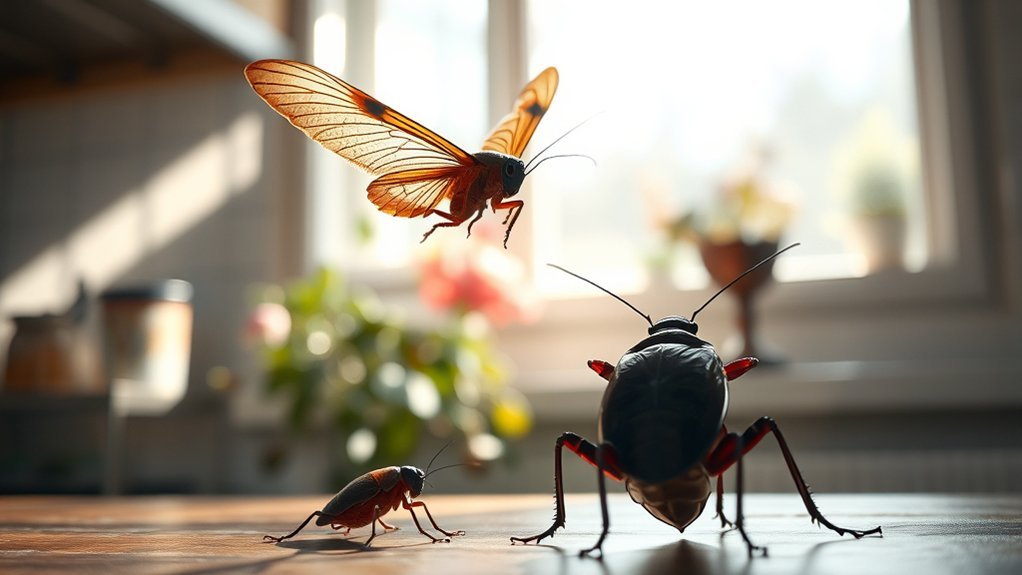
Now that you know adult roaches can develop functional wings, you might wonder whether they’re truly flying or just falling with style. The honest answer is that most cockroaches glide rather than fly.
True flight involves powered, sustained wing movement like birds or insects such as bees. Cockroaches don’t typically do that indoors. Instead, they launch from elevated surfaces like shelves, cabinets, or curtain rods and glide downward in short, uncontrolled descents. Warm temperatures help their wings generate enough lift to cover a room, but it’s still controlled falling rather than active flight.
That said, some species break this rule. The Asian cockroach actively flies toward light sources and covers longer distances. The Smoky Brown flies confidently in humid outdoor environments. The Australian cockroach flies indoors during summer. Among the more unique cases, only male Brown-Banded cockroaches can fly, as the females of this species are completely flightless.
Why Only Adult Cockroaches Can Fly?
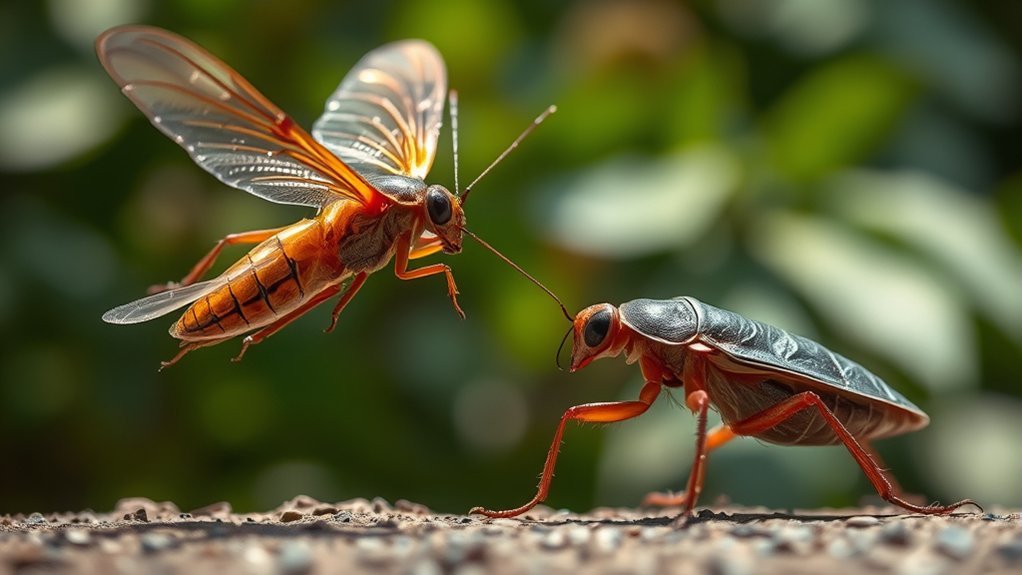
If you’ve ever wondered why you only see adult cockroaches flying, it’s because nymphs simply don’t have wings. As young cockroaches progress through their molting stages, they develop small wing pads, but these structures can’t support flight until the final molt completes their transformation into adulthood. Once a cockroach reaches full maturity, its wings finish developing, giving it the physical capability to fly or glide depending on the species. German cockroach nymphs are wingless but still display the same distinctive dark stripes seen on adults.
Adult Cockroaches Develop Wings
Unlike nymphs, adult cockroaches are the only stage capable of true flight because they’ve completed their final molt, which triggers the full development of both fore-wings and hind-wings. Before this final change, wings remain undeveloped and non-functional throughout the nymph stage.
However, having wings doesn’t guarantee equal flight capability across all species. Wing functionality varies greatly depending on the species and sex of the cockroach. For example, in brown-banded cockroaches, only males develop flight-capable wings, while females remain grounded despite having wings.
You’ll also notice that species from Blattidae and Ectobiidae families differ markedly in their flight capacity. So when you spot a winged cockroach, its actual ability to fly depends entirely on its species, sex, and developmental completion. Species like the Asian and smoky-brown cockroach tend to be far more capable fliers than others.
Nymphs Lack Flight Capability
Before reaching adulthood, cockroaches pass through a series of developmental stages called nymphs, and flight simply isn’t possible at any of these stages. Nymphs are completely wingless early on, and while they gradually develop small wing pads through multiple molts, these pads can’t generate aerodynamic force or support takeoff.
It’s not just about wings, though. A nymph’s body proportions, underdeveloped flight muscles, and overall structure make sustained flight physically impossible. Instead, young cockroaches rely entirely on running and maneuvering through tight spaces to escape threats.
This applies to every cockroach species, regardless of whether the adults eventually fly. No intermediate stage gives nymphs partial flight ability. True wings only emerge during the final adult molt, and that’s when flight becomes possible. Species like smoky brown cockroaches are strong fliers as adults but are just as grounded as any other nymph during their developmental stages.
Final Molt Enables Flight
The final molt is what separates a wingless nymph from a fully capable adult — and it’s the single biological event that makes flight possible. Before this stage, nymphs simply don’t have wings. After it, they do.
The process isn’t random. Molting hormones, specifically ecdysone, regulate the entire changeover. A major ecdysone peak triggers the final molt, and wings emerge fully functional immediately after. German cockroaches develop usable wings right away. American and brown-banded cockroaches follow the same pattern — wings appear only once the final molt is complete.
You’re also looking at reproductive maturity kicking in at this stage. Flight and reproduction don’t develop gradually — they arrive together, directly after the last molt, marking the cockroach’s full shift into adulthood.
Which Cockroach Species Can Actually Fly?
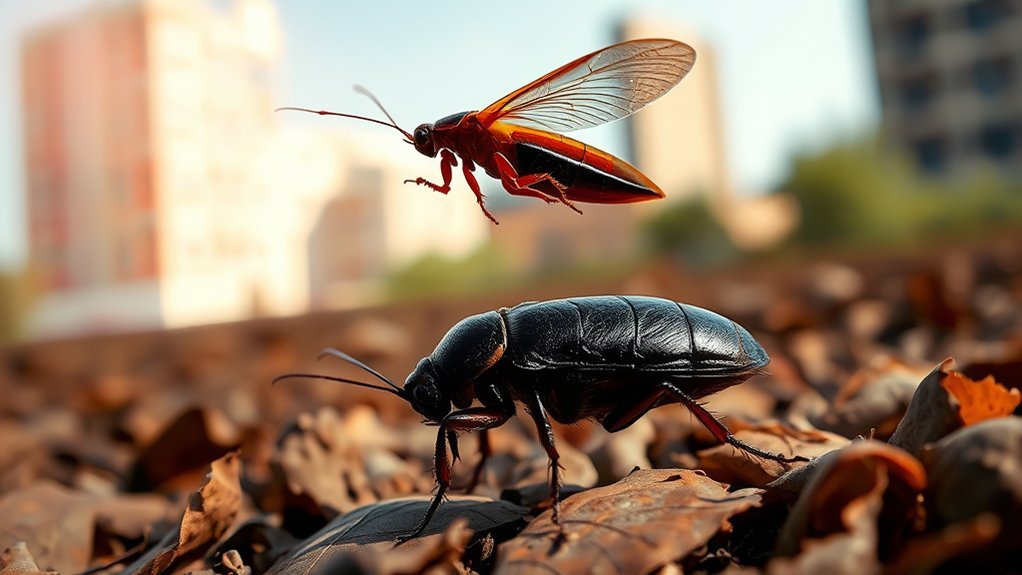
When it comes to cockroaches, you’ll find a clear divide between strong fliers and gliders. Species like the Asian, Australian, Smokybrown, and Pennsylvania wood cockroach are true fliers, actively taking to the air, while the American cockroach mostly glides short distances from elevated surfaces. Meanwhile, species like the German, Oriental, and Florida woods cockroach either rarely or never fly, despite some having wings.
Strong Fliers vs. Gliders
Not all cockroaches fly the same way—some are strong, active fliers, while others merely glide when escaping danger. Strong fliers like the smokybrown and Asian cockroach use their wings purposefully. The smokybrown’s wings extend beyond its body, letting it fly into attics and homes during humid nights. The Asian cockroach actively seeks light, making it a frequent indoor nuisance near doors and windows.
Gliders, on the other hand, don’t sustain powered flight. The American cockroach drops from elevated surfaces like walls or shelves, using its wings to control the fall rather than truly fly. The Australian cockroach glides in warm, humid conditions but can’t maintain air time like a true flier. Knowing which type you’re dealing with helps you understand how it’s entering your space.
Species With Flight Capability
Knowing whether a cockroach glides or flies actively matters, but it helps even more to know exactly which species you’re dealing with. Several cockroaches you’ll encounter are capable of true flight or gliding.
The Smokybrown and Asian cockroach are your strongest fliers. Smokybrowns use powered flight in humid outdoor environments, while Asian cockroaches maneuver easily with longer wings and chase lights aggressively.
Australian cockroaches fly short distances during summer, mainly escaping threats or finding food. American cockroaches rarely fly but glide from heights when heat or disturbance triggers it.
Brown-banded cockroaches only fly if you’re dealing with an adult male—females are completely flightless. Knowing these distinctions helps you identify what you’re facing and respond with the right control strategy.
Which Common Cockroaches Can’t Fly?
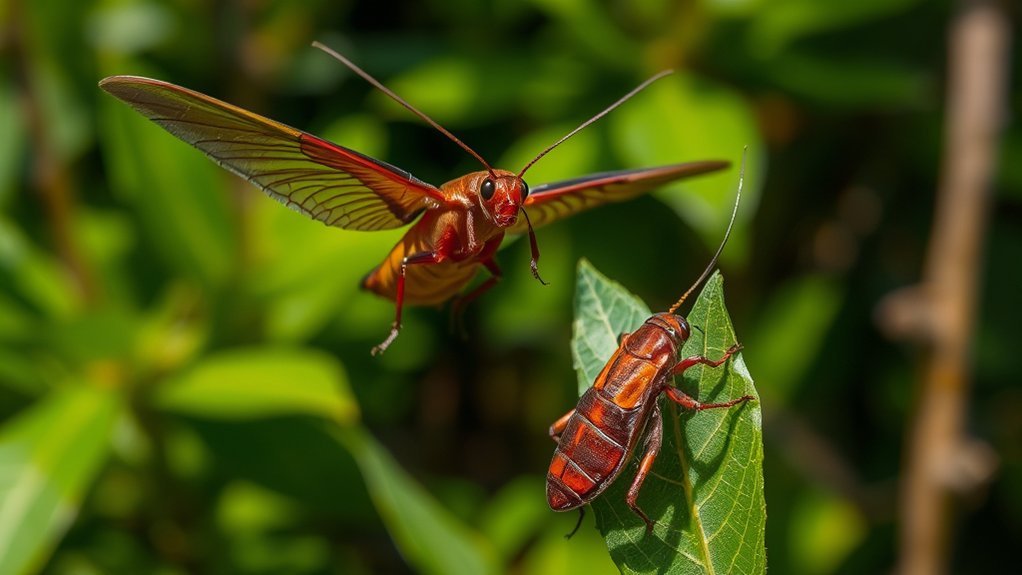
While many cockroaches have wings, not all of them use those wings to fly. Some of the most common species you’ll encounter indoors are actually completely grounded despite their wing structures.
The German cockroach (*Blattella germanica*) has wings but prefers running over flying. It’s exceptionally fast on its feet, making it one of the most difficult indoor pests to catch. The Oriental cockroach (*Blatta orientalis*), often called a water bug, takes flightlessness even further — its wings are underdeveloped, making flight physically impossible. You’ll typically find it in damp spaces like basements and sewers.
The brown-banded cockroach presents an interesting case. Males can fly, but females can’t, even though they have wings. So if you’re spotting brown-banded cockroaches in your home, roughly half of them are permanently grounded.
These species contrast sharply with fliers like the American, Smoky Brown, and Asian cockroaches.
How to Identify a Flying Cockroach in Your Home
Spotting a flying cockroach isn’t always straightforward, since different species carry distinct visual markers that set them apart. Smokybrown cockroaches display a uniform mahogany brown color with wings extending beyond their abdomen. Brown-banded cockroaches show distinct banding patterns across their wings and abdomen, and you’ll notice adult males fly readily when disturbed. American cockroaches appear dark reddish brown with a yellowish head outline, though they glide rather than truly fly. Asian cockroaches resemble German cockroaches but fly indoors through open doors and windows.
Beyond appearance, you can identify flying cockroaches through behavioral clues. Smokybrown species are strong nocturnal fliers drawn to lights, while increased flight activity before storms signals air pressure sensitivity. You’ll also find supporting evidence like dark pepper-like droppings near baseboards, musty oily odors in heavily infested areas, and shed skins in hiding spots. These combined signs confirm a flying cockroach presence in your home.
Why Do Flying Cockroaches Suddenly Appear in Summer?
Once you’ve learned to recognize flying cockroaches by their markings and behavior, the next question is why they suddenly seem to materialize out of nowhere each summer. The answer comes down to temperature and biology working together.
Cockroaches are cold-blooded, so warmer temperatures directly accelerate their metabolism, triggering increased movement, breeding, and flight. Heat gives them the energy needed to deploy their wings, which most species rarely use in cooler conditions.
Summer heat and humidity also drive cockroaches upward from sewers and subterranean hiding spots, pushing them into your living spaces at night when temperatures stay elevated. Their breeding cycles simultaneously accelerate, expanding populations rapidly.
When they do take flight, they’re typically hunting mates, locating food, escaping threats, or scouting locations for new colonies. If you’re in a warmer southern state like Florida, you’ll notice this aerial activity far more frequently than residents in northern cities experience it.
What Draws Flying Cockroaches Toward Lights and Windows?
When you leave your porch light or indoor lamps on at night, you’re fundamentally sending an open invitation to flying cockroaches. These insects mistake artificial light for celestial cues like moonlight, which disrupts their navigation and pulls them straight toward your home. Your windows and open doors then become easy entry points, letting light-attracted species like smoky brown and Australian cockroaches fly right inside.
Light Attraction Triggers Flight
If you’ve ever noticed cockroaches clustering near porch lights or darting toward illuminated windows, recent 2024 research reveals why: artificial lighting disrupts insects’ spatial orientation systems entirely. Rather than mistaking lights for navigation sources, cockroaches experience compromised spatial awareness that triggers attraction responses impossible under natural conditions.
Light direction matters greatly. Downward-facing lights cause insects to fly upward toward the source, then dive toward reflected light on surfaces below. Upward-facing lights produce comparatively stable forward flight without that disruptive diving behavior.
Asian cockroaches represent a notable exception, confusing artificial illumination with moonlight and actively entering structures through illuminated openings. Most other species don’t fear light but prefer darkness based on evolutionary conditioning. When sudden lighting changes occur, panic responses drive them toward shadows rather than genuine light aversion.
Windows as Entry Points
Flying cockroaches use five primary entry points around windows: open frames, torn screens, cracked sills, gaps in surrounding siding, and crevices in window trim. Their flat bodies let them squeeze through sliver-thin gaps you’d barely notice.
Once inside, they’re drawn by warmth and moisture near windows. Leaky air conditioners, heating ducts, and condensation on glass all signal ideal living conditions. Poor window seals create standing water, and that damp environment pulls them closer.
You’ll rarely spot them immediately after entry because they’re nocturnal. During the day, they hide in dark window crevices, behind crown molding, or in clutter like boxes nearby. Rotting organic matter from moisture buildup near windows makes these areas even more attractive to an incoming infestation.
Do Flying Cockroaches Spread More Disease Than Crawling Ones?
Whether flying cockroaches spread more disease than crawling ones is a reasonable concern, but the science doesn’t support a meaningful distinction. Both types carry identical pathogens and use the same transmission routes.
| Disease | Cause |
|---|---|
| Gastroenteritis | E. coli, Salmonella |
| Salmonellosis | Salmonella bacteria |
| Dysentery | Intestinal infection |
| Typhoid fever | Salmonella Typhi |
| Respiratory illness | Allergens, droppings |
Cockroaches spread 33 bacteria types, six parasitic worms, and seven pathogens regardless of flight capability. They accumulate bacteria from garbage, sewage, and decaying matter, then transfer it through droppings, vomiting, and direct contact with food and surfaces.
You face the same risks from crawling species as flying ones. Cockroach allergens become airborne either way, triggering asthma and chronic respiratory symptoms. Children are especially vulnerable. Your biggest concern shouldn’t be whether a roach flies—it’s whether one’s inside your home at all.
Why Flying Cockroaches Are Harder to Get Rid Of
Getting rid of flying cockroaches is harder than eliminating their crawling counterparts, and several overlapping factors explain why. First, many populations have developed metabolic and target-site resistance to pyrethroids, carbamates, and organophosphates, so common over-the-counter sprays often fail entirely. When aerosols do make contact, they can scatter the population and trigger bait-shy behavior, worsening the infestation rather than controlling it.
Placement adds another layer of difficulty. Flying species harbor in dry structural voids and upper areas, meaning floor-level baits won’t reach them. You’ll need to apply treatments inside upper cabinets, behind appliances, and near ceiling-level harborages to have any real impact.
Their nocturnal habits also allow populations to grow undetected until the infestation becomes severe. Because flying activity during daylight signals serious overcrowding, you’re likely already behind. Without an integrated approach combining rotation of pesticide groups, growth regulators, and proper bait placement, elimination remains unlikely.
Frequently Asked Questions
Can Flying Cockroaches Survive Cold Winters Indoors Without Warm Conditions?
Flying cockroaches can’t survive cold winters indoors without warm conditions. They need warmth, humidity above 60%, and food to thrive. Without these essentials, you’ll find their activity slows considerably, and they won’t establish lasting infestations.
How Long Does a Cockroach Nymph Take to Develop Functional Wings?
You’ll find that development time varies by species. German cockroaches take 55-68 days, American cockroaches develop similarly, but Oriental cockroaches need 300-800 days before males grow short wings and females don’t develop wings at all.
Are Flying Cockroaches More Likely to Infest Homes With Pets?
Flying cockroaches aren’t more likely to infest your home just because you have pets. However, pet food crumbs and moisture near water bowls can attract them, increasing your infestation risk.
Can Flying Cockroaches Travel Between Apartment Units Through Shared Ventilation?
Yes, flying cockroaches can travel between your apartment units through shared ventilation. They’ll exploit gaps as small as 1/8 inch in ducts, vents, and HVAC systems, especially during warmer months when their foraging activity increases considerably.
Do Flying Cockroaches Bite Humans More Often Than Crawling Cockroaches?
You don’t face a higher bite risk from flying cockroaches than crawling ones. Both types rarely bite humans, and when they do, it’s only under extreme starvation conditions, regardless of wing ability.
Conclusion
So now you know the truth: flying roaches aren’t a separate species—they’re just adult cockroaches using the wings they’ve always had. You’ve seen why they appear in summer, what attracts them to your lights, and why they’re tougher to eliminate. Whether they’re crawling or flying, they’re equally dangerous and unwelcome. Don’t wait until they’ve settled in. Take action early, seal your entry points, and you’ll keep these winged pests from taking over your home.
