
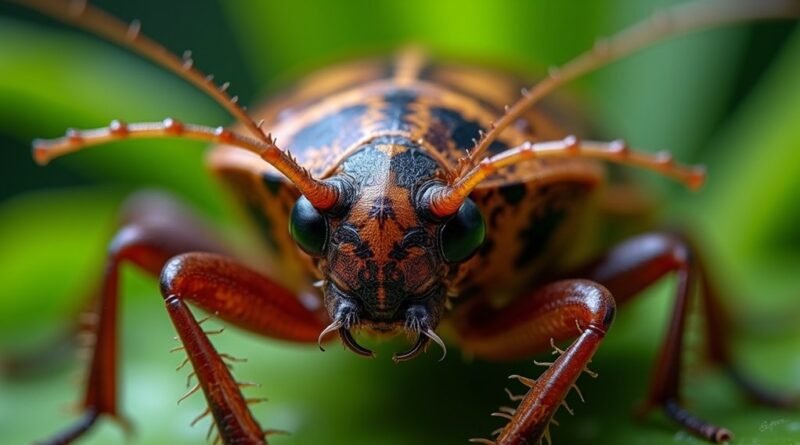
Giant Cockroach: The World’s Biggest Species and What to Know
When you think of the world’s biggest cockroach, you’re probably picturing the wrong species. *Megaloblatta longipennis* holds the record for length and wingspan, stretching 9.7 cm long with wings spanning 20 cm. But the Giant Burrowing Cockroach of Australia wins on weight, maxing out at 42.5 grams. These giants live in rainforests and burrows, far from your kitchen. There’s a lot more to these remarkable creatures than you’d expect.
Key Takeaways
- *Megaloblatta longipennis* is the longest winged cockroach, measuring 9.7 cm with a wingspan reaching 20 cm, recognized by Guinness World Records.
- The Giant Burrowing Cockroach is the heaviest species, weighing up to 42.5 grams, native to Queensland, Australia.
- Giant cockroaches inhabit humid rainforests and coastal regions across South America and Australia, burrowing up to one meter deep.
- Of 4,500 cockroach species, only 4 infest homes; giant cockroaches thrive exclusively in undisturbed, wild ecosystems.
- Giant cockroaches possess functional wings spanning up to 20 cm, unlike common pest species whose wings are rarely functional.
What Is the World’s Biggest Giant Cockroach?
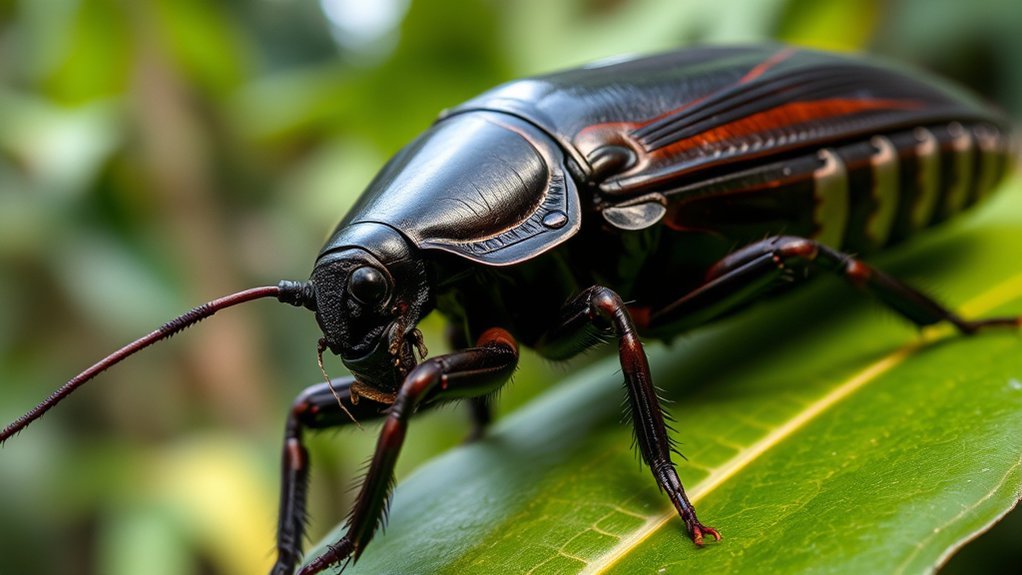
So while *M. longipennis* won’t claim the heaviest title, its extraordinary length and impressive wingspan make it the undisputed size champion among the world’s winged cockroach species. The largest recorded specimen, a female, measured an astounding 9.7 cm in length, cementing its place in the record books.
The Giant Cockroach That Wins on Length and Wingspan
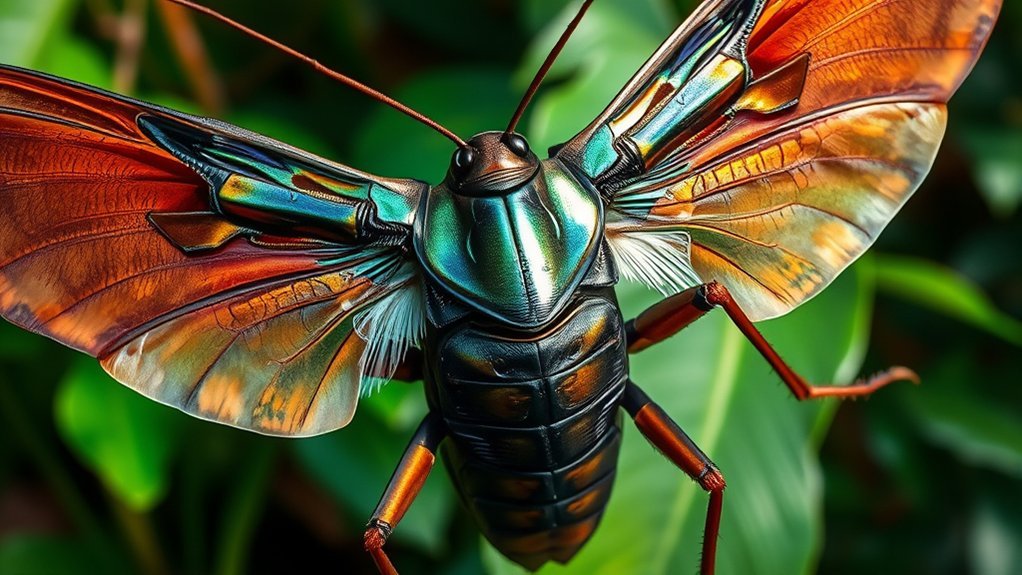
If you’re looking for the cockroach that takes the top spot in both length and wingspan, *Megaloblatta longipennis* is your answer. The largest preserved female specimen measures an impressive 97 mm (3.8 in) long and 45 mm (1.75 in) wide, dwarfing the average cockroach’s 0.6 to 7.6 cm range. Its wingspan stretches up to 20 cm (8 in), earning it official recognition from Guinness World Records as the largest cockroach by both length and wingspan. This remarkable specimen was collected by Akira Yokokura of Yamagata, Japan, highlighting the role of dedicated collectors in advancing scientific understanding of record-breaking insects.
Record-Breaking Length Measurements
Adults of this species range from 4 cm to over 9 cm in body length, with females reaching the largest sizes. That’s a significant jump beyond the typical cockroach, which maxes out at around 7.6 cm. The entire *Megaloblatta* genus spans 4–9.7 cm, and *M. longipennis* pushes that upper limit further than any related species, cementing its status as the world’s longest cockroach. The genus was first recorded in Mexico and belongs to the family Ectobiidae, subfamily Nyctiborinae.
Impressive Wingspan Dimensions
Megaloblatta longipennis doesn’t just dominate by length—it also holds the record for the widest wingspan of any cockroach, reaching up to 20 cm (8 in). To put that in perspective, that’s wider than many small bird species and dwarfs the typical cockroach’s total body length of 0.6 to 7.6 cm.
The closely related M. blaberoides nearly matches this, achieving wingspans of approximately 18.5 cm (7.3 in). These broad wings aren’t just for show—they enable flight across the tropical forest canopy of South and Central America, supporting survival in rainforest environments across Peru, Ecuador, and Colombia. Both species also share significant size variation across individual specimens, reflecting the biological diversity within this remarkable group.
Guinness World Records verified these measurements using the largest documented specimen, a female from Akira Yokokura’s collection in Yamagata, Japan, confirming the species’ unmatched wingspan credentials.
The Heaviest Giant Cockroach Species on Earth
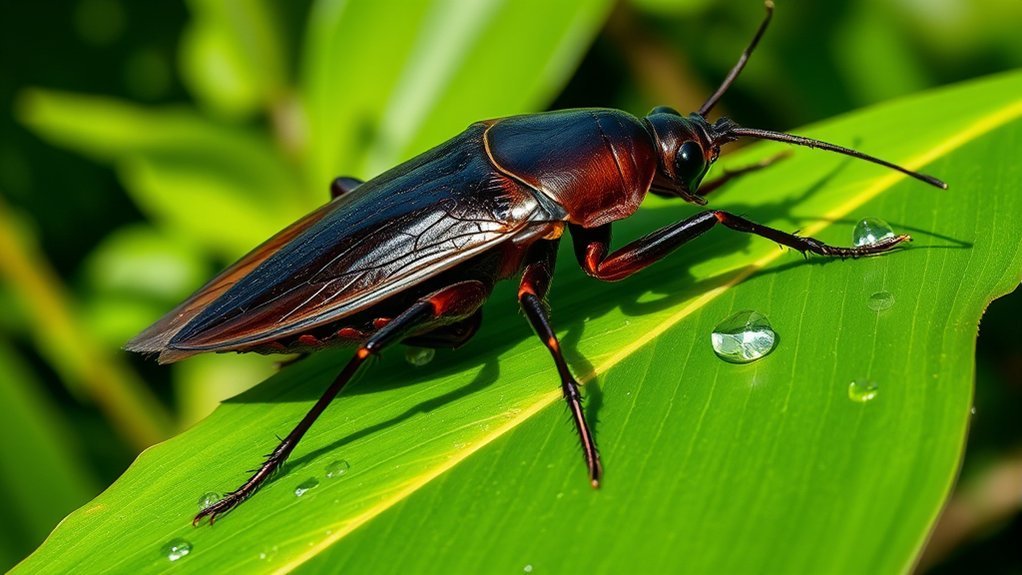
When it comes to sheer weight, the Giant Burrowing Cockroach claims the top spot among all 4,500 cockroach species on Earth. You’ll find this wingless Australian native tipping scales beyond 40 grams, with recorded maximums reaching 1.5 ounces (42.5 grams).
Despite lacking wings and measuring under 10 cm, it outweighs longer competitors like *Megaloblatta longipennis*, which spans 20 cm in wingspan. Its thick exoskeleton and dense muscle mass drive that impressive weight.
| Feature | Giant Burrowing Cockroach |
|---|---|
| Maximum Weight | 42.5 grams |
| Length | Under 10 cm |
| Wings | None |
| Origin | Australia |
| Heaviest Species | Yes |
Females typically weigh more than males due to reproductive physiology. You won’t find another cockroach species matching this weight anywhere globally. It’s truly the heavyweight champion of its kind, thriving in Queensland’s soil and leaf litter habitats. Its range stretches across approximately 1,000 kilometers, from Rockhampton to Cooktown, through dry savannah and tropical regions.
Giant Cockroach Size: Length Champion vs. Weight Champion
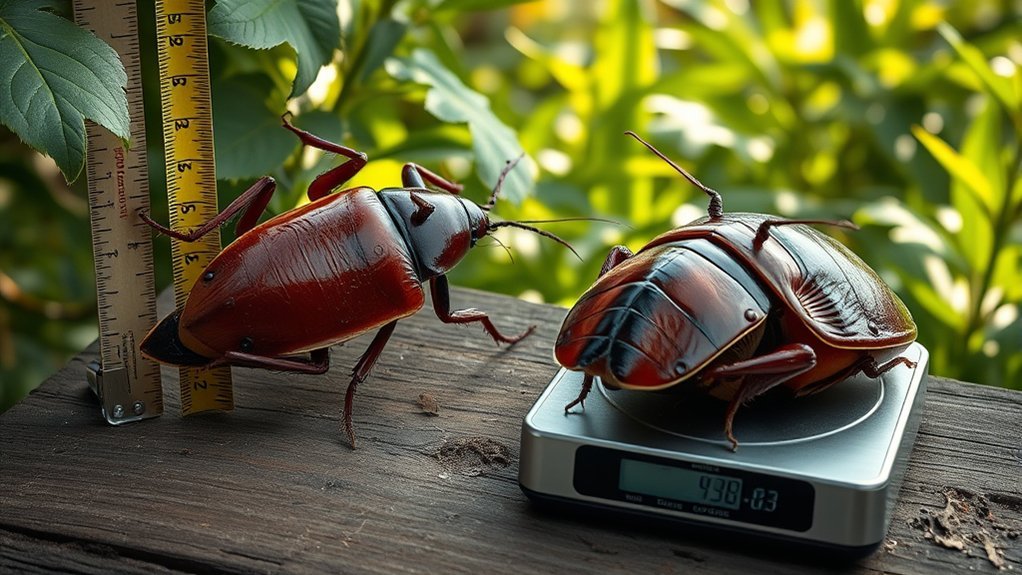
Here’s how they compare directly:
- Length: *Megaloblatta longipennis* reaches 9.7 cm; the rhinoceros cockroach maxes out near 8 cm
- Weight: The rhinoceros cockroach exceeds 30 grams, decisively outweighing its winged competitor
- Wingspan: *Megaloblatta longipennis* stretches up to 20 cm across; the rhinoceros cockroach has no wings at all
- Build: *Megaloblatta longipennis* features a broader, winged physique while the rhinoceros cockroach is stout and heavily built
You’re fundamentally comparing two different evolutionary strategies. One species maximized linear reach and flight capability; the other packed on mass and bulk. Neither title cancels out the other — both species earn their giant status legitimately.
Where Giant Cockroaches Actually Live
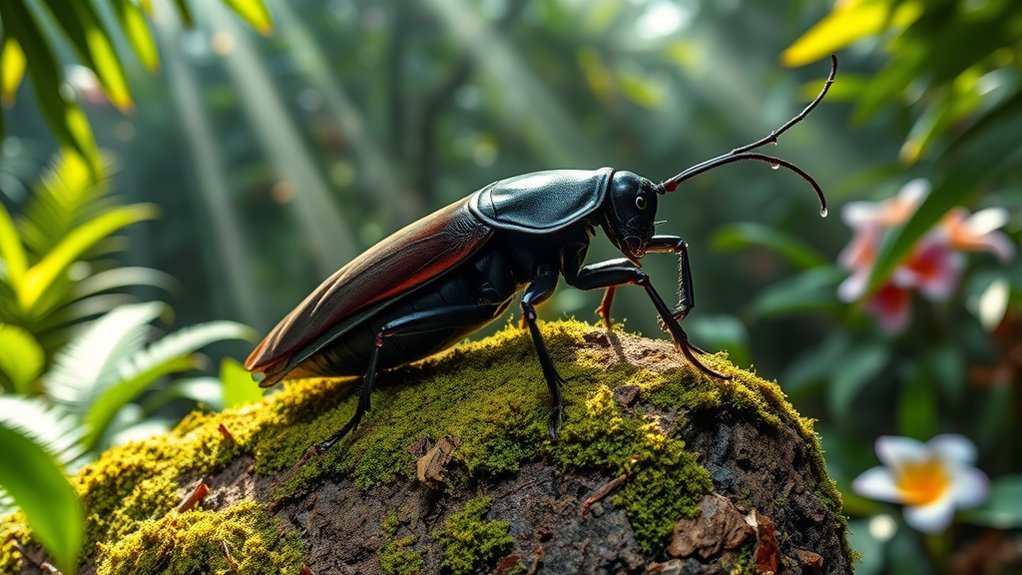
If you’re curious about where giant cockroaches call home, you’ll find them spread across three main regions: South America, Australia, and Central America. Australia’s Queensland coast hosts the giant burrowing cockroach, which you’ll discover living in compacted sandy forest soils between Rockhampton and Cooktown. Meanwhile, you can trace other massive species through the rainforests of South America and the tropical zones of Central America, where humid conditions support their survival.
South American Species Locations
Here’s where you’ll specifically encounter these species:
- Caves and rock cracks in Panama and Central America
- Rainforest floors across northern South America
- Andean coastal regions in Peru and Ecuador
- Trinidad and Tobago rainforest cave systems
Australian Habitat Regions
Australia’s giant cockroaches call Queensland home, thriving across a coastal stretch that runs roughly 1,000 kilometres between Rockhampton and Cooktown, including the islands of the Whitsundays. You’ll find them across three distinct habitat types depending on moisture levels.
In drier areas west of the Great Dividing Range, they inhabit Eucalyptus woodlands and savannas near locations like Alpha and Boonderoo. Wetter coastal zones around Cooktown, Magnetic Island, and Reedy Creek Reserve support rainforest populations. Mid-range scrublands connect these extremes through places like Coen and Mount Garnet, spanning 18 documented geographical populations across subtropical Queensland.
Wherever they settle, they’re digging burrows up to one metre deep in sandy, compacted soils. They’re nocturnal and use these burrows as permanent residences, avoiding areas with unsuitable soil or water conditions.
Central American Range
While Australia’s giant burrowing cockroaches stake their claim across Queensland’s varied landscapes, the true giant of the cockroach world—*Blaberus giganteus*—calls an entirely different hemisphere home. This species is endemic to the Neotropical zone, thriving across Central and South America‘s warm, humid environments.
You’ll find it distributed across:
- Central America – Mexico, Guatemala, Panama, and Costa Rica
- South America – Colombia, Venezuela, Brazil, Ecuador, Guyana, Suriname, and French Guiana
- Caribbean Islands – Trinidad and Tobago, Cuba, and Hispaniola
- Microhabitats – Limestone caverns, tree hollows, decomposing logs, and rock crevices
Within these regions, it favors dark, moisture-rich spaces—particularly bat-inhabited caves where guano accumulates and rainforest floors layered with decomposing organic material.
Why Giant Cockroaches Are Nothing Like the Species You Know
Only 4 of 4,500 cockroach species actually infest homes. You’ve been fearing an extreme minority.
| Feature | Pest Cockroach | Giant Cockroach |
|---|---|---|
| Habitat | Your home | Deep rainforest |
| Wings | Rarely functional | Spans up to 20 cm |
| Size | Under 4 cm | Up to 9.7 cm long |
Females reach the most extreme recorded sizes, preserved specimens proving just how far removed this species is from anything you’ve encountered crawling across your floor.
Frequently Asked Questions
How Long Do Giant Cockroaches Typically Live in the Wild?
You’ll find that giant cockroaches typically live up to 20 months in the wild, though they can survive up to 2 years depending on habitat conditions, humidity levels, and diet availability.
Can Giant Cockroaches Be Legally Kept as Exotic Pets?
You can legally keep giant cockroaches as exotic pets in many regions, but you’ll need proper permits. Captive-bred species like Madagascar hissing cockroaches are widely permitted, while state and international laws vary considerably.
What Do Giant Burrowing Cockroaches Eat in Their Natural Habitat?
In their natural habitat, you’ll find giant burrowing cockroaches eating dry, decomposing eucalyptus leaves, decaying bark, dried acacia leaves, and dry grass. They’ll also consume shed exoskeletons during moulting for extra nutrition.
Are Giant Cockroaches Dangerous or Venomous to Humans?
Giant cockroaches aren’t venomous or dangerous to you. They don’t have stingers or venom, but they can carry bacteria, trigger allergies, and their leg spines might scratch your skin, risking bacterial infection.
How Do Giant Cockroaches Reproduce Compared to Smaller Species?
Giant cockroaches don’t lay oothecae like smaller species do—they give birth to live young instead. Smaller species like German or American cockroaches produce egg cases, each containing dozens of eggs that they carry or deposit elsewhere.
Conclusion
Now that you’ve learned about the world’s biggest cockroaches, you can see they’re nothing like the pests you’d find in your kitchen. Whether you’re measuring by length or weight, these creatures are genuinely impressive insects living in tropical habitats far from your home. They’re not scavengers hiding in your walls—they’re fascinating species thriving in rainforests. So next time someone mentions cockroaches, you’ll know there’s a whole world of giant species worth understanding.
