
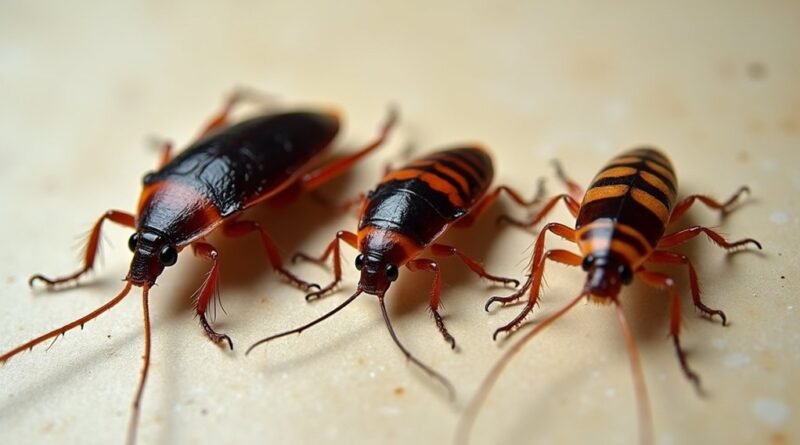
House Cockroach Types: The Most Common Species Found in US Homes
The five most common house cockroach types in the US are the German, American, Oriental, Brown-Banded, and Pennsylvania Wood cockroach. You’ll most often encounter the German cockroach in kitchens and bathrooms, while the American cockroach — the largest at up to 2 inches — prefers damp basements. Each species has distinct size, color, and habitat preferences that set it apart. Knowing which one you’re dealing with makes all the difference in getting rid of it fast.
Key Takeaways
- The five most common house cockroach species in the US are German, American, Oriental, Brown-Banded, and Pennsylvania Wood cockroaches.
- German cockroaches are the most prevalent indoor pest, with one female capable of producing thousands of offspring annually.
- American cockroaches are the largest species, reaching up to 2 inches, identifiable by their reddish-brown color and yellow figure-eight head marking.
- Oriental cockroaches prefer cool, damp environments near drains, while Brown-Banded cockroaches favor dry, elevated spots like upper cabinets and bedrooms.
- Cockroaches enter homes through foundation cracks, plumbing gaps, poorly sealed doors, dry drains, and by hitchhiking in grocery bags or cardboard boxes.
The Most Common House Cockroach Types in the US
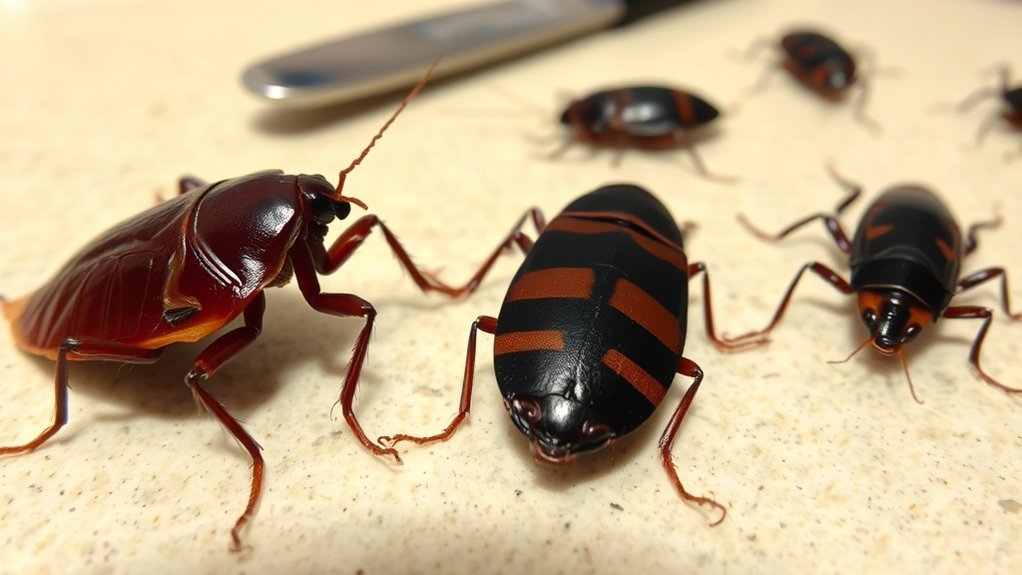
Five cockroach species are responsible for most infestations in American homes: the German, American, Oriental, Brown-Banded, and Pennsylvania Wood cockroach. Each species has distinct behaviors, preferences, and habitats that influence how you’ll find and deal with them.
The German cockroach is the most prevalent, thriving in warm, humid spaces near food and water. The American cockroach, the largest at up to 2 inches, prefers dark, damp areas like basements and sewers. The Oriental cockroach favors cooler, damp environments and is commonly found in northern states. The Brown-Banded cockroach hides in warm, dry, elevated spots like upper cabinets and appliance motors, making it harder to detect. The Pennsylvania Wood cockroach is primarily an outdoor species that occasionally wanders inside through firewood or cracks but won’t establish an indoor infestation.
Knowing which species you’re dealing with is critical to choosing an effective control strategy. The Smokybrown cockroach is another species to be aware of, as it lives primarily outdoors but can enter homes through open windows and doors, especially in warmer climate regions.
Size, Color, and Habitat: How to Identify Each Species
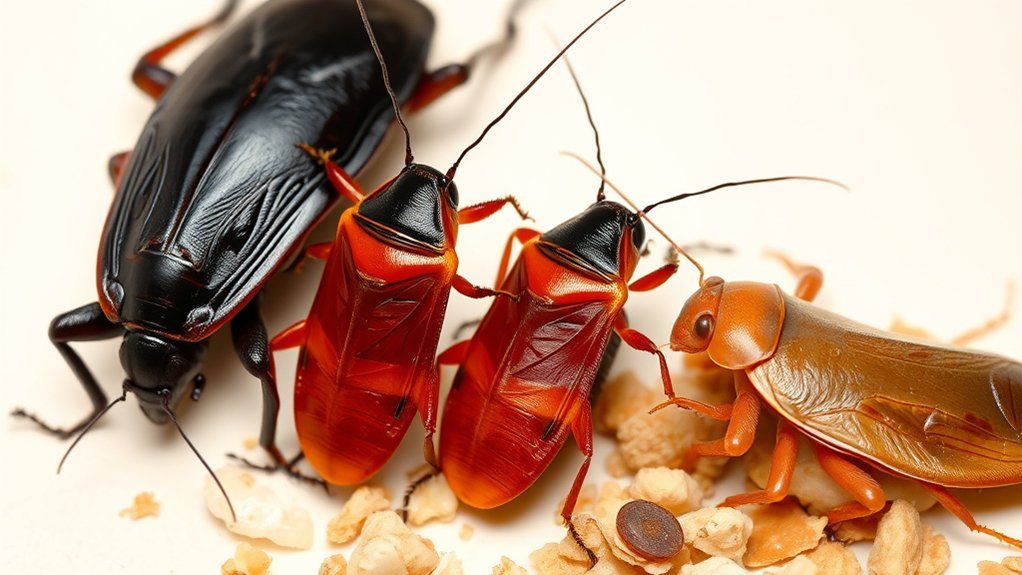
When identifying cockroaches in your home, you’ll want to focus on three key traits: size, color, and preferred habitat. Each species carries distinct physical markers—from the German cockroach‘s tan body and dark head stripes to the American cockroach‘s reddish-brown coloring and yellow head bands—that make accurate identification possible. Once you know what you’re looking at, you can also use location as a clue, since some species favor warm, humid kitchens while others thrive in cool, damp basements or dry upper cabinets. The Oriental cockroach is easily recognized by its glossy dark-brown or black appearance, with females growing up to 32 mm in length.
Visual Identification Key Traits
Identifying cockroaches accurately comes down to three key traits: size, color, and markings. Once you know what to look for, distinguishing species becomes straightforward.
German cockroaches are small (0.5–0.6 inches) and tan with two dark stripes behind the head. American cockroaches are the largest at up to 2 inches, displaying reddish-brown coloring with a yellow figure-eight pattern on their heads. Oriental cockroaches appear nearly black with a shiny, greasy surface, reaching 1–1.5 inches. Brown-banded cockroaches match the German cockroach in size but feature distinct lighter bands across their wings and abdomen. Smokybrown cockroaches are uniformly dark brown to black, similar in size to American cockroaches.
Focus on size first, then color, then markings — you’ll have your identification quickly. Each species also tends to favor specific environments, so habitat clues like warm, humid areas can further confirm your identification.
Preferred Habitats By Species
Each cockroach species gravitates toward a distinct environment, and knowing where to look is just as useful as knowing what to look for. German cockroaches cluster near kitchens and bathrooms, while brown-banded roaches favor drier, elevated spots like bedrooms and closets. American cockroaches thrive in basements, sewers, and crawl spaces, whereas Oriental cockroaches prefer cool, consistently damp areas near drains. Smoky browns tend to stay outdoors but move inside during winter. The Pennsylvania wood cockroach is primarily an outdoor species, typically found beneath the bark of dead trees and feeding on decaying organic matter.
| Species | Primary Location | Key Condition |
|---|---|---|
| German | Kitchen, bathroom | Warm, humid |
| Brown-Banded | Bedroom, closet | Dry, warm |
| American | Basement, sewer | Dark, damp |
| Oriental | Drains, crawl spaces | Cool, moist |
| Smoky Brown | Woodpiles, attics | Humid, wooded |
Identifying the species helps you target the right areas during inspection and treatment.
Size and Color Differences
Once you know where to look, you’ll also want to know what you’re looking at. Size and color are your quickest identification tools.
The American and Smoky Brown cockroaches are your largest species, reaching up to 2 inches. The American sports a reddish-brown color with a distinctive yellow figure-eight on its head, while the Smoky Brown appears uniformly dark brown.
German and Brown-Banded cockroaches are your smaller species, both measuring around half an inch. The German features light brown coloring with two dark stripes behind its head. The Brown-Banded shares a similar size but displays two lighter bands across its wings.
The Oriental cockroach falls in between at about 1 inch, standing out with its shiny black or dark brown appearance. Known for producing a notably strong odor, the Oriental cockroach thrives in damp environments like basements and drains.
German Cockroach: The Most Persistent Indoor Pest
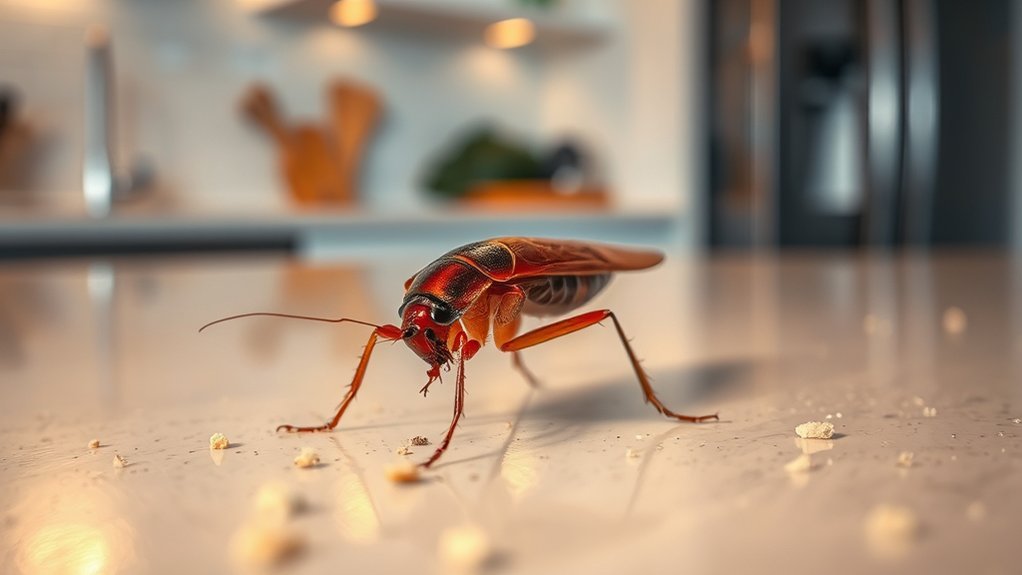
The German cockroach is the most common and persistent roach you’ll encounter indoors, measuring just 1/2 to 5/8 inch long with a tan-to-light-brown body marked by two dark parallel streaks running from behind the head to the base of its wings. Despite having fully developed wings, it doesn’t fly.
You’ll most often find it near dishwashers, stoves, sinks, and kitchen cabinets, where it stays close to food and water. Its small size lets it hide inside appliances and tight crevices where larger species can’t reach.
What makes it particularly difficult to eliminate is its reproductive capacity. One female and her offspring can produce thousands of roaches within a year, with single infestations reaching hundreds of thousands of individuals. The female carries her egg capsule throughout the entire development period, helping more nymphs survive. This combination of rapid reproduction and adaptability makes it the number one cockroach pest worldwide.
American Cockroach: The Largest Species in US Homes
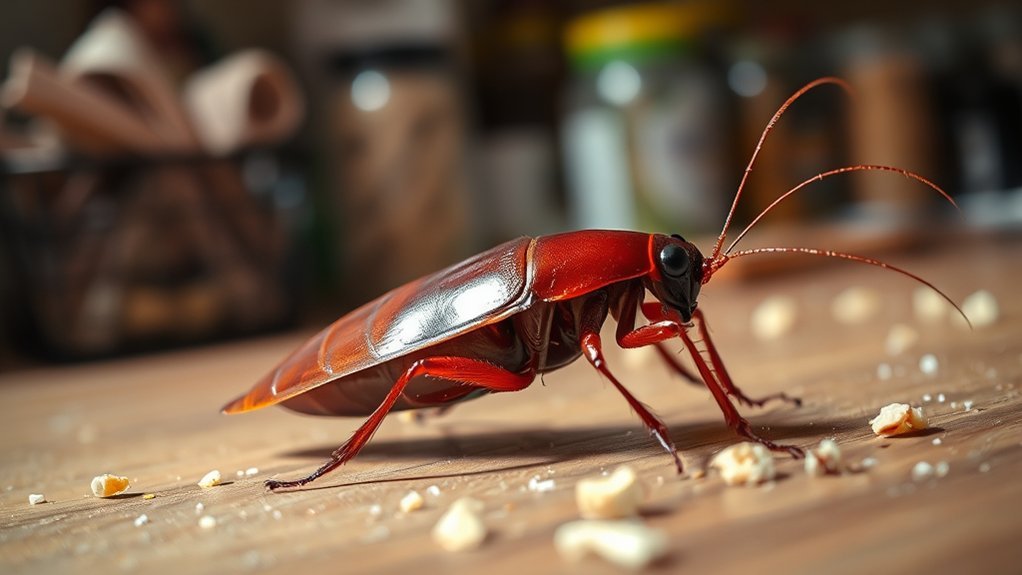
If you’ve ever spotted a large, reddish-brown cockroach scurrying across your floor, you’ve likely encountered the American cockroach, the biggest common species invading U.S. homes at 1½ to 2 inches long. You’ll typically find them thriving in warm, moist areas like your basement, bathroom, or kitchen, where they seek out humidity and food sources. They’ll enter your home through small cracks, pipes, and openings, making it essential to seal potential entry points before an infestation takes hold.
Identifying the American Cockroach
When you spot a large, reddish-brown cockroach scurrying across your floor, it’s likely an American cockroach—the biggest house-infesting species in North America. Adults measure 1.5–2 inches long with a flattened, oval body. Look for these key identifiers:
- Pronotum markings: A yellow figure-eight pattern on the shield covering its head
- Color: Rusty brown to mahogany body with a pale pronotum edge
- Wings: Both sexes have them, but males’ wings extend past their abdomen
- Antennae: Two long, segmented antennae extending from the head
- Cerci: Two appendages protruding from the abdomen at 45 degrees
Nymphs lack wings and appear uniformly gray-brown, making them look distinctly different from adults.
Preferred Habitats and Behaviors
Once you understand what an American cockroach looks like, knowing where it lives and how it behaves makes it far easier to track down and eliminate. These cockroaches thrive in warm, humid environments and are primarily nocturnal, hiding during the day and foraging at night.
| Location | Attraction | Risk Level |
|---|---|---|
| Basements/sewers | Moisture, darkness | High |
| Kitchens/bathrooms | Food, plumbing leaks | High |
| Boiler rooms/heating ducts | Warmth | Medium |
| Woodpiles/storm drains | Outdoor shelter | Medium |
They’re omnivorous scavengers drawn to sweets, starches, and fermenting materials. Adults can fly, giving them greater range than other species. They aggregate using pheromones, so spotting one often signals more nearby. Eliminating moisture and sealing entry points from foundations and drains disrupts their survival.
How They Enter Homes
American cockroaches exploit five main pathways to invade your home, and understanding each one gives you a real advantage in stopping them. Even a 1/16-inch gap grants them entry, so no crack is too small to matter. Here’s where they’re getting in:
- Cracks and crevices in foundations, walls, and utility penetrations
- Vents and pipes with gaps around plumbing lines and unscreened openings
- Doors and windows lacking sweeps, screens, or proper sealing
- Drains and sewers through dry P-traps and cracked pipes connecting to municipal systems
- Hitchhiking inside grocery bags, cardboard boxes, and used furniture
Once you identify which entry points are vulnerable in your home, you can seal them before cockroaches establish a foothold.
Brown-Banded, Oriental, and Smoky Brown: Less Common but Still a Problem
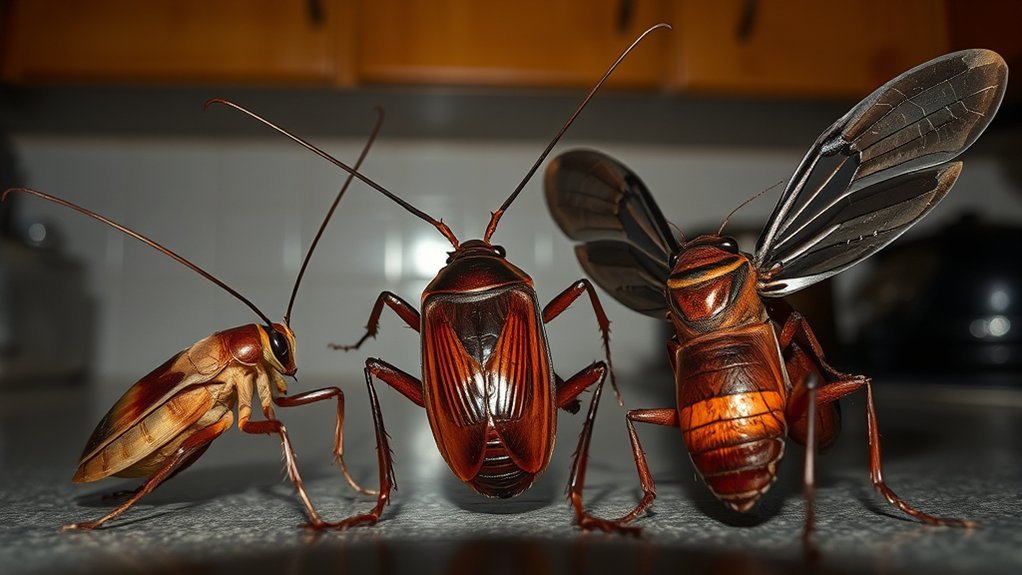
While German cockroaches dominate most infestations, three other species—brown-banded, Oriental, and smoky brown—can still make your life miserable.
Brown-banded cockroaches thrive indoors in warm, dry spaces above 80°F, avoiding kitchens and moisture. You’ll find them near ceilings, electronics, and upper cabinets. They eat almost anything, including books, wallpaper paste, and clothing, and females produce up to 600 offspring over their lifetime.
Oriental cockroaches prefer damp, cool areas like basements and drains, making them common in northern states. They carry pathogens, contaminate surfaces, and produce a strong oily odor. You’ll notice peak activity during summer months.
Smoky brown cockroaches are large, strong fliers found throughout the humid South and East. They breed outdoors in leaf litter and gutters, invading your home during dry spells. Eliminating them requires outdoor perimeter treatment, not just indoor control.
Since each species behaves differently, correct identification determines which control methods will actually work.
Where Each House Cockroach Type Hides and Why It Matters
Knowing which cockroach species you’re dealing with is only half the battle—you also need to know where they hide. German cockroaches favor kitchen cracks, appliance gaps, and humid spaces near food. American cockroaches gravitate toward basements, drains, and sewer-connected areas. Oriental cockroaches stick to cool, damp zones like crawl spaces and bathroom drains. Brown-banded cockroaches break the mold entirely, hiding in dry, elevated spots like upper cabinets, wall decorations, and electronics.
Knowing the species is only half the battle—you also need to know exactly where they hide.
These hiding spots aren’t random—they directly affect how fast infestations grow and how much risk you face. Here’s why location matters:
- Proximity to food and water accelerates reproduction
- Damp areas intensify allergy and asthma symptoms
- Wall voids and appliances spread pathogens like Salmonella
- Bedroom migrations contaminate personal items
- Species-specific hiding preferences require targeted treatments
Using the wrong control method for the wrong species wastes time and lets infestations worsen.
Frequently Asked Questions
Can Cockroaches Survive Without Food or Water for Extended Periods?
Cockroaches can’t survive long without water, as they lose moisture quickly. You’ll find they need consistent access to damp areas, though some species, like brown-banded cockroaches, are less dependent on water sources.
Are Cockroaches Dangerous to Pets Living Inside the Home?
Yes, cockroaches are dangerous to your pets. They carry bacteria like Salmonella, trigger allergic reactions, and contaminate your pet’s food and water bowls, putting your furry companions at serious health risk.
How Quickly Can a Cockroach Infestation Spread Between Apartment Units?
Cockroach infestations can spread to your neighboring units fast—up to 30% of a population moves weekly through shared walls, plumbing, and floor gaps, making early, building-wide treatment essential before numbers explode exponentially.
Do Cockroaches Only Come Out at Night Inside Homes?
Cockroaches don’t only come out at night, but they’re mostly nocturnal. If you’re spotting them during the day, it’s a warning sign—you’ve likely got a heavy infestation forcing them from overcrowded hiding spots.
What Smells or Natural Repellents Actually Deter Cockroaches Effectively?
Peppermint oil, cedar shavings, and neem oil are your most effective natural options. You’ll want to apply peppermint spray weekly, place cedar in key areas, and use diatomaceous earth for the strongest results against active infestations.
Conclusion
Now that you know the most common house cockroach types, you’re better equipped to identify what’s lurking in your home. Don’t ignore the warning signs—each species has unique habits and hiding spots that’ll affect how you treat the problem. Whether you’re dealing with German cockroaches in your kitchen or American cockroaches in your basement, acting fast is your best defense against a full-blown infestation.
