
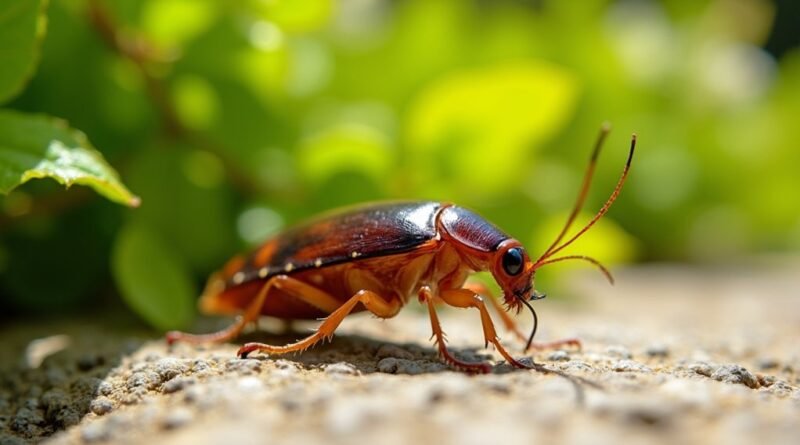
Outdoor Cockroach: Species That Live Outside and How to Keep Them Away
Outdoor cockroaches like American, Oriental, Smokybrown, and Wood cockroaches thrive in mulch, leaf litter, woodpiles, and damp yard debris. You can identify them by their reddish-brown to dark coloring and ½ to 2-inch size. They’re drawn to moisture, organic waste, and standing water — and they’ll sneak inside through cracks, drains, and gaps around utilities. Keep them out by eliminating attractants and sealing your home’s entry points, and there’s plenty more you’ll want to know.
Key Takeaways
- Common outdoor cockroach species include the American, Oriental, Smokybrown, and Wood cockroach, each preferring specific habitats like sewers, mulch, and woodpiles.
- Outdoor cockroaches are identified by color and size, ranging from reddish-brown American cockroaches to glossy black Oriental cockroaches.
- Moisture, organic debris, standing water, and food waste are the primary attractants drawing cockroaches toward homes.
- Eliminate standing water, trim vegetation, replace wood mulch with gravel, and apply perimeter treatments to deter outdoor cockroaches effectively.
- Seal entry points using weather stripping, door sweeps, silicone caulk, and insect-proof mesh to prevent cockroaches from entering your home.
What Makes a Cockroach an Outdoor Species?
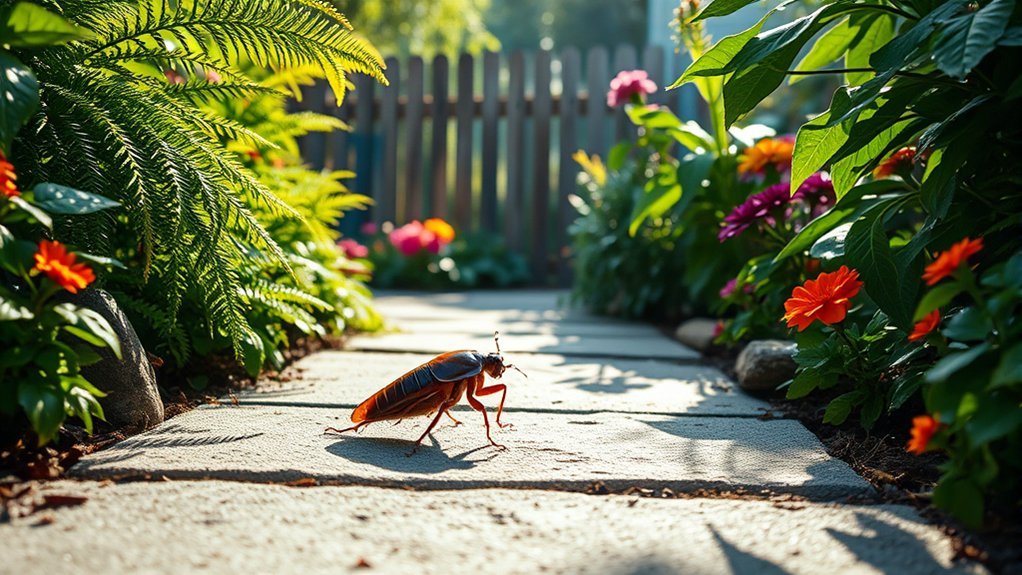
Not all cockroaches are the unwelcome houseguests you might imagine—many species thrive almost exclusively in outdoor environments, never establishing themselves indoors. Understanding what separates outdoor species from indoor ones helps you identify what you’re dealing with and how to respond.
Outdoor cockroaches have evolved specific habitat preferences tied to natural environments. Wood cockroaches, for example, live under bark, in treeholes, and woodpiles, and they can’t breed or survive indoors. That biological limitation makes them obligate outdoor species. Field cockroaches prefer leaf litter and plant debris, rarely venturing inside unless heat or drought forces them to seek shelter.
Physical adaptations also define outdoor species. Wood cockroaches are strong fliers, with wings extending beyond the abdomen, helping them navigate open environments. Their behavior, habitat needs, and temperature tolerances all reflect life outside—not inside your walls. Recognizing these traits helps you distinguish a temporary outdoor visitor from a potential indoor infestation. In their natural habitat, wood cockroaches serve as important decomposers, breaking down decaying plant material and contributing to the ecosystem.
Common Outdoor Cockroach Species in North America
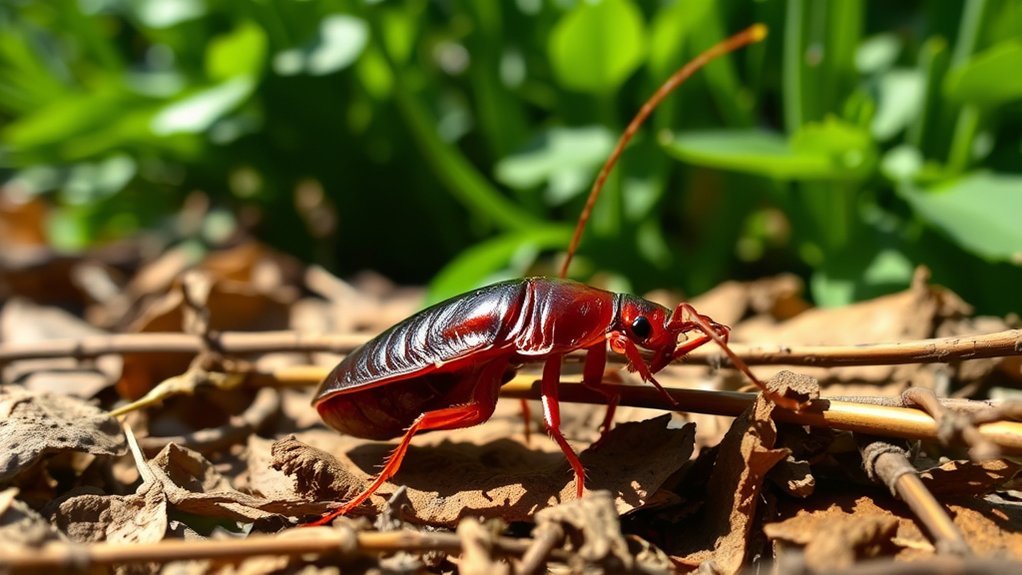
Several outdoor cockroach species call North America home, each with distinct habits, habitats, and risks. Knowing which species you’re dealing with helps you target prevention more effectively.
The most common outdoor species you’ll encounter include the American, Oriental, Smokybrown, Australian, and Pennsylvania Wood cockroach. While they primarily live outside, each one can enter your home under the right conditions.
| Species | Primary Outdoor Habitat |
|---|---|
| American Cockroach | Sewers, dumps, moist areas near buildings |
| Oriental Cockroach | Garbage dumps, sewers, damp environments |
| Smokybrown Cockroach | Mulch, leaf litter, tree holes |
| Pennsylvania Wood Cockroach | Woodpiles, loose bark, hollow trees |
These species thrive in moisture-rich, sheltered environments close to structures. The Smokybrown and Australian cockroaches are strong fliers, making them harder to exclude. The Oriental cockroach can’t fly at all, but it still infiltrates structures through ground-level gaps and drains. The Pennsylvania Wood cockroach is commonly found under loose bark outdoors and rarely breeds indoors, making sealing entry points the most effective control measure.
How to Identify Outdoor Cockroaches by Appearance
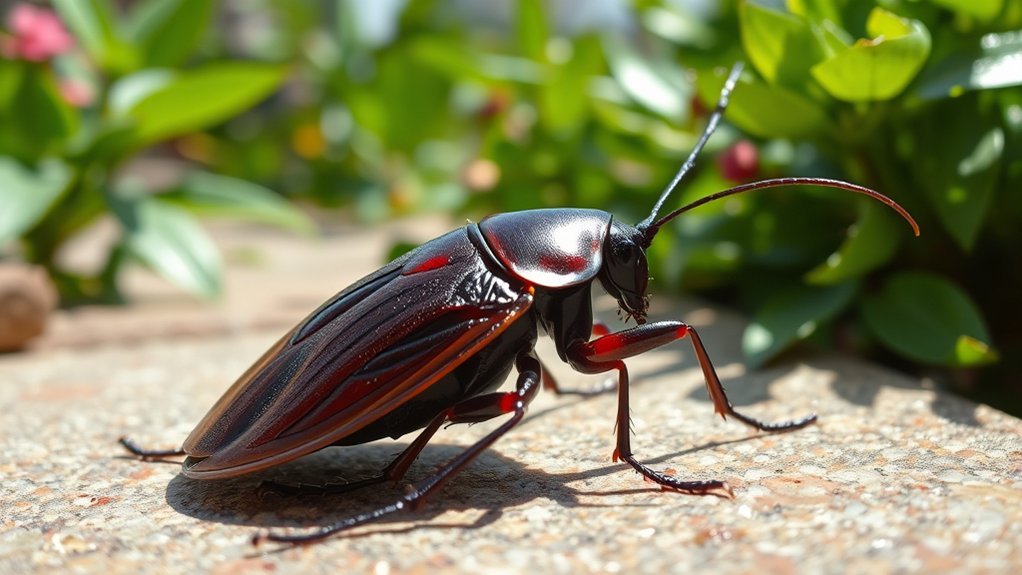
When identifying outdoor cockroaches, you’ll want to focus on two key physical traits: color and size. American cockroaches appear reddish-brown with a yellowish figure-8 pattern on their heads, while Oriental cockroaches display a shiny black to dark reddish-brown color, and Smokybrown cockroaches show a uniform mahogany tone. Size differences also set these species apart, with American cockroaches reaching up to 2⅛ inches, Oriental females maxing out at 1¼ inches, and Wood Cockroaches presenting a slender, grayish-brown profile. Cockroaches are also known to spread at least 33 bacteria, making proper identification an important first step in protecting your home from health risks.
Key Physical Identification Traits
Cockroaches share a recognizable body plan around a few key features you can spot at a glance. Their flattened oval bodies carry a shield-like pronotum that hides the head, paired cerci at the abdomen’s end, and six spiny legs built for fast movement. Long, thread-like antennae extend roughly the full body length. Cockroaches are nocturnal and thigmotactic, meaning they prefer tight, dark spaces and are most active at night.
| Trait | What You’ll See |
|---|---|
| Pronotum | Shield-like plate behind the head |
| Antennae | Thread-like, equal to body length |
| Wings | Length varies by species and sex |
| Legs | Six spiny legs for quick movement |
| Cerci | Paired appendages at abdomen’s end |
These traits stay consistent across species, making them your most reliable starting point before noting species-specific markings like stripes or colorations.
Color and Size Differences
Color and size are your clearest clues when telling outdoor cockroach species apart. The American cockroach is your largest option, stretching 1½ to 2⅛ inches with a reddish-brown body and a yellowish figure-8 pattern on its head. The smokybrown cockroach looks similar but runs slightly smaller with a uniform mahogany color and no head markings. Oriental cockroaches appear glossy dark-brown to black, reaching about 1 inch long. Wood cockroaches are dark chocolate brown with a distinctive tan line along their wing and head edges. Brown-banded cockroaches are your smallest outdoor species at just ½ inch, sporting two light yellow bands across a dark brown body. German cockroaches are light brown to tan and can be identified by two dark stripes running parallel down their backs. Once you’ve matched the color and size, you’ve narrowed your identification considerably.
Where Outdoor Cockroaches Hide in Your Yard
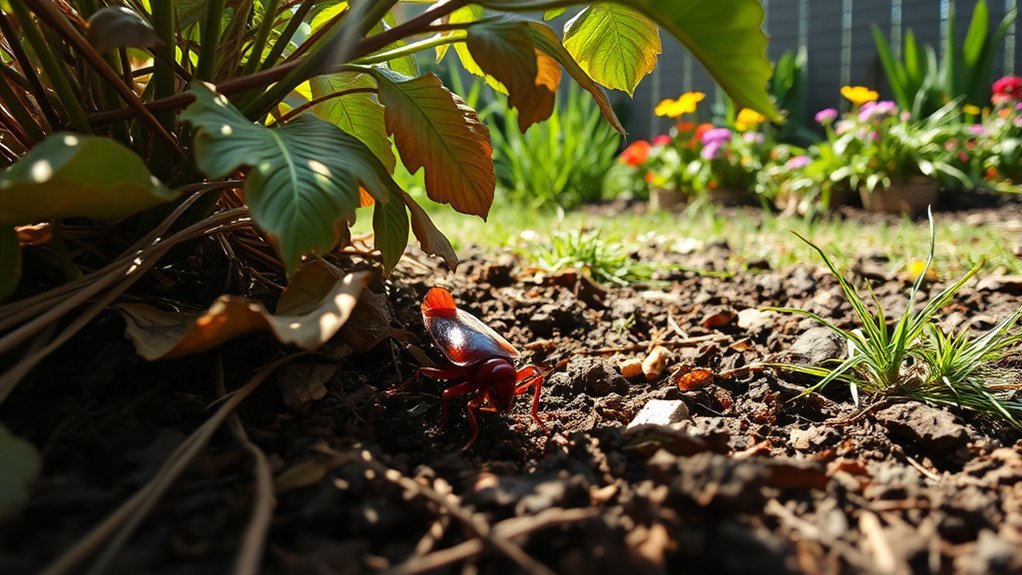
Outdoor cockroaches cluster in the dampest, darkest corners of your yard, favoring woodpiles, compost bins, clogged gutters, dense ivy, and the soil beneath decks and sheds. They’re drawn to moisture and decaying organic matter, so any area with standing water, wet mulch, or rotting leaves becomes a prime harborage site. Their activity also shifts with the seasons, peaking in warm, humid months when temperatures hold between 25–30°C and populations breed fastest.
Common Yard Hiding Spots
Knowing where cockroaches hide in your yard is the first step toward controlling them. These pests exploit specific environments offering darkness, moisture, and tight spaces.
Check these four prime hiding spots:
- Mulch beds – Thick layers retain humidity and shelter American cockroaches during the day, hiding egg cases and droppings beneath the surface.
- Rocks and stones – Gaps measuring 3–5mm beneath stones match cockroaches’ thigmotactic preferences, providing stable temperatures and minimal light.
- Sewer drains – Consistent humidity above 70% and nearby organic waste make drains a major harborage and entry point.
- Garbage receptacles – Waste odors attract cockroaches within a 3–10 meter foraging range, while surrounding cardboard creates additional shelter.
Yard structural voids, including foundation cracks and fence crevices, also concentrate cockroach activity.
Moisture and Debris Attraction
Moisture and organic debris are the two biggest draws pulling cockroaches into your yard. Leaky faucets dripping into mulch beds, clogged gutters filled with wet leaves, and sprinklers soaking soil near your foundation all create the damp conditions roaches need to survive. Birdbaths, plant saucers, and old tires pool standing water, making your yard even more inviting.
Debris compounds the problem. Leaf litter, woodpiles, compost bins, and cardboard piles retain moisture while supplying food. Humidity above 70% lets roaches thrive without desiccating, and porous debris surfaces absorb their pheromones, drawing even more roaches in.
To push back, fix leaky faucets, adjust sprinklers, eliminate standing water, and maintain a dry gravel band along your foundation. Remove or regularly turn compost and debris piles.
Seasonal Activity Patterns
Fixing moisture problems and clearing debris goes a long way, but cockroach pressure in your yard also shifts with the seasons, and knowing when they’re most active helps you stay ahead of an infestation.
- Spring: Egg cases hatch, nymphs emerge, and cockroaches scout for water as conditions dry out.
- Summer: Heat and humidity accelerate breeding; storms flush roaches from mulch beds and sewers toward your home.
- Fall: Dropping temperatures push outdoor species toward your foundation, clustering in debris and garbage bins.
- Winter: Activity slows, but heated structures attract desperate roaches seeking warmth.
Smokybrown cockroaches respond to porch lights and garbage year-round, while American cockroaches surge during summer flooding. Each seasonal shift creates a new entry opportunity.
Which Outdoor Cockroaches Invade Homes?
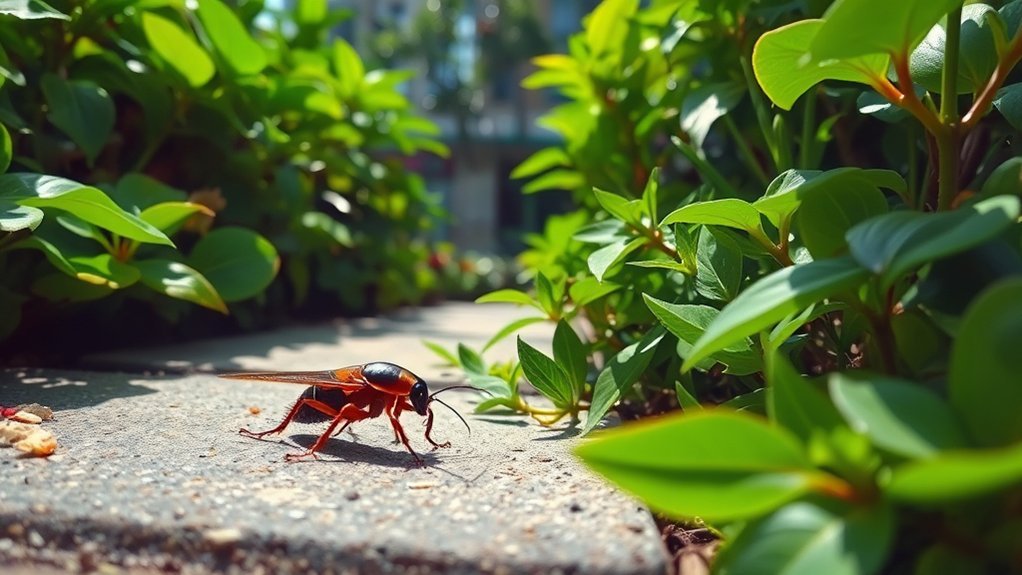
While many cockroaches thrive outdoors, several species regularly invade homes. Knowing which ones you’re dealing with helps you respond effectively.
| Species | Entry Method |
|---|---|
| American Cockroach | Drains, foundation cracks, utility conduits, gaps around doors |
| Oriental Cockroach | Foundation gaps, pipes, lower-level openings |
| Smoky Brown Cockroach | Open windows, doors, roofline gaps |
| Brown-Banded Cockroach | Various openings in outdoor-to-indoor passage areas |
| Wood Cockroach | Gaps near porches, decks, garages; firewood and flowerpots |
Each species has unique behaviors that influence how it gets inside. American cockroaches prefer sewer systems and climb vertical surfaces, making pipes a common entry point. Oriental cockroaches can’t fly or climb, so they stick to ground-level openings. Smoky brown cockroaches fly toward your lights and squeeze through roofline gaps. Wood cockroaches wander in accidentally, often hitchhiking inside on firewood you’ve brought indoors.
How to Modify Your Yard to Repel Outdoor Cockroaches
Your yard’s conditions directly influence how many cockroaches show up at your door. A few targeted changes make your property far less inviting.
Start with these four modifications:
- Clear standing water from birdbaths, plant saucers, and clogged gutters to eliminate breeding grounds.
- Trim shrubs and trees 18 inches from your foundation to remove pest bridges and improve airflow.
- Replace wood mulch with gravel or rubber mulch in a 2-foot band around your foundation, keeping a 6–12 inch gap between mulch and the structure.
- Apply perimeter treatments like Cyfluthrin at 1.5 feet from your exterior walls, targeting doors, windows, and foundation edges.
Complement these steps by planting lavender, rosemary, or marigolds as natural deterrents and raking fallen leaves regularly to eliminate roach shelter. Combining moisture control, vegetation management, and chemical treatments keeps outdoor roaches from migrating inside.
How to Seal Your Home Against Outdoor Cockroaches
Even the most treated yard won’t keep cockroaches out if your home has gaps they can squeeze through. Start by replacing worn weather stripping on door frames and installing door sweeps that make firm contact with thresholds. Recaulk window sashes and frames, and clean debris from window tracks that can attract cockroaches.
Even a treated yard means nothing if cockroaches can simply walk through gaps in your doors and windows.
For cracks along baseboards and wall-floor junctions, use silicone caulk. Apply expanding foam around larger gaps near pipes and conduits, and insert steel wool into holes before sealing to prevent chewing through repairs.
Don’t overlook utility penetrations. Seal gaps around cables, wires, and pipe entries with caulk or foam, and cover vents with fine insect-proof mesh to maintain airflow while blocking entry.
Finally, maintain your seals seasonally, since caulk shrinks and cracks over time. Fix plumbing leaks, unclog drains, and pour water weekly into floor drains to fill traps and block sewer access.
When to Call a Professional for Outdoor Cockroach Control
Knowing when to stop DIY efforts and call a professional can make the difference between a manageable problem and a full-blown infestation. Watch for these clear warning signs:
- Multiple sightings — Spotting two or more cockroaches, especially in kitchens or bathrooms, signals you need expert intervention immediately.
- Physical evidence — Droppings, smear marks, shredded skins, or egg cases confirm an active infestation beyond DIY control.
- Health symptoms — Unusual allergy issues in your family or pets alongside sightings indicate a severe problem requiring professional treatment.
- Failed DIY attempts — If baits, traps, and natural remedies aren’t working, cockroaches have likely established hard-to-reach hideouts only professionals can access.
Professionals don’t just eliminate visible roaches — they identify species, locate hidden colonies, and create customized extermination plans. They also provide ongoing advice to prevent future infestations, giving you long-term protection rather than temporary relief.
Frequently Asked Questions
Can Outdoor Cockroaches Survive Winter Cold and Freezing Temperatures?
Some outdoor cockroaches can’t survive freezing temps below 15°F, but they’ll seek shelter in woodpiles, mulch, and crawlspaces. Others enter diapause, slowing their metabolism to endure winter’s harshest conditions effectively.
Do Outdoor Cockroaches Pose Health Risks to Pets and Livestock?
Yes, outdoor cockroaches do pose health risks to your pets and livestock. They carry bacteria like Salmonella and E. coli, trigger allergies, cause infected bites, and transmit parasites when your animals ingest contaminated food or water.
Are Outdoor Cockroaches Attracted to Outdoor Lighting at Night?
Yes, some outdoor cockroaches are attracted to your outdoor lighting at night. Asian cockroaches and Turkestan cockroach males’ll fly toward lights, mistaking artificial illumination for natural navigation cues, potentially entering your home through nearby gaps.
How Long Do Outdoor Cockroaches Typically Live in Natural Environments?
Outdoor cockroaches’ lifespans vary by species. American cockroaches live up to 400 days, Oriental cockroaches survive around 180 days, and Brown-banded cockroaches last roughly 6-8 months. You’ll find their longevity depends heavily on environmental conditions.
Can Outdoor Cockroaches Damage Garden Plants or Vegetable Crops?
Outdoor cockroaches can damage your garden plants, but it’s rare. They mostly eat decaying matter, though they’ll occasionally nibble seedlings or spread bacteria and pathogens that indirectly harm your vegetable crops.
Conclusion
Outdoor cockroaches don’t have to take over your yard or sneak into your home. By identifying the species you’re dealing with, modifying your landscaping, and sealing potential entry points, you can keep these pests where they belong — outside. If your efforts aren’t working, don’t hesitate to call a professional. You’ve got the knowledge now; it’s time to put it to use and reclaim your space.
