
Signs of a Cockroach Infestation Food Workers Should Know
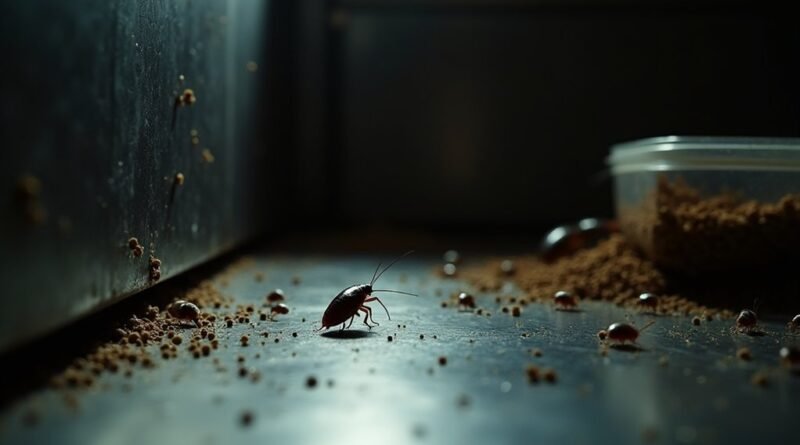
If you work in food service, you need to spot cockroach infestations before they become serious health violations. Watch for tiny dark droppings that resemble coffee grounds or pepper near food storage areas. You’ll also notice a musty, oily odor, smear marks along baseboards, and damaged packaging. Egg casings and shed skins confirm active breeding. A single daytime sighting is already a red flag. Keep exploring to protect your kitchen and stay compliant.
Key Takeaways
- Cockroach droppings appear as tiny dark specks resembling ground coffee or pepper grains, often found near food prep areas.
- Musty, oily odors intensifying behind appliances or under sinks indicate an active cockroach presence requiring immediate attention.
- Dark, red-brown smear marks along baseboards and drains signal active cockroach travel routes and nearby hiding spots.
- Egg casings resembling tiny dried kidney beans confirm rapid breeding and an already-established cockroach population on-site.
- Daytime cockroach sightings indicate severe overcrowding in hiding spots, representing a critical health violation in food service environments.
What Cockroach Droppings Look Like in Food Storage Areas
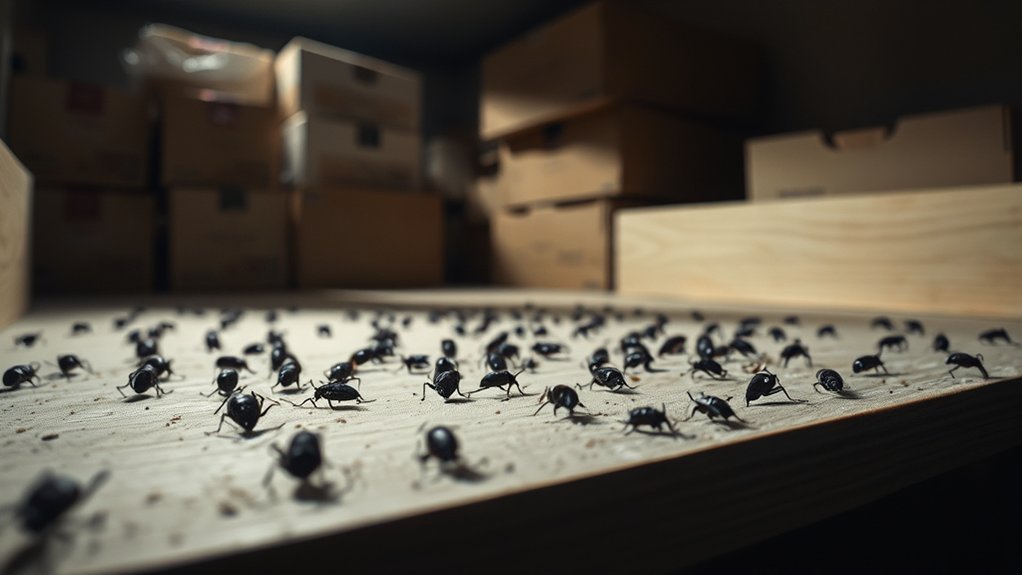
Cockroach droppings in food storage areas look like tiny dark brown dots or pepper grains, though their exact appearance varies by species. Smaller species, like the brown-banded cockroach, leave pinpoint-sized pellets ranging from 0.5 to 1mm — similar to coffee grounds. German cockroach droppings measure about 1mm and resemble ground coffee. Larger species, like the American and oriental cockroaches, produce blunt, cylinder-shaped feces reaching 2mm long.
You’ll also notice distinguishing features that separate cockroach droppings from rodent waste. Look for ridges along the length of the feces and blunt ends rather than tapered points. An oily coating often covers the droppings as well.
In food storage areas, you’ll typically find these droppings inside cabinets, behind appliances, under sinks, and on shelves near spilled dry goods. Trails forming along walls and concentrated clusters signal an active infestation nearby. Beyond being a visual indicator, cockroach droppings pose serious health risks, as they contain harmful bacteria and allergens that can contaminate nearby food supplies.
The Smell That Signals a Cockroach Infestation
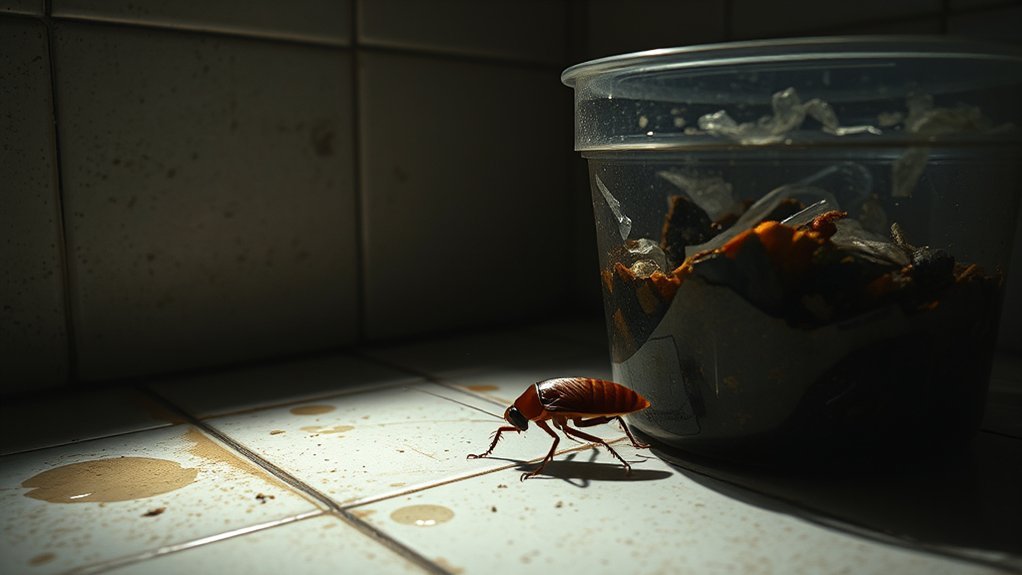
If you notice a musty, oily odor with a faint sweetness when you enter a room, you may already have a cockroach problem. Cockroaches release pheromones and produce oleic acid as they decompose, creating a smell that concentrates behind refrigerators, under sinks, and in low-airflow corners. That odor also penetrates porous surfaces like drywall and fabric, making it detectable even after you’ve cleaned the visible areas. A stronger smell often means the population has grown, signaling that immediate intervention is necessary before the infestation becomes harder to control.
Recognizing Cockroach Odor Characteristics
One of the most telling signs of a cockroach infestation is a persistent, musty, oily smell—often compared to wet cardboard mixed with stale grease or damp rags. You might also detect sour, pungent notes similar to moldy food or dirty socks.
| Odor Type | Description | Source |
|---|---|---|
| Musty/Oily | Wet cardboard, stale grease | Pheromones, feces |
| Damp/Mildew | Cool, moist environment smell | Oriental cockroaches |
| Sour/Pungent | Moldy food, dirty socks | Saliva, vomit, secretions |
| Sweet/Chemical | Unpleasant sweetness | Large infestations |
| Decomposition | Strong, sharp oleic acid | Dead cockroaches |
German cockroaches produce the sharpest, greasiest odor, while Oriental cockroaches emit a damp, mildew-like scent. If the smell returns quickly after cleaning, you’re likely dealing with an established colony. When cockroaches die, their bodies release oleic acid decomposition, creating a sharp, unpleasant odor that can actually attract even more roaches to the area.
Where Smells Concentrate
Where you smell cockroaches matters as much as what you smell. In kitchens, check behind stoves, refrigerators, and inside cabinets, where warmth and food sources concentrate musty pheromone odors. Cracks in kitchen walls often hide active nests producing the strongest smells.
In bathrooms, focus on areas under sinks and around pipes, where moisture intensifies Oriental roach odors. Dark corners trap death stench from decaying corpses, while wall voids hold lingering musty smells.
Laundry and utility rooms present similar risks. Moist environments behind washers and inside pipe crevices accelerate mold growth from roach waste, amplifying foul odors.
If smells seem to come from inside walls, a large hidden population may be building. Odors in sealed voids grow intolerable fast. Cockroaches rely on scent for navigation, meaning concentrated odors in hidden areas signal active trails leading directly to nesting sites.
Odor Transfers To Surfaces
Cockroach odors don’t just linger in the air—they transfer to surfaces and embed themselves in your home’s materials. Pheromones and organic compounds penetrate porous materials like fabrics, drywall, and wallpaper, making them difficult to eliminate with standard cleaning. You’ll find the smell clinging to furniture, food packaging, and clothing, while waste residue embeds deeply into building materials.
Roach corpses left in infested areas make the problem worse, releasing decomposing fatty acids and proteins that saturate nearby surfaces. Even after you clean, the odor returns because the compounds have absorbed too deeply for surface-level treatments to reach. If you’re noticing persistent smells despite repeated cleaning efforts, the source isn’t gone—it’s embedded, signaling an active infestation that requires professional intervention to fully address. The stronger the smell, the greater the likelihood that a larger infestation has been developing undetected for some time.
Cockroach Egg Casings and Shed Skins You Might Be Missing
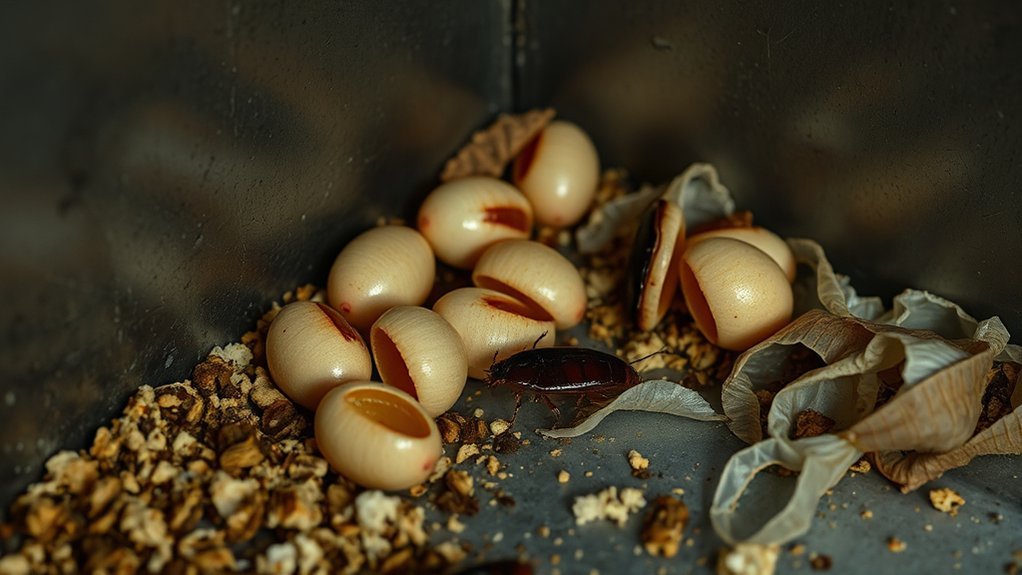
Among the most overlooked signs of a cockroach infestation are the egg casings and shed skins they leave behind. These small, capsule-shaped casings measure 5–10 mm and resemble a dried kidney bean or tiny purse. You’ll find them near leaking pipes, appliance bases, and cabinet corners.
| Egg Casing Type | What to Look For |
|---|---|
| Unhatched | Plump, firm, bulbous |
| Hatched | Deflated, split, shriveled |
| Shed Skins | Translucent, empty exoskeletons |
Identifying whether casings are hatched matters. Unhatched ones still contain 15–40 eggs depending on species. If you confirm eggs inside, flush them immediately.
German cockroach females carry casings visibly from their abdomen, while American and Oriental species hide theirs in warm, dark spots. One overlooked casing can silently yield dozens of roaches in your facility.
Damp Areas and Water Sources Where Cockroaches Hide
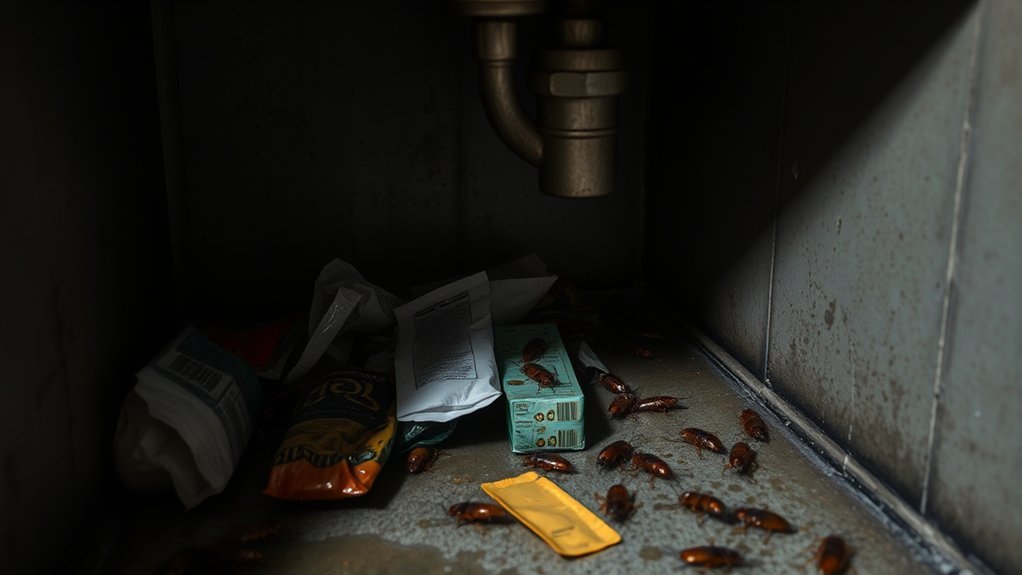
While egg casings and shed skins reveal where cockroaches have been, their active hiding spots tell you where they are right now—and moisture is the common thread.
Check under sinks first. Leaky pipes create constant dampness, and when food residue combines with that moisture, you’ve got ideal cockroach conditions. Behind toilets, condensation keeps walls and floors persistently wet, while nearby drains give roaches direct entry points. Around tubs and showers, cracked caulking and grout lines shelter infestations in areas that stay warm and humid after every use.
Don’t overlook floor drains and utility pipes. American cockroaches dominate these areas, feeding on organic buildup and spreading pathogens as they move. Basements and crawl spaces compound the problem—poor ventilation, cluttered storage, and proximity to sewer drains let colonies thrive for weeks even without food.
Anywhere water collects or leaks, cockroaches follow. Fixing moisture problems directly undercuts their ability to survive.
Where Cockroaches Actually Build Their Nests
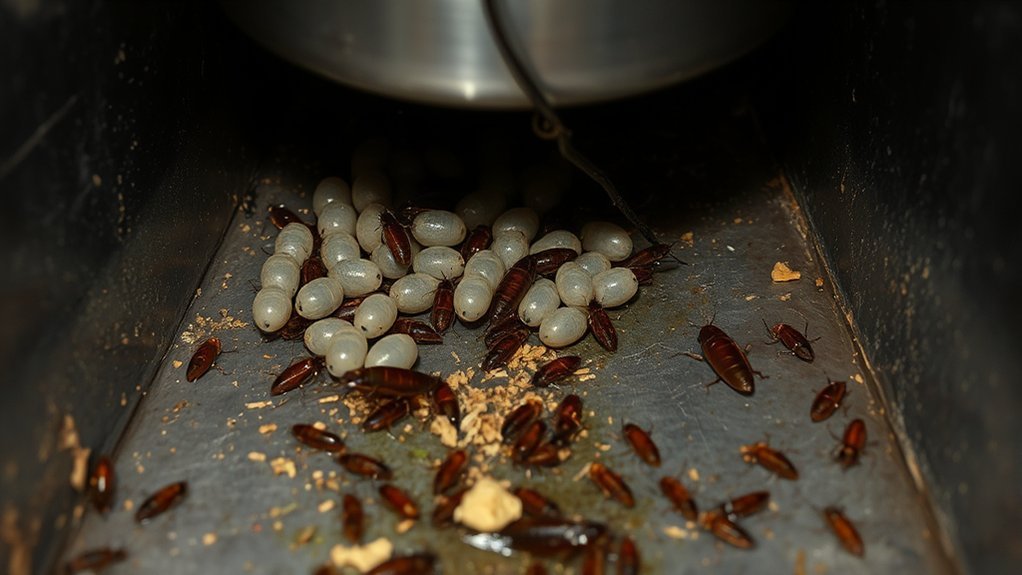
Nesting sites follow a clear pattern: warmth, darkness, and proximity to food or water. In your kitchen, check behind refrigerators, dishwashers, and under stoves. Cockroaches also nest inside refrigerator door gaskets and around warm appliance areas. They’re drawn to pantries where food storage gives them easy access to resources.
Your cabinets and plumbing spaces are equally vulnerable. Look inside sink cabinets, kitchen drawers, and unused compartments. Areas near drainage systems are particularly attractive to them.
Cabinets and plumbing spaces are prime hiding spots — check sink cabinets, drawers, and anywhere near drainage systems.
Beyond the kitchen, cockroaches build nests in bathroom cabinets, under sinks, and around plumbing and drains. Basements with boilers, crawlspaces, wall voids, and cluttered attics provide ideal dark, enclosed environments.
Don’t overlook furniture and hidden spots. They’ll nest under couches, inside closets, and within cracks and crevices. Any furniture harboring crumbs or areas near outdoor debris can also become an active nesting zone.
Cockroach Smear Marks and What They Mean
Cockroach smear marks are dark, red-brown streaks left behind as roaches move through your home, and they’re one of the clearest indicators of an active infestation. Unlike solid waste from other pests, cockroaches excrete liquid feces that mix with body oils, creating greasy, irregular smudges on surfaces they contact.
You’ll find these marks along baseboards, under appliances, around drains, and in food storage areas. German cockroaches concentrate marks in kitchens, American cockroaches leave heavier staining in basements, and Oriental cockroaches smear surfaces near drains and sewers.
Pay attention to both density and distribution. Concentrated marks point to a localized hiding spot, while marks spreading across multiple rooms signal a severe, widespread problem. The more staining you see, the larger the population and the longer the infestation has gone unchecked. Think of smear marks as a roadmap directly to cockroach travel routes and nesting areas.
Damaged Packaging as a Cockroach Infestation Sign
Damaged food packaging is one of the most tangible signs you’ll find during a cockroach infestation. Cockroaches chew through cardboard, plastic, and paper without hesitation, leaving behind gnawed edges and entry points that compromise everything inside. When you spot multiple damaged containers in the same area, you’re likely dealing with an established population, not an isolated incident.
Here’s what damaged packaging means for your facility:
- Cockroaches have already accessed your food supply directly
- Harmful bacteria and pathogens are now contaminating stored goods
- Every nibbled box near others signals active nesting close to your inventory
- Compromised packaging puts your customers at risk of foodborne illness
- Your facility faces serious regulatory and sanitation consequences
Don’t treat packaging damage as minor wear. Inspect your storage areas systematically, document every damaged container, and correlate findings with other infestation signs. Contact a pest control professional immediately when damage appears widespread.
Daytime Cockroach Sightings Mean Serious Trouble
Spotting a cockroach during the day is never a good sign. Cockroaches are nocturnal by nature, so they stay hidden while your facility operates under bright lights. When they’re visible during daylight hours, it typically means their hiding spots are overcrowded, forcing them into open spaces.
Multiple daytime sightings confirm what you likely already suspect — you’re dealing with a severe infestation. A single roach appearing in your kitchen or bathroom warrants immediate attention, but repeated sightings combined with droppings, shed skins, or musty odors confirm an active, spreading problem.
In food service environments, daytime roach activity directly increases your contamination risk. Cockroaches spread bacteria across food preparation surfaces and trigger allergens that affect staff and customers. Don’t rely on store-bought products to handle this. Contact a licensed pest control professional immediately to protect your operation and the public you serve.
How Bad Is the Infestation and When to Call Pest Control
How severe is your cockroach problem? If you’re spotting roaches during the day, hundreds more are hiding nearby. Overpopulated nests force them into open areas, confirming a large, dangerous colony spreading through your facility.
Don’t wait to act. These signs demand immediate professional intervention:
- Droppings anywhere mean active cockroaches are feeding and moving through your food prep areas right now.
- Egg casings confirm rapid breeding — a full-blown infestation is already developing behind your walls.
- Strong musty odors or smear marks signal pheromones attracting even more pests into your space.
- A single sighting counts as a critical health violation and can trigger a restaurant shutdown.
- DIY methods won’t work — adapted roaches require professionals who can eliminate deep, hidden nests effectively.
Call pest control immediately. Every hour you delay puts your customers and your business at serious risk.
Frequently Asked Questions
Can Cockroaches Spread Diseases to Food Workers in Commercial Kitchens?
Yes, cockroaches can spread diseases to you in commercial kitchens. They’ll contaminate your food surfaces, utensils, and ingredients by depositing fecal matter and pathogens after traversing drains, waste zones, and other unsanitary areas.
How Quickly Can a Small Cockroach Problem Become a Full Infestation?
A small cockroach problem can explode into a full infestation within 4-8 weeks if you don’t act fast. Since a single pair can produce 400,000 offspring yearly, you’re facing exponential growth rapidly.
What Health Code Violations Result From a Confirmed Cockroach Infestation?
A confirmed cockroach infestation can result in violations for pest control, insanitary facilities, improper food storage, and compromised hygiene standards. You’ll face citations that’ll damage your compliance score, reputation, and revenue.
Are Certain Cockroach Species More Dangerous Than Others in Food Facilities?
Yes, both species threaten your facility, but German cockroaches are more dangerous. They’re smaller, reproduce faster, and they’ll hide in your food equipment. American cockroaches carry pathogens too, though they’re less prolific.
Can Cockroaches Survive Commercial Kitchen Cleaning Chemicals and Sanitizing Products?
Yes, cockroaches can survive your commercial kitchen’s cleaning chemicals and sanitizers. They thrive on grease buildup, hide in cracks, and enter through pipes, bypassing surface treatments and standard mopping efforts entirely.
Conclusion
Now that you know what to look for, you’re better equipped to catch a cockroach infestation before it spirals out of control. Don’t ignore droppings, smear marks, strange odors, or daytime sightings — they’re all red flags demanding immediate action. You’re responsible for keeping your food workspace safe, so act fast when something seems off. Contact a licensed pest control professional the moment you suspect an infestation, and never wait until the problem gets worse.
