
Small Cockroach: What Species Are Tiny and How to Identify Them
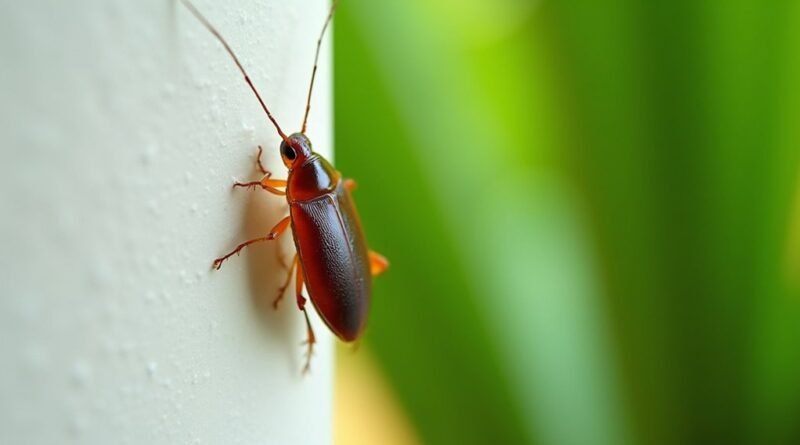
Small cockroaches are typically ¼ to ½ inch long, and the two species you’re most likely dealing with are the German cockroach and the brown-banded cockroach. German cockroaches are light brown with two dark stripes running down their backs. Brown-banded cockroaches have distinctive light tan bands across their wings and abdomen. Knowing which species you’re facing makes all the difference, and there’s plenty more to uncover about their habits, hiding spots, and how to tell them apart.
Key Takeaways
- Small cockroaches measure ¼ to ½ inch, with common tiny species including the German cockroach and brown-banded cockroach.
- German cockroaches are ½ to ⅝ inch, light brown with two dark parallel stripes running down their backs.
- Brown-banded cockroaches measure about ½ inch and display distinctive light tan or yellow bands across their wings and abdomen.
- German cockroaches prefer warm, humid areas like kitchens, while brown-banded cockroaches favor dry, warm spots like upper cabinets and electronics.
- Nymphs of small species can be as tiny as 1/16 inch, are wingless, and darker than adults, complicating identification.
How Small Is a Small Cockroach?
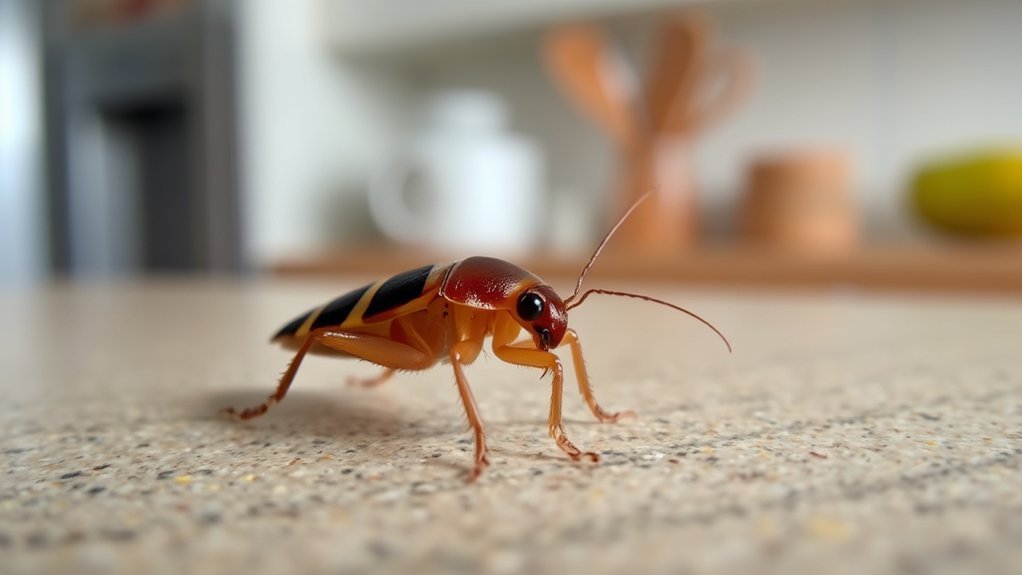
When identifying small cockroaches, knowing what “small” actually means helps narrow your search. Experts generally define small cockroaches as species measuring between ¼ and ½ inch long. That range gives you a practical benchmark when you’re trying to distinguish a genuinely small species from a juvenile of a larger one.
For context, American cockroaches reach 1.1 to 2.1 inches, and Oriental cockroaches measure 0.71 to 1.14 inches. Both dwarf the species you’d classify as small. German and brown-banded cockroaches, two of the most common small pest species, each measure roughly ½ to ⅝ inch as adults.
On the extreme end, Attaphila fungicola reaches only 3 mm total, making it the smallest known cockroach species. Nymphs complicate identification further since they’re even tinier, sometimes as small as 1/16 inch, regardless of how large they’ll eventually grow. Of the approximately 3,500 cockroach species found worldwide, only a fraction are considered small enough to fall within the pest range most homeowners encounter.
The Small Cockroach Species Most Likely in Your Home
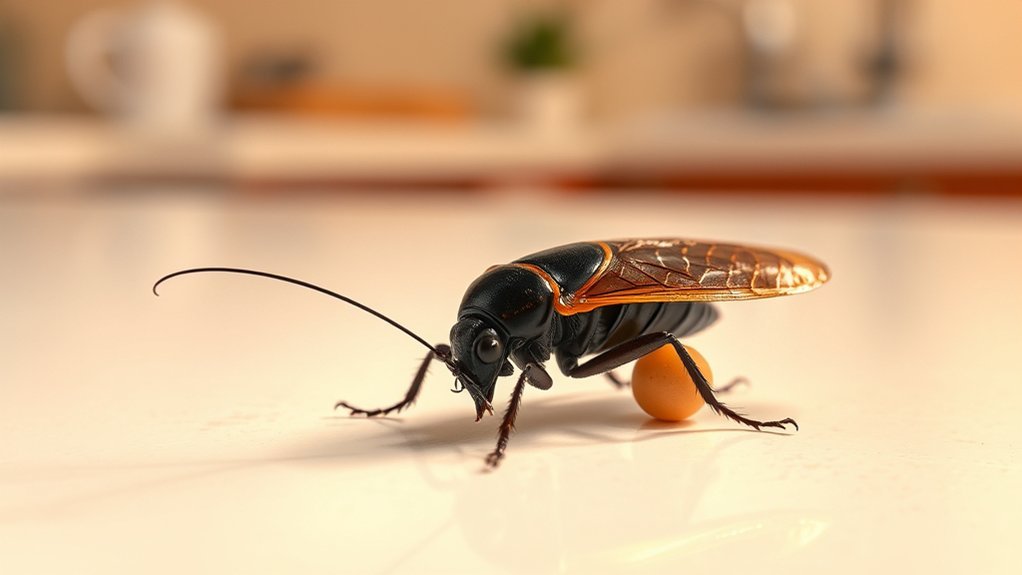
If you’re spotting small cockroaches indoors, you’re most likely dealing with either a German or brown-banded cockroach. The German cockroach, measuring ½ to ⅝ inch long, is light brown with two dark parallel stripes behind its head and gravitates toward kitchens and bathrooms. The brown-banded cockroach reaches about ½ inch long, sports two light tan or yellow bands across its wings and abdomen, and prefers warmer, drier spots like upper cabinets and appliances. Both species are known to contaminate food and surfaces with bacteria such as Salmonella and E. coli, posing serious health risks to household members.
German Cockroach Characteristics
The German cockroach is the small species you’re most likely dealing with if you have a cockroach problem indoors. Adults measure ½ to ⅝ inch long and display a light brown to tan color with two dark parallel stripes running along the pronotum. Their bodies are flat and oval-shaped, with spiny legs and long antennae.
You can distinguish males from females easily. Males have slender, tapered abdomens, while females are stouter with rounded posteriors and tegmina covering the entire abdomen.
Nymphs look noticeably different — they’re smaller, darker brown to black, and wingless with a single stripe. If you’re seeing an active infestation, expect roughly 80% of the population to be nymphs rather than adults. Females produce 4 to 8 egg capsules in their lifetime, with each capsule containing 30 to 48 eggs.
Brown-Banded Cockroach Traits
Brown-banded cockroaches are another small species you might encounter indoors, though they’re less common than German cockroaches. They measure 10–14 mm long, with light brown to tan coloring and two distinctive brownish bands across their abdomen. Males are slimmer with fully developed wings and fly readily when disturbed, while females are broader with wings that don’t fully cover their abdomen.
Unlike German cockroaches, you’ll find brown-banded roaches in warm, dry areas away from moisture — think refrigerator motor housings, upper cabinet walls, picture frames, electronics, and upholstered furniture. They prefer temperatures above 80°F and tend to hide higher in structures. A single female can produce up to 14 egg capsules in her lifetime, contributing to rapid population growth if left unmanaged.
These roaches pose serious health risks. They spread bacteria like E. coli and Salmonella, trigger asthma and allergies, and contaminate surfaces with feces and defensive secretions.
What Does a German Cockroach Look Like?
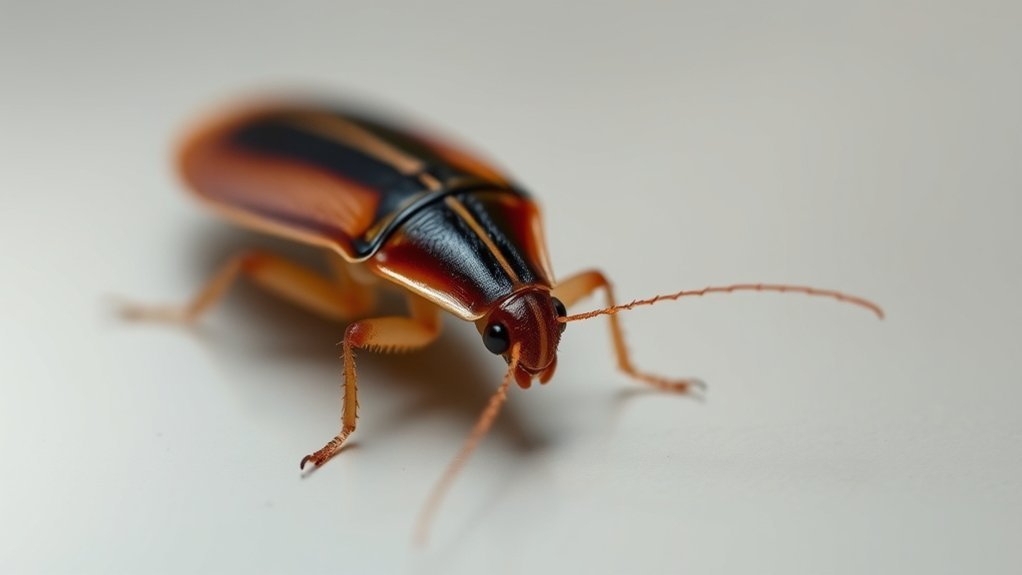
When you spot a German cockroach, you’ll notice its light brown or tan body measuring just ½ to 5/8 inch long, with two distinctive black stripes running along the pronotum behind its head. Adults carry fully formed wings that stop at the abdomen’s edge, though you’ll rarely catch one flying since they prefer sprinting across surfaces. Nymphs look noticeably different—smaller, wingless, and nearly black—but they still display those same two dark stripes that make this species easy to identify at any life stage. Females carry an egg capsule attached to their abdomen that contains 30 to 40 eggs.
German Cockroach Physical Features
German cockroaches are small, flat-bodied insects measuring between ½ to ⅝ of an inch (13–16 mm) long, with a light brown to tan coloration that can darken to almost black in some individuals. You’ll notice their most distinctive feature immediately: two dark, parallel stripes running along the pronotum, the shield-like plate behind the head.
Males appear longer and narrower with a lighter body color, while females are shorter, rounder, and noticeably darker. Both sexes share the same flattened, oval-shaped body with long antennae and wings, though neither flies regularly. Nymphs start at just 3 mm and grow through six instars, reaching 12.5 mm before adulthood. These identifying characteristics make German cockroaches distinguishable from other small cockroach species you might encounter.
Nymph Versus Adult Appearance
Spotting a German cockroach depends heavily on whether you’re looking at a nymph or a fully grown adult. Nymphs hatch at under 3 millimeters, emerging bright white before darkening to grayish-brown within hours. As they age, they turn dark brown to black, briefly going lighter and nearly translucent after each molt.
Adults are noticeably larger and carry fully developed wings, while nymphs remain wingless throughout their 5-6 instars. Late-stage nymphs do show small wing buds, signaling their final molt is approaching. You’ll also notice nymphs have longer legs relative to their bodies, allowing them to move quickly into tighter cracks than adults can reach. Both share similar markings, making size and wings your clearest identification tools.
Coloration And Stripe Patterns
The German cockroach‘s most recognizable feature is its light brown to tan body, though adults can range into reddish-brown or darker brown shades. Males tend to run lighter than females, who display a noticeably darker brown tone.
What truly sets this species apart are the two dark parallel stripes running along its pronotum, from the head down to the wing base. You’ll often hear these called “racing stripes,” and they form a shape resembling an equal sign or figure-eight.
These stripes are your clearest visual clue for distinguishing German cockroaches from similar species. Brown-banded roaches lack these parallel pronotal stripes entirely, while American roaches appear darker reddish-brown without the same defined markings.
What Does a Brown-Banded Cockroach Look Like?
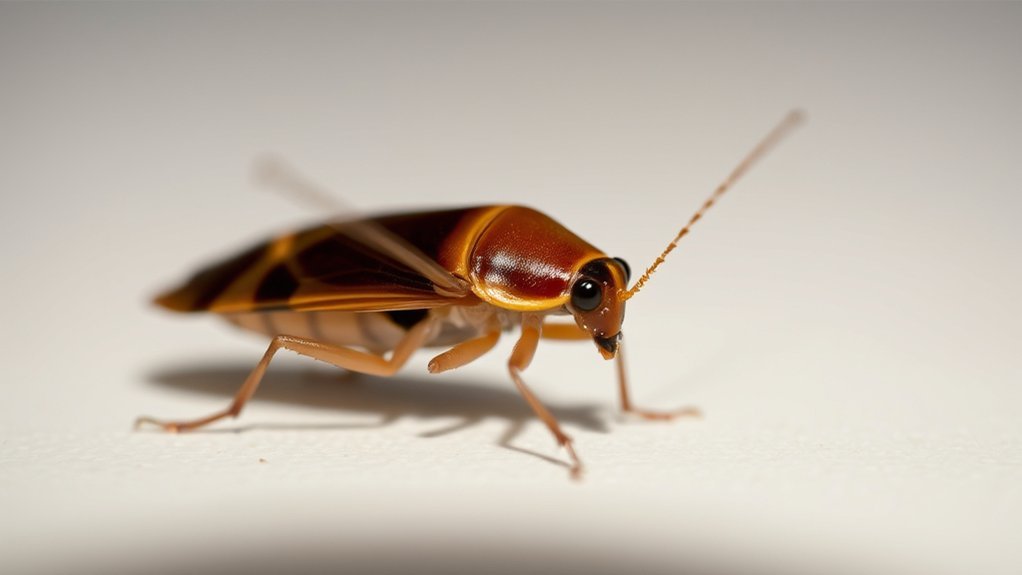
Brown-banded cockroaches are small, oval-shaped insects measuring between 10–14 mm long, with a light to medium brown body marked by two distinctive light brown bands across their wings and abdomen. You’ll notice darker bell-shaped markings on the pronotum and bands that may appear broken or irregular beneath the wings.
| Feature | Male | Female |
|---|---|---|
| Color | Lighter brown | Darker brown |
| Wings | Full, extends past abdomen | Short, partial coverage |
| Build | Slender | Shorter, stouter |
| Flight | Capable | Cannot fly |
| Body Length | ~10–14 mm | Slightly shorter |
Males take flight when disturbed, while females rely on their stouter build to stay grounded. Unlike German cockroaches, brown-banded roaches lack longitudinal head stripes, displaying transverse bands instead. Their tan-to-brown coloring helps them blend seamlessly into furniture and cabinetry, making visual detection challenging.
German Cockroach vs. Brown-Banded Cockroach: Size, Habits, and Speed
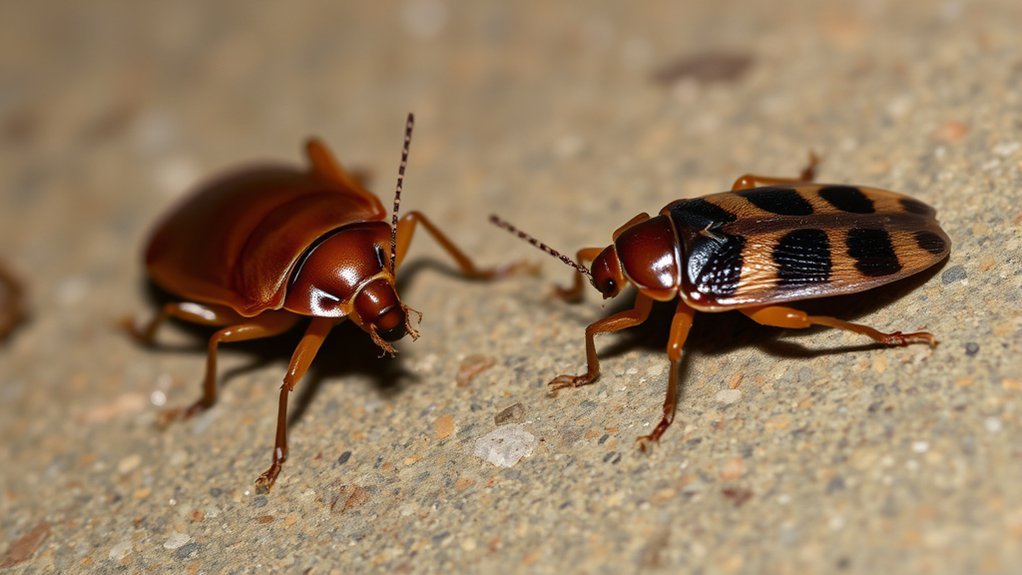
While both species are small and fast-moving, German and brown-banded cockroaches differ enough in size, habits, and behavior to help you tell them apart.
German cockroaches are slightly larger, reaching about 17 mm, compared to the brown-banded’s 10–14 mm. Germans are tan with two dark head stripes and longer-than-body antennae, while brown-banded roaches are light brown with dark wing bands and shorter antennae.
Their habits also diverge. German cockroaches prefer warm, humid spots like kitchens and bathrooms, entering through sewer pipes and plumbing. They’re highly sensitive to cold and run when disturbed. Brown-banded cockroaches favor dry, warm areas like attics and appliance motors, typically transported indoors via furniture. Males fly when disturbed; females run.
Reproduction timelines differ too. Germans develop from egg to adult in 50–68 days, while brown-banded roaches take 95–276 days, though both reproduce quickly enough to cause serious infestations.
Where Each Small Cockroach Species Hides and Why
Each small cockroach species hides where its biology demands. German cockroaches favor cracked bathroom tiles, wall voids near plumbing, and under kitchen sinks — all offering moisture and darkness. Brown-banded cockroaches avoid ground-level activity, preferring high walls, cabinet corners, and warm appliance interiors like TVs. You’ll find Oriental cockroaches near drains, laundry rooms, and damp basement debris, as they need constant water access to survive.
| Species | Primary Hiding Motivation |
|---|---|
| German Cockroach | Moisture, thigmotactic pressure, warmth near plumbing |
| Brown-Banded Cockroach | Elevated, dry, warm spots away from foot traffic |
| American Cockroach | High humidity zones near floor drains and water heaters |
| Oriental Cockroach | Constant water access, damp debris, sewer proximity |
Understanding these preferences helps you target inspections precisely. Tight cracks, leaky pipes, warm appliances, and cluttered storage aren’t random hiding spots — they’re biological requirements driving where each species settles.
Frequently Asked Questions
Are Small Cockroaches More Dangerous Than Larger Cockroach Species?
Small cockroaches aren’t necessarily more dangerous individually, but you’re at higher risk from them due to their rapid reproduction, allergen production, and ability to access food areas, amplifying overall health hazards in your home.
Can Small Cockroaches Survive Outdoors in Colder Climates?
Small cockroaches can’t survive outdoors in colder climates. They’re tropical species that need warmth above 21°C (70°F) to reproduce. In cold regions like the U.S. Midwest, you’ll only find them thriving indoors.
How Do Small Cockroaches Enter Homes in the First Place?
Small cockroaches enter your home by hitchhiking in grocery bags, boxes, and used furniture. They’ll also squeeze through cracks in walls, gaps around pipes, and travel through shared ventilation systems in multi-unit buildings.
What Smells or Scents Naturally Repel Small Cockroach Species?
You can repel small cockroaches using peppermint, tea tree, eucalyptus, mint, rosemary, oregano, and lavender oils. These scents naturally deter cockroaches, and you’ll get better results by combining multiple oils together.
Do Small Cockroaches Bite Humans While They Sleep?
Small cockroaches don’t bite you while you sleep. They’re focused on foraging for food scraps, not human flesh. Their chewing mouthparts aren’t designed for piercing skin, making bites extremely rare and scientifically undocumented.
Conclusion
If you’ve spotted a tiny cockroach in your home, you’re most likely dealing with a German or brown-banded species. Knowing the differences between them helps you target the right hiding spots and choose the most effective treatment. Don’t ignore even one small roach—where there’s one, there are almost certainly more. Act quickly, seal entry points, and address moisture issues to keep these resilient pests from taking over your space.
