
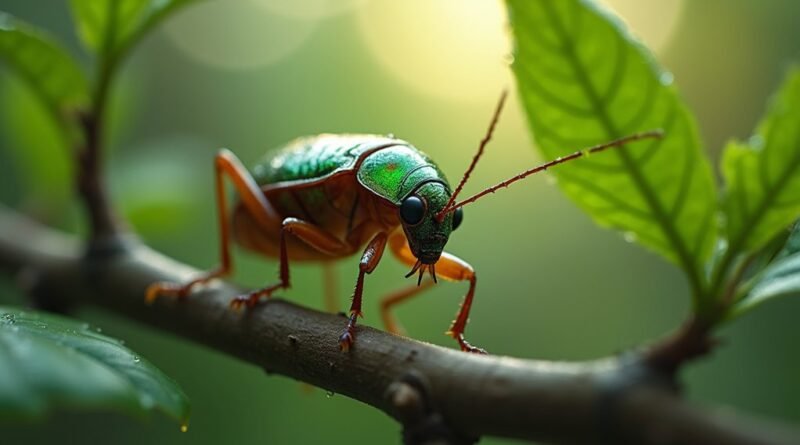
Tree Cockroach: Identification and Whether It Is a Problem
If you’ve spotted a flat, oval-shaped roach ranging from light tan to dark brown, you’re likely dealing with a tree cockroach. Unlike house roaches, they don’t carry diseases, can’t breed indoors, and usually die within 48–72 hours inside your home. They’re more of a nuisance than a real threat. Understanding where they come from and how they get in can help you stop them before they become a recurring problem.
Key Takeaways
- Tree cockroaches have oval, tan-to-brown bodies, long antennae, and spiny legs; males fly and grow to 1 inch, females are smaller.
- Unlike house roaches, tree cockroaches are active day and night and cannot complete their life cycle indoors.
- They pose minimal health risks but can mechanically transfer bacteria and release allergens affecting sensitive individuals like children and the elderly.
- Tree cockroaches are classified as nuisance pests; they cause no structural damage and typically die indoors within 48–72 hours.
- Prevention focuses on sealing entry points, storing firewood away from foundations, and reducing outdoor lighting during peak seasons.
What Does a Tree Cockroach Actually Look Like?
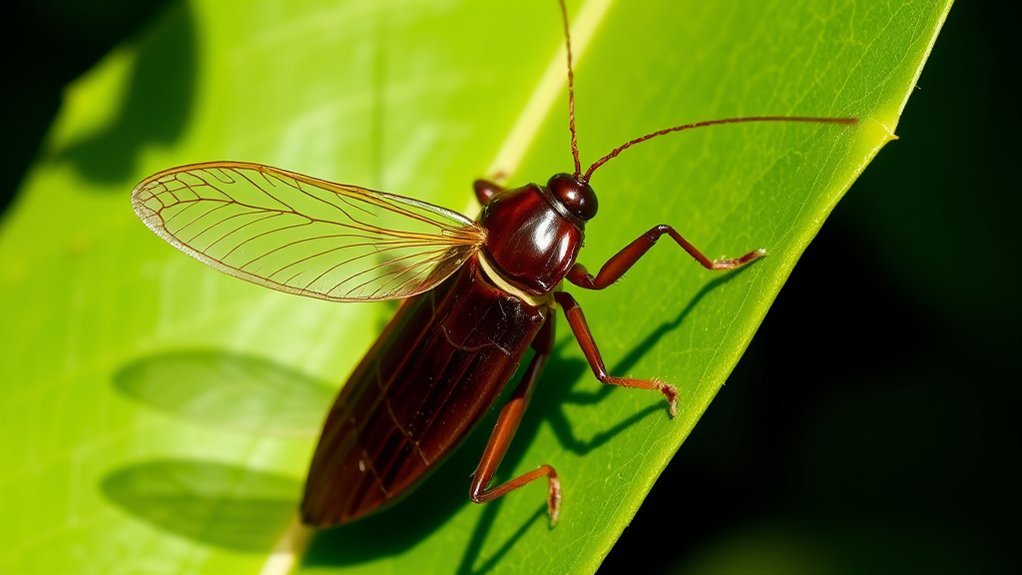
Tree cockroaches share the same flattened, oval-shaped body that’s typical of most cockroach species, but they carry a few standout features that make them easier to identify. Their bodies are dorsoventrally flattened, and their heads stay concealed beneath the thorax when viewed from above.
You’ll notice their coloring ranges from light tan to dark chestnut brown, depending on sex and maturity. Males tend to run lighter, while females display a darker, shinier brown. Immatures often show reddish-brown tones.
Size-wise, males reach up to 1 inch long, occasionally exceeding 1¼ inches, while females stay slightly shorter at around ¾ inch. Both sexes have two long antennae and six spiny, splayed legs built for quick movement.
Wings are where they differ most. Males carry long wings that extend past the body, enabling flight, while females have short, non-functional wings. Look for pale or cream-colored stripes along the wing edges and prothorax as a key identifier. This transparent or whitish stripe is visible on both nymphs and adults, making it one of the more reliable markings to look for across life stages.
What Makes a Tree Roach Different From Common House Roaches?
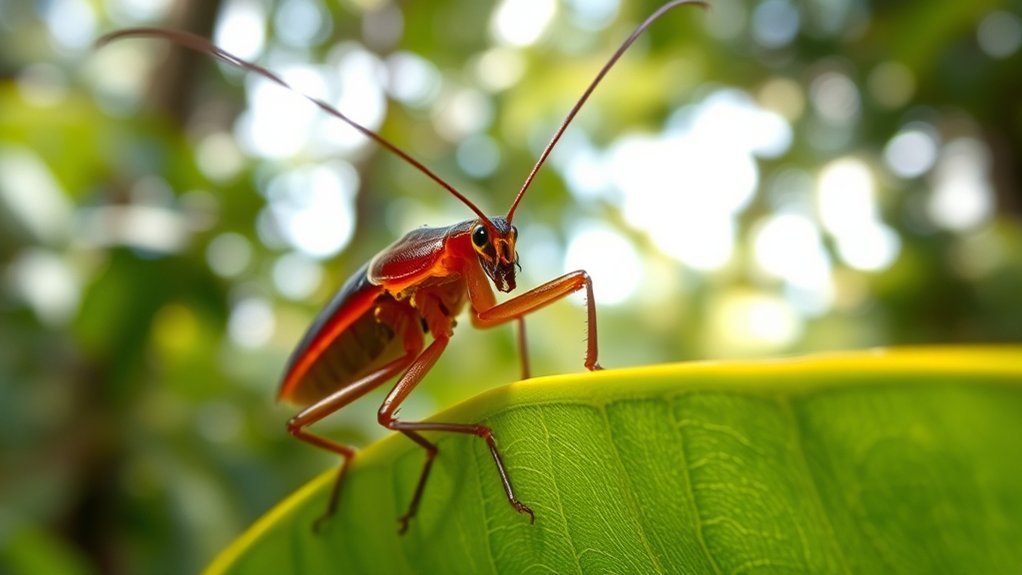
Although tree roaches and house roaches belong to the same order, they’re built for entirely different lifestyles. Where house roaches dart into hiding the moment you flip a light switch, tree roaches move slowly and don’t startle easily. That behavioral gap alone tells you a lot about which one you’re dealing with.
Tree roaches move slowly and tolerate light. House roaches vanish the instant you flip a switch.
Here are three key differences worth knowing:
- Behavior: Tree roaches are active day and night and tolerate light; house roaches are nocturnal and flee when exposed.
- Reproduction: Tree roaches can’t complete their life cycle indoors and die within 48–72 hours; house roaches reproduce rapidly inside warm buildings.
- Health risk: Tree roaches pose no real threat; house roaches carry over 20 bacteria types and trigger asthma allergens.
If you spot one indoors, context matters. A tree roach likely wandered in by accident, while a house roach signals a developing infestation. Common household cockroach species include German, American, brown banded, and Oriental cockroaches, each capable of thriving and reproducing inside your home.
Where Do Tree Cockroaches Come From?
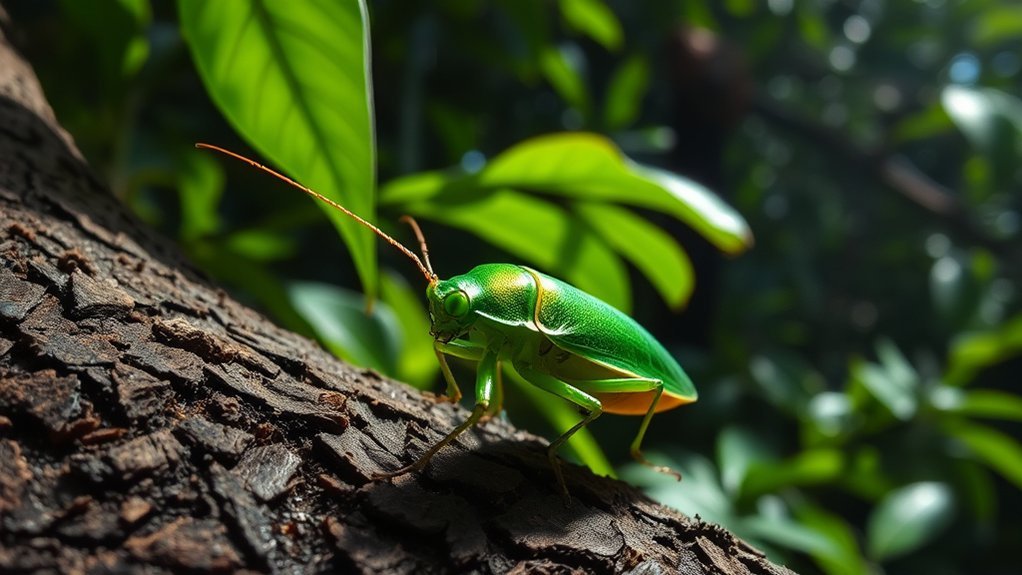
Most tree cockroaches you’ll encounter trace back to a surprisingly specific set of outdoor conditions. They originate in forest environments where decaying wood, leaf litter, and high moisture levels support their entire life cycle. Female wood cockroaches deposit egg capsules behind loose bark on dead trees, logs, and stumps during warm months. Those eggs hatch within about a month, and nymphs spend up to two years developing before molting into adults.
Standing dead trees, or snags, contain nearly 80% of collected wood cockroaches, making them a primary source. Rotting logs, woodpiles, and hollow trees also harbor large populations. When you stack firewood near your home or let gutters fill with wet leaves, you’re fundamentally creating ideal cockroach habitat right against your house.
Because these insects are native to eastern and central North America, they’re abundant across a wide range of outdoor environments year-round. Unlike the German cockroach, which researchers traced to an origin in South Asia roughly 2,100 years ago before spreading globally through human trade routes, tree cockroaches evolved within North American ecosystems without the influence of human commerce or migration.
How Do Tree Cockroaches Get Into Your Home?
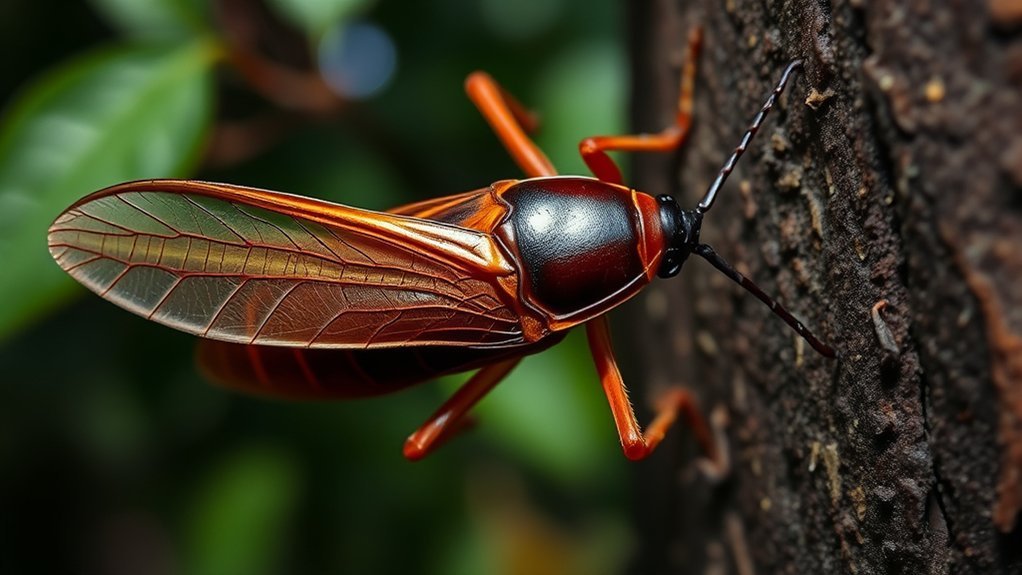
Tree cockroaches find their way inside through several common pathways you might overlook. You can unknowingly carry them in on firewood or mulch, where nymphs and adults hide under bark, especially during winter months. They’ll also slip through cracks in your foundation, gaps around vents, and even surge indoors during breeding season in late May and June. Male tree cockroaches are also drawn inside because they are attracted to lights, mistaking indoor lighting for natural cues during their search for mates.
Firewood and Mulch
Wood cockroaches have two primary pathways into your home: firewood and mulch. Firewood stacks are prime habitats, especially under bark and in moist wood. When you bring infested logs indoors, dormant nymphs warm up and become active inside your home.
Reduce your risk by following these practices:
- Inspect each log before bringing it inside, knocking pieces together to dislodge hidden insects.
- Store firewood away from your home’s exterior, elevated off the ground to discourage nesting.
- Bring in only small amounts of firewood at a time and burn it immediately.
Keep your firewood dry and split it in late fall when fewer insects are active. Never treat firewood with pesticides, as burning treated wood releases harmful vapors. When disposing of infested wood, burn it outside in a fire pit or discard it to maintain a pest-free environment.
Cracks and Vents
Even a 1/16-inch crack is wide enough for a cockroach to squeeze through, making your home’s foundation, walls, and vents common entry points. Gaps around pipes, windows, and exterior wall fissures give tree cockroaches direct access indoors, especially during warm seasons when they’re actively seeking warmth and food. Moisture near foundations attracts them further, and once inside, they move into wall voids and spread throughout your home.
Vents are equally problematic. HVAC ducts, dryer vents, and roof vents without proper seals become highways connecting rooms or even units in multi-family buildings. To stop this, use a caulking gun on foundation and wall cracks, install airtight vent covers, and pack gaps with steel wool or copper mesh. Regularly inspect plumbing and wiring penetrations too.
Seasonal Entry Points
Sealing cracks and vents cuts off many entry routes, but tree cockroaches also exploit seasonal patterns to find their way inside. Three seasonal triggers increase your risk considerably:
- Spring warming: Rising temperatures above 50°F push wood roaches out of outdoor harborage, and population pressures drive them toward nearby structures.
- Summer lighting: Males are strongly attracted to artificial light, so your lighted windows and open screens become direct invitations during warm evenings.
- Dry spells: When outdoor moisture drops, cockroaches seek water sources indoors, particularly if your home sits near wooded areas.
If you live adjacent to forests or woodlands, these seasonal windows compound your exposure. Addressing lighting, moisture, and structural gaps before spring arrives gives you the best defense.
Are Tree Cockroaches Dangerous or Just a Nuisance?
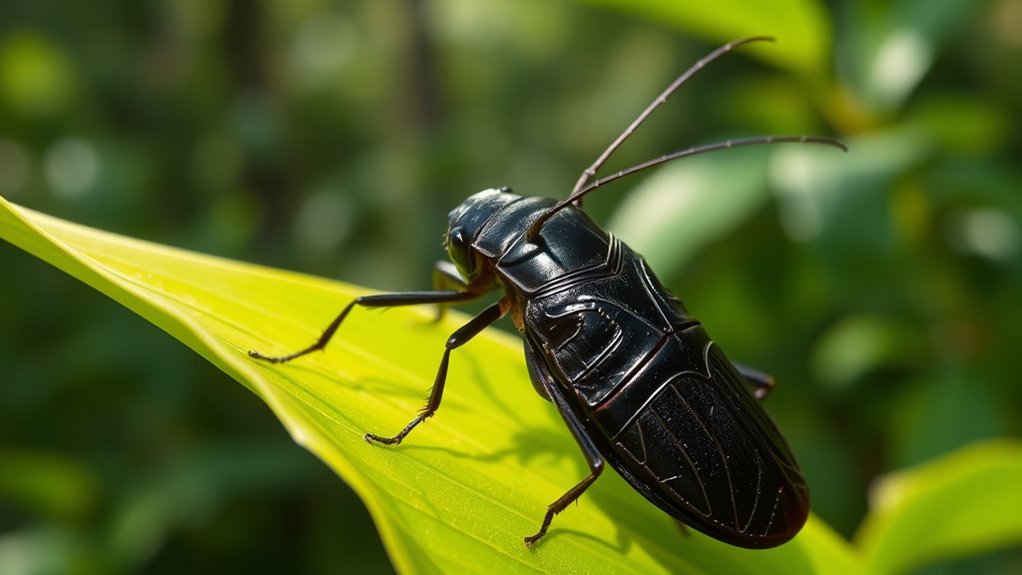
If you’ve spotted a tree cockroach in your home, you can breathe easy — they carry no known diseases, don’t bite or sting, and aren’t linked to the asthma triggers or allergens associated with German or American cockroaches. Unlike their indoor cousins, tree cockroaches avoid sewers and breed exclusively outdoors, making them far less hazardous to your health. Their real offense is the alarm they cause — their large size and nocturnal appearances make them unsettling houseguests, even though they’re ultimately harmless accidental invaders.
Health Risks Assessed
While tree cockroaches are often dismissed as mere nuisances, they carry real health risks you shouldn’t overlook. They mechanically transfer bacteria from sewers to your kitchen surfaces, contaminating food and utensils. Their droppings, saliva, and shed skin release airborne allergens that trigger serious respiratory reactions.
Here’s what you’re actually dealing with:
- Bacterial threats – They spread Salmonella, E. coli, and Staphylococcus through fecal deposits and body contact with food.
- Respiratory allergens – Their debris triggers asthma attacks, wheezing, and worsening symptoms in sensitized individuals.
- Vulnerable household members – Children, elderly adults, and immunocompromised individuals face the greatest risks from exposure.
Don’t underestimate their impact. Even occasional indoor intrusions introduce pathogens and allergens that affect your household’s health.
Nuisance Without Harm
Despite their unsettling appearance and the alarm they trigger in most households, tree cockroaches are classified as nuisance pests rather than genuine threats. They don’t bite, sting, damage furniture, or breed indoors. Their presence is temporary, driven by seasonal attraction to lights and pheromones.
| Factor | Tree Cockroach | Indoor Species |
|---|---|---|
| Biting/Stinging | None | None |
| Indoor Breeding | No | Yes |
| Structural Damage | None | Possible |
You’ll typically see them near wooded areas during breeding season, entering through gaps around doors or windows. Males fly indoors accidentally, while females rarely enter at all. Since they can’t sustain indoor populations, your response should focus on prevention—sealing entry points and eliminating outdoor harborage—rather than chemical treatment.
Can Tree Cockroaches Survive Inside Your Home?
When a wood cockroach wanders into your home, it won’t last long. These insects need consistently damp conditions to survive, and your heated, climate-controlled home simply can’t provide that. Most die within 48–72 hours from dehydration or starvation.
They also can’t breed indoors. Wood cockroaches only mate and lay eggs beneath bark or outdoor debris, making a permanent infestation impossible. Any roach you find inside is a temporary visitor, nothing more.
Here’s what makes indoor survival impossible for them:
- Low humidity causes rapid dehydration, killing them within days
- No food sources indoors, since they feed on decaying outdoor matter
- Unsuitable conditions prevent mating or egg-laying entirely
If you spot one inside, it likely hitchhiked in on firewood or camping gear. You don’t need to panic. Unlike German cockroaches, wood roaches won’t establish themselves in your home or cause any lasting problem.
How Do You Keep Tree Cockroaches Out of Your Home?
Since wood cockroaches can’t establish themselves indoors, keeping them out is less about eradication and more about limiting how often they wander in. Start by sealing entry points—caulk cracks in ground-level walls, repair gaps around doors and windows, and maintain tight-fitting screens. In food areas, seal gaps around sinks, baseboards, and crevices.
Manage your firewood carefully. Store piles far from your foundation, bring only one to two days’ worth inside at a time, and debark it before storing it indoors. Remove fallen trees, stumps, and wood debris from your yard.
Bring only a day or two of firewood inside at a time, and store piles well away from your foundation.
Since tree cockroaches are drawn to light, reduce outdoor lighting during May and June. Use warm-colored LED bulbs, install motion sensors, and block indoor light from escaping through windows.
Finally, apply residual insecticide around your home’s exterior, set glue traps near entry points to monitor activity, and keep gutters clean to eliminate excess moisture.
Do You Actually Need Pest Control for Tree Cockroaches?
For most homeowners, tree cockroaches don’t warrant a full pest control response. Their presence indoors is usually temporary, lasting only a few weeks in spring, and they can’t establish nests or reproduce inside your home.
Before reaching for pesticides, consider that insecticides offer limited benefit against wood roaches. Instead, focus on exclusion and sanitation first. Chemical control simply isn’t always necessary.
You should consider professional pest control only if:
- Infestations persist beyond a few weeks despite exclusion efforts
- Large numbers keep appearing, suggesting a significant outdoor population near your foundation
- DIY methods fail, making barrier treatments or residual insecticides around your perimeter worth exploring
If you do need intervention, Integrated Pest Management (IPM) combines targeted treatments with low-risk alternatives like glue boards and baits, reducing pesticide resistance risks. Licensed professionals guarantee chemicals are applied safely and effectively when the situation truly calls for it.
Frequently Asked Questions
Do Tree Cockroaches Bite Humans or Pets When Handled?
Tree cockroaches rarely bite you or your pets when handled. They avoid confrontation, preferring to flee. Biting’s only likely if there’s a severe infestation with scarce food, making it an extremely uncommon last resort.
What Time of Year Are Tree Cockroaches Most Commonly Seen?
You’ll most commonly see tree cockroaches from late May through June, when breeding season peaks. However, you can encounter them indoors anytime between May and October, especially when warm, humid weather triggers increased activity.
Can Tree Cockroaches Damage Wooden Furniture or Structural Wood?
You don’t need to worry about tree cockroaches damaging your wooden furniture or structural wood. They feed on rotting trees and decaying matter outdoors, unlike wood-destroying insects such as powder post beetles that target structures.
Do Tree Cockroaches Produce Any Odor or Allergens Indoors?
Yes, tree cockroaches can produce allergens from their saliva, feces, and shed skins. If they enter your home, you’ll notice musty odors and risk triggering asthma or allergic reactions through inhalation of airborne particles.
Are Tree Cockroaches Attracted to Specific Types of Outdoor Lighting?
Yes, tree cockroaches are drawn to warm-colored lights ranging from 1800K to 3000K. You’ll find they’re especially attracted to porch and window lights, so switching to cooler bulbs can reduce their presence.
Conclusion
If you’ve spotted a tree cockroach in your home, don’t panic. These roaches prefer living outdoors and rarely establish indoor infestations. You can keep them out by sealing entry points, reducing outdoor lighting, and eliminating moisture. If you’re seeing them regularly, it’s worth calling a pest control professional to assess the situation. Understanding what you’re dealing with makes tackling the problem much easier.
