
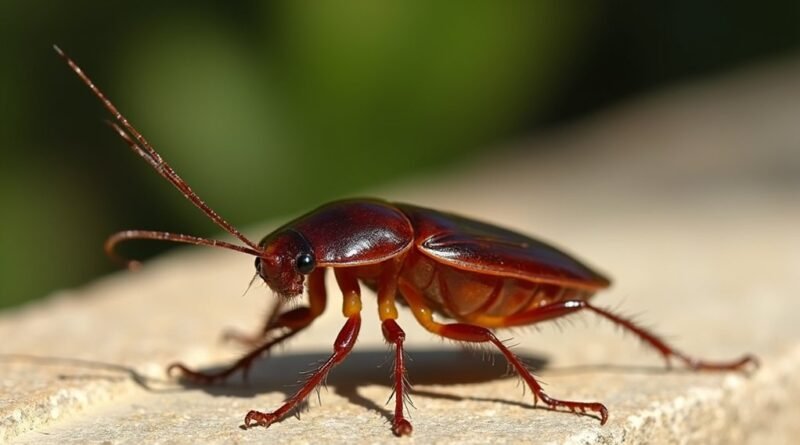
Turkestan Cockroach: Identification, Behavior, and Control
The Turkestan cockroach (*Blatta lateralis*) is one of the Southwest’s fastest-spreading pests, measuring 15–28 mm long. You can spot males by their brownish-orange color and long yellowish wings, while females are darker with cream-colored markings and can’t fly. They prefer warm, outdoor environments near moisture but will invade your home through cracks and gaps. Everything you need to identify, track, and eliminate them is covered ahead.
Key Takeaways
- Turkestan cockroaches (*Blatta lateralis*) measure 15–28 mm, with brownish-orange winged males and dark, flightless females bearing cream-colored markings.
- Native to Central Asia, they thrive in warm, dry climates like California and Texas, preferring outdoor moisture-rich environments.
- Nocturnal and attracted to light, they invade homes through cracks and gaps, seeking food, moisture, and shelter.
- Signs of infestation include pepper-like droppings, oval egg cases, shed exoskeletons, and musty odors near mulch or pavement cracks.
- Control involves baits, traps, granule treatments, and exterior sprays; professional help is needed when two or more cockroaches are spotted.
What Is the Turkestan Cockroach?
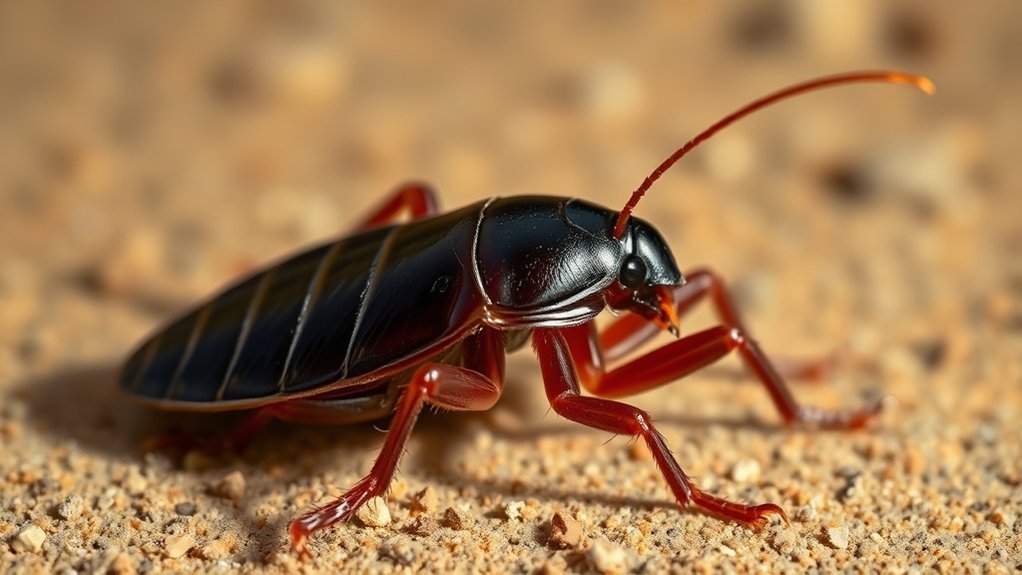
The Turkestan cockroach (*Blatta lateralis*) is an outdoor-dwelling species native to Central Asia and northeastern Africa that’s now established across the American Southwest. You’ll also find it called the red runner or rusty red cockroach. It arrived in the U.S. during the 1970s–1980s via military ships from the Middle East and has since spread through online reptile food sales, reaching as far north as New York.
Adults grow 15–28 mm long. Females are dark brown to black with cream-colored markings along their body edges and short wing stripes. Males are smaller, brownish-orange with long yellowish wings and similar cream markings. Nymphs are wingless and bi-colored, with a light brown thorax and dark brown abdomen.
Unlike German cockroaches, Turkestan cockroaches aren’t aggressive indoor pests. They prefer warm, outdoor environments near moisture sources like mulch, leaf piles, and garden beds. As nocturnal insects, they are most active at night and are commonly drawn to light sources such as porch lights and windows.
How to Tell Male and Female Turkestan Cockroaches Apart
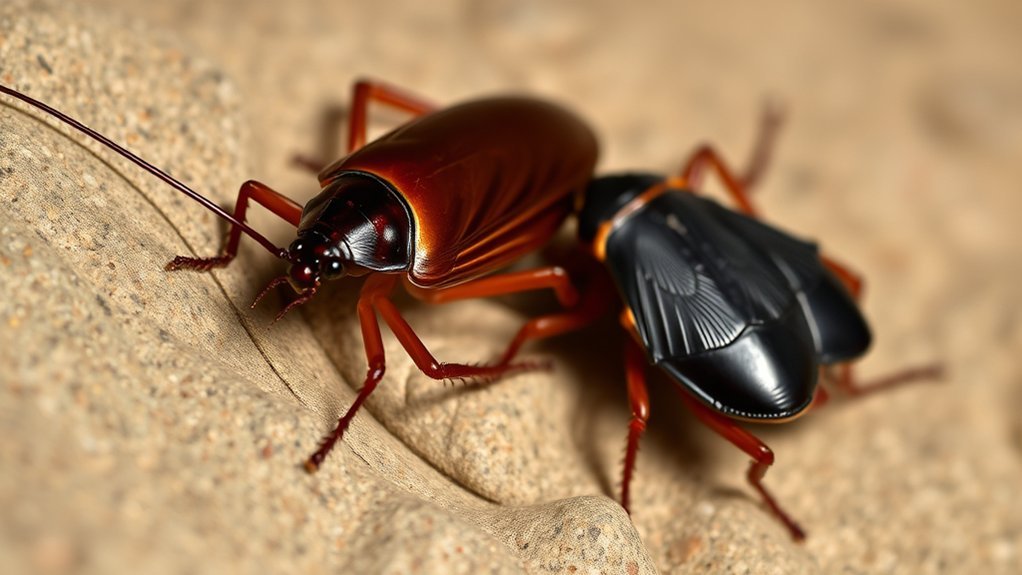
Telling male and female Turkestan cockroaches apart is straightforward once you know what to look for. Start with color: males display a brownish-yellow tone, while females appear light brown to reddish. Both sexes measure roughly ½ to 7/8 inch long, but males have a slender, elongated abdomen, whereas females carry a broader, more rounded abdomen suited for egg carrying.
Wings offer another reliable clue. Males have longer wings that extend beyond their bodies, enabling flight. Females have shorter, reduced wings with cream-colored bars that don’t cover the full abdomen, leaving them flightless.
Finally, check the abdomen’s tip. Females have a visible ovipositor protruding at the end, while males have a pair of claspers and anal styles instead. The species is scientifically known as Blatta lateralis, native to a range stretching from North Africa to Central Asia. Once you recognize these key differences, identifying each sex takes only a quick visual inspection.
Is That a Turkestan Cockroach or Something Else?
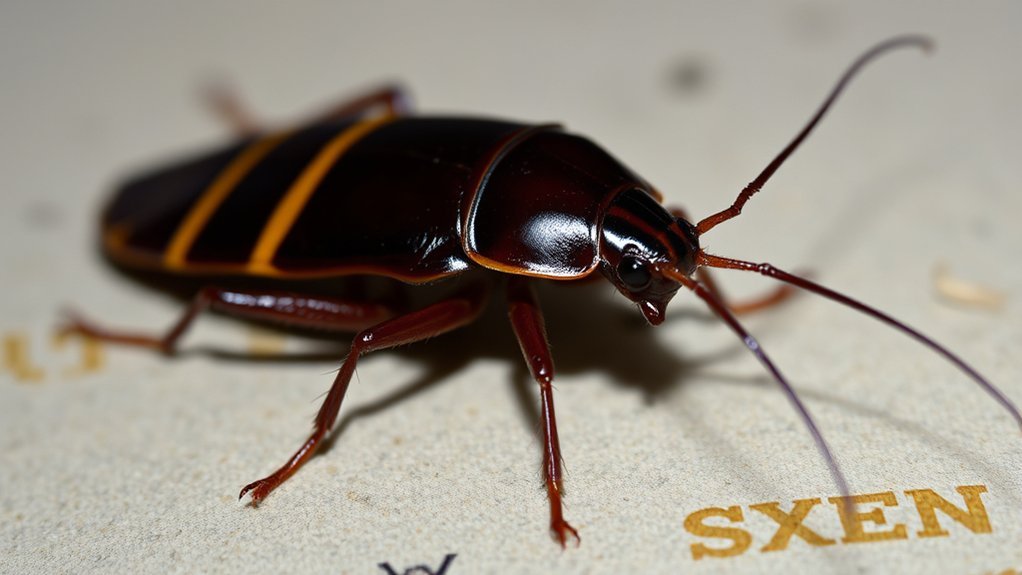
Once you can tell males from females, the next step is confirming you’re actually dealing with a Turkestan cockroach and not a lookalike species.
Compared to the German cockroach, Turkestans are larger, darker, and prefer outdoor environments. German cockroaches are lighter-colored with two distinct dark parallel lines behind the head—a marking Turkestans don’t have.
Turkestan cockroaches are larger and darker than German cockroaches and lack their signature parallel lines behind the head.
Confusing a Turkestan with an American cockroach is less likely since Americans are noticeably larger overall. Male Turkestans are smaller and more reddish-orange than American males, whose wings also extend similarly but on a bigger frame.
Female Turkestans are most often confused with Oriental cockroaches due to their shared dark brown to black coloration. The key difference is the cream-colored markings on the Turkestan’s pronotum—Oriental cockroaches lack these. If you spot those pale edge markings on a dark female, you’re looking at a Turkestan.
Regardless of the species you’re dealing with, both Turkestan and German cockroaches can spread dangerous pathogens like Salmonella and E. coli, making accurate identification an important first step toward protecting your household’s health.
Where Turkestan Cockroaches Live and How They Spread
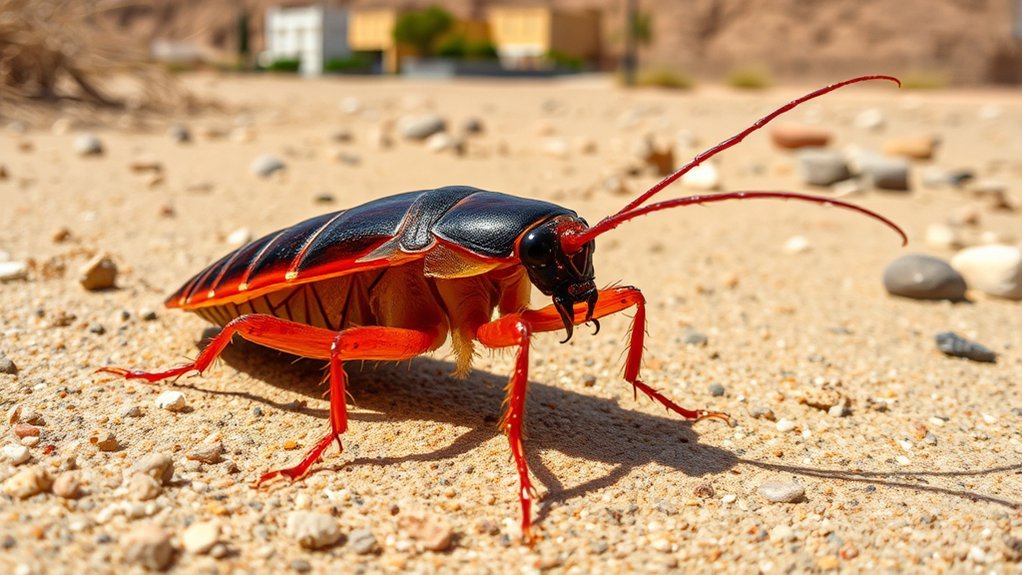
Knowing where Turkestan cockroaches thrive helps explain why they’ve spread so aggressively. Outdoors, you’ll find them in water meter boxes, irrigation boxes, concrete cracks, hollow block walls, compost piles, leaf litter, mulch beds, and potted plants. They prefer hot, dry climates, making them well-suited to the Southwest US, particularly California and Texas. They’re also displacing oriental cockroaches throughout southwestern outdoor habitats.
Though they primarily stay outside near structures, they’ll occasionally invade your home during hot summer months when searching for food and moisture. Males fly and are drawn to lights, increasing your chances of encountering them indoors.
Their spread stems from multiple factors. Shipping and travel move them across regions, while reptile breeders distribute them widely as live feeder insects. Fast reproduction in harsh conditions—females producing 5–10 oothecae, each hatching roughly 17 nymphs—gives them a serious competitive edge over other species. They were first detected in the US in 1978 near Sharpe Army Depot in California, believed to have arrived on military equipment from Central Asia.
Why Turkestan Cockroaches Keep Ending Up Inside Your Home
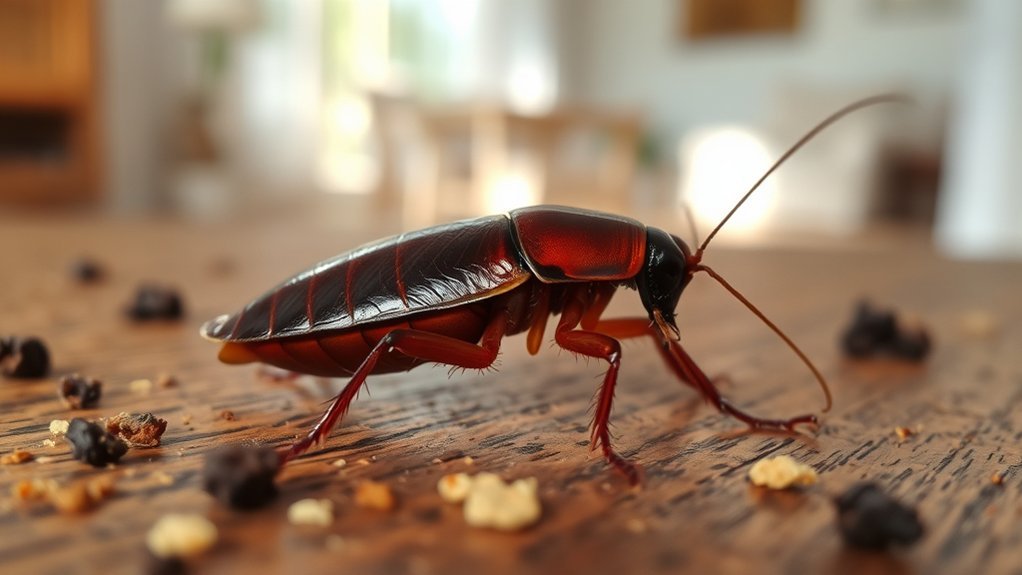
Even though Turkestan cockroaches prefer living outdoors, several factors keep pulling them inside your home. Moisture is the biggest draw. Leaky pipes, dripping faucets, and humid rooms like kitchens, bathrooms, and laundry areas signal easy water access. During hot, dry weather, roaches actively search for scarce water sources, making your home a prime target.
Entry is rarely difficult. Gaps under doors, worn weatherstripping, foundation cracks, and openings near utility lines all serve as convenient pathways. At night, porch lights and illuminated windows attract flying roaches directly toward your home.
Once inside, they find enough to survive. Pet food, decaying organics, and damp clutter in garages provide temporary sustenance. Outdoor conditions also push them inward. Mulch, leaf litter, woodpiles, and compost bins near your foundation build up nearby populations, increasing the chances that wandering roaches will find their way through any unsealed gap. Their droppings and saliva can trigger allergies and asthma in sensitive individuals, making an infestation a health concern beyond just a nuisance.
Signs of a Turkestan Cockroach Infestation in Your Yard
Catching a Turkestan cockroach infestation early starts with knowing what to look for in your yard. During the day, you’ll rarely see them unless populations are severely overcrowded. At night, grab a flashlight and inspect mulch beds, pavement cracks, and irrigation boxes — that’s where they’re most active. Flying males often swarm exterior lights after dark.
Physical evidence tells a clear story. Look for dark, pepper-like droppings near moisture sources, oval-shaped egg cases glued to hidden surfaces, and shed exoskeletons in sheltered spots. A musty, oily odor intensifying around meter boxes or moist hiding areas signals serious population growth.
Check water meter boxes, debris piles, compost heaps, and potted plants for heavy concentrations. Place sticky traps in suspected areas and check them after three to five days — captured specimens confirm an active infestation requiring immediate attention.
Yard Conditions That Attract Turkestan Cockroaches
Turkestan cockroaches don’t move into a yard by accident — specific conditions draw them in and keep them thriving. Moisture, organic debris, and structural gaps create the perfect environment for populations to establish quickly.
| Attracting Factor | Common Example |
|---|---|
| Moisture sources | Leaking irrigation boxes, standing water |
| Organic debris | Leaf litter, compost piles, mulch beds |
| Structural features | Cracks in patios, water meter boxes |
| Lighting | Porch lights attracting flying males |
| Food availability | Pet food left out, unsecured trash bins |
Check your yard for leaking sprinklers and poor soil grading, since both trap moisture near your foundation. Clear woodpiles, leaf piles, and cluttered sheds that harbor roaches in decaying matter. Seal cracks in concrete walls and pavement where they shelter during daylight. Switch outdoor lights near damp zones to reduce nighttime congregation and limit their entry points.
How to Get Rid of Turkestan Cockroaches Around Your Home
Getting rid of Turkestan cockroaches takes a layered approach — no single method eliminates them reliably. Start with sanitation: remove food scraps, unsealed goods, cardboard, and paper products that serve as food sources. Keep areas dry, declutter yard waste, and reduce outdoor harborage around compost and debris.
Next, seal cracks, gaps, and entry points around your home’s exterior. Fit doors and windows with intact mesh screens and apply sealants where roaches commonly enter.
For active infestations, place cockroach-specific baits and traps in hiding spots like kitchens, bathrooms, and utility rooms. Combine baits with sprays for stronger results. Apply granule treatments to mulch beds and damp soil, and use exterior power treatments around patios and walls.
Inspect thoroughly to locate breeding zones, then monitor with ongoing service plans. Use wet-and-dry vacuums during treatments, and consult a professional before applying insecticides due to potential health risks.
When to Call a Pest Control Professional
Knowing when to call a pest control professional can make the difference between a manageable problem and a full-blown infestation. If you spot two or more Turkestan cockroaches, find droppings, shed skins, or eggs, or notice foul odors, it’s time to contact an expert. A single sighting near food storage or preparation areas also warrants immediate professional intervention due to contamination risks.
If your DIY treatments aren’t producing results within a reasonable timeframe, don’t wait. Persistent sightings after home remedies signal that professional-grade solutions are necessary. Widespread activity across multiple rooms or rapid population spread demands urgent expert attention.
Once a professional treats your home, expect two or three initial sessions spaced 2–4 weeks apart to eliminate adults and newly hatched nymphs. Afterward, preventive treatments every 30–60 days will keep Turkestan cockroaches from returning.
Frequently Asked Questions
Can Turkestan Cockroaches Survive Cold Winters in Northern US States?
Turkestan cockroaches can survive cold winters in northern U.S. states, but they’ll struggle. You’ll find them seeking shelter in electrical boxes, water meters, and cracks to stay warm and avoid freezing temperatures outdoors.
Are Turkestan Cockroaches Harmful to Pets if Accidentally Ingested?
If your pet ingests a Turkestan cockroach, it can experience vomiting, diarrhea, or bacterial infections from E. coli and Salmonella. Monitor your pet closely for 24 hours and contact your vet if symptoms appear.
How Long Does a Turkestan Cockroach Typically Live?
You’re looking at a Turkestan cockroach lifespan of roughly 3–5 months, though they can survive 6–12 months. Adults typically live 21–82 days, while nymphs take about 7.5 months to reach maturity.
Do Turkestan Cockroaches Carry Diseases Transmissible to Humans?
Yes, Turkestan cockroaches can transmit diseases to you. They carry bacteria like Salmonella, cholera, and listeria, contaminating your food and surfaces as they crawl. Their feces and saliva can also trigger allergic reactions and worsen your asthma.
Can Turkestan Cockroaches Damage Garden Plants or Household Items?
Turkestan cockroaches can damage your garden plants and household items, but they’re more of a nuisance than a serious threat. They’ll feed on decaying vegetation and may burrow into damp furniture or damage electronics indoors.
Conclusion
Turkestan cockroaches are tough to deal with, but you’ve got the tools to fight back. By identifying them correctly, eliminating the yard conditions they love, and applying the right treatments, you can protect your home from an infestation. Don’t wait until you’re overwhelmed—act at the first signs of activity. And if things get out of hand, don’t hesitate to call a pest control professional who can handle the problem quickly and effectively.
