
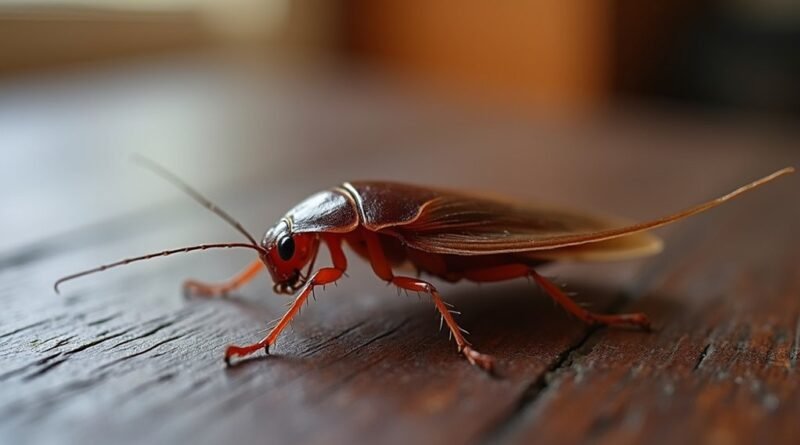
Asian Cockroach: How to Identify and Control This Species
You can identify an Asian cockroach by its tan-to-brown body, measuring 13 to 16 mm, with long narrow wings that extend past its abdomen. Unlike its German cousin, it’s a strong flier that’s drawn to lights at dusk. You’ll typically find it outdoors in mulch beds and leaf litter. Control it by sealing entry points, removing debris, and using bait stations. There’s much more to know about keeping these pests away for good.
Key Takeaways
- Asian cockroaches are 13–16 mm long, tan to light brown, with long wings extending past the abdomen and dark pronotal stripes.
- Unlike German cockroaches, Asian cockroaches prefer outdoor habitats like mulch beds, compost piles, and leaf litter in warm, humid climates.
- They are strong fliers, attracted to lights at dusk, and commonly enter homes through open doors, windows, and exterior cracks.
- Colonies can reach 250,000 per acre, peaking in late August, making early detection and monitoring with glue traps essential.
- Control methods include sealing entry points, eliminating outdoor debris, applying bait stations every 6 feet, and using beneficial nematodes or diatomaceous earth.
How to Identify the Asian Cockroach
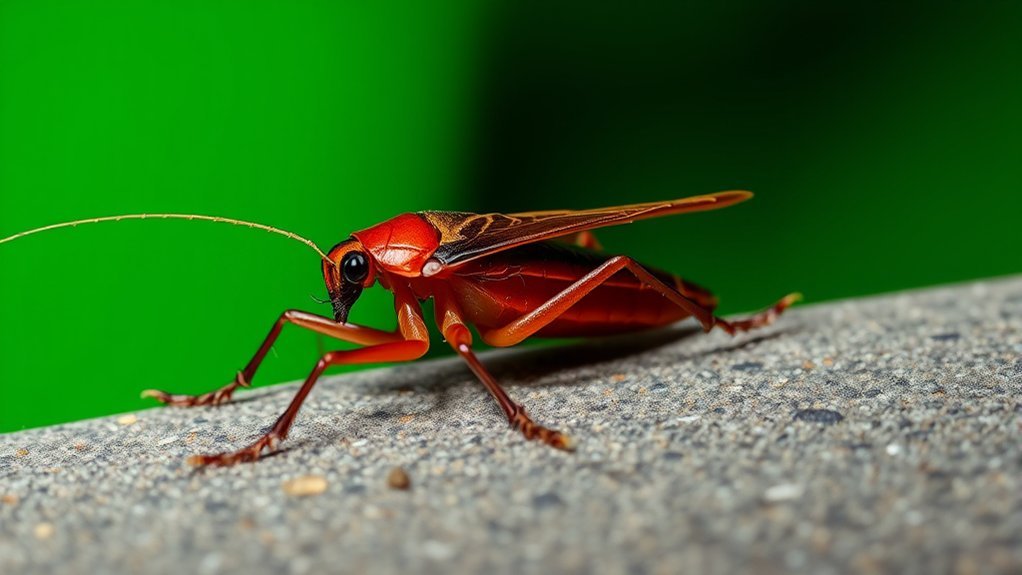
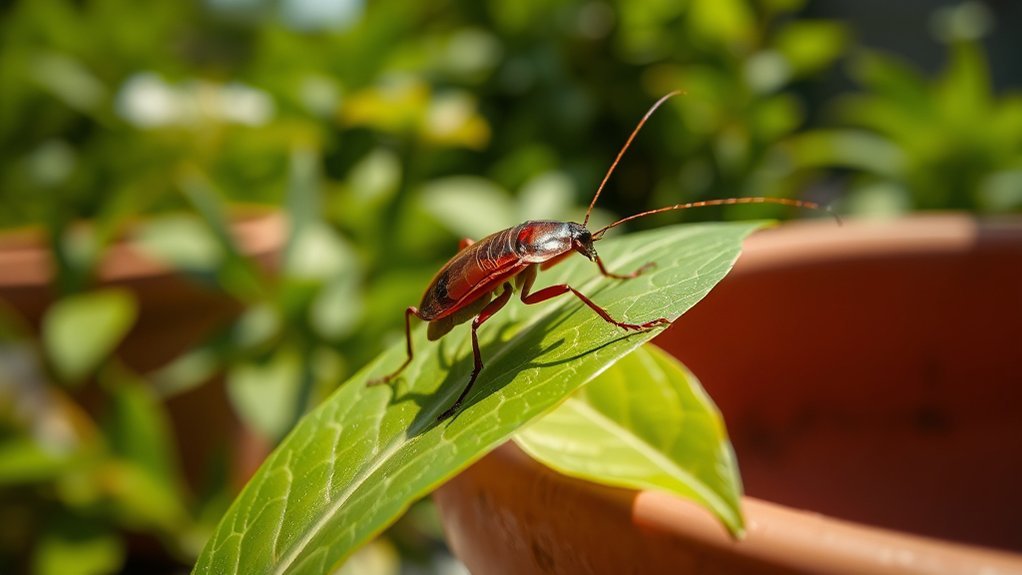
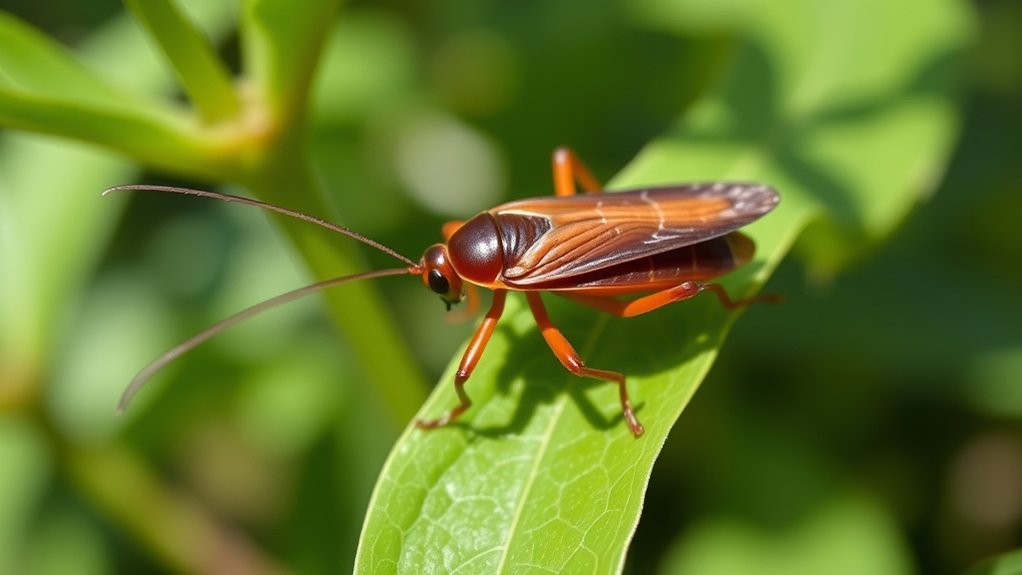
The Asian cockroach is a small insect, measuring between 13 and 16 mm long — roughly the size of your thumbnail. It has a tan to light brown body with two dark parallel stripes running along its pronotum. Compared to the German cockroach, it’s slightly lighter in color, with more defined dorsal stripes and longer, narrower wings that extend past the tip of its abdomen.
Telling the two species apart can be tricky — you’ll often need an expert for a positive ID. Key differences include a shorter pronotum, distinct ventral mandible and tegmen vein variations, and a white abdominal midsection rather than a lightly pigmented one.
One of the clearest behavioral identifiers is its strong flying ability. The Asian cockroach sustains flights of up to 120 feet and is drawn to lights at dusk, unlike its German counterpart. It was introduced to Florida in the early 1980s and has since spread throughout the state and into Georgia.
Where Asian Cockroaches Live and Why They Enter Homes
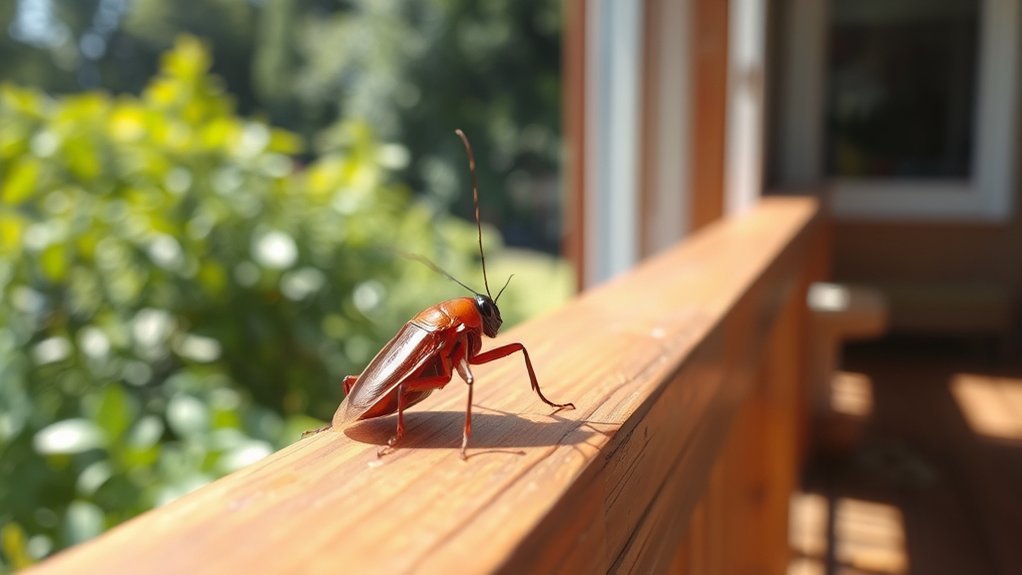
Once you know what an Asian cockroach looks like, understanding where it lives helps explain why it keeps showing up around your home. Native to Asia, it’s now common throughout the Southern United States, thriving in warm, humid environments.
| Outdoor Habitat | Reason for Home Entry |
|---|---|
| Mulch beds and compost piles | Attracted to porch and interior lights |
| Heavy leaf litter under shrubs | Flies through open doors and windows at dusk |
| Damp grassy lawns | Slips through cracks in your home’s exterior |
| Organic debris in flowerbeds | Seeks food or escapes adverse outdoor conditions |
Colonies reach 250,000 per acre, peaking in late August. As a strong flier drawn to bright lights, it heads toward your home at dusk and enters through any available opening, preferring damp rooms like kitchens and bathrooms once inside. The species was first recorded in Lakeland, Florida, in 1986, believed to have arrived via imported goods from Japan, and has since spread across several southern states.
How the Asian Cockroach Differs From the German Cockroach
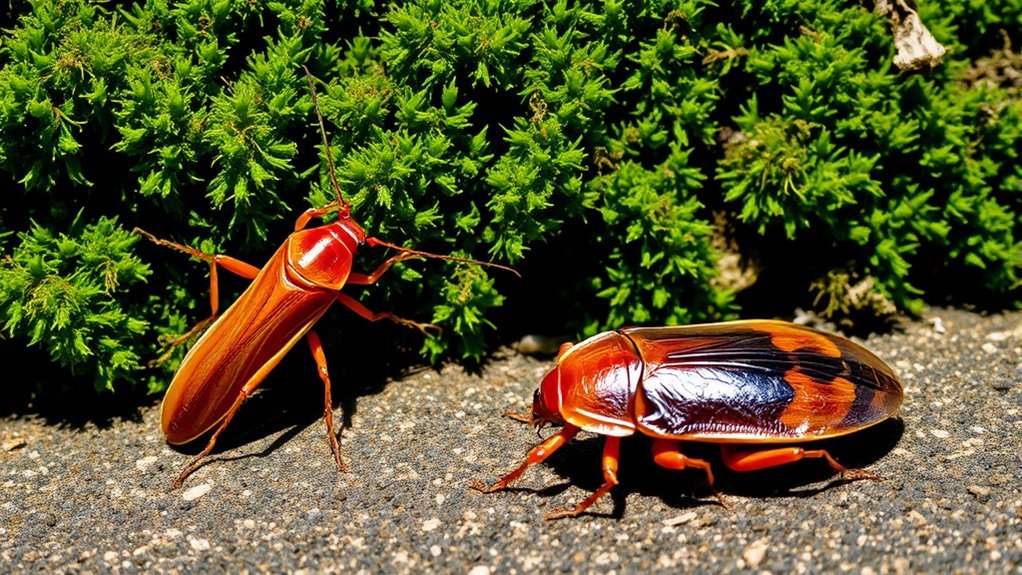
Telling an Asian cockroach apart from a German cockroach isn’t always straightforward, since the two species share a similar brown coloring and parallel dark stripes on their backs. However, several differences help you distinguish them.
Size offers one clue. Asian cockroaches measure 0.5 to 0.75 inches, while German cockroaches are smaller at 0.39 to 0.55 inches. Wing length is more reliable—Asian cockroaches have wings extending past their abdomen and fly readily, especially toward lights at night. German cockroaches have shorter wings and rarely fly.
Look at coloring more closely. Asian cockroaches appear slightly translucent with a yellowish tint, while German cockroaches tend to be darker with more pronounced stripes.
Location matters most. If you’re spotting roaches outdoors, they’re likely Asian cockroaches. Indoors, particularly in kitchens and bathrooms, German cockroaches are the more probable culprit. Even pest professionals rely on behavior and location over appearance alone.
Asian cockroaches also have a more narrow and long body shape compared to the wider build of the German cockroach.
How Fast Do Asian Cockroaches Reproduce?
Asian cockroaches reproduce more slowly than their German cousins, producing an estimated 79.6 hatched eggs per female over a lifetime—roughly half that of the German cockroach. Each female averages 3.7 oothecae, with 64.6% of those being viable. Viable oothecae contain an average of 37.5 eggs and carry an 88% hatch rate.
You’ll notice the timeline is fairly drawn out. Females produce their first ootheca just 13 days after eclosion, then continue dropping one every 7.9 days. Each viable ootheca incubates for roughly 19.2 days before hatching. Nonviable oothecae are either dropped within 4 days or carried to full term.
Female immatures take 67.8 days to develop, while males mature slightly faster at 65.7 days. Adult females live 103.5 days on average compared to just 48.5 days for males. This slower reproductive rate limits how quickly an Asian cockroach population can grow. By contrast, German cockroaches can produce 5-8 oothecae per lifetime, with each new egg case forming every 20-25 days under typical indoor conditions.
How to Control and Prevent Asian Cockroaches
Controlling Asian cockroaches requires tackling the problem from multiple angles, starting with eliminating what draws them in. Remove indoor food debris and water sources, and outdoors, clear leaf litter, plant debris, and trim overgrown shrubbery to reduce shelter and moisture.
Seal cracks in walls, floors, and foundations, and install door sweeps and weather stripping. Spray entry points and apply treatment 3 feet up your foundation and 10 feet outward around your home’s perimeter.
For chemical control, place bait stations every 6 feet in active areas and apply gel baits in pea-sized amounts near hiding spots. Combine baits with other methods for better results than sprays alone.
Natural options include beneficial nematodes, diatomaceous earth, and boric acid dust behind appliances. Use glue traps to monitor activity, schedule follow-up treatments every 1-2 weeks, and apply preventive treatments quarterly to maintain year-round protection. Storing pantry items and dry goods in airtight sealed containers helps eliminate accessible food sources that attract cockroaches indoors.
Frequently Asked Questions
Are Asian Cockroaches Harmful to Human Health or Food Safety?
Yes, Asian cockroaches can seriously harm your health and food safety. They carry over 30 bacteria types, trigger allergies and asthma, and contaminate your food with pathogens like Salmonella and E. coli.
Do Asian Cockroaches Damage Plants or Garden Vegetation Outdoors?
You’ll find that Asian cockroaches rarely cause serious plant damage. They prefer decaying matter, but they’ll occasionally nibble seedlings. They actually benefit gardens by consuming harmful bollworm eggs, making them less destructive than other common pests.
Can Pets Help Detect or Control Asian Cockroach Populations?
Your pets can help detect Asian cockroaches using their keen senses, but they can’t control infestations. You’ll still need professional pest control, as dogs and cats alone won’t eliminate an existing cockroach population.
Are Asian Cockroaches More Common in Certain U.S. States?
Yes, you’ll find Asian cockroaches most commonly in Florida, Georgia, Alabama, Texas, and South Carolina. They thrive in warm, humid southeastern U.S. climates, with Florida having the highest concentration since their initial discovery there in 1986.
Do Asian Cockroaches Have Any Natural Predators in the Wild?
Yes, Asian cockroaches have natural predators! You’ll find toads, frogs, lizards, and parasitoid wasps hunting them. Entomopathogenic fungi and predatory nematodes like *Steinernema carpocapsae* also infect and kill them in the wild.
Conclusion
Now that you know how to identify and control Asian cockroaches, you’re better equipped to keep these pests out of your home. You’ll want to seal entry points, reduce outdoor lighting, and eliminate moisture to make your property less inviting. If you’re dealing with a serious infestation, don’t hesitate to contact a professional pest control service. Taking action early is always your best defense against these resilient insects.
