
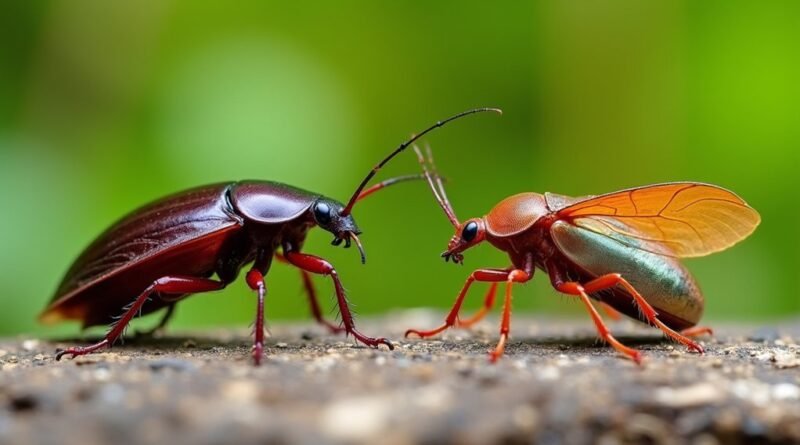
Cockroach vs Palmetto Bug: What Is the Difference?
A palmetto bug is a cockroach — there is no biological difference between the two. “Palmetto bug” is a regional nickname used throughout the southeastern United States for large outdoor cockroach species, most commonly the American cockroach, smokybrown cockroach, and Florida woods cockroach. Scientists do not recognize palmetto bug as a separate classification. Every palmetto bug belongs to family Blattodea, the same insect order as every other cockroach on earth.
The confusion between the two terms is purely linguistic. Calling a cockroach a palmetto bug does not change what it is, what risks it poses, or how to get rid of it. For everything you need to know about palmetto bugs — identification, species breakdown, seasonal behavior, health risks, and how to remove them — see our complete palmetto bug guide.
What Makes a Cockroach a Palmetto Bug?
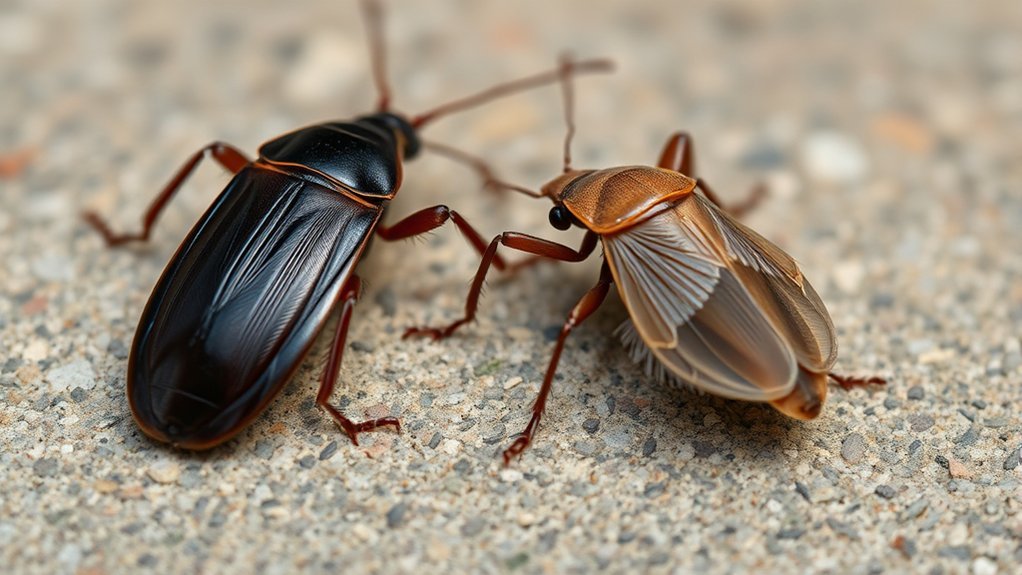
The palmetto bug label applies specifically to large, outdoor-dwelling cockroach species common to the Southeast. Three species earn the name most consistently:
- Florida woods cockroach (Eurycotis floridana) — the species most directly associated with palmetto habitats. Dark reddish-brown to black, entirely flightless, produces a foul-smelling defensive spray when disturbed. Found throughout Florida and Gulf Coast states.
- American cockroach (Periplaneta americana) — the species most widely called a palmetto bug across the broader South. Reddish-brown with a yellowish figure-eight head marking, capable of short flights, frequently found near drains and sewers.
- Smokybrown cockroach (Periplaneta fuliginosa) — uniform dark mahogany-brown, a strong flier, gravitates toward tree holes, gutters, and woodpiles in humid southeastern climates.
You will never hear anyone call a German cockroach a palmetto bug. The label sticks to large, outdoor-linked species only. German cockroaches are small, tan, and live exclusively indoors — the opposite behavioral profile from the outdoor-dwelling species the palmetto bug term describes.
Cockroach vs Palmetto Bug: Key Differences at a Glance
| Feature | Palmetto Bug | German Cockroach |
|---|---|---|
| Size | Up to 5.3 cm (2 inches) | 1.3 to 1.6 cm (half inch) |
| Color | Reddish-brown to dark brown | Light tan with two dark stripes |
| Habitat | Outdoors — mulch, leaf litter, drains | Exclusively indoors |
| Indoor sighting means | Accidental wanderer | Established infestation |
| Flight | Some species fly, Florida woods cannot | Rarely flies despite having wings |
| Reproduction indoors | Cannot establish indoor colonies | Breeds rapidly indoors |
| Single sighting urgency | Low — seal entry points | High — immediate treatment required |
Why the Difference Actually Matters for Treatment
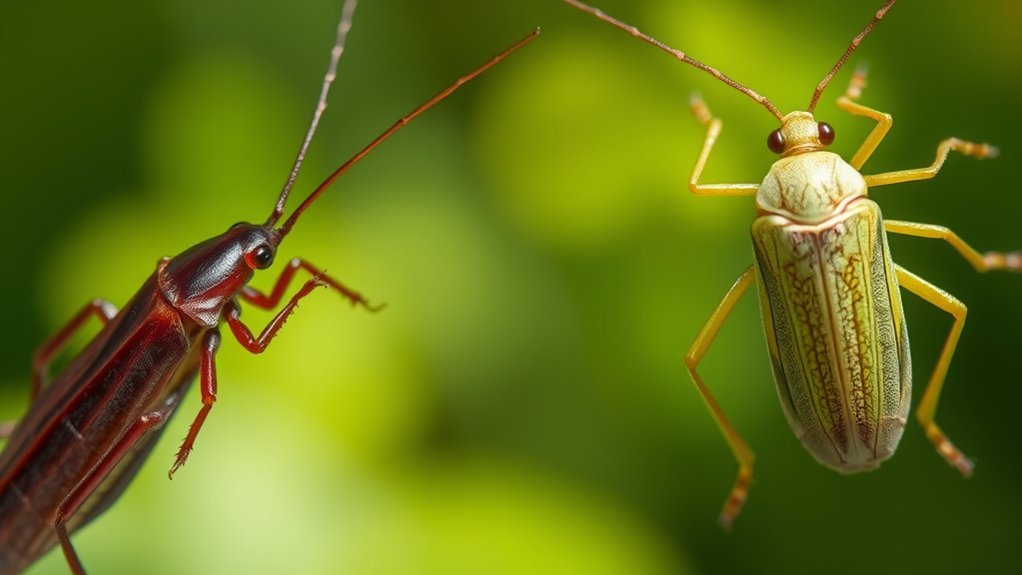
The distinction matters entirely because of what it tells you about the right response. A palmetto bug sighting triggers one action plan. A German cockroach sighting triggers a completely different one.
If you found a palmetto bug indoors: It wandered in from outside through a gap, drain, or open door. It cannot breed indoors and will die within 48 to 72 hours from dehydration. The response is exclusion — seal entry points, fix moisture sources, reduce outdoor organic debris near the foundation. Interior chemical treatment is largely unnecessary.
If you found a German cockroach indoors: You have an established breeding population. A single German cockroach female can produce up to 300 offspring in her lifetime, and they breed exclusively indoors. The response is immediate gel bait deployment in harborage zones, insect growth regulators, and professional assessment if the population covers more than one room.
Using palmetto bug treatment on a German cockroach infestation (or vice versa) wastes time and money while the actual problem grows. Correct identification before treatment is the most important step in effective pest control.
Where Palmetto Bugs Come From
Palmetto bugs enter homes from outdoor harborage near the foundation — mulch beds, woodpiles, leaf litter, palmetto trees, and drainage infrastructure. They follow moisture gradients and warmth through structural gaps during nocturnal foraging. About 62% of southeastern households encounter them annually, reflecting how common the species are in outdoor environments throughout Florida, Georgia, and the Gulf Coast states.
Heavy summer rain flushes outdoor populations from ground-level harborage simultaneously, driving spikes in indoor entry events. Male American cockroaches and smokybrown cockroaches fly toward lit windows and open doors during warm-weather mating season. The Florida woods cockroach is flightless but enters through floor drains, foundation cracks, and pipe penetrations at ground level.
For the complete breakdown of palmetto bug species, how to identify each one, seasonal behavior, health risks, and a full removal guide, see our complete palmetto bug identification and control guide.
Frequently Asked Questions
Is a Palmetto Bug the Same as a Cockroach?
Yes. A palmetto bug is a cockroach — the terms are not biologically distinct. “Palmetto bug” is a regional nickname used in the southeastern United States for large outdoor cockroach species, most often the American cockroach, Florida woods cockroach, and smokybrown cockroach. Every palmetto bug belongs to family Blattodea alongside every other cockroach species.
Are Palmetto Bugs Worse Than Cockroaches?
Palmetto bugs are larger and more alarming to encounter, but German cockroaches are a significantly worse infestation problem. Palmetto bugs are outdoor species that cannot breed indoors and die within days inside a home. German cockroaches live exclusively indoors, reproduce rapidly, and require active professional treatment to eliminate. A palmetto bug sighting requires exclusion. A German cockroach sighting requires immediate treatment.
Are Palmetto Bugs Dangerous?
Palmetto bugs carry the same bacteria and allergens as any cockroach species — E. coli, Salmonella, and cockroach allergens that trigger asthma in approximately 40% of exposed people. They do not bite under normal circumstances and are not venomous. The Florida woods cockroach’s defensive spray can irritate skin and eyes on direct contact. Their outdoor preference significantly limits the exposure risk compared to indoor German cockroach infestations.
How Do I Tell a Palmetto Bug From Other Cockroaches?
Size and location are the two fastest identification clues. If the cockroach is large (over 1 inch), dark brown to reddish-brown, and appeared near a door, drain, or exterior wall — it is almost certainly a palmetto bug species. If it is small (under 3/4 inch), tan with dark stripes, and appeared inside a kitchen cabinet or behind an appliance — it is almost certainly a German cockroach. For a full visual species guide, see our palmetto bug identification guide.
