
Cockroach Frass: What It Is, What It Looks Like, and Why It Matters
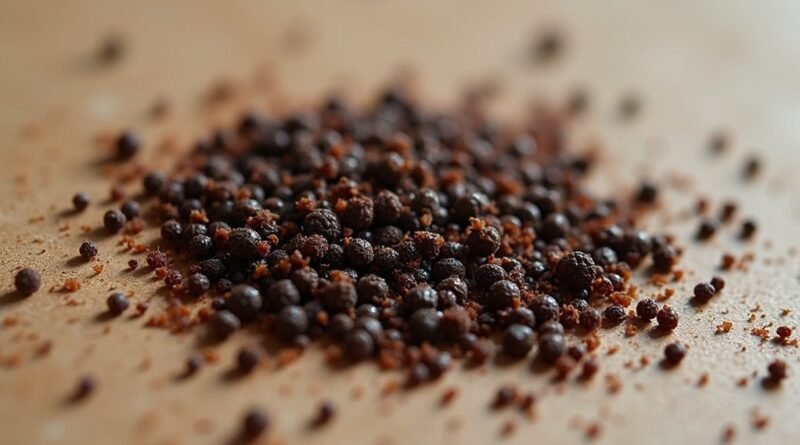
Cockroach frass is the waste cockroaches leave behind as they move through your home. It looks like dark brown or black specks, smears, or tiny cylindrical pellets, and you’ll usually find it along edges, corners, and tight spaces roaches frequent. Beyond being unsightly, it carries harmful pathogens and can trigger allergies and asthma. Understanding what you’re dealing with is the first step — and there’s a lot more to uncover.
Key Takeaways
- Cockroach frass is the solid waste produced by cockroaches, consisting of digested food and organic matter, as cockroaches do not urinate.
- It appears as dark brown or black specks, smears, or cylindrical pellets, typically ranging from 1 to 3mm in size.
- Smaller species leave pepper-like spots, while larger species produce solid, ridged cylinders, helping identify the specific cockroach type present.
- Frass poses serious health risks, carrying pathogens like E. coli and Salmonella, and can trigger allergies and worsen asthma symptoms.
- Beyond health concerns, cockroach frass matters as an infestation indicator and surprisingly offers gardening benefits due to its nutrient-rich NPK composition.
What Is Cockroach Frass?
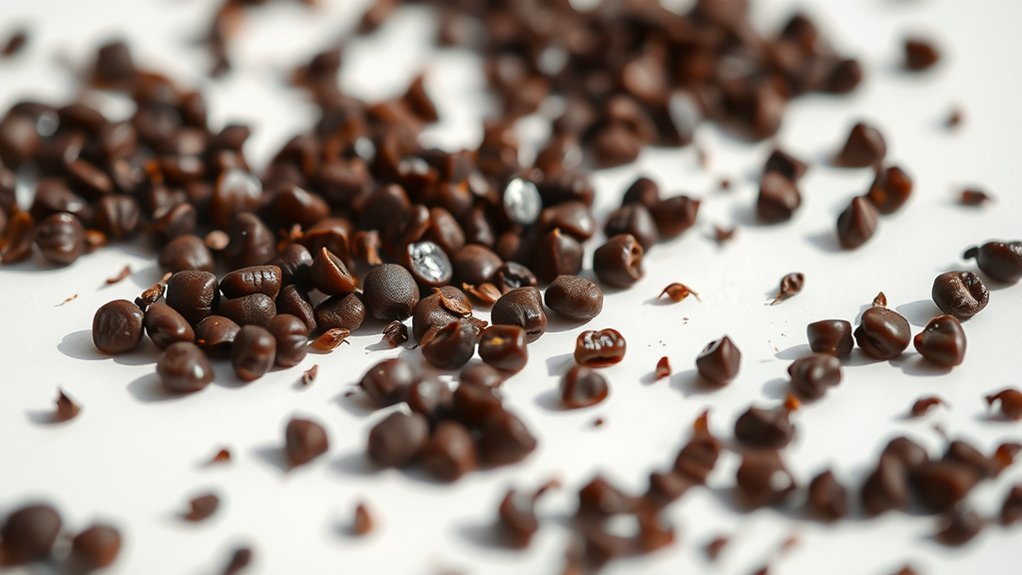
Cockroach frass is the collective waste roaches leave behind—a mix of digested food, garbage, rotting matter, and dead insect remains. Unlike many insects, cockroaches don’t urinate. Instead, they secrete both solid and semi-solid waste, so what you see varies depending on the roach’s size, age, and species.
What makes frass particularly concerning is what it carries. Because cockroaches eat almost anything, their digestive systems retain pathogens from everything they consume—including dangerous bacteria like E. coli and Salmonella. They don’t discriminate about where they defecate either, often leaving droppings directly in or near food sources.
You’ll also notice dark brown smear marks on surfaces where roaches have been crawling. These marks aren’t just aesthetic evidence of activity—they’re a sign of contamination. Frass appears wherever roaches eat and move, making it one of the clearest indicators that you’re dealing with an infestation. The proteins found in frass and shed skin can trigger allergies and asthma in sensitive individuals, even long after the roaches themselves are gone.
What Does Cockroach Frass Look Like?
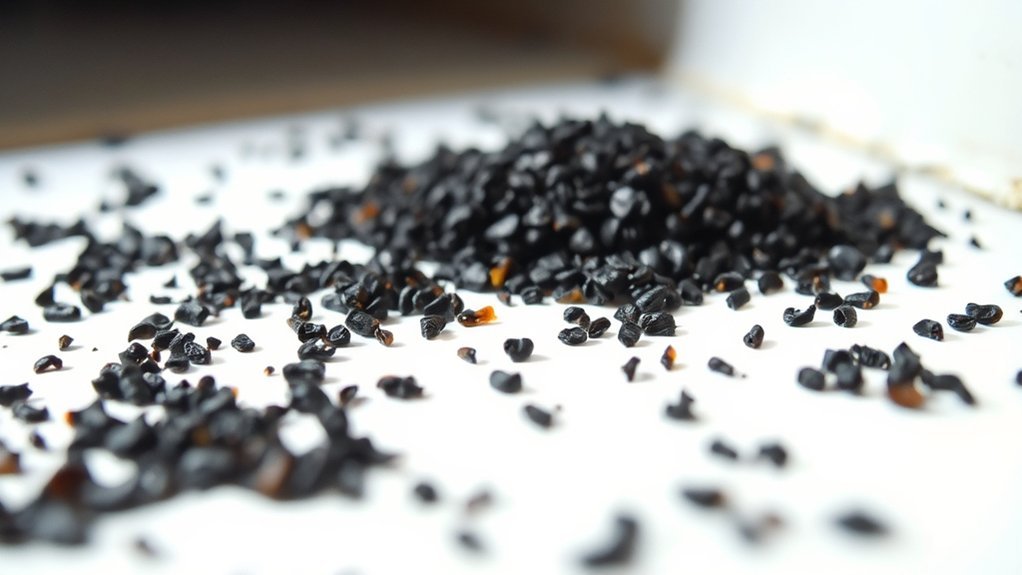
When you’re trying to identify cockroach frass, you’ll notice it typically appears as dark brown or black specks, smears, or small cylindrical pellets ranging from 1 to 3mm in size. Smaller species like German roaches leave behind moist, pepper-like spots, while larger species like American roaches produce solid, ridged cylinders with blunt ends. You’ll most often find these droppings concentrated in corners, edges, and tight spaces where roaches frequently travel and nest. Mouse droppings, by contrast, are larger at 6 to 10mm and have pointed ends, making them easy to distinguish from roach frass.
Color and Texture
Frass from small cockroaches, like German roaches, looks like tiny dark brown or black specks that you’d easily mistake for ground coffee or black pepper. Small species also leave smeared, ink-like stains rather than distinct pellets, especially along surfaces they frequently crawl across.
Larger species, like American or Oriental roaches, produce solid, cylindrical droppings with a rigid pellet texture. These appear dark brown to black when fresh and lighten to a softer brown as they dry out.
Regardless of size, you’ll notice cockroach frass shares a consistently dark color profile. The difference lies in texture—small roaches leave dust-like specks and smears, while large roaches leave structured pellets. Knowing this distinction helps you identify which species you’re dealing with. Unlike mouse droppings, cockroach frass has rounded ends and ridges along the body of each pellet.
Shape and Size
Shape tells you a lot about what you’re dealing with. Large cockroach droppings are cylindrical, solid, and ridged from end to end—almost like a fennel seed. Small roach droppings skip the solid pellet form entirely, appearing as smeared, inky specks instead.
| Roach Type | Dropping Shape | Size | Surface Texture | Key Feature |
|---|---|---|---|---|
| American/Smoky Brown | Cylindrical | Up to 1/8 inch | Ridged | Rounded ends |
| German/Brown-Banded | Speck-like | Tiny | Smeared | Stains surfaces |
| Large Nymphs | Small, round | Smaller than adult | Ridged | Proportional to stage |
| Small Nymphs | Speck-like | Very small | Smeared | Matches adult pattern |
| Mouse (for comparison) | Oval | 1/8–1/4 inch | Smooth | Pointed ends |
If you see ridges, you’re looking at roach frass—not mouse droppings. Mouse droppings are also pointed at both ends, a distinct contrast to the blunt, rounded ends found on cockroach frass.
Common Infestation Locations
Knowing what frass looks like only gets you so far—you also need to know where to find it. Cockroaches gravitate toward warmth, moisture, and food, so their frass concentrates in predictable spots.
In the kitchen, check cabinet crevices under sinks, inside appliances like toasters and coffeemakers, near food prep areas, open non-perishables, and garbage cans. In bathrooms, inspect around drains, pipes, cracked tiles, and cabinets. Cockroaches also nest inside electronics—televisions, computers, and game consoles—seeking warmth from motors and heating ducts.
In basements, look near sewers, crawl spaces, utility pipes, floor drains, and humid areas. In living rooms, check behind picture frames, under upholstered furniture, inside clocks, and anywhere food crumbs accumulate. Frass in these spots confirms active cockroach presence. American cockroaches are commonly found near sewer systems, making basement drains and utility pipes especially likely spots to discover frass deposits.
Cockroach Frass vs. Mouse, Termite, and Bed Bug Droppings
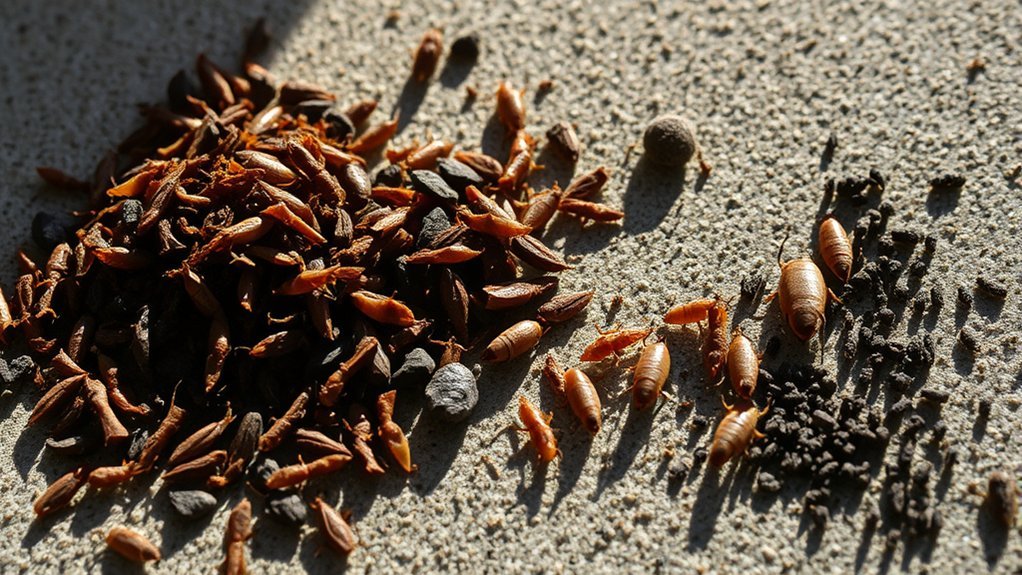
Identifying droppings correctly can mean the difference between choosing the right treatment and wasting time on the wrong pest. Cockroach frass is dark, blunt-ended, and ridged — qualities that set it apart from other common pest droppings.
| Feature | Cockroach Frass | Comparison Pest |
|---|---|---|
| Shape | Cylindrical, blunt ends, ridged | Mouse: pointed ends; Termite: hexagonal pellets |
| Size | 1mm–1 inch depending on species | Bed bug: 1–2mm flat ink spots |
| Location | Kitchens, cabinets, hidden spots | Termite: wood damage; Bed bug: mattress seams |
Mouse droppings form scattered trails with smooth, pointed tips. Termite frass piles into powdery, tan hexagonal pellets near structural wood damage. Bed bug droppings leave rust-colored, smearable ink stains on fabric surfaces.
Cockroach frass stays dry, matte, and granular — it won’t smear or stain immediately. Correct identification prevents misdiagnosis and guarantees you target the actual infestation effectively.
Where to Find Cockroach Frass in Your Home
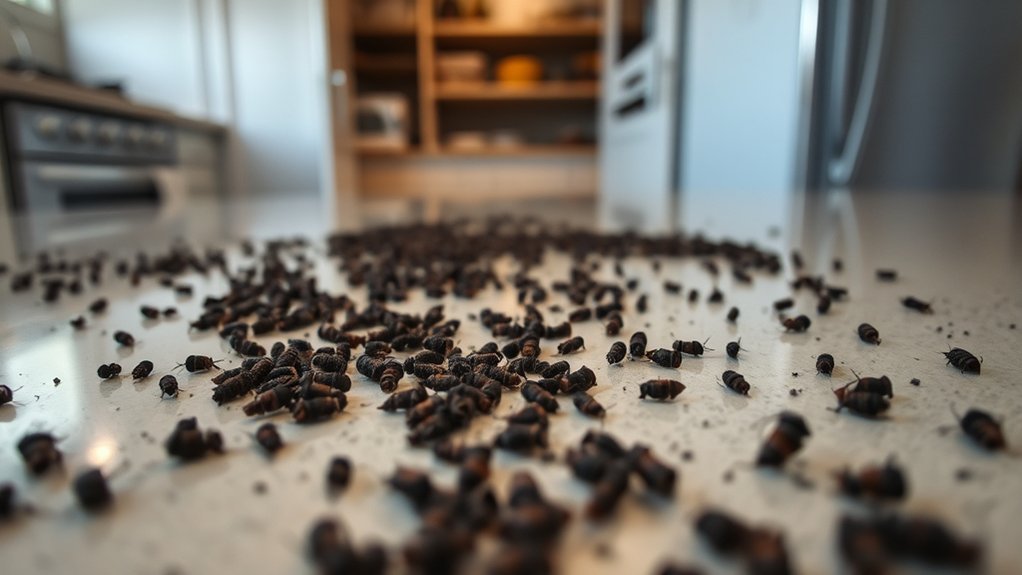
Once you’ve confirmed those dark, ridged pellets are cockroach frass and not mouse or termite droppings, your next move is tracking down where they’re concentrated. Start in the kitchen—check dark cabinet corners, behind the refrigerator, under the stove, and near the dishwasher. German roaches favor elevated spots, so inspect tops of cabinets and upper shelving too.
Cockroach frass confirmed? Head straight to the kitchen—cabinets, behind appliances, and upper shelving are prime hiding zones.
Move into the bathroom next. Look under sinks, behind toilets, around plumbing panels, and near floor drains. Oriental roaches cluster in these damp zones, leaving droppings scattered rather than grouped.
Don’t overlook basements, crawl spaces, laundry rooms, and areas near water heaters and HVAC units—all prime spots for moisture-loving species.
Finally, check along baseboards, wall junctions, closet corners, and behind furniture throughout the home. Roaches use these pathways for movement, leaving frass trails that reveal exactly where they’re traveling and hiding.
How to Gauge Infestation Size From Cockroach Frass
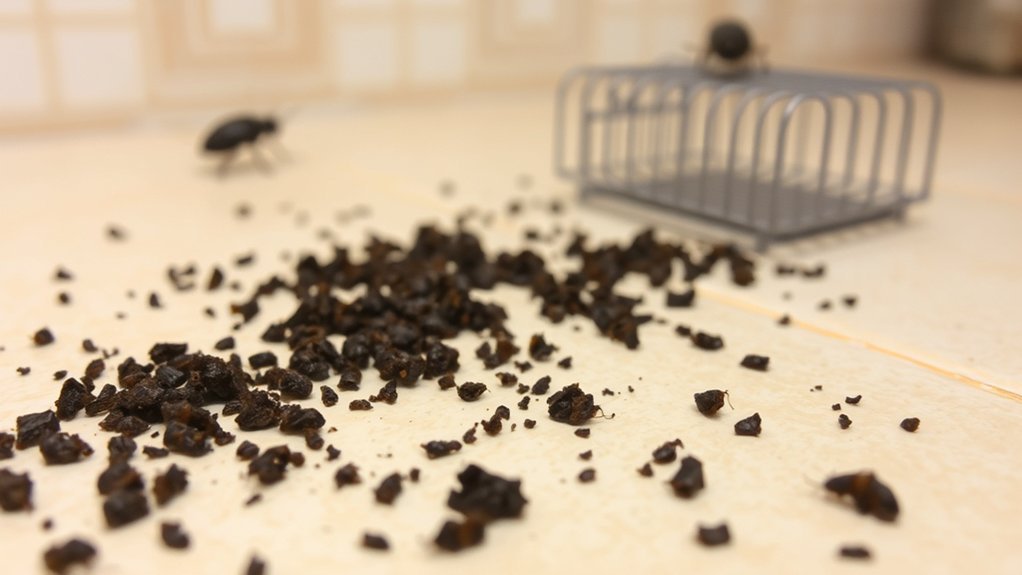
The amount and distribution of frass you find tells you a lot about how serious your cockroach problem actually is. Small, isolated deposits suggest a minor infestation, while widespread accumulation signals something far worse. Here are four key indicators to assess severity:
- Frass quantity — Large amounts or widespread deposits point to a major infestation requiring immediate action.
- Frass size — Tiny specks indicate nymphs or early stages; rice-grain-sized droppings confirm a mature adult population.
- Nymph-to-adult trap ratios — A 4:1 nymph-to-adult ratio signals a growing German cockroach population, while 80% or higher nymph counts mean it’s expanding unchecked.
- Combined signs — Oothecae, shed skins, smear marks, and musty odors alongside frass confirm heavy reproduction and dense harborage.
If frass accumulation is increasing over time, your population is growing. Don’t wait to act.
Why Cockroach Frass Is Dangerous to Your Health
Cockroach frass isn’t just an unsightly nuisance — it’s a genuine health threat hiding in plain sight. The proteins in droppings trigger allergic reactions like sneezing, coughing, itchy eyes, and skin rashes. Allergens become airborne easily, meaning you’re inhaling them without realizing it.
If you or your children have asthma, frass makes it considerably worse. Studies link cockroach feces to severe, hours-long asthma attacks, particularly in kids. Allergens circulating through air ducts intensify respiratory symptoms for vulnerable household members.
Beyond allergies, frass carries dangerous bacteria — E. coli, Salmonella, Staphylococcus aureus, and others — capable of causing food poisoning, diarrhea, and fever. The WHO directly associates cockroach droppings with serious illnesses including typhoid fever, cholera, and dysentery.
If you’re immunocompromised, elderly, or living with infants, the risks multiply. Don’t underestimate what those small dark specks can do to your household’s health.
How to Safely Clean Up Cockroach Frass
Before you touch anything, put on your gloves and mask to protect yourself from allergens and airborne particles. Once you’re geared up, use a HEPA filter vacuum to remove the frass from surfaces, working from top to bottom and disposing of the vacuum bag in a sealed container afterward. Then, spray the contaminated surfaces with a disinfectant or diluted bleach solution, let it dry completely, and wipe away any residue with a damp cloth.
Gear Up First
Cleaning up cockroach frass safely starts with having the right personal protective equipment (PPE) on hand. Before touching anything, suit up properly to protect yourself from harmful pathogens and allergens.
- Gloves – Wear disposable gloves to prevent direct skin contact with contaminants.
- Face Mask – Use an N95 or respirator mask to avoid inhaling airborne particles.
- Protective Eyewear – Shield your eyes during severe infestations where particles may become airborne.
- Footwear Protection – Cover your shoes with disposable shoe covers or wear rubber boots in heavily contaminated areas.
Also, wear long sleeves and pants to minimize skin exposure. Don’t skip these steps — cockroach frass carries bacteria that pose real health risks.
Vacuum Before Wiping
Grab your vacuum before reaching for any cleaning spray or cloth. Cockroach droppings contain pheromones that attract more roaches, so physically removing frass eliminates those chemical signals before they draw in new populations. Spraying contaminated surfaces without vacuuming first just pushes debris around rather than eliminating it.
Work systematically from top to bottom, using your vacuum’s hose attachment to extract frass from cabinet tops, crevices, appliance surfaces, and large cracks where roaches congregate. Your HEPA filter captures microscopic particles from cast skins and droppings that could otherwise trigger respiratory issues or asthma.
Once finished, immediately take the vacuum outside. Seal the bag or canister contents in a plastic bag before placing everything in your outdoor trash bin.
Disinfect Contaminated Surfaces
With the frass vacuumed away, it’s time to disinfect every contaminated surface. Choose a disinfectant that’s safe for the specific material you’re cleaning—whether it’s hardwood, vinyl, tile, or countertops.
Here’s how to disinfect effectively:
- Mix your solution. Combine bleach, soap, and water, or use a household disinfectant cleaner to eliminate bacteria and pathogens.
- Apply and let it sit. Spray the solution on the affected area and allow it to dwell for the recommended time before wiping.
- Scrub thoroughly. Use a coarse sponge on stubborn stains, covering droppings and surrounding areas completely.
- Dispose of materials. Seal used cloths, sponges, gloves, and masks in a plastic bag before discarding.
Can Cockroach Frass Be Used as Garden Fertilizer?
While cockroach frass isn’t typically the first thing that comes to mind when you think of garden fertilizer, it shares many of the same beneficial properties found in other insect frass products. Like other insect frass, it contains balanced NPK ratios along with micronutrients like calcium and magnesium that plants need to thrive.
Beyond basic nutrition, frass enhances soil by improving moisture retention, boosting microbial activity, and building organic matter over time. The beneficial microbes it introduces break down nutrients into forms your plants can readily absorb. Its chitin content also stimulates your plants’ natural defense mechanisms, helping them resist pests and fungal disease.
You can apply it by working it into soil, brewing it as a tea, or using it as a root drench. Mix one teaspoon per gallon of water for drenching, or steep one cup in five gallons of water for 24 hours to create a foliar spray.
How Blatticomposting Turns Cockroach Waste Into Compost
Blatticomposting transforms cockroach waste into a powerful soil amendment through a surprisingly straightforward biological process. Cockroaches digest organic food waste and excrete frass, a nutrient-dense byproduct containing nitrogen, phosphorus, and potassium. Unlike traditional composting, you’re working with a faster, cleaner system that considerably reduces odor and moisture complications.
Here’s how the process works:
- Feed cockroaches fruit scraps, vegetable matter, and other organic materials inside coconut coir-bedded bins.
- Maintain temperatures above 75°F to support active breeding and consistent waste processing.
- Let supplementary organisms like mealworms, beetles, and sowbugs handle unconverted matter, mold, and fungi.
- Collect frass every six months when you replace bedding for immediate use as soil amendment.
You’re fundamentally creating a closed-loop system where food waste that would’ve entered landfills converts entirely into concentrated, usable fertilizer for agricultural or garden applications.
How to Keep Cockroaches From Coming Back After Cleanup
After cleaning up cockroach frass, you’ll need to act fast to prevent these pests from returning. Seal every crack, gap, and crevice around doors, windows, and your home’s foundation to cut off their entry routes. Then eliminate their food sources by storing pantry items in airtight containers, cleaning up spills immediately, and keeping garbage in tightly tied bags.
Seal Entry Points
Cleaning up cockroach frass removes the evidence, but sealing entry points keeps them from returning. Cockroaches exploit surprisingly small gaps, so a thorough inspection matters.
Focus on these four critical areas:
- Doors and windows – Install door sweeps, replace worn weatherstripping, and recaulk window frames and sashes to eliminate gaps.
- Utility penetrations – Fill openings around pipes, wires, and conduits with expanding foam or silicone caulk where walls and foundations meet utilities.
- Vents and crawl spaces – Attach fine mesh screens to vents and inspect attics, basements, and crawl spaces for hidden gaps.
- Wall-floor junctions – Apply silicone sealant between baseboards and flooring, and combine vapor barriers with moisture control to make conditions inhospitable.
Recheck sealants periodically since they crack over time.
Eliminate Food Sources
Sealing entry points denies cockroaches access, but they’ll keep returning if food sources remain. Every crumb, grease smear, and open container is an invitation.
| What You’re Leaving Out | What Cockroaches Gain |
|---|---|
| Open pasta, rice, and sweets | Unrestricted feeding access |
| Uneaten pet food and dirty bowls | Constant odor and residue |
| Greasy oven sides and counters | Hidden, nutrient-rich debris |
| Unsealed trash and pizza boxes | Decaying food and shelter |
| Fruit peels and spilled juice | Moisture and sugar sources |
Store packaged foods in airtight containers, refrigerate produce, and clean behind appliances regularly. Remove pet food promptly after feeding and seal trash with lids. Clean spills immediately—sticky residues attract cockroaches fast. Deny them food, and they won’t stay.
Frequently Asked Questions
Can Cockroach Frass Attract Other Pests Into My Home?
Yes, cockroach frass can attract other pests into your home. Outdoor mulch harboring roaches also draws termites, ants, spiders, centipedes, and earwigs. You’ll want to clean droppings promptly to prevent additional infestations.
Does Cockroach Frass Have Any Distinctive Smell I Can Detect?
Yes, you’ll notice cockroach frass produces an acrid, oily, musty stench. It’s often compared to moldy food or rancid oil, and it’s stronger odor typically signals a larger, more severe infestation nearby.
How Long Does Cockroach Frass Remain Hazardous After Roaches Leave?
Cockroach frass can remain hazardous for years after roaches leave. You’re still at risk from allergens, airborne particles, and pathogens until you thoroughly clean and disinfect the affected areas. Don’t ignore it!
Can Pets Get Sick From Eating or Sniffing Cockroach Frass?
Yes, your pets can get sick from eating or sniffing cockroach frass. It contains bacteria like Salmonella, parasite eggs, and allergens that’ll trigger vomiting, diarrhea, respiratory issues, or serious infections in vulnerable animals.
Does Cockroach Frass Look Different Depending on What Roaches Ate?
Yes, what roaches eat affects their frass’s appearance. If they’ve been consuming garbage, you might notice a slight sheen. Their diet also influences consistency, though color stays dark brown to black regardless.
Conclusion
Now that you know what cockroach frass looks like and why it matters, you’re better equipped to identify and tackle an infestation head-on. Don’t ignore those tiny droppings—they’re telling you something important about what’s happening in your home. Clean up carefully, stay vigilant, and take preventive steps to keep cockroaches from returning. Whether you’re dealing with a minor problem or a major one, early detection through frass identification can make all the difference.
