
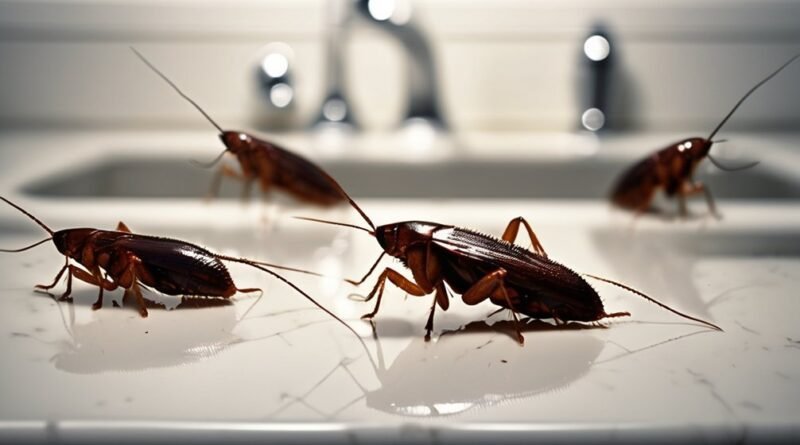
German Cockroaches: The Apartment Infestor
If you’ve ever flicked on your kitchen light at midnight, you’ve likely witnessed the telltale scurrying of German cockroaches. These persistent pests aren’t just passing visitors — they’re professional home invaders with a knack for turning your living space into their breeding ground. While you might spot one or two today, thousands more could be lurking behind your walls, waiting for the right moment to expand their territory. Understanding the signs, the color and stripes that identify them, and the right steps to eliminate them is how you take back control of your apartment.
Key Takeaways
- German cockroaches are indoor pests that rapidly spread through apartment buildings via shared plumbing lines and wall voids between units.
- A single female can produce over 30,000 roaches annually, quickly leading to severe infestations across multiple apartment units.
- Common entry points include boxes, groceries, and furniture, with roaches establishing colonies near kitchen and bathroom water sources.
- 20-30% of apartment units typically become infested simultaneously, making building-wide control measures essential for effective management.
- Integrated Pest Management, including HEPA vacuuming, sealing entry points, and strategic bait placement, is crucial for apartment infestations.
- Early inspection, good hygiene, and consistent moisture control are the most effective prevention strategies for people living in multi-unit housing.
Identifying German Cockroaches in Your Apartment
Before you can eliminate a German cockroach problem, you need to confirm what you’re dealing with. Accurate identification is the first step — and it’s straightforward once you know the key features.
German cockroaches are light brown to tan in color and measure about 0.5–0.6 inches in length. The defining characteristic is two dark parallel stripes running from the back of the head down the pronotum. Despite having wings, they almost never fly — they run. Nymphs are smaller and darker but share the same two-stripe pattern.
Key signs of a German cockroach infestation in your apartment include:
- Droppings — small, dark specks resembling ground pepper, found in cabinets, along baseboards, under stoves, behind refrigerators, and near sinks
- Egg capsules — light brown, ribbed cases found in cracks, inside cabinets, and tucked behind appliances
- Shed skins — pale exoskeleton husks near harborage places indicating active nymph molting
- Odor — a musty, oily smell that intensifies with larger populations
- Live roaches — spotting even one adult during daylight is a reliable sign of a significant hidden population
Understanding the Scale of Urban Infestations
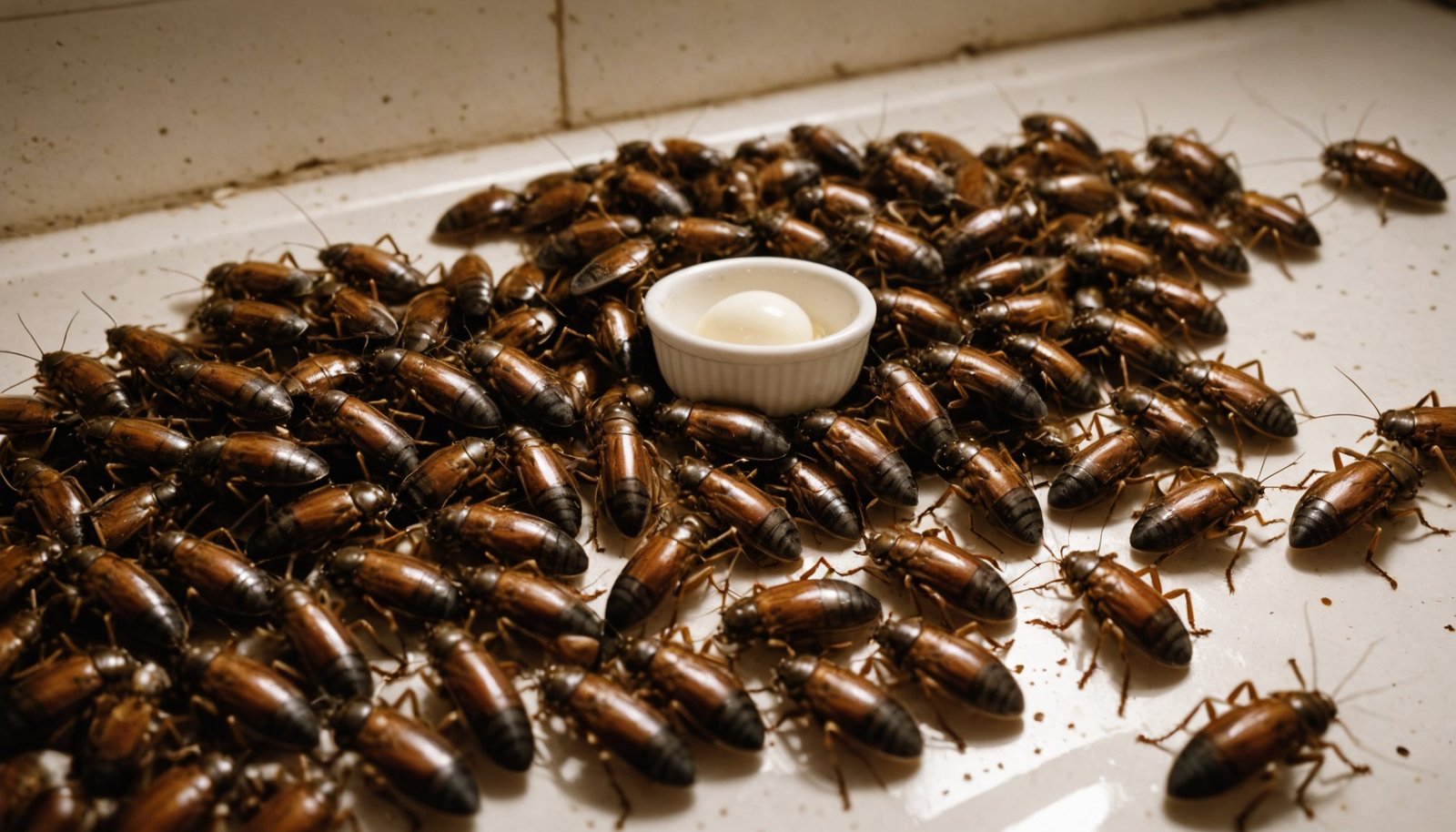
While German cockroach infestations can start small, they quickly escalate into massive populations ranging from 900 to hundreds of thousands of individuals within a single home. You’ll often find these infestations concentrated in urban settings, where 20-30% of apartment units in a building can be affected simultaneously. Cities like New Orleans experience particularly severe infestations due to favorable conditions for cockroach survival. Unlike other species, these pests are solely indoor dwellers and rarely venture outside.
When these pests colonize a new site, they typically arrive in large groups, leading to rapid population expansion. The economic impact is substantial — cockroach pest control represents about 15% of all pest control expenses in the U.S. For people living in affected apartments, this means significant personal costs for exterminator services, treatment, and lost time dealing with an infestation that spreads through shared walls, floors, and plumbing systems.
The Hidden Life of German Cockroaches
Although German cockroaches remain largely unseen during daylight hours, they lead complex lives within the warm, humid confines of human dwellings. You’ll find these nocturnal pests clustering together in narrow cracks and crevices, drawn by aggregation pheromones that create communal hideouts marked by brownish spotting near cabinets, behind stoves, and under refrigerators.
Their remarkable survival skills include an advanced sense of smell to locate food, and they’ll eat almost anything — from your leftovers to cardboard and glue when times are tough. These resilient insects can undergo their complete life cycle in as little as ten weeks.
Female roaches carry their egg capsules for up to a month, with each capsule containing up to 40 nymphs. Don’t be fooled by spotting just one cockroach; it likely signals a larger infestation hiding in your walls, as they spread easily through structural voids and shared spaces between apartments. Their dark brown to tan color, twin stripes, and flat profile allow them to squeeze through holes and gaps as thin as a dime.
Health Threats to Apartment Residents
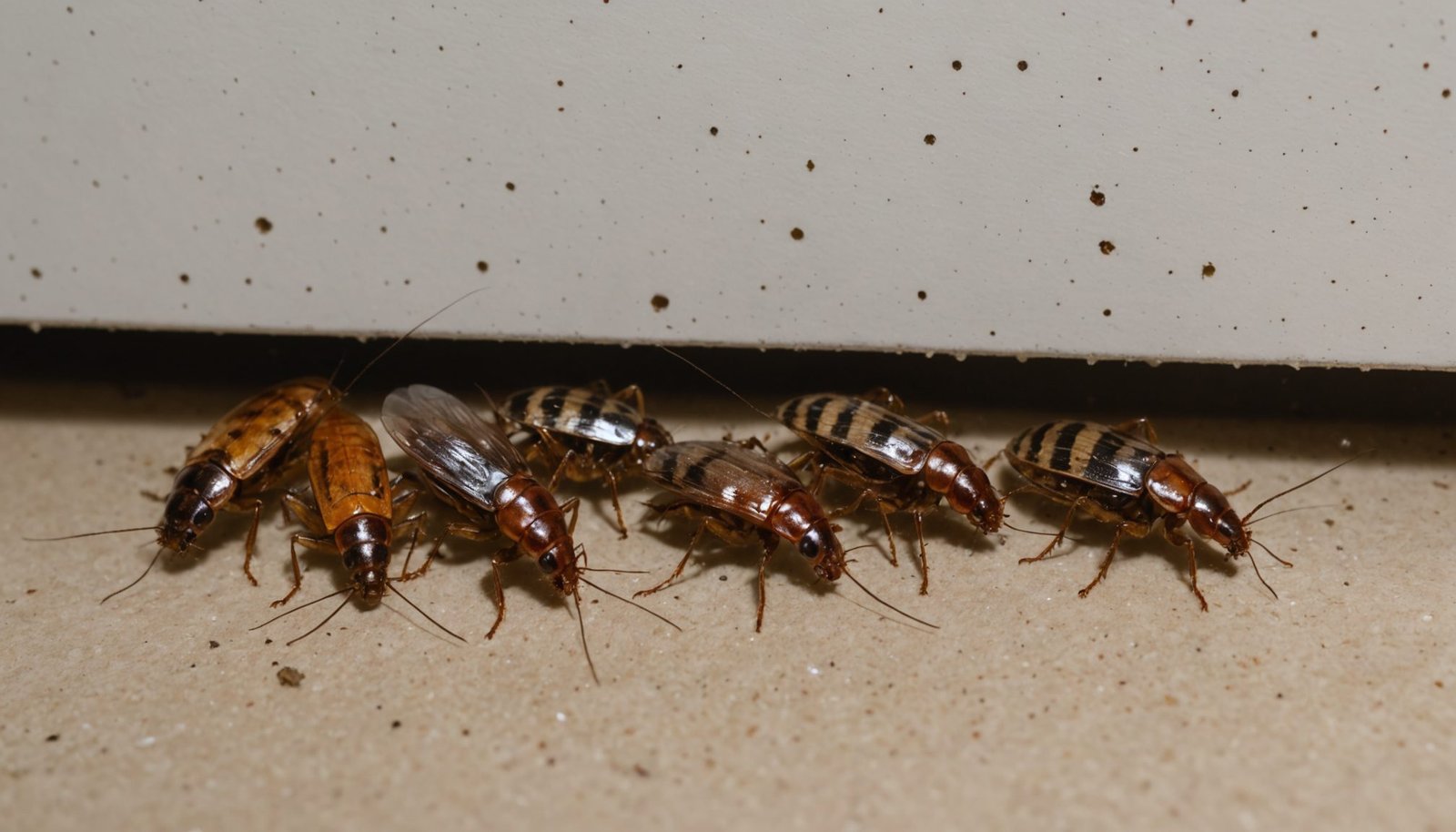
Your health can be severely impacted by German cockroaches lurking in your apartment, as their droppings, shed skins, and saliva contain potent allergens that trigger asthma attacks and respiratory issues. When these pests crawl across your counters, dishes, and food items, they spread dangerous bacteria like E. coli and Salmonella through their legs and bodies. Children, seniors, and those with compromised immune systems face the greatest risks from both the allergens and bacterial contamination these unwanted roommates bring. A persistent musty odor in your living space often indicates you’re dealing with a serious cockroach problem.
Allergens Trigger Asthma Attacks
Since German cockroach allergens affect millions of urban residents, their role in triggering asthma attacks poses a serious health concern. If you’re sensitive to these allergens, you’ll find they can trigger asthma attacks in 60-90% of cases, leading to wheezing, chest tightness, and breathing difficulties. These allergens work by causing airway inflammation and hypersensitivity through complex immune system interactions.
Children face particular risks, requiring more frequent hospital visits when they’re allergic to cockroaches compared to those who aren’t. The problem becomes even more severe in inner-city and low-income housing, where infestations are more common and exposure is ongoing. Studies show that infants exposed to cockroach allergens during the first three months of life have a significantly higher risk of developing respiratory allergic diseases. Good hygiene, regular inspection, and prompt pest control are the most effective ways to reduce allergen exposure for people living in affected apartments.
Disease Transmission Through Contact
The silent scurrying of German cockroaches through apartment buildings poses far more danger than mere disgust. These pests serve as mechanical vectors for over 33 different bacteria species, including dangerous pathogens like Salmonella and antibiotic-resistant strains. You’re at risk when they contaminate your food, utensils, dishes, and surfaces with bacteria from their bodies, feces, and regurgitation. Their remarkable ability to survive without oxygen for extended periods enables them to spread through plumbing systems and multiply rapidly across units.
| Disease Type | Transmission Method | Health Impact |
|---|---|---|
| Bacterial/Viral | Surface contact, food contamination | Food poisoning, gastroenteritis |
| Parasitic | Eggs/cysts in droppings | Worm infections, digestive issues |
| Foodborne | Kitchen contamination | Diarrhea, fever, vomiting |
How Infestations Start and Spread
German cockroaches typically enter your apartment by hitchhiking on boxes, groceries, or furniture, then quickly establish themselves in kitchens and bathrooms where food and water are plentiful. Once inside, they’ll exploit structural connections like shared walls, plumbing chases, and ventilation ducts to spread between apartment units. These pests multiply rapidly by laying egg capsules in hidden cracks and crevices, while feeding on everything from food scraps to paper products and organic debris.
Common Entry Points
Despite their small size, cockroaches can squeeze through incredibly narrow openings — holes, gaps, and cracks as thin as a few millimeters — to infiltrate homes and buildings. You’ll find these pests primarily entering through cracks in foundations, walls, and floors, while gaps around baseboards and molding provide easy access to living spaces.
Plumbing systems are particularly vulnerable entry points, as cockroaches exploit gaps around pipes, fixtures, and drain openings. They’ll also use vents, chimneys, and air ducts, especially in apartment buildings with shared ventilation. Don’t overlook your doors and windows — deteriorated weather stripping creates perfect entry opportunities. Be especially cautious with items you bring into your home: cockroaches frequently hitchhike on cardboard boxes, grocery bags, used furniture, and appliances. These items can harbor both adult roaches and their egg capsules, quickly leading to full-blown infestations.
Unit-to-Unit Movement
When cockroach populations establish themselves in multi-unit buildings, they don’t stay confined to a single space. These persistent pests move through shared structural features, primarily using walls, ceilings, and utility chases to spread their infestations.
- About 65% of cockroach movement occurs between adjoining kitchens, where they exploit cracks, gaps around pipes, and electrical outlets to travel between units.
- Crowding and resource depletion in one unit triggers exploration into neighboring spaces as they seek new food sources.
- Large nymphs are the primary dispersers, showing more cockroach movement than adults or small nymphs, constantly searching for new harborages.
- They’re drawn to other units by aggregation pheromones and species-specific odors, particularly through shared plumbing lines that connect floors vertically.
Rapid Population Growth
The explosive growth potential of these resilient pests creates intimidating challenges for people, property managers, and exterminator services alike. In ideal conditions, a single female German cockroach and her offspring can produce over 30,000 roaches within a year. Females lay 4-8 egg capsules in their lifetime, with each capsule containing about 32 eggs. These pests thrive in temperatures between 70-90°F, especially in humid environments with high moisture near water sources like sinks, stoves, and bathrooms.
They’ll rapidly colonize areas with abundant food and cluttered, dark spaces. What makes control particularly difficult is their ability to mature in just two months, allowing populations to rebound quickly even after pest control treatment. The nymphs‘ practice of consuming adult feces helps them establish vital gut bacteria, increasing their survival odds despite surface insecticides.
The Breeding Cycle: Why Numbers Explode
As German cockroaches multiply at an astonishing rate, their breeding cycle can quickly turn a small infestation into a major problem. You’ll find these pests particularly challenging to control due to their explosive reproductive potential, where a single female can produce up to 400 eggs in her lifetime through multiple egg capsules called oothecae.
- Each female carries her ootheca for 20-30 days, protecting 35-40 eggs until they hatch.
- Nymphs develop rapidly over 40-60 days, going through 5-7 molts before reaching adulthood.
- Adults begin reproducing immediately, with females producing new oothecae within weeks of the previous batch hatching.
- Under ideal conditions, one female’s offspring can grow to 10,000 descendants, creating overlapping generations that perpetuate the infestation.
Winning the Battle Against Cockroaches
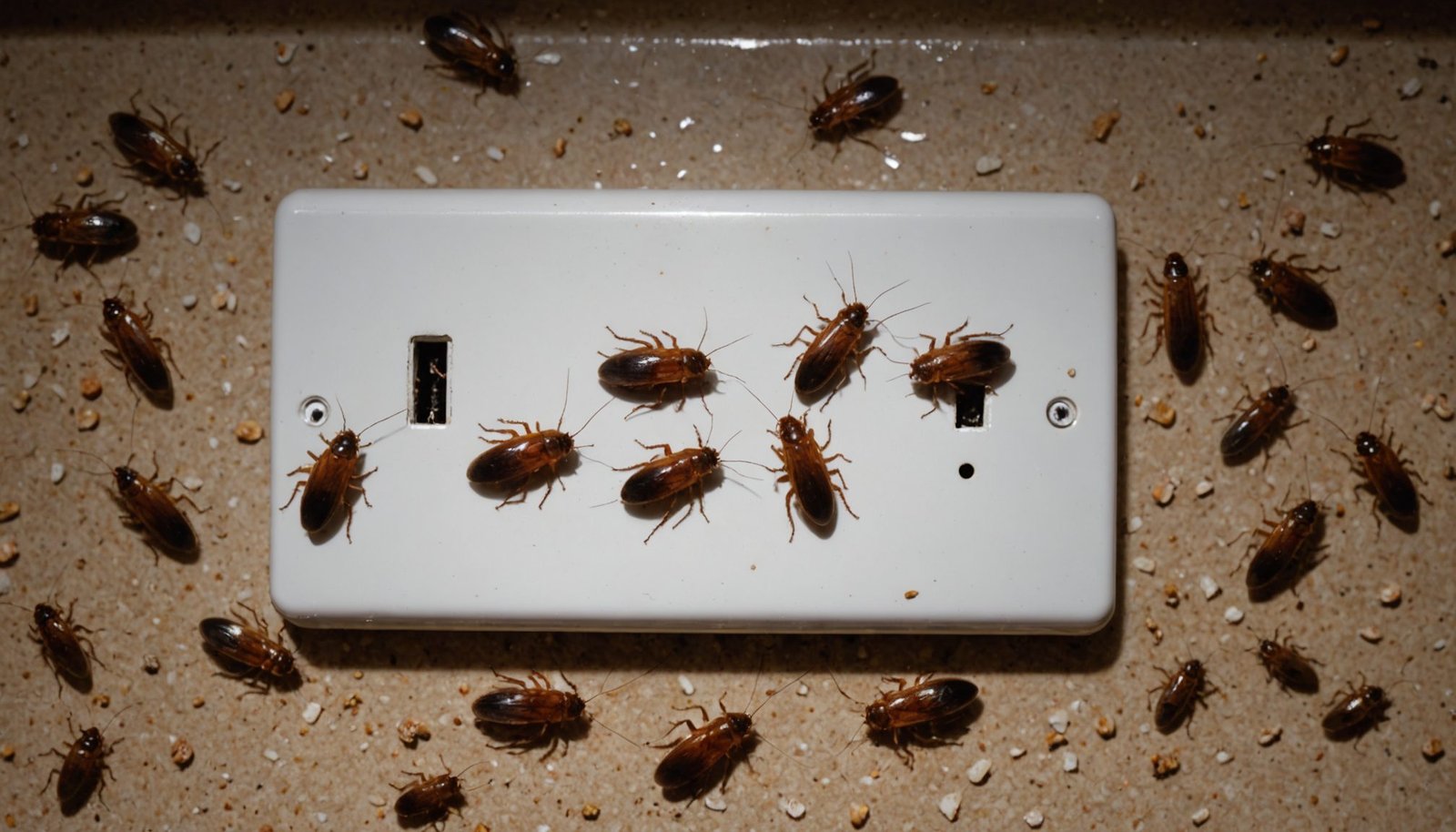
Successfully battling German cockroaches requires an all-encompassing approach that combines multiple control strategies. No single spray or product will eliminate a well-established infestation — you need an integrated plan that addresses hygiene, moisture, harborage, and active treatment simultaneously.
Sanitation and Hygiene
Good hygiene is the foundation of any effective German cockroach control program. Keep your kitchen clean by wiping down stoves, cleaning under refrigerators, washing dishes promptly, and storing food in sealed containers. Remove clutter that provides harborage in cabinets, corners, and storage areas. Fix leaks and dry wet surfaces — moisture is as important to German cockroaches as food, and eliminating it significantly reduces their ability to establish colonies.
Sealing and Exclusion
As part of ongoing maintenance, seal cracks, gaps, and holes around pipes, baseboards, and under appliances with caulk. Pay special attention to corners inside cabinets, gaps around stoves and refrigerators, and any penetrations through shared walls. In multi-unit buildings, coordinate with neighbors and building management — sealing your unit alone is insufficient if adjacent apartments remain infested.
Treatment and Monitoring
Start by placing sticky traps near food and water sources to monitor infestation levels and track your progress. Apply gel baits in strategic locations where you’ve spotted roach activity — inside cabinets, behind appliances, along baseboards, and near sinks. Place bait stations in areas like under the stove and behind the refrigerator where gel baits may not adhere well. Dust formulations like boric acid or diatomaceous earth work well in wall voids, under appliances, and in hard-to-reach crevices where baits can’t be placed.
Use HEPA vacuuming to remove roaches and debris, enhancing your treatment‘s effectiveness. Rotate bait products regularly to prevent resistance — this is one of the most overlooked steps in long-term cockroach control. For persistent infestations, professional exterminator services provide inspection, targeted insecticides, and follow-up visits that deliver results DIY approaches often can’t sustain. With diligence and a systematic IPM program, you can effectively eliminate these persistent pests from your apartment.
For a complete overview of cockroach species and how to control them, check our guide on Types of Cockroaches – Identification & Control
Conclusion
You’re not powerless against these persistent pests. With proper hygiene, moisture control, sealing entry points, and a strategic approach to pest control, you’ll dramatically reduce your risk of infestation. Don’t wait until you spot roaches to take action — prevention is your strongest weapon. Regular inspection of cabinets, behind refrigerators, under stoves, and along baseboards catches signs early, before numbers compound and the problem spreads to neighboring units. Remember, it’s not just about killing visible insects with a spray — it’s about breaking their breeding cycle and making your space inhospitable to these unwanted bugs.
