

Cockroach Inspection Cost: What Professionals Charge and What to Expect
Cockroach inspection costs typically run between $60 and $125, though bundling your inspection with treatment can waive or reduce that fee. What you’ll pay depends on your home’s size, the infestation’s severity, and whether you choose a one-time visit or an ongoing service plan. One-time treatments average $100–$400, while severe infestations can push costs past $7,500. Keep going to find out exactly what drives these numbers—and how to keep more money in your pocket.
Key Takeaways
- Standalone cockroach inspections typically cost $60 to $125, though booking treatment immediately may waive or reduce the inspection fee.
- Bundled one-time visit packages range from $150 to $350, while monthly service plans carry initial inspection fees of $125 to $300.
- During inspections, technicians examine kitchens, bathrooms, and crawlspaces for live cockroaches, droppings, egg casings, and entry points.
- Treatment costs vary by infestation severity, ranging from $100 to $400 for light cases and up to $7,500 for severe infestations.
- Ongoing monthly plans averaging $30 to $60 can save 40% to 60% compared to reactive treatments over five years.
What Does a Cockroach Inspection Actually Cost?

Cockroach inspection costs typically range from $60 to $125 as a standalone service, though many exterminators waive or deduct that fee if you book treatment on the spot. When it’s bundled into a one-time visit, you’re usually looking at $150–$350 total. If you’re starting a monthly service plan, the initial inspection runs $125–$300, while annual service packages typically fold it in at $125–$500.
What you actually pay depends on how you move forward. If you commit to a treatment plan with the same company, that inspection fee often disappears entirely. But if you’re just shopping around or getting a second opinion, expect to pay the full standalone rate.
Keep in mind that inspection costs are just the starting point. Once the exterminator assesses your infestation level, home size, and treatment needs, the real pricing conversation begins. For severe infestations, extreme treatments like fumigation can run anywhere from $1,000 to $7,500 depending on the scope of the problem.
What Happens During a Cockroach Inspection?

When the technician arrives, they start with a full property walkthrough, zeroing in on kitchens, bathrooms, crawlspaces, attics, and basements—anywhere cockroaches find food, water, shelter, or a way inside. They use flashlights and mirrors to inspect tight spaces, checking behind electrical outlets, under drawers, inside appliance motor compartments, and along cabinet hinges, refrigeration gaskets, and plumbing fixtures.
They’re looking for live or dead cockroaches, droppings resembling coffee grounds or black pepper, egg casings, shed skins, and any musty odor signaling a heavy infestation. Daytime sightings tell them the problem’s serious.
Once the inspection wraps up, they’ll identify the species, map harborage sites, pinpoint entry points like wall cracks and pipe gaps, and note moisture sources or food attractants driving the infestation. Identifying the species matters because German cockroaches, American cockroaches, and brown-banded cockroaches each require tailored treatment strategies based on their biology and preferred habitats. You’ll leave with a clear picture of what you’re dealing with and a targeted treatment plan to address it.
Light or Severe: How Does Infestation Level Change the Price?
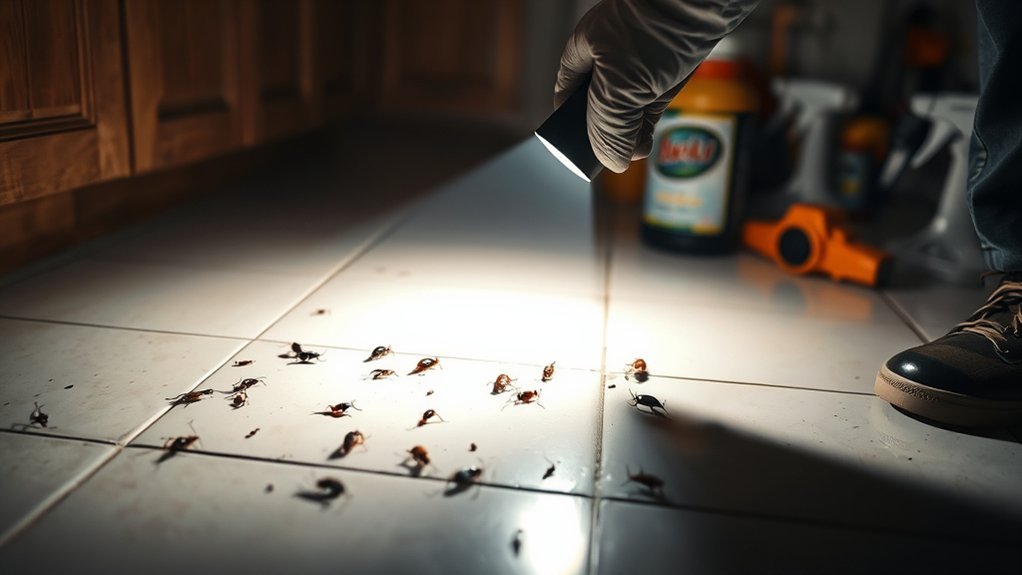
The severity of your cockroach infestation directly determines how much you’ll pay for treatment. A light infestation typically runs you $100–$400 for a single visit, while a moderate problem requiring 2–3 visits can climb to $300–$700 or more. If you’re dealing with a severe infestation, expect costs ranging from $1,000 to $7,500+, especially when fumigation or whole-house tenting becomes necessary. Factors like home size and layout also influence the final price, as larger homes require more time and materials to treat effectively.
Severity Levels and Pricing
Whether you’re dealing with a handful of roaches or a full-blown infestation, the severity of the problem directly determines what you’ll pay. Light infestations typically cost $100–$400 per treatment, while major infestations run $300–$700 per visit. Severe cases involving fumigation or tenting can reach $2,500–$7,500.
| Severity Level | Cost Range | Visits Required |
|---|---|---|
| Minor | $100–$400 | 1 |
| Major | $300–$700 | 2+ |
| Severe | $2,500–$7,500 | Multiple intensive |
| German Cockroach Clean-Out | $250–$600 | 2+ |
| Fumigation | $1,000–$3,000 | Multiple |
Daytime roach sightings, widespread activity, and neglected properties push you into higher pricing tiers. The more rooms involved, the more visits you’ll need, and the higher your total cost climbs. Hiring a professional early can prevent a manageable infestation from escalating into a severe case that costs significantly more to resolve.
Treatment Costs by Infestation
How severe your cockroach problem is will largely determine what you pay for treatment. A light infestation typically runs $100 to $400 per visit, averaging around $200. You’ll likely need just one visit, and treatments like gel baits, glue traps, or growth regulators cost $100 to $600. Smaller homes under 1,000 square feet often fall between $100 and $150.
Severe infestations are a different story. Expect to pay $300 to $700 per visit, with extreme cases reaching $2,500 to $7,500. Fumigation alone costs $1,000 to $3,000, and whole-house tenting runs $1,200 to $7,500. Multiple treatments become necessary, and larger homes push costs even higher.
The bottom line is that catching the problem early keeps your expenses manageable and your treatment options simpler. For ongoing protection, yearly extermination plans typically range from $400 to $1,100 depending on the frequency and scope of service.
Which Treatment Type Costs the Most?
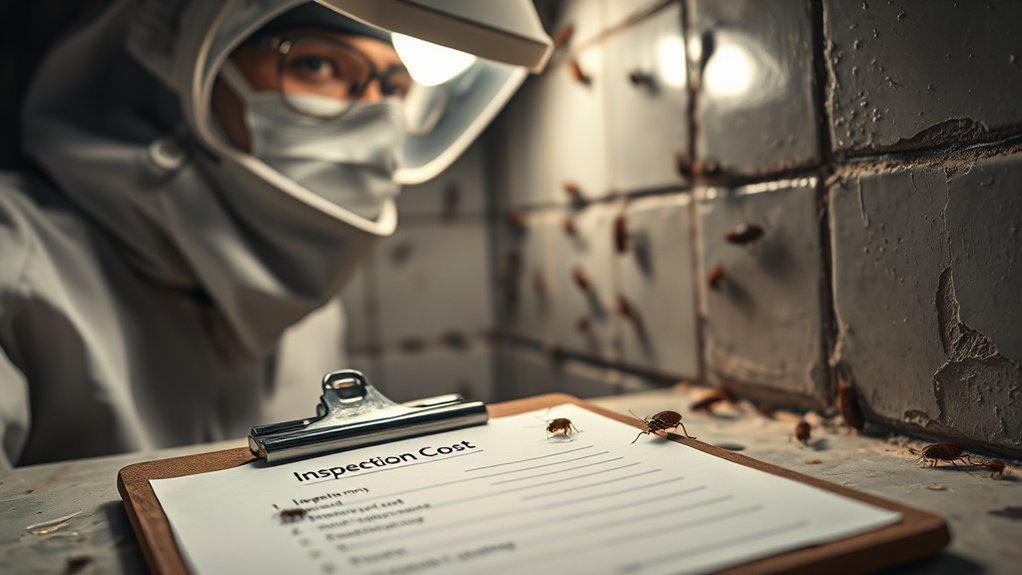
When comparing pest control costs, bed bug treatments rank as the most expensive, with structural fumigation reaching up to $30,000 for large homes. Even standard bed bug control runs $850 to $3,500, making it the priciest infestation to address. The process also takes roughly four weeks, adding to overall costs.
Termite treatments fall in the mid-range, averaging $1,300 to $1,500 for a 2,520-square-foot home. High-end termite control can reach $3,500, and damage repairs push costs even higher.
For cockroach-specific treatments, IGR products like Gentrol Point Source carry a higher price tag, as exterminators describe them as expensive. They’re effective for breaking German cockroach life cycles quickly. Professional-grade gel baits like Advion Cockroach Gel Bait also cost more due to their strength. Sprays tend to be the most affordable option, offering both contact killing and long-term prevention at a lower price point.
How Home Size Affects Your Extermination Cost
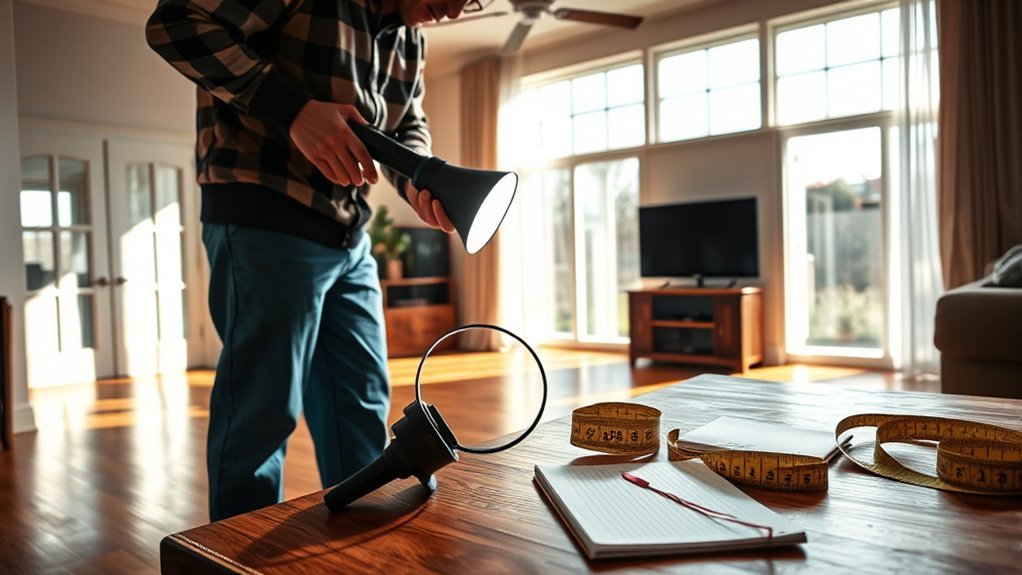
Your home’s square footage directly influences what you’ll pay for cockroach extermination. Smaller homes, like a 1,000 sq ft space, average around $125, while larger 3,000 sq ft homes can cost up to $500 or more. The bigger your home, the more chemicals, labor, and inspection time an exterminator needs to cover it effectively.
Size Impacts Pricing
The size of your home is one of the biggest factors determining what you’ll pay for cockroach extermination. Larger homes require more chemicals, longer labor hours, and thorough inspections across more rooms and hiding spots. Cockroaches also breed faster in bigger spaces, meaning infestations spread more widely and demand more intensive treatment.
Pricing scales consistently with square footage. A 1,500-square-foot home typically costs $150–$250, while a 2,000-square-foot home averages around $300, ranging from $250–$350. At 2,500 square feet, expect $350–$450, and a 3,000-square-foot home runs $450–$550. Costs continue rising beyond 3,000 square feet.
Multi-story layouts and complex floor plans add further complexity, increasing both access time and treatment scope. Exterminators base their initial quotes directly on your home’s measured square footage.
Smaller Homes Cost Less
Smaller homes cost markedly less to treat for cockroaches, and the savings are straightforward to understand. A 1,000 square foot home averages $125, while a 2,000 square foot home runs around $300. Doubling your square footage roughly doubles your cost.
| Home Size | Cost Range | Average Cost |
|---|---|---|
| 1,000 sq ft | $100–$150 | $125 |
| 1,500 sq ft | $150–$250 | $200 |
| 2,000 sq ft | $250–$350 | $300 |
If you own a smaller property, you’ll also benefit from simpler treatment methods like sprays, gels, and traps instead of costly fumigation. Ongoing monthly maintenance plans run $40–$70, keeping future infestations manageable. Acting early prevents costs from escalating considerably.
Larger Properties Cost More
Larger homes cost considerably more to treat for cockroaches because exterminators need additional time, materials, and visits to cover more ground. For a 3,000+ square foot home, you’re looking at $450–$575 on average, compared to $270–$360 for a 2,000 square foot property. Costs scale directly with size, so every additional square foot adds to your total.
Serious infestations in larger spaces often demand multiple treatment visits, which drives costs higher. If your home requires fumigation, expect to pay $2,000–$4,000, depending on size. Whole-house treatments run approximately $1.50–$4.00 per square foot. Exclusion work, which seals entry points, adds another $200–$1,000 or more. In extreme cases, total extermination costs can reach $8,000 for expansive, heavily infested properties.
What Louisville Homeowners Actually Pay for Roach Extermination
Most Louisville homeowners pay between $150 and $600 for professional cockroach extermination, though you’ll typically see one-time treatments fall in the $110–$245 range for minor infestations. For broader pest control visits, expect to pay $100–$300 depending on your property and infestation severity.
Local exterminators base their pricing on several variables—your home’s size, the cockroach species present, and how accessible the infested areas are. A German cockroach problem hiding behind walls costs more to treat than roaches concentrated in an open kitchen space.
Cockroach extermination costs vary based on home size, species, and how accessible the infested areas are.
Compared to other pests, cockroaches are relatively affordable to eliminate. Bed bugs run $500–$1,500, and termites can reach $2,500. Your roach problem, treated at $100–$400, sits on the lower end of extermination costs.
Providers like Aptive offer treatments within the $100–$300 range, so getting two or three quotes lets you find competitive local pricing without sacrificing quality service.
One-Time Treatment vs. Ongoing Service: Which Saves More?
When deciding between a one-time treatment and an ongoing service plan, the long-term numbers favor recurring coverage. A reactive approach—relying on individual treatments whenever roaches return—can cost you $4,100–$9,000 over five years, including $2,000–$5,000 in potential property damage and emergency surcharges. An ongoing plan averages around $3,000–$3,500 over the same period, saving you 40%–60% compared to repeated reactive treatments.
One-time treatments run $100–$400 for cockroaches, but they only address the current infestation. Roaches breed quickly, so without continued service, reinfestation is likely. Ongoing plans typically cost $30–$60 per month for cockroach maintenance and break breeding cycles while blocking re-entry year-round.
If you’re dealing with a single, isolated incident, a one-time treatment makes sense. But if your home is prone to recurring roach problems, an ongoing plan delivers better protection and stronger long-term value.
How to Lower Your Cockroach Extermination Cost Without Sacrificing Results
Cutting cockroach extermination costs doesn’t mean settling for weaker results—it means applying the right methods in the right places. Start with cockroach bait gel in pea-sized dots inside cabinets, corners, and crevices. Roaches carry the poison back to their colonies, spreading the kill without you chasing every individual roach.
Pair bait with an insect growth regulator like hydroprene or pyriproxyfen to prevent nymphs from developing. Together, they collapse colonies within 3–6 weeks. Add boric acid dust thinly under sinks and appliances, and place diatomaceous earth along travel paths to handle stragglers.
Before treating, vacuum infested areas, seal food in airtight containers, fix leaks, and reduce moisture. Skip foggers and broad pyrethroid sprays—they don’t reach nests and German cockroaches have built resistance.
Monitor with sticky traps, reapply every 2–3 weeks, and you’ll get professional-level results while saving at least $200 in exterminator fees.
Frequently Asked Questions
Does Homeowners Insurance Ever Cover Cockroach Extermination or Inspection Costs?
Homeowners insurance rarely covers cockroach extermination or inspection costs. Your policy typically excludes pest control since it’s considered preventable maintenance. You might find coverage if cockroaches cause a secondary covered peril, like fire from chewed wires.
How Long Does a Typical Cockroach Extermination Treatment Actually Last?
Your extermination treatment typically lasts 30 to 90 days, though it can extend up to six months. You’ll likely need follow-up visits every two weeks for severe infestations or monthly for moderate ones.
Are Cockroach Exterminators Required to Hold Specific Licenses or Certifications?
Yes, cockroach exterminators must hold specific licenses or certifications. You’ll find they’re required to pass exams, complete category-specific training, and renew certifications every three years to legally apply restricted-use pesticides.
Can Cockroaches Return After a Professional Treatment Is Completed?
Yes, cockroaches can return after professional treatment, especially if it’s incomplete or your infestation was severe. You’ll need multiple visits and consistent sanitation practices to prevent them from coming back successfully.
What Health Risks Do Cockroach Infestations Pose to Household Residents?
Cockroach infestations expose you to serious health risks. They’ll spread bacteria like E. coli and salmonella, trigger allergic reactions, worsen asthma, contaminate your food, and transmit dangerous diseases like typhoid and dysentery throughout your home.
Conclusion
Cockroach inspection costs vary based on infestation severity, home size, and treatment type, but you now know what to expect before calling a pro. Whether you’re dealing with a light problem or a full-blown infestation, getting an inspection early saves you money in the long run. Don’t wait until the problem gets worse — the sooner you act, the less you’ll pay and the faster you’ll reclaim your home.
