
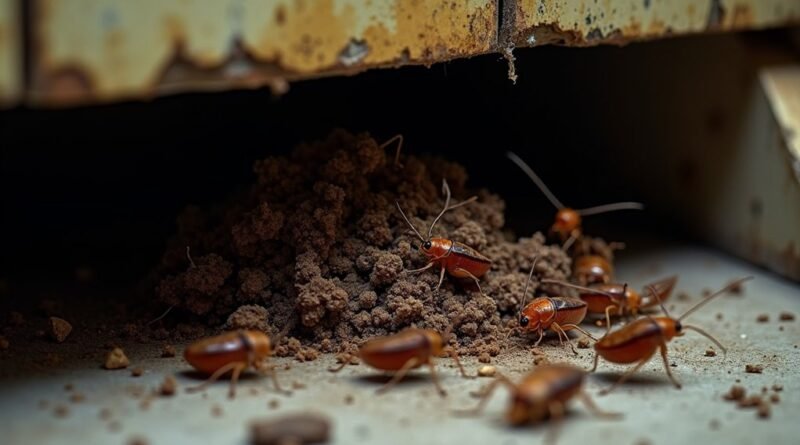
Cockroach Nest: What It Looks Like and How to Find It
You won’t find a cockroach nest shaped like a hive or burrow — it’s simply a dark, cluttered hiding spot where roaches gather, breed, and leave behind telltale signs. Look for tiny black droppings, shed skins, brown egg cases, and a musty odor in warm, humid areas like behind refrigerators, under sinks, or in basement corners. Knowing exactly what to look for — and where — makes all the difference in tracking them down.
Key Takeaways
- Cockroach nests are not structured constructions but hidden congregations in warm, dark, humid areas driven by pheromones and survival instincts.
- Key signs of a nest include tiny black droppings, shed skins, brown egg cases, and a persistent musty odor.
- Common indoor nesting spots include behind refrigerators, under sinks, inside bathroom cabinets, and near basement water heaters.
- German cockroaches nest indoors near food and water, while wood cockroaches nest exclusively outdoors and cannot reproduce indoors.
- To find nests, inspect at night using a flashlight, place sticky traps, and follow roach escape routes to their harborage.
What a Cockroach Nest Actually Is
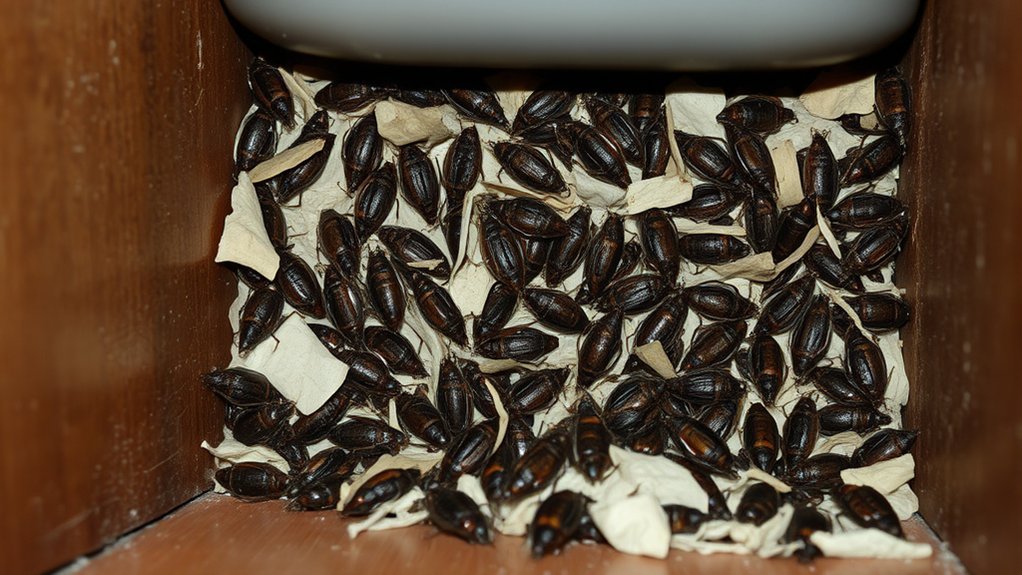
Unlike the structured hives of bees or ant colonies, a cockroach “nest” isn’t a deliberately built structure — it’s simply a hidden space where roaches congregate together. There’s no queen, no hierarchy, and no organized construction effort. Cockroaches are gregarious insects that gather in shared spaces primarily during daylight hours when they’re avoiding predators and human activity.
What drives them together isn’t social obligation — it’s survival. Once a cockroach finds a spot near food and water, it releases attractant pheromones that signal other roaches to follow. Those chemical markers create dense clusters in favorable locations without requiring any coordinated effort.
You’ll typically find these congregation spots in dark, warm, humid areas of your home — think kitchen cabinets, bathroom walls, or basement crevices. Roaches choose locations that offer maximum protection while keeping them within several feet of food and water sources. Inside these areas, you may also find molted exoskeletons, droppings, and egg cases called oothecas left behind by reproducing females.
What Does a Cockroach Nest Look Like?
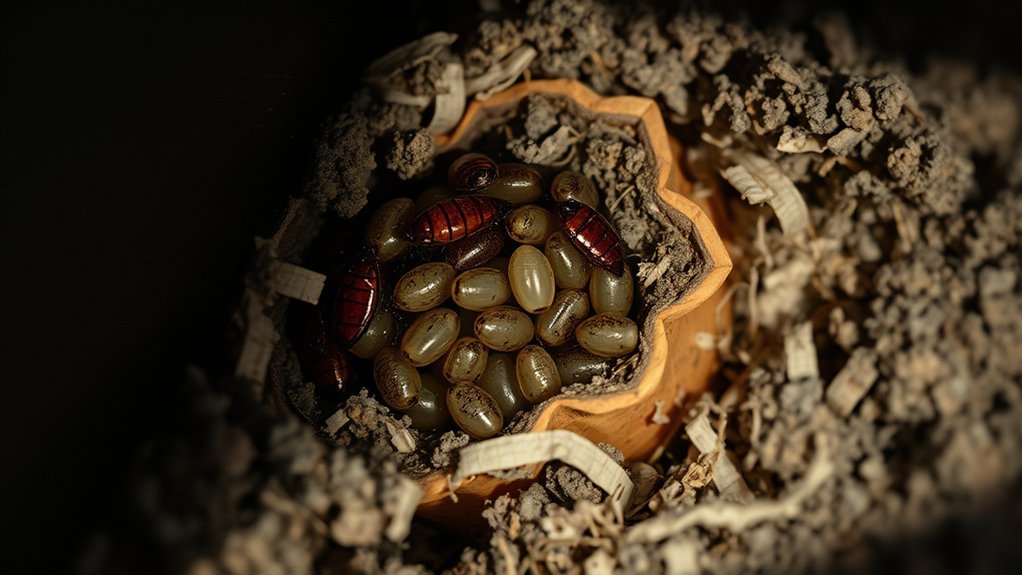
Now that you know what a cockroach nest actually is, you’ll want to know what you’re looking for. Unlike a bird’s nest or beehive, cockroach nests aren’t structured or meticulously built. Instead, you’re looking for a cluttered, messy area where roaches have gathered together.
Cockroach nests aren’t structured like a beehive — they’re simply cluttered areas where roaches have gathered together.
Expect to find a combination of the following in one concentrated spot:
- Adult roaches clustered together in dark groups
- Nymphs appearing light brown or white
- Oothecae, brown pill-shaped egg cases roughly 1/4-inch long
- Droppings resembling tiny black specks or dark smears, similar to ground pepper, but featuring ridges that distinguish them from mouse feces
- Shed exoskeletons leaving translucent remnants throughout the area
You’ll also notice a strong musty odor wherever roaches have concentrated. That smell comes from pheromones that actually attract even more roaches to the same location. Roaches are drawn to areas with food, moisture, and warmth, which is why nests are most commonly found near kitchen appliances, leaky pipes, and other humidity-prone environments.
What Are the Signs of a Cockroach Nest?
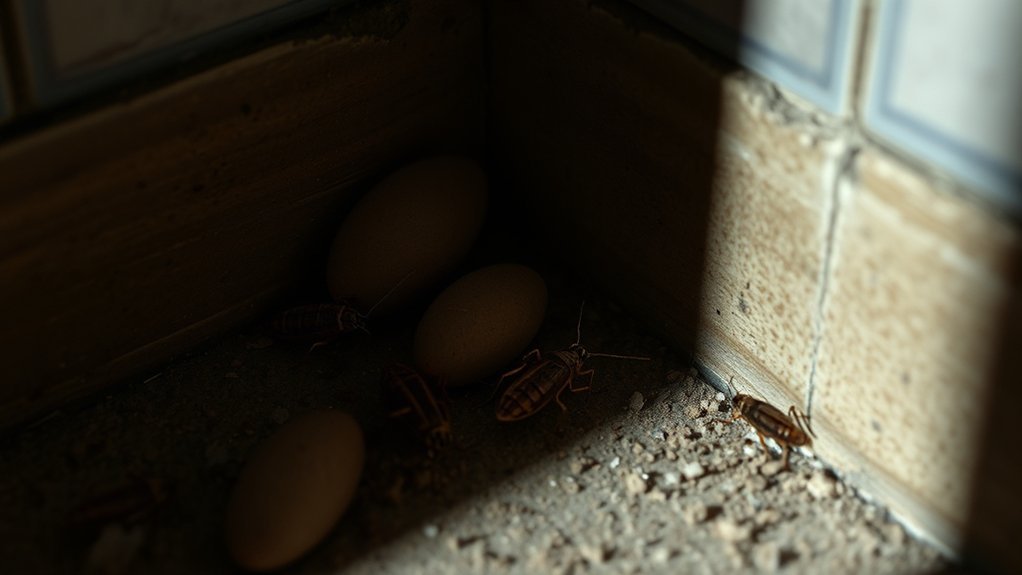
You can spot a cockroach nest by looking for tiny black droppings resembling ground coffee along walls, cabinet edges, and appliance bases, alongside light brown shed skins left behind by molting nymphs. Brown, pill-shaped egg cases clustered in dark corners confirm an active breeding site, especially when found near feces. A persistent musty odor in confined spaces like kitchens or bathrooms points you directly toward the nest’s location. Egg cases are brown, under a quarter inch long, and capable of housing more than forty baby roaches inside.
Visible Droppings and Skins
Droppings and shed skins are two of the clearest signs that cockroaches have established a nest nearby. Roach droppings resemble small black pepper grains or coffee grounds, measuring 1–3 mm long and ranging from dark brown to black. You’ll find them clustered in kitchen cabinets, under appliances, near plumbing fixtures, and along baseboards where roaches travel regularly. Fresh droppings appear darker and slightly moist, while older deposits look lighter and crumbly.
Shed skins are equally telling. Cockroaches molt 5–8 times during development, leaving behind translucent to tan-colored casings that hold the roach’s body shape. Finding multiple casings concentrated in one spot confirms prolonged habitation. When you spot both droppings and shed skins together, you’re looking at strong evidence of an active, established colony.
Odors and Egg Cases
Beyond the visible evidence of droppings and shed skins, your nose can lead you straight to a cockroach nest. Cockroaches produce a distinctive musty, oily odor—think stale coffee grounds mixed with wet cardboard. The stronger the smell, the larger the infestation hiding behind your walls or under appliances. This odor can also cling to furniture, wallpaper, food packaging, and clothing and belongings throughout your home.
Watch for these additional odor-related nest indicators:
- Species-specific scents – German cockroaches smell sharply greasy and pungent, while Oriental cockroaches emit a damp, mildew-like odor resembling basement mold.
- Pheromone-laced droppings – Accumulated feces release musty pheromones that actively attract more roaches to established nesting spots.
- Egg cases (oothecae) – Small capsules containing dozens of eggs appear near warm, moist areas like appliances, cardboard layers, or toilet paper rolls—remove them immediately to stop hatching.
Where Do Cockroaches Build Their Nests?
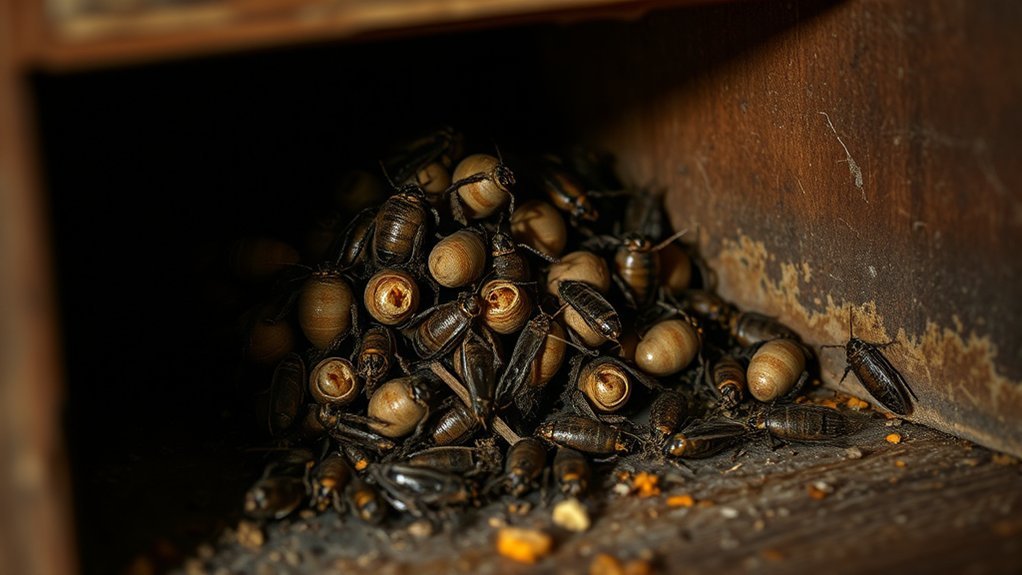
Cockroaches don’t build nests the way birds or rodents do — instead, they gravitate toward spots that naturally offer warmth, moisture, darkness, and easy access to food. They’re drawn together by pheromones, forming aggregations rather than constructed nests.
In kitchens, check behind refrigerators and stoves, under sinks, inside cabinets near food, and around dishwashers. Bathrooms are equally vulnerable — look inside cabinets, under sinks, around drains, and in crevices near plumbing. Basements and crawlspaces offer ideal conditions too, particularly near water heaters, foundation cracks, and damp undisturbed corners.
Don’t overlook furniture and clutter. Cockroaches hide under sofas, inside drawers, behind wall-mounted décor, and within wall voids. Kitchens and bathrooms tend to be infested first since they provide everything cockroaches need. If you spot one, others are almost certainly nearby, concealed in the closest dark, secluded spot available. If you’re having trouble identifying infestation sources online, note that certain website security systems may block access when malformed data is submitted during a search.
How German, Oriental, and Wood Cockroach Nests Differ
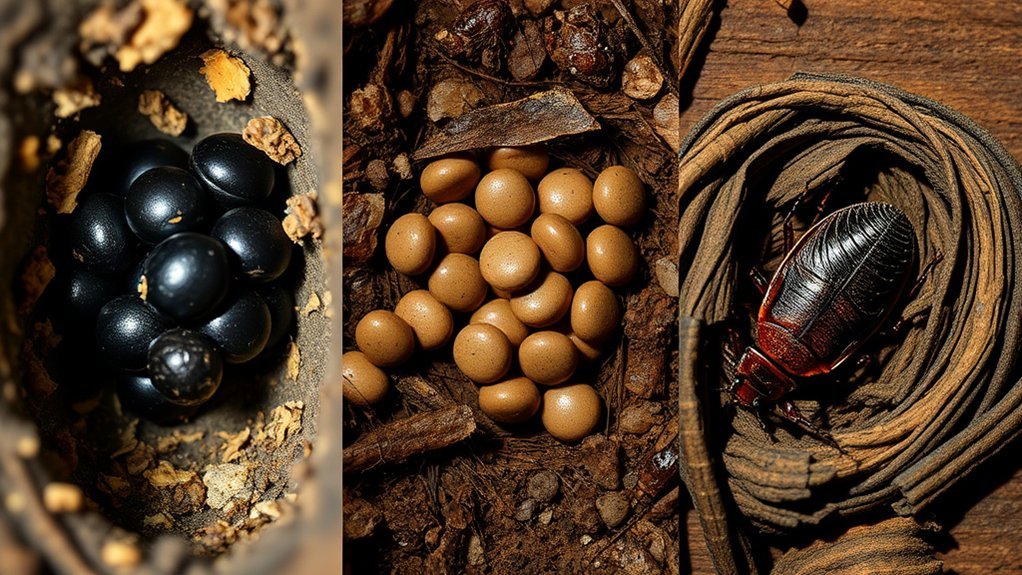
When comparing German and Oriental cockroach nests, you’ll notice German oothecae are larger at ⅓ inch versus the Oriental’s ¼ inch, and German droppings look like fine coffee grounds while Oriental droppings are more ridged and pellet-like. German infestations also produce a stronger musty odor, denser clutter, and faster reproduction cycles than Oriental ones. Wood cockroaches, by contrast, nest loosely in outdoor tree hollows or bark crevices, leaving fewer shed skins, less visible frass, and no noticeable odor.
German vs. Oriental Nests
Different cockroach species don’t nest the same way, and knowing these distinctions can help you identify which pest you’re dealing with.
German cockroaches stay strictly indoors, nesting within 16 feet of food and water in kitchen cabinets, behind appliances, and near plumbing. Oriental cockroaches prefer damp, cooler environments like basements and crawl spaces, often entering through drains and foundation gaps.
Here’s how their nesting habits differ:
- Location: German roaches target kitchens and bathrooms; Oriental roaches favor basements and crawl spaces.
- Moisture needs: Oriental roaches require wet conditions, while German roaches prioritize warmth and food proximity.
- Entry points: Oriental roaches crawl through pipes and drains, whereas German roaches exploit interior cracks and crevices near resources.
Wood Cockroach Nesting Habits
Unlike German and Oriental cockroaches, wood cockroaches nest exclusively outdoors in forest leaf litter, under fallen logs, loose tree bark, and wood piles. They thrive in damp environments rich with decaying organic material, making rotting stumps, wet mulch, and rain gutters clogged with leaves ideal nesting spots.
You won’t find them establishing colonies indoors. Without outdoor moisture, they dehydrate and die quickly. They occasionally wander inside through cracks, firewood, or open windows, but they can’t reproduce or survive long inside your home.
Their nesting is also decentralized, meaning there’s no single harborage point like you’d find with German or Oriental cockroaches. Instead, wood cockroaches spread loosely across woodland environments, contributing to decomposition rather than contaminating your living space.
How to Find a Cockroach Nest
Finding a cockroach nest requires a methodical approach, since roaches gravitate toward dark, damp, and secluded spots near food and water. Start your inspection at night using a flashlight and small mirror to check tight spaces. Flip on lights suddenly in dark rooms to catch roaches mid-movement and trace their escape routes back to the nest.
Roaches hide in dark, damp spots — inspect at night, flashlight in hand, and follow their escape routes straight to the nest.
Focus your search on these high-priority areas:
- Kitchen and bathroom hotspots – Behind appliances, under sinks, around plumbing, inside cabinet hinges, and near drains.
- Hidden structural zones – Wall voids, basements, crawlspaces, attics, and behind wallpaper near moisture.
- Cluttered harborage points – Drawers, pantries, furniture undersides, and closets where debris accumulates.
Place sticky traps in multiple locations simultaneously. The trap with the highest roach count points directly toward the nest. Look for droppings, egg cases, shed skins, and a musty odor to confirm you’ve found it.
Frequently Asked Questions
How Long Does It Take for a Cockroach Nest to Fully Establish?
A cockroach nest can fully establish within 4-6 months. Under ideal conditions, you’re looking at rapid exponential growth, so don’t delay—every week you wait allows the population to expand dramatically.
Can Cockroach Nests Cause Health Problems for Humans Living Nearby?
Yes, cockroach nests can seriously harm your health. They’ll expose you to allergens, bacteria, and pathogens that trigger asthma, cause allergic reactions, and spread diseases like salmonella and E. coli throughout your living space.
Do Cockroaches Abandon Their Nests and Relocate to New Areas?
Yes, cockroaches do abandon their nests and relocate when you disturb them, remove food sources, or apply pesticides. They’ll scatter to nearby cracks, regroup, and quickly establish new harborages throughout your home.
How Many Cockroaches Typically Live Together in a Single Nest?
You’ll typically find hundreds of cockroaches living together in a single nest. German roach populations can explode from hundreds to tens of thousands within months, so don’t underestimate an infestation’s size based on what you’re seeing.
Can Pets Detect Cockroach Nests Before Humans Notice Them?
Yes, your dog can detect cockroach nests before you ever notice them. They’ll use their 300 million scent receptors and superior hearing to alert you by barking or focusing intensely on specific areas.
Conclusion
Now that you’ve learned what cockroach nests look like and where to find them, you’re better equipped to tackle an infestation head-on. Start by checking the most common hiding spots—kitchens, bathrooms, and dark, damp areas. Look for droppings, egg cases, and musty odors that signal their presence. Once you’ve located the nest, act fast. The sooner you eliminate it, the better your chances of stopping the colony before it grows out of control.
