
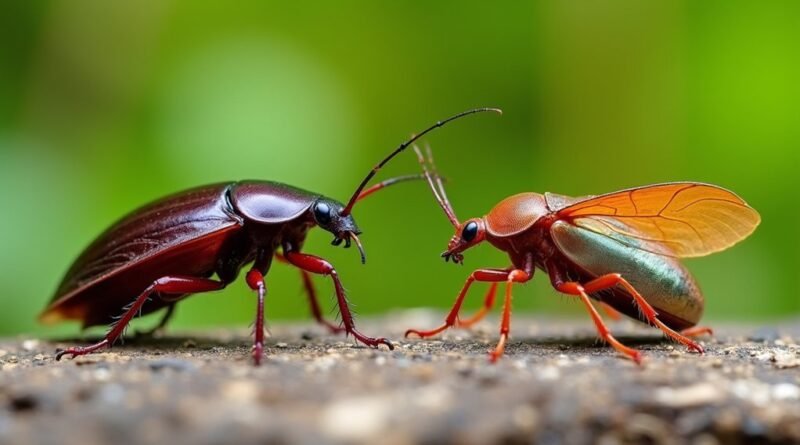
Cockroach vs Palmetto Bug: What Is the Difference?
“Palmetto bug” isn’t a scientific term — it’s just a nickname for certain large cockroach species that live outdoors, like the American and smokybrown cockroach. You’re still dealing with a cockroach either way, but palmetto bugs tend to be bigger, reddish-brown, and prefer hiding in palm trees and mulch rather than your kitchen. They wander inside occasionally, unlike German cockroaches, which signal a serious infestation. There’s plenty more to know about telling these pests apart.
Key Takeaways
- “Palmetto bug” is a colloquial term for large outdoor cockroach species, not a scientific classification, with all palmetto bugs belonging to family Blattodea.
- The American cockroach is the most commonly labeled palmetto bug, while German cockroaches are never referred to as palmetto bugs.
- Palmetto bugs are larger, measuring 1.5–3 inches, while regular cockroaches typically measure 0.5–1.5 inches, with German cockroaches maxing at 0.5 inches.
- Palmetto bugs prefer outdoor habitats like palm trees and mulch, while German cockroaches favor indoor kitchens and bathrooms, rarely venturing outside.
- A single palmetto bug sighting often indicates an occasional wanderer, whereas a visible German cockroach typically signals an established infestation.
Is a Palmetto Bug Just a Cockroach?
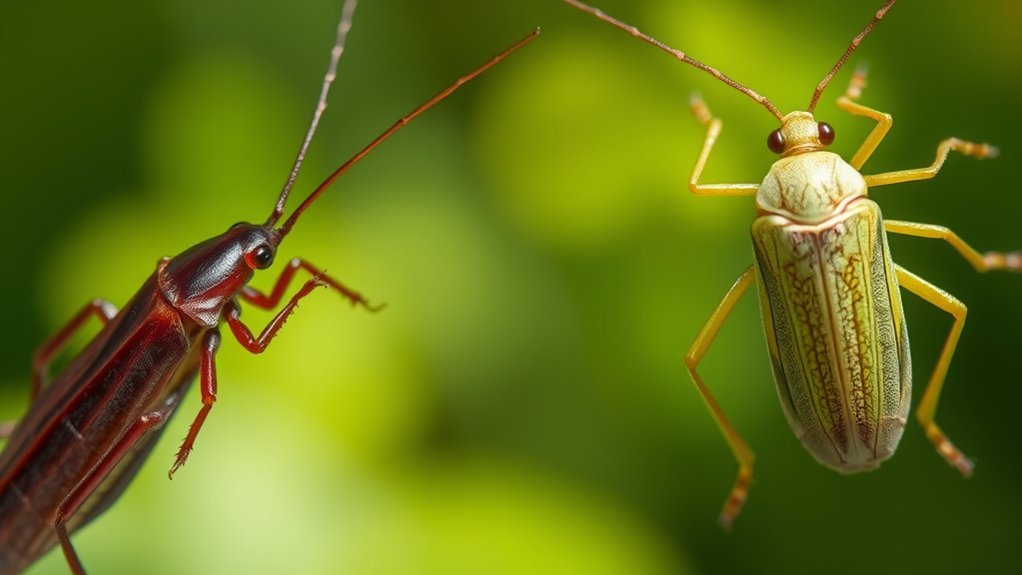
If you’ve ever heard someone in Florida or South Carolina refer to a “palmetto bug,” they’re simply talking about a cockroach — no separate species, no biological distinction. The term is purely colloquial, a regional nickname used throughout the southeastern U.S. to describe certain large cockroach species.
Every palmetto bug belongs to the family Blattodea, the same family as all cockroaches. Scientists don’t recognize “palmetto bug” as a classification — pest control specialists and locals coined it as a catch-all for bigger, outdoor-dwelling roaches like the American cockroach and smokybrown cockroach. Misidentification is common because several species share overlapping common names, making consultation with pest control professionals recommended for accurate species identification.
Which Cockroach Species Get Called Palmetto Bugs?
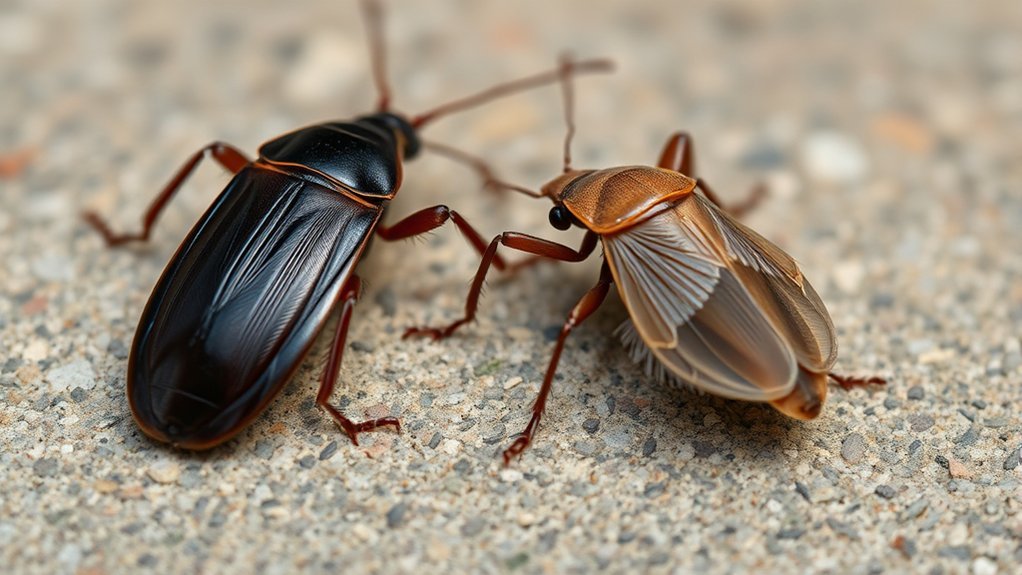
Not every cockroach earns the “palmetto bug” label — locals and pest control professionals reserve it for the larger, outdoor-dwelling species common to the Southeast.
The American cockroach (*Periplaneta americana*) tops the list. At up to 2 inches long with a reddish-brown body and yellow figure-eight head marking, it’s the species you’ll most often hear called a palmetto bug. The smokybrown cockroach (*Periplaneta fuliginosa*) also qualifies — it’s a strong flier with uniform dark brown coloring that gravitates toward tree holes, woodpiles, and gutters. The Florida woods roach (*Eurycotis floridana*) likely gave the term its origin, given its direct association with palmetto habitats along the Southeast coast. The oriental cockroach (*Blatta orientalis*) sometimes gets lumped in too, particularly in regional catch-all usage.
You won’t hear anyone call a German cockroach a palmetto bug. The label sticks exclusively to large, outdoor-linked species found near palmetto palms. Females of these species produce egg cases containing 14 to 16 eggs, making their reproduction cycle notably slower than that of the German cockroach.
How Big Is a Palmetto Bug Compared to a Regular Cockroach?
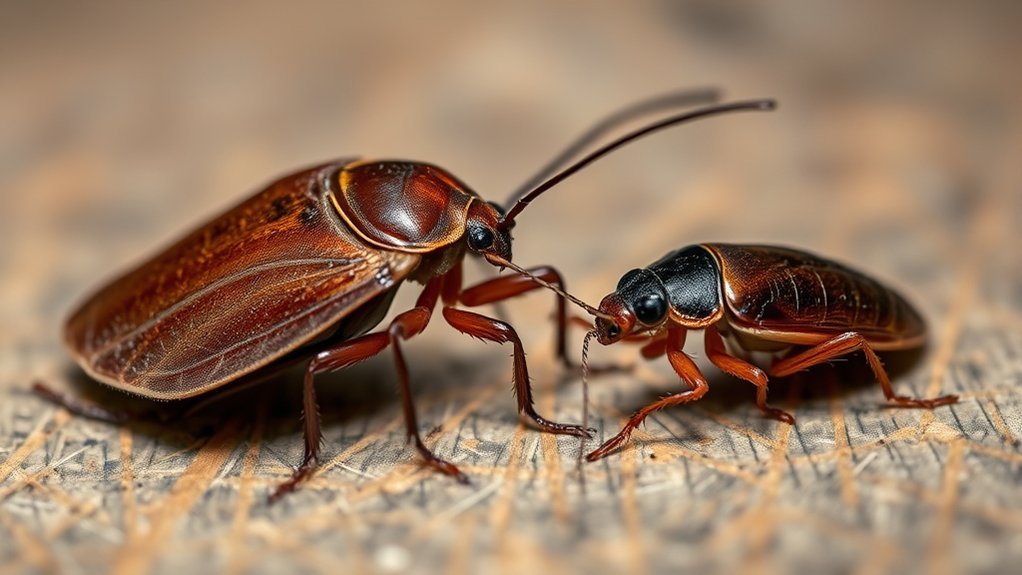
Size is one of the fastest ways to tell a palmetto bug apart from a typical household cockroach. Palmetto bugs, particularly the American cockroach, typically reach 1.5 to 2 inches in length, with some growing up to 3 inches in warm, humid regions like Florida and South Carolina. That’s roughly twice the length of an average household roach.
Regular cockroaches generally measure between 0.5 and 1.5 inches. The German cockroach, one of the most common indoor species, tops out at just half an inch, making it considerably smaller than a palmetto bug.
If you’re in the Southeast, you can expect palmetto bugs to skew even larger. Favorable climate conditions in southern states allow these insects to grow substantially bigger than their northern counterparts. So if you spot a roach that looks unusually large, there’s a good chance you’re dealing with a palmetto bug. Palmetto bugs also display a distinctive yellowish figure-eight pattern on the back of their heads, which can help you confirm the identification beyond size alone.
Can Palmetto Bugs Fly but Other Cockroaches Can’t?
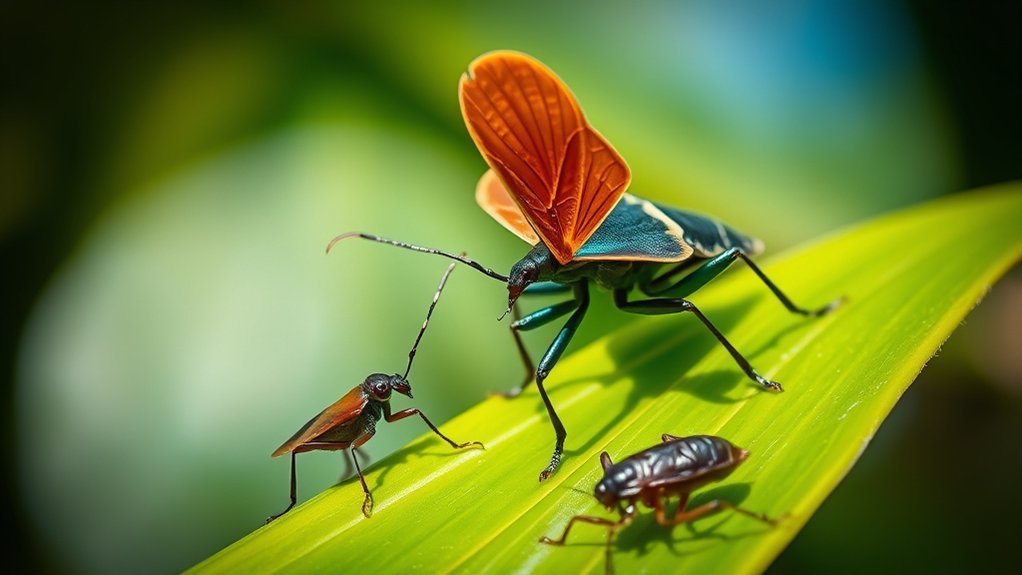
If you’ve ever seen a palmetto bug take flight, you might assume they’re unique among cockroaches for this ability, but that’s not quite accurate. Palmetto bugs, which are American cockroaches, do fly in short bursts or glide when startled, yet many other cockroach species also have functional wings. German cockroaches, smokybrown cockroaches, and other common household species are all technically capable of flight, though most rarely use their wings and prefer running instead. Palmetto bugs are identifiable by their reddish-brown color and the yellowish figure-eight pattern found on their heads.
Palmetto Bug Flight Ability
Palmetto bugs can fly, but they’re not exactly graceful in the air. They possess well-developed wings, yet they prefer gliding over sustained flight. You’ll notice they typically take to the air only when disturbed or when searching for food and water. Their flight is short-distance at best, making them poor flyers compared to what their wings suggest.
They’re most active during warmer months, and you might spot them flying toward your home in late fall as temperatures drop. They’re seeking warmth and shelter. Indoors, humidity and decaying vegetation attract them further.
Think of their flight as a survival tool rather than a primary mode of travel. They use it mainly to escape danger or relocate quickly, then return to crawling as their preferred movement. The American cockroach and palmetto bug are, in fact, the same species, sharing identical physical traits including these wings.
Other Cockroaches Flying Capability
While palmetto bugs do fly, they’re far from the only cockroach species with wings. Several other species are capable fliers you might encounter. Asian cockroaches can travel over 100 feet in a single flight, making them exceptionally strong fliers. Smoky brown cockroaches thrive in humid outdoor environments and fly regularly. Cuban cockroaches, with their light bodies and green coloring, are also very capable fliers. Australian cockroaches are high fliers often spotted indoors during summer.
Not every winged species takes to the air, though. German cockroaches have fully developed wings but rarely fly, preferring to run. Oriental cockroaches are completely flightless despite having wings. With brown-banded cockroaches, only males can fly — females cannot. So flight capability varies considerably across species.
Where Do Palmetto Bugs Hide Compared to Other Roaches?
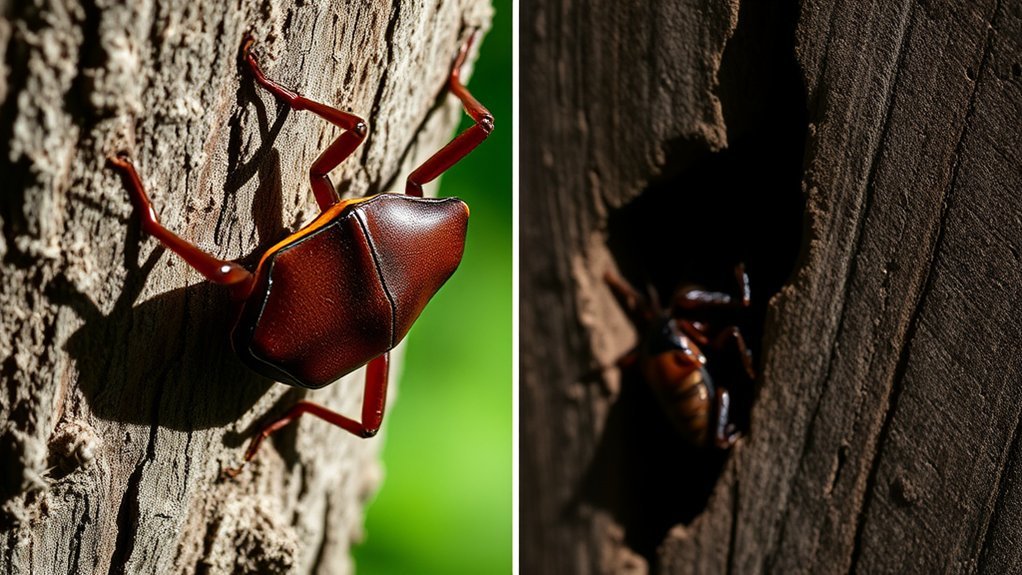
Because palmetto bugs thrive in warm, humid environments, they tend to hide in very different spots than other cockroach species. You’ll find them outdoors in mulch beds, palm trees, and woodpiles, while indoors they favor basements, crawl spaces, and utility rooms.
| Location | Palmetto Bug | German/Oriental Roach |
|---|---|---|
| Outdoor preference | Mulch, palm trees, woodpiles | Minimal outdoor activity |
| Indoor preference | Basements, crawl spaces | Kitchen cabinets, bathrooms |
| Moisture needs | High humidity, leaky drains | Moderate, near food sources |
| Attic/high areas | Yes, uses flying ability | Rarely accessed |
| Sewer presence | Occasional | Oriental roaches favor these |
Smoky brown roaches share palmetto bugs’ love of dark attics and tree hollows, making them the closest comparison. German roaches, however, stick near food in warm kitchens rather than damp basements. Palmetto bugs typically enter your home opportunistically during rain, unlike German roaches that infest indoors permanently.
Do Palmetto Bugs Make You Sick the Same Way Cockroaches Do?
Whether palmetto bugs hide in your crawl space or German roaches camp out near your kitchen, both pose the same serious health risks. You’re dealing with insects that carry E. coli, Salmonella, Staphylococcus, and Streptococcus on their bodies and feet.
The World Health Organization links cockroaches to 30 diseases, including cholera, dysentery, campylobacteriosis, and typhoid fever. Palmetto bugs specifically harbor the polio virus and spread pathogens through their droppings, saliva, and shed skins. Since they walk through sewers and garbage, they contaminate every surface they touch afterward.
Your allergy and asthma risk is identical regardless of species. About 40% of exposed people react to cockroach proteins found in droppings, body parts, and saliva. Symptoms include sneezing, itchy eyes, nasal congestion, skin rashes, and asthma attacks, especially in children. There’s no meaningful difference in how sick either pest can make you.
Palmetto Bug or German Cockroach: What’s the Difference?
When you compare the two side by side, the size difference alone makes identification straightforward—the German cockroach measures just 1/2 to 5/8 inch long, while the palmetto bug stretches up to 2 inches. You’ll also notice distinct coloring: the German cockroach is light brown with two dark stripes behind its head, whereas the palmetto bug sports a reddish-brown body with a yellowish figure-eight pattern. Beyond looks, their habits set them even further apart, since German cockroaches live exclusively indoors near food and water, while palmetto bugs prefer outdoor environments like palm trees, mulch, and sewers, only entering your home when they need moisture.
Size and Appearance Differences
If you’ve ever spotted a large, reddish-brown roach skittering across your floor, you know the instant alarm it triggers. Size and coloring instantly separate these two species.
| Feature | Palmetto Bug | German Cockroach |
|---|---|---|
| Length | 1.5–2 inches | ½–⅝ inch |
| Color | Reddish-brown/mahogany | Light brown or tan |
| Head Marking | Yellowish figure-eight | Two dark parallel stripes |
| Wings | Fully developed, functional | Present but less notable |
| Body Shape | Oval, flattened, large | Compact oval profile |
Palmetto bugs rank among the largest home-invading roaches, making their indoor presence dramatic. German cockroaches appear roughly half their size, sporting two dark stripes running from head to wings. You’ll identify palmetto bugs by their shiny bodies and distinctive pronotum markings, while German cockroaches favor compact forms suited for tight indoor cracks.
Habitat and Behavior Contrasts
Physical differences only tell part of the story — where these roaches live and how they behave reveals just as much about what you’re dealing with.
Palmetto bugs thrive outdoors in mulch, woodpiles, tree holes, and palm trees, preferring temperatures between 82–91°F with humidity above 70%. They don’t choose to enter your home — they wander in through plumbing gaps, foundation cracks, or sewer connections, typically triggered by heavy rain or cold weather. A single indoor sighting usually means an occasional wanderer, not an infestation.
German cockroaches are a different problem entirely. They live exclusively indoors, hiding behind appliances, under sinks, and inside cabinets. They reproduce rapidly, and if you’re spotting them during daylight, you’re already dealing with a serious, established infestation.
Droppings, Odor, and Egg Cases That Signal Palmetto Bugs
Spotting a palmetto bug in your home is unsettling, but 3 key signs—droppings, egg cases, and odor—can tell you far more about the severity of your problem than a single sighting ever could.
Droppings look like small dark cylinders, roughly 2-3mm long, with ridged sides and blunt ends. You’ll find them clustered in corners or along edges. Smear marks—black or reddish-brown streaks left by liquified feces—appear on walls near bathrooms and kitchens, revealing active movement patterns.
Egg cases, called oothecae, are tan or brown capsules measuring up to half an inch long. Each one holds 14 to 16 eggs. Multiple cases mean active reproduction is already underway.
A strong, musty odor, caused by pheromone release, intensifies in confined spaces and signals a significant infestation. When droppings, smear marks, egg cases, and odor all appear together, you’re dealing with a serious problem requiring immediate action.
Frequently Asked Questions
How Long Do Palmetto Bugs Typically Live Compared to Other Cockroaches?
Palmetto bugs typically live six months to over a year. You’ll find that’s similar to German cockroaches at 12 months, while Oriental cockroaches live only six months, making them the shortest-lived species.
Are Palmetto Bugs More Common in Certain U.S. States Than Others?
Yes, you’ll find palmetto bugs most commonly in southeastern states like Florida, Alabama, Georgia, and Mississippi. They thrive in these warm, humid coastal regions, and you’ll rarely encounter the term used outside the American Southeast.
What Attracts Palmetto Bugs Indoors More Than Other Cockroach Species?
You’ll find that palmetto bugs prefer warm, humid environments more than other cockroach species do. They’re especially drawn indoors by moisture sources like basements, crawl spaces, and sewers, plus food contamination opportunities in kitchens and dining areas.
Can Palmetto Bugs Survive Cold Winters Unlike Other Cockroach Species?
You’ll find that palmetto bugs can’t survive temperatures below 25°F, just like other cockroach species. However, they’re better adapted to mild Florida winters, allowing them to persist outdoors year-round unlike northern cockroach species.
How Fast Do Palmetto Bugs Reproduce Compared to German Cockroaches?
Palmetto bugs reproduce much slower than German cockroaches. You’re looking at a manageable growth rate compared to German cockroaches, which can produce up to 400 offspring in a single female’s lifetime, making infestations harder to control.
Conclusion
Whether you’re spotting a massive flying roach in Florida or finding smaller ones in your kitchen, you’re dealing with cockroaches either way. The term “palmetto bug” doesn’t change what you’ve got—it’s still a pest that spreads bacteria and needs immediate attention. Once you’ve identified the species, you can choose the right treatment. Don’t let the name fool you; act fast before your roach problem grows beyond control.
