
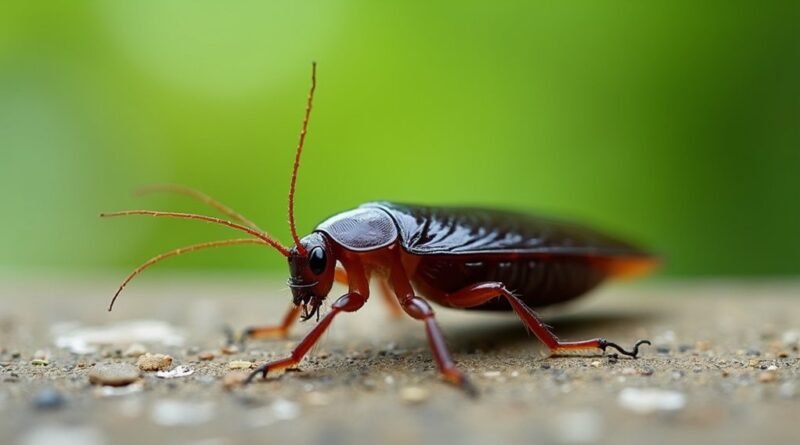
Deadly Cockroach Species: Are Any Cockroaches Dangerous to Humans?
No cockroach species is inherently deadly, but they’re still dangerous to your health. Common species like German and American cockroaches carry over 33 types of bacteria and can spread diseases like salmonella, typhoid fever, and hepatitis A. Their droppings and shed skin trigger allergies and asthma, especially in children. You don’t need a rare or exotic species to face serious health risks—the ones already in your home can cause real harm, and there’s much more you should know.
Key Takeaways
- No cockroach species is directly deadly to humans, but they pose serious health risks through disease transmission, allergies, and bacterial contamination.
- Cockroaches carry over 33 bacteria types and 7 pathogens, transmitting diseases like salmonellosis, typhoid fever, and hepatitis A.
- Cockroach allergens are the leading asthma trigger in inner-city children, with one in five U.S. children showing severe sensitivity.
- German, American, and Australian cockroaches are most dangerous due to rapid reproduction and potential to reach harmful population densities.
- Cockroaches rarely bite humans, only doing so in extreme infestations with scarce food sources, primarily in confined spaces.
Are Cockroaches Actually Dangerous to Humans?
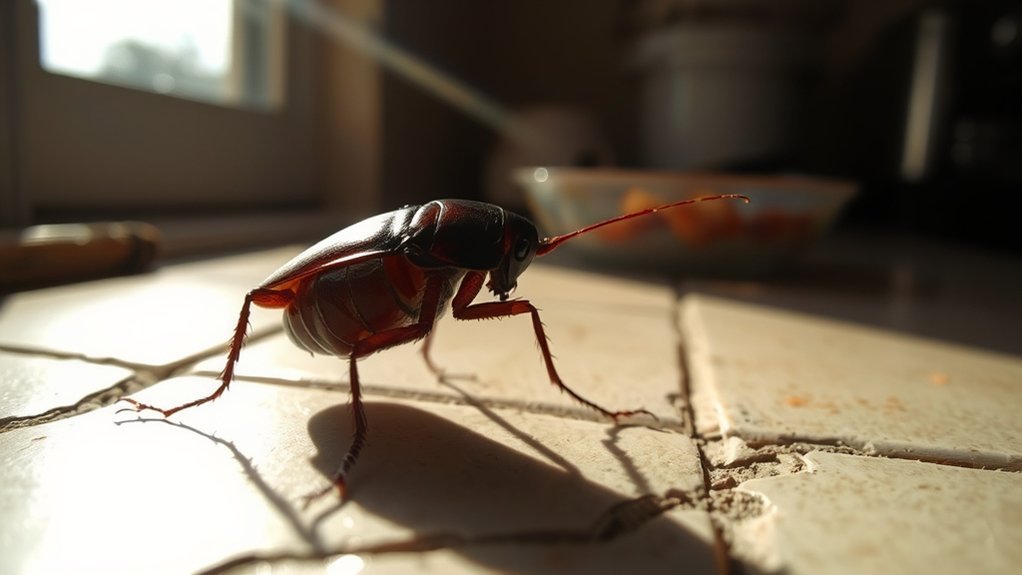
Cockroaches aren’t just unsettling to look at — they’re genuinely dangerous to your health. These insects carry 33 types of bacteria, six varieties of parasitic worms, and seven types of pathogens. They transmit disease-causing bacteria, viruses, fungi, and parasites through direct contact, regurgitation, and defecation, making them highly effective mechanical vectors.
When cockroaches vomit and defecate on your food, they deposit harmful bacteria like salmonella, E. coli, staphylococcus, and streptococcus. This creates a direct pathway to serious illnesses, including food poisoning, dysentery, cholera, and typhoid fever.
Beyond bacterial transmission, their shed exoskeletons, saliva, feces, and body parts release allergenic proteins into your air. Inhaling these fragments triggers allergic reactions and asthma attacks, particularly in children. The World Health Organization even classifies cockroaches as “unhygienic scavengers in human settlements,” confirming that their presence represents a serious public health threat. Beyond the physical health risks, living with an infestation can cause significant stress and anxiety, adding a serious psychological toll on top of the dangers cockroaches already pose.
How Serious Does a Cockroach Problem Have to Get to Harm You?
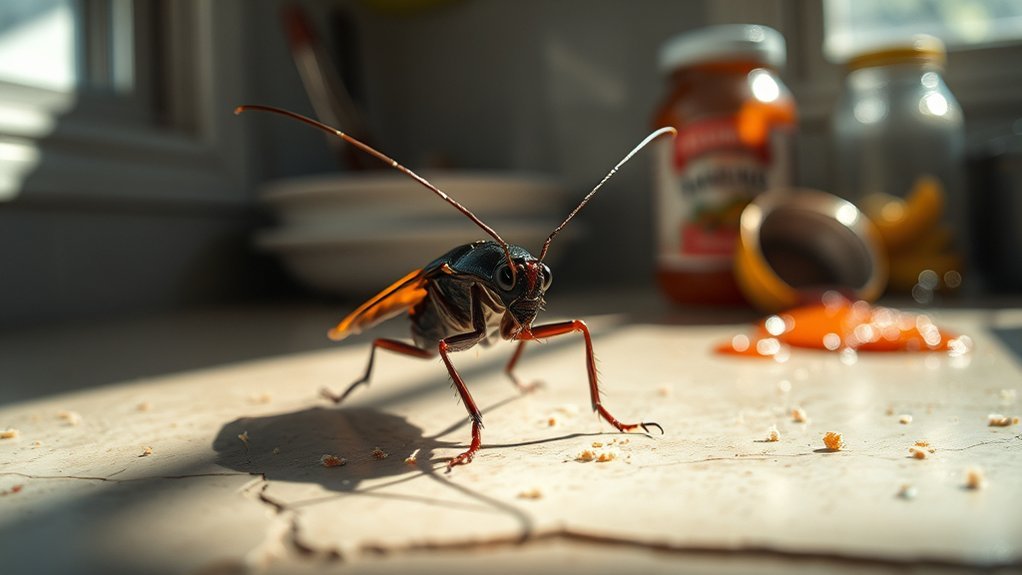
You might assume cockroaches only become dangerous once an infestation spirals out of control, but even a small population poses real health risks through bacterial contamination and allergen exposure. However, biting represents a threshold that requires a truly extreme infestation, where overcrowding and food scarcity drive cockroaches to gnaw on human fingernails, eyelashes, and skin. As their population grows, so does the aggression, the contamination, and the likelihood that you’ll face consequences beyond a simple nuisance. Cockroaches are known carriers of serious illnesses, as they can spread typhoid, cholera, and dysentery through contact with food and surfaces in your home.
Population Threshold for Biting
While cockroach bites are extraordinarily rare, they do occur when infestations reach extreme population densities that exhaust available food sources. Once populations outgrow their normal resources, they’ll start foraging on humans. You’re most at risk when these conditions exist:
- Overwhelming numbers force cockroaches beyond typical scavenging behaviors
- Confined spaces, like ships, amplify density to dangerous biting thresholds
- No alternative food sources remain accessible to sustaining populations
- American, German, or Australian species reach critical reproductive densities
History’s most documented biting cases occurred aboard ships, where sailors actually wore gloves to protect their fingers. German cockroaches pose the highest risk due to their reproduction rates, while Australian cockroaches’ proximity to dwellings increases your exposure. Infestations typically get controlled before reaching these thresholds.
Cockroaches are nocturnal creatures, meaning the greatest risk of being bitten occurs while you are asleep and unaware of their presence.
Food Scarcity Triggers Aggression
Reaching the population threshold discussed above is only part of the picture — food scarcity is what actually pulls the trigger. When cockroaches exhaust their normal food sources, they’re forced to forage on unconventional targets, including you. Your fingernails, eyelashes, feet, and hands become viable options once garbage and exposed food disappear.
Historical shipboard cases make this dynamic clear. Sailors on infested vessels wore gloves to protect their fingers because isolated populations had consumed available food supplies and turned to human tissue. That’s not theoretical — it happened repeatedly with American and Australian cockroach species.
You’re not their preferred meal. You’re their last resort. But when populations grow unchecked and food runs out, that distinction stops mattering entirely. Beyond bites, high-density infestations also create serious hygiene and property concerns that compound the risks of an uncontrolled population.
Infestation Levels and Risk
Most people assume cockroaches only become dangerous once they’ve completely overrun a home, but that’s wrong. Even minor infestations put you at risk. Here’s what a small cockroach presence can do:
- Spread bacteria like salmonella and E. coli onto your food and prep surfaces
- Transfer pathogens through body contact, regurgitation, and defecation
- Trigger allergic reactions from shed skins and feces, even at low population levels
- Worsen asthma symptoms, causing 3.4 times more hospitalizations in allergic children
German cockroaches reproduce rapidly in warm, humid spaces like your kitchen and bathroom, meaning a small problem escalates fast. You don’t need a full-blown infestation to suffer real health consequences. Any cockroach presence near your living space demands immediate attention. Professional pest inspections are crucial for identifying hidden contamination areas before the problem grows beyond control.
Which Cockroaches Are Most Likely to Bite You?
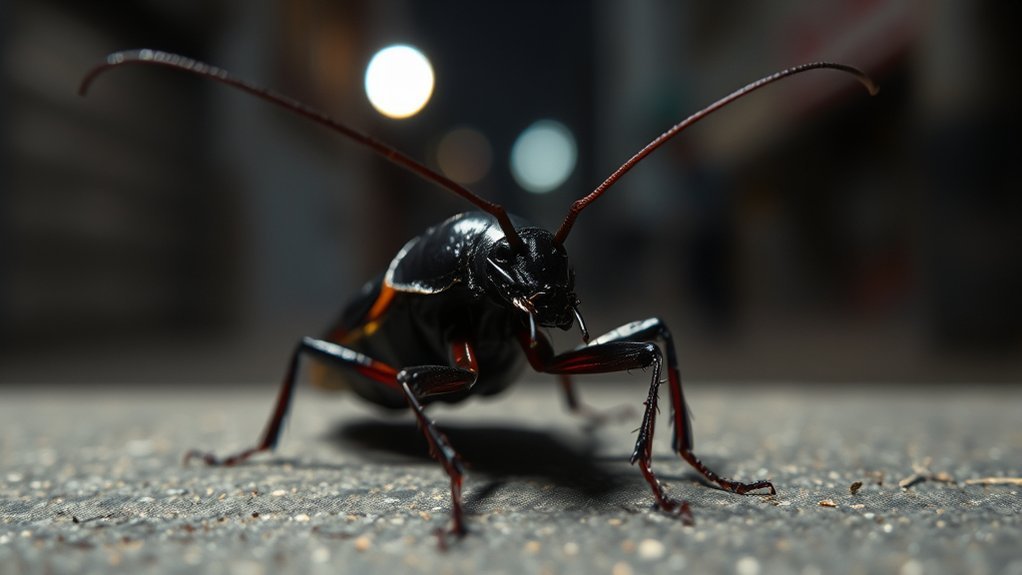
Though most cockroach species avoid humans, four types stand out as the most likely to bite you: the American, Australian, German, and Oriental cockroach.
The American cockroach (*Periplaneta americana*) poses the greatest risk, particularly on ships, where it’ll gnaw fingernails, eyelashes, feet, and hands when food runs scarce. The Australian cockroach (*Periplaneta australasiae*) behaves similarly in large ship infestations, targeting human skin once it exhausts normal food sources. Sailors once wore gloves for protection against both species.
In homes, the German cockroach is your most likely culprit. It breeds rapidly, and dense populations will nibble your fingernails, hands, and face overnight during shortages. The Oriental cockroach, though slower-moving, lives close to humans near food and trash, and it’ll use its mandibles on exposed skin when desperate.
All four species bite under the same condition: extreme infestation with dwindling food.
What Diseases Can Cockroaches Spread to Humans?
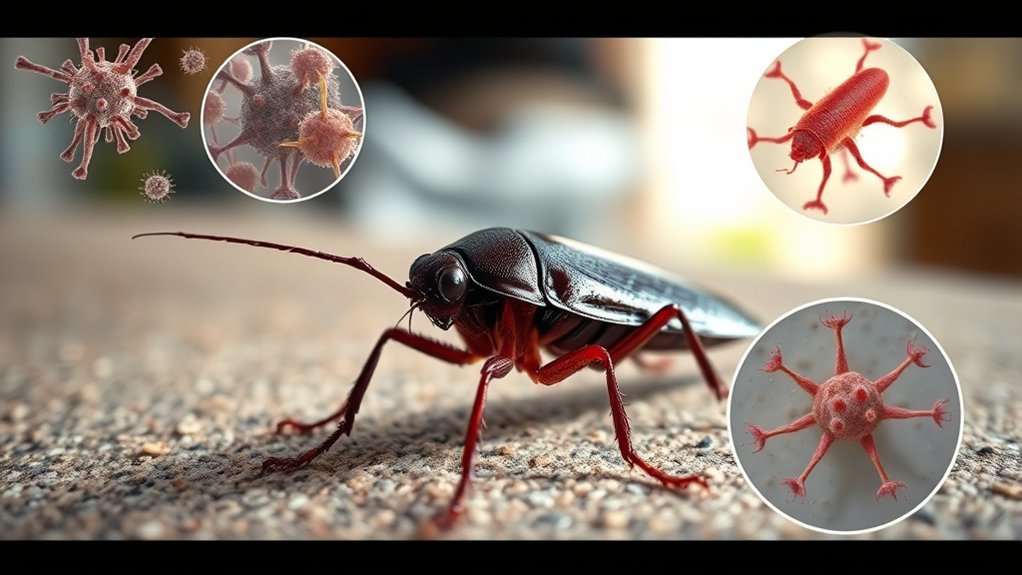
Cockroaches don’t just bite—they carry diseases that can land you in the hospital. These insects harbor over 33 types of bacteria, 7 pathogens, and 6 parasitic worms, transferring them directly onto your food and surfaces.
Cockroaches carry over 33 bacteria types, 7 pathogens, and 6 parasitic worms—depositing them directly onto your food and surfaces.
Here are four serious diseases cockroaches can spread to you:
- Salmonellosis – German cockroaches transfer Salmonella through their legs, feces, and body contact, causing fever, diarrhea, and cramps within 12–72 hours.
- E. coli infections – About 25% of cockroach-carried microorganisms are food-borne pathogens like E. coli O157:H7, spreading through droppings near food prep areas.
- Typhoid fever – Cockroaches carry Salmonella Typhi, which can cause liver damage, internal bleeding, and gut perforations.
- Dysentery – Shigella dysenteriae from cockroach feces produces shiga toxins, triggering severe, potentially epidemic-level illness.
Beyond bacteria, cockroaches also spread hepatitis A, rotavirus, and polio, making pest control a genuine health priority.
Can Cockroaches Trigger Allergies and Asthma?
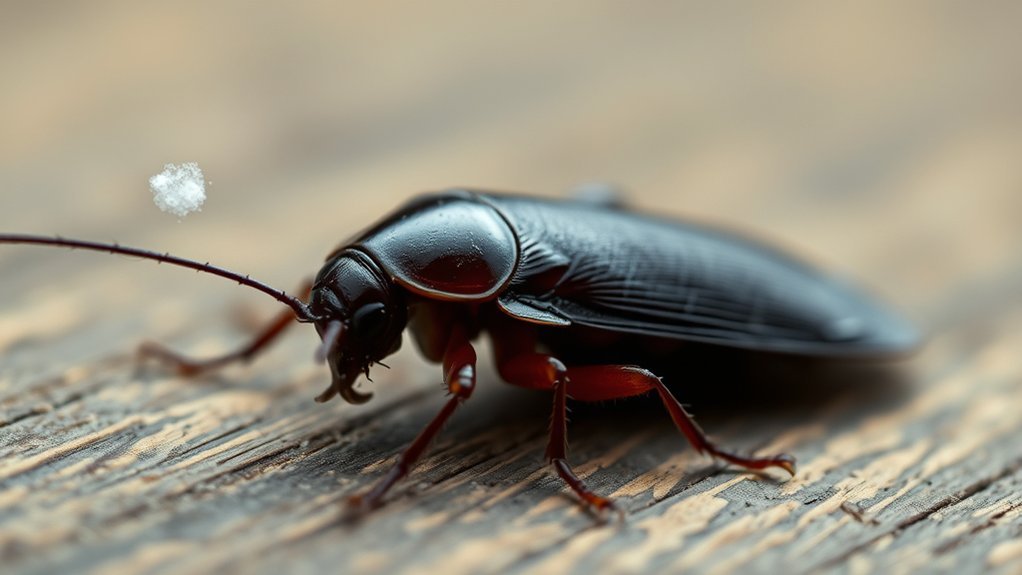
Beyond spreading infections, cockroaches can also wreck your respiratory health. Their droppings, saliva, cast skins, and decomposing bodies contain proteins that trigger allergic reactions and asthma attacks. When you vacuum carpets or disturb furniture, these particles become airborne and enter your nasal and oral cavities, causing inflammation and epithelial damage.
You’ll likely experience wheezing, chest tightness, nasal congestion, itchy skin, and shortness of breath. Severe reactions occur most often in already-sensitized individuals. Cockroaches are actually the number one allergen triggering asthma in inner-city children, and one in five U.S. children is severely sensitive to them.
You’re not safe from exposure either—detectable allergen levels exist in 63% of U.S. homes. Lower-income urban communities face disproportionately higher risks, with cockroach allergens greatly worsening asthma morbidity among African American and Hispanic populations. Early childhood exposure alone can lead to repeated wheezing and long-term asthma development.
How to Get Rid of Cockroaches Before They Become a Health Risk
Since cockroaches become a serious health risk fast, your best defense is stopping them before they settle in. Start with sanitation and moisture control, then move to targeted treatments if needed.
Cockroaches become a health risk fast — your best defense is prevention through sanitation and moisture control.
Keep your home unattractive to cockroaches by focusing on these key habits:
- Eliminate food sources — store food in airtight containers, wipe counters after meals, and never leave dirty dishes overnight.
- Control moisture — fix leaks immediately, dry spills fast, and run exhaust fans in kitchens and bathrooms.
- Seal entry points — close cracks in walls, around windows, and doors to block access.
- Use traps and baits — place sticky traps under sinks, behind the fridge, and use bait stations so roaches carry poison back to the colony.
If infestations persist, adopt an Integrated Pest Management approach, prioritizing non-chemical methods before using low-toxicity baits.
Frequently Asked Questions
Can Cockroaches Bite You While You Sleep?
Yes, cockroaches can bite you while you sleep, but it’s rare. They’re nocturnal and active at night, yet they’ll prefer other food sources over you unless they’re in extreme infestations.
How Long Can Cockroaches Survive Without Food or Water?
Cockroaches can survive up to a month without food, but you’ll find they can’t last more than a week without water. Dry conditions’ll kill them faster than starvation ever will.
Do Cockroaches Pose Risks to Pets as Well as Humans?
Yes, cockroaches do pose risks to your pets. They’ll spread bacteria like salmonella and E. coli, trigger allergic reactions, and in severe infestations, they’ll even bite your sleeping pets on their paws and ears.
Can Cockroach Bacteria Survive on Surfaces After Extermination?
Yes, cockroach bacteria can survive on surfaces after extermination. Their feces and body fragments deposit pathogens like Salmonella and E. coli, which you’ll find persisting on surfaces long after you’ve eliminated the infestation.
Are Cockroach Infestations More Dangerous for Children Than Adults?
Yes, cockroach infestations are more dangerous for your children than for you. Kids face higher asthma risks, more hospital visits, and their developing immune systems can’t handle allergens and pathogens as effectively as adults can.
Conclusion
Cockroaches aren’t just creepy—they’re a genuine health threat you shouldn’t ignore. They can spread bacteria, trigger allergies, and even bite you in severe infestations. The longer you let them stick around, the greater your risk of exposure to the diseases they carry. Don’t wait until the problem spirals out of control. Take action at the first sign of an infestation to protect yourself and everyone in your home.
