
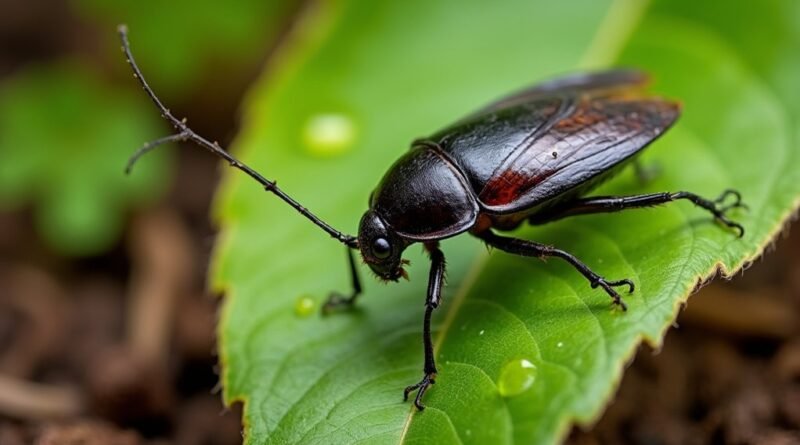
Hissing Cockroach: Everything You Need to Know
The Madagascar hissing cockroach is one of nature’s most unique insects, and it’s worth knowing everything about it. You’ll find it’s a large, wingless, shiny brown species native to Madagascar’s tropical forests. It can grow up to 3 inches long and produces hisses reaching 90 decibels by forcing air through specialized abdominal spiracles. It thrives in warm, humid environments and even makes a great beginner pet. Stick around, and you’ll discover just how extraordinary this creature truly is.
Key Takeaways
- The Madagascar hissing cockroach is a large, wingless species reaching 3 inches, native to Madagascar’s tropical forests, where it breaks down decaying matter.
- Males are distinguished by pronounced pronotum bumps and thicker antennae, while females give birth to 30-60 live nymphs through ovoviviparous reproduction.
- They produce sounds up to 90 decibels by forcing air through abdominal spiracles, with four distinct hiss types serving different communicative purposes.
- Colonies are organized under a dominant male, with members huddling communally, foraging nocturnally, and relying on intact forest ecosystems for survival.
- As pets, they require secure enclosures, 90-95°F temperatures, 60% humidity, and a diet of fruit and vegetable scraps including citrus.
What Is a Hissing Cockroach?
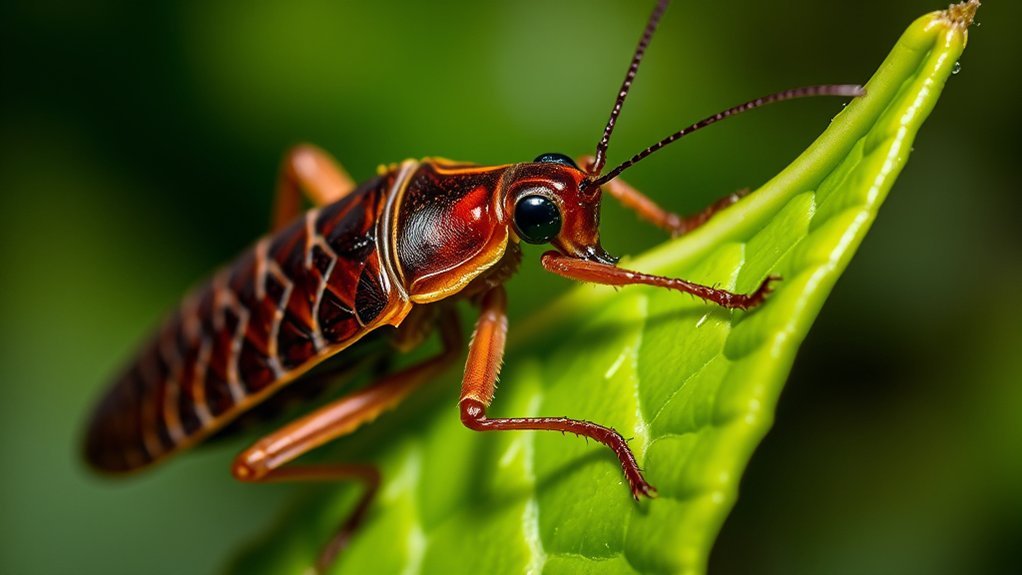
The Madagascar hissing cockroach is one of the largest cockroach species in the world, growing up to 3 inches long at maturity. Its scientific name is *Gromphadorhina portentosa*, and it belongs to the family Blaberidae, order Blattodea, and class Insecta.
The Madagascar hissing cockroach, scientifically known as *Gromphadorhina portentosa*, ranks among the world’s largest cockroach species, reaching up to 3 inches long.
You’ll recognize this insect by its shiny brown, oval-shaped body. Unlike many cockroach species, it’s completely wingless. Males are easy to distinguish from females — they’re larger, sport pronounced bumps on their pronotum, and have thicker, hairier antennae.
What makes this cockroach truly unique is its ability to hiss deliberately, a trait no other insect shares. It forces air through modified abdominal spiracles to produce sounds reaching up to 90 decibels — loud enough to hear from 12 feet away.
Native to Madagascar, this species thrives in warm climates and has become a popular subject in scientific study and exotic pet keeping. It is also an excellent climber, capable of scaling smooth vertical surfaces with ease.
Where in the World Hissing Cockroaches Come From
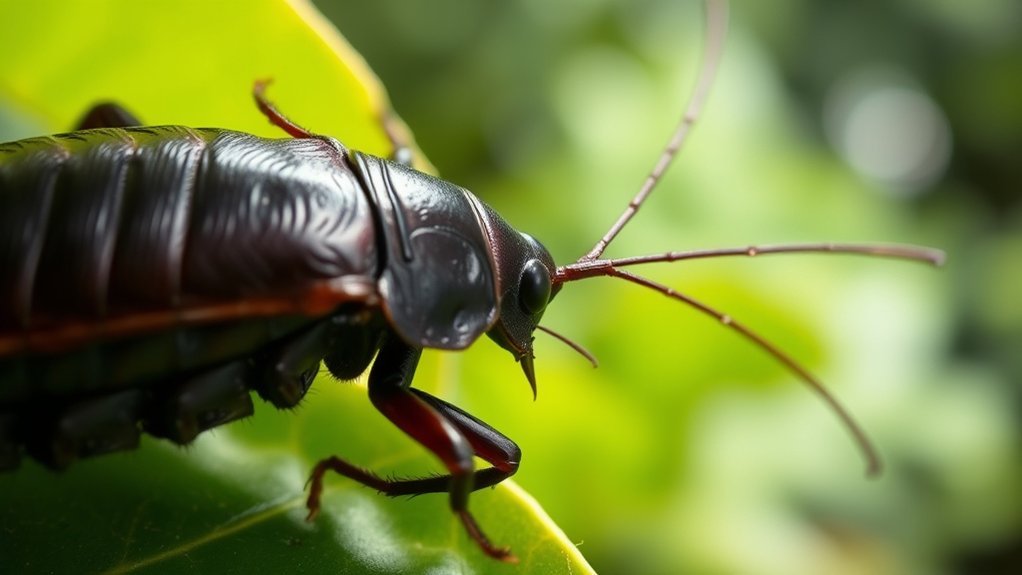
If you’re curious about where hissing cockroaches come from, you can trace their origins to a single place: the island of Madagascar, off the eastern coast of Africa. You’ll find them living in tropical forests, where they shelter and breed inside hollow, rotting logs surrounded by leaf litter. These dense, humid forest environments supply everything the species needs, from decaying organic matter to eat to the protective cover that keeps their colonies thriving. In these environments, they function as detritivores, breaking down decaying matter and recycling essential nutrients back into the soil.
Madagascar’s Forest Origins
Nestled off the east coast of Africa, Madagascar is the fourth largest island in the world and the only place on Earth where hissing cockroaches naturally exist. Within this island nation’s tropical and subtropical forests, you’ll find these insects thriving beneath leaf litter, rotting logs, and forest floor detritus. They depend on the warm, humid conditions Madagascar’s rainforests provide, feeding on decaying vegetation as detritivores and recycling nutrients back into the soil. This makes them essential contributors to their ecosystem’s decomposition processes. While the IUCN currently lists them as least concern, deforestation remains a serious long-term threat. Their survival depends on intact forest ecosystems, meaning the health of Madagascar’s forests directly determines the future of this remarkable species. You can support rainforest preservation by purchasing shade-grown coffee and certified wood products.
Hollow Logs and Colonies
Within those dense Madagascar forests, hollow and rotting logs serve as the cockroach’s most essential real estate. You’ll find them tucked into crevices, drawing security and humidity from the decaying wood that also doubles as their food source. They’ll forage through rotten logs and leaf litter, scavenging fallen fruit and decaying plant matter throughout the night before retreating to their hollow shelters by day.
These roaches don’t live alone. They organize themselves into large family colonies, each dominated by a single male who asserts his rank through stilting up on his toes. You’ll notice communal huddling throughout forest pockets, with groups sheltering collectively under logs and rocks. This tight-knit social structure keeps colonies thriving within Madagascar’s tropical lowland rainforests. Madagascar is home to twenty hissing cockroach species, making it a uniquely concentrated hub for these remarkable insects.
Native Habitat Characteristics
These roaches thrive in Madagascar’s warm, humid coastal forests, where they burrow into rotting logs and leaf litter. You won’t find them adapting well to cooler, temperate climates since they depend on year-round tropical heat and high humidity. They’re detritivores, breaking down decaying plant matter and recycling nutrients back into the forest ecosystem, making them a genuinely valuable part of their native environment. Their diet consists mainly of fruit and plant materials, and at the zoo they are commonly fed apples and other fruits.
How the Hissing Cockroach Produces Its Signature Sound
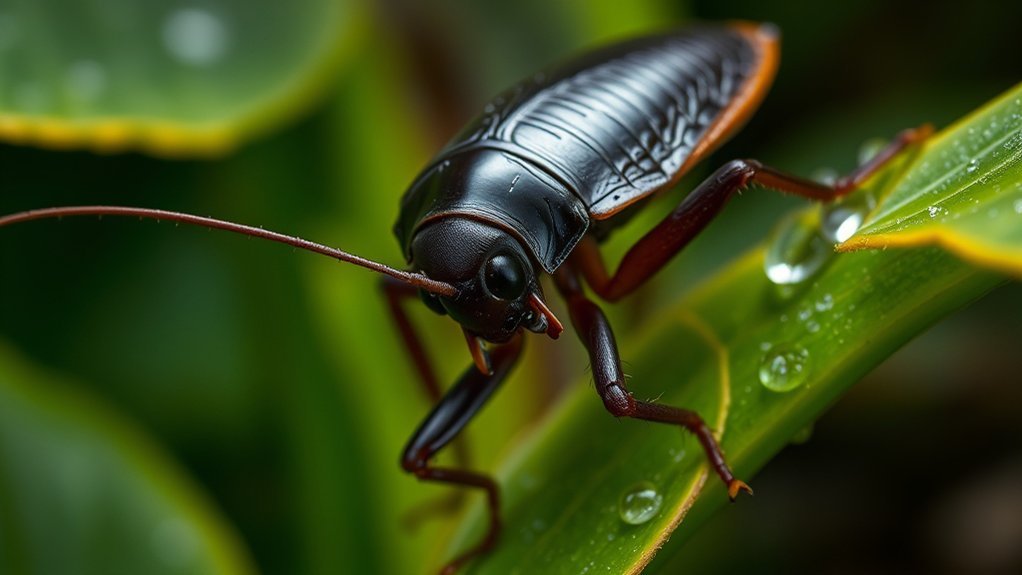
When you pick up a Madagascar hissing cockroach, it forces air through specialized spiracles — modified breathing pores along its abdomen — to produce that distinctive hiss. You’ll notice the insect uses sharp abdominal contractions to expel air rapidly, mimicking the respiratory sound production seen in vertebrates. Depending on the situation, you’re actually hearing one of three distinct hiss types: an alarm hiss, an aggression hiss between competing males, or a courtship hiss during mating rituals.
Spiracle Air Expulsion
Tiny pores called spiracles line the sides of the hissing cockroach‘s abdomen, and they’re responsible for producing its iconic sound. These modified abdominal spiracles act as breathing pores embedded in the hardened exoskeleton. When the cockroach forcibly contracts its abdomen, it expels air through these openings, creating the distinctive hiss you hear.
Unlike most insects that rub body parts together or vibrate membranes, the hissing cockroach uses its respiratory system directly for sound production. Think of it as similar to how you’d push air forcibly through your nostrils — except the cockroach has multiple spiracle pairs working simultaneously, amplifying the volume considerably. Air travels in one direction, drawing into the thoracic spiracles and expelling outward through the abdominal ones, driving that audible, pressurized hiss.
Unique Hiss Types
Although the hissing cockroach produces one signature sound, it doesn’t use that hiss for just one purpose. You’ll actually find four distinct hiss types, each serving a specific role within the colony.
When disturbed by sudden light or rough handling, cockroaches produce an alarm hiss, warning nearby colony members of danger. Males locked in territorial disputes emit an aggression hiss, with frequency and tone reflecting their dominance ranking. During reproduction, males produce a courtship hiss to attract females — acoustically distinct from the other types. Finally, the intraspecific communication hiss facilitates general social interaction, conveying information about hierarchy and status.
Both males and females perform the alarm hiss, while the remaining three types are exclusive to males. Recording and analysis can reliably distinguish between all four.
The 4 Types of Hisses and What Each One Means
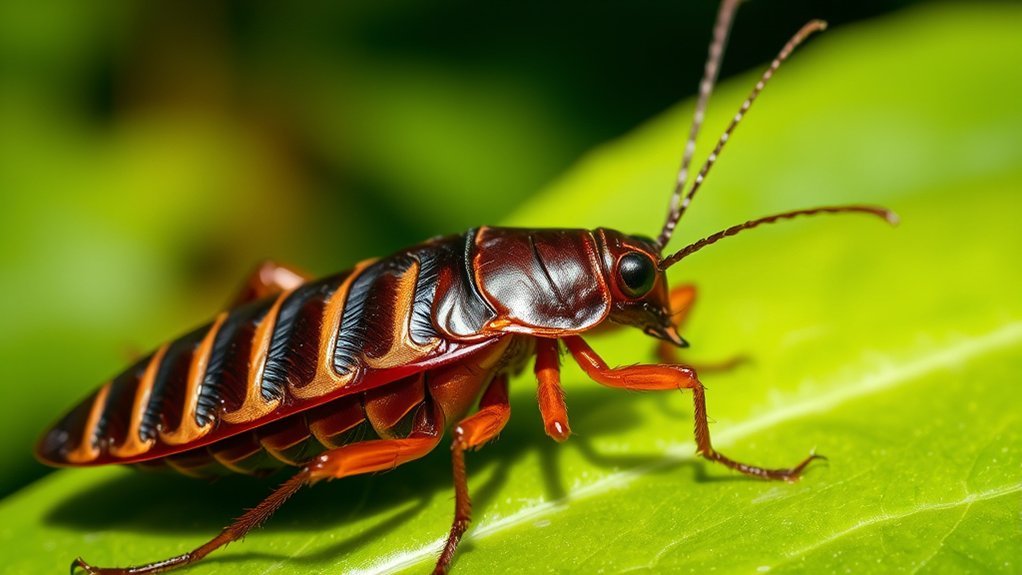
The Madagascar hissing cockroach produces four distinct hisses, each serving a specific purpose. Understanding these hisses helps you interpret their behavior more accurately.
The disturbance hiss is their primary defense, frightening predators by sounding like a rattlesnake. The female-attracting hiss occurs exclusively when a male connects with a female during mating. The aggressive hiss settles territorial disputes between competing males over breeding rights. A fourth general hiss also occurs during casual interactions.
| Hiss Type | Who Produces It |
|---|---|
| Disturbance Hiss | Both sexes |
| Female-Attracting Hiss | Males only |
| Aggressive Hiss | Males only |
All hisses are produced by forcefully expelling air through abdominal spiracles — no wings required, since they don’t have any.
You’ll notice males hiss more frequently overall, since two of the four types are exclusive to them. Females primarily hiss defensively when threatened.
How Hissing Cockroaches Form Colonies and Establish Hierarchy
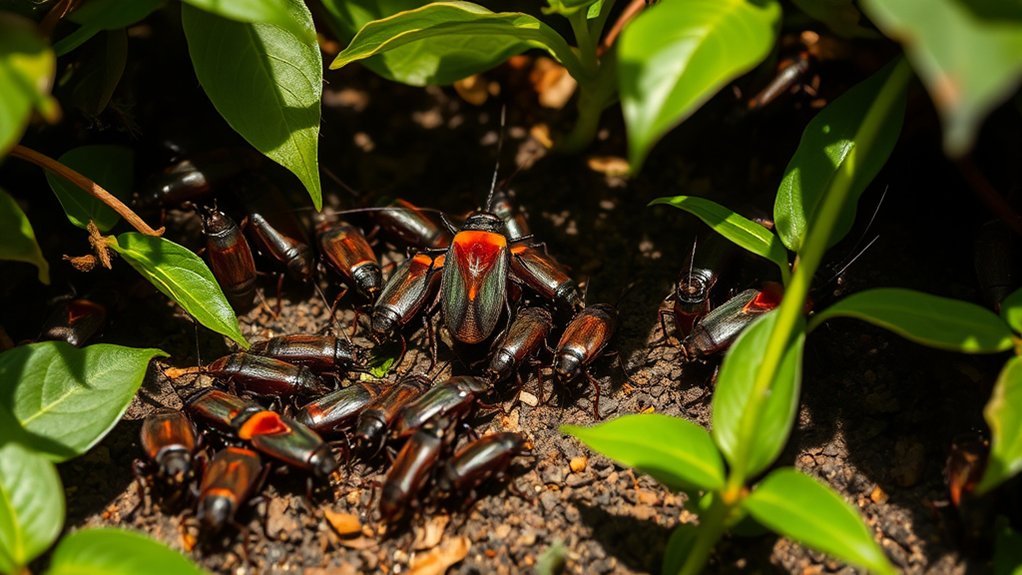
When setting up a Madagascar hissing cockroach colony, you’ll want to start with a large container like a Tupperware tub, coating the rim with Vaseline or oil to prevent escapes. Stock it with egg cartons for hiding spots, and maintain temperatures between 90-95°F with 60% humidity to encourage breeding.
Your colony thrives when it contains all sexes and ages, creating continuous reproduction cycles. Here’s what you’ll observe as hierarchy develops:
- Males aggressively clash, producing combat hisses that echo through the container to establish dominant rankings.
- Winning males gain mating access, using courtship hisses to approach females within the established dominance order.
- Nymphs emerge at ¼ inch, maturing through eight molts over three months while gradually integrating into the social structure.
Females reproduce two to three times yearly, keeping your colony self-sustaining with steady resources and consistent warmth.
The Hissing Cockroach Life Cycle From Birth to Maturity
Once your colony establishes its hierarchy, you’ll see the hissing cockroach’s fascinating life cycle play out right before you. Females are ovoviviparous, meaning they carry eggs internally until hatching, then push out 30–60 live nymphs after a roughly 60-day gestation.
Nymphs emerge as first instars—ghostly white, soft-bodied, and fully formed, resembling miniature adults. Their exoskeletons harden and darken within hours. Parents and offspring maintain close physical contact during this vulnerable stage.
Freshly born nymphs emerge ghostly white and soft, hardening into miniature adults within hours of entering the world.
Development follows incomplete metamorphosis across six nymphal instars. You’ll notice nymphs can’t hiss until the fourth instar. Handle them carefully during molting, since ecdysis is a delicate process. Mites often transfer between individuals during molts, naturally aiding cleanup.
Nymphs reach sexual maturity in approximately five to seven months. Adults then grow to 5–7.5 cm and can live two to five years in captivity—a remarkably long lifespan for cockroaches.
Can You Keep a Hissing Cockroach as a Pet?
Surprisingly, hissing cockroaches make excellent pets, ranking among the top beginner invertebrates for kids and classrooms alike. Their gentle nature, sturdy build, and clean habits make them ideal for hands-on interaction. Before you bring one home, though, check your local regulations, as they’re banned in some areas.
Here’s what you’ll need to get started:
- A secure enclosure — Use a glass or plastic container with a tight lid, since they’ll climb smooth surfaces and escape easily.
- The right environment — Keep temperatures above 70°F using an under-tank heat mat, and mist daily to maintain humidity.
- Simple feeding — Toss in fruit and vegetable scraps, including citrus like oranges for vitamin C.
When handling them, expect a startling hiss — it’s harmless air expelled through their breathing tubes. Their spiky legs grip firmly but won’t injure you.
Frequently Asked Questions
Are Hissing Cockroaches Dangerous or Venomous to Humans?
Hissing cockroaches aren’t dangerous or venomous to you. They don’t bite, sting, or secrete toxins. You might experience mild allergens from mold on their bodies, so wash your hands after handling them.
How Long Do Hissing Cockroaches Typically Live in Captivity?
Your hissing cockroach will typically live 3-5 years in captivity, though some specimens have reached 6 years. With proper diet, humidity, warmth, and group housing, you’ll maximize their lifespan to its fullest potential.
Do Hissing Cockroaches Carry Diseases or Harmful Bacteria?
Yes, hissing cockroaches can carry harmful bacteria like Salmonella, E. coli, and Staphylococcus. They’ll also spread molds and fungi through their feces, potentially triggering allergic reactions or respiratory issues if you’re exposed.
Can Hissing Cockroaches Survive Cold Temperatures Outside Their Native Habitat?
Hissing cockroaches can’t survive prolonged cold temperatures outside their native habitat. They need nights above 50ºF and days in the mid-60s°F minimum. Babies tolerate cold even less effectively than adults do.
How Do Hissing Cockroaches Differ From Common Household Pest Cockroaches?
You’ll find hissing cockroaches differ greatly from household pests—they’re larger, wingless, native to Madagascar’s forests, and they hiss when threatened. Household pests like German or American roaches don’t hiss and actively invade homes seeking food and water.
Conclusion
Whether you’re fascinated by their unique biology or considering one as a pet, hissing cockroaches are truly remarkable creatures. You’ve now learned how they communicate, form colonies, and develop through their life cycle. These insects prove that even the world’s most misunderstood bugs have complex social behaviors worth appreciating. If you’re ready to welcome one into your home, you’ll find they’re surprisingly manageable, low-maintenance companions that never fail to spark conversation.
