
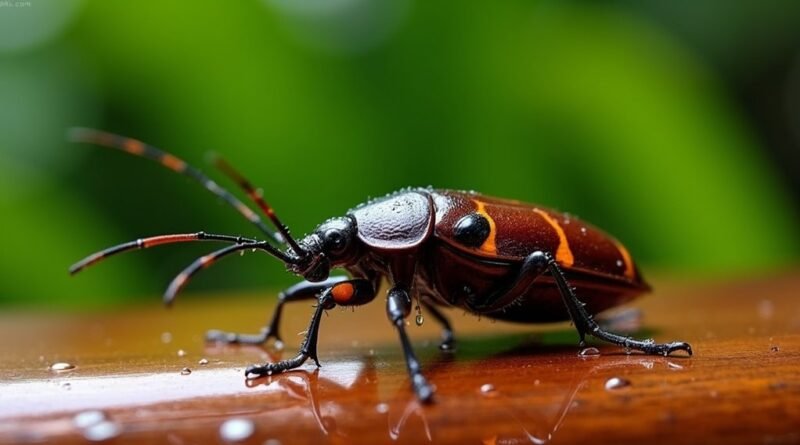
Is a Palmetto Bug a Cockroach?
Yes, a palmetto bug is a cockroach. There’s no biological difference between the two — you’re looking at the same insect. The name “palmetto bug” is simply a regional nickname used in the South, particularly in Florida and South Carolina. It likely comes from the bug’s habit of hiding under palmetto palm leaves. Early settlers coined the softer term to avoid alarm. Keep scrolling to discover everything you need to know about these unwanted houseguests.
Key Takeaways
- Yes, a palmetto bug is a cockroach; the term is simply a regional nickname with no biological distinction from cockroaches.
- The name “palmetto bug” originates from the Southeastern U.S., where these insects hide beneath palmetto palm leaves.
- The American cockroach is the most common species called a palmetto bug, measuring 1.5–2 inches with a reddish-brown body.
- Early Southern settlers coined “palmetto bug” as a euphemism to reduce the alarm associated with the word “cockroach.”
- Despite the softer name, palmetto bugs carry serious health risks, including salmonella, E. coli, and allergens that worsen asthma.
Is a Palmetto Bug Actually a Cockroach?
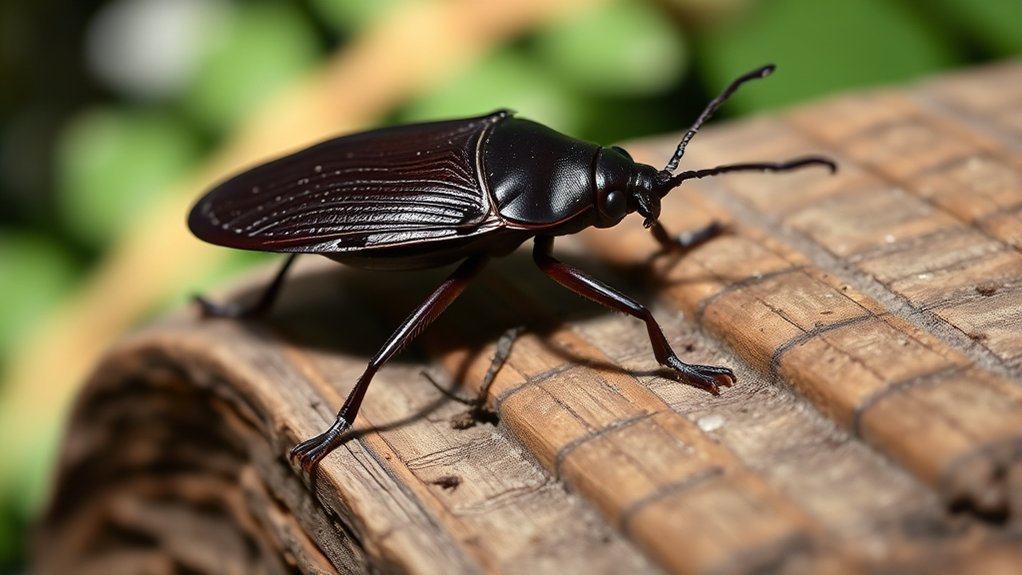
If you’ve ever heard someone in the South refer to a “palmetto bug,” they’re simply using a polite regional nickname for the American cockroach (*Periplaneta americana*). There’s no biological difference — it’s the same pest species, just described with a softer term commonly used across Florida, South Carolina, and other Southeastern states.
The name likely originates from the insect’s habit of hiding beneath palmetto palm leaves. You’ll recognize this roach by its large size — over 1.5 inches long — reddish-brown color, and the yellowish figure-eight pattern on its head. It’s fully winged and capable of short flights or glides.
Occasionally, the term extends to related species like the Smokybrown cockroach or Oriental cockroach, but the American cockroach remains the primary association. Whatever you call it, you’re dealing with the same disease-carrying pest that triggers asthma and invades homes through drains, plumbing, and unsealed entry points. Early settlers used the term as a euphemism for cockroaches to sound less alarming to those around them.
Which Cockroach Species Are Actually Called Palmetto Bugs?
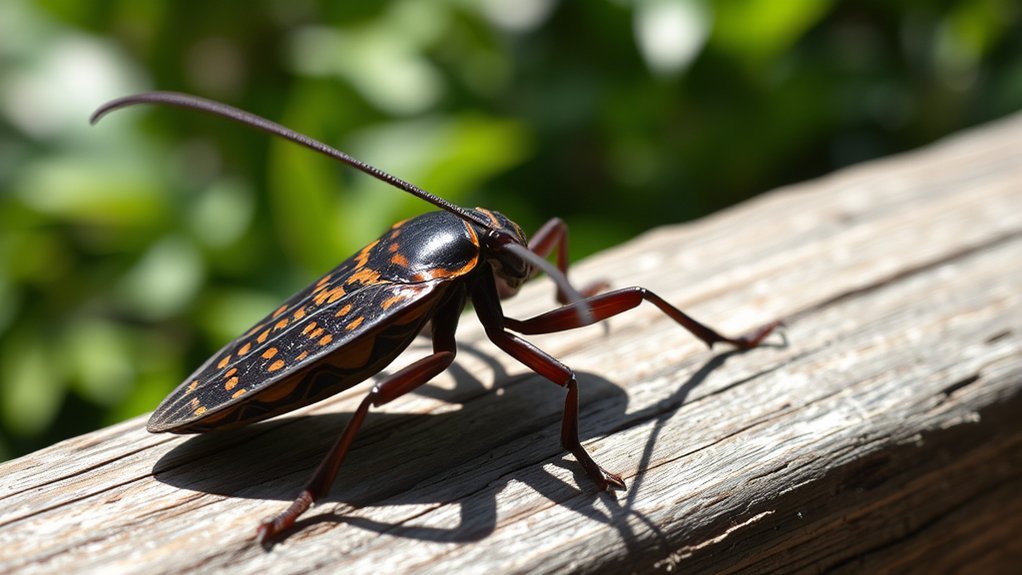
When people in the Southeast use the term “palmetto bug,” they’re usually referring to one of three cockroach species: the American cockroach, the Smokybrown cockroach, or the Florida Woods cockroach. You’ll recognize the American cockroach by its reddish-brown body and yellowish head markings, while the Smokybrown cockroach sports a uniform dark mahogany color and strong flying ability. The Florida Woods cockroach, though less likely to invade your home, earns the palmetto bug label through its habit of living in outdoor vegetation and palmetto trees along the coastal Southeast. These species commonly shelter under palmetto leaves outdoors, particularly in warm, humid environments like mulch, flower beds, and around palm trees.
American Cockroach
The American cockroach (*Periplaneta americana*) is the species most commonly called a palmetto bug, particularly across Florida and South Carolina. You’ll recognize it immediately by several distinct traits that set it apart from other roach species:
- Size: It measures over 1.5 inches long, making it one of the largest home-invading cockroaches you’ll encounter
- Coloration: Its reddish-brown body features a yellowish figure-eight marking on the back of its head
- Wings: Both males and females carry fully developed wings and can fly
Despite the regional nickname, it remains a single species regardless of what locals call it. You’ll typically find it thriving in warm, humid environments, which explains why southeastern states report such high populations. These cockroaches are commonly found in damp areas like sewers, woodpiles, and mulch.
Smokybrown Cockroach
While the American cockroach holds the title as the most recognized palmetto bug, it’s not the only species that earns that nickname. The smokybrown cockroach (*Periplaneta fuliginosa*) also carries that label throughout the southeastern U.S.
You can identify it by its uniform shiny dark brown or mahogany color and slightly smaller frame compared to the American cockroach, though adults still exceed one inch. Unlike the American cockroach, it lacks the yellowish figure-eight pattern on its head. Its fully developed wings extend beyond its body, making it a strong flier.
It thrives in warm, humid environments above 68°F, favoring tree holes, mulch, and decaying vegetation. It entered South Carolina in the 1860s and remains a persistent presence across the Southeast. Researchers believe the smokybrown cockroach is originally from Japan, having spread to the United States over time.
Florida Woods Cockroach
Among the cockroach species called palmetto bugs, the Florida woods cockroach (*Eurycotis floridana*) may have the strongest claim to the nickname—it’s native to the Southeast and commonly found in palm trees. Measuring 30–40 mm, it’s dark reddish-brown with a shield-shaped pronotum and reduced wing pads.
What truly sets this species apart is its defense system:
- It ejects a foul-smelling spray up to one meter when threatened, earning it nicknames like “skunk roach” and “stinkroach”
- Its secretion can harm skin and sensitive tissues
- It moves slower than other cockroaches, making the spray its primary survival tool
You’ll find it in woodpiles, rotting trees, and attics—rarely venturing into living spaces despite its intimidating size. As an omnivorous scavenger, it feeds on decaying organic matter, baked goods, and grease when it does make its way indoors.
How to Identify Palmetto Bugs by Size, Color, and Shape
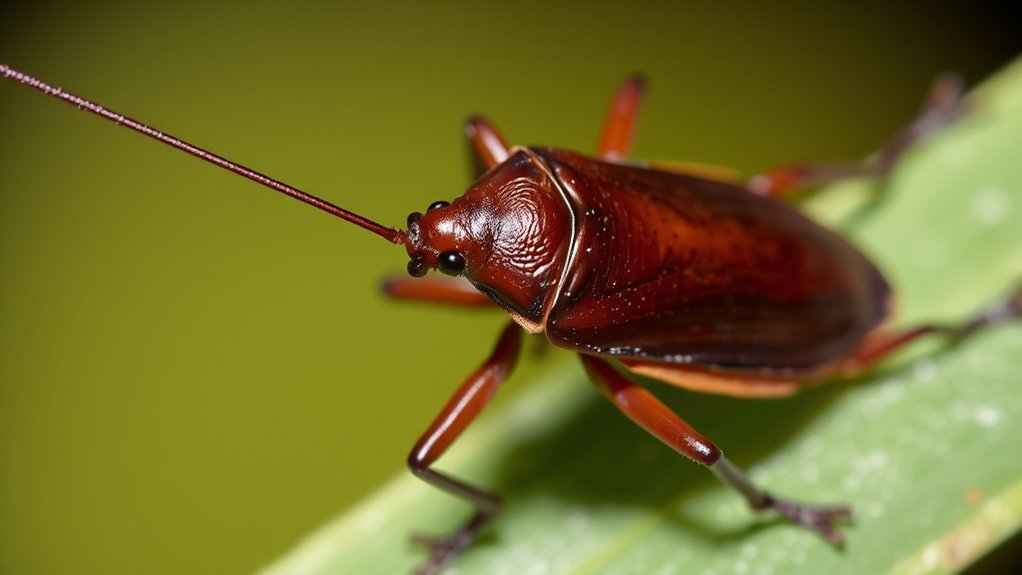
Identifying a palmetto bug comes down to a few key physical traits that set it apart from other cockroaches. Most adults measure between 1.5 and 2 inches long, making them noticeably larger than German cockroaches, which reach only half an inch.
You’ll recognize them by their reddish-brown to dark brown coloring. American cockroaches display a distinctive yellow figure-eight pattern behind the head, while smoky brown species feature a glossy mahogany finish with a uniform dark body.
Their oval shape and shield-like pronotum give them a robust, recognizable profile. Unlike German cockroaches, they lack two dark stripes, and unlike brown-banded species, they show no horizontal yellow-brown bands. Both American and smoky brown varieties have fully developed wings that extend past their bodies and can glide or fly in warm temperatures. These combined traits make palmetto bugs straightforward to identify once you know what to look for.
Where Palmetto Bugs Live and Hide
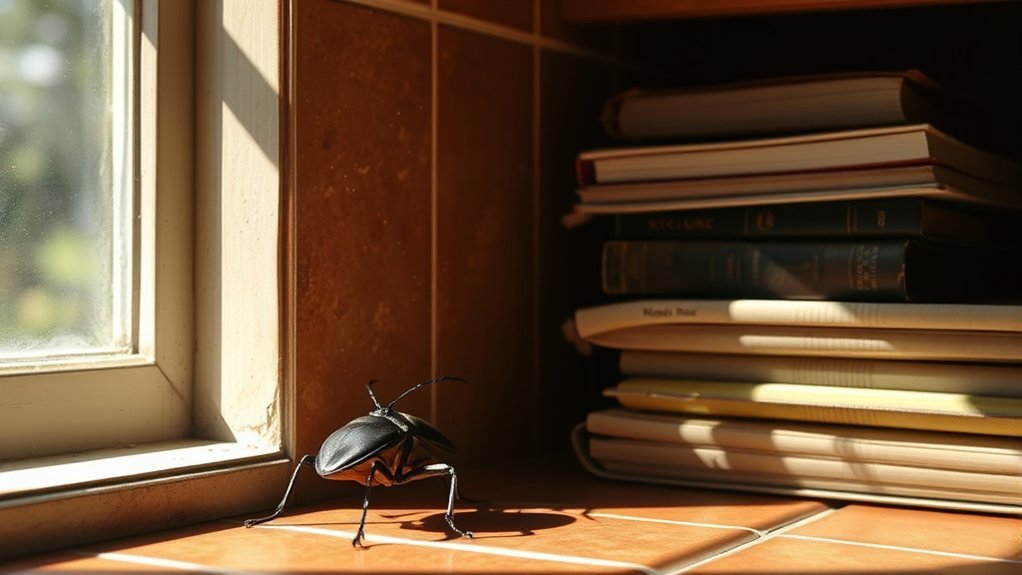
Once you can spot a palmetto bug by its size and markings, knowing where it hides gives you a real advantage in controlling it. These cockroaches favor warm, dark, and damp environments both inside and outside your home.
Indoors, they’re most active in:
- Kitchens and bathrooms – Moisture from leaky pipes, sinks, and appliances draws them in, while cracks near refrigerators and under-sink cabinets give them shelter.
- Basements and crawlspaces – Dark, humid conditions with cluttered debris match their ideal habitat, and foundation cracks let them migrate from outdoors easily.
- Walls and structural voids – They travel through pipe pathways and electrical lines, flattening their bodies to squeeze through tight crevices between walls.
Outdoors, they breed in mulch beds, leaf litter, tree bark, and storm drains before entering your home through gaps in door seals, windows, and foundation cracks.
What Health Risks Do Palmetto Bugs Cause?
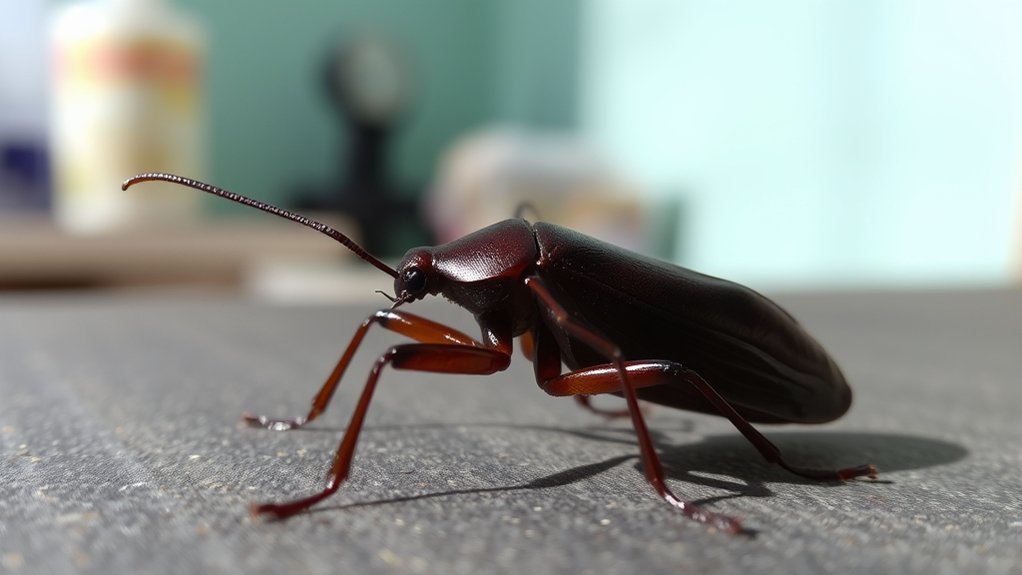
Knowing where palmetto bugs hide is one thing—understanding what they can do to your health is another. These insects carry serious health risks that you shouldn’t ignore.
Their feces, sheddings, and saliva contain proteins that trigger allergic reactions. You might experience coughing, sneezing, nasal congestion, itchy skin, or red eyes. If you or your child has asthma, exposure can worsen attacks considerably, sometimes requiring medical treatment.
They also spread dangerous bacteria, including salmonella, staphylococcus, streptococcus, shigella, and E. coli. They pick these pathogens up from sewers, drains, and excrement, then transfer them onto your counters, floors, and food storage areas. Any surface they walk across becomes a contamination risk.
Their bites are rare but can cause redness, swelling, itching, and secondary bacterial infections. Even without direct contact, airborne allergens from their debris worsen respiratory conditions over time. Spotting one means you need to act fast.
Why “Palmetto Bug” Means Something Different Than Cockroach in the South
The term “palmetto bug” isn’t just a nickname—it carries real cultural weight in the South. When you hear someone in Florida or South Carolina say “palmetto bug,” they’re not just being imprecise. They’re drawing a deliberate distinction from the cockroach you’d find scurrying across a kitchen floor.
Here’s what that distinction actually means:
- Size matters: Palmetto bugs are large outdoor species, like the American or smokybrown cockroach, not the smaller half-inch German cockroach invading your pantry.
- Habitat defines identity: These bugs live in palmetto trees, leaf debris, and wood piles—not your cabinets.
- It’s a cultural softener: Southerners use the term to avoid the visceral reaction “cockroach” triggers, reflecting a regional politeness around an unavoidable reality.
You’re fundamentally dealing with the same insect family, but the name signals where it lives and how locals have chosen to make peace with its presence.
Frequently Asked Questions
Can Palmetto Bugs Fly Indoors and How Often Do They Fly?
Yes, palmetto bugs can fly indoors, but they don’t do it often. You’ll typically see them fly sporadically when disturbed, especially in warm, humid conditions or during nighttime kitchen activity.
How Do Palmetto Bugs Enter Homes and Buildings?
Palmetto bugs enter your home through plumbing voids, foundation cracks, roof soffits, and utility line openings. They’ll also squeeze through gaps around dryer vents, under-sink spaces, and even crawl up through toilet drains and sewer systems.
Are Palmetto Bug Infestations More Common in Apartments or Houses?
Palmetto bug infestations are more common in your apartment than in a house. You’re dealing with shared walls, plumbing lines, and neighboring units that make it easier for bugs to spread rapidly.
What Smells or Repellents Keep Palmetto Bugs Away Naturally?
The search results don’t cover natural repellents for palmetto bugs. You’ll need sources specifically addressing pest control methods to find which smells, like peppermint oil or cedar, effectively deter these insects naturally.
How Long Do Palmetto Bugs Typically Live Indoors?
Indoors, palmetto bugs typically live six months to over a year. You’ll find females surviving up to a year, while younger ones spend about a year maturing before living six additional months as adults.
Conclusion
So now you know the truth—palmetto bugs are cockroaches, plain and simple. Whether you’re dealing with an American, Smoky Brown, or Florida Woods cockroach, you’re facing the same health risks and infestation concerns. Don’t let the prettier name fool you into thinking they’re harmless. If you’ve spotted one in your home, you’ll want to act fast, because where there’s one cockroach hiding, there are almost certainly more nearby.
