
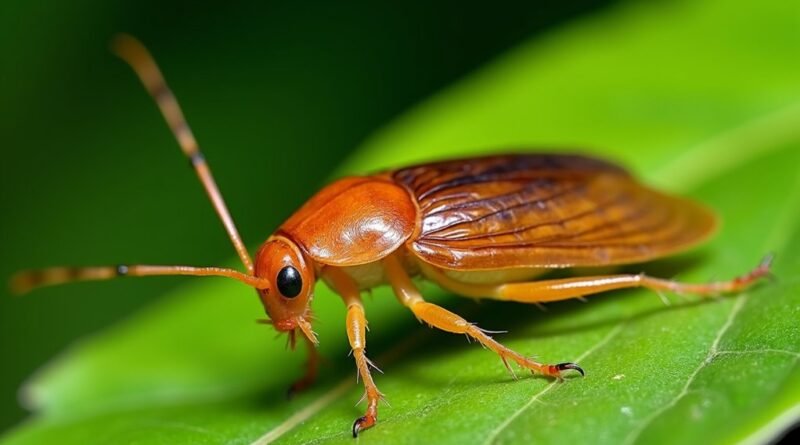
Light Brown Cockroach: Species That Are Tan or Light Colored
If you’ve spotted a light brown cockroach in your home, it’s most likely a German or brown-banded cockroach. German cockroaches measure up to 5/8 inch long and sport two dark stripes behind their heads. Brown-banded cockroaches are slightly smaller with distinctive wing bands. Both species love warm, hidden spaces like kitchens, bathrooms, and furniture crevices. Knowing which one you’re dealing with makes all the difference in getting rid of them for good.
Key Takeaways
- The German cockroach, the most common home-infesting species, is light brown with two dark parallel stripes behind its head.
- Brown-banded cockroaches are another tan-colored species, identifiable by distinctive bands across their wings rather than pronotal stripes.
- German cockroaches measure 1/2 to 5/8 inch long, while brown-banded cockroaches are slightly smaller with shorter antennae.
- Light brown cockroaches camouflage easily against walls and furniture, making detection difficult due to their coloring and nocturnal behavior.
- Signs of a light brown cockroach infestation include dark droppings, yellowish egg cases, shed skins, and a musty odor.
The Two Most Common Light Brown Cockroaches in U.S. Homes
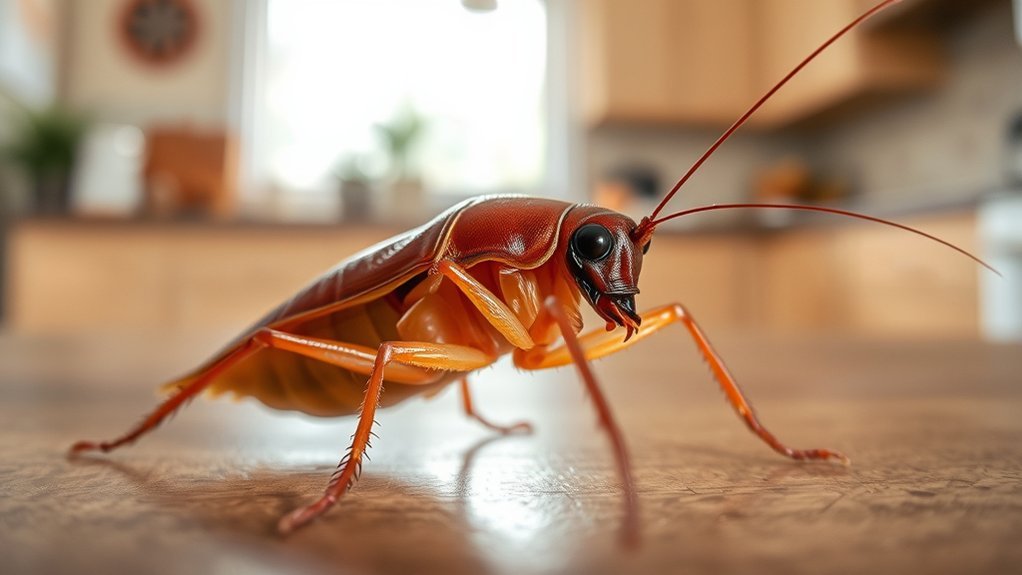
When it comes to light brown cockroaches invading U.S. homes, two species dominate: the German cockroach and the brown-banded cockroach. You’ll find the German cockroach nearly everywhere indoors, making it the most prevalent home-infesting species worldwide. It measures 1/2 to 5/8 inch long and displays two dark parallel stripes behind its head. It thrives in warm, humid spots near food and moisture, like kitchens and bathrooms.
The brown-banded cockroach is less common, accounting for just 1% of indoor infestations in California. It’s slightly smaller at up to 1/2 inch long and features two lighter bands across its wings and abdomen. Unlike the German cockroach, it prefers warm, dry, elevated locations like cabinets, furniture, and ceilings. Both species are nocturnal and enter homes through food sources and pipes, but they differ markedly in habitat preferences and prevalence. The brown-banded cockroach is known to hide egg cases under furniture, allowing infestations to spread throughout the entire house and making elimination particularly challenging.
German vs. Brown-Banded: How to Tell Them Apart
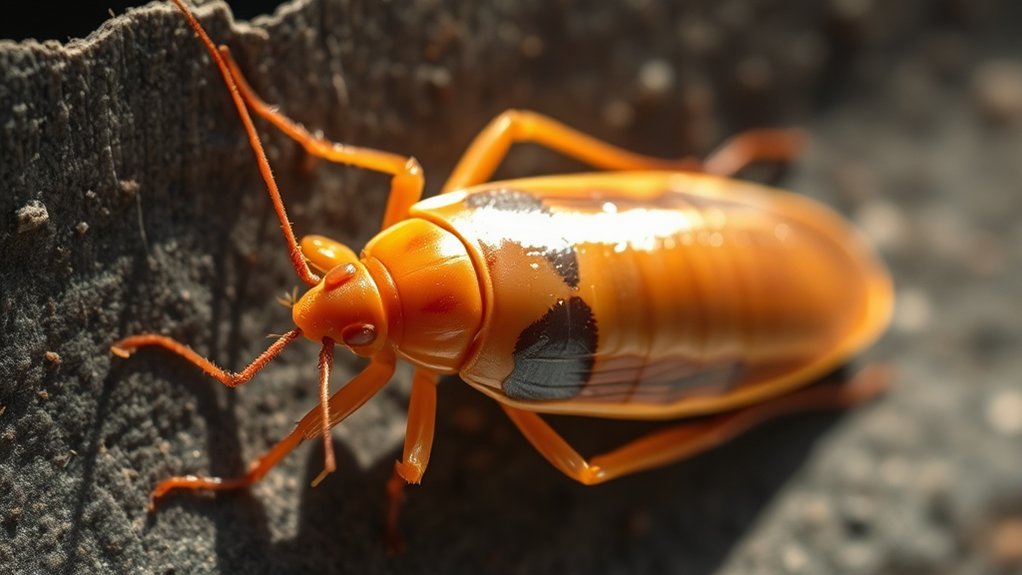
Since both the German and brown-banded cockroach share a similar light brown appearance, telling them apart takes a closer look at a few key physical traits.
At first glance, German and brown-banded cockroaches look nearly identical — but a closer look reveals key differences.
Germans are slightly larger at 5/8 inches and carry two dark parallel stripes behind their heads. Brown-banded roaches reach only 1/2 inch and display dark bands across their wings instead of head stripes.
Here are four key differences you’ll notice:
- Antennae: German antennae extend past the body; brown-banded antennae don’t
- Wings: Female brown-banded have underdeveloped wings; German females have full wing coverage
- Markings: Germans show pronotal stripes; brown-banded show wing bands
- Size: Germans measure up to 5/8 inches; brown-banded cap at 1/2 inch
You’ll also notice that nymphs make identification easier since brown-banded nymphs display their characteristic bands more prominently during early development. Both species are obligate indoor roaches that depend entirely on humans for food, water, and shelter, making them persistent household pests regardless of which type you’re dealing with.
Where Do Light Brown Cockroaches Hide in Your House
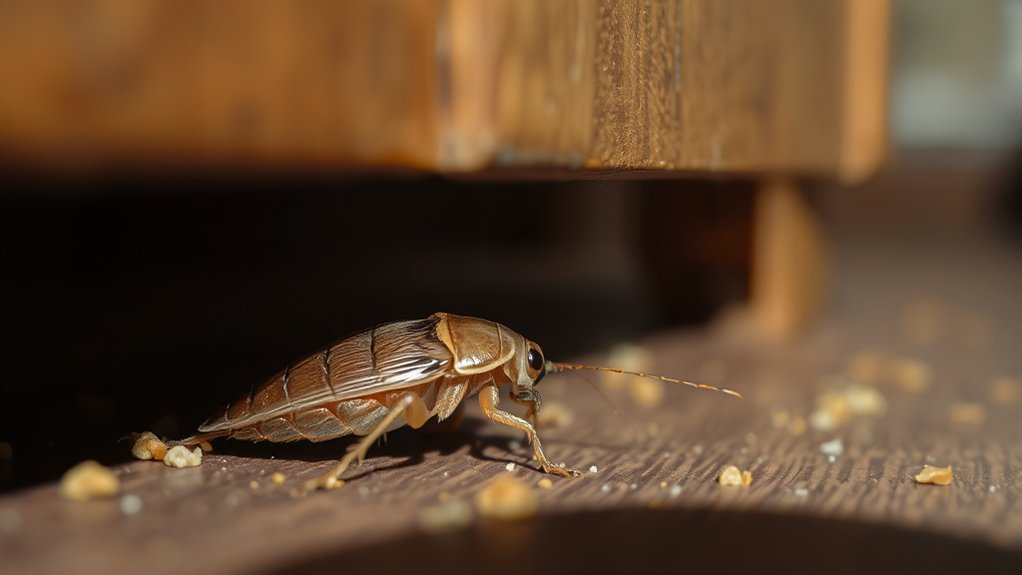
Light brown cockroaches exploit nearly every hidden corner of your home, from furniture crevices and picture frames to electrical outlets and appliance interiors. They shelter inside warm furniture gaps, behind wall art, and within book bindings. Peeling wallpaper, loose molding, and baseboard cracks give them easy access to wall voids where they hide during the day.
Heat draws them to electronics like televisions, routers, and game consoles, and you’ll often find adult males active near light switches at night. They also squeeze behind switch plates, ceiling fans, and inside electrical outlets.
In kitchens, check upper cabinets, pantry corners with food debris, and crevices with crumbs or grease. Behind refrigerators, stoves, and dishwashers are common hotspots, as are the interiors of toasters, microwaves, and coffee makers. Around plumbing lines, under sinks, and near floor drains, moisture makes these areas especially attractive hiding spots. Unlike other roach species, light brown cockroaches strongly prefer dry, elevated areas, making upper shelves and wall-mounted fixtures particularly common harborage points.
Signs You Have a Light Brown Cockroach Infestation
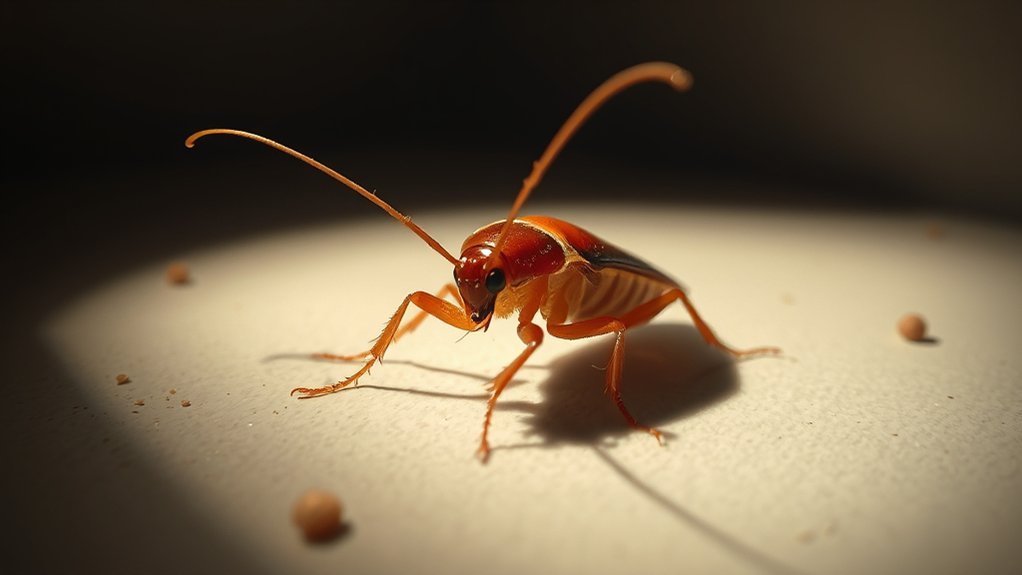
Spotting a light brown cockroach infestation early can save you from a full-blown outbreak. Watch for these key warning signs:
- Egg cases: Small, yellowish or reddish-brown capsules under 5mm long, glued to furniture, walls, or hidden crevices
- Droppings: Tiny dark specks or smears clustered in cabinets, along baseboards, inside appliances, or near ceiling fixtures
- Shed skins and nymphs: Discarded skins near nesting sites, plus small, dark nymphs with brown body stripes
- Adult sightings: Half-inch roaches with banded wings and long antennae; one sighting means more are hiding nearby
You might also notice a strong, musty odor signaling a heavy infestation. If household members experience itchy eyes, sneezing, or worsening asthma, cockroach allergens could be the culprit. Don’t ignore these signs—act quickly before the population grows harder to control. Brown-banded cockroaches are known to spread across multiple rooms and hidden areas, making infestations particularly difficult to detect and control without professional help.
What Makes Light Brown Cockroaches Harder to Spot and Control
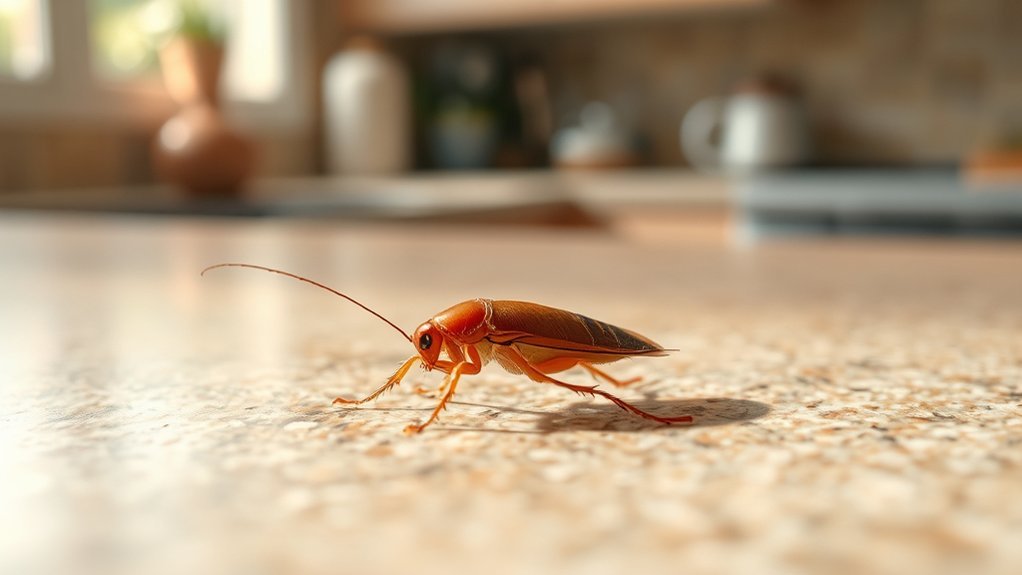
Unlike their moisture-loving cousins, brown-banded cockroaches favor dry, warm environments above 80°F—meaning you won’t find them clustered around leaky pipes or kitchen drains. Instead, they hide in bedrooms, furniture, and electronics, making detection far trickier.
Their ½-inch bodies slip into spaces larger species can’t reach, and their light brown coloring blends seamlessly with walls and furniture.
| Factor | Why It Matters | Where It Applies |
|---|---|---|
| Small size | Fits into tight crevices | Clock interiors, switch plates |
| Nocturnal behavior | Active only at night | Behind picture frames, electronics |
| Dry habitat preference | Spreads across multiple rooms | Bedrooms, closets, pantries |
| Camouflage coloring | Blends with surroundings | Walls, furniture, appliances |
| Flying males | Complicate detection when disturbed | Any indoor space |
Standard cockroach control strategies won’t work here. You’ll need insecticidal dusts, caulking across multiple rooms, and likely professional help to fully eliminate them. Signs of infestation often go unnoticed until populations grow large, but telltale clues like tiny dark droppings, shed skins, and hidden egg cases in concealed areas can confirm their presence.
Frequently Asked Questions
Can Light Brown Cockroaches Survive Outdoors in Cold Climates?
No, light brown cockroaches can’t survive outdoors in cold climates. They depend on heated indoor environments year-round. If you spot them, they’ve likely infiltrated your home seeking warmth to stay alive.
Are Light Brown Cockroaches Dangerous to Pets or Animals?
Yes, light brown cockroaches can harm your pets. They’ll carry bacteria like E. coli and Salmonella, contaminate food bowls, cause bites, and stress your animals through unusual noises and smells from their droppings.
Do Light Brown Cockroaches Bite Humans While They Sleep?
Yes, light brown cockroaches can bite you while you sleep, but it’s rare. They’ll nibble on food residue around your mouth or hands, leaving red, raised bumps that may itch or swell.
How Long Can Light Brown Cockroaches Survive Without Food or Water?
Light brown cockroaches, like German cockroaches, can’t survive more than 42 days without food and die within 12 days without water. You’ll find they’re especially vulnerable to dehydration in dry, low-humidity environments.
Can Light Brown Cockroaches Develop Resistance to Common Pesticides?
Yes, light brown cockroaches can develop resistance to common pesticides like pyrethroids, organophosphates, and carbamates. They’ll evolve detoxification enzymes, and their gut microbiota helps degrade insecticides, making standard treatments increasingly ineffective over time.
Conclusion
If you’ve spotted a light brown cockroach in your home, don’t wait to act. These tan, hard-to-see pests multiply fast and hide in spots you’d never think to check. You’ll want to identify whether you’re dealing with German or brown-banded cockroaches, since each requires a different control approach. Check your kitchen, bathrooms, and hidden crevices regularly. The sooner you address the problem, the better your chances of stopping an infestation before it spreads.
