
Palmetto Bug vs Cockroach: Are They the Same Thing?
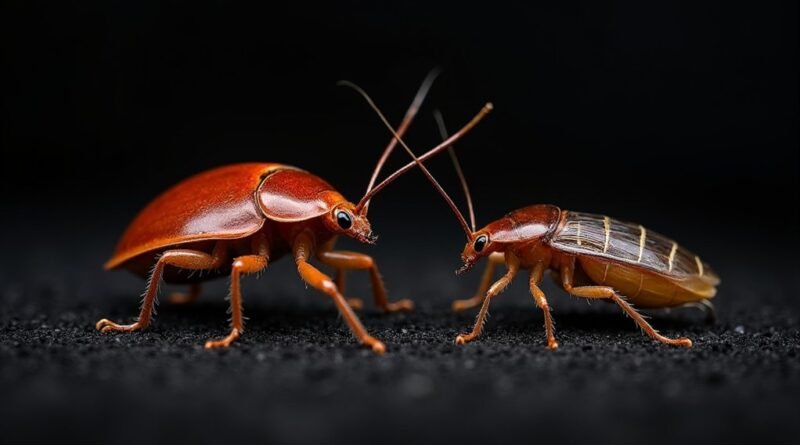
Yes, a palmetto bug is just a cockroach. The term “palmetto bug” isn’t a scientific classification — it’s a regional nickname used mainly in the southeastern United States. It typically refers to large species like the American cockroach, smokybrown cockroach, and Florida woods roach. These bugs thrive in warm, humid environments and can pose real health risks in your home. Keep going to find out everything you need to know about these unwanted houseguests.
Key Takeaways
- Palmetto bug” is a regional nickname, not a scientific term, and refers to large cockroach species found primarily in the southeastern United States.
- All palmetto bugs are cockroaches, but not all cockroaches are palmetto bugs; the term applies to specific larger species.
- The name most commonly refers to three species: the American cockroach, smokybrown cockroach, and Florida woods roach.
- Palmetto bugs differ from smaller cockroaches, like German cockroaches, by their larger size, outdoor preferences, and fully developed wings.
- Despite the different name, palmetto bugs share the same health risks, behaviors, and elimination strategies as other cockroach species.
Is a Palmetto Bug Just a Cockroach?
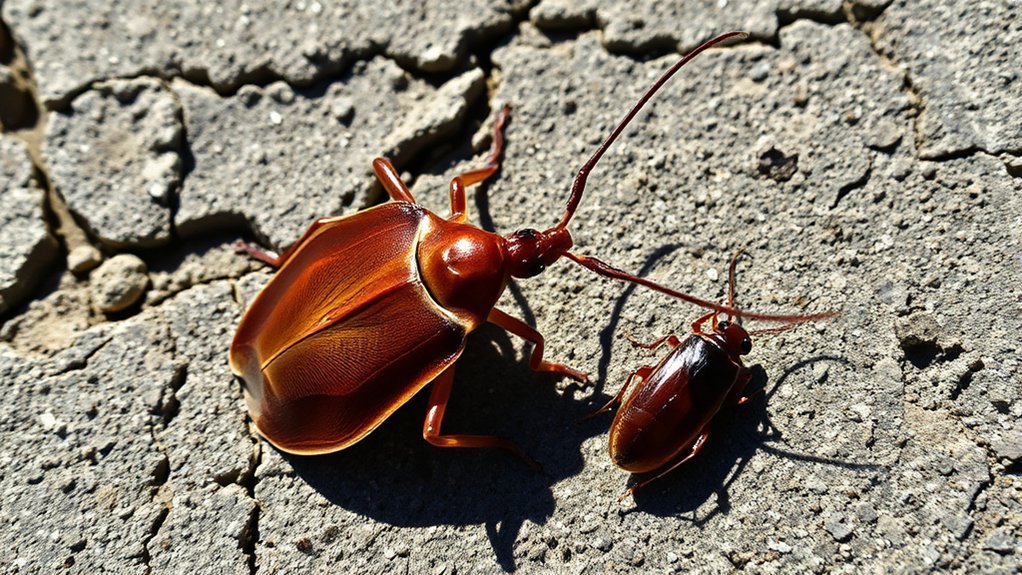
When you hear the term “palmetto bug,” you might assume it’s a distinct species—but it’s actually just a regional nickname for large cockroaches found in the southeastern United States. It’s not a scientific classification; it’s slang that pest control specialists and locals use to describe several peridomestic species.
The term typically applies to the smokybrown cockroach (*Periplaneta fuliginosa*), the American cockroach (*Periplaneta americana*), and possibly the Florida woods roach (*Eurycotis floridana*). All of these species belong to the order Blattodea, which means every palmetto bug qualifies as a cockroach—without exception.
What sets them apart from other roaches is their size and habitat. They’re noticeably larger than the German cockroach, ranging from 1.5 to 3 inches long, and they prefer outdoor environments like palmetto bushes, mulch, and trees rather than your kitchen cabinets. The smokybrown cockroach is particularly common in older neighborhoods with mature hardwood trees. Don’t let the nickname fool you—it’s still a cockroach.
Which Cockroach Species Get Called Palmetto Bugs?
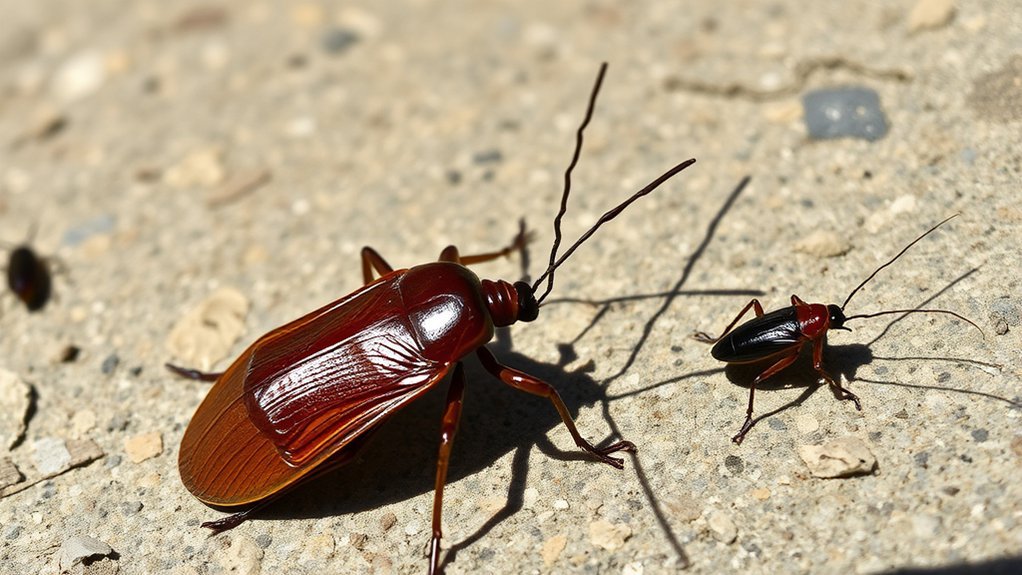
When you hear the term “palmetto bug,” it’s almost always referring to one of two species: the American cockroach or the smokybrown cockroach. You’ll recognize the American cockroach by its reddish-brown body, yellowish figure-eight head marking, and impressive 1.5 to 2-inch length. The smokybrown cockroach shares a similar size but sports a uniform shiny mahogany color and earns a reputation as a stronger flier, often darting toward outdoor lights at night. Both species are commonly found outdoors in warm, humid regions, particularly under palmetto leaves and in moist landscape areas like mulch and flower beds.
American Cockroach Overview
The American cockroach is the species most commonly called a palmetto bug, and it’s the largest cockroach species you’re likely to encounter in your home. Adults measure 1.5 to 2 inches long and display a distinctive reddish-brown color with a pale yellow band behind their head. You can identify them by their oval, flattened body and fully developed wings, though they rarely fly.
These cockroaches thrive in dark, moist environments like sewers, boiler rooms, and bathrooms, and they’ll enter your home through cracks or gaps under doors. They’re attracted to decaying organic matter and food storage areas. When threatened, they dart away quickly—they’re actually the fastest-running insects, reaching speeds up to 5.4 km/h, which explains why they seem to vanish the moment you spot them. Remarkably, they can survive two to three months without food, though they cannot last more than a month without water.
Smokybrown Cockroach Traits
Closely related to the American cockroach, the smokybrown cockroach is another species that earns the “palmetto bug” label. You’ll recognize it by its uniform dark mahogany coloration and glossy, polished body surface. It measures 1.25 to 1.5 inches long, with wings extending past its abdomen on both males and females — and both sexes fly confidently toward lights, windows, and ceilings at night.
You’ll typically find smokybrown cockroaches thriving outdoors in mulch, leaf litter, woodpiles, and tree bark, as they require constant moisture and prefer temperatures above 68°F. They’re excellent climbers, reaching roofs and upper building areas with ease. When disturbed, they’ll either take flight or dart into dark hiding spots, making them quick and difficult to catch. Like other cockroach species, smokybrown cockroaches pose food contamination risks through direct contact with food sources and fecal deposits left on surfaces.
How to Tell a Palmetto Bug Apart From Other Cockroaches
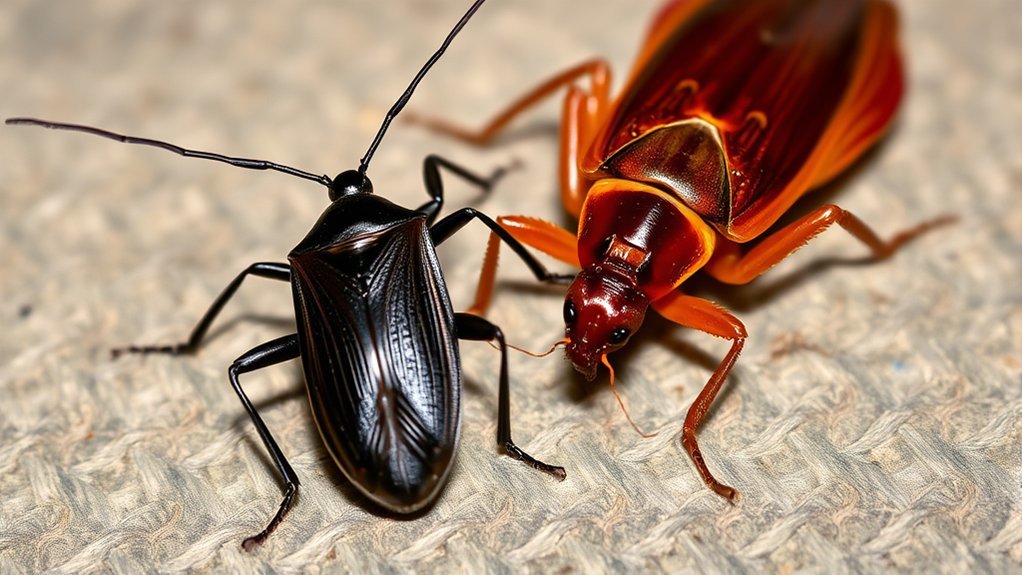
Telling a palmetto bug apart from other cockroaches comes down to a few key physical traits. First, check the size. Palmetto bugs reach 1.5–3 inches, making them the largest home-infesting cockroach species. If you’re looking at something smaller, it’s likely a German or smoky brown cockroach.
Next, look at the coloring. Palmetto bugs display reddish-brown bodies with a pale yellow band around the pronotum and a distinctive “sunglasses” pattern near the top of the thorax. German cockroaches are tan with two dark stripes, while smoky brown cockroaches appear dark mahogany and shiny with no markings.
Finally, trust your nose. Palmetto bugs emit a musky odor, particularly near damp nesting areas like woodpiles or floorboards. Other cockroach species tend to produce an oily smell instead. Combining these three checks—size, color patterns, and odor—lets you identify a palmetto bug with confidence. Unlike most other cockroach species, palmetto bugs are also capable of flight due to wings that are fully developed, making them easier to distinguish when observed in motion.
Can Palmetto Bugs Fly?
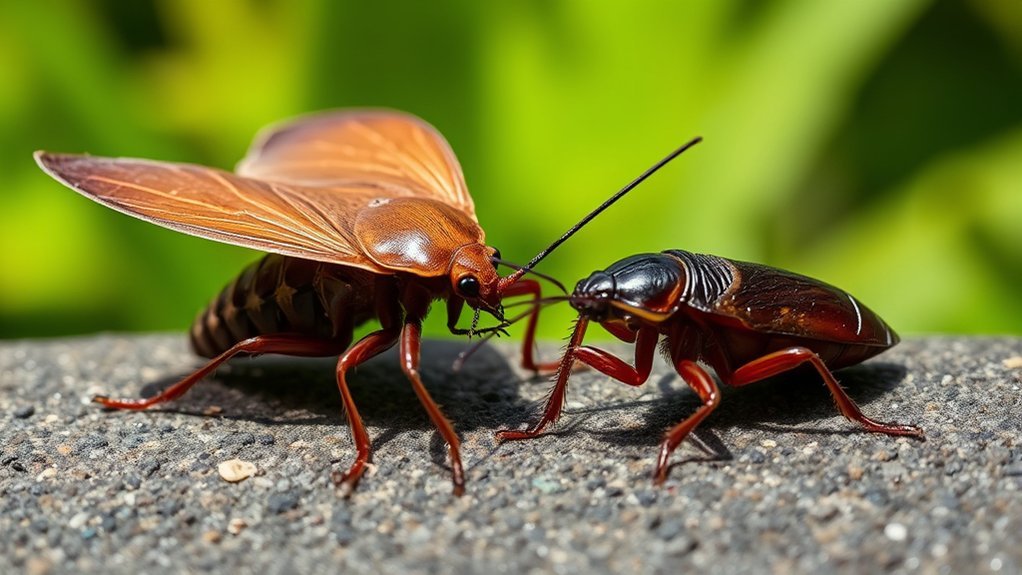
If you’ve ever wondered whether palmetto bugs can fly, the answer is yes—both sexes have fully developed wings and can take to the air. However, they’re not strong or precise flyers; they tend to glide haphazardly rather than navigate with control, often appearing to fly directly at you when startled. Indoors, you’ll typically see flight triggered by threats or bright lights, especially in warm, humid conditions.
Wings Enable Flight
Both the American cockroach and the smokybrown cockroach—the two species most commonly called palmetto bugs—can fly. Their fully developed wings aren’t just for show; they actively use them to enter your home through doors and windows, especially during warm evenings.
Here’s what makes their flight ability particularly unsettling:
- American cockroaches have reddish-brown wings covering their entire abdomen, and both males and females fly directly toward indoor lights.
- Smokybrown cockroaches are actually stronger fliers, drawn to your porch lights on warm nights.
- Both species use flight to shift from outdoor habitats straight into your living space.
- German cockroaches, by contrast, rarely fly despite having wings—making palmetto bugs uniquely aggressive fliers among common household roaches.
Gliding Over True Flying
Heat, flooding, or heavy rain pushes them indoors, where they glide toward light sources when doors open. Their size works in their favor—American cockroaches exceed 1.5 inches, while some palmetto bugs reach 3 inches, allowing longer, more controlled glides.
Compare this to German cockroaches, which glide minimally. Smokybrown and American cockroach species glide most frequently, especially in the humid southeastern U.S., where warm conditions make this behavior particularly common.
Flight Triggers Indoors
Palmetto bugs can fly, though they prefer gliding over sustained flight. Several triggers cause them to fly indoors, putting you face-to-face with these unsettling insects.
They’re drawn inside by:
- Lights: They spot your indoor lights through open doors and fly straight toward them at night.
- Weather extremes: Flooding, intense heat, or cold temperatures drive them to seek your home’s shelter.
- Warmth and moisture: Your home’s humidity and warmth attract them directly from outdoors.
- Summer heat: Warm summer days increase active flight, raising your chances of an unexpected indoor encounter.
Once inside, they gather in moist areas like your basement. Spotting them during daylight hours signals a heavy infestation requiring immediate attention.
Where Do Palmetto Bugs Live and Hide?
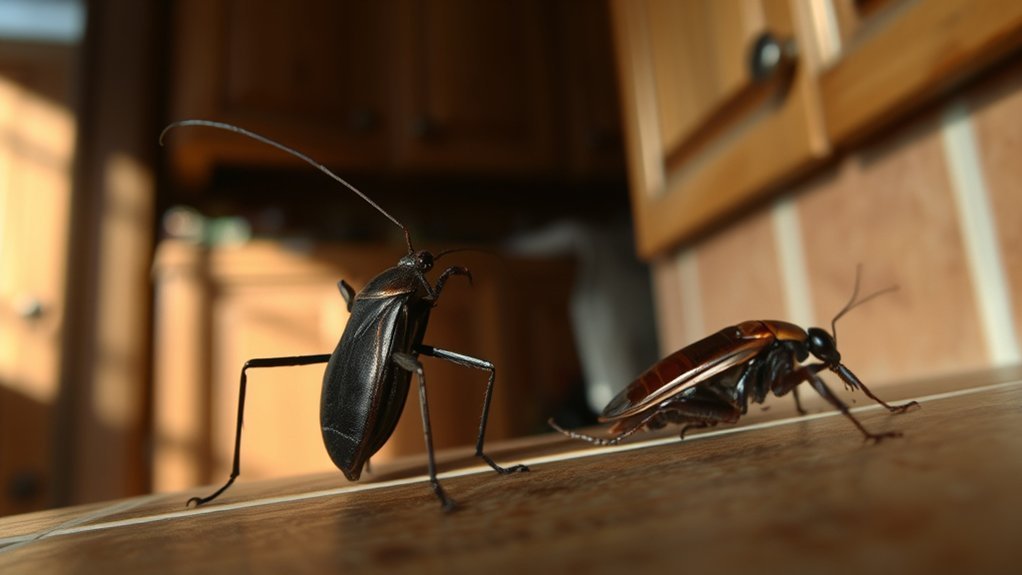
Whether you’re dealing with them indoors or outdoors, palmetto bugs thrive in warm, humid environments where moisture, darkness, and food sources are readily available. Inside your home, you’ll find them hiding in basements, crawl spaces, kitchens, and bathrooms where plumbing creates constant moisture. They also nest beneath floorboards, inside walls, and around drains and sewer entry points.
Outdoors, they congregate under palm trees, palmetto bushes, mulch beds, and flower beds. Tree holes, bark crevices, gutters collecting organic debris, and woodpiles also serve as common harborage sites. Their preference for decaying vegetation and damp conditions makes landscaping areas particularly attractive.
Geographically, palmetto bugs are most prevalent in the southeastern United States, especially Florida and South Carolina, where warm climates support year-round populations. During cooler months, they move indoors seeking warmth, which is often when you’ll notice an increase in sightings inside your home.
Are Palmetto Bugs Dangerous to Have in Your Home?
So, how dangerous are palmetto bugs to have in your home? While they rarely bite, and their bites leave only small red marks, the real threats are subtler and more serious than you’d expect.
These insects contaminate your food with bacteria, trigger allergic reactions, and worsen asthma symptoms through allergens in their shed skins and feces. Their droppings stain surfaces, and a musty odor signals heavy allergen buildup throughout your space.
Here’s what you should genuinely worry about:
- Your health: Shed skins and feces release airborne allergens that aggravate respiratory conditions
- Your food supply: They hide in unsanitary areas before crawling across your kitchen counters and contaminating food
- Your home’s hygiene: Their droppings spread germs in dark, hidden spots
- Your stored belongings: Large infestations indirectly damage stored items
Daytime sightings mean your infestation’s already severe, so don’t ignore the warning signs.
What Diseases Can Palmetto Bugs Spread?
Beyond the general health risks already covered, it’s worth knowing exactly which diseases palmetto bugs can spread in your home. Three bacterial pathogens pose the greatest concern: Salmonella, Staphylococcus, and Streptococcus.
Palmetto bugs transmit these bacteria primarily by walking across food items and leaving droppings in your kitchen. Salmonella spreads through contaminated food storage and preparation areas, while Staphylococcus contaminates food and surfaces throughout your home. Streptococcus transfers through fecal matter left wherever you handle food.
Palmetto bugs spread Salmonella, Staph, and Strep by contaminating your food, surfaces, and preparation areas with droppings.
Your risk increases the longer an infestation persists, since fecal accumulation grows over time. Inhaling dried fecal particles also creates respiratory hazards beyond bacterial illness.
That said, not every palmetto bug carries a significant pathogen load. Maintaining cleanliness reduces your transmission risk considerably, and targeted pest elimination works better than fear-based avoidance. Understanding the actual risks helps you respond effectively rather than reactively.
How to Get Rid of Palmetto Bugs
Getting rid of palmetto bugs requires tackling the problem from multiple angles—exclusion, sanitation, and targeted treatment. Start by sealing cracks around doors, windows, and pipes to cut off their entry points. Fix leaks in bathrooms, basements, and kitchens since moisture draws them in. Store food in sealed containers and never leave pet food out overnight.
For treatment, these options deliver real results:
- Diatomaceous earth dehydrates and kills them slowly in the cracks they hide in
- Boric acid baits placed in dark, damp areas destroy them from the inside out
- Gel baits with fipronil lure foraging bugs to a poison they can’t resist
- Sticky traps expose exactly where they’re moving through your home
If the infestation’s severe, don’t wait—call a licensed pest control professional. They’ll target nests in sewers and crawlspaces using integrated pest management for lasting elimination.
Frequently Asked Questions
Why Are Palmetto Bugs More Common in Florida Than Other States?
You’ll find palmetto bugs thriving in Florida because its warm, humid climate, abundant palmetto palms, and year-round subtropical temperatures create ideal breeding conditions that cooler, drier northern states simply can’t match.
Do Palmetto Bugs Bite Humans While They Sleep?
Palmetto bugs can bite you, but they rarely do. They’re opportunistic and might nibble on your skin while you sleep, though it’s uncommon. You’re more at risk from their disease-spreading habits than their bites.
How Long Does a Palmetto Bug Typically Live?
You’re looking at a lifespan of 200-400 days for palmetto bugs as adults. With indoor access to food and moisture, they’ll often survive beyond a year, especially in warm, humid southern climates.
Are Palmetto Bugs Attracted to Light Sources at Night?
Yes, palmetto bugs are attracted to light at night. You’ll often notice them flying toward illuminated entry points and windows after dark, as they’ve evolved light-seeking behavior as an instinctive nocturnal navigation mechanism.
Can Palmetto Bugs Survive in Cold Northern US Climates?
You’ll find that palmetto bugs can’t truly thrive in cold northern U.S. climates. They’ll only survive indoors via heated structures, basements, or sewers, but cold winters prevent outdoor breeding and any sustained northern establishment.
Conclusion
Whether you’re dealing with a palmetto bug or a cockroach, you’re fundamentally facing the same pest. You’ve learned that palmetto bugs are just regional nicknames for certain cockroach species, particularly the American cockroach. Don’t let the different name fool you into thinking they’re harmless. They’re dangerous, they spread disease, and they don’t belong in your home. Use the identification tips and removal strategies you’ve discovered here to tackle an infestation quickly and effectively.
