
Tiny Cockroach: What Species Are Small and What to Do About Them
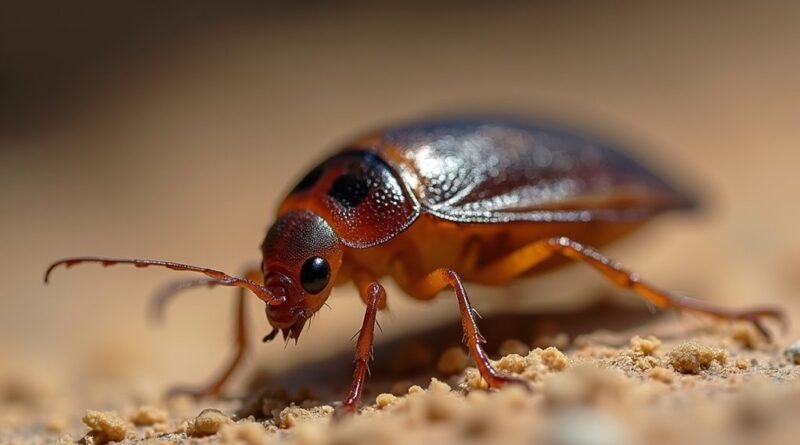
If you’ve spotted a tiny cockroach, it’s likely a German or brown-banded species — both measuring under ¾ inch. German cockroaches are light brown with two dark stripes, while brown-banded ones have distinctive light bands across their wings. To eliminate them, you’ll need to use bait gels, roach sprays, and remove food and moisture sources. Act fast, because these species reproduce alarmingly quickly, and there’s a lot more you’ll want to know.
Key Takeaways
- The smallest cockroach species include the brown-banded (½ inch), German (½–5/8 inch), and three-lined cockroach (¼ inch), the tiniest North American species.
- German cockroaches are light brown with two dark stripes, while brown-banded cockroaches display distinctive light-colored bands across their wings.
- Small cockroaches hide in kitchens, bathrooms, furniture, and wall voids, remaining concealed in tight crevices during daylight hours.
- German cockroaches reproduce rapidly, with one lineage potentially reaching 300,000 individuals, making early intervention critical for controlling infestations.
- Eliminate small cockroaches using bait gels, roach sprays, and sanitation measures, including sealing food, fixing leaks, and removing clutter.
What Small Cockroach Species Live in North America?
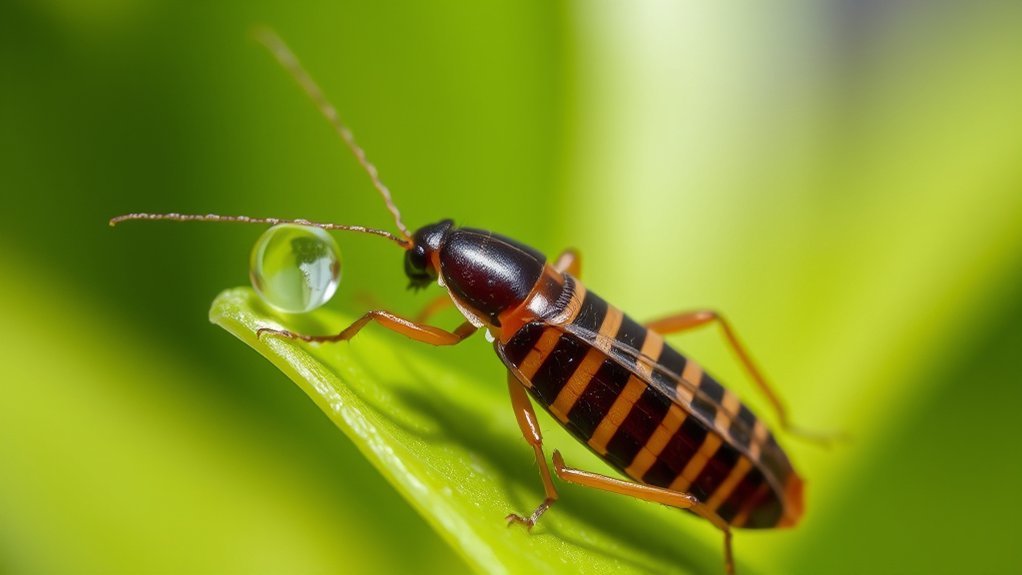
Several small cockroach species call North America home, and knowing how to tell them apart is key to addressing an infestation. You’ll encounter five main species worth knowing.
The brown-banded cockroach is the smallest home-infesting species, maxing out at ½ inch with alternating amber and dark brown markings. The German cockroach, also ½ to 5/8 inch long, is light brown with two dark stripes behind its head and thrives in warm, humid spaces near food and moisture.
The three-lined cockroach reaches only ¼ inch, has no wings, and it’s established primarily in parts of California. The Pennsylvania wood cockroach grows up to 1 inch and typically enters homes through firewood. Finally, the smokybrown cockroach reaches around 1 inch, displays a uniform mahogany color, and you’ll often find it outdoors near American or Oriental cockroaches.
Identifying your specific species helps you target the right treatment. The field cockroach is another small species, growing to only ½ inch and preferring outdoor environments like piles of dead leaves or mulch.
How Do You Identify German Cockroaches?
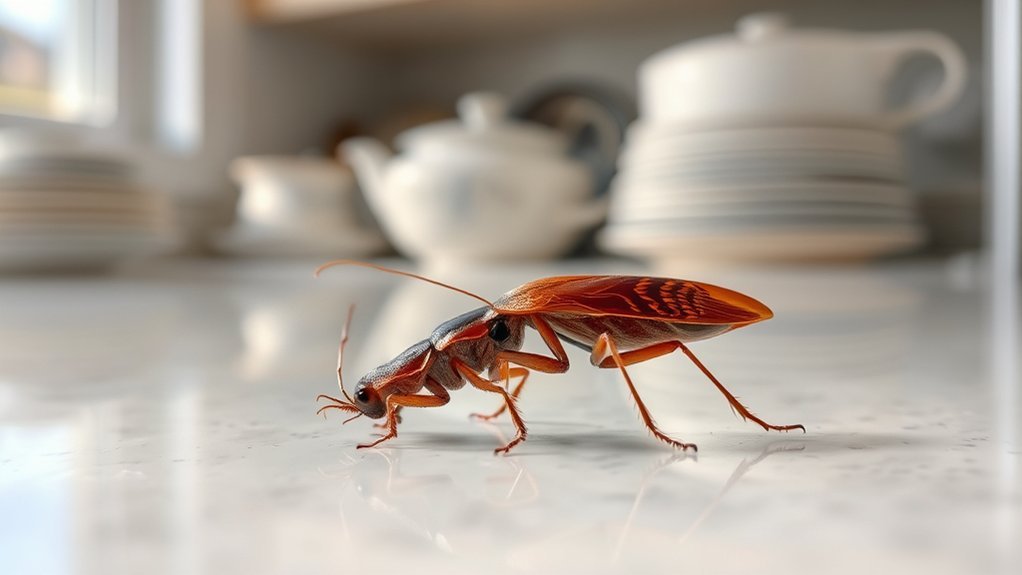
When you spot a German cockroach, look for a light brown or tan oval body about 1/2 to 5/8 inch long, with two dark parallel stripes running from behind the head to the wing base. You’ll also notice that females appear darker than males, and all adults carry wings, though they rarely fly. Nymphs are easier to distinguish since they’re smaller, wingless, and display a darker brown to black coloration compared to the tan adults. Unlike their American cockroach counterparts, German cockroaches are notably smaller and tannish with dark stripes rather than reddish brown with a light-edged thorax.
Physical Appearance Traits
German cockroaches are tiny insects, measuring only ½ to 5/8 inch long as adults — smaller than a pencil eraser. Their light brown to tan bodies carry two dark parallel stripes running from behind the head to the wing base. Females appear darker and wider than the slender, tapered males.
| Trait | Adults | Nymphs |
|---|---|---|
| Length | ½–5/8 inch | 1/8–9/16 inch |
| Color | Light brown to tan | Dark brown to black |
| Markings | Two dark thorax stripes | Pale thoracic stripe |
| Body shape | Oval, elongated | Compact, oval |
| Wings | Present, rarely fly | Absent |
You’ll also notice six legs, long antennae, and a foul odor when you disturb them. Their fecal droppings resemble tiny pepper flakes. Females also carry an egg case called an ootheca, which is roughly 5/16 inch long and typically contains around 40 eggs.
Nymph Versus Adult Differences
Knowing what German cockroaches look like at different life stages helps you tell a nymph from an adult — and that distinction matters when you’re evaluating an infestation.
Nymphs start at just 3 mm, darkening from white to dark brown within hours of hatching. Adults reach 13–16 mm with fully developed wings. Here’s what separates them:
- Wings — Nymphs are wingless; adults develop functional wings after their final molt.
- Size — Nymphs progress through up to six instars, growing from 3 mm to 12.5 mm before adulthood.
- Reproductive organs — Only adults can reproduce; nymphs lack this capability entirely.
Both stages share the same pronotal stripes, similar behavior, and protein-based food preferences — making early identification critical for effective control. Physical contact within aggregations has been shown to accelerate nymphal development, meaning denser infestations can shorten the time it takes nymphs to reach reproductive adulthood.
How Do You Identify Brown-Banded Cockroaches?
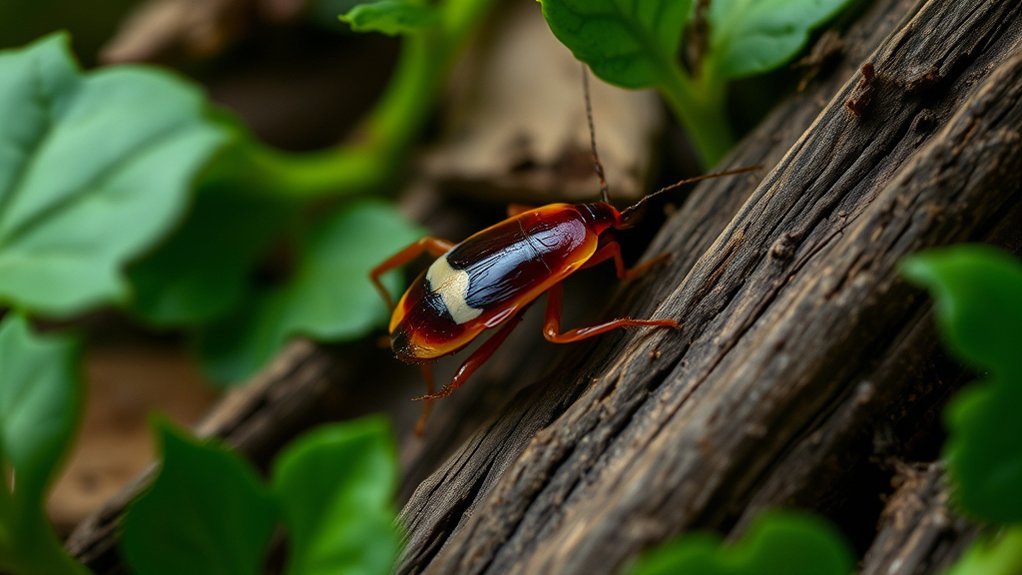
Brown-banded cockroaches are one of the smaller roach species you’ll encounter, measuring between 10 mm and 14 mm long with a distinctive light or glossy dark-brown coloring. Their most recognizable feature is the two light-colored bands running across their wings and abdomen, though these bands can appear broken or irregular and may be partially hidden beneath the wings.
You’ll notice clear differences between males and females. Males are slender, light brown, and have full wings covering their abdomen, allowing them to fly when disturbed. Females are broader, darker, and have underdeveloped wings that don’t fully cover their abdomen.
Unlike German cockroaches, brown-banded roaches avoid moisture and prefer warm, dry areas above floor level, such as cabinets and electronics. They’re nocturnal and hide during the day, making early detection difficult. Their yellowish egg cases, less than 5 mm long, are typically placed under furniture. Due to their preference for heated indoor environments, brown-banded cockroaches are commonly found hiding behind wall decorations, loose wallpaper, and inside electrical appliances like televisions and radios.
Where Do Small Cockroaches Hide in Your Home?
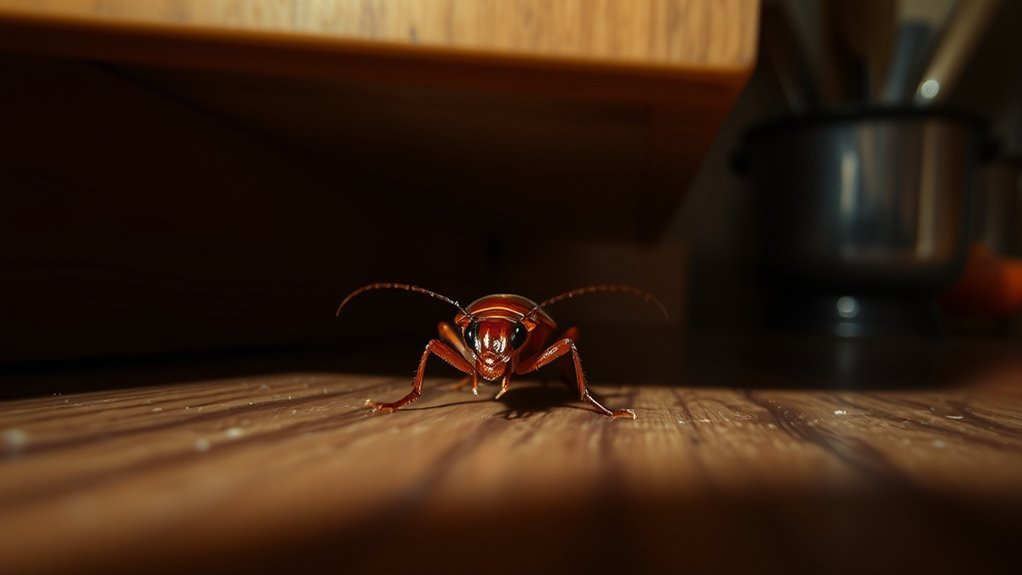
Small cockroaches have five common hiding spots in your home: the kitchen, bathroom, living areas, basement and utility spaces, and walls or ceilings.
In kitchens, they’ll nest behind refrigerators, stoves, and dishwashers, inside cabinets, or within appliances like toasters and coffee makers. Bathrooms attract them near drains, pipes, and cracked tiles. In living areas, they’ll tuck into furniture, electronics, and corners where food particles collect.
Basements and utility spaces are especially risky because cockroaches thrive in moisture-heavy environments. Watch these three spots closely:
- Near water heaters and utility pipes
- Along floor drains and door thresholds
- Inside cluttered storage areas
Walls and ceilings also harbor infestations. You’ll find them behind baseboards, inside wall voids, and near electrical outlets where they deposit egg casings. Cracks, crevices, and damp ceiling areas are prime real estate for small cockroach species seeking shelter.
How Fast Do Small Cockroaches Reproduce?
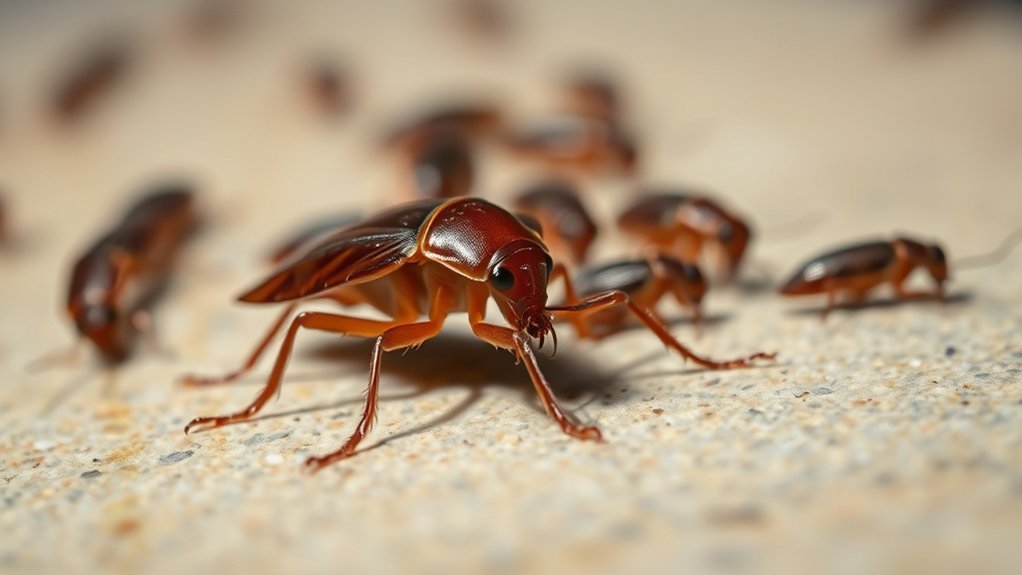
Cockroaches reproduce at a staggering rate, which is why a minor sighting can escalate into a full infestation within weeks. German cockroaches are among the fastest breeders you’ll encounter. A single female produces 4 to 8 oothecae in her lifetime, each containing 30 to 48 eggs. She carries each ootheca until hatching, which occurs in 20 to 30 days under warm conditions.
Once hatched, nymphs molt 6 to 7 times before reaching adulthood, maturing in as little as 50 to 60 days in warm environments. German roaches begin breeding just days after reaching maturity, and females can form new oothecae within weeks. That cycle compounds fast—a single German cockroach lineage can reach 300,000 individuals within a lifetime.
Even without males, females can reproduce parthenogenetically, making population control even harder. If you spot tiny cockroaches, act immediately before numbers spiral out of control.
What Makes Small Cockroaches So Difficult to Eliminate?
When you’re dealing with small cockroaches, their rapid reproduction rates make elimination feel like a losing battle, as a single female can produce hundreds of offspring in just months. You’ll rarely find their nests easily, since these insects hide in wall voids, behind appliances, and inside tight crevices that standard treatments can’t reach. These two factors combined mean that killing the cockroaches you see barely scratches the surface of the actual infestation.
Rapid Reproduction Rates
One of the key reasons tiny cockroaches are so difficult to eliminate is their staggering reproductive capacity. A single German cockroach female produces 120–320 eggs across her lifetime, and under ideal indoor conditions, populations can explode within months. Here’s what makes their reproduction particularly overwhelming:
- Speed: Nymphs mature into breeding adults in as little as 50–60 days in warm environments.
- Volume: One female can produce over 200 offspring, each capable of breeding within 100 days.
- Independence: German cockroaches reproduce parthenogenetically, meaning females don’t need males to produce offspring.
Heated indoor spaces eliminate seasonal breeding interruptions, allowing year-round reproduction. By the time you notice an infestation, you’re likely already dealing with multiple overlapping generations.
Hidden Nesting Locations
Even if you eliminate every cockroach in sight, hidden nests guarantee the infestation bounces back. Small cockroaches exploit cracks in walls, ceilings, and floors as both hideouts and entry points. They squeeze behind refrigerators, under sinks, and inside cabinet voids where warmth and moisture concentrate. Bathrooms and kitchens offer ideal conditions—humid air, nearby plumbing, and constant food access keep colonies thriving.
Wall voids, ripped wallpaper, and floor drains harbor entire colonies you’ll never see during daylight hours. Their nocturnal habits mean they retreat deep into these spaces before you notice them. Look for droppings, shed skins, egg cases, and a musty odor—these signs reveal nest locations. Without targeting the actual nest, surface treatments won’t break the infestation cycle.
How Do You Get Rid of Small Cockroaches for Good?
Getting rid of small cockroaches for good requires a multi-pronged approach that combines chemical treatments, sanitation improvements, and preventive measures.
Start by addressing infestations from multiple angles simultaneously:
Tackling a cockroach infestation means hitting it from every direction at once — no single solution will cut it.
- Apply chemical treatments strategically — Use roach sprays on visible cockroaches, place bait gels in hiding areas so roaches carry poison back to their colonies, and deploy barrier products around your home’s perimeter.
- Eliminate attractants immediately — Wipe spills right away, store food in airtight containers, fix indoor leaks, reduce humidity, and remove dirty dishes from sinks promptly.
- Manage waste and clutter — Remove old boxes and newspapers, tie garbage bags tightly, and maintain regular disposal schedules to eliminate roach harborage areas.
You’ll also need sustained commitment beyond initial treatment. Maintain sanitation standards, inspect entry points regularly, and reapply barrier products to prevent reinfestation. For persistent problems, consider professional intervention.
Frequently Asked Questions
Can Small Cockroaches Survive Being Submerged in Water?
Yes, small cockroaches can survive submersion, but it depends on the species. German cockroaches last about 15 minutes in cold water, while others can hold their breath for up to 30-40 minutes.
Do Small Cockroaches Carry Diseases That Affect Household Pets?
Yes, small cockroaches can carry diseases that’ll affect your household pets. They transmit E. coli, Salmonella, and tapeworms, causing vomiting, diarrhea, and fever in your dogs and cats through direct contact or ingestion.
Are Small Cockroaches Capable of Biting Humans While They Sleep?
Yes, small cockroaches can bite you while you sleep, though it’s rare. Species like the German and brown-banded cockroach may nibble on exposed skin, such as your hands, feet, or face.
Can Small Cockroaches Damage Electrical Wiring or Household Appliances?
Yes, small cockroaches can damage your electrical wiring and appliances. They’ll chew through wires, leave corrosive droppings on circuit boards, and nest inside warm devices, causing overheating, short circuits, and potentially dangerous electrical fires in your home.
Do Small Cockroaches Produce Odors Detectable by Humans?
Yes, small cockroaches can produce odors you’ll detect, but only during an infestation. Their pheromones, droppings, and shed skins create musty, oily smells that intensify in your kitchen and bathroom.
Conclusion
Small cockroaches are tough opponents, but you can win the battle with the right approach. You’ve learned how to identify the most common species, where they’re hiding, and why they’re so hard to eliminate. Now it’s time to put that knowledge to work. Use the identification and treatment strategies you’ve discovered here, and you’ll protect your home from these resilient pests before they take over.
