
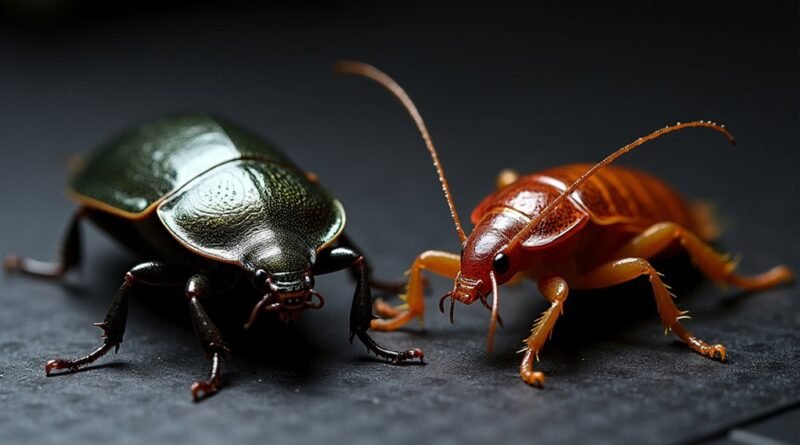
Water Bug That Looks Like a Cockroach: How to Tell the Difference
You can tell a water bug from a cockroach by checking three key traits. Water bugs are larger, reaching up to 4 inches, while cockroaches rarely exceed 2 inches. Cockroaches have long, thin antennae, whereas water bugs have short, thick ones. You’ll usually spot cockroaches indoors near kitchens or bathrooms, but water bugs prefer ponds and streams. Keep going to uncover everything else that separates these two insects.
Key Takeaways
- Cockroaches have long, thin antennae, while water bugs have short, thick antennae, making antennae the easiest first identification feature.
- Water bugs have pincer-like front claws for hunting prey, whereas cockroaches have standard uniform walking legs for scavenging.
- Water bugs are larger, measuring 2–4 inches, while cockroaches typically range from just 0.5–2 inches in length.
- Finding bugs in kitchens or bathrooms suggests cockroaches, while sightings near drains or standing water indicate water bugs.
- Water bugs are solitary hunters, whereas cockroaches are passive scavengers typically found in large indoor groups or colonies.
Water Bug vs. Cockroach: How to Tell the Difference
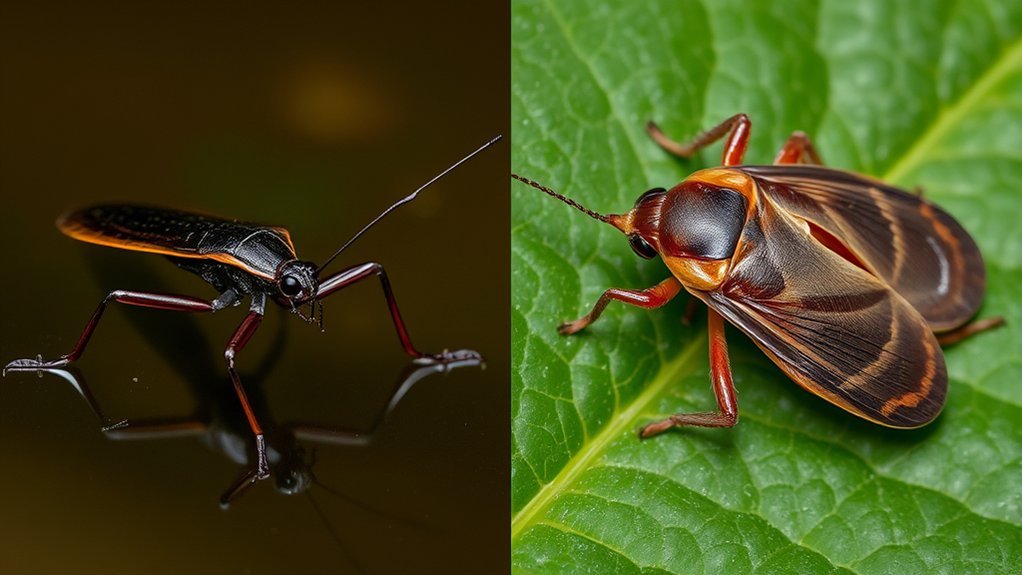
Telling a water bug apart from a cockroach comes down to a few key physical and behavioral traits. Start by checking the antennae. Cockroaches have long, thin antennae that extend visibly beyond their bodies, while water bugs have short, thick antennae that aren’t nearly as prominent.
Next, look at the front legs. Water bugs have pincer-like claws designed for capturing prey, whereas cockroaches have standard walking legs built for running and climbing.
Water bugs have pincer-like claws for catching prey, while cockroaches have standard legs made for running and climbing.
Habitat also helps you identify which insect you’re dealing with. Water bugs stay near ponds and streams, rarely entering homes. Cockroaches, on the other hand, thrive indoors in damp areas like kitchens, basements, and bathrooms.
Finally, consider behavior. Water bugs actively hunt prey and can bite you, causing sharp pain. Cockroaches scavenge for scraps and will run or hide when threatened rather than attack. Unlike cockroaches, water bugs are solitary creatures typically found alone rather than in large groups or colonies.
Size, Shape, and Color That Give Each One Away
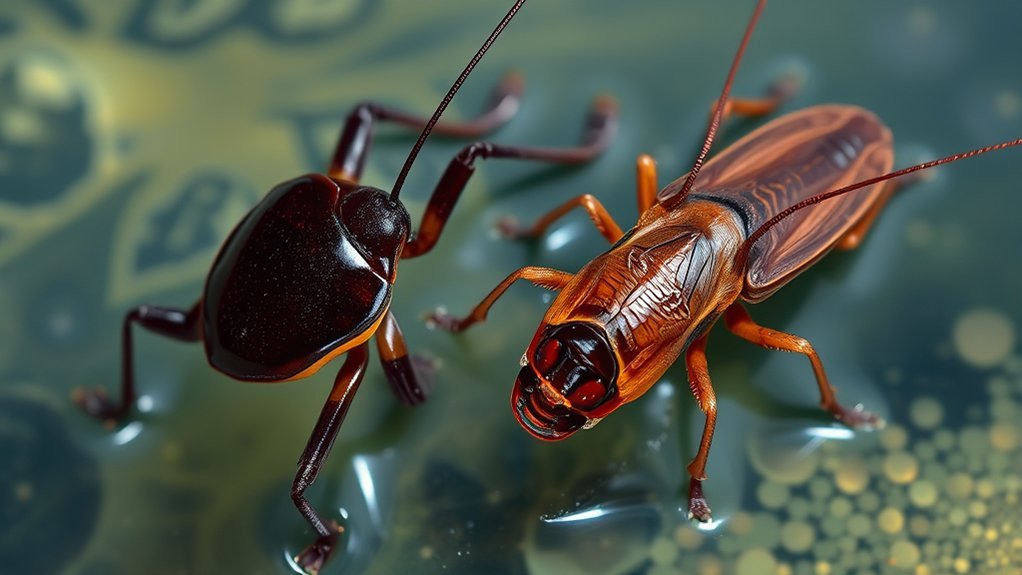
Beyond behavior and habitat, size, shape, and color can also help you tell these two insects apart at a glance. Water bugs measure 2–4 inches long, while cockroaches typically range 0.5–2 inches. If you spot something exceeding 2 inches, it’s likely a water bug.
Shape offers another reliable clue. Water bugs have flat, oval bodies that resemble dying leaves, with wings crossing in an X pattern at rest. Cockroaches, by contrast, have elongated, slightly tapered bodies that appear broad but not as distinctly oval.
Color is trickier since both insects share brown tones. Water bugs tend toward gray, tan, or greenish-brown shades, sometimes with a uniform, leaf-like appearance. Cockroaches lean reddish-brown to dark brown, with oriental cockroaches displaying a greasy black sheen.
When identifying these insects, rely on size and shape first. Color alone can mislead you due to significant overlap between the two. Water bugs also possess clawed front feet designed for grabbing and subduing prey, a feature entirely absent in cockroaches.
What Their Legs, Antennae, and Wings Actually Reveal
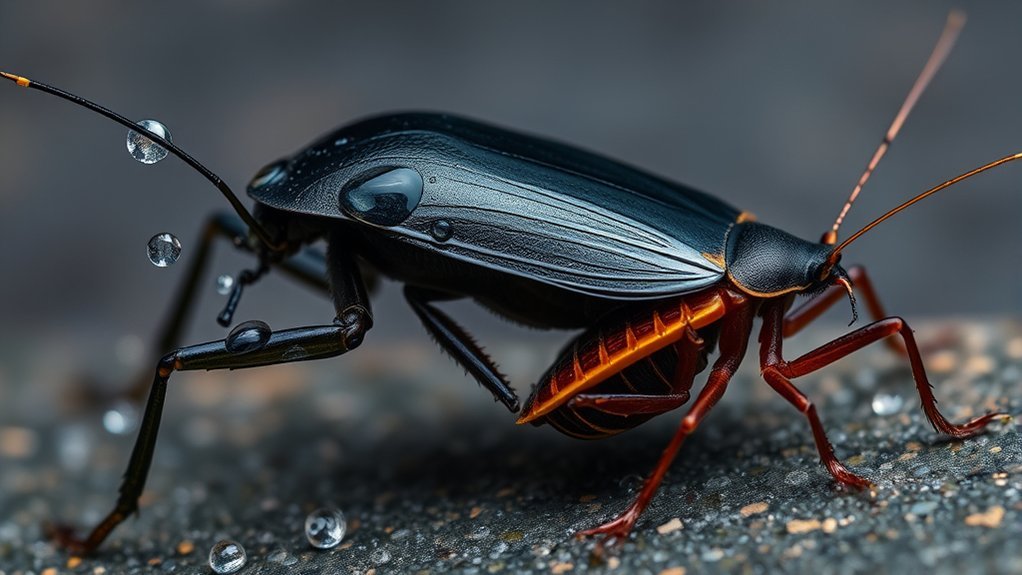
Legs, antennae, and wings reveal sharp differences between water bugs and cockroaches once you know what to look for. Water bugs have pincer-like front legs for grabbing prey and oar-shaped hind legs for swimming. Cockroaches carry six uniform walking legs built for scavenging and running, with no pincers or paddle shapes anywhere.
Antennae tell you just as much. Cockroach antennae are long, thin, and filiform, often long enough to obscure the head entirely. Water bug antennae are short, thick, and far less noticeable, sitting close to the body.
Wings round out the picture. Water bugs have overlapping wings that form a distinct X-pattern when at rest and can fly between water bodies. Cockroaches are less capable fliers. Oriental males have short wings and can’t fly, while females are wingless. American cockroaches have wings but mostly glide rather than fly actively. True water bugs also belong to the family Belostomatidae, a classification that separates them entirely from cockroaches at the biological level.
Where Water Bugs and Cockroaches Actually Live
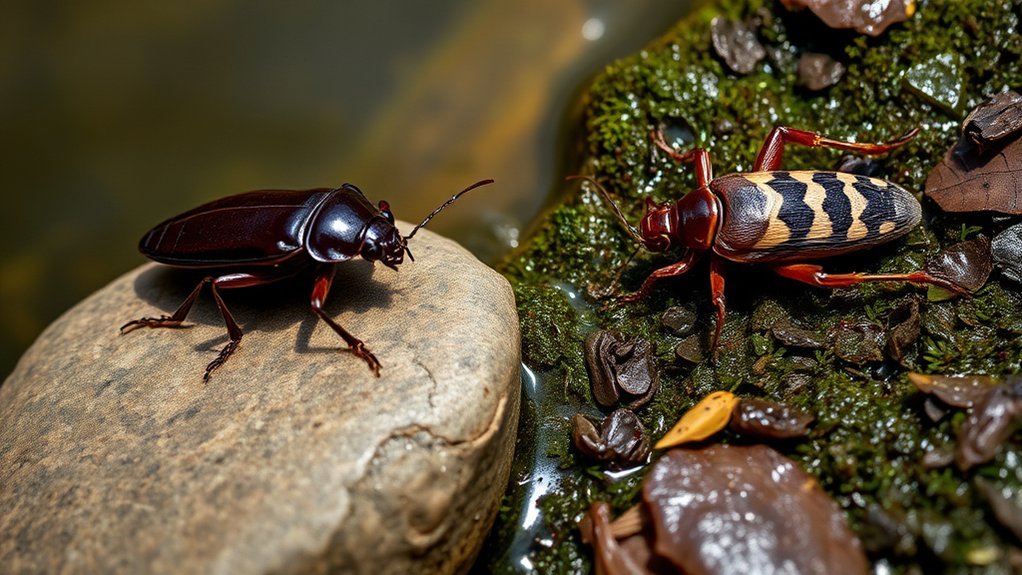
Where an insect lives tells you almost as much as what it looks like. Water bugs stick to aquatic environments — pools, ponds, lakes, marshes, and slow-moving streams. They need water to survive, surfacing only to breathe. You’ll find them near standing water, outdoor fountains, or seasonal floodplains. They wander indoors mainly during warmer months, drawn by artificial lights or attracted to leaks and standing water inside your home.
Cockroaches prefer a different kind of damp. They thrive in basements, sewers, drains, and dark corners near plumbing — humid but never submerged. They get inside through gaps under doors, utility lines, air ducts, and even hitching rides in grocery boxes or packages.
Both insects can enter through cracks and pipes, which explains the confusion. But their core habitats differ sharply. If you spotted it near a pond, it’s likely a water bug. Near your kitchen drain, suspect a cockroach. Unlike water bugs, cockroaches reproduce quickly and nest in large colonies, making a single sighting a potential sign of a much bigger hidden population.
Which One Is in Your Home: and What to Do Next
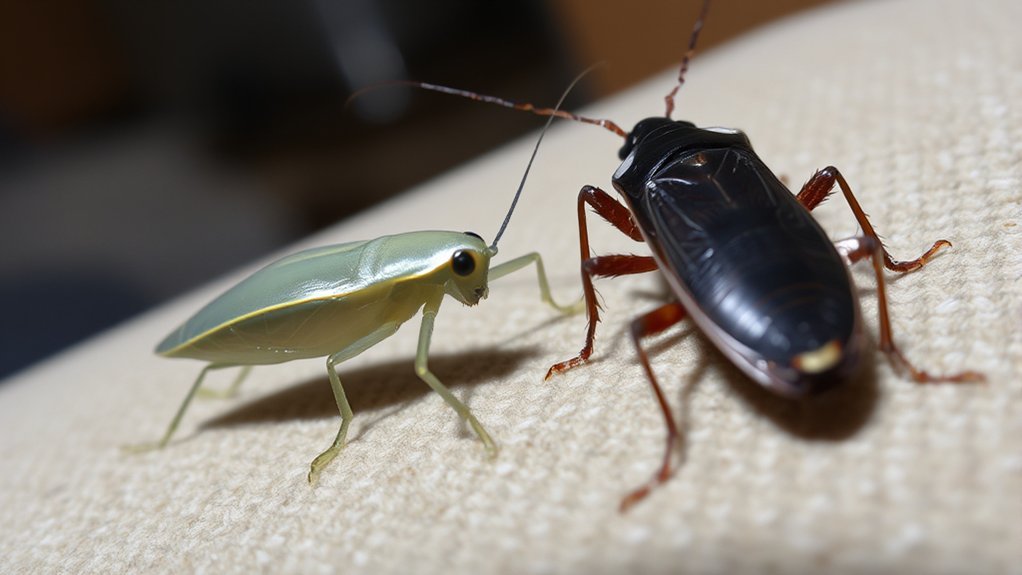
Figuring out which insect you’re dealing with comes down to a few quick visual checks. Look at the antennae first — cockroaches have long, whip-like ones, while water bugs have short or invisible antennae. Check the legs: water bugs have thick, pincer-like front legs; cockroaches have thin, spiny legs built for running. If you’re spotting bugs in your kitchen or bathroom, it’s almost certainly a cockroach. Bugs appearing near drains or after heavy rain suggest water bugs sneaking inside.
Once you’ve identified the culprit, act fast. Seal cracks, fix leaks, and eliminate standing water immediately. For cockroaches, use gel baits or targeted insecticides and apply diatomaceous earth around entry points. For water bugs, remove outdoor debris and address exterior moisture issues.
If you’re seeing more than five to ten bugs weekly indoors, call a professional — cockroach colonies breed quickly and worsen without expert intervention. Unlike water bugs, cockroaches can spread harmful microbes like salmonella and E. coli by contaminating surfaces and food in your home.
Frequently Asked Questions
Can Water Bugs and Cockroaches Ever Be Found in the Same Location?
Yes, you can find water bugs and cockroaches in the same locations! They’re both attracted to damp, dark areas like basements, bathrooms, and drains, especially during heavy rain or humid conditions.
Do Water Bugs Reproduce as Quickly Indoors as Cockroaches Do?
No, water bugs don’t reproduce as quickly indoors as cockroaches do. Cockroaches thrive in warm, damp indoor spaces, rapidly multiplying, while water bugs prefer freshwater habitats and rarely invade homes to breed.
Are Water Bugs or Cockroaches More Dangerous to Human Health?
Cockroaches are far more dangerous to your health than water bugs. They’ll spread bacteria, trigger your asthma, and contaminate your food, while water bugs typically stay outdoors and only accidentally enter your home.
What Attracts Water Bugs to Enter Homes After Heavy Rainfall?
After heavy rainfall, you’ll find water bugs entering your home due to flooded habitats, structural cracks, high humidity, sewer overflows, and available food sources like organic debris, pet food, and moisture-rich environments that mimic their natural surroundings.
Can Cockroaches Learn to Swim Like Water Bugs Can?
You can’t expect cockroaches to learn swimming like water bugs. They’re naturally built to float and paddle with their legs, but they don’t possess true swimming ability, making them fundamentally different from aquatic water bugs.
Conclusion
Now that you know what sets these two insects apart, you’re better equipped to handle whatever’s crawling around your space. If it’s a water bug, you’ll likely only spot it near moisture outdoors. If it’s a cockroach, you’ve got a bigger problem that needs immediate attention. Don’t wait to act—identify what you’re dealing with, then take the right steps to get rid of it fast.
