
What Does Cockroach Poop Look Like? A Complete Visual Guide
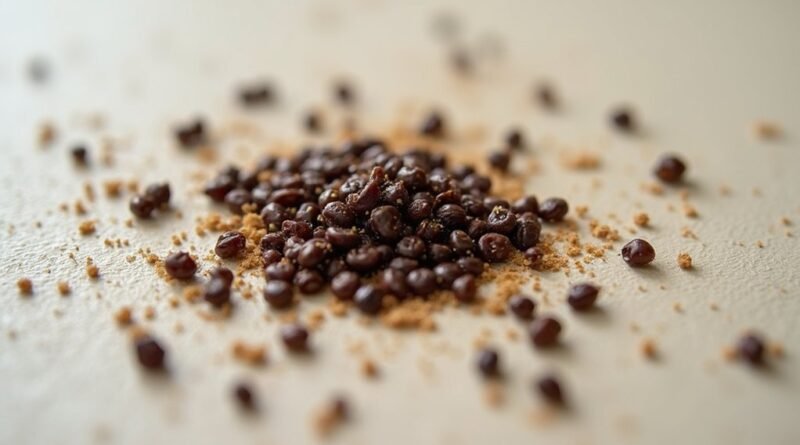
Cockroach droppings look like tiny dark specks resembling ground coffee or black pepper flakes, typically measuring 1–3mm depending on the species. Fresh droppings are dark brown to black, while older ones fade to grayish-brown and crumble easily. Larger species like the American cockroach leave small ridged cylinders, while smaller species produce fine granular particles. You’ll usually find them clustered near food sources, corners, and tight spaces — and there’s much more you’ll want to know.
Key Takeaways
- Cockroach droppings resemble small dark specks similar to ground coffee or black pepper, measuring 1–3mm and ranging from dark brown to black.
- Larger species like American cockroaches produce ridged cylindrical droppings, while smaller species like German cockroaches leave fine granular specks.
- Fresh droppings appear moist and dark, gradually lightening and drying to a crumbly grayish-brown color over time.
- Unlike smooth, pointed mouse droppings measuring 3–6mm, cockroach droppings have blunt ends, visible ridges, and appear clustered near food sources.
- Cockroach droppings carry dangerous pathogens like Salmonella and E. coli, plus allergens that can trigger asthma and allergic reactions.
What Does Cockroach Poop Actually Look Like?
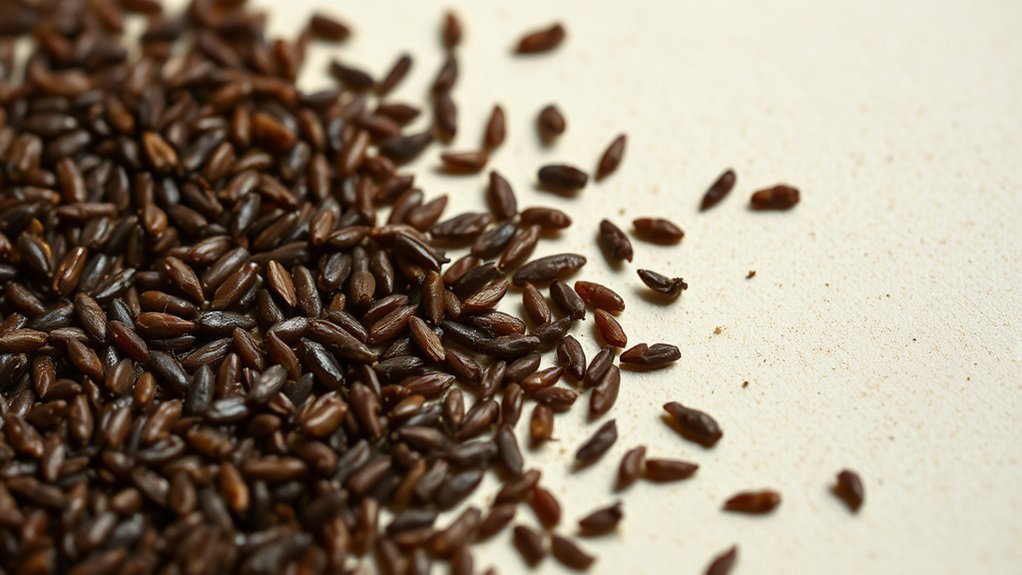
Cockroach droppings are small, dark specks that closely resemble ground coffee or black pepper flakes, ranging from 1–3mm depending on the species. Their color runs from dark brown to black, appearing darkest when fresh. As they age, they dry out and harden.
You’ll notice that texture varies depending on the roach species involved. Smaller species produce fine, granular particles, while larger species leave cylindrical droppings with visible ridges running along the sides. In tight corners and along edges, you might spot dark smears or stains instead of solid pellets, particularly from smaller species.
Fresh droppings may look slightly moist, but don’t count on that detail alone for identification. The shape and ridged texture are your most reliable visual clues. German cockroaches produce finer, pepper-like particles, while American cockroaches leave more substantial cylindrical forms you can examine more easily with the naked eye. If you’re unsure whether you’re looking at roach or mouse droppings, note that mouse droppings are larger, measuring 6–10mm, and taper to pointed ends rather than the blunt, ridged ends left by roaches.
Does Every Roach Species Leave Different Droppings?
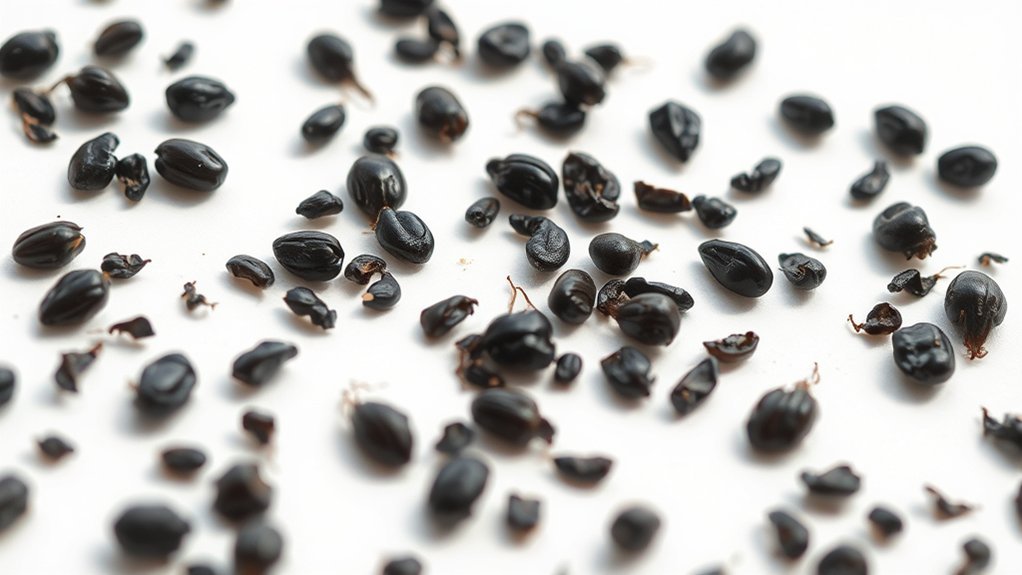
Yes, every roach species leaves slightly different droppings, though they generally fall into two broad categories: fine, granular specks from smaller species and ridged cylindrical pellets from larger ones.
German and brown-banded cockroaches produce similar droppings—tiny dark specks resembling black pepper or coffee grounds, often leaving ink-like smears along corners and edges. You can easily mistake them for dirt or dust.
American and Oriental cockroaches leave much more distinctive droppings. American roach droppings form small ridged cylinders, 2–3mm long, with blunt ends resembling fennel seeds. Oriental roach droppings are even larger, reaching up to an inch long, with ridges running end to end.
One reliable distinction you’ll notice is texture. Large roach droppings have visible ridges, while mouse droppings appear smoother. Regardless of species, all cockroach droppings contain allergens and pheromones that attract more roaches, making early identification critical for effective control. Droppings are most commonly found near food sources and hiding spots, so inspecting kitchen cabinets, behind appliances, and dark corners can help you locate and identify an infestation faster.
What Size and Shape Tell You About the Roach Species
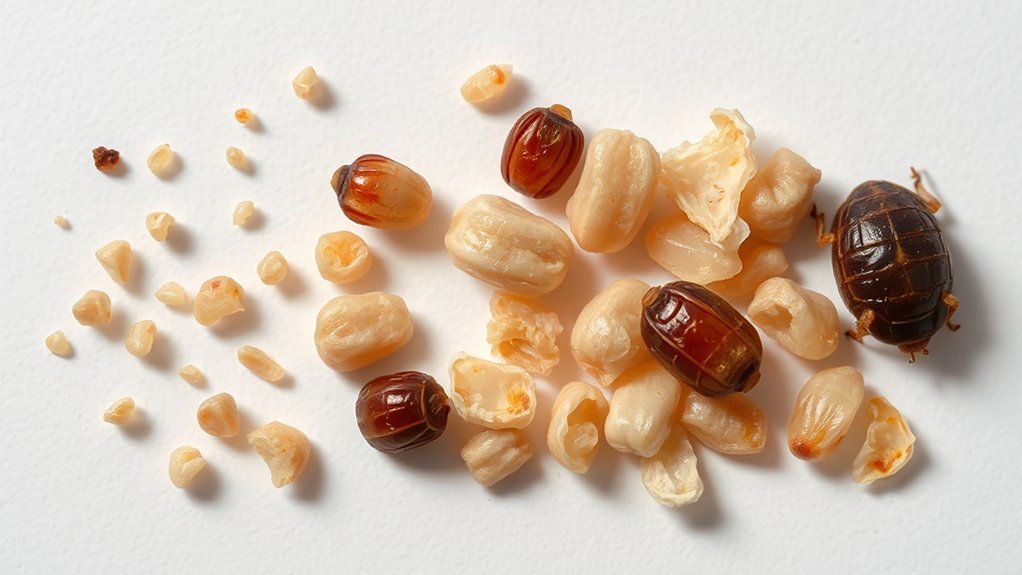
The size and shape of cockroach droppings act as a reliable species identifier. Large species like American and Oriental cockroaches leave cylindrical, solid pellets up to one inch long with visible ridges running end to end. Small species like German and Brown-Banded cockroaches produce granular specks resembling black pepper or coffee grounds, measuring under 1 millimeter.
You can narrow down the species by focusing on three key visual traits:
- Shape: Cylindrical pellets with blunt ends point to larger species; irregular granular specks indicate smaller ones
- Ridges: Visible ridges along the length confirm larger species and help distinguish droppings from rodent feces
- Size: Rice-grain dimensions suggest large roaches, while dust-like particles suggest small ones
Nymph droppings follow the same pattern but scale down proportionally. As cockroaches mature, their droppings grow, giving you another clue about infestation progression and the species involved. Cockroach poop contains compounds that can trigger allergic reactions, making accurate species identification important for addressing the specific health risks present in your home.
How Roach Droppings Change Color and Texture Over Time
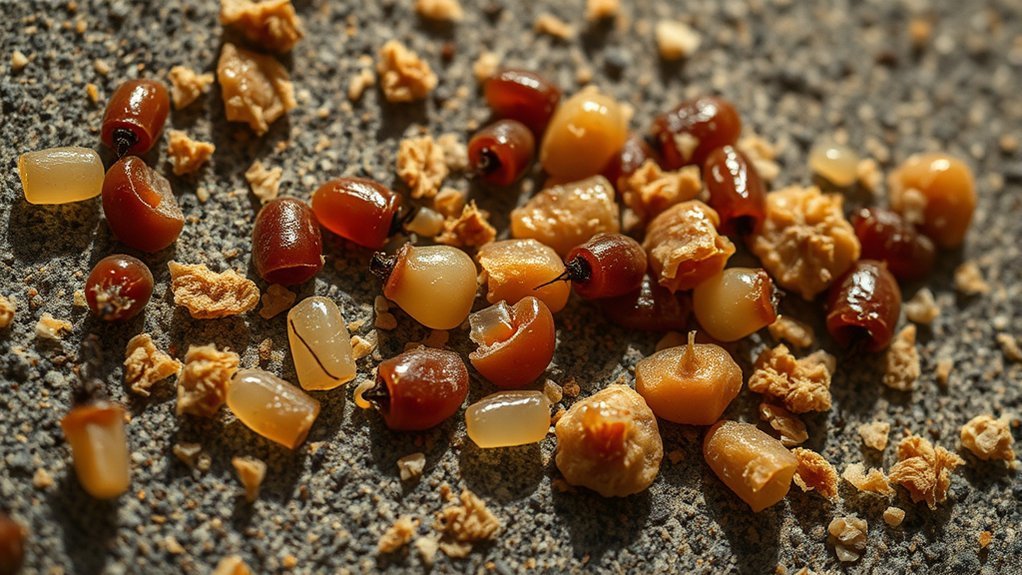
Roach droppings go through four distinct stages of color and texture change, each revealing how long the infestation has been active. Fresh droppings appear dark brown to black, feel moist, and smear when you press them with a gloved finger — a clear sign of an active infestation.
Within hours, they enter the initial aging stage. Moisture evaporates, color lightens slightly, and the texture shifts from sticky to semi-dry, though they’ll still smudge.
At the intermediate stage, you’ll notice a medium brown color, a dry crust forming on the surface, and reduced smearing ability. The shape holds but hardens.
Fully dried droppings turn grayish-brown, crumble easily, and won’t smudge at all — resembling dry coffee grounds and suggesting an old or resolved infestation.
Several factors influence this timeline. High humidity slows drying, air exposure accelerates it, and the roach’s diet affects the initial color intensity. As droppings age and dry out, they release allergenic particles into the air, increasing the risk of respiratory issues and asthma symptoms during everyday activities.
Is That Cockroach Poop or Mouse Droppings?
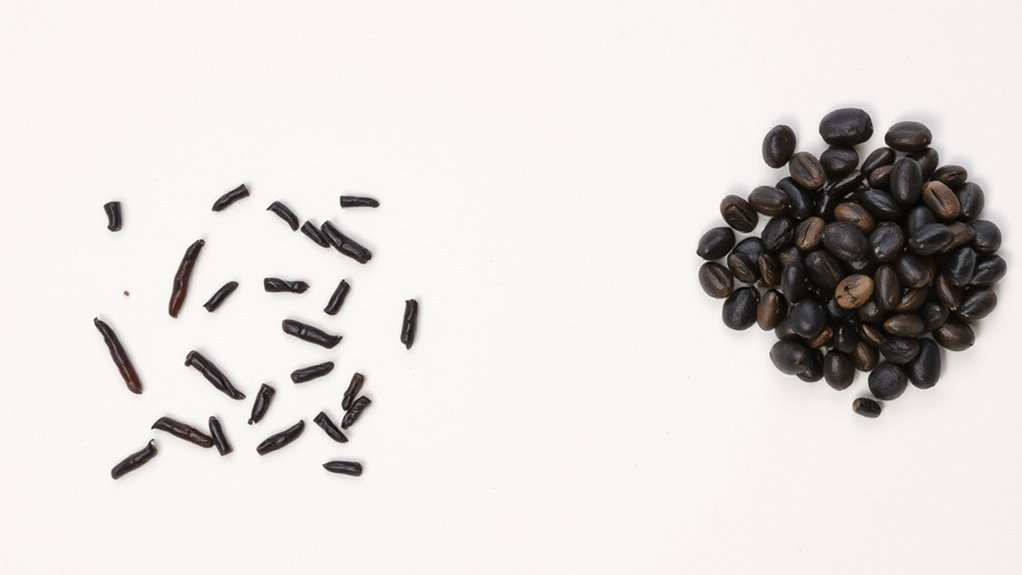
When you’re trying to tell cockroach poop from mouse droppings apart, size is your first clue—mouse droppings measure 3–6mm, while German roach droppings stay under 1mm, though American roach droppings can match mouse size at up to 1 inch. Shape and texture sharpen the distinction further: mouse droppings have pointed ends and feel smooth or shiny when fresh, whereas roach droppings have blunt, rounded ends with visible lengthwise ridges and a consistently dull, granular surface. Once you know these three markers—size, shape, and texture—you can confidently identify which pest you’re dealing with. Mice tend to leave uniform pellets scattered in trails, while cockroaches deposit droppings in clusters near food sources.
Size Comparison Chart
Distinguishing cockroach droppings from mouse droppings often comes down to size, and knowing the measurements of each can save you from misidentifying your pest problem. Most indoor roach species produce droppings under 1/8 inch, while mouse droppings measure between 1/8 and 1/4 inch.
- German cockroach droppings: 1–2mm, resembling ground black pepper
- American cockroach droppings: 2–3mm, cylindrical with ridges, approaching but not matching mouse dropping size
- Mouse droppings: 1/8–1/4 inch, smooth, rice-shaped pellets with pointed ends
When you’re comparing the two, remember that roach droppings feature blunt ends and ridged surfaces, while mouse pellets stay smooth and uniform. Size alone won’t confirm your pest, but it’s your fastest starting point.
Distinct Shape Differences
Shape is your clearest clue when you’re trying to tell cockroach poop from mouse droppings. Cockroach droppings have blunt ends on both sides, whether they’re tiny specks or larger cylinders. Mouse droppings, however, taper into pointed or pinched ends. You’ll also notice cockroach droppings sometimes smear like ink, while mouse pellets stay solid and firm.
| Feature | Cockroach | Mouse |
|---|---|---|
| End Shape | Blunt both ends | Pointed/pinched ends |
| Texture | May smear or streak | Solid, smooth surface |
| Ridges | Present on larger droppings | None |
| Form | Specks or cylinders | Distinct rice-shaped pellets |
When you spot dark pellets, check the ends first. That single detail cuts through the confusion faster than size or color alone.
Texture and Surface Contrast
Texture tells you just as much as shape when you’re comparing cockroach droppings to mouse droppings. Small roach droppings smear and stain surfaces, leaving ink-like spots or coffee ground-like granules. Mouse droppings stay solid, intact, and smooth with no smearing whatsoever.
- Cockroach (small species): 1–2mm pepper-like specks that smear, stain, and leave dark, inky marks on corners and edges
- Cockroach (large species): 2–3mm ridged cylinders with grooves and blunt ends, more defined but still darker and rougher than mouse droppings
- Mouse droppings: 6–10mm smooth pellets with pointed ends that remain firm and intact without staining surfaces
When you run a gloved finger across roach droppings, they’ll smear. Mouse droppings won’t budge.
Where in Your Home Roach Droppings Show Up Most
You’ll find roach droppings concentrated in kitchens and bathrooms first, since these rooms offer the food, moisture, and warmth cockroaches need to thrive. Check behind appliances, along cabinet edges, under sinks, and near toilets, where dark specks, smears, and cylindrical pellets tend to cluster. Hidden corners, drawer interiors, and spaces behind pipes also collect droppings fast, so don’t overlook these spots during your inspection.
Kitchen and Bathroom Hotspots
Roaches don’t wander randomly — they gravitate toward the same high-risk zones in nearly every home. In kitchens and bathrooms, you’ll find droppings concentrated where moisture, warmth, and food intersect. Leaky pipes under sinks create the constant dampness roaches need to survive year-round. Behind refrigerators, warmth and food residue make ideal clustering spots for German roaches. Cracked grout, worn caulking, and sweating pipes in older homes add even more entry points and shelter.
Check these specific locations first:
- Under sinks — black specks or smears near pipe joints and drainage lines
- Behind appliances — dark particles and droppings clustered near refrigerators and dishwashers
- Bathroom surfaces — droppings along floor drains, behind toilets, and inside cracked shower caulking
Hidden Corners and Cabinets
While kitchens and bathrooms get most of the attention, hidden corners and cabinets are where roach activity often goes undetected the longest. Dark, undisturbed spaces behind furniture collect scattered black specks and cylindrical droppings from larger species like American cockroaches. You’ll often find feces concentrated along baseboards and wall junctions near furniture edges.
Inside cabinets, check joints and crevices closely. German cockroaches leave pepper-like specks along edges, while larger species deposit coffee-grain-shaped feces on wooden panels. A foul, oily odor trapped in tight joints signals active nesting.
In pantries and storage drawers, look for dark specks near food sources and hidden egg cases behind drawer panels. If specks keep reappearing after cleaning, you’re dealing with an established infestation, not just residual debris.
How to Tell If You Have a Minor Problem or a Full Infestation
How bad is your cockroach problem? The answer lies in what you’re seeing. A few isolated specks in one cabinet suggest a minor issue, while droppings in multiple rooms with live roaches visible signal a full infestation.
Look for these key indicators:
- Minor problem: Fresh, distinct specks limited to one area like a cabinet or under the sink, no egg cases or live roaches present
- Advancing infestation: Moderate droppings paired with egg cases, shed skins, and occasional dead roaches appearing in hidden spots like pantries and bathrooms
- Full infestation: Heavy accumulation spreading across multiple rooms, dark stains covering surfaces, visible live roaches, musty odor, and mixed species droppings
If droppings persist despite regular cleaning, you’re likely dealing with a problem that requires professional intervention rather than DIY solutions.
Why Cockroach Droppings Are More Dangerous Than They Look
You might dismiss a few dark specks as a minor nuisance, but cockroach droppings carry bacteria, allergens, and pathogens that threaten your household’s health far beyond what their size suggests. Even dried, microscopic fecal particles become airborne during sweeping or vacuuming, triggering asthma attacks, respiratory allergies, and bacterial infections without you realizing the source. Recognizing these hidden hazards early lets you gauge whether you’re facing an isolated problem or a full infestation before the health risks compound.
Hidden Health Hazards
Cockroach droppings carry far more danger than their small size suggests. When droppings dry out, they crumble into fine particles that become airborne, meaning you’re inhaling allergens and pathogens without realizing it. These microscopic threats worsen asthma, trigger eczema flare-ups, and sensitize your airways over time.
- Pathogen exposure: Droppings harbor Salmonella, E. coli, and Shigella, contaminating your countertops, utensils, and food without visible signs.
- Respiratory damage: Inhaled fecal particles provoke chronic wheezing, bronchitis, and long-term airway sensitization, especially in children and the elderly.
- HVAC contamination: Dried excrement entering your ventilation system circulates hazards throughout your entire home, amplifying exposure far beyond the original infestation site.
You can’t afford to dismiss what looks like harmless specks—they’re actively compromising your household’s health.
Unseen Infestation Signals
Those small, scattered specks you’re finding aren’t just waste—they’re a map of hidden activity. Droppings in multiple locations confirm an established infestation, not an isolated roach. You’ll spot tiny black pepper-like specks in corners, edges, and concealed spaces, while larger ridged cylindrical droppings signal American roach presence deeper inside walls or cabinets.
Check under sinks, around appliances, and along baseboards—these locations reveal where colonies travel undetected. Accumulation near pantries confirms breeding populations are already active close to your food supply.
What makes this worse is that droppings contain pheromones, actively recruiting more roaches to the same spots. Fresh, dark droppings mean the infestation is growing right now. Finding droppings across multiple areas means you’re dealing with a widespread, unseen population requiring immediate professional intervention.
The Pheromones in Roach Droppings That Draw More Roaches In
Roach droppings don’t just sit there — they actively recruit more cockroaches. Their feces contain volatile carboxylic acids (VCAs), chemical signals that broadcast “safe location” to nearby roaches. These compounds evaporate into the air, advertising food, shelter, and mates. But here’s the catch: gut bacteria produce these VCAs. Without bacteria, the pheromones don’t form, and the attraction disappears entirely.
Your infestation grows because each dropping strengthens the signal. Researchers identified 40 VCAs in normal feces, with 12 completely absent in germ-free droppings. A synthetic blend of just six pheromones outperforms commercial attractants.
Key facts you should understand:
- Sterile cockroaches can’t produce aggregation pheromones
- Nymphs actively prefer bacterially colonized feces over clean droppings
- Pheromone profiles shift based on local environment and microbiota
Every dropping you miss becomes another invitation for more roaches to move in.
How to Clean Up Roach Droppings Safely
Now that you understand how roach droppings actively recruit more pests, eliminating them quickly cuts off that chemical signal. Here’s how to clean safely and effectively.
Gear up first. Wear rubber gloves and a face mask before touching anything. Use a HEPA filter vacuum to trap allergens without spreading them.
| Stage | Method | Key Tip |
|---|---|---|
| Dry droppings | HEPA vacuum from top surfaces down | Seal vacuum bag immediately |
| Feces removal | Scoop with disposable paper towels | Place in sealable plastic bag |
| Surface washing | Soap, warm water, scrub brush | Use baking soda to kill odor |
| Disinfecting | Diluted bleach or vinegar-water mix | Let surfaces dry completely |
After disinfecting, rinse surfaces with fresh warm water and vacuum once more. Seal cracks and holes to block re-entry, empty trash daily, and wipe pet bowls with hot soapy water to prevent reinfestation.
Frequently Asked Questions
Can Cockroach Droppings Stain Fabric or Upholstery Permanently?
Yes, cockroach droppings can permanently stain your fabric and upholstery. They’ll leave dark, ink-like marks that embed into fibers when dried. You’ll need to act fast, as moist droppings penetrate deeper, worsening discoloration over time.
Do Cockroaches Stop Leaving Droppings in Certain Weather Conditions?
Cockroaches don’t stop leaving droppings in certain weather conditions. Even in cold weather, you’ll still find evidence in heated indoor spaces, where established infestations continue producing droppings regardless of external temperatures or seasonal changes.
How Long Do Cockroach Droppings Remain Viable as Allergen Sources?
Cockroach droppings can remain viable as allergen sources for over two years. You’ll find they retain potency even after drying, and mechanical disturbance can release these allergens indefinitely from old, undisturbed residues in your home.
Can Pets Get Sick From Accidentally Ingesting Cockroach Droppings?
Yes, your pets can get sick from ingesting cockroach droppings. They’ll risk gastrointestinal issues like vomiting and diarrhea, bacterial infections, and lethargy. You should seal food sources and maintain pest control to protect them.
Are Cockroach Droppings Visible Under Ultraviolet or Black Light?
Cockroach droppings can fluoresce under ultraviolet or black light, making them easier to spot in dark areas. You’ll often see them glow, helping you identify hidden infestations that aren’t visible under normal lighting conditions.
Conclusion
Now that you know what cockroach droppings look like, you’re better equipped to catch an infestation early. Don’t ignore those tiny dark specks — they’re telling you something important. You’ve learned how to identify them, distinguish them from mouse droppings, and clean them up safely. Take action immediately if you spot them, because the longer you wait, the bigger your problem becomes. Your health and home depend on it.
