
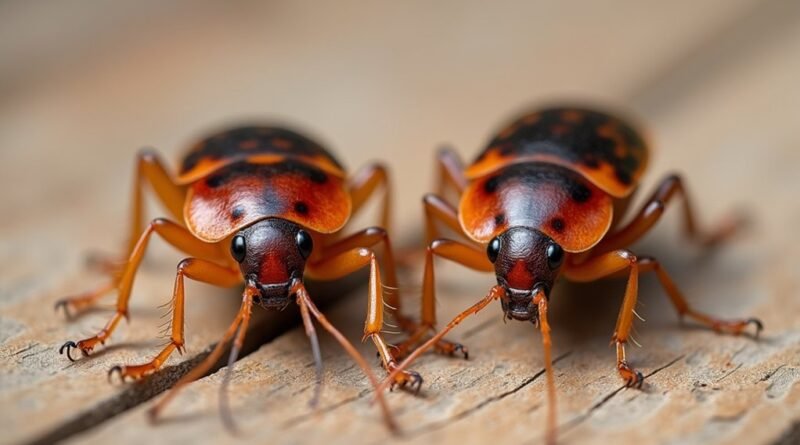
Wood Cockroach vs Cockroach: Key Differences Explained
Wood roaches and house roaches couldn’t be more different. You’ll find wood roaches living outdoors in decaying logs and leaf litter — they’re accidental home visitors that die within 48-72 hours inside. House roaches, however, thrive indoors, reproduce rapidly, and carry over 20 harmful bacteria. Wood roaches pose minimal health risks, while house roaches signal serious hygiene concerns. Keep exploring to understand exactly which one you’re dealing with and what to do about it.
Key Takeaways
- Wood roaches live outdoors in decaying wood and leaf litter, while house roaches thrive indoors and establish year-round colonies.
- House roaches reproduce rapidly indoors, whereas wood roaches die within 48-72 hours inside due to lack of moisture.
- Wood roaches pose minimal health risks, while house roaches carry over 20 harmful bacteria, including Salmonella and Staphylococcus.
- Wood roaches are light chestnut-brown with cream wing margins; house roaches are darker, ranging from 1/2 inch to over 2 inches.
- Wood roaches require no pesticides for removal, while house roaches need sealing, traps, and insecticide treatments for control.
What’s the Difference Between Wood Roaches and House Roaches?
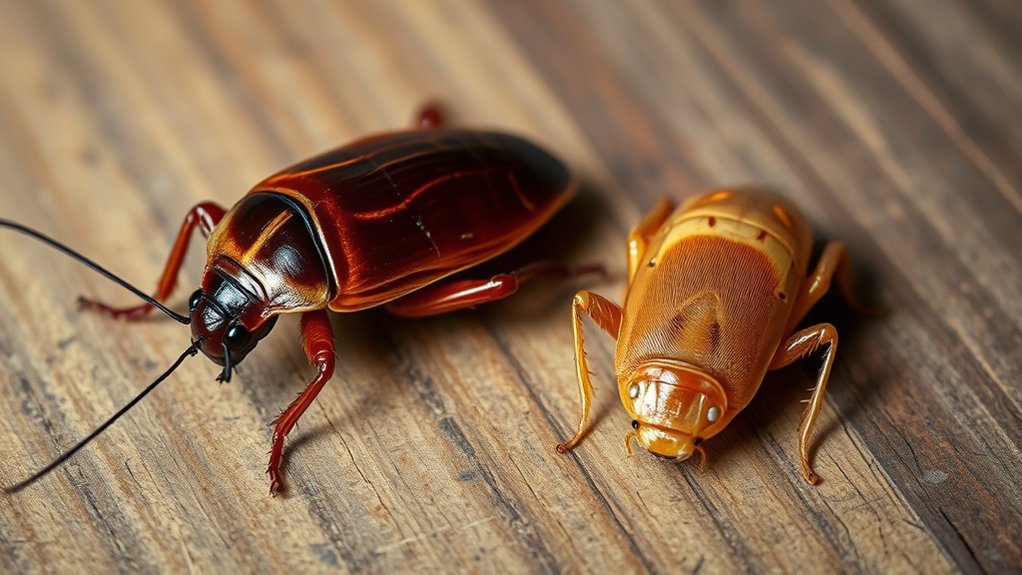
When comparing wood roaches and house roaches, their habitats tell the story. Wood roaches live outdoors in leaf litter, decaying logs, and wood piles, requiring high moisture from rotting plant matter. House roaches thrive indoors, colonizing kitchens, bathrooms, and basements year-round.
Their behaviors differ sharply too. Wood roaches move slowly day and night, while house roaches are nocturnal and dart quickly into cracks when disturbed. Male wood roaches fly toward lights, occasionally wandering inside accidentally, but they can’t sustain an indoor population and die within 48-72 hours without moisture.
The health risks couldn’t be more different. Wood roaches pose no real threat, carrying no known bacteria or food contamination risks. House roaches, however, carry over 20 bacteria types, contaminate food, and trigger asthma allergens.
Treatment reflects these differences too. You can simply sweep wood roaches out, but house roaches demand professional pest control. House roaches are also drawn to food crumbs and human waste, making cleanliness in kitchens one of the most effective deterrents against an infestation.
What Do Wood Roaches Look Like Compared to House Roaches?
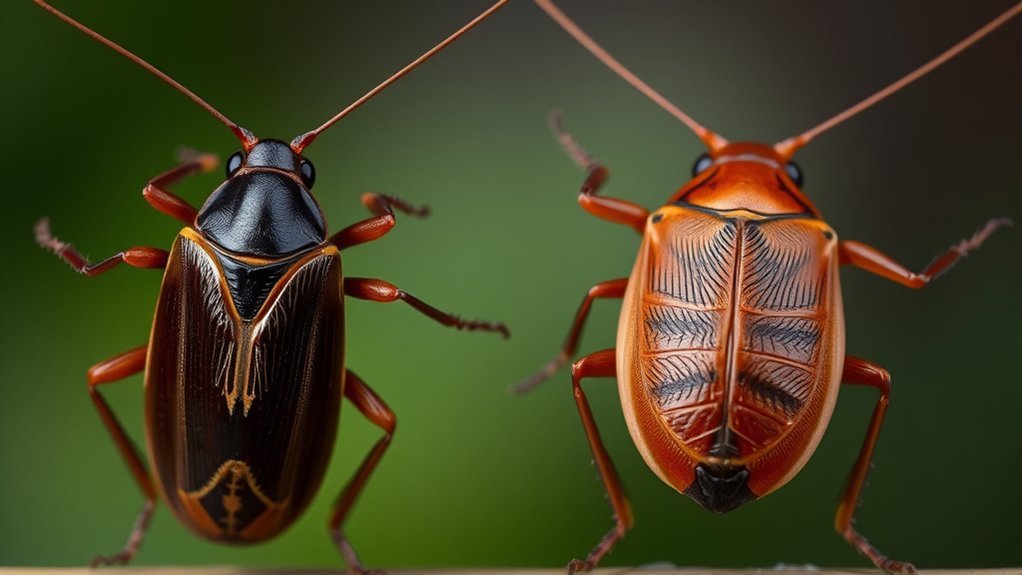
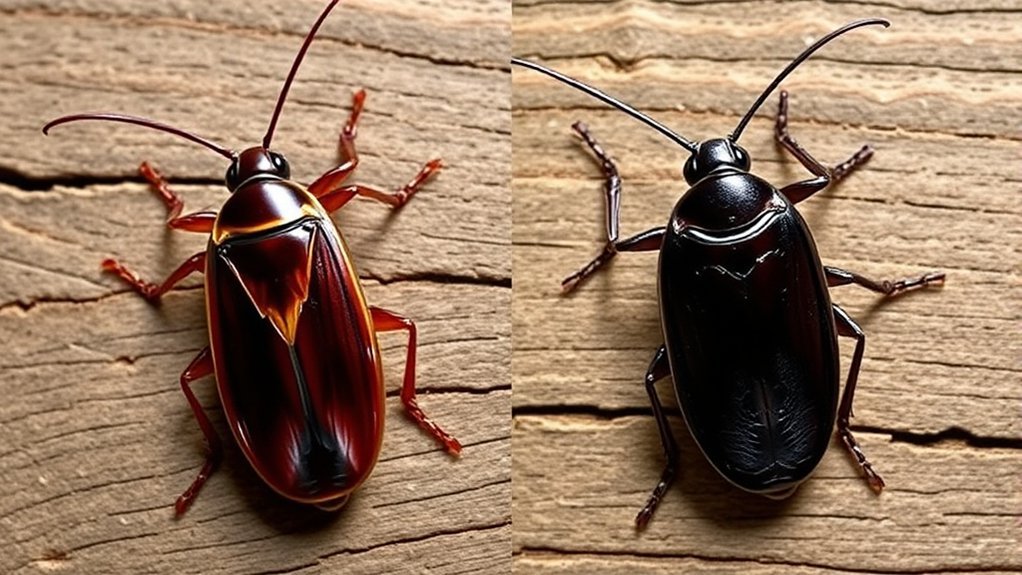
Telling a wood roach apart from a house roach comes down to color, size, and a few key structural details. Wood roaches sport a light chestnut-brown color with cream or transparent stripes along their wing edges and pale margins on their body. House roaches, by contrast, show darker tones — American roaches carry a reddish sheen, German roaches have two black stripes on their pronotum, and Oriental roaches appear nearly black.
Size-wise, wood roaches measure 3/4 to 1 inch, with males reaching the full inch. House roaches vary widely, from German roaches at 1/2 inch to American roaches stretching past 2 inches.
Structurally, both share an oval shape, long antennae, and six spiny legs. The key difference is behavior — wood roaches move slowly and won’t dart away, while house roaches scatter quickly when you disturb them. Male wood roaches also have noticeably long wings extending past their abdomen. Unlike house roaches, wood roaches are most active during late May through June, coinciding with their mating season.
How Can You Identify a Wood Roach at a Glance?
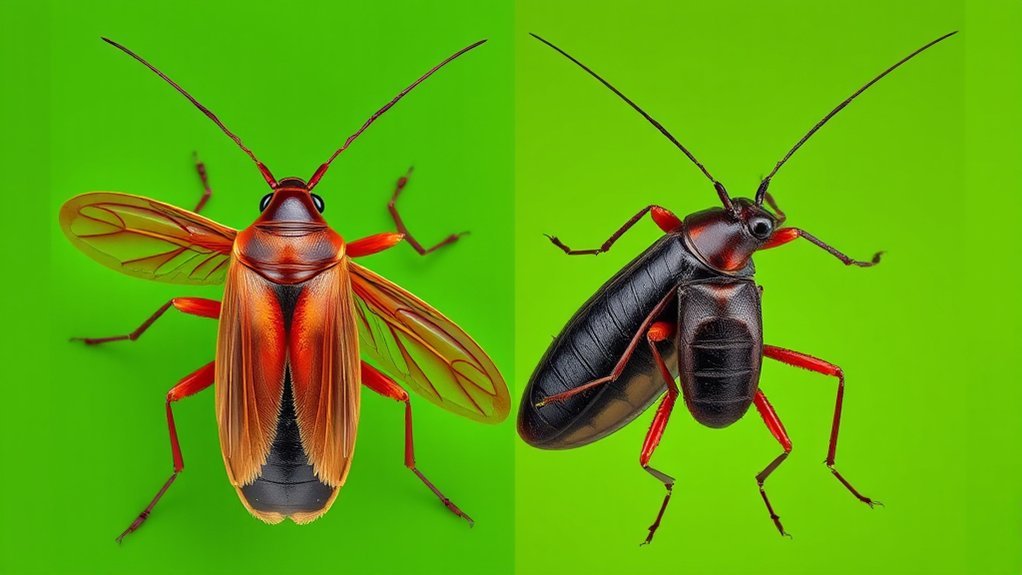
Spotting a wood roach at a glance is straightforward once you know what to look for. Start with size—adults measure ¾ to 1 inch, making them noticeably smaller than American cockroaches. Their chestnut-brown to tan coloring is common among roaches, so don’t rely on color alone.
Instead, focus on two reliable markers. First, check the thorax for a pale, creamy white or transparent stripe along its edge—both sexes carry this feature, and it’s rarely seen on household roaches. Second, look at the wings. Males have fully developed wings with a distinctive cream-colored edge along the margins, giving them a noticeably tan appearance. Females have short, stubby, non-functional wings.
You’ll also notice wood roaches lack the dark parallel stripes found on German cockroaches and have no “M” marking. Their flattened, oval body and long antennae complete the picture. Unlike indoor roaches that scatter when exposed, wood roaches are slow and calm, often remaining still rather than running away when approached.
Where Do Wood Cockroaches Actually Live?
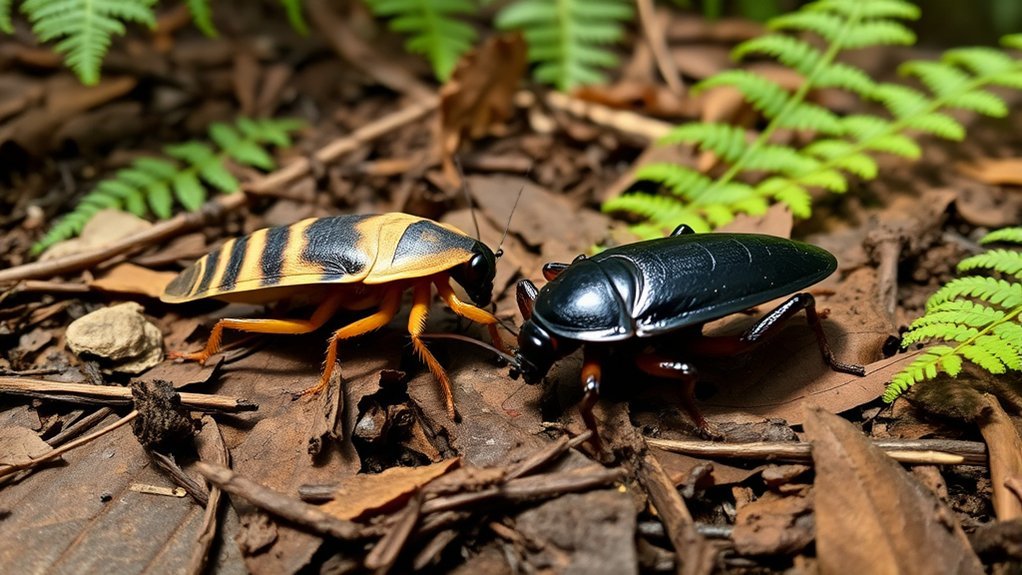
If you spot a wood cockroach outside, you’ll almost always find it in moist, wooded environments—think rotting logs, leaf litter, loose tree bark, and hollow stumps. Unlike common household roaches, wood cockroaches don’t seek out your home; they’re accidental visitors, typically carried in on firewood or drawn inside by outdoor lights during mating season. Once indoors, they quickly dehydrate in dry conditions and die, so a wood roach inside your house isn’t a sign of an infestation. Males swarm outdoors primarily during May and June, which is when they are most likely to be accidentally drawn toward lit windows and entrances.
Natural Outdoor Habitats
Unlike common cockroaches that invade your home, wood cockroaches thrive in forested areas throughout eastern and central North America, particularly in regions like Virginia, Iowa, Maine, and the Northeast. They prefer open, timbered areas with little ground cover and high moisture levels.
You’ll commonly find them in rotting logs, stumps, fallen trees, and beneath loose tree bark. Their flattened bodies allow them to squeeze into tight crevices within decaying wood. Hollow trees also provide ideal shelter, while nymphs overwinter under bark and wood debris.
On your forest floor, they inhabit leaf litter and decomposing organic matter, where females deposit eggs during summer. After dark, you can spot adults climbing tree trunks and lower branches of oaks and elms. Wood cockroaches are also drawn to lights at night, which can lead them into nearby homes during their mating season in May and June.
Accidental Indoor Appearances
| Entry Method | Peak Season | Prevention Tip |
|---|---|---|
| Flying toward lights | May–June | Limit porch lighting |
| Hiding in firewood | Late summer/fall | Store wood away from home |
| Crawling under siding | Spring | Caulk exterior gaps |
| Accumulating in gutters | Year-round | Clear gutters regularly |
| Wandering from woods | May–June | Maintain wide lawn buffer |
Once inside, they wander openly without nesting or reproducing. They’re temporary visitors that can’t acclimate to your home’s low humidity, so they die off quickly without intervention.
Why Are Wood Roaches Getting Into Your Home?
Wood roaches don’t seek out your home the way German cockroaches do — they stumble in accidentally through a handful of predictable pathways. The most common causes include:
Unlike German cockroaches, wood roaches don’t invade intentionally — they simply wander inside through a few common, predictable entry points.
Outdoor lighting – Male wood roaches are strongly drawn to bright lights, especially during late May and June mating season. Porch lights and security lighting pull flying males straight through open doors.
Firewood transport – Nymphs hide under bark on firewood during winter. When you bring logs indoors, they warm up and become active, emerging unexpectedly inside your home.
Structural gaps – They crawl through spaces under doors, open windows, and utility line openings. Cedar shake shingles and roof gutters also provide staging areas before entry.
Habitat proximity – If your home sits near wooded areas with leaf litter, rotting logs, or woodpiles close to the foundation, roach populations build up right at your doorstep.
Can Wood Cockroaches Survive Indoors?
Once a wood cockroach wanders inside your home, it’s fundamentally on a countdown. Unlike common household roaches, wood cockroaches can’t survive long in your living space. They typically die within 48 to 72 hours due to dehydration, since your home’s dry, heated air strips away the moisture they depend on. Even under the best circumstances, most won’t last beyond two weeks.
You also don’t need to worry about them breeding indoors. Wood cockroaches can only reproduce outside, laying eggs exclusively under bark or debris during summer. They can’t complete their life cycle in your home, so you’ll never find egg cases or nymphs establishing themselves inside.
If you spot one, simply vacuum or sweep it up. It’s a temporary visitor, not a settling resident. No pesticides or panic are necessary—just basic removal handles the problem effectively.
Do Wood Roaches Carry Disease Like House Roaches?
When it comes to disease transmission, wood roaches and house roaches aren’t even in the same category. House roaches carry over 20 types of harmful bacteria, including Salmonella, Staphylococcus, and Streptococcus. They contaminate surfaces, droppings, and food, creating serious health risks. Wood roaches, on the other hand, lack these dangerous pathogens entirely.
You don’t need to worry about wood roaches spreading disease. They die quickly indoors, which prevents any significant health issues from developing. Here’s what sets them apart from house roaches:
- House roaches spread Shigella by contacting garbage and waste
- House roaches leave bacteria on every surface they walk across
- Wood roaches carry none of the pathogens house roaches transmit
While wood roaches can trigger mild allergies through droppings or shed skin, their temporary indoor presence limits allergen buildup. Their health risk is minimal compared to their disease-carrying counterparts.
Which Is the Real Threat: Wood Roach or House Cockroach?
When comparing health risks, house cockroaches pose a far greater threat than wood roaches, spreading allergens and bacteria that can trigger asthma and contaminate food. You’re unlikely to face an infestation from wood roaches, since they don’t reproduce indoors and their presence is purely accidental. House cockroaches, however, lay egg cases inside your home, allowing populations to grow rapidly and turn a minor sighting into a full-blown infestation.
Health Risk Comparison
If you’ve ever spotted a cockroach in your home, your first instinct was probably panic — but not all roaches carry the same health risks. Wood roaches die within 48-72 hours indoors and won’t reproduce, making them largely harmless. Indoor cockroaches, however, are a genuine threat to your health.
Indoor cockroaches can expose you to:
- Diseases like salmonellosis, typhoid fever, cholera, and dysentery
- 33 types of bacteria, including Salmonella, Staphylococcus, and Streptococcus
- Allergens from body parts, saliva, and feces that trigger asthma and respiratory issues
Wood roaches don’t bite, sting, or spread disease. Indoor cockroaches thrive year-round, contaminating your food and surfaces continuously. Knowing the difference helps you respond appropriately instead of overreacting — or worse, underreacting.
Infestation Potential Differences
Spotting any roach in your home feels alarming, but wood roaches and house cockroaches pose completely different infestation threats. Wood roaches can’t establish indoor colonies because dry indoor air kills them within 48–72 hours. They don’t breed indoors, lay eggs only under outdoor bark or debris, and die off before reproducing inside. You won’t face a growing population — their presence stays temporary.
House cockroaches are a different story. Species like German and American roaches thrive in warm, humid buildings, completing their life cycle in 6–8 weeks indoors. They multiply rapidly, contaminate surfaces through droppings, and form persistent colonies that won’t resolve on their own.
If you’re seeing wood roaches, they’re a short-term nuisance. House cockroaches, however, represent a genuine, long-term infestation threat you’ll need to address immediately.
Do You Need Pest Control for Wood Cockroaches?
Whether you need pest control for wood cockroaches depends on the severity and frequency of indoor sightings. Isolated, accidental entries typically self-resolve since wood roaches can’t reproduce indoors and die off naturally. However, heavy infestations or constant activity warrant action.
Consider pest control if you’re experiencing:
- Frequent sightings day and night, causing ongoing discomfort
- Heavy outdoor pressure near woodpiles, stumps, or forested areas
- Seasonal surges during peak activity in May and June
For DIY control, place glue boards every 5-10 feet in active areas and apply perimeter insecticide treatments at 0.33-1 oz per 1,000 sq ft. Quarterly sprays maintain long-term results.
If DIY efforts aren’t working, contact a licensed professional. Preventative maintenance programs with twice-annual applications offer reliable, long-term protection. Don’t let a manageable problem escalate when effective solutions are readily available.
How Do You Keep Wood Roaches Out of Your Home?
Keeping wood roaches out starts with understanding how they get in. Seal all cracks, gaps, and penetrations in ground-level walls using caulk, putty, or plastic wood. Keep doors, windows, and screens tight-fitting, and repair any holes immediately. Redirect outdoor lights to shine downward rather than outward, and during peak activity months of May and June, switch to warm-colored LEDs or motion-activated lighting to reduce attraction.
Manage firewood carefully. Store piles far from your home, debark wood before bringing it inside, and only carry in a day or two’s worth at a time. Remove stumps, fallen limbs, and wood debris from your property.
Eliminate moisture by fixing leaks, cleaning gutters, and removing leaf litter from window wells. Apply a residual insecticide perimeter treatment around your foundation, doors, and windows, and use glue traps near common entry points to monitor activity.
Frequently Asked Questions
Are Wood Roaches More Common in Certain Seasons Than Others?
Yes, you’ll see wood roaches most often from May through August when warm temperatures trigger mating behaviors. Males fly toward your lights on warm evenings, making late spring and early summer your highest-risk period.
Can Wood Roaches Damage Wooden Furniture or Structural Wood Indoors?
You don’t need to worry about wood roaches damaging your wooden furniture or structural wood. They can’t chew sound timber, they only eat decaying matter, and they’ll dehydrate and die indoors within 72 hours.
Do Wood Roaches Bite Humans or Pets if Handled?
Wood roaches rarely bite you or your pets, even if you handle them. They’re non-aggressive and prefer fleeing over biting. No documented cases exist of wood cockroaches biting humans or animals.
How Long Do Wood Roaches Typically Live in Their Natural Habitat?
In their natural habitat, wood roaches typically live over a year, and they can sometimes survive up to two years. You’ll find they thrive best in moist environments with consistent access to decaying wood.
Are Wood Roach Eggs Dangerous if Found Near Your Home?
You don’t need to worry about wood roach eggs near your home. They’re not dangerous, don’t carry diseases, and they’ll only hatch outdoors, posing no health risks to you or your family.
Conclusion
Now that you know the difference between wood roaches and house roaches, you’re better equipped to handle an encounter. If you’re spotting them occasionally near wooded areas or entryways, don’t panic—they’re not looking to invade your home. But you’ll still want to seal entry points and reduce moisture. If you’re dealing with a full infestation, don’t wait—contact a pest control professional to identify the species and tackle the problem fast.
