
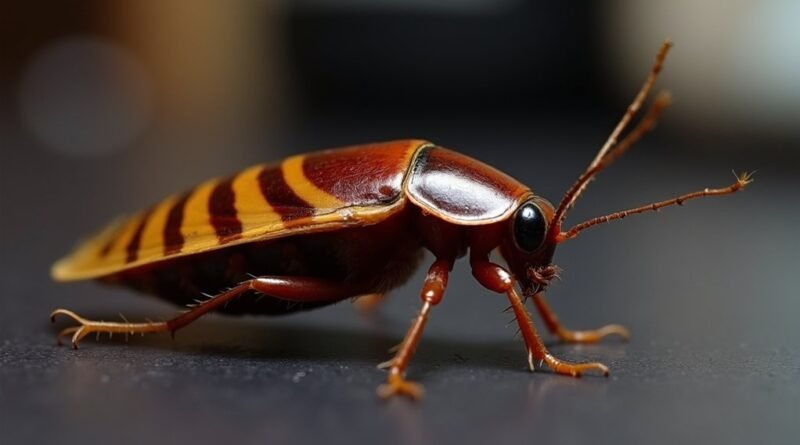
Brown-Banded Cockroach: Identification, Habits, and How to Get Rid of Them
You can identify a brown-banded cockroach by the two pale bands crossing its wings and abdomen, its tan-to-light-brown body, and its small size of about half an inch. Unlike German cockroaches, it prefers warm, dry spots like electronics, cabinets, and ceilings rather than humid areas. To get rid of them, seal food, use sticky traps, and apply gel baits or boric acid. There’s much more to uncover about outsmarting these persistent invaders.
Key Takeaways
- Brown-banded cockroaches are small (10-14 mm), tan to light-brown insects with two distinctive light-colored bands across their wings and abdomen.
- Unlike German cockroaches, brown-banded cockroaches prefer warm, dry, elevated locations such as ceilings, cabinets, electronics, and furniture crevices.
- Signs of infestation include small dark droppings, reddish-brown egg capsules, shed skins, musty odors, and live cockroach sightings.
- These omnivorous insects consume food crumbs, starchy materials, skin flakes, and body oil residues, foraging in upper cabinets and appliances.
- Eliminate infestations by sanitizing spaces, sealing gaps, using sticky traps, applying gel baits, and contacting professionals for persistent problems.
How to Identify a Brown-Banded Cockroach
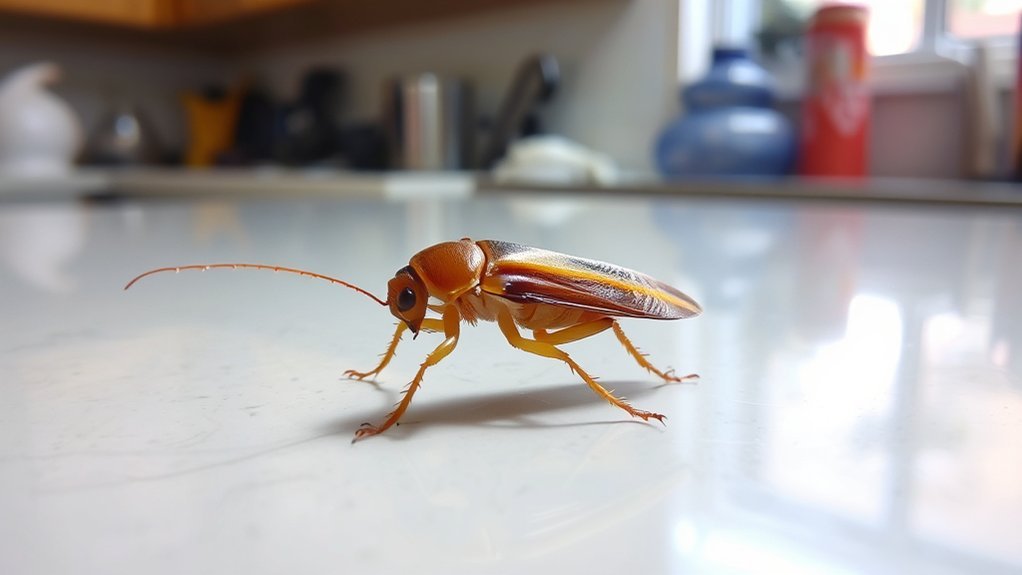
The brown-banded cockroach (*Supella longipalpa*) is one of the smallest invasive cockroach species, measuring between 10 and 14 mm long. Its most distinctive feature is the two light-colored transverse bands running across its wings and abdomen, visible in both adults and nymphs.
You can tell males and females apart easily. Males are slender, light brown, and have fully developed wings that cover their abdomen. They’ll even fly when disturbed. Females are shorter, stouter, and their wings don’t fully cover their abdomen.
Both sexes display a tan to light-brown body with banding at the base and mid-abdomen. You’ll also notice a light-brown or yellow band along the thorax edge. Nymphs share these same two broad brownish bands, making identification consistent across all life stages. These markings reliably distinguish brown-banded cockroaches from other common species. Unlike brown-banded cockroaches, German cockroaches are identified by two dark stripes running along their pronotum rather than light-colored bands across their wings and abdomen.
Brown-Banded vs. German Cockroach: What’s the Difference?
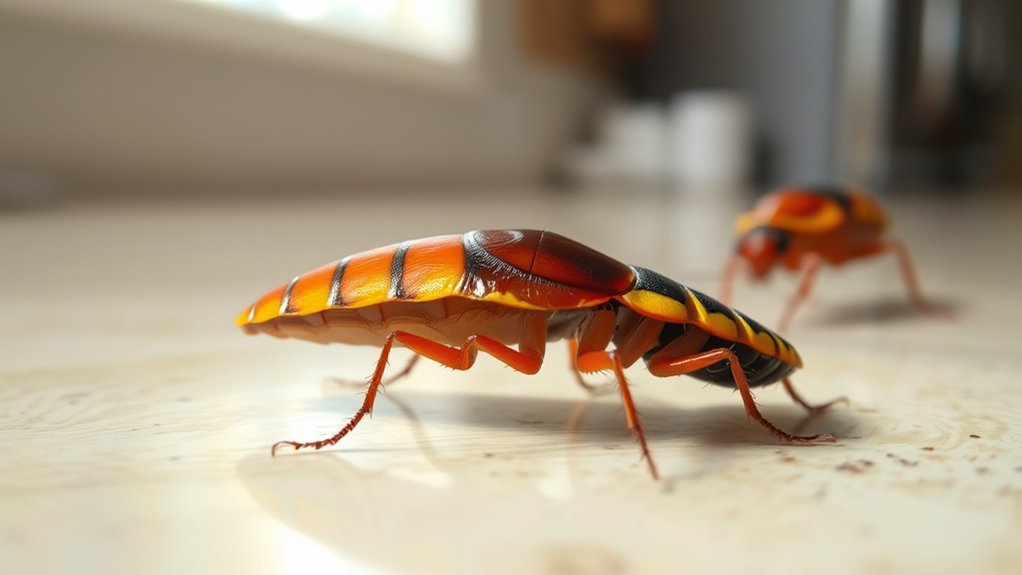
When you’re dealing with a cockroach infestation, telling brown-banded and German cockroaches apart helps you choose the right control strategy. You’ll notice brown-banded cockroaches sport distinctive tan bands across their wings and abdomen, prefer dry, elevated spots like cabinets and ceilings, and males can fly short distances when disturbed. German cockroaches, by contrast, are slightly larger, stick to humid, low-lying areas near moisture sources, and rely entirely on running rather than flying to escape threats. Both species are obligatory domestic cockroaches, meaning neither can survive for long without the shelter and resources that indoor environments provide.
Appearance and Size Differences
Telling a brown-banded cockroach apart from a German cockroach comes down to a few key physical traits. Brown-banded roaches measure about ½ inch long, while German roaches run slightly larger at ½ to 5/8 inches. Color is another clear distinction — brown-banded roaches are dark brown with lighter tan wing margins, whereas German roaches are uniformly light brown or tan.
You can also spot the difference through their markings. Brown-banded roaches display light-colored bands across the base of their wings, which are especially visible on nymphs. German roaches, on the other hand, have two dark parallel stripes running along their pronotum. Finally, German roaches have antennae longer than their bodies, while brown-banded antennae don’t exceed body length. When it comes to wings, males of both species are fully winged, but female brown-banded roaches have underdeveloped wings, unlike female German roaches whose wings cover their entire bodies.
Habitat and Moisture Preferences
Unlike their appearance, the habitat preferences of brown-banded and German cockroaches couldn’t be more different. Brown-banded cockroaches thrive in warm, dry, elevated locations throughout your home. You’ll find them near ceilings, crown molding, upper cabinets, and inside heat-generating electronics like TVs, routers, and alarm clocks. They spread across bedrooms, living rooms, closets, and home offices — rarely concentrating in one area.
German cockroaches, however, demand constant moisture. They cluster near sinks, drains, leaks, and humid kitchen and bathroom spaces, staying close to water sources to survive.
If you’re dealing with brown-banded cockroaches, avoid focusing your search in damp, low-lying areas. Instead, check high, dry spots throughout your entire home, since their scattered distribution makes them considerably harder to detect than moisture-dependent German cockroaches. Brown-banded cockroaches are also known to hide behind wallpaper and picture frames, taking advantage of the dry, undisturbed spaces these surfaces provide.
Flight and Control Strategies
One key behavioral difference that can help you tell these two species apart is flight: brown-banded males are capable of short flights or gliding bursts when disturbed, while females have shorter wings and can’t fly at all. German cockroaches, despite having fully developed wings, rarely fly indoors and prefer to run.
For control, these differences matter. Brown-banded cockroaches glue their egg cases to furniture undersides, wall voids, and appliances, so you’ll need to inspect those hidden spots carefully. Missing even a few egg cases means the infestation continues. German cockroaches, by contrast, reproduce aggressively, so fast-acting treatments are critical. Since both species spread through furniture, bags, and shared plumbing, inspect second-hand items before bringing them inside to avoid introducing either species into your home.
Brown-banded cockroaches tend to scatter across multiple rooms, preferring warm and dry areas like bedrooms and closets, while German cockroaches centralize their activity near kitchens and bathrooms where food and moisture are readily available.
How to Tell If You Have a Brown-Banded Cockroach Problem?
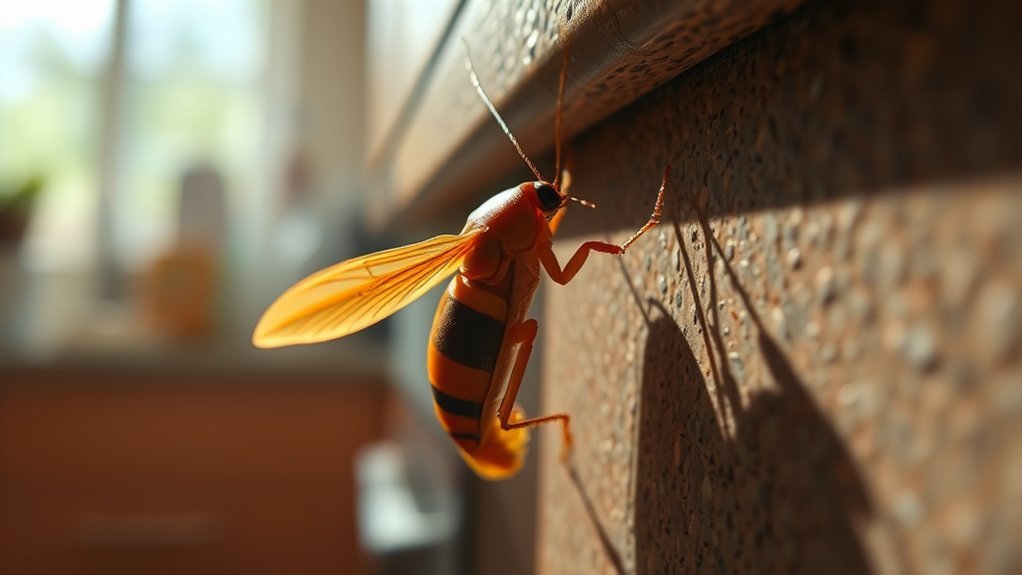
Knowing whether you’ve got a brown-banded cockroach problem comes down to recognizing a handful of telltale signs. Unlike other species, these roaches prefer warm, dry, elevated spots—think furniture, ceilings, and electrical appliances rather than kitchens or bathrooms.
Watch for these key indicators:
- Droppings – Small dark specks or smears on cabinets, walls, or ceiling fixtures signal active feeding areas.
- Egg capsules – Look for reddish-brown cases under 5mm long glued to furniture undersides, walls, or ceilings.
- Shed skins – Discarded molts near warm, hidden crevices confirm an active breeding population.
- Live sightings – Spotting one cockroach means more are hiding nearby; daytime sightings suggest a large infestation.
You might also notice a musty odor or experience allergy symptoms like sneezing or itchy eyes. Any combination of these signs warrants immediate action.
Where Do Brown-Banded Cockroaches Hide in Your Home?
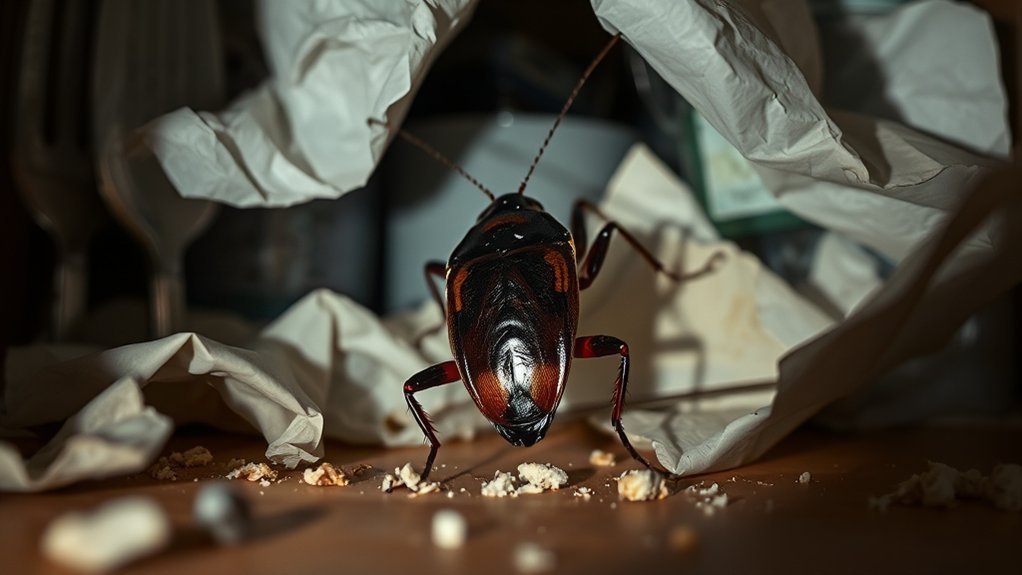
Brown-banded cockroaches don’t hide where you’d expect—they skip the damp areas under sinks and instead favor warm, dry spots like upper cabinets, electronics, furniture crevices, and wall moldings. You’ll find them tucked inside televisions, behind picture frames, under clock housings, and even within the bindings of books. If you’re spotting small, dark droppings, shed skins, or yellowish egg cases in these elevated and enclosed spaces, you’ve likely got an infestation on your hands.
Common Hiding Spots
Unlike most cockroaches that gravitate toward damp, low-lying areas, brown-banded cockroaches prefer warm, dry spots higher up in your home. You’ll find them clustering in locations that retain heat and stay undisturbed. Their favorite hideouts include:
- Elevated wall areas – near crown molding, behind picture frames, and beneath loose wallpaper
- Electronics and appliances – inside televisions, computers, and clocks, or behind outlet covers and light switch plates
- Furniture and upholstery – tucked into crevices, book bindings, closet corners, and dresser drawers
- Upper cabinets and storage – behind pantry boxes, on high shelves, and inside medicine cabinets
Don’t overlook infrequently cleaned spaces like guest rooms and home offices, as these undisturbed zones make ideal long-term harborage sites.
Signs of Infestation
Catching a brown-banded cockroach infestation early means knowing what clues to look for—and where. Check elevated areas first—upper cabinets, picture frames, molding, and electronics—for small, dark droppings resembling ground pepper. You’ll also find tan, purse-shaped egg capsules about 5mm long glued to surfaces behind wallpaper, wall art, or electrical switch plates.
Translucent molted skins collect near appliance motors, routers, televisions, and ceiling fixtures. If you spot small, light-brown roaches with tan wing bands near light switches or ceiling fans at night, that confirms an active infestation. You might also notice a musty odor from infested electronics, grease marks on walls, chewing damage on book bindings or wallpaper, and food contamination in upper pantry areas.
What Brown-Banded Cockroaches Eat and Where They Forage
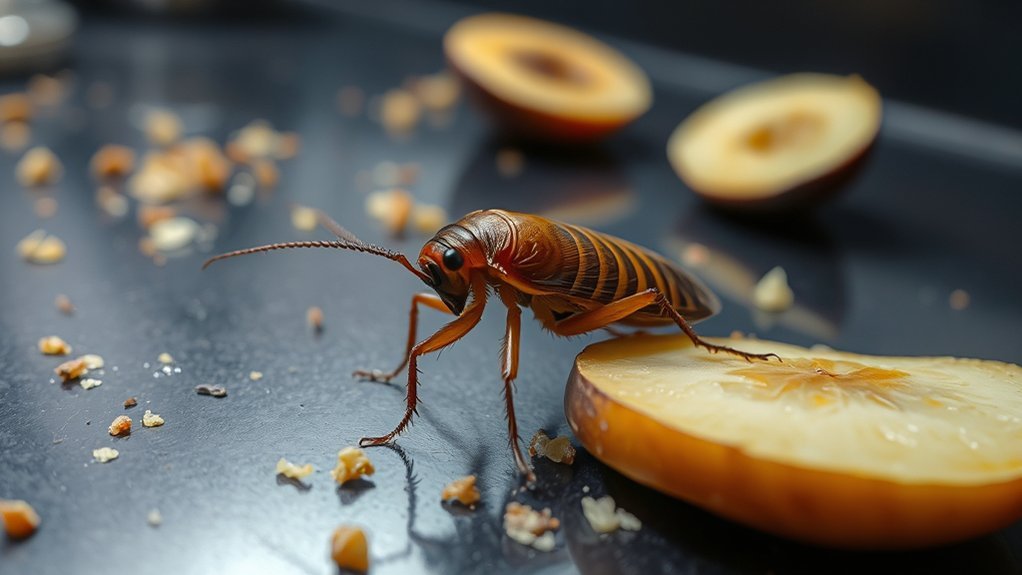
Because they’re true omnivores, brown-banded cockroaches will eat almost anything they come across—from food crumbs and decaying organic matter to starchy materials like book bindings, wallpaper paste, envelope glue, and even bath soap. They’ll also target body oil residues, skin flakes, dyes, nylon stockings, and drapes.
Their diet directly impacts development speed. Nymphs raised on dates alone mature in just 54 days, while those on standard diets take up to 60 days.
When foraging, expect to find them in these locations:
- Upper cabinets and high shelves stocked with starchy or sugary foods
- Behind wall decorations, pictures, and loose wallpaper
- Inside electrical appliances like TVs and toasters
- Closets, wardrobes, and upholstered furniture where they feed on fabric and residues
Their dietary flexibility makes them harder to control, since eliminating one food source won’t drive them out.
How Long Do Brown-Banded Cockroaches Live and Reproduce?
Brown-banded cockroaches live anywhere from 80 to 315 days, though most adults survive between 100 and 206 days depending on temperature, humidity, and food availability. Females tend to outlive males, surviving 13 to 45 weeks under favorable conditions.
Their reproductive capacity makes them especially problematic. A female produces roughly 14 egg capsules during her lifetime, each containing 10 to 18 eggs. She carries each capsule for 24 to 36 hours before hiding it in a sheltered location. Those eggs hatch within approximately 50 days, and nymphs molt up to 8 times before reaching adulthood—a process taking 3 to 6 months. A single female can generate around 250 offspring and approximately 600 descendants per year.
Because multiple life stages coexist simultaneously in your home, killing only adult cockroaches won’t eliminate an infestation. Eggs and nymphs will continue developing and replenishing the population.
How to Get Rid of Brown-Banded Cockroaches for Good
Eliminating brown-banded cockroaches requires tackling every life stage at once—not just the adults you can see. Start by cutting off their food, water, and shelter, then apply targeted treatments to break the cycle completely.
Follow these four essential steps:
- Sanitize and seal. Wipe up spills, store food in airtight containers, fix leaky pipes, and caulk gaps around windows, doors, and utility entrances.
- Find the hotspots. Use sticky traps to pinpoint activity in warm, dry areas like closets, attics, and behind wall hangings—not just kitchens.
- Apply baits and dusts. Place slow-acting gel baits in active areas, and use boric acid or insecticide dusts in wall voids and hidden pathways.
- Call a professional if needed. Licensed pest professionals can apply IGRs, residual treatments, and integrated strategies when infestations persist or resist standard control methods.
Frequently Asked Questions
Can Brown-Banded Cockroaches Survive Outdoors in Colder Climates?
Brown-banded cockroaches can’t survive outdoors in colder climates. They’ll die at temperatures below 15°F and become sluggish under 45°F, so they’ll seek warmth inside your heated structures during winter months.
Are Brown-Banded Cockroaches Known to Spread Diseases or Cause Allergies?
Yes, brown-banded cockroaches can spread diseases and trigger allergies. They’ll contaminate your food and surfaces with pathogens like Salmonella and E. coli, while their droppings and shed skin can cause allergic reactions and worsen asthma.
Do Brown-Banded Cockroaches Produce Any Noticeable Odor in Your Home?
Yes, brown-banded cockroaches produce a noticeable musty, oily, and damp odor in your home. As their population grows, you’ll notice the smell intensifying, especially in kitchens and bathrooms where they’re most active.
Can Brown-Banded Cockroaches Damage Furniture, Books, or Household Materials?
Yes, brown-banded cockroaches can damage your furniture, books, and household materials. They’ll consume glue, starch, and dyes in upholstery, book bindings, wallpaper, and paper-based items, leaving visible holes, ragged edges, and feeding signs.
Are Brown-Banded Cockroaches More Active During Specific Seasons of the Year?
You won’t notice seasonal changes in brown-banded cockroach activity since they’re active year-round indoors. They thrive in warm environments between 77°F and 86°F, maintaining consistent infestations regardless of outdoor temperatures or seasonal shifts.
Conclusion
Dealing with brown-banded cockroaches isn’t easy, but you’ve now got everything you need to fight back. You can identify them, understand their habits, and know exactly where they’re hiding in your home. By staying consistent with treatments and eliminating their food sources, you’ll keep these pests from taking over. Don’t wait until the infestation grows — take action today and reclaim your space from these unwanted guests.
