
White Cockroach: What to Do If You See One
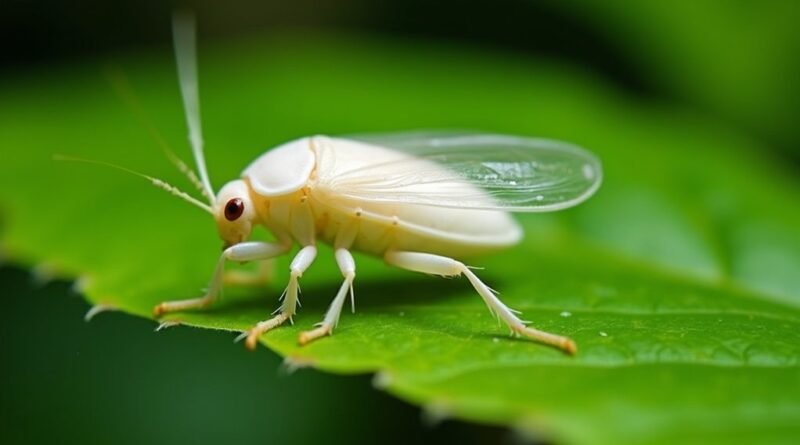
Spotted a white cockroach and want to know what to do right now? It isn’t a rare species or an albino, it’s a juvenile that’s just shed its old exoskeleton in a process called molting, and its new shell is still soft and colorless. That part hardens and darkens back to normal within hours. What matters more is what it tells you: cockroaches only molt in places where they feel completely safe, so seeing one usually means there’s an active infestation nearby. Here’s exactly what that means and what to do about it. For the full biology behind why this happens, see our complete guide, Albino Cockroach: Why Cockroaches Turn White After Molting.
Key Takeaways
- White cockroaches are not a separate species but juvenile roaches in a post-molt phase, lasting only a few hours until their new shell hardens.
- Spotting one signals a hidden infestation, since molting only happens in secure environments with an established colony nearby.
- White cockroaches carry the same health risks as fully colored ones, including Salmonella and E. coli.
- The right response is the same as any infestation: clean up, cut off food and moisture, seal entry points, and bait or call a professional.
- For the hormonal and biological explanation of molting itself, that’s covered in depth in our companion guide linked above.
What Is a White Cockroach, Really?
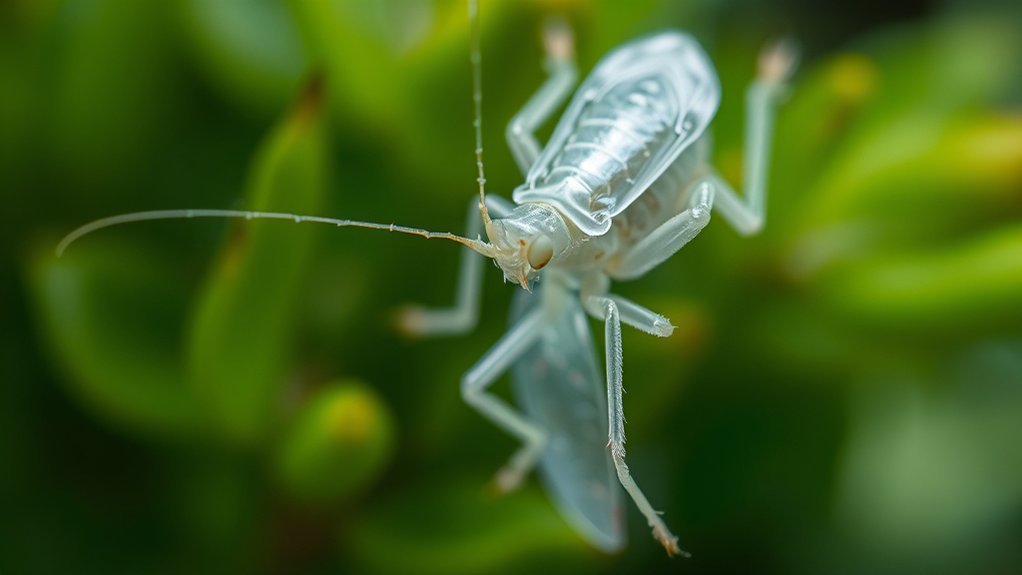
If you’ve ever spotted a pale, ghostly-looking cockroach scurrying across your floor, you haven’t discovered a rare albino species, you’ve simply caught a juvenile cockroach mid-molt. When a cockroach sheds its old exoskeleton, it briefly exposes a soft, translucent exterior underneath. This pale, off-white appearance lasts only a few hours while the new shell hardens and darkens to its familiar brown or black color, driven by a chemical reaction involving tyrosine. During this window, the cockroach is physically vulnerable, which is why it moves slowly and stays hidden.
These juveniles share the same body shape as their adult counterparts, though they’re typically wingless. Their white appearance isn’t a pigmentation condition, it’s simply a normal developmental stage every cockroach passes through, and cockroaches are not true albinos: no species has ever been confirmed to carry genuine albinism. Our companion piece on why cockroaches turn white after molting walks through the hormones and cellular process behind this in detail, along with the nymph identification basics in our guide to baby roaches. What matters here is what to do next.
Which Cockroach Species Turn White When They Molt?
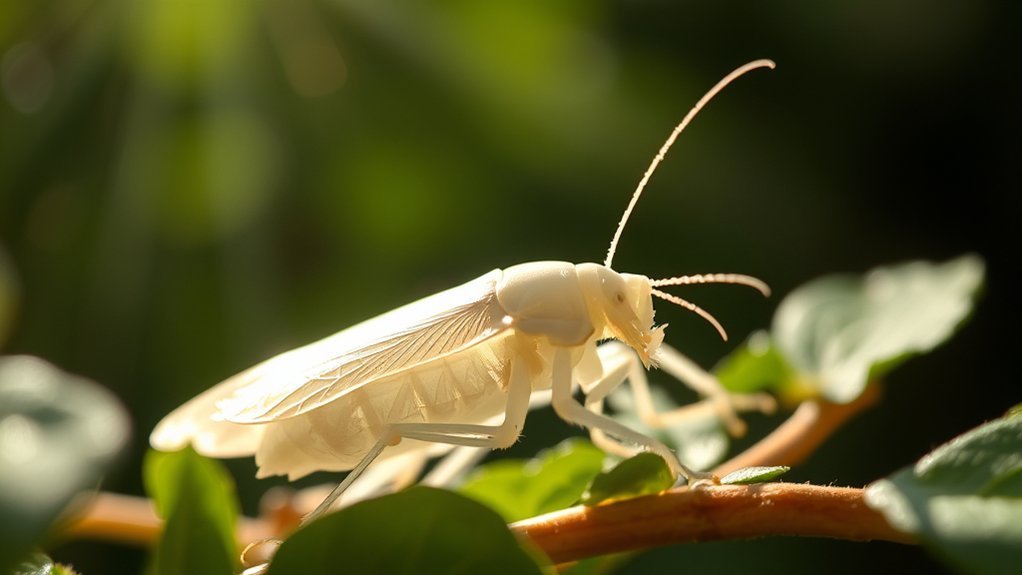
Every common indoor species turns white when it molts, but you’re most likely to spot it in German roaches and brown-banded cockroaches, since they’re the most common species breeding indoors. German roaches are the most frequently reported in their white phase: because a thriving colony is roughly 80% nymphs, molting happens constantly throughout the space, usually in kitchens and bathrooms. Brown-banded cockroaches turn white too, but you’ll spot them less often since they prefer warmer, drier, more elevated hiding spots.
American cockroaches and Oriental cockroaches go through the same temporary whitening, just less often indoors since they’re more likely to be outdoor wanderers. For exact molt counts and timing by species, our full molting guide and life cycle breakdown cover that in detail.
Does a White Cockroach Mean You Have an Infestation?
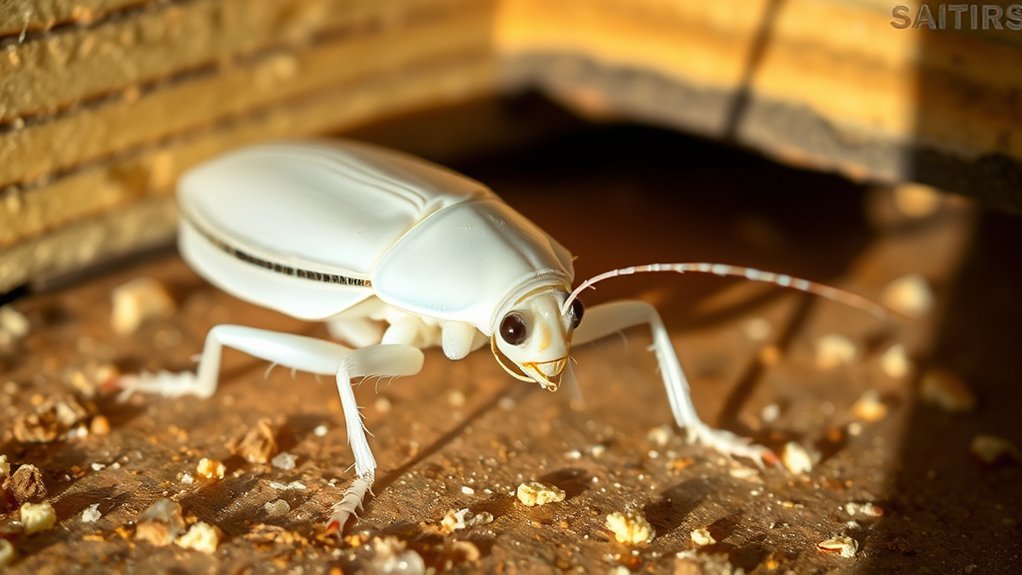
Spotting a white cockroach isn’t just a curiosity, it’s a red flag. Roaches only molt in safe, protected spaces, so if one’s molting in your home, a colony has already established secure hiding spots nearby.
Spotting a white cockroach isn’t just odd, it’s a warning sign that a hidden infestation has already taken hold.
Here’s why one white roach signals a bigger problem:
- Population growth: A healthy colony is roughly 80% nymphs constantly molting and maturing.
- Hidden numbers: Spotting any roach, white or not, usually means dozens more are concealed nearby.
- Established shelter: Molting only happens where roaches feel completely secure.
- Active breeding: White nymphs mean adults are already reproducing inside your home.
What to Do Immediately After Spotting a White Cockroach
Now that you know a white cockroach signals an active infestation, your next move matters. Act fast using these key steps:
| Action | What to Do | Why It Helps |
|---|---|---|
| Clean immediately | Vacuum feces, dead roaches, shed skins | Removes allergens and attractants |
| Eliminate sources | Fix leaks, seal food, remove grease | Cuts off food and moisture |
| Seal entry points | Close cracks, gaps, and drains | Blocks roaches from spreading |
After handling the basics, deploy gel baits or a boric acid and sugar mix near suspected hiding spots. These target cockroaches during their vulnerable molting phase, hitting populations at the source.
Don’t stop at DIY methods. Contact a pest control professional to implement integrated pest management. Schedule quarterly treatments to stay ahead of future outbreaks. The sooner you respond, the less likely a small problem becomes a full-blown infestation.
How Long Does a Cockroach Stay White?
Not long. The white phase lasts anywhere from a few minutes in small nymphs to a few hours in larger adults, and you’ll rarely see it in the open since roaches instinctively hide while their shell is still soft. If you’re spotting one out in plain sight, overcrowding or something disturbing the colony is likely pushing it into view. For a species-by-species timing breakdown, see our full molting timeline.
Do White Cockroaches Carry the Same Health Risks?
White cockroaches carry the same health risks as their darker counterparts, since molting doesn’t strip them of the pathogens they transmit. Whether white or dark, cockroaches contaminate your food, surfaces, and air with dangerous bacteria and allergens.
Don’t be fooled by a white cockroach, it’s just as dangerous as the dark ones you already fear.
Here’s what white cockroaches expose you to:
- Pathogens – They spread E. coli, Salmonella, Shigella, and Entamoeba histolytica through feces, saliva, and body parts, causing gastroenteritis and dysentery.
- Allergens – Their saliva, feces, eggs, and shed parts trigger wheezing, skin rashes, nasal congestion, and anaphylactic shock.
- Respiratory risks – Inhaled exoskeleton fragments and feces worsen asthma, particularly in children, and contribute to chronic bronchitis and sinus infections.
- Food contamination – They mechanically transmit dozens of bacteria types and pathogens onto your food and utensils.
If you spot a white cockroach, treat it as seriously as any other infestation.
How to Respond to a White Cockroach Sighting
Spotting a white cockroach doesn’t automatically mean your home has a full-blown infestation, but it’s still worth taking seriously. Since molting roaches hide in dark areas, a sighting often signals a larger population nearby.
To handle it safely, trap the roach using a glass or container, slide paper underneath, and release it outdoors. If you prefer to kill it, use a roach-specific spray and follow label directions. Avoid stepping on it, as this scatters body parts and releases bacteria. Clean the area thoroughly afterward.
Next, vacuum to remove droppings, exoskeletons, and dead roaches. Store food in airtight containers, eliminate crumbs and grease, and repair any leaks under sinks or around appliances. Place gel baits in dark, hidden areas to target nests.
If you notice droppings, oothecae, or musty odors, call a professional. They can treat wall voids and attics that DIY methods can’t reach.
Frequently Asked Questions
Are White Cockroaches More Attracted to Light Than Normal Cockroaches?
No evidence suggests white cockroaches are more attracted to light than normal ones. You’ll find they share the same negative phototaxis, scattering when light appears, since their white color stems from molting, not behavioral changes.
Do Cockroaches Eat Their Shed Exoskeletons After Molting Is Complete?
Yes, cockroaches do eat their shed exoskeletons after molting. You’ll find they’re programmed to consume these shells indiscriminately, recycling essential nutrients. They wait until they’ve hardened enough to move before consuming nearby shed exoskeletons.
Are White Cockroaches Faster or Slower Than Fully Pigmented Cockroaches?
You’d find white cockroaches are likely slower than fully pigmented ones. Their soft, unhardened exoskeletons compromise muscular leverage, and they’re hiding rather than running, but researchers haven’t directly measured speed differences between molting and fully pigmented cockroaches.
How Common Are White Cockroaches to Actually See in a Home?
Molting itself is constant in an established colony, since most nymphs molt several times before adulthood, but actually seeing a white cockroach is rare. They instinctively hide the moment they emerge, so spotting one out in the open usually means overcrowding or disturbance is pushing them into view.
Is It Safe to Touch or Handle a White Cockroach?
It’s not recommended. A white cockroach carries the same bacteria and pathogens as a fully colored one, so handling it bare-handed still risks contact with Salmonella and E. coli. Use a container or gloves if you need to move or trap one.
Do White Cockroaches Need Different Bait or Treatment?
No, the same gel baits, sprays, and sanitation steps that work on fully colored cockroaches work on white ones. Since white cockroaches are simply nymphs mid-molt, treating the source colony is what actually resolves the problem, not targeting the color phase itself.
Conclusion
Spotting a white cockroach might seem unusual, but now you know it’s simply a molting roach in a vulnerable stage, and a sign of an active, growing infestation nearby. Act fast: seal entry points, eliminate food sources, and call a pest professional if needed. If you want the complete science behind why this happens in the first place, hormones, timing, and all, read our full guide, Albino Cockroach: Why Cockroaches Turn White After Molting.
