

Cockroach Eggs vs Poop: How to Tell What You Are Looking At
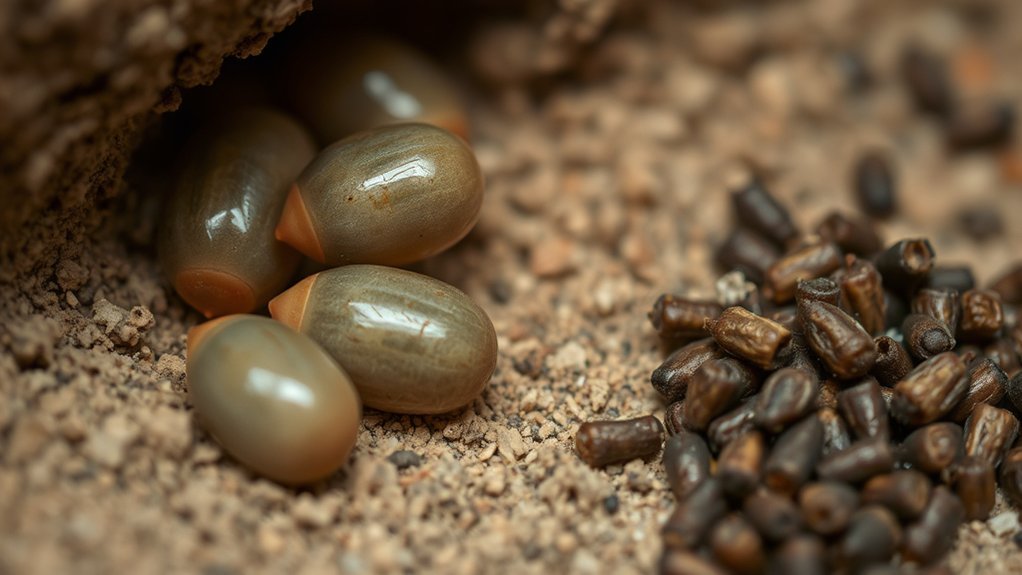
Cockroach eggs come bundled in a protective capsule called an ootheca, which looks like a tiny brown purse or bean measuring 5–10 mm. Droppings, on the other hand, are small dark specks or ridged pellets with a consistently matte appearance. Both show up in warm, dark, moist areas like behind appliances or under sinks. Knowing exactly what you’re looking at helps you gauge how serious your infestation really is — and there’s a lot more to uncover below.
Key Takeaways
- Cockroach eggs (oothecae) are small, bean-shaped capsules (5–10 mm) in shades of brown, while droppings are tiny dark specks or ridged pellets.
- Oothecae have a smooth, plump surface with visible ridges, whereas droppings appear consistently dark and matte with no defined capsule shape.
- German cockroach droppings resemble ground black pepper; American cockroach droppings are larger ridged cylinders (2–3 mm) with blunt ends.
- Unhatched oothecae look full and rounded; hatched cases appear deflated, helping distinguish them from droppings of similar size.
- Finding both oothecae and droppings together in dark, warm, moist areas confirms an active, breeding cockroach infestation indoors.
What Do Cockroach Eggs Actually Look Like?
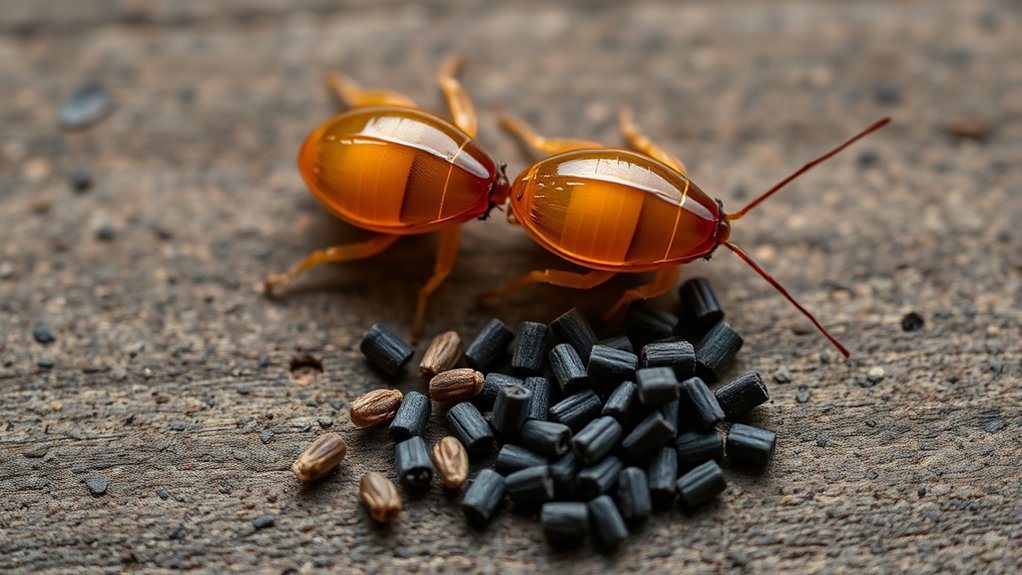
Cockroach eggs aren’t laid individually — they’re bundled inside a protective capsule called an ootheca. This casing is protein-based, hardens quickly after formation, and shields the eggs inside until they’re ready to hatch.
You’ll recognize an ootheca by its capsule-like shape, often described as a tiny purse or bean. It typically measures between 5 and 10 mm long, depending on the species. The color ranges from light tan to dark reddish-brown, and the surface is generally smooth, though some have visible ridges or a seam running along the top.
Species differences matter when you’re trying to identify what you’ve found. German cockroach oothecae are tan and small, holding up to 50 eggs. American cockroach oothecae turn nearly black within days. Oriental varieties appear slightly inflated, while brown-banded oothecae are the smallest of the group at around 5 mm.
Finding an ootheca is a strong signal that roaches are breeding indoors, meaning they’ve located a reliable source of food, water, and shelter somewhere in your home.
What Do Cockroach Droppings Look Like?
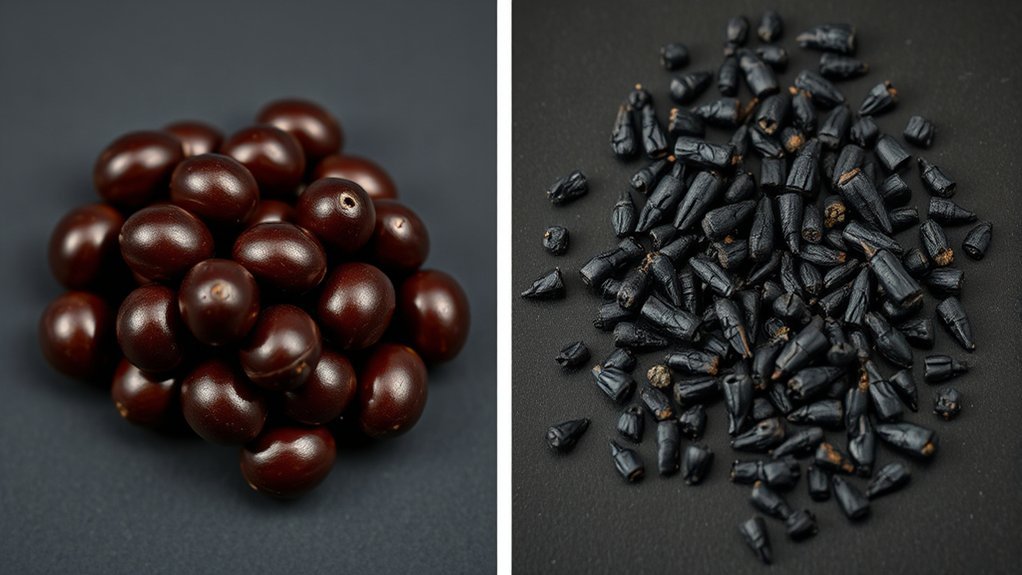
Unlike the egg cases, cockroach droppings don’t come in one neat form — their appearance shifts depending on the species you’re dealing with. German roach droppings are tiny, measuring just 1–2mm, and look like ground black pepper or coffee grounds. You’ll often find them as dark smears or ink-like spots along corners and edges in kitchens and pantries.
German roach droppings look like ground black pepper — tiny, dark specks hiding in plain sight along kitchen corners.
American roach droppings are larger, reaching 2–3mm, and form distinct ridged cylinders with blunt ends. You’ll spot these near damp areas like basements and bathrooms.
Oriental roach droppings fall somewhere in between — darker, mid-sized, and concentrated around floor drains and crawl spaces.
Regardless of species, fresh droppings appear dark and glossy, while older ones dry out and crumble. Beyond the visual clues, all cockroach droppings carry allergens, release pheromones that attract more roaches, and deposit bacteria from garbage and sewage. If you suspect mouse droppings instead, note that they are significantly larger at 6–10mm and feature pointed ends, unlike the blunt-tipped cylinders left by cockroaches.
Size, Shape, Color: How Cockroach Eggs and Droppings Differ
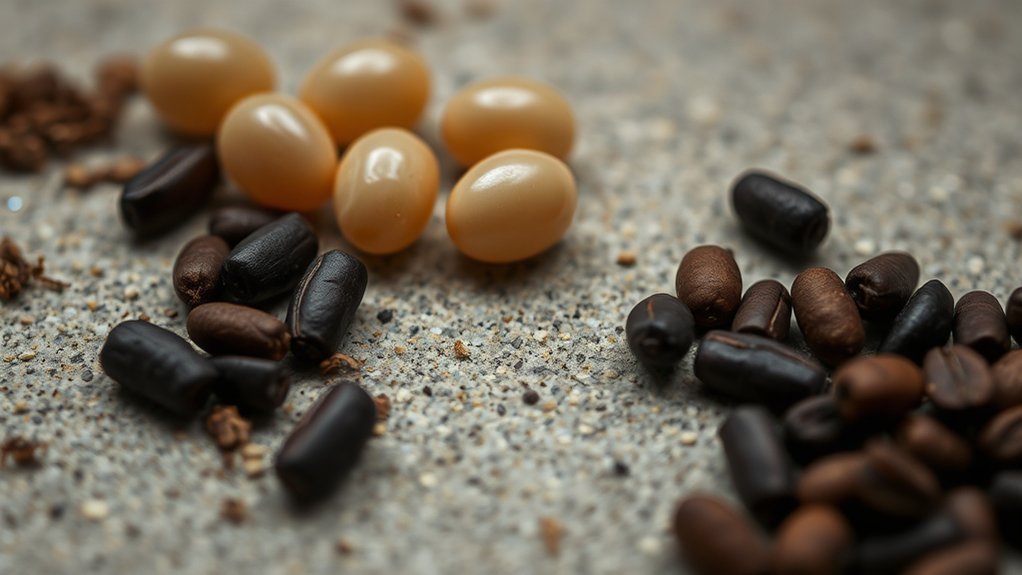
When you’re trying to tell cockroach eggs apart from droppings, size and shape are your clearest clues. Egg cases, called oothecae, form distinct elongated capsules ranging from 5-10 mm long, with ridged sides and a glossy, smooth surface that no dropping can mimic. Color also sets them apart, as oothecae range from light brown to nearly black depending on the species and age, while droppings maintain a consistently dark, matte appearance. Unhatched oothecae appear noticeably plump and full, whereas hatched cases look deflated or crumpled, giving you another visual clue about what stage of an infestation you may be dealing with.
Egg Shapes and Sizes
The ootheca, or egg case, is an oblong capsule that looks like a small pill or bean, typically ranging from 5 mm to 13 mm depending on the species. Most household species fall between 5–10 mm, roughly the size of a grain of rice.
German cockroach egg cases measure 6–9 mm, featuring rows of indentations along the sides. American cockroach cases average 8 mm, appearing purse-shaped with a ridged edge. Oriental cockroach cases are slightly larger at 8–10 mm, with an inflated shape that darkens from reddish-brown to nearly black over time. Brown-banded cockroaches produce the smallest cases at just 5 mm.
You can use these size and shape differences to narrow down which species you’re dealing with before taking action. Each oriental cockroach ootheca contains about 16 eggs enclosed within its dark capsule, making a single case a significant indicator of potential infestation.
Color Differences Explained
Color alone can help you quickly separate cockroach eggs from droppings. Egg cases, or oothecae, appear in shades of brown depending on the species. American cockroach cases start brown and turn black within a day or two. German cases are light brown and slightly transparent, while Oriental cases are dark reddish-brown with an inflated look.
Droppings tell a different story. You’ll notice small roach feces look like dark specks resembling ground black pepper or coffee grounds. Larger species leave darker, elongated pellets closer to rice grains in shape. Roach feces also leave smeared dark brown marks on surfaces when touched.
If you’re seeing structured, brown capsules, you’re looking at eggs. If you’re seeing scattered black specks or smears, that’s droppings. Both egg cases and droppings are roughly similar in size, but oothecae measure about 8 mm in length and contain multiple eggs rather than being individual ones.
Where in Your Home to Find Cockroach Eggs and Droppings
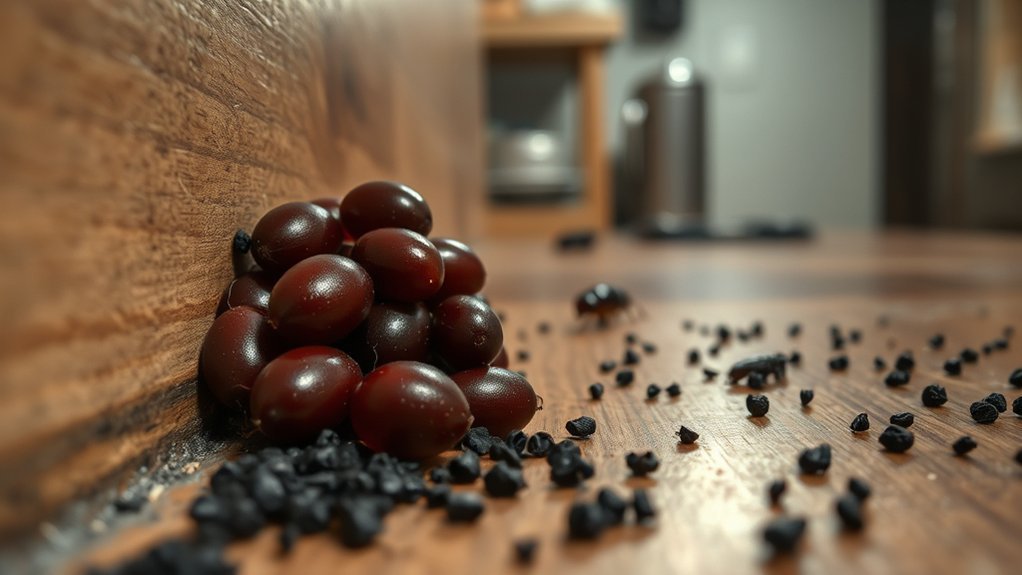
If you’re dealing with a cockroach problem, knowing where to look for eggs and droppings can help you confirm an active infestation fast. Check behind and under appliances like refrigerators and stoves, inside cabinet hinges, under sinks, and in the dark recesses of your pantry. You’ll often find droppings concentrated in the same areas as egg cases, so spotting both together is a strong sign roaches are actively nesting nearby.
Common Hiding Spots
Cockroaches gravitate toward the same types of spots whether they’re laying eggs or leaving droppings — dark, warm, and moist areas close to food and water. In kitchens, check behind appliances, inside cabinets near sinks, and under dripping pipes. Bathrooms present similar risks around drains, tubs, and plumbing lines where humidity stays high. Basements and crawl spaces attract Oriental cockroaches specifically, so inspect floor drains, foundation walls, and stored boxes. Inside living areas, look behind upholstered furniture and inside wall voids or ceiling gaps. Outdoors, mulch beds, decaying wood piles, and foundation edges near damp organic debris are prime locations. If you find eggs or droppings in one spot, there’s a strong chance more exist nearby.
Signs of Active Infestation
Knowing where to look is only half the battle — you also need to know what you’re looking at once you find it. A few droppings or a faint musty odor suggest a small infestation, but multiple oothecae signal a major one. Each German ootheca produces 25–40 nymphs, so even one case means dozens of roaches are coming.
Finding both eggs and droppings together confirms an active, breeding infestation — not just a stray roach passing through. Droppings near pantries or kitchen surfaces reveal active feeding sites and require immediate cleanup since feces carry bacteria from garbage and sewage. Eggs confirm a breeding source is present, making the problem far more serious than a temporary intrusion.
How to Tell Which Cockroach Species Left Eggs or Droppings Behind
Identifying which cockroach species invaded your home comes down to a few key physical clues left behind. German cockroaches leave small, dark droppings resembling pepper and tan egg capsules near kitchen areas. American cockroaches produce larger, ridged droppings and reddish-brown capsules containing 14-16 eggs. Oriental cockroaches leave droppings in damp, cool spaces like basements and produce up to 8 egg capsules yearly. Smokybrown cockroaches deposit black egg capsules measuring 3/8 inch with 24 eggs each.
| Species | Egg Capsule Color | Preferred Location |
|---|---|---|
| German | Tan/light brown | Kitchens, warm areas |
| American | Reddish-brown | Sewers, basements |
| Oriental | Dark brown/black | Damp basements, sewers |
| Smokybrown | Black | Warm, humid outdoors |
Cross-referencing droppings size, egg capsule color, and location helps you pinpoint the exact species. Smaller droppings near food sources suggest German cockroaches, while larger droppings near drains indicate American or Oriental species.
How to Eliminate the Infestation Once You Know What You Found
Once you’ve confirmed what you’re dealing with, it’s time to hit the infestation from multiple angles. Start with sanitation—clean crumbs immediately, wipe pantry shelves, and fix leaky pipes to eliminate food and water sources. Use a dehumidifier in damp areas and don’t leave pet water bowls out overnight.
Next, apply gel bait in pea-sized dots every 10–12 inches near active zones. Never spray repellents near bait, as roaches will avoid it. Replace dried-out bait every 2–3 weeks.
In hard-to-reach spots, dust boric acid behind appliances and inside wall voids. Keep it dry so it stays effective.
Use sticky traps to monitor activity and guide bait placement. Seal cracks and caulk entry points to block re-entry. If the infestation is severe, aerosol sprays offer immediate knockdown, but professional treatment with multiple visits may be necessary for full elimination.
Frequently Asked Questions
Can Cockroach Eggs Hatch Without the Female Carrying Them?
Yes, cockroach eggs can hatch without the female carrying them. Once she deposits the ootheca in a secure location, you’ll find it hatches on its own within 24-81 days depending on conditions.
Are Cockroach Eggs or Droppings Harmful to Touch Directly?
Both can harm you. Cockroach droppings carry bacteria like Salmonella and trigger allergies, while eggs themselves aren’t poisonous but harbor dangerous pathogens. You should always wash your hands thoroughly after touching either.
How Long Does a Cockroach Ootheca Take to Fully Harden?
You’ll find that a cockroach ootheca typically takes one to two days to fully harden. Warmer temperatures around 86°F speed up the process, while cooler conditions around 70°F slow the hardening considerably.
Can Pets Accidentally Consume Cockroach Eggs or Droppings Safely?
Your pets can’t safely consume cockroach eggs or droppings. Both carry serious health risks, including Salmonella, E. coli, tapeworms, and digestive infections. You should store pet food securely and remove leftovers immediately to prevent exposure.
Do Cockroach Eggs Have a Distinctive Smell Detectable by Humans?
You won’t detect cockroach eggs by smell alone. Oothecae don’t emit a distinctive odor; instead, you’ll need to identify them visually as small, brown, oval cases through careful inspection.
Conclusion
Now that you know the difference between cockroach eggs and droppings, you’re better equipped to identify what you’re dealing with and take action fast. Whether you’ve spotted dark pellets or a clustered egg case, don’t ignore either sign. Both indicate cockroaches are nearby and likely breeding. Use this knowledge to pinpoint the species, locate the infestation’s source, and choose the most effective elimination method before the problem gets worse.
