
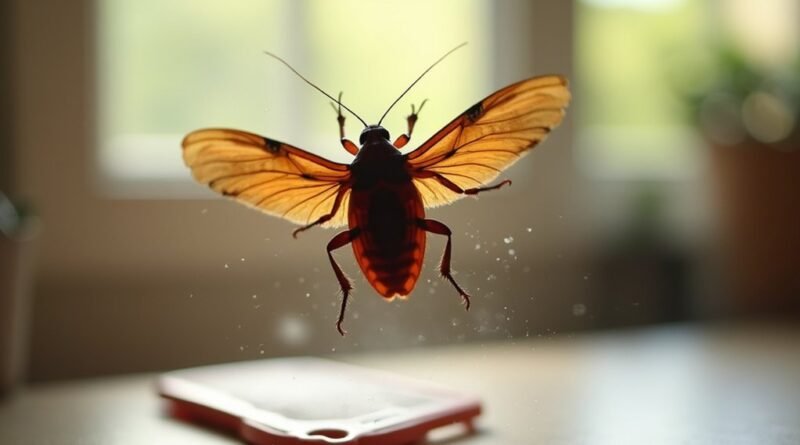
Flying Cockroach: Which Species Fly, When They Do It, and How to Stop Them
Not every cockroach can fly, but several common U.S. species can, including the American, Smoky Brown, and Asian cockroach. They’re most likely to take flight when temperatures climb above 85°F and humidity is high. You can keep them out by sealing entry points, controlling moisture, and eliminating food sources. If you’re seeing them inside, there’s a lot more you should know about what’s driving them your way.
Key Takeaways
- American, Smoky Brown, Asian, Australian, and Pennsylvania Wood cockroaches are the most common flying species found in the U.S.
- Wings extending past the abdomen tip indicate a cockroach is capable of flight.
- Cockroaches typically fly when temperatures exceed 85°F, especially during hot, humid nights.
- Flying cockroaches enter homes seeking light, moisture, food, or shelter, often transported inside on firewood or boxes.
- Prevent infestations by sealing entry points, controlling moisture, storing food properly, and maintaining clean landscaping.
Which Flying Cockroach Species Are Actually Common in the U.S.?
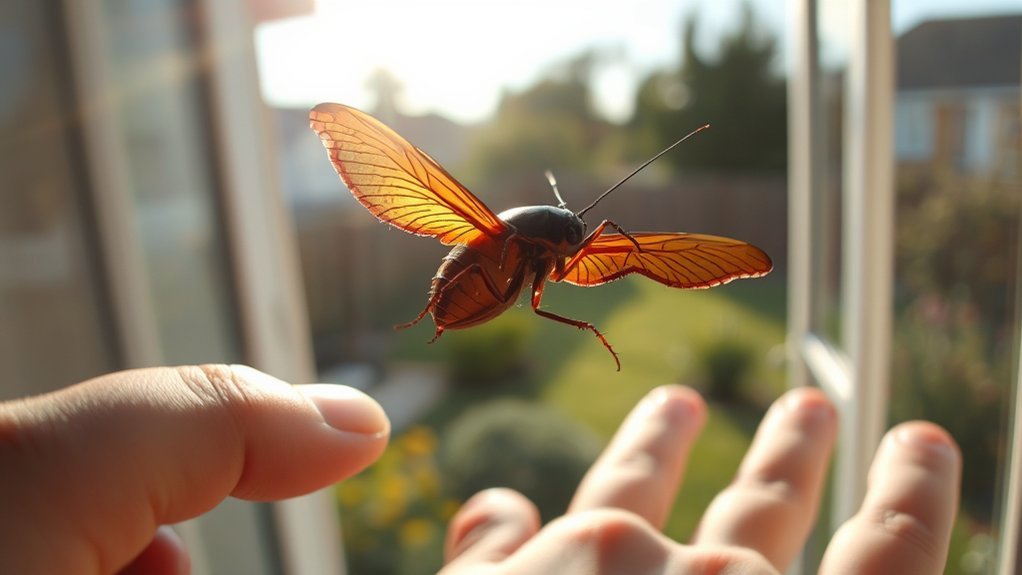
Not all cockroaches you’ll encounter in the U.S. can fly, but several common species are capable of taking to the air under the right conditions.
The American cockroach, reaching up to 2 inches long, is one of the largest you’ll see. It flies short distances in warm, humid conditions above 85°F and is most common in Southern states like Florida and Alabama. The smoky brown cockroach, slightly smaller at 1.25–1.5 inches, is a strong flier attracted to light and moisture, frequently spotted throughout Florida and the South. The Asian cockroach actively seeks light, making it a frequent home invader in Florida and other warm states. The Australian cockroach also flies and enters homes at night, primarily in Southern climates. In Northern states, you’ll occasionally encounter the Pennsylvania wood cockroach, where males fly toward lights during summer but rarely establish themselves indoors. Flying cockroaches typically originate from outdoor environments before making their way inside.
How Can You Tell If a Cockroach Is a Flying Species?
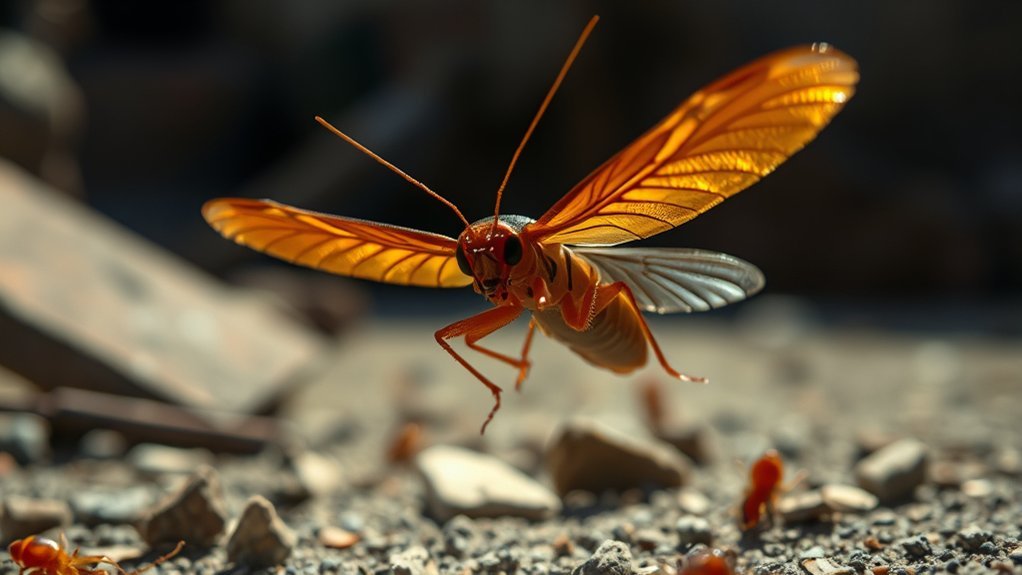
You can start by checking wing length—if a cockroach’s wings extend past its abdomen tip, it’s likely a capable flier, as seen in the smokybrown. Beyond wing length, distinct visual markers help you narrow down the species: look for a yellowish figure-8 pattern on the pronotum for the American, two dark parallel stripes for the German or Asian, and a uniform mahogany-brown body for the smokybrown. Combining these wing and color clues gives you a reliable way to identify whether the cockroach you’re dealing with can actually take flight. American cockroaches measure between 1.5 and 2 inches in length, making them one of the larger species you might encounter when trying to distinguish flying cockroaches from non-flying ones.
Wing Length Clues
Wing length is one of the clearest indicators of whether a cockroach can fly. If the wings extend past the tip of the abdomen, that cockroach likely has flight capability. You’ll see this in male American, Brown-Banded, and Pennsylvania Wood cockroaches, all of which have fully developed wings built for flying or gliding.
Shorter wings tell a different story. Female Brown-Banded and Pennsylvania Wood cockroaches have wings that don’t reach the abdomen’s end, making flight impossible. Oriental cockroach females have no wings at all, while males only cover half the abdomen—neither can fly. German cockroaches have full wing coverage but still can’t truly fly, managing only short glides.
When you spot a cockroach, check whether its wings clear the abdomen tip—that’s your quickest flight clue. American cockroaches are among the most widespread fliers, found throughout the U.S. and across the globe.
Species Visual Markers
Spotting a flying cockroach species comes down to a few key visual markers. Knowing what to look for helps you identify which cockroaches pose an aerial threat before they catch you off guard.
- German cockroach: Light brown with two dark pronotal stripes; 17 mm long with antennae matching body length.
- Brown-banded cockroach: Tiny at 13 mm; two yellow or light brown bands across wings and abdomen.
- American cockroach: Reddish-brown with a yellow marking behind the head; over 1 inch long with visible wings.
- Smokybrown cockroach: Uniform mahogany body; dark wings extending the full abdomen length. Strong fliers, smokybrown cockroaches typically live outdoors but may venture inside in search of food.
- Oriental cockroach: Shiny black with vestigial wings; it can’t fly despite their presence.
What Temperature and Conditions Trigger Cockroach Flight?
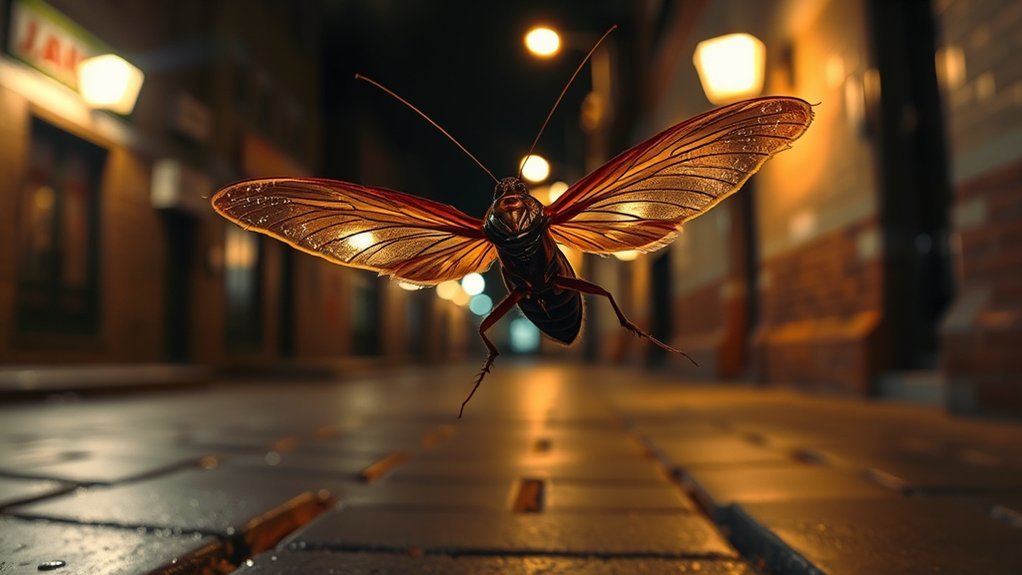
If you’ve ever wondered why cockroaches seem to take flight more often during sweltering summer nights, temperature is the primary culprit. Cockroaches thrive between 75-85°F, but once temperatures exceed this range, they take flight to seek cooler conditions. As ectotherms, their activity increases with rising temperatures, and heat makes their flight muscles more efficient and pliable.
Humidity compounds the effect. Hot, humid nights push cockroaches to fly in search of moisture and better microclimates. When extreme heat causes moisture evaporation from their environment, they move to survive.
Where you live also matters. If you’re in southern states like Florida, you’ll encounter flying cockroaches far more frequently due to consistently high temperatures. Rising air currents during hot weather even help them glide. Developmental temperature plays a role too—cockroaches raised in warmer conditions need weaker stimuli to initiate flight than those raised in cooler environments. Warmer climates also produce more flying cockroaches overall, as the consistently high temperatures provide the energy needed to take to the air.
Why Are Flying Cockroaches Coming Into Your Home?
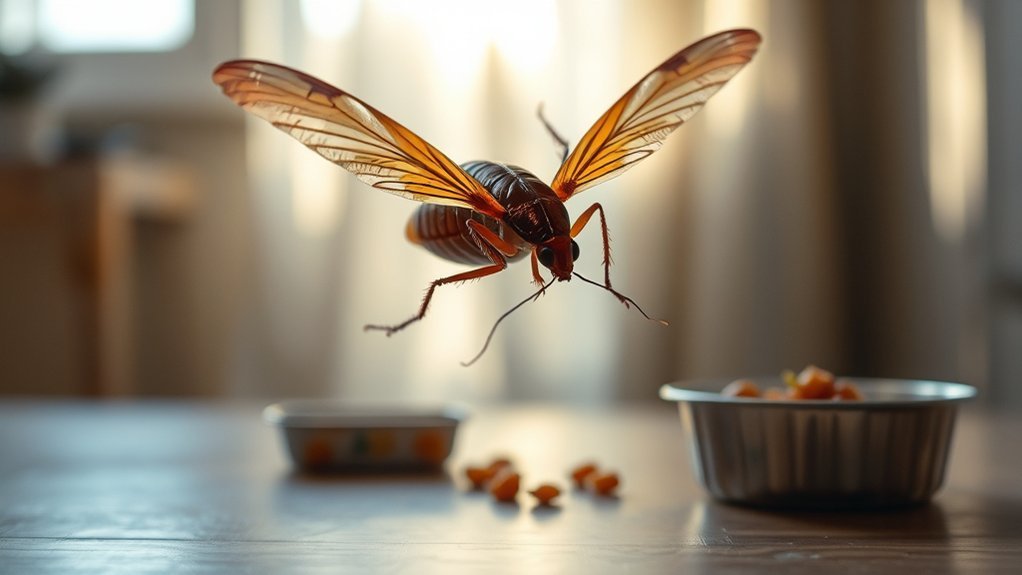
Flying cockroaches don’t end up in your home by accident—specific conditions and behaviors drive them indoors. Understanding these triggers helps you identify and address the real problem.
Here’s what’s pulling them inside:
- Your lights attract them. Smokybrown cockroaches, Cuban cockroaches, and Pennsylvania wood cockroaches all fly toward artificial light at night, often entering through gaps around windows and doors.
- Your outdoor environment harbors them. Wood piles, mulch, tree bark, and dead logs provide ideal habitats right next to your home.
- Humidity shifts force them in. Smokybrown cockroaches need humidity above 60% to survive and migrate indoors when outdoor conditions dry out.
- You’re carrying them inside. Firewood, boxes, egg cartons, and produce like potatoes regularly transport cockroaches directly into your home.
- Your home offers food and shelter. Kitchens and bathrooms concentrate the food, moisture, and warmth flying cockroaches actively seek.
Does a Flying Cockroach Mean You Have an Infestation?
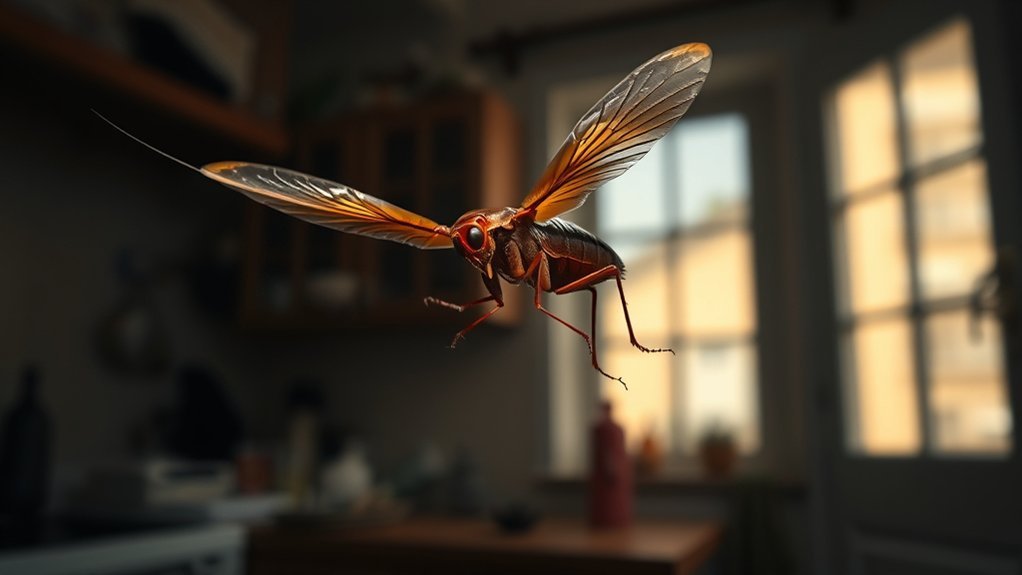
Seeing a cockroach take flight in your home naturally raises a bigger question—is this a one-off visitor or a sign of something worse? Unfortunately, one flying cockroach often means dozens more are hiding nearby. Females produce egg cases rapidly, so a single sighting rarely tells the full story.
Species matter here. American cockroaches flying in summer can point to sewer or basement breeding sites. Brown-banded males flying out of furniture suggest hidden egg cases in those exact spots. Smokybrown cockroaches taking flight may indicate roof or attic entry points.
You can confirm an infestation by looking beyond the flier itself. If you’re spotting droppings, shed skins, or egg cases alongside repeated sightings over days or weeks, you’re dealing with an established colony. Flying adults combined with nymphs on the ground make the picture even clearer—you’ve got a reproducing population on your hands.
How Do You Stop Flying Cockroaches From Getting Inside?
Stopping flying cockroaches from entering your home comes down to cutting off the three things they’re after: entry points, food, and moisture. Seal gaps around doors, windows, and plumbing penetrations with caulk, and replace torn door sweeps. Fix leaky pipes, run bathroom fans, and dehumidify basements to eliminate moisture. Store food in airtight containers and take trash out frequently.
Here’s a quick checklist to keep them out:
- Seal entry points – Caulk cracks in frames, siding, and foundation walls, and repair damaged window screens.
- Eliminate food access – Store pet kibble and pantry items in sealed containers; wipe spills immediately.
- Remove moisture – Fix leaks under sinks and address moist spots behind appliances.
- Clean up landscaping – Clear leaf litter and keep mulch away from your foundation.
- Set glue traps – Place them near baseboards to identify hotspots early.
Frequently Asked Questions
Can Flying Cockroaches Bite Humans During Flight or When Disturbed?
Flying cockroaches can bite you, but they rarely do. They’re more focused on escaping than attacking. You’re most at risk if you corner or handle one, prompting a defensive bite from their chewing mouthparts.
How Far Can a Flying Cockroach Actually Travel in One Flight?
You’ll find that flight distance varies by species. Asian cockroaches can travel around 120 feet per flight, while German cockroaches only glide short distances. Tropical species like Australian cockroaches sustain even longer flights.
Are Flying Cockroaches More Dangerous Than Non-Flying Cockroach Species?
Flying cockroaches aren’t more dangerous than non-flying species. German cockroaches, which can’t fly, rank as the most hazardous due to their aggressive indoor colonization, high reproduction rates, and sustained contact with your food preparation areas.
Do Flying Cockroaches Lay Eggs Differently Than Non-Flying Species?
Flying cockroaches like the American species don’t carry their ootheca as long as non-fliers like Germans do. You’ll find they drop egg cases within hours or days, while German cockroaches carry theirs until hatching.
Can Cockroaches That Fly Spread Disease Faster Than Crawling Ones?
You won’t find evidence that flying cockroaches spread disease faster than crawling ones. Both contaminate surfaces through mechanical transfer on their bodies and droppings, so flight doesn’t notably accelerate pathogen transmission.
Conclusion
Flying cockroaches are unsettling, but you’ve got options. By sealing entry points, fixing moisture issues, and keeping lights off at night, you can make your home far less inviting. If you’re already seeing them inside regularly, don’t wait—that’s your signal to act fast before a small problem becomes a full infestation. Stay consistent with prevention, and you’ll keep these winged pests where they belong: outside.
