
How Many Eggs Does a Cockroach Lay? Breeding Speed by Species
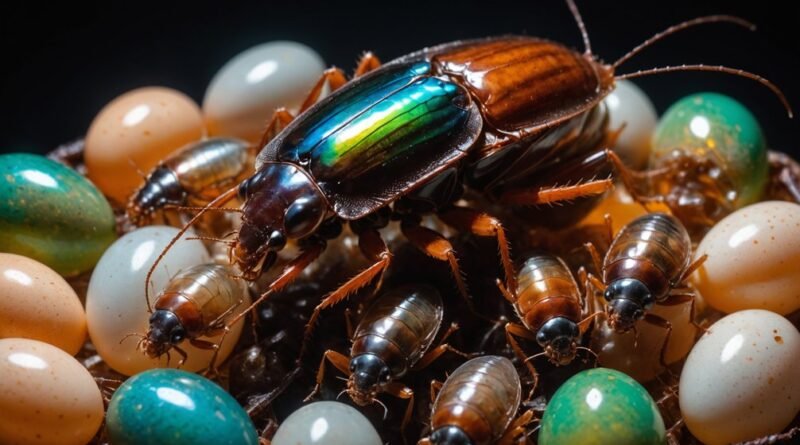
You’re dealing with insects that reproduce fast. A single cockroach can produce over 100 offspring in its life, but it varies by species. German roaches are worst, with 150–380+ eggs, often 30–48 per case. American roaches lay about 84–224 eggs total, brown-banded around 160–320, while Australian and Asian roaches can exceed 200–700. Because each hidden egg case can release dozens of nymphs, it helps to know which species you might have next.
Key Takeaways
- German cockroaches lay 30–48 eggs per ootheca and can produce 150–384 eggs per female, enabling explosive indoor infestations.
- American cockroaches produce 14–16 eggs per ootheca, with 6–90 cases in a lifetime, totaling roughly 84–224 eggs per female.
- Australian cockroaches lay 20–24 eggs per ootheca and produce 12–30 cases, for about 240–720 eggs per female, with ~75% egg survival.
- Asian cockroaches lay 30–44 eggs per ootheca and usually form 4–6 cases, totaling about 120–264 eggs, often outdoors but attracted to lights.
- High egg output and short intervals between oothecae mean a single female can yield hundreds of offspring and tens of thousands of descendants annually.
How Many Eggs Do Cockroaches Lay Overall?
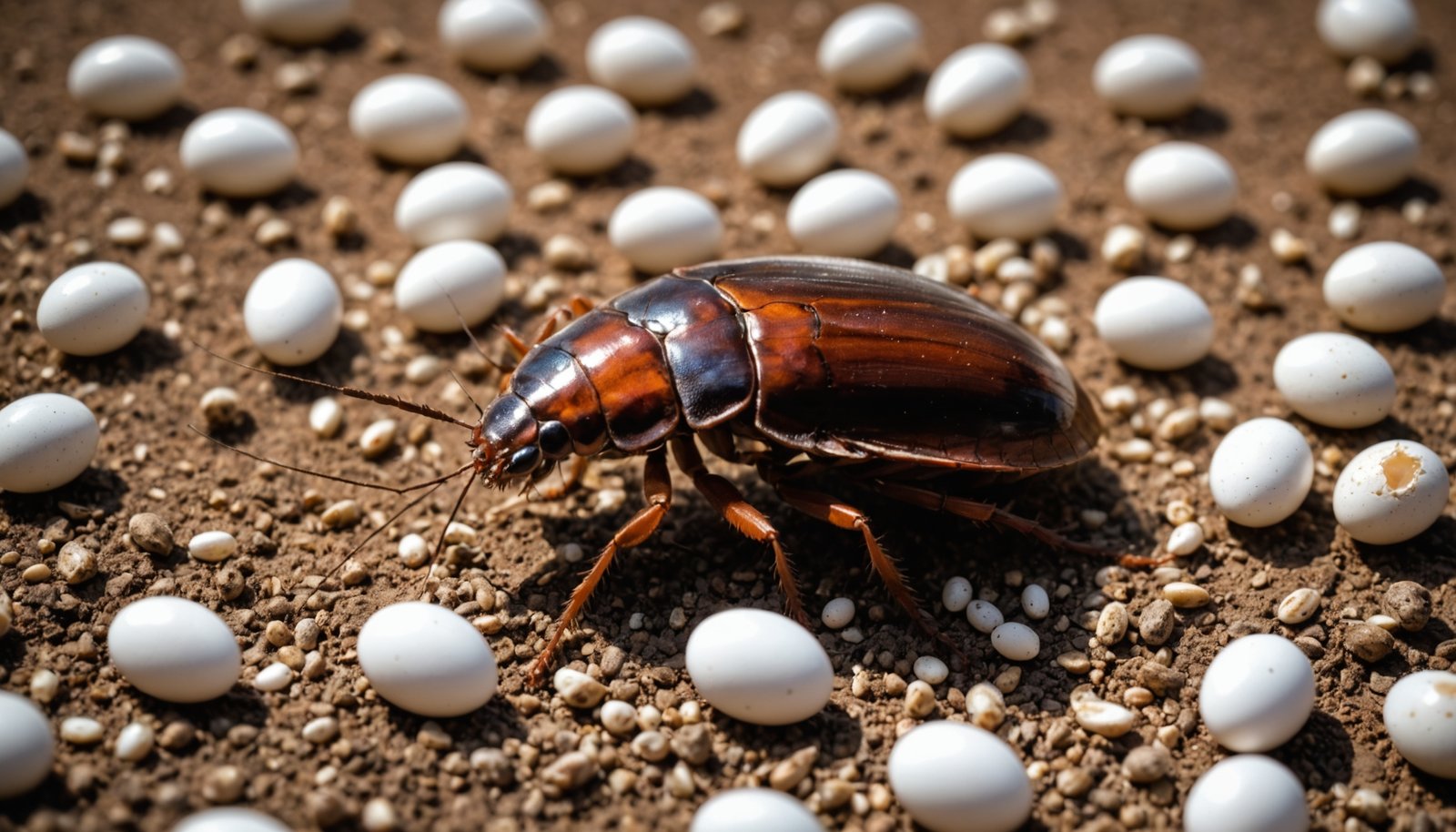
When you’re dealing with cockroaches, you’re not just seeing a few bugs—you’re up against insects that can produce well over a hundred offspring in a single lifetime. To understand cockroach reproduction, you need to look at their egg laying habits by species. Most cockroaches package eggs in an ootheca, each holding roughly 10–50 embryos. Under the right warm, humid conditions, many common pest species can complete their life cycle faster and fit in more egg cases over their lifespan.
German cockroaches are extreme breeders: each ootheca holds about 30–48 eggs, and a single female can generate 150–384 eggs in her life. American cockroaches lay fewer per case—about 14–16—but can still reach 84–224 over a lifespan that supports continuous breeding.
Oriental cockroaches produce 16–18 eggs per ootheca, with up to 18 cases, while brown-banded cockroaches top out around 250 eggs total. Other species, like Australian and Asian cockroaches, often fall in the 160–400 lifetime egg range under ideal conditions, keeping overall reproductive potential consistently high.
Why Cockroach Egg Counts Drive Infestations at Home
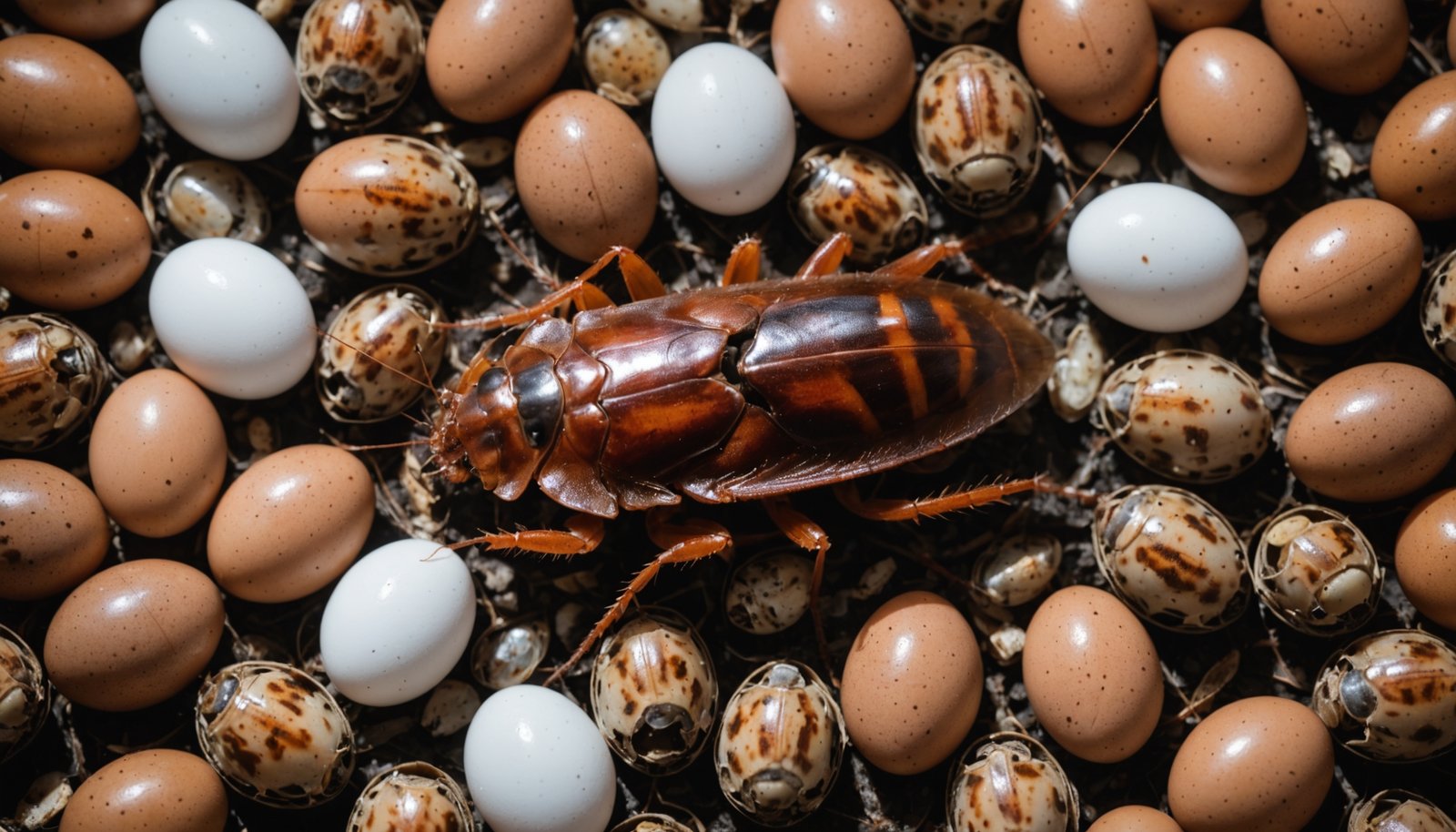
Even a single cockroach egg case can quietly shift a minor sighting into a full-blown infestation because each ootheca holds multiple embryos ready to exploit your home’s conditions. High egg counts amplify how quickly population dynamics spiral out of control. In the right breeding environments, one female can generate tens of thousands of descendants in a year. Early detection of egg cases and nymphs is critical because hidden oothecae can hatch for weeks before you notice visible adults.
Your everyday environmental conditions often provide ideal infestation triggers. Warm rooms, standing water, and the humidity impact of bathrooms, dishwashers, and under-sink leaks keep oothecae from drying out. Pet food left overnight, toaster crumbs, grease films, and splash zones around garbage disposals create continuous food sources that fuel egg production.
Nesting habits make things worse. Cockroaches hide oothecae in cardboard piles, damp cabinets, and wall voids, protecting their reproductive strategies from your view. Because eggs hatch weeks after they’re laid, you’ll still see waves of nymphs even after you remove visible adults.
German Cockroach: Egg Cases and Breeding Speed
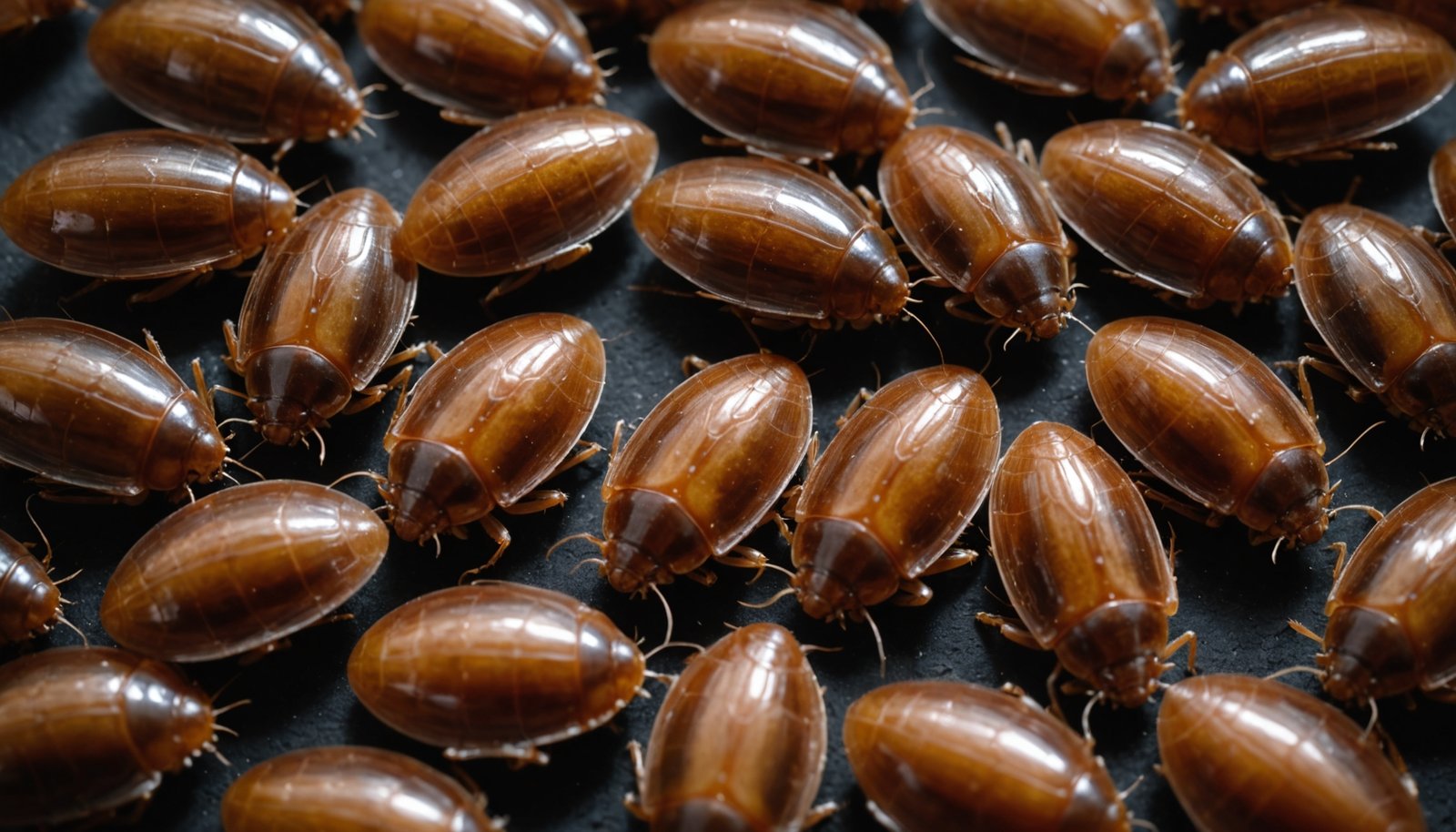
Although many cockroach species reproduce quickly, German cockroaches are in a league of their own because of how many eggs each female carries and how fast she produces them. A single german cockroach female forms her first egg case just 11–12 days after becoming an adult, then produces a new one every 20–30 days. Each 8 mm ootheca typically holds 30–40 eggs, sometimes up to 48, far more than most household species. This rapid output of oothecae means German cockroaches can produce thousands of individuals annually under ideal indoor conditions.
Her reproductive strategy centers on protection. She keeps the egg case attached to the tip of her abdomen for 20–30 days, shielding it from predators and moving it to ideal temperature and humidity. She drops it only 12 hours to 5 days before hatch, often in deep cracks.
Picture this:
- A rice‑grain‑sized capsule packed with 40 embryos.
- Dozens of pale nymphs spilling out at once.
- One female seeding hundreds of offspring, with high nymph survival.
American Cockroach: Egg Cases and Reproduction
Unlike the German cockroach’s always‑carried egg case, the American cockroach packs its offspring into short, dark purse‑shaped oothecae that it quickly hides away. You’ll recognize the ootheca structure by its smooth, dark brown to almost black casing, about 8 mm long, with a ridged “zipper” along the top. Each one holds roughly 14–16 embryos, all aligned in two rows with their heads toward that keel. Temperature and humidity significantly affect how long these eggs take to develop and finally hatch.
During peak reproduction, a female can form up to two oothecae per week and produce 6–90 in her lifetime—over 1,500 potential offspring in a single cockroach lifecycle. She carries each case for a few hours to several days, then glues it with saliva in protected, moisture‑rich spots: under sinks, inside cupboards, beside baseboards, near laundry machines, or around trash and cardboard. The protein shell hardens, the case splits along the ridge, and the nymphs emerge while the ootheca remains stuck in place.
Brown-Banded Cockroach: Egg Production in Homes
When brown-banded cockroaches move into your home, each female can steadily produce multiple egg capsules, each packed with more than a dozen developing nymphs. You’re not just dealing with a few insects; you’re facing a reproductive system that can turn one or two unnoticed females into hundreds of roaches in a year. To understand how quickly an infestation can explode, you need to look at their typical egg capsule output and how that translates into an indoor reproduction rate. Temperature variations strongly influence how long their egg cases take to incubate, which can speed up or slow down how fast the population grows.
Typical Egg Capsule Output
A single brown-banded cockroach female can produce a surprising number of egg capsules in a home, each one holding a tight cluster of developing nymphs. You’ll notice subtle egg capsule variations: some appear more yellowish or reddish-brown, others a light tan, sometimes even translucent enough that embryos show through. Despite their small ootheca size—only about 5 mm long—each capsule typically holds 10–18 eggs, with around 16 embryos on average.
Across her life, one female usually produces 10–20 capsules, often peaking at 13–14:
- A row of tiny tan cases along a ceiling edge
- A single capsule glued behind a picture frame
- Several golden-brown oothecae tucked under furniture edges
Indoor Infestation Reproduction Rate
One brown-banded cockroach female can quietly drive a rapid indoor infestation, because each egg case she glues to furniture, walls, or electronics shelters a tightly packed cluster of developing nymphs. You’ll find these purse-shaped capsules in dark, elevated spots—under shelving, inside cabinets, behind picture frames, or near warm electronics and refrigerator motors. Each hardened case typically protects about 12 eggs, and the protein shell resists many pest control products.
Effective infestation prevention depends on early egg case identification. Look for small, rectangular, yellowish to reddish-brown capsules, about 5 mm long, often bunched together.
| Sign/Feature | What It Tells You |
|---|---|
| Glued capsules on furniture | Active breeding indoors |
| Capsules in clusters | Established infestation |
| Pepper-like droppings | Nearby nesting sites |
| Nymphs on walls | Recent hatching |
| Visible embryos | Cases close to hatching |
Oriental Cockroach: Egg Output and Indoor Risk
Few household pests match the Oriental cockroach’s steady reproductive output, which makes even small indoor incursions a long‑term risk. You’re dealing with females that produce oothecae holding about 16–18 eggs each, with typical totals of 8 cases in a lifetime and reported ranges up to 15. Those egg case characteristics—dark reddish‑brown, about 8–10 mm long, tucked into cracks and damp voids—let them hide in your home for months.
At room temperature, eggs incubate roughly 60 days before nymphs emerge. Nymph development stretches 6–12 months, with 7–10 molts, so multiple overlapping generations can build unnoticed.
Picture how this plays out indoors:
- A single female drops oothecae in basement wall cracks by a drain.
- Nymphs spread slowly through crawl spaces, behind pipes, under clutter.
- By late spring, adults concentrate in cool, below‑ground areas, feeding and breeding out of sight.
Australian and Asian Cockroaches: Egg Production Compared
Although both the Australian and Asian cockroaches thrive in warm, humid climates, their egg production strategies differ in ways that change how fast an infestation can build. Australian females pack fewer eggs into each ootheca—about 20–24—but they produce 12–30 cases over their lives, totaling roughly 240–720 eggs. With an egg survival rate around 75%, many of those eggs successfully hatch after about 40 days.
Asian cockroaches flip that pattern. Each ootheca carries more eggs—30–44—yet a female typically makes only 4–6 cases, for a lifetime total of about 120–264 eggs. So despite their higher per-case count, they usually generate far fewer offspring overall.
Habitat preferences also influence egg survival. Australian cockroaches drop or glue oothecae into cracks, crevices, and moist wood, often around outdoor debris. Asian cockroaches stay mostly outdoors too, especially in warm Gulf Coast areas, and their light attraction can draw them toward buildings.
How Egg Numbers Affect Cockroach Control at Home
Differences in egg production between species don’t just matter on paper—they change how fast a problem in your house explodes. When a single German female can generate 400 offspring in six months—and up to 300,000 in a year with her descendants—you can’t afford to underestimate breeding habits. You’re not seeing just a few bugs; you’re seeing the tip of an egg-driven iceberg.
To picture what’s happening behind the walls, imagine:
To picture what’s happening behind the walls, imagine a hidden, multiplying nursery of roaches you never see
- A kitchen cabinet where one hidden ootheca releases 30–48 nymphs, all maturing in roughly 54–100 days.
- A warm bathroom where high egg survival (80–90%) turns every crack into a roach nursery.
- A sofa or basement where new cases appear every 20–30 days, keeping numbers rising even after you spray.
Effective control means targeting females and egg cases early, before populations jump from dozens to hundreds in weeks.
Frequently Asked Questions
Can Cockroach Eggs Survive Washing Machines, Dishwashers, or Vacuum Cleaners?
They sometimes survive. You reduce egg survival by using hot wash cycles above 125°F with detergent, then high-heat drying 30+ minutes. Dishwashers may help, vacuums don’t kill eggs—you must discard or heat-treat vacuum contents.
Do Cockroach Eggs Pose Any Health Risks or Trigger Allergies Directly?
Yes, they do. You face serious health implications because cockroach eggs release potent allergy triggers that become airborne, worsening asthma, causing coughing, wheezing, skin rashes, sinus infections, and even spreading bacteria like Salmonella onto food and surfaces.
Can Cockroach Eggs Be Carried Into Homes on Groceries, Boxes, or Secondhand Furniture?
Yes, cockroach eggs can hitchhike in your home on groceries, boxes, and secondhand furniture. You face grocery risks from hidden oothecae in packaging and serious furniture infestations from egg cases lodged in seams, cracks, and joints.
What Do Cockroach Egg Cases Look Like, and How Can I Identify Them?
You spot cockroach oothecae by egg case characteristics: small, pill-shaped, ridged capsules, 5–10 mm long, brown to black, rigid like coffee beans. Use egg case identification by checking for split, deflated, or intact, plump cases.
Can Household Pets Spread Cockroach Eggs Around the Home?
Yes, pets can indirectly spread cockroach eggs by moving through infested areas, disturbing oothecae, and tracking them via fur or paws. Your pet behavior, food bowls, and cluttered zones can all influence egg transmission risk indoors.
Conclusion
Knowing how many eggs each cockroach species can produce helps you understand why infestations explode so fast. German cockroaches breed fastest indoors, but American, Oriental, brown-banded, Australian, and Asian cockroaches all multiply quickly in the right conditions. If you act early—cleaning thoroughly, reducing moisture, sealing cracks, and using baits or professional treatment—you’ll break the egg cycle, stop new generations, and keep your home from turning into a long-term roach nursery.
