
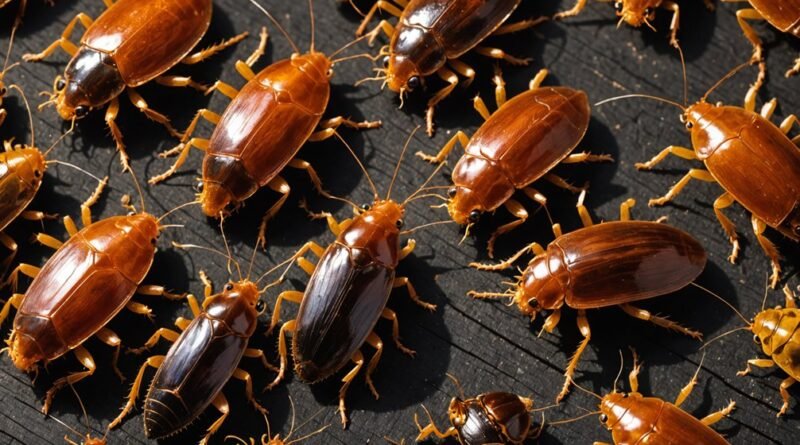
Oriental Cockroach Life Cycle: How Long Each Stage Takes
Oriental cockroaches develop slowly, so you’re dealing with them for the long haul. Their full life cycle runs about 300–800 days. Eggs sit inside oothecae for roughly 50–60+ days before hatching. Nymphs then grow and molt for about 200–600 days, depending on temperature and humidity. Adults live around 1–6 months, with numbers peaking in late spring and early summer. Once you know how long each stage lasts, it’s easier to time control steps effectively.
Key Takeaways
- The full Oriental cockroach life cycle lasts about 300–800 days, depending mainly on temperature and moisture.
- Eggs develop within oothecae for roughly 50–60+ days, with cooler conditions extending and warmer conditions shortening this period.
- Nymphs take about 200–600 days (24–130 weeks) to mature, molting 7–10 times before becoming adults.
- Adults typically live 34–180 days, averaging around six months under favorable, moist conditions.
- Overall development from egg to adult is fastest in warm, humid environments and slows considerably in cooler, drier settings.
Oriental Cockroach Life Cycle: Full Timeline at a Glance
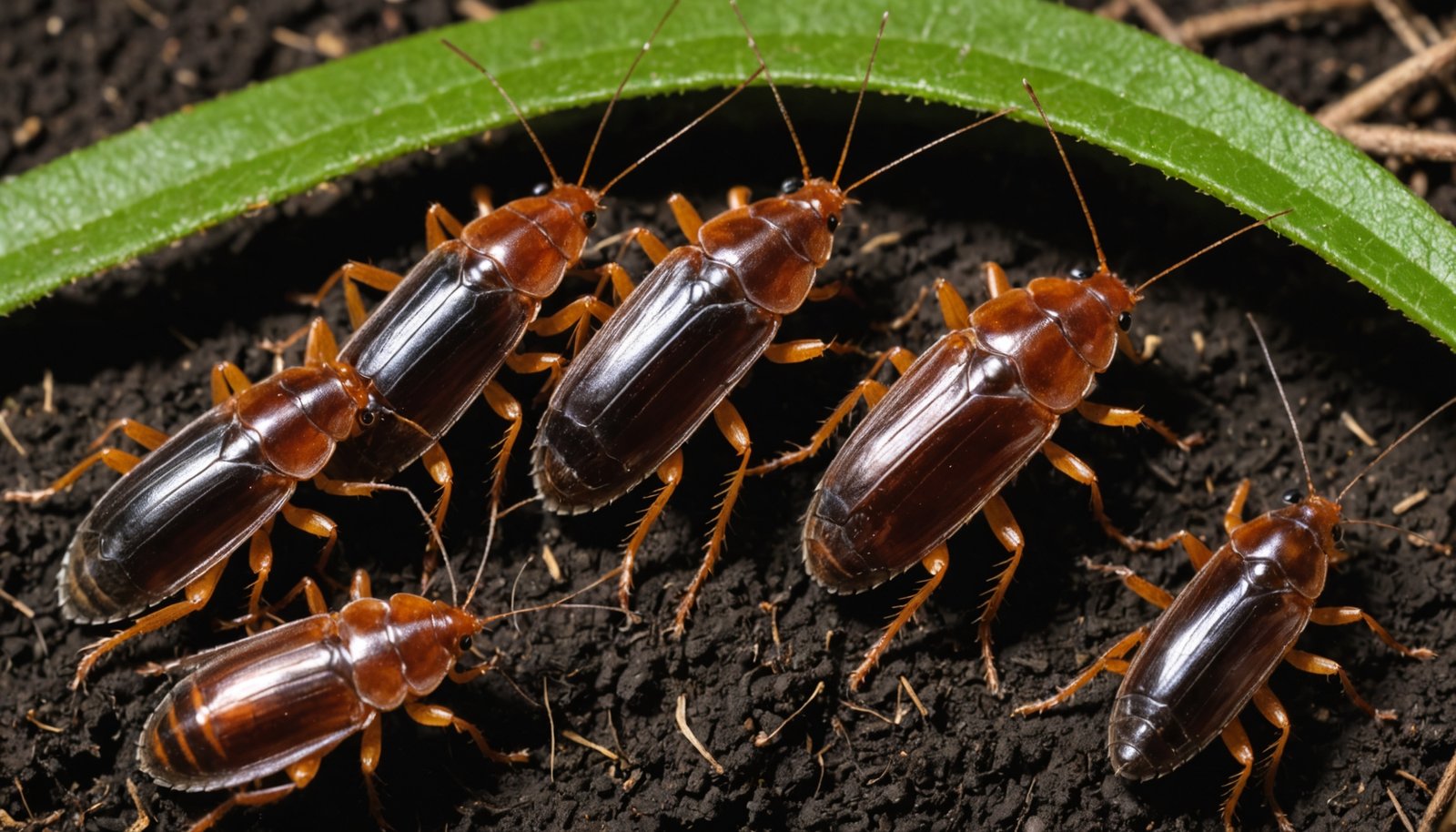
From egg to adult, the oriental cockroach follows a slow, season‑driven life cycle that typically stretches over a full year or more. You’ll see three main development stages: egg, nymph, and adult. Under average growth conditions, the full journey from egg to adult usually takes about 300–800 days, with adults most visible in late spring and early summer. Their tendency to cluster in cool, damp basements, crawl spaces, and near pipes means indoor populations often peak where moisture problems persist.
Once nymphs emerge, Nymph behavior dominates the timeline. They resemble small adults without wings and mature over 24–130 weeks. Their high molting frequency—7 to 10 molts, averaging about 589 days—lets them adjust to shifting growth conditions and seasonally limited food. Rainy seasons speed development; cooler fall temperatures slow it until spring.
Adults live roughly 34–180 days, averaging around six months. Over that span, each female can produce several oothecae, totaling about 200 offspring. This slow but steady output is one of their core survival strategies and shapes their Environmental impact.
Egg Stage: Oriental Cockroach Ootheca Timeline and Hiding Spots
One of the most important—and easiest to overlook—parts of the oriental cockroach’s life cycle is the egg stage, when females hide sturdy, reddish‑brown oothecae in protected spots. You’ll see why Ootheca identification matters: each case is dark, slightly inflated, about 8–10 millimeters long, and textured so it can cling to rough surfaces.
Females handle Egg deposition about once a week, producing oothecae with roughly 16 eggs each and up to eight oothecae in a lifetime. Adult cockroaches contribute significantly to population growth once these eggs hatch and nymphs mature into breeding adults. Their Nesting preferences favor warm, sheltered areas close to food and moisture, such as basement floor drains, crawl spaces, and cluttered storage. Outdoors, they tuck cases into mulch, trash areas, or organic debris.
These Hiding strategies boost Egg survival by shielding oothecae from predators and drying out. The Temperature impact is significant: in cooler conditions, incubation stretches well past 60 days, while warmer, rainy periods speed development and hatching.
Nymph Stage: Oriental Cockroach Molts and Development Time
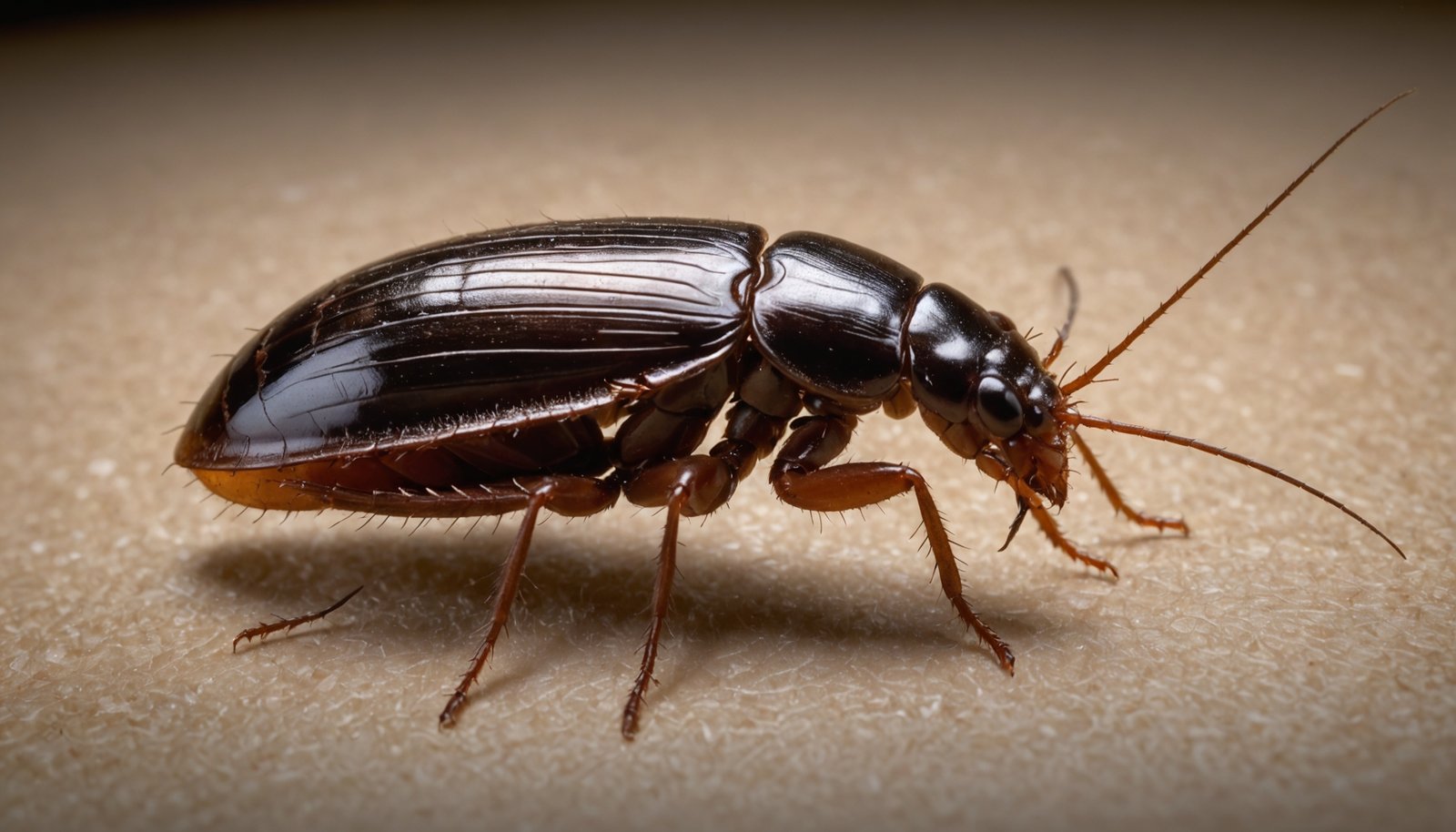
Although they look like smaller, wingless versions of the adults, oriental cockroach nymphs go through a long, changing phase marked by repeated molts and slow growth. When nymphs first hatch, they’re soft, white, and only about 6 mm long. Within hours, they darken to a reddish‑brown with light and dark bands, and female nymphs already appear broader than males. Oriental cockroach nymphs can take anywhere from 200 to 600 days to fully develop, making them one of the slower‑maturing household cockroach species.
Nymph development is slow and heavily shaped by molting frequency. Each nymph sheds its exoskeleton 7 to 10 times, passing through the same number of instars before the final molt produces an adult. This stage alone can last 24 to 130 weeks, and total development from egg often runs 300 to 800 days.
Temperature and humidity strongly influence how fast nymphs progress. At typical room temperatures, development commonly stretches to about 575–602 days. Nymphs stay sluggish, usually at or below ground level, emerging mainly in spring and summer to feed and grow.
Adult Oriental Cockroaches: Lifespan, Mating, and Peak Seasons
As Oriental cockroaches reach adulthood, you’ll see their lifespan, mating habits, and seasonal activity patterns determine how serious an infestation can become. You need to understand how long adults live, how many offspring they produce, and when their numbers peak to plan effective control. In this section, you’ll learn the typical adult lifespan range, their mating behavior and output, and the key months when adults are most active. Adults typically live 1–6 months, and this relatively short but productive lifespan allows populations to build quickly if left unchecked.
Adult Lifespan Range
Even after oriental cockroaches reach adulthood, their remaining lifespan can vary widely, typically ranging from just over a month to about six months. These lifespan variations come from several Environmental factors, clear Gender differences, and naturally high Mortality rates. In typical indoor conditions, you’ll see most adults live close to six months, but some die in just 34 days while others push past 5 months. Because adults are primarily nocturnal scavengers, you’ll often notice them most at night unless overcrowding or food shortages force them into daytime activity.
Use these ranges to judge how long an infestation’s adults might persist:
| Factor | Typical Range |
|---|---|
| Overall adult lifespan | 34–180 days (about 1–6 months) |
| Usual “average” lifespan | Around 6 months |
| Adult female lifespan | 34–181 days |
| Adult male lifespan | 112–160 days |
| Cooler, drier conditions | Shorter survival; fewer visible adults |
Mating Behavior and Output
Knowing how long adults stick around only tells part of the story; you also need to understand how they mate and how many young they can produce. Oriental cockroach courtship rituals are simple and direct: the male approaches the female head‑on and raises his wings, while the slightly larger, heavier female first positions herself above him, moving her mouthparts over his back. Copulation finishes with them aligned end‑to‑end, yet mating success is low—only about one in twenty attempts actually results in fertilization.
When it does, the female forms an egg case (ootheca) within a day, then carries it for up to several days before dropping it in a damp, hidden spot. Across her life, she can generate roughly 150–200 offspring.
Seasonal Activity Peaks
While oriental cockroaches breed slowly compared to some other pests, their long development time and adult lifespan create clear seasonal peaks you can watch for. Adults usually live 1–6 months, so when many mature at once, you see sharp increases indoors and outside. Their seasonal behavior typically brings peak adult numbers in late spring and early summer, especially in May, June, and July.
Nymphs become more noticeable in spring and summer, then develop into the adults you’ll see later in the season. By late summer and early fall, adult numbers usually decline. Environmental factors strongly shape these peaks: cooler temperatures slow development and reproduction, while damp basements, sewers, and crawl spaces let adults survive longer and remain active even when outdoor conditions shift.
How Temperature and Weather Change the Oriental Cockroach Life Cycle
Because Oriental cockroaches are cold-tolerant but not cold-loving, temperature and weather patterns strongly dictate how fast they move through each life stage. Temperature effects show up immediately: eggs take about 60 days to hatch at room temperature, but warmer conditions shorten that time and speed nymphal development. Weather influences and seasonal patterns then shape what you actually see. Adults peak outdoors from May through July, while nymphs dominate mid to late summer and often overwinter, finishing development in spring.
Nymph variability is huge. Nymphs can take 24–130 weeks and 7–10 molts to reach adulthood, stretching the egg-to-adult span from about 300 to 800 days when conditions are cool or inconsistent. Rainy, damp periods accelerate development, especially in basements and sewers. Adult longevity also shifts: adults may live 34–180 days, surviving longer in warm, sheltered, moist areas and moving indoors during hot, dry weather to extend their life.
Reproduction: Oriental Cockroach Oothecae, Egg Counts, and Offspring
When you understand how oriental cockroaches form and protect their oothecae, you can see why their populations build so quickly in the right conditions. You’ll look at the structure and traits of these egg cases, how many eggs they usually hold and how well they survive, and what that means for total offspring over a female’s lifetime. This context helps you gauge how rapidly an unnoticed infestation can expand.
Ootheca Formation And Traits
Oriental cockroaches reproduce using egg capsules called oothecae, and understanding their formation and traits helps you spot an infestation early. After mating, ootheca development begins within a day. The female carries the capsule for about 30 hours, then drops it one to seven days after formation in a hidden, humid place. These ootheca characteristics make them easy to miss.
Each capsule is smooth, shiny, and pill‑shaped, about 8–12 mm (under ½ inch) long, with faint, indistinct compartments. Color shifts from yellow‑white to reddish‑brown, then blackish‑brown as it ages.
| Feature | Description | What you notice |
|---|---|---|
| Shape | Oblong, pill‑ or bean‑like | Looks like a tiny purse |
| Surface | Smooth, not ridged | Shiny, blends with debris |
| Color | Yellow‑white to dark blackish‑brown | Dark speck near damp areas |
| Placement | Cracks, drains, mulch, crawl spaces | Always close to moisture |
Egg Numbers And Survival
Although Oriental cockroaches reproduce more slowly than some other species, each female still produces enough eggs to fuel a serious infestation. You can expect roughly 8 oothecae per female, each about 0.3 inches long and dark brown, typically tucked into cracks, mulch, or crawl spaces near food. Each case holds around 16 tightly packed eggs, fewer than German roaches but still dangerous when conditions favor egg viability.
Key points for egg numbers and survival:
- About 50–60+ days of incubation before hatching, depending on warmth and shelter
- Eggs need protected, humid sites for maximum egg viability
- Nymphs emerge as smaller, brown versions of adults and darken over time
- Slow, year‑long development actually boosts nymph survival in undisturbed, hidden areas
Lifetime Offspring Potential
That slower pace of development doesn’t limit how many young a single roach can ultimately produce. You’re looking at a reproductive engine built for steady output. Each ootheca forms within a day of mating and gets dropped or glued into secluded cracks, often near food. With about 16 eggs per capsule and an average of eight oothecae, one female can generate roughly 128 offspring; high-performing females with around 16 capsules can reach about 256.
These reproductive strategies pair tightly with environmental influences. In warm, damp conditions, oothecae hatch faster—about 42–60 days—so generations overlap and populations build quickly. In cooler areas, hatching slows, but those capsules still sit protected until conditions favor successful emergence.
Which Life Stage You’re Seeing and What It Means for Control
When you spot a cockroach or an egg case, knowing which life stage you’re seeing tells you how far the infestation’s progressed and how to respond. Each stage highlights different Nymph behavior, Environmental factors, Control strategies, and Infestation signs you should pay attention to.
- Egg cases (oothecae): Dark, 8–10 mm capsules in damp, hidden spots mean females have already been active for weeks. Intensify sanitation around moisture, food crumbs, and clutter.
- Nymphs: Small, wingless, dark brown nymphs—most visible in summer—signal a months‑old, ongoing problem. Their long 6–12 month development gives you time for sustained control.
- Adults: Shiny black, 1–1.25 inches, they peak in late spring and early summer, often near basements and bathrooms. Focus on perimeter and outdoor harborages.
- Mixed stages: Seeing eggs, nymphs, and adults together shows a well‑established population. Use integrated Control strategies: exclusion, moisture reduction, baits, and monitoring.
Oriental vs. German Cockroach Life Cycles and Infestation Risk
German cockroaches are a different problem. Their eggs hatch in about 24 days, nymphs mature in roughly 103 days, and females can produce up to 400 offspring in a lifetime. Under ideal indoor conditions, they can explode in numbers within months.
Orientals usually stay in damp basements, sewers, and crawl spaces, while Germans concentrate in warm kitchens and bathrooms. You need targeted pest control: moisture and entry-point management for Orientals, plus strict sanitation and crack-and-crevice treatments for Germans.
Frequently Asked Questions
Do Oriental Cockroaches Bite Humans or Spread Specific Diseases?
Yes, they can bite but rarely, and they don’t spread specific diseases by biting. You should focus on cockroach behavior, sanitation, sealing food, and home maintenance for effective bite prevention and reduced contamination risks.
How Far Can Oriental Cockroaches Travel From Their Nesting Sites?
They typically travel about 9 meters from nesting sites, staying near porches and lower floors. You’ll notice their nesting behavior and travel patterns remain highly localized, with most movement through shared plumbing and damp, ground-level harborage areas.
What Smells or Products Naturally Repel Oriental Cockroaches?
You can’t rely on proven natural repellents for oriental cockroaches; research hasn’t confirmed effective smells or products. You may experiment with essential oils like peppermint or eucalyptus, but you must still prioritize sanitation and moisture control.
Can Oriental Cockroaches Live Entirely Outdoors Without Entering Homes?
Yes, they can live entirely outdoors. You’ll see them thrive in outdoor habitats like sewers, mulch, and trash areas, where their survival strategies rely on moisture, decaying organic matter, and reliable water sources, not indoor shelter.
Are Oriental Cockroaches Attracted More to Certain Types of Buildings?
Yes, they’re more attracted to damp, older buildings where building materials stay cool and porous. You’ll see them favor basements, crawl spaces, and sewers, especially when environmental factors like high humidity and standing water persist.
Conclusion
When you understand the oriental cockroach life cycle, you stop guessing and start targeting. Eggs, nymphs, and adults each tell you something different about how advanced an infestation is and how urgently you need to act. Use timelines, temperature effects, and egg case habits to choose the right treatment and follow‑up. When you can recognize each stage quickly, you’ll catch infestations earlier—and keep them from turning into a long‑term problem.
