
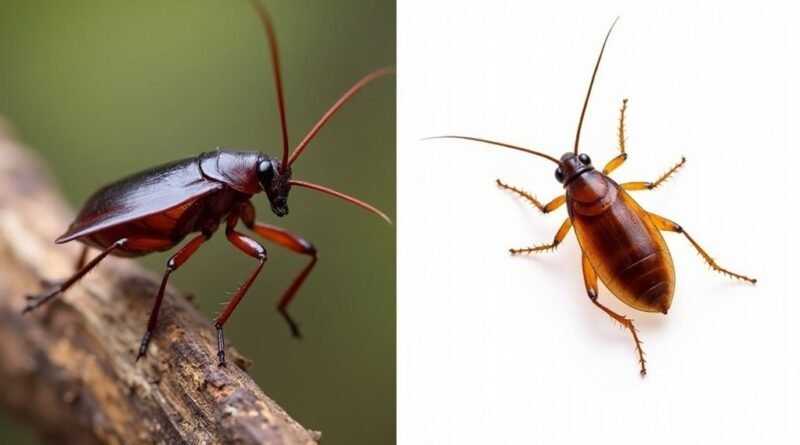
Wood Roach vs Cockroach: How to Tell Them Apart
Wood roaches and cockroaches look similar, but you can tell them apart by a few key traits. Wood roaches are light brown with a pale cream stripe along their wing edges, move slowly, and are attracted to light. Indoor cockroaches avoid light, move fast, and vary by species — from the small German roach to the large American roach. Keep these differences in mind, and you’ll find even more ways to identify and handle each one.
Key Takeaways
- Wood roaches are light brown with a cream-colored stripe along wing edges, while indoor cockroaches vary from pale brown to reddish-black without this marking.
- Wood roaches are attracted to light and move slowly, whereas indoor cockroaches are nocturnal, fast-moving, and scatter when exposed to light.
- Wood roaches inhabit outdoor environments like rotting logs and only enter homes accidentally, never establishing permanent indoor populations.
- Indoor cockroaches carry over 20 harmful bacteria and trigger severe allergies, while wood roaches pose minimal health risks and die quickly indoors.
- Preventing wood roach entry involves sealing cracks, storing firewood away from walls, and using yellow LED porch lights during mating season.
What Does a Wood Roach vs Cockroach Actually Look Like?
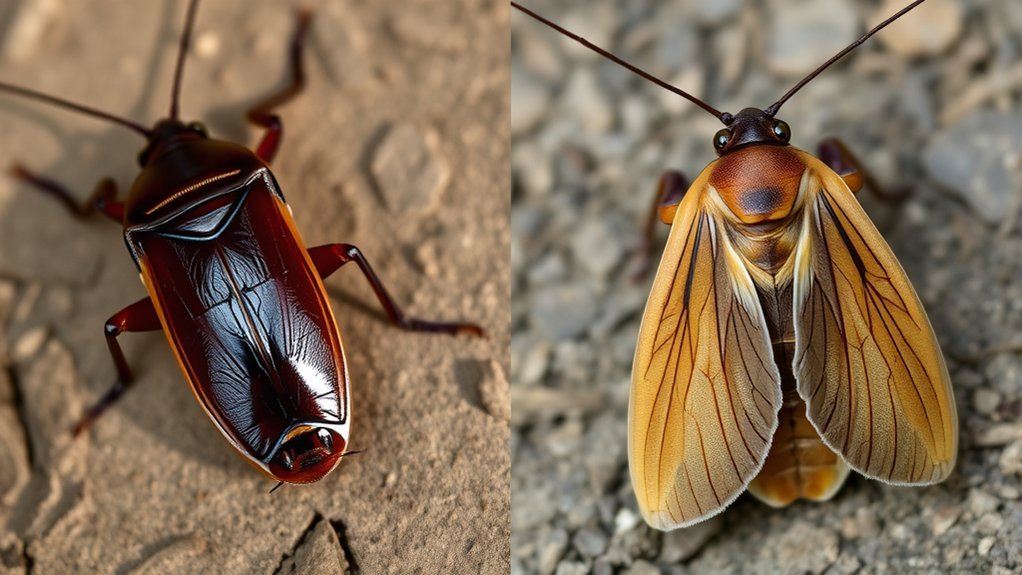
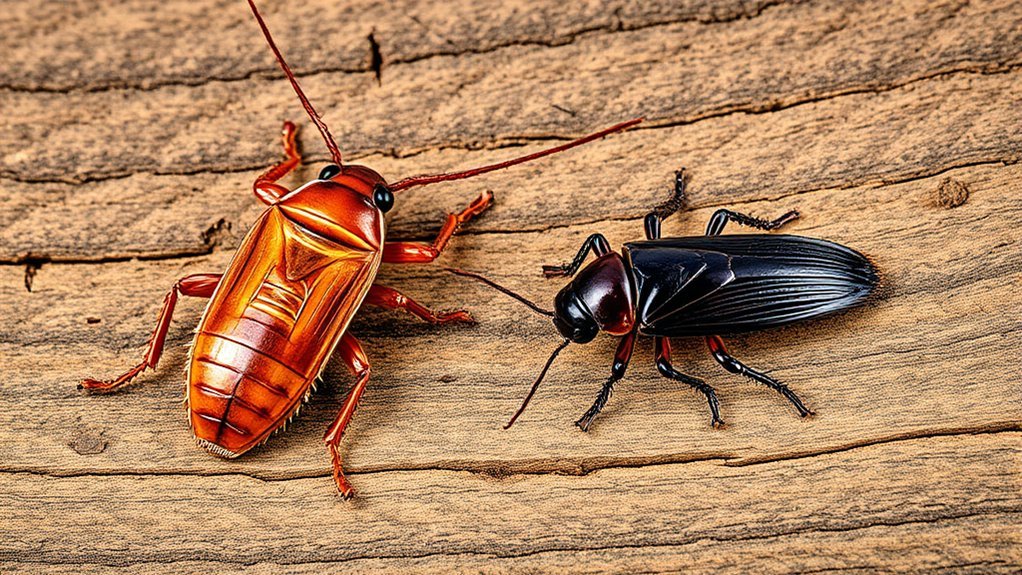
When comparing a wood roach vs cockroach, size is often your first clue. Male wood roaches measure 7/8 to 1 1/4 inches, while females are smaller at 1/2 to 3/4 inches. Their most distinctive feature is the pale, cream-colored stripe running along the wing edges and prothorax.
German cockroaches measure just 5/8 to 2/3 inches and display two dark racing stripes behind the head rather than light edging. American cockroaches run larger at 1 1/4 to 2 1/8 inches, appearing reddish-brown without the wood roach’s distinctive pale striping.
Oriental cockroaches skew nearly black with a glossy finish, while brown-banded cockroaches share similar coloring to wood roaches but lack the cream-edged wings. You’ll also notice that wood roach nymphs appear reddish-brown without wings, which can cause confusion with American cockroach nymphs due to their overlapping size and coloration. Unlike household cockroaches, wood roaches are typically light brown or chestnut-brown in color, making their overall tone warmer and less dark than most indoor pest species.
How Wood Roaches and Indoor Cockroaches Behave Differently
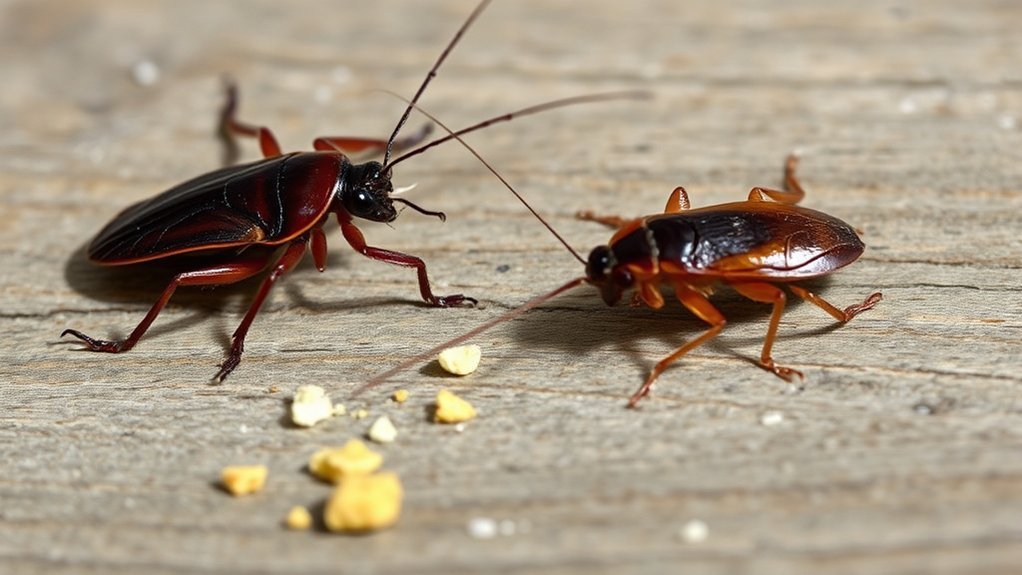
One of the clearest behavioral differences you’ll notice is how each insect responds to light. If you spot a roach flying toward your porch light on a warm May evening, it’s almost certainly a male wood roach, since indoor cockroaches actively avoid light and scatter when you flip a switch. Understanding this distinction helps you quickly assess whether you’re dealing with a harmless outdoor wanderer or a species that’s breeding inside your home.
Wood roaches are slow-moving and diurnal, making them easy to spot and remove during daylight hours, unlike indoor cockroaches that are fast, nocturnal, and quick to hide when disturbed.
Light Attraction Differences
Most homeowners don’t realize that a roach’s relationship with light can immediately reveal which species they’re dealing with. Wood roaches, particularly males, are strongly attracted to artificial light during their late May and June mating season. You’ll find them accumulating near porch lights, pool areas, and security lighting without any attempt to flee.
Indoor cockroaches behave in the exact opposite way. When you flip on a light, they dart immediately into cracks and dark corners. Their survival depends on avoiding light entirely, so you’ll only spot them foraging in complete darkness.
This contrast makes identification straightforward. If a roach holds its ground under your porch light, it’s likely a wood roach. If it runs the moment you turn the lights on, you’re dealing with a pest species. To reduce wood roach encounters near your home, consider switching to yellow outdoor bulbs, which are far less attractive to them than standard white lights.
Indoor Versus Outdoor Activity
Light behavior gives you a quick clue, but where these roaches actually live and how they move through your world tells the fuller story. Wood roaches stay outdoors in rotting logs, loose bark, and firewood piles. They only enter your home accidentally. Indoor cockroaches, however, claim your kitchen, bathroom, and basement as permanent territory.
| Feature | Wood Roach | Indoor Cockroach |
|---|---|---|
| Primary habitat | Outdoors, moist wood | Kitchens, basements |
| Indoor presence | Accidental, temporary | Established, permanent |
| Activity pattern | Day and night indoors | Nocturnal, hides daily |
You’ll notice wood roaches don’t flee when you approach them. Indoor cockroaches dart away instantly when disturbed. That calm versus panicked response reflects each insect’s relationship with indoor spaces entirely. Wood roaches also require constantly moist conditions to reproduce, which is why indoor environments rarely support a lasting population.
Wood Roach vs Cockroach: Color, Size, and Wing Differences at a Glance
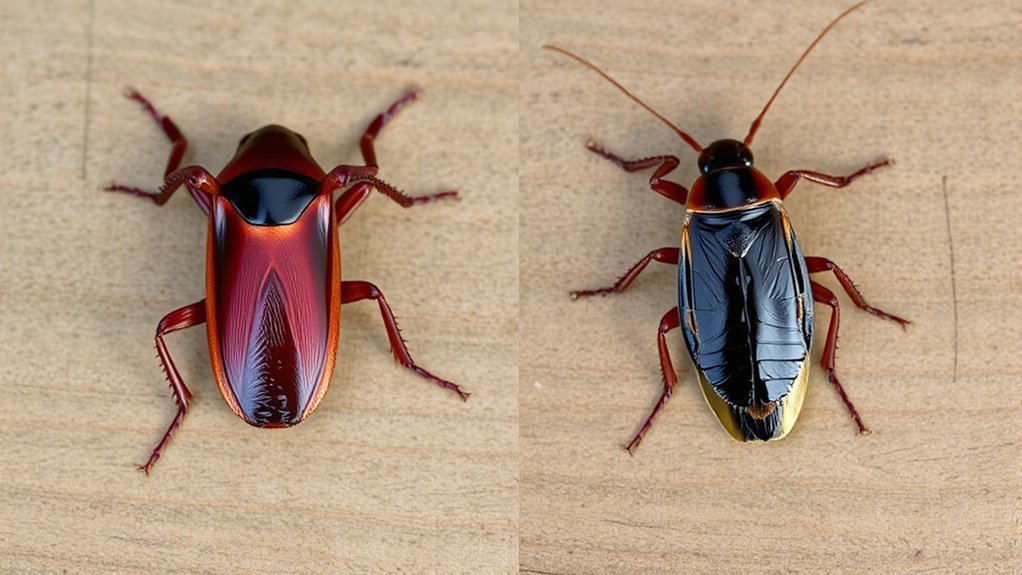
When comparing wood roaches to indoor cockroaches, you’ll notice clear differences in color, size, and wing structure that make identification straightforward. Wood roaches sport a light brown to chestnut-brown tone with cream-colored wing edges, while American cockroaches appear reddish-brown, German cockroaches show two dark pronotal stripes, and Oriental cockroaches look nearly black. Size and wing development also set them apart, with male wood roaches reaching up to 1 inch and possessing long, functional wings, whereas females carry short, non-functional wings that leave the abdomen exposed. Unlike most indoor cockroaches, wood roaches are less light sensitive, making them more likely to wander into lit areas of a home without hesitation.
Color and Size Differences
Telling a wood roach apart from a cockroach often comes down to size and color. Male wood roaches reach about 1 inch long, while females measure roughly 0.75 inches. Both are noticeably smaller than American cockroaches, which range from 1.25 to 2.125 inches. German and brown-banded cockroaches run smaller, topping out near 0.625 and 0.5 inches respectively.
Color-wise, wood roaches display a chestnut-brown base with pale edges along the prothorax and wing margins—a detail you won’t find on most common cockroaches. American cockroaches appear reddish-brown, German cockroaches show two dark stripes on a pale brown body, and Oriental cockroaches look dark and glossy. These color patterns give you quick visual clues when you’re trying to make a fast identification.
Wing and Body Distinctions
Wings set wood roaches apart from cockroaches almost as quickly as color does. Male wood roaches have long, fully functional wings with a distinctive transparent or cream-colored stripe along the edges, making them capable fliers attracted to outdoor lights at night. Female wood roaches carry short, non-functional wings, leaving their abdomen exposed.
Cockroaches tell a different story:
- German cockroaches have wings but rarely use them
- American cockroaches manage only short glides or flights
- Oriental females are completely wingless, unlike any wood roach
- Brown-banded males are the only cockroaches that truly fly
If you spot a roach flying confidently toward your porch light, you’re likely dealing with a male wood roach, not a household pest.
Where Wood Roaches Live vs Where Indoor Cockroaches Hide
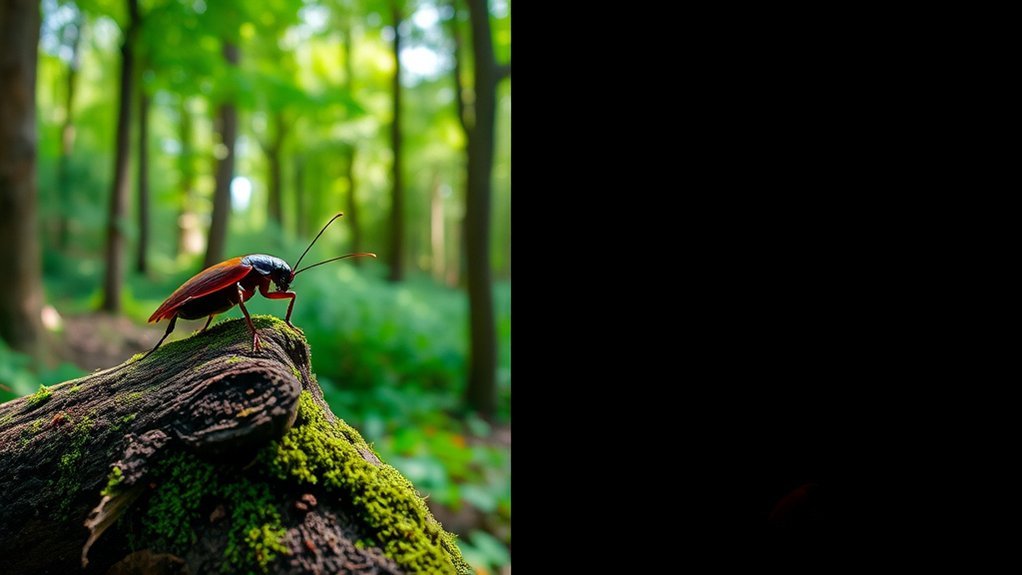
One of the clearest differences between wood roaches and indoor cockroaches is where they actually live. Wood roaches stick to moist, outdoor environments — rotting logs, leaf litter, mulch beds, and loose tree bark. They wander indoors accidentally through firewood, open gaps, or cedar shingles, but they won’t survive long inside without consistent moisture.
Indoor cockroaches are the opposite. They thrive in dry homes, hiding behind appliances, inside cabinets, and near food and water sources. They establish true infestations, unlike wood roaches, which are just temporary visitors.
| Feature | Wood Roach | Indoor Cockroach |
|---|---|---|
| Primary habitat | Rotting logs, leaf litter | Kitchens, bathrooms |
| Moisture need | High — requires outdoor dampness | Moderate — adapts indoors |
| Indoor survival | Dies without moisture | Thrives and reproduces |
| Entry method | Firewood, gaps, shingles | Hitchhikes on goods |
| Infestation risk | None — temporary presence | High — establishes colonies |
Can Wood Roaches Infest Your Home?
Whether wood roaches can truly infest your home comes down to a simple answer: no. They wander inside accidentally and can’t establish populations because your home’s environment doesn’t support their survival or reproduction.
Still, finding one crawling across your floor at night isn’t exactly comforting. Here’s what you’re actually dealing with when wood roaches get inside:
- They move slowly and openly, unbothered by light or disturbance, making them impossible to ignore
- Large numbers entering at once feel overwhelming, even though they’re completely harmless to your structure
- They can leave bacteria or allergens on surfaces they touch
- They disappear on their own once their brief mating season ends in late June
You’re not facing an infestation—you’re facing a temporary nuisance tied directly to outdoor breeding cycles. Seal entry points, swap porch lights for yellow LEDs in May, and store firewood far from your foundation to keep them outside where they belong.
Are Wood Roaches Actually Dangerous to Your Health?
Wood roaches won’t make you sick the way indoor cockroaches can. They don’t bite, sting, or spread diseases, and they die quickly indoors due to rapid dehydration. Since they can’t reproduce inside your home, they pose minimal sustained health risk.
That said, they’re not completely harmless. If you accidentally ingest a wood roach that’s contaminated your food, you could experience illness. Some people also develop allergic reactions to them, including rashes, itchy eyes, asthma flare-ups, and a sore throat. Their chemical spray can also contaminate kitchen surfaces, dishes, and utensils.
Indoor cockroaches are a different story. They carry over 20 harmful bacteria, including Salmonella, Staphylococcus, and Streptococcus. Their droppings trigger severe allergies, worsen asthma, and even cause anaphylactic shock in sensitive individuals. The CDC ranks cockroaches among the top indoor allergens, particularly for children in urban environments.
How to Get Rid of Wood Roaches Without Calling an Exterminator
Getting rid of wood roaches on your own is straightforward if you tackle the problem from multiple angles. You don’t need a professional when consistent effort and the right methods work together.
Getting rid of wood roaches on your own is straightforward—consistent effort and the right methods are all you need.
Start with sanitation and exclusion:
- Pull mulch and leaf litter 12–18 inches from your foundation—roaches are literally living in your landscaping
- Seal every crack around doors, windows, and basement walls before another roach slips inside unnoticed
- Store firewood off the ground and far from exterior walls, or you’re handing roaches a free home
- Fix leaking pipes immediately, because moisture is what keeps drawing them back no matter what else you do
Once you’ve addressed those entry points, apply food-grade diatomaceous earth along baseboards and door frames. Place glue boards every 5–10 feet in active areas to monitor and capture stragglers. For heavier pressure, spray a residual insecticide like Reclaim I/T around your perimeter and reapply quarterly.
Frequently Asked Questions
Do Wood Roaches Make Noise or Produce Any Detectable Sounds Indoors?
You won’t hear wood roaches indoors—they don’t produce audible sounds. They can’t hiss or chirp, and their rare scurrying movements remain undetectable to your ears in typical home environments.
Are Wood Roaches More Common in Certain Seasons or Times of Year?
You’ll encounter wood roaches most often in spring and summer, particularly May through August. They’re most active during warm evenings when males fly toward lights, then decline dramatically as fall temperatures drop.
Can Pets Safely Eat or Interact With Wood Roaches They Encounter?
Your pets can interact with wood roaches at low risk, but it’s best to discourage eating them. They’re not highly toxic, yet they can carry bacteria or pesticide residues that’ll cause digestive upset.
Do Wood Roaches Have Any Natural Predators That Help Control Populations?
Yes, wood roaches do have natural predators! Spiders, lizards, frogs, centipedes, and birds all actively hunt them outdoors. These predators help control wild populations, though they won’t eliminate any roaches that’ve wandered into your home.
Are Wood Roaches Protected or Considered Beneficial Insects in Any Region?
You won’t find wood roaches on any protected species list, but they’re considered beneficial decomposers throughout eastern North America. They’re valued for breaking down organic matter and supporting healthy forest ecosystems.
Conclusion
Now that you know the difference between a wood roach and a cockroach, you’re better equipped to handle either one. If you’re spotting them outside near wood piles, it’s likely a harmless wood roach. But if they’re showing up inside your kitchen or bathroom, you’ve probably got a bigger problem on your hands. Use the signs covered here to identify what you’re dealing with and take action fast.
