
Are Cockroaches Nocturnal? When and Why They Come Out
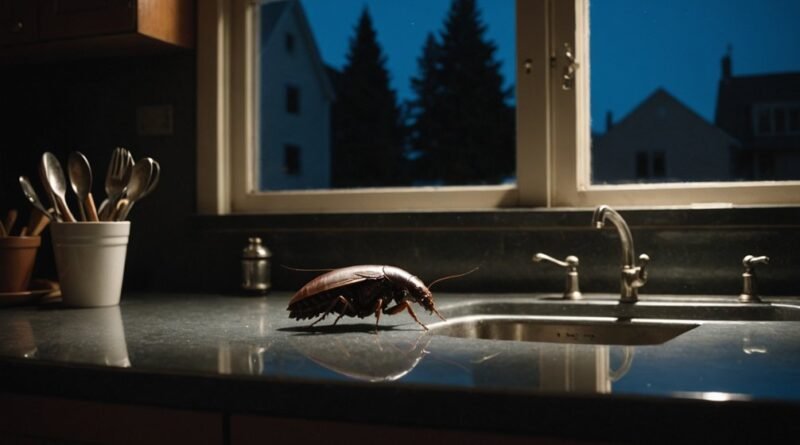
Yes, cockroaches are truly nocturnal. You’ll usually see them within an hour or two after lights go out, with activity peaking around midnight. They come out at night because it’s darker, cooler, safer from predators, and less disturbed by people. Darkness also helps them conserve moisture and follow scent trails to food and water in kitchens and bathrooms. If you spot them in daylight, that often signals a bigger problem you’ll want to understand better.
Key Takeaways
- Cockroaches are truly nocturnal; their circadian clock drives most activity from shortly after lights out to around midnight.
- Light strongly suppresses their movement; even dim light makes them hide, so they rarely appear in well-lit areas.
- They come out at night to safely search for food, water, and mates, mainly in kitchens, bathrooms, and other humid areas.
- Darkness and cooler nighttime temperatures reduce dehydration and predation risk, making night the most efficient time for them to be active.
- Seeing cockroaches in daytime usually indicates a heavy infestation, overcrowding, or food stress forcing them out of hiding.
When Do Cockroaches Actually Come Out at Night?
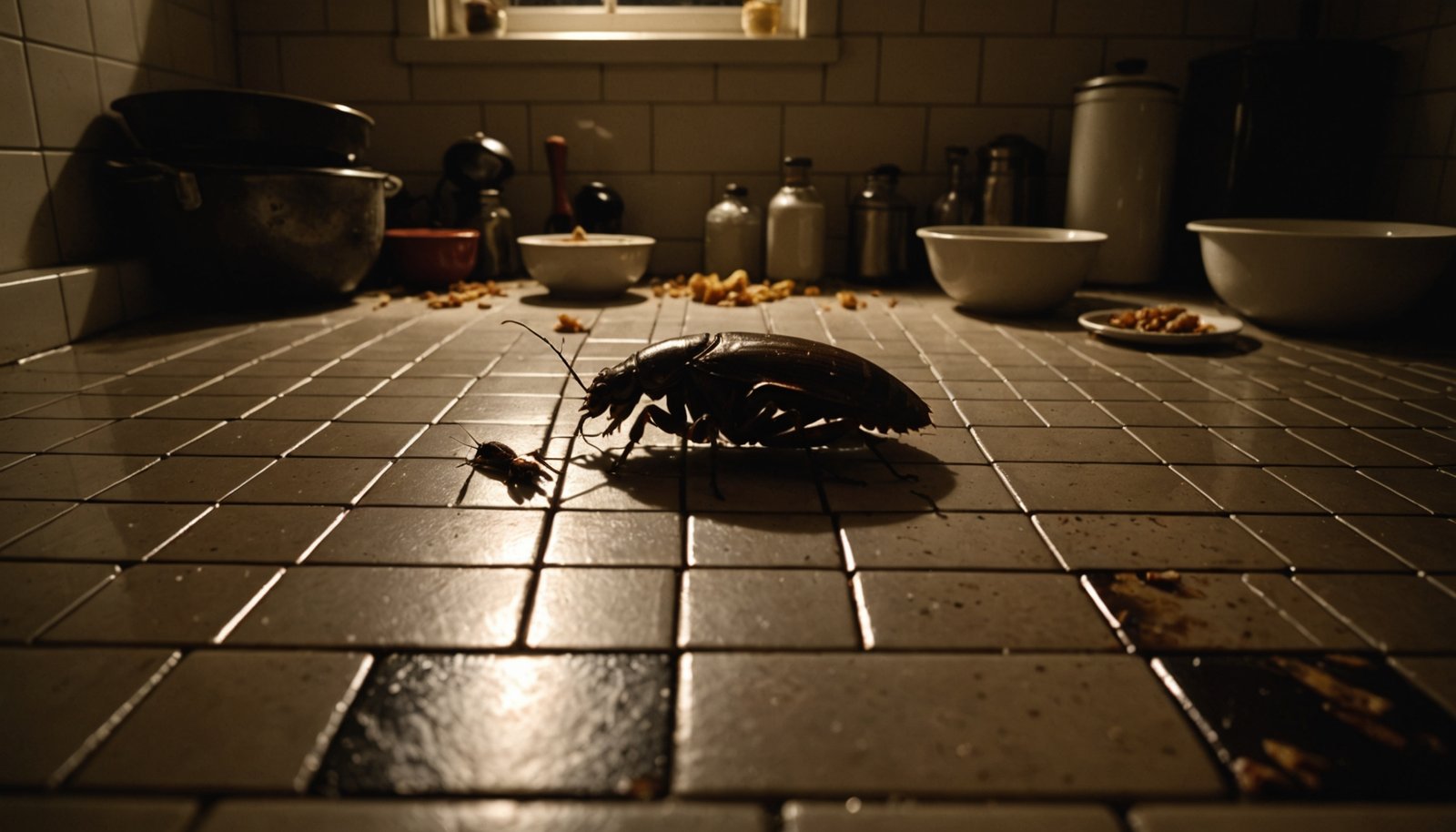
As darkness settles in, cockroaches typically start emerging within the first hour or two after the lights go out, reaching their highest activity in the middle of the night. You’ll notice their nocturnal habits most in kitchens and bathrooms, where they slip out once your home quiets down and footsteps stop.
They follow scent trails to crumbs, grease, and organic matter, turning your floors, counters, and drains into a focused feeding frenzy. Cooler nighttime temperatures and higher humidity make it easier for them to move, forage, mate, and deposit oothecae while staying alert to danger. If you begin spotting roaches during the daytime, it often signals a heavy infestation that may require professional treatment.
Their light-sensitive eyes excel in dim conditions, so they navigate pipes, crawl spaces, and utility lines with ease. If you flip on a light suddenly, they’ll instantly scatter, signaling how strongly they avoid bright exposure. By the last few hours before dawn, they’re mostly immobile again, hidden tightly away until the next dark cycle.
Are Cockroaches Truly Nocturnal or Just Night-Preferring?
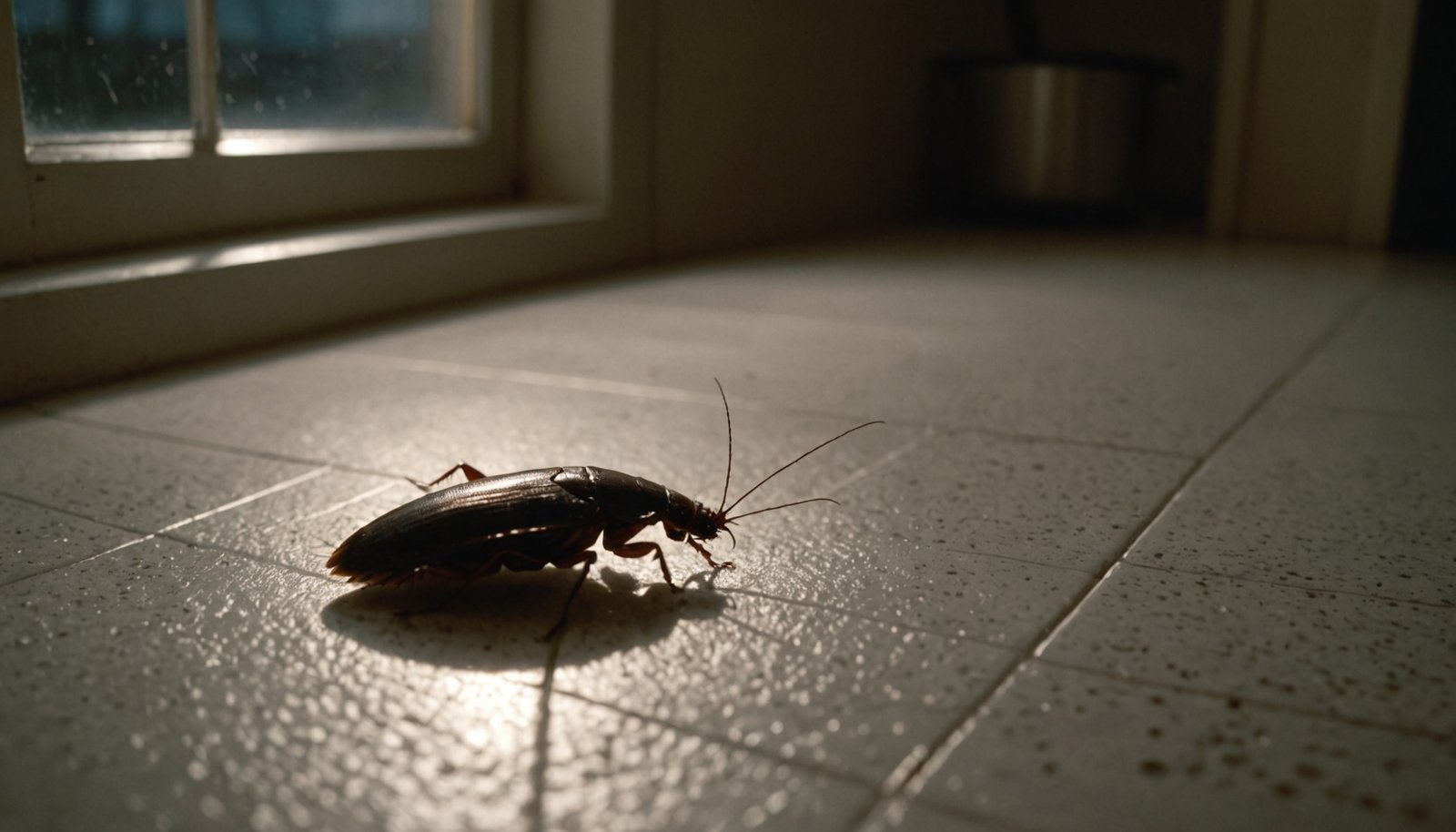
You might wonder if cockroaches are truly hard-wired night creatures or if they simply prefer the dark to avoid danger. When you look at their built-in circadian clocks and how strongly light suppresses their activity, you start to see that it’s more than just a casual preference. Understanding this distinction helps you predict when they’re most active and how to disrupt their routine. Studies show that even when other conditions stay the same, changing light alone can strongly shift or even temporarily abolish their activity rhythm.
True Nocturnal Behavior
Although many insects simply prefer the dark, cockroaches qualify as truly nocturnal because their activity is tightly locked to the night by an internal circadian clock rather than just low light levels. You’re not just seeing night-loving pests; you’re seeing animals with strict nocturnal adaptations and highly predictable activity patterns. Under normal conditions, they emerge only at night, with movement peaking around midnight, then tapering off.
Even dim light sharply cuts their activity, and bright artificial light can almost completely halt emergence. Their internal clock keeps running even when social interactions or vibrations change, so they stay hidden by day regardless of disturbance. Because they seek warm, moist harborage close to food, their nightly foraging is typically concentrated around kitchens, bathrooms, and other water or food sources.
| Time Period | Typical Behavior |
|---|---|
| Daylight | Rest, complete hiding |
| Sunset–early night | Peak emergence |
| Around midnight | Maximum movement |
| Late night | Declining activity |
Night Preference Explained
Their strict internal clock sets the schedule, but what you notice in your kitchen is their powerful preference for darkness. Cockroaches are truly nocturnal, yet what stands out most to you are their nighttime habits and how strongly they seek darkness benefits. They become most active in the middle of the night, when your home’s quiet, cooler, and undisturbed. During these peak hours, a neuropeptide called Pigment Dispersing Factor helps regulate their nightly activity.
In darkness, they forage for crumbs and grease, follow scent trails, search for mates, and expand territory from crawl spaces into kitchens and bathrooms. Light means danger: sudden brightness startles them, triggers negative phototaxis, and sends them fleeing to tight, moist harborages. Their wraparound, light-sensitive eyes let them navigate and detect motion in dim conditions, turning night into their safest working hours.
Why Cockroaches Avoid Light and Prefer Darkness
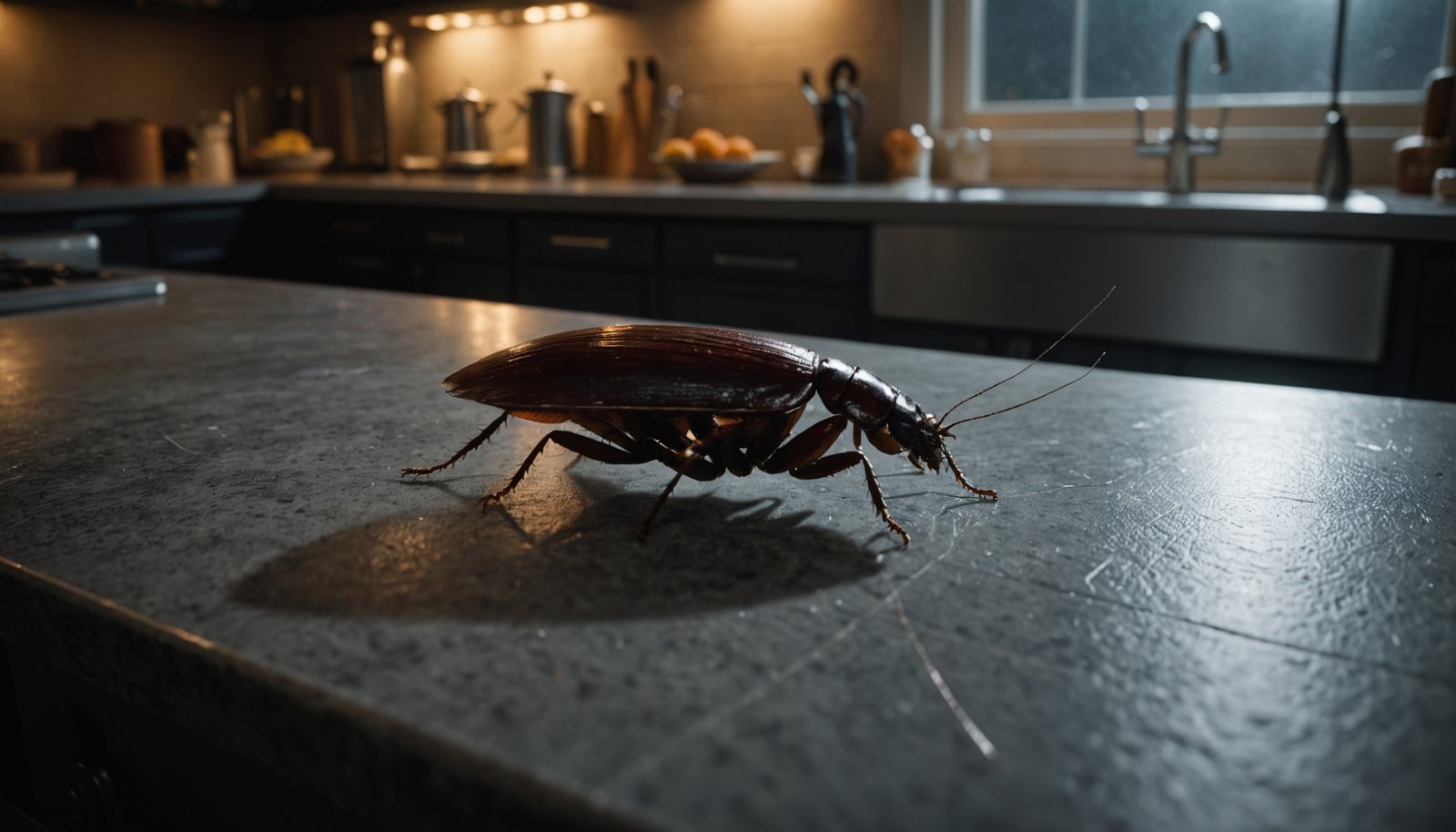
When you see cockroaches scatter the instant a light switches on, you’re watching powerful instincts that favor darkness in action. Over millions of years, they’ve learned that bright conditions usually mean predators and human activity that can kill them. To a cockroach, light isn’t just brightness; it’s a danger signal that tells it to run and hide. Their internal circadian rhythms still push them to be most active at night, even in constant darkness without any external time cues.
Instincts That Favor Darkness
Because darkness offers safety and efficiency, cockroaches have evolved powerful instincts that draw them away from light and into hidden, low-light spaces. Their hiding strategies center on tight, moist crevices where they can rest unseen by predators and align daytime shelter with nighttime foraging. Over generations, these instincts have hardwired roaches to move, feed, and mate when you’re least active.
Their sensory adaptations make darkness an advantage, not a handicap. Light-sensitive eyes that wrap around the head detect faint movement without turning. Antennae packed with fine hairs read air currents, scent trails, and vibrations, guiding them through pitch-black areas. Cooler night temperatures lower dehydration risk and improve metabolic efficiency, letting them conserve energy while exploiting dark, undisturbed microhabitats.
Light as Danger Signal
Darkness doesn’t just feel safer to cockroaches; light actively signals danger. Over millions of years, roaches learned that when light appears, predators are usually close. In nature, daylight means birds, lizards, and mammals are hunting, so avoiding brightness became a powerful predator avoidance strategy that boosted survival and reproduction.
Indoors, the same pattern continues. For a cockroach in your kitchen, light signals more than visibility—it predicts your movement.
- Roaches quickly link lights switching on with footsteps, doors, and vibrations
- Near-miss swats or dead roaches in lit areas reinforce the light-danger connection
- Their eyes excel in low light, so they function best in dim, quiet spaces
- Alarm pheromones and air currents trigger hiding, especially when lights come on
How Cockroaches Are Built for the Night
Although you might only notice cockroaches as quick shadows after the lights go out, their entire bodies are engineered to thrive in the dark. Their compound eyes wrap around the head, giving almost 360-degree coverage and powerful night vision. Each eye holds thousands of light-sensitive units that detect single photons and tiny movements you’d never see. This extreme sensory adaptation lets them navigate even without moonlight.
When vision’s limited, their antennae take over. Packed with fine hairs, they pick up air vibrations, scents, and obstacles so roaches can map a room and flee threats in near-total darkness. Inside the eyes, specialized photoreceptors adapt within seconds after bright light, then boost weak signals so motion still stands out.
Their nervous system and circadian clock time this nighttime performance, while long, spined legs, vibration-sensing organs, and streamlined bodies let them run, squeeze, and hide efficiently in the dark.
What Cockroaches Do All Night: Feeding, Mating, Spreading
Once the lights go out, cockroaches turn your quiet home into a busy nighttime worksite—hunting for food, searching for mates, and pushing into new territory while you sleep. They follow scent-marked trails into kitchens and bathrooms, using nocturnal navigation to reach crumbs, grease, and moisture. Their scavenging habits let them feed on almost anything, from organic matter in drains to decaying plant material, while you’re unaware.
At the same time, they’re performing mating rituals. Females drop oothecae egg cases in dark cracks, and pheromone communication helps coordinate mates, nymphs, and alarm signals within their social structure.
- Target peak-access food sources while your home’s quiet
- Use pheromone communication to share discoveries and danger
- Rely on predator avoidance tactics, scattering from sudden light
- Push territory expansion through pipes, wall gaps, and utility lines
All night, they feed, breed, and spread through your home’s hidden pathways.
Where Cockroaches Hide in Daylight (And Why It Matters)
Because cockroaches are nocturnal, they spend daytime hours wedged into tight, hidden spaces—right inside the areas you use most. Their daylight hiding choices follow predictable pest behavior: they want darkness, tight contact, and nearby food and moisture. In kitchens, they slip behind refrigerators and stoves, under and inside cabinets, especially beneath sinks, behind dishwashers, and into pantry corners or food storage gaps.
In bathrooms, they press under sinks, behind toilets, around pipes, and into wall voids near moisture. Throughout your home, they tuck behind baseboards and trim, inside wall voids, around floor drains, near electrical outlets, and into narrow gaps.
Utility rooms, laundry areas, and garages offer perfect daylight hiding: under appliances, inside electronics, in cluttered boxes, and near water heaters. Basements and crawl spaces, with dark, quiet, slightly damp conditions, become roach headquarters—exactly where they can safely rest before emerging at night.
What Seeing Cockroaches in Daylight Really Means for Infestations
Those hidden daylight hangouts matter for one big reason: when you start seeing cockroaches out in the open during the day, your problem’s usually much bigger than a few stray bugs. Because roaches are wired to stay hidden until dark, daytime sightings almost always act as serious infestation signals.
Daytime roach sightings usually mean a serious, hidden infestation is already boiling over behind the scenes
In most homes, roaches only break their nocturnal routine when overcrowding and food stress push them out. That means the population density inside walls, cabinets, or appliances has likely hit a critical level and their usual harborage sites are overflowing.
Watch for patterns like:
- Several roaches sprinting for cover when you flip on a light
- Chewed food packages or rapidly disappearing pet food (strong feeding pressure)
- Droppings, smear marks, egg casings, or a musty odor near activity
- Repeated daytime sightings in multiple rooms or units
At that point, DIY efforts rarely cut it—you’ll need targeted, professional pest control to collapse the hidden nests.
How Nighttime Cockroach Activity Threatens Your Kitchen and Health
While you’re winding down for the night, cockroaches are just getting started in your kitchen—and their peak activity happens in the first couple of hours after sunset. Their nocturnal behavior, driven by circadian rhythms, means they roam when you’re not watching, crossing floors and countertops in search of crumbs, spills, and food residue. During this window, males and non-pregnant females travel furthest, turning any lapse in kitchen sanitation into a nightly buffet.
As they follow these feeding habits, they track pathogens and allergens across cutting boards, utensils, and stored food, creating serious health risks. Dark, tight spaces under sinks and behind appliances, combined with plumbing leaks and humidity, turn your kitchen into prime real estate. Moisture control and basic habitat analysis—understanding where water, food, and shelter overlap—are essential to effective pest management and infestation prevention, because the real damage happens while you sleep.
How to Deter Cockroaches at Night With Light, Cleaning, and Control
You don’t have to accept that all this hidden nighttime activity will keep threatening your kitchen; you can turn their habits against them with light, cleaning, and targeted control. Roaches hate sudden brightness, so basic light deterrence helps: switch on a bright kitchen light if you get up at night, and use motion‑activated lights near trash and under sinks to startle them and disrupt navigation.
Pair that with focused cleaning strategies so they don’t find rewards when they venture out. At night, they’re hunting crumbs, grease, and moisture, so eliminate all three before bed.
- Wipe counters, stovetops, and cabinet fronts to remove food films.
- Vacuum floors and crevices to break pheromone trails and pick up crumbs.
- Dry sinks, fix leaks, and empty pet bowls to remove water.
- Seal cracks, clear clutter, and place gel baits in dark harborage zones.
Frequently Asked Questions
Do Different Cockroach Species Have Different Nightly Activity Schedules?
Yes, different cockroach species keep distinct nightly schedules. You’ll notice species behavior and activity patterns vary: some peak right after dusk, others closer to midnight or pre-dawn, depending on competition, habitat, and light sensitivity.
Can Changing My Sleep Schedule Affect Cockroach Behavior in My Home?
Yes, your changing sleep patterns can affect cockroach behavior. When you’re active at night, you disrupt their peak foraging time. Environmental factors like light, noise, and vibrations can push them into quieter rooms or later activity periods.
How Far Will Cockroaches Travel From Their Nest During a Single Night?
They’ll typically roam just a few yards from their nest, but some can reach travel distances up to 100 yards when food’s scarce. Their nesting habits keep them close to warmth, moisture, and reliable food sources.
Does Outdoor Lighting Around My Home Change Indoor Cockroach Activity Patterns?
Yes, outdoor lighting around your home changes indoor cockroach activity patterns. You’ll often see delayed, more concentrated indoor attraction after lights switch off, with roaches staying hidden deeper in walls and emerging later along utility lines.
Can Pets Influence When Cockroaches Choose to Come Out at Night?
Yes, pets can influence when cockroaches come out. Your pets’ behavior, heat, food, and water change environmental factors, disrupt roach scent trails, and shift their activity patterns toward quieter, warmer, less-patrolled times of night.
Conclusion
Now that you know when roaches come out and why, you can turn the odds against them. Use their nocturnal habits against them: clean up food and moisture at night, seal hiding spots, and reduce clutter. Watch for daytime sightings—they’re a red flag of a bigger problem. Combine light, sanitation, and targeted control, and you’ll make your home far less welcoming to cockroaches and the health risks they bring.
