
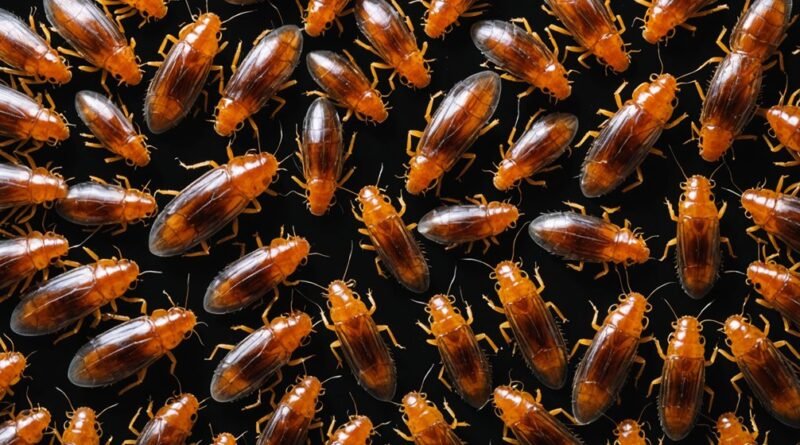
Baby Cockroach Identification: What Nymphs Look Like at Each Stage
You can spot baby cockroaches (nymphs) by their flat, oval bodies, long twitching antennae, and darting movement into cracks. Right after hatching they’re tiny, soft, and ghost‑white, then quickly turn gray‑brown. As they grow from about 3 mm to over 10 mm, they darken, stay wingless, and look like fast, mini versions of adults. Seeing multiple sizes at once usually means an active infestation, and the exact size and color tell you much more.
Key Takeaways
- Baby cockroaches (nymphs) are flat, oval, wingless, fast-moving, and hide in cracks; long, thin antennae are a key distinguishing feature.
- Newly hatched “ghost” nymphs are tiny (about 3 mm), soft, bright white, and turn gray-brown to dark brown within hours.
- As nymphs molt 6–7 times, they grow from about 3 mm to 12–15 mm and darken, gradually resembling small, wingless adults.
- Multiple nymph sizes present together (from under 5 mm to about 14 mm) indicate an active, ongoing cockroach infestation.
- Species differ slightly: German nymphs show dark stripes, American nymphs develop reddish-brown bodies and wing pads, while brown-banded and Oriental nymphs have distinct banding or uniform dark colors.
How to Tell Baby Cockroaches From Other Bugs
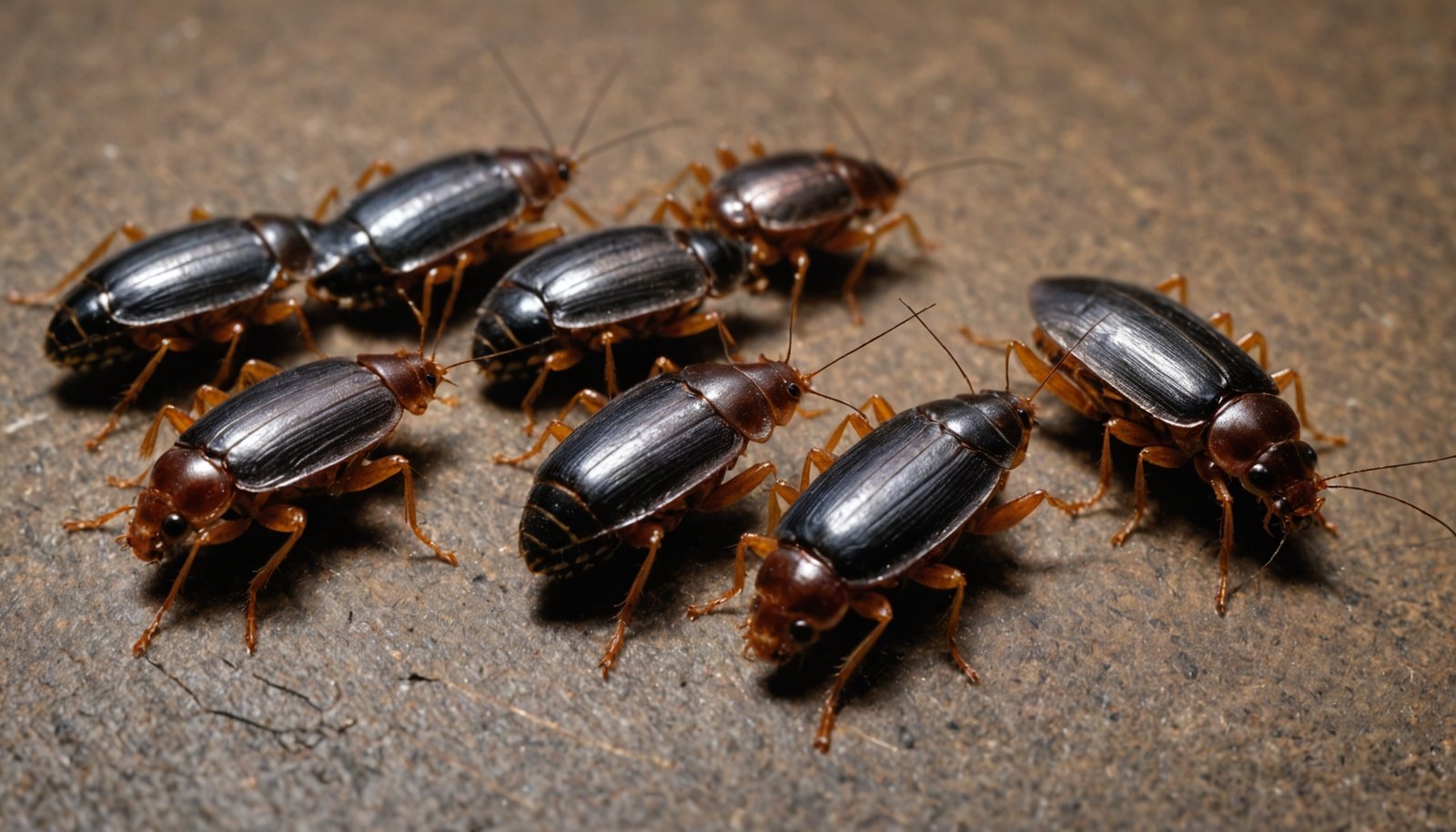
Ever wondered whether that tiny, fast-moving bug is a baby roach or something harmless? Focus on how it moves and hides. Nymph behavior includes sudden, darting bursts straight toward cracks, not lazy wandering. If you see a flat, oval body that vanishes into gaps faster than similar‑sized bugs, that’s a red flag.
Watch the antennae function closely. Cockroach nymphs have very long, thin antennae that sweep constantly, feeling for vibrations and scents as they follow adult scent trails. Their hiding tactics rely on that flat body and speed, slipping under baseboards or inside appliance seams. Because their presence signals an active breeding population, even a few nymphs usually mean more are hiding nearby.
Size and growth rates also help. Very small, wingless bugs under 3 mm that keep reappearing over several weeks suggest developing nymphs rather than random invaders. When you notice multiple sizes—tiny, medium, and almost half‑adult—those staggered stages are strong infestation signs, not just a few stray household insects.
General Baby Cockroach Features to Look For
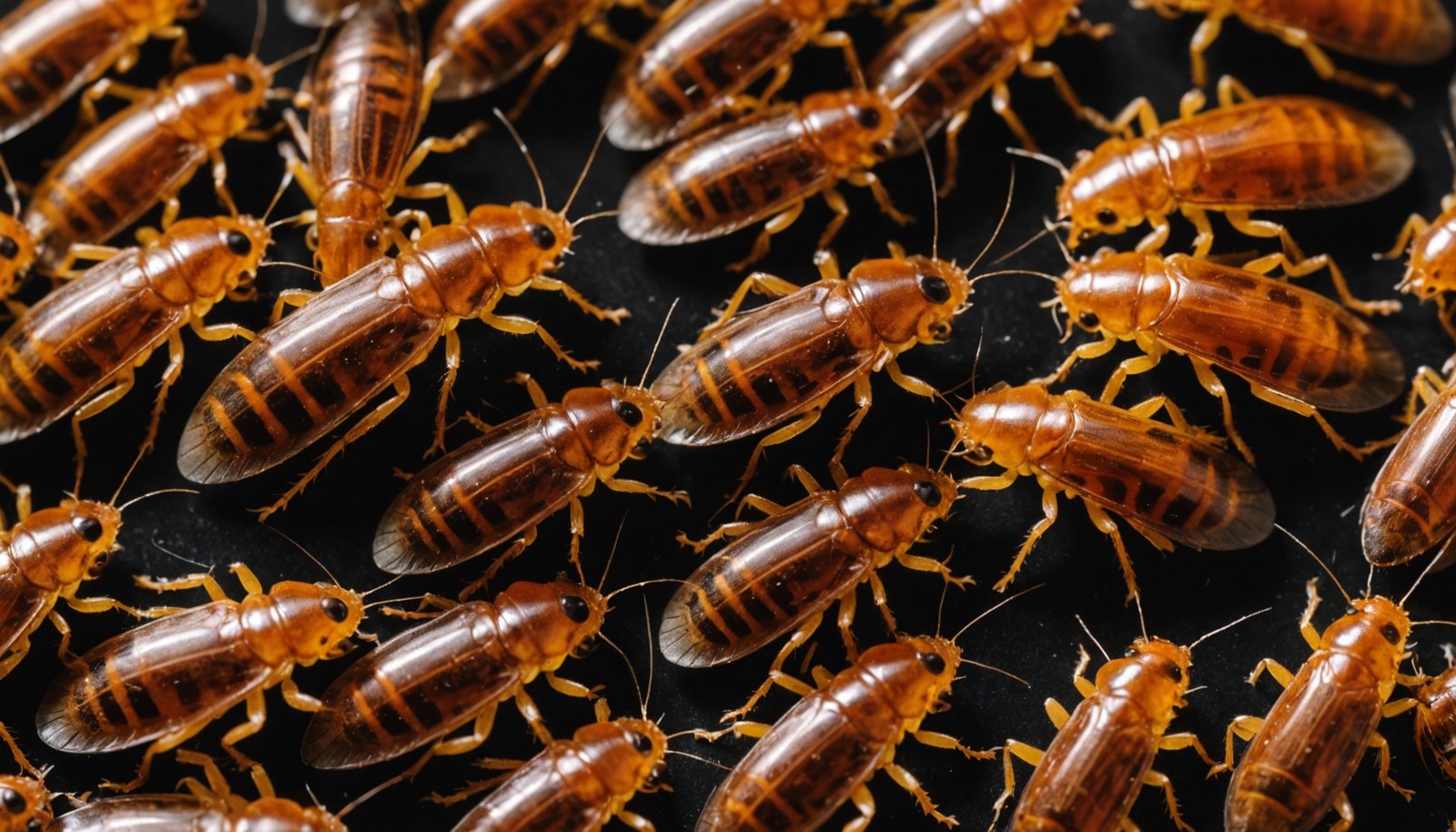
Once you know how baby roaches move, it helps to match that behavior with their physical traits. Freshly hatched nymphs start out bright white, almost see‑through, only a few millimeters long. As they take in air, their shells harden and darken within hours, and early food access shapes their growth patterns. Nymphs gradually darken with each molt, shifting from pale to a deeper grayish‑brown as they move closer to adulthood. You’ll usually see a flattened, oval body divided into three segments, with a softer feel in the youngest stages.
Nymphs lack fully developed wings the entire time, so any “baby roach” you spot will have either no wings or small, non-functional wing buds. Their six spiny legs and extra-long antennae drive classic nymph behavior: rapid darting, quick bursts toward dark cracks, and constant probing of surfaces.
| Feature | What You’ll Notice | Why It Matters |
|---|---|---|
| Color | Pale to grayish-brown, darkening over time | Indicates age and recent molt |
| Body Shape | Small, flat oval, no full wings | Distinguishes nymphs from adults |
| Legs & Antennae | Spiny legs, twitching antennae | Signal roach, not other insects |
Baby Cockroach (Nymph) Stages by Size and Color
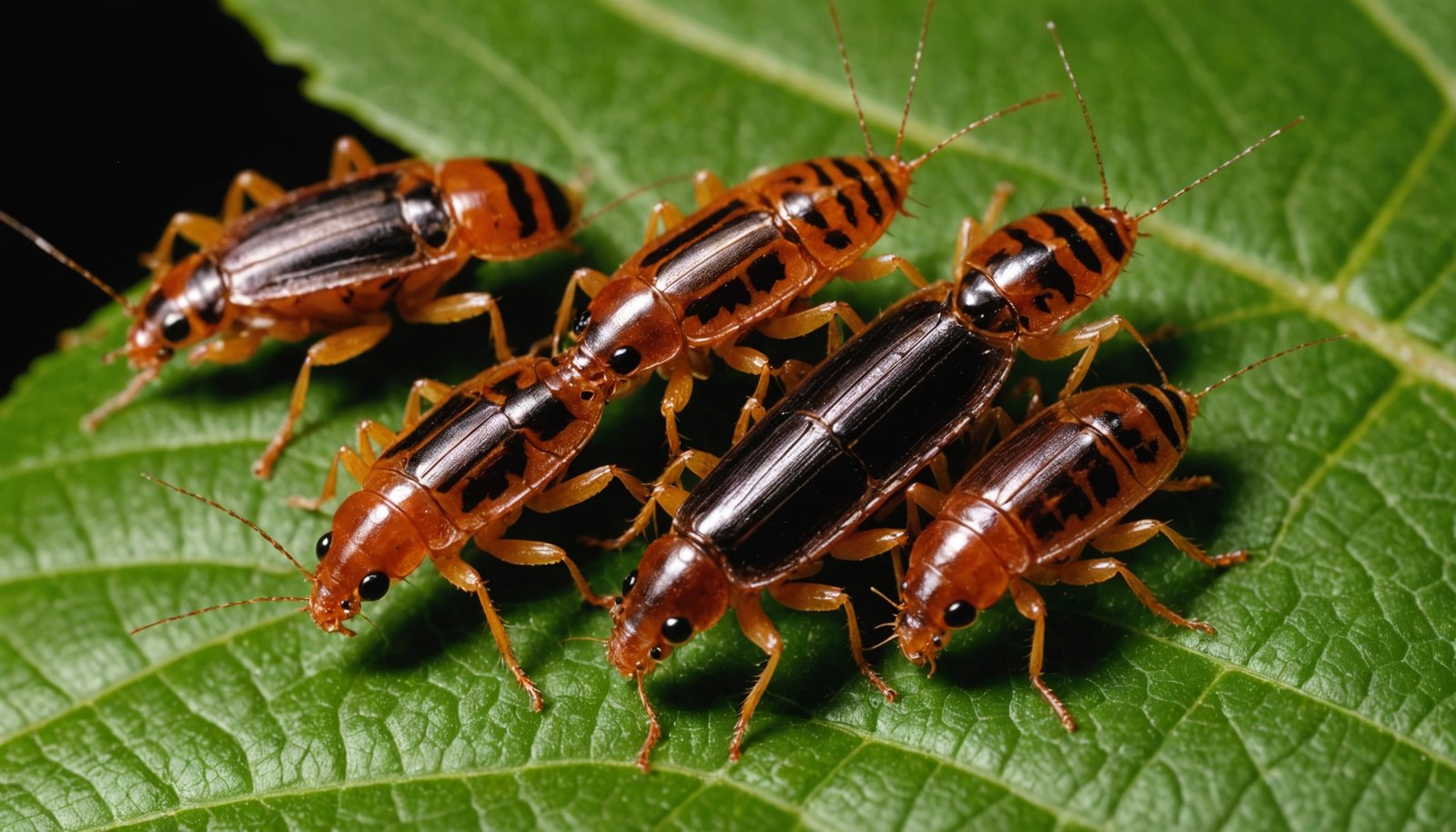
As baby cockroaches mature, you’ll see clear changes in both their size and color that help you track their stage. First, there’s the bright white “ghost” nymph phase right after hatching, then a period of steady size increases as they molt. Nymphs go through multiple molts, shedding their exoskeleton several times before reaching adulthood. By the late stages, you’ll notice their colors deepen and patterns sharpen, making them easier to link to a specific species.
Early “Ghost” Nymph Phase
During the earliest “ghost” nymph phase, baby cockroaches look so pale and fragile that many people don’t recognize them as roaches at all. These ghost nymph characteristics appear right after hatching or just after a molt, when the insect’s body is bright white, almost see-through, and very soft. It’s wingless, with a rounded body, long antennae, and six spiny legs that seem oversized for its tiny frame. Because this stage occurs immediately after they emerge from the ootheca or a molt, seeing these ghost nymphs indoors is a strong sign that an active cockroach population is breeding nearby.
Early growth factors matter during these first hours. The nymph actually enlarges by taking in air before its new exoskeleton hardens. Food access in the first 12 hours can boost its growth and survival. As the shell stiffens, color quickly shifts from white to grayish or brown, revealing each species’ typical pattern.
Mid-Stage Size Changes
After the brief ghostly phase fades, baby cockroaches enter a steadier growth period where size and color make them easier to spot. During this mid-stage window, most nymphs reach about 1/4 inch long, so you’ll notice them more clearly along baseboards and in cabinets. Repeated mid stage molts drive this size jump, with German cockroaches often completing 2–3 molts by day 60 under warm, favorable conditions. In this period, nymphs immediately begin actively searching for food after hatching, which can increase the chances you’ll see them near crumbs, spills, or pet dishes.
You’ll also see nymph coloration become more distinctive. German nymphs turn a deeper brown to nearly black, while American nymphs shift from gray‑brown toward richer reddish tones. Brown-banded nymphs show obvious yellow bands on the abdomen, and Oriental nymphs develop clear light-and-dark body bands, helping you distinguish species by sight.
Late-Stage Color Deepening
Once baby cockroaches reach their later nymph stages, their color shifts from murky mid-browns into deeper, more adult-like tones that make identification easier. At this point in the growth stages, nymph color darkens predictably after each molt, especially in the first 12 hours as the soft white body hardens.
German nymphs turn almost uniformly dark with a sharper pale dorsal patch and clear head bands. American nymphs deepen from gray-brown to reddish-brown, then approach a mahogany tone while keeping a banded look. Oriental nymphs progress from red-brown to glossy near-black, with few markings. Smoky brown nymphs go from black with white bands to reddish-brown, then lose patterns as they approach a smooth, smoky brown adult shade.
German Baby Cockroaches (Nymphs) by Size and Stage
When you’re looking at German baby cockroaches, their size at each instar gives you clear landmarks, from tiny 1/8‑inch hatchlings to nearly 9/16‑inch late-stage nymphs. As they grow, you’ll see their color shift from pale white to almost black, then settle into the familiar brown with clear parallel stripes. By matching size and color together, you can estimate how long the infestation’s been active and how close those nymphs are to becoming breeding adults.
Size Landmarks By Instar
Across their 5–7 nymphal stages (instars), German baby cockroaches follow fairly predictable size landmarks that make stage-by-stage identification possible. If you focus on size comparison and clear instar differences, you can roughly age what you’re seeing. First instars are about 3 mm long. Second instars reach around 4.5 mm, and third instars measure about 5.6 mm. By the fourth instar, they’re roughly 7 mm. Fifth instars grow to about 9 mm and start approaching pre-adult proportions. Sixth instars reach about 12.5 mm, and by the final molt, adults are near 15 mm. Under good conditions, they pass through these 6–7 molts in about 40–100 days, with nymphs making up most of an active infestation.
Color Changes Over Time
Although size landmarks help you estimate a German cockroach nymph’s age, its color shifts just as reliably as it grows. Right after hatching, nymphs look white and soft, then begin nymph coloration changes toward dark brown within hours as their bodies harden. A tiny pale patch on the second and third segments helps with identifying nymph stages in these first days.
Early instars darken from gray‑brown to nearly black, with faint parallel bands appearing on the pronotum and light areas slowly expanding. Mid instars look more uniformly dark brown to black, with clearer pronotal stripes and broader pale bands on the thorax. By late instars, darkening is complete and they resemble small, wingless, blackish adults.
Recognizing Infestation Age
Because German cockroach nymphs pass through predictable size stages, you can roughly gauge how long an infestation’s been active just by looking at their length and mix of ages. Early nymphs under 5 mm (1st–2nd instar) point to very recent hatchings, often within the last few weeks. Mid-stage nymphs at 6–10 mm suggest the infestation’s been developing for at least a month.
When you see many late-stage nymphs nearing 14 mm but still wingless, the nymph stage may be 50–100 days old. A thriving infestation usually shows 75–80% nymphs, reflecting aggressive population dynamics. Mixed sizes, combined with typical nymph behavior—hiding in cracks, quick scattering—signal ongoing reproduction rather than a one‑time introduction.
American Baby Cockroaches (Nymphs) by Size and Stage
As American cockroaches develop from tiny hatchlings to nearly full-sized adults, their baby stages (nymphs) follow a clear progression in size, color, and body features that you can use to identify them. By watching nymph behavior and growth patterns, you can estimate how long they’ve been in your home.
Right after hatching, nymphs are 1/8–1/4 inch, white, rounded, soft, and completely wingless, looking like miniature adults without markings. Early nymphs turn grayish‑brown and stay soft-bodied; their back half darkens first as they molt.
Freshly hatched nymphs are tiny, soft, white, wingless, and quickly darken from the back as they molt
By the mid nymph stage, they’re approaching 1/2 inch, reddish‑brown, and start showing faded yellow edges on the thorax. They shed their exoskeleton many times to grow.
Late nymphs reach up to 1 inch, with elongated bodies, full reddish‑brown color, darker rears, and visible but useless wing pads. After the final molt, they gain full wings and reproductive ability.
Brown-Banded and Oriental Baby Cockroaches: How to Spot Them
Baby cockroaches from brown-banded and Oriental species can look like tiny, featureless bugs at a glance, but their color patterns, size, and hiding spots make them surprisingly easy to tell apart once you know what to check. For Brown Banded Identification, focus on pattern and placement. Young brown-banded nymphs start nearly black, then show two lighter bands ranging from tan to light gold across the body as they molt. They stay wingless, move quickly, and favor warm, dry, higher spots like behind picture frames, electronics, or along walls.
Oriental Nymphs look very different. They hatch uniform grayish-brown with no bands, darken gradually, and later develop small wing pads. They’re slower and stick to damp, low areas—basements, crawl spaces, near floor drains, or mulch.
Use this quick checklist:
- Color pattern: banded vs plain gray-brown
- Speed and behavior: darting vs sluggish
- Location: dry upper walls vs damp, ground-level zones
What Baby Roach Size Reveals About Your Infestation
Once you can tell different baby roach species apart, their size starts to tell you how long they’ve been breeding in your home. When you measure nymph size, you’re really estimating infestation duration. Very small nymphs (3–5mm) usually mean eggs hatched within days. If most German nymphs are about half their 10–12mm final size, you’re likely 3–4 weeks into an infestation.
Larger American nymphs nearing 20–30mm point to 3–6 months of activity. Oriental and brown-banded nymphs close to their 10–12mm maximum are on the edge of adulthood, signaling a long-established problem. Mixed sizes together—tiny, medium, and near-adult—confirm ongoing breeding cycles, not a one-time hitchhiker.
Check ratios too. When over 80% of what you see are nymphs, the colony’s actively growing. If you start noticing fewer nymphs versus adults after treatment, your control efforts are finally cutting into future generations.
Frequently Asked Questions
Can Baby Cockroaches Live Without Adults or an Established Colony Nearby?
No, they usually can’t. For baby cockroach survival, you’ll see that nymphs need adults’ food sources and shelter. Nymph social behavior keeps them near colonies; isolated nymphs rarely thrive long-term or start new infestations alone.
Do Baby Cockroaches Carry Diseases or Trigger Allergies as Much as Adults?
Yes, baby cockroaches carry diseases and trigger allergies just as much as adults. You face equal disease transmission risk and potent allergy triggers from their feces, saliva, and shed skins, so you shouldn’t ignore nymph infestations.
Where Do Baby Cockroaches Usually Hide During the Day Inside Homes?
They usually hide in dark crevices near food and moisture. You’ll find nymphs in kitchen cabinets, under sinks, behind refrigerators, inside wall voids, under bathroom vanities, around plumbing, and within cluttered cardboard or fabric piles.
How Quickly Can Baby Cockroaches Reproduce Once They Become Adults?
They can reproduce almost immediately after their final molt. You’re seeing full reproductive maturity as soon as adulthood begins, so the life cycle rapidly continues, especially for German cockroaches in warm homes with steady food and moisture.
Can Household Cleaning Alone Get Rid of Baby Cockroaches Without Pesticides?
No, household cleaning alone won’t eliminate baby cockroaches. You must pair strict cleaning methods with sealing cracks, drying moisture, traps, and natural remedies like boric acid or diatomaceous earth, or call professionals for heavier infestations.
Conclusion
Now that you can spot baby roaches by size, color, and shape, you won’t confuse them with harmless bugs. When you notice nymphs, you’re seeing early warning signs of a growing infestation. Use what you’ve learned to track where they’re hiding, how many stages you’re seeing, and how serious the problem might be. The sooner you act on what their size reveals, the faster you can stop roaches from taking over.
