
Baby Cockroach: What They Look Like, Where They Hide, and How to Get Rid of Them
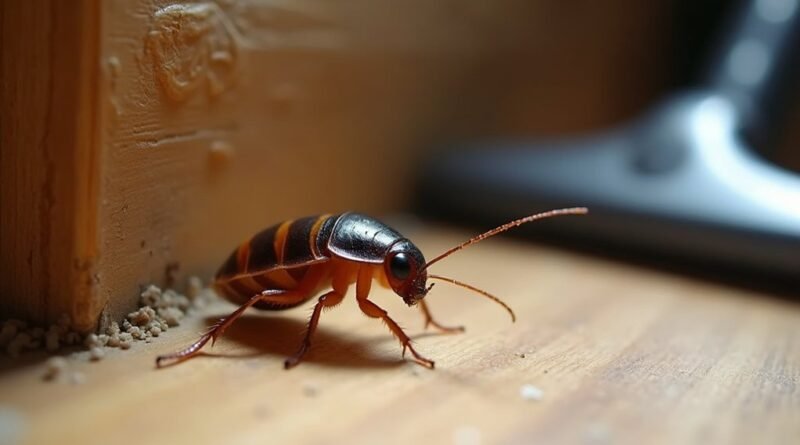
Baby cockroaches, called nymphs, look like tiny versions of adults, ranging from 1.5mm to 6mm depending on the species. They’re flat, oval-shaped, and turn from white to dark brown within hours of molting. You’ll find them hiding behind refrigerators, under sinks, and inside electronics. To get rid of them, eliminate food and water sources, seal entry points, and use gel baits or boric acid. There’s much more to know about stopping them for good.
Key Takeaways
- Baby cockroaches are small, flat, oval-shaped insects with six spiny legs, long antennae, and no fully developed wings, ranging from 1.5mm to 6mm.
- After molting, nymphs appear white or gray, darkening within hours to species-specific colors like black, reddish-brown, or striped patterns.
- Common hiding spots include behind refrigerators, under sinks, inside electronics, cluttered storage areas, and basements with dripping pipes.
- Eliminating food and water sources while sealing cracks and entry points significantly reduces baby cockroach populations in your home.
- For persistent infestations, use gel baits, boric acid, diatomaceous earth, sticky traps, or consult a professional exterminator for treatment.
What Does a Baby Cockroach Actually Look Like?
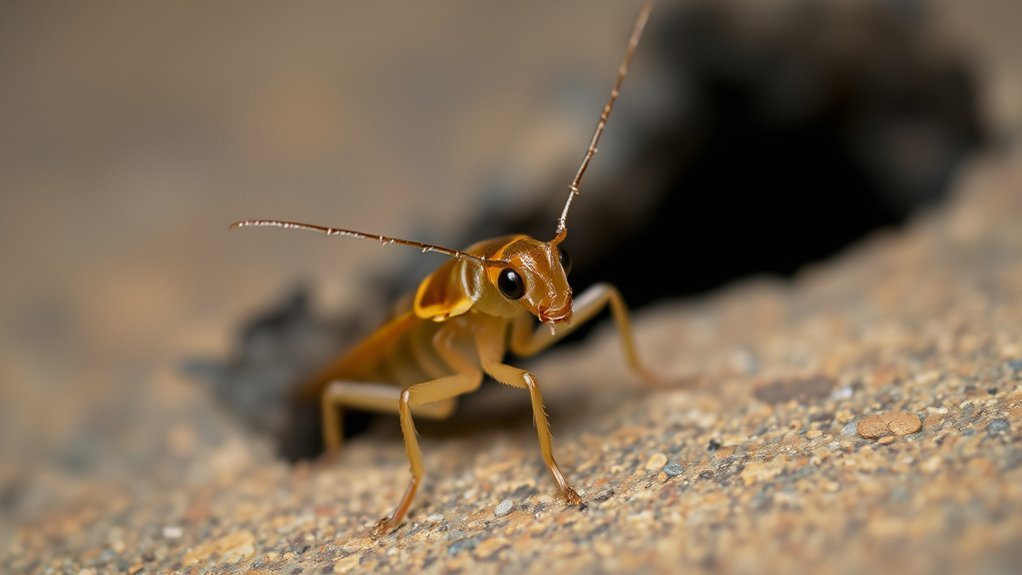
Baby cockroaches, or nymphs, look like miniature versions of adults but lack fully developed wings. You’ll notice their flat, oval-shaped bodies divided into three segments: head, thorax, abdomen. Six spiny legs allow them to scuttle quickly across surfaces, while long, thread-like antennae extend from their small heads. Their downward-facing mouths and large compound eyes are also distinguishable features.
Size varies by species, ranging from 1/8 inch to 1/2 inch depending on age. Color shifts throughout development. Most nymphs appear white or gray immediately after molting, then harden and darken within hours. German cockroach nymphs are light brown with two dark parallel stripes. American nymphs start grayish-white before turning reddish-brown. Oriental nymphs begin reddish-brown and darken to glossy black. Brown-banded nymphs display two light bands across their dark brown abdomens. Smoky brown cockroach nymphs are darker than American roaches and feature two cream-colored bands across their bodies.
How Baby Cockroaches Grow and Molt Into Adults
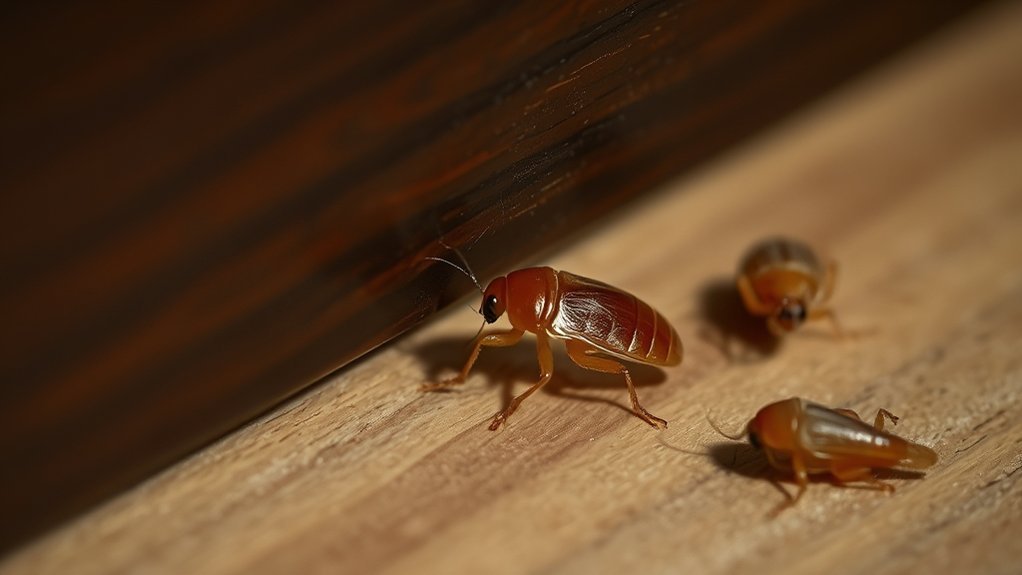
Once a nymph hatches from its ootheca, it skips any larval phase and immediately begins growing through a series of stages called instars. Between each instar, it sheds its rigid exoskeleton to accommodate its expanding body. Depending on the species, a nymph goes through 5 to 14 instars before reaching adulthood.
After each molt, you’ll notice the nymph turns temporarily whitish before its new exoskeleton hardens and darkens. This cycle repeats until the final molt, which produces a sexually mature adult with fully developed wings.
How quickly this happens depends on temperature, food availability, and species genetics. The German cockroach reaches adulthood in as few as 60 days under ideal warmth, while the Oriental cockroach can take up to 800 days. Higher temperatures accelerate the entire process, while limited food and cooler conditions slow it down considerably. The smoky-brown cockroach, for example, has a developmental period that ranges widely from 160 to 716 days depending on the temperature of its environment.
How to Tell Baby Cockroaches Apart by Species
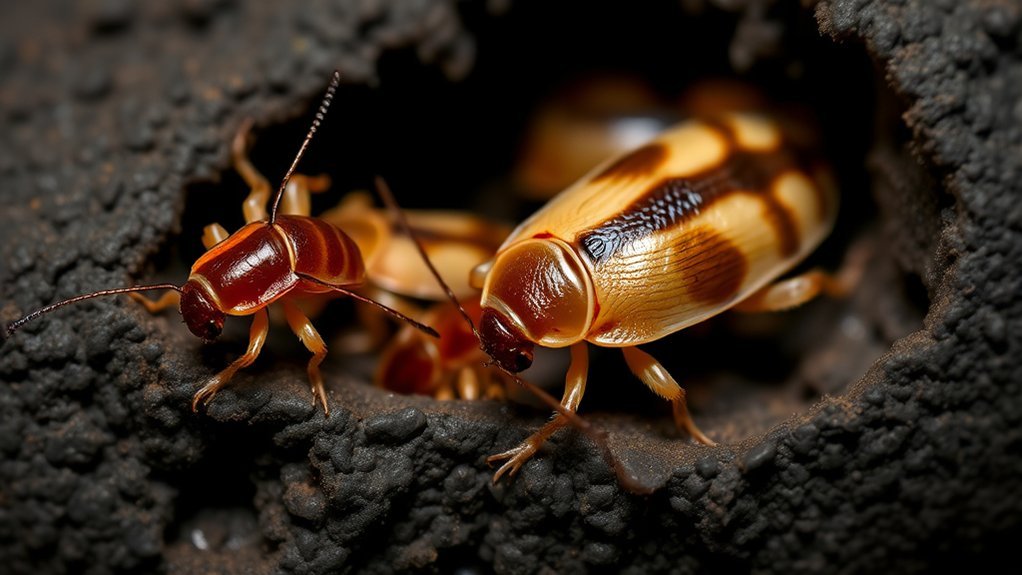
Telling baby cockroaches apart by species isn’t always straightforward, but a few key physical traits make identification manageable.
Size, coloration, and body markings are your best tools. German nymphs display two dark lengthwise stripes, while brown-banded nymphs show light bands running width-wise. Oriental nymphs darken to glossy black as they mature, and American nymphs are significantly larger than the rest.
| Species | Starting Size | Key Marking |
|---|---|---|
| German | ~3mm | Two dark lengthwise stripes |
| American | ~5mm | Reddish-brown banding, largest nymph |
| Oriental | ~6mm | Glossy black coloration |
Brown-banded nymphs are the smallest, starting at just 1.5mm, with slender bodies and distinct width-wise banding. Smoky-brown nymphs stand out with their gleaming brownish-black coloration, unlike the lighter hues of other species. Matching size and markings together gives you the clearest identification. American cockroach nymphs begin life at around 5mm but can grow to 30mm at maturity, making them the largest nymphs you are likely to encounter during an inspection.
Where They Hide Inside Your Home
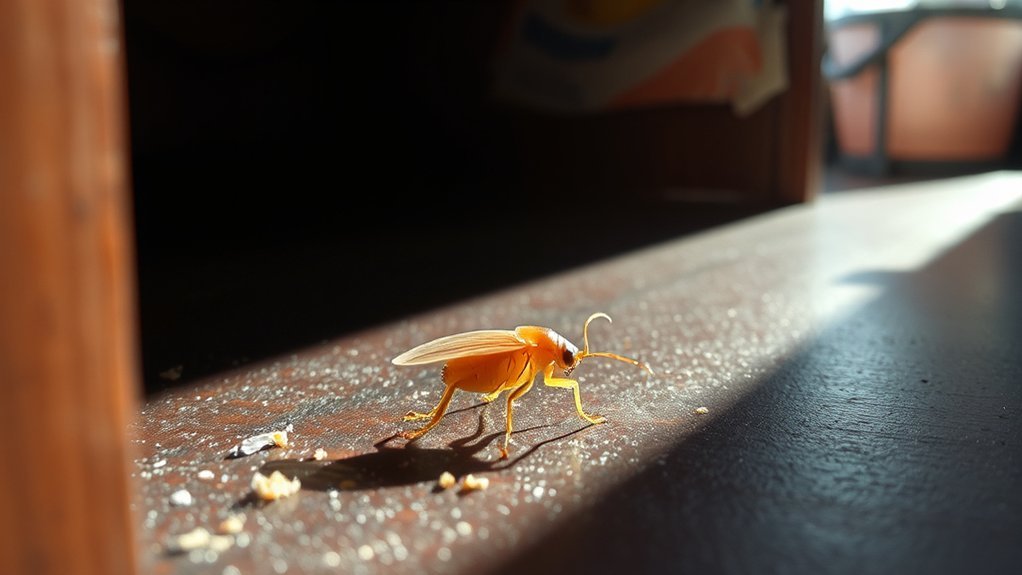
Because cockroach nymphs are tiny and fast, they exploit hiding spots you’d rarely think to check. In kitchens, they’ll squeeze behind refrigerators, under stoves, around dishwasher edges, and inside cabinet hinges and drawer slides. Check under your sink too, especially around plumbing penetrations where darkness and moisture concentrate.
Cockroach nymphs squeeze into kitchen hiding spots you’d never think to check — behind fridges, under stoves, inside cabinet hinges.
Bathrooms and laundry rooms offer similar conditions. Nymphs cluster behind toilets, under vanity sinks, and near washer hookups and water heaters where humidity stays high and airflow stays low.
They’re also drawn to warmth, so you’ll find them inside electronics like TVs and game consoles, and tucked inside toasters, coffee makers, and microwaves where food debris collects.
Don’t overlook storage areas. Cardboard boxes, cluttered closets, and furniture where crumbs accumulate are prime nesting spots. Basements with stored items, dripping pipes, and floor drains give nymphs everything they need to stay hidden and multiply. Cockroaches can also consume organic matter found in floor drains, making these areas a self-sustaining food source that keeps nymphs coming back.
How to Get Rid of Baby Cockroaches for Good
Getting rid of baby cockroaches means attacking the problem on multiple fronts—because targeting nymphs alone won’t stop an infestation if the conditions that support them remain unchanged. Start by eliminating food and water sources. Store food in airtight containers, dispose of garbage daily, and fix leaky pipes. Without these attractants, cockroaches can’t sustain a colony.
Next, seal every crack, gap, and crevice around doors, windows, and pipes to block entry points. Then deploy baits and traps—gel baits work well in crevices where nymphs hide, while sticky traps help you monitor activity levels.
For treatments, sprinkle boric acid or diatomaceous earth in problem areas, or mix boric acid with sugar to create effective DIY bait. Natural options like tea tree oil also help repel roaches.
If the infestation’s severe, call a professional exterminator. They’ll target adults, nymphs, and eggs thoroughly while applying safe fumigation methods. Baby cockroaches carry pathogens and allergens that pose serious health risks to your household, making swift and thorough elimination an urgent priority.
Frequently Asked Questions
How Long Does It Take for Baby Cockroaches to Become Adults?
Depending on the species, you’re looking at vastly different timelines. German cockroaches mature in 70-103 days, while American cockroaches take up to 600 days, and Oriental cockroaches can take 300-800 days.
Can Baby Cockroaches Survive Without Their Mother Nearby?
Yes, baby cockroaches can absolutely survive without their mother nearby. They’re completely independent from birth, foraging for food, hiding in cracks, and regulating their own molting process without any parental care or guidance needed.
Are Baby Cockroaches Capable of Reproducing Before Reaching Full Maturity?
No, baby cockroaches can’t reproduce before reaching full maturity. They must complete all their molts and undergo their final molt into adulthood before they’re capable of mating and producing egg cases.
Do Baby Cockroaches Carry the Same Diseases as Adult Cockroaches?
Yes, baby cockroaches carry the same diseases as adults. They’re crawling through sewers, pipes, and garbage, picking up harmful bacteria and pathogens that they’ll spread to your food and surfaces through droppings and direct contact.
How Many Baby Cockroaches Hatch From a Single Egg Case?
Depending on the species you’re dealing with, you can expect anywhere from 10 to 50 baby cockroaches hatching from a single egg case, with German cockroaches producing the most and brown-banded cockroaches the fewest.
Conclusion
Spotting a baby cockroach means you’re dealing with an active infestation, not just a lone straggler. You’ve got to act fast, targeting their hiding spots with baits, traps, and proper sanitation. Don’t let clutter, moisture, or food debris give them what they need to survive. Whether you’re identifying species or sealing entry points, every step you take cuts off their lifeline. Stay consistent, and you’ll stop the cycle before it spirals out of control.
