
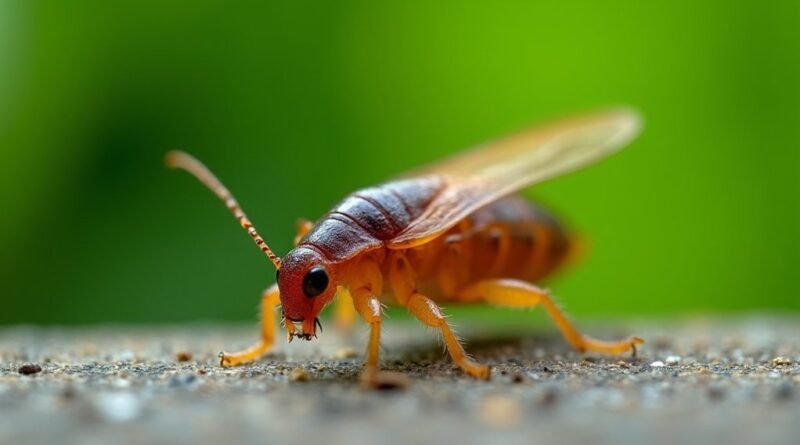
Cockroach Nymph: How to Identify Baby Roaches at Every Stage
A cockroach nymph is the immature developmental stage of a cockroach — a smaller, wingless version of the adult insect that undergoes incomplete metamorphosis through a series of molts before reaching reproductive adulthood. Cockroach nymphs go through 5 to 7 molts before reaching adulthood, grow by roughly 12% in size after each molt, and approximately 78% of cockroach nymphs survive to adulthood under ideal conditions. The average lifespan of a cockroach nymph is about 95 days depending on species, and about 60% of cockroach infestations start with the presence of nymphs rather than adults — meaning a nymph sighting almost always indicates an established breeding colony already producing the next generation in your home.
Key Takeaways
- Cockroach nymphs resemble adults but are smaller, lack fully developed wings, and have proportionally longer legs — cockroach nymphs go through 5 to 7 molts before reaching adulthood.
- Newly hatched nymphs appear white or transparent, darkening within hours to species-specific colors. They grow by roughly 12% in size after each molt.
- The average lifespan of a cockroach nymph is about 95 days depending on species — German cockroaches mature fastest at around 103 days, Oriental cockroaches slowest at up to 800 days.
- About 60% of cockroach infestations start with nymph presence rather than adult sightings — spotting nymphs confirms an already-established breeding colony producing new generations.
- Approximately 78% of cockroach nymphs survive to adulthood under ideal conditions, making early disruption of nymph development through insect growth regulators the most effective population control strategy.
What a Cockroach Nymph Actually Looks Like
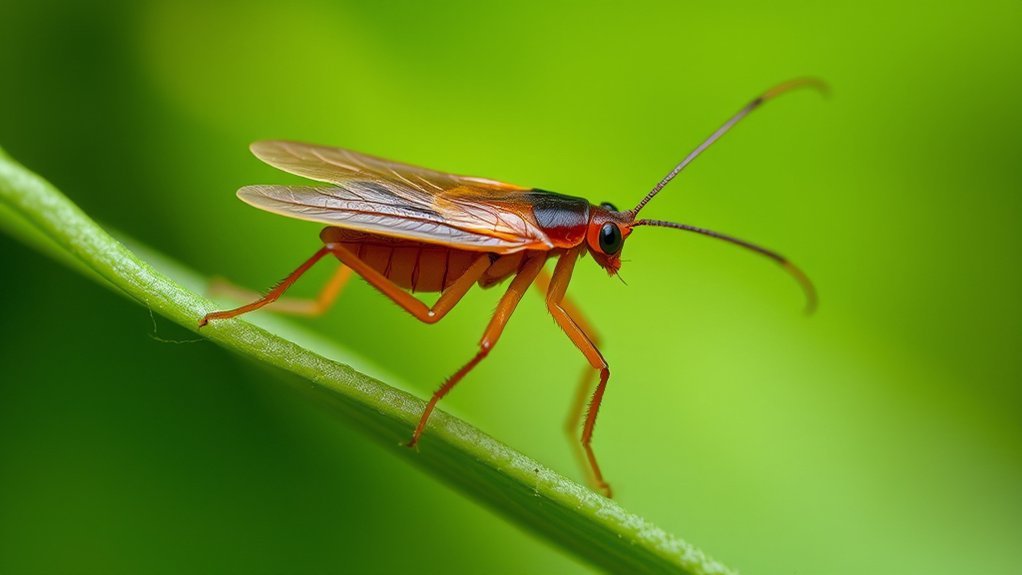
Baby cockroaches — known as nymphs — share the same flattened, oval-shaped body as adults but are noticeably smaller and lack fully developed wings. Three distinct body segments are visible: head, thorax, and abdomen. Long, thread-like antennae extend from the head, roughly equal to or longer than the body length depending on species. Six spiny legs are proportionally longer relative to body size than in adults, making nymphs fast and difficult to catch across smooth kitchen counter surfaces and wall surfaces alike.
One detail that often surprises homeowners is the nymph’s color immediately after molting. For a brief period — typically 2 to 6 hours — they appear white or nearly transparent before their exoskeleton hardens and species-specific pigmentation develops. This white phase occurs after every molt, not just hatching. As nymphs progress through instars, their coloration shifts in species-specific patterns: German cockroach nymphs carry two dark parallel bands on their back, American nymphs gradually darken from grayish to reddish-brown, and Oriental nymphs shift from reddish-brown to glossy black. These color patterns combined with wingless bodies and small size are your clearest visual confirmation that you are dealing with nymphs rather than small adult cockroaches. See our complete baby cockroach identification guide for detailed nymph-to-adult visual comparisons across all common species.
How Big Are Cockroach Nymphs at Each Stage?
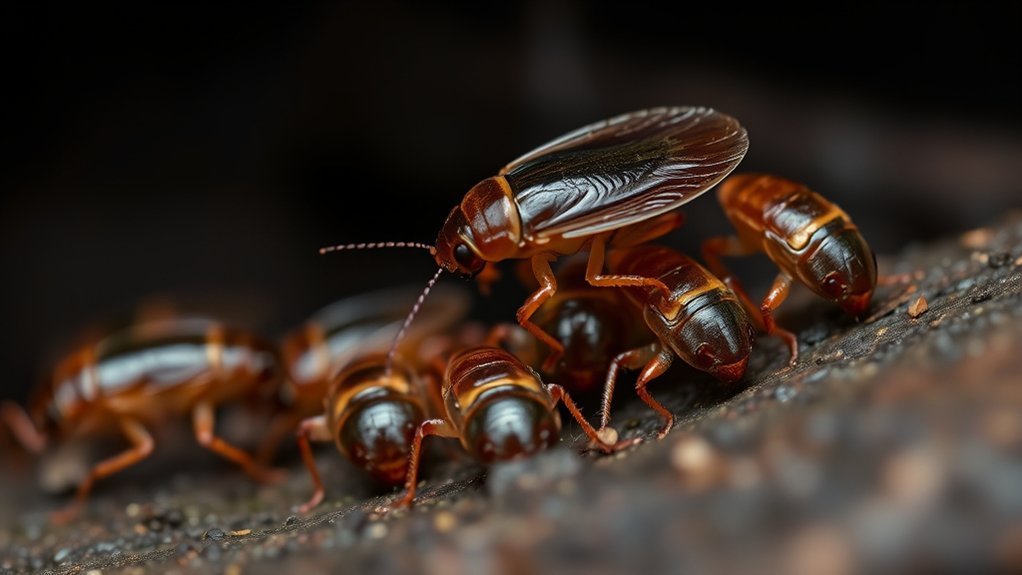
Nymph size varies considerably by species, and knowing expected size at each instar helps gauge how established an infestation is. Cockroach nymphs grow by roughly 12% in size after each molt — a consistent growth increment that means the size you observe tells you directly which instar you are looking at for a given species. The average lifespan of a cockroach nymph is about 95 days across all species, but this masks enormous individual species variation.
American and Oriental cockroach nymphs both hatch at roughly 1/4 inch, making them the largest at emergence. Smoky brown nymphs start slightly larger at 3/8 inch. German and brown-banded nymphs hatch at just 3mm (1/8 inch), making them the hardest to spot in early instars. Development timelines differ as dramatically as size: Oriental nymphs take the longest at up to 600 to 800 days, American nymphs range from 65 to 400 days, and German nymphs mature fastest in around 103 days — which is why German cockroaches are so much more difficult to eliminate than larger-bodied species that reproduce more slowly. If you spot tiny 3mm nymphs, you are almost certainly dealing with German or brown-banded cockroaches. Larger nymphs suggest American, Oriental, or smoky brown species.
How Cockroach Nymph Color Changes Through Development
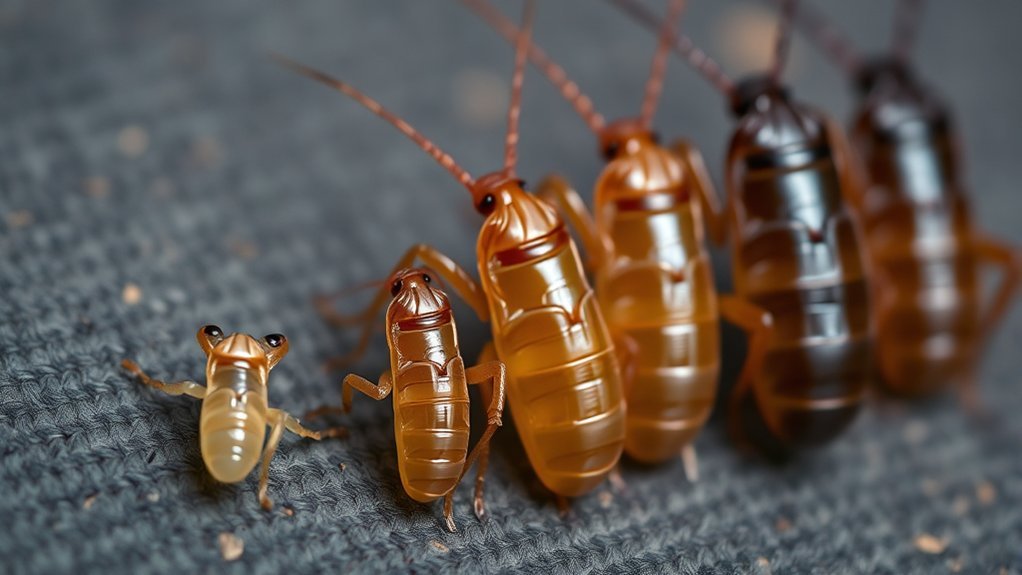
When a cockroach nymph first hatches, it appears white or pale because the exoskeleton has not hardened yet. This white phase is temporary — it lasts 2 to 6 hours before species-specific coloration develops as the exoskeleton sclerotizes (hardens). The same white phase recurs after every subsequent molt throughout the nymph’s development, making recently-molted nymphs identifiable regardless of their instar.
Freshly Hatched White Phase
Freshly hatched cockroach nymphs emerge white or pale due to the undeveloped exoskeleton. Each species alters differently once hardening begins. German cockroach nymphs shift to dark brown-black while retaining their signature parallel head stripes — these stripes on the back are the most reliable early identification feature for this species. American cockroach nymphs turn gray-brown first, then develop reddish-brown tones through later instars. Oriental cockroach nymphs move from white to red-brown, eventually deepening to nearly jet-black gloss by adulthood. Smoky brown nymphs develop dark brown to black coloring with white bands in early instars, with antenna tips remaining white at early hardened stage before darkening.
Progressive Darkening Through Instars
After each molt, cockroach nymphs pass through the brief white phase before the exoskeleton hardens and species-typical coloration resumes at a slightly deeper shade than the previous instar. Tracking these color shifts helps identify both species and development stage.
| Species | Early Nymph Color | Late Nymph Color | Adult Color |
|---|---|---|---|
| German | Tan with dark back stripes | Darker brown, stripes sharpen | Light brown, two parallel stripes |
| American | Gray-brown | Reddish-brown developing | Reddish-brown, yellow head marking |
| Oriental | Reddish-brown | Dark brown, glossy | Jet-black, highly glossy |
| Brown-banded | Dark brown, two light bands | Dark brown, bands sharpen | Brown with distinct banding |
| Smoky brown | Dark brown with white bands | Reddish-brown, bands fade | Uniform mahogany-brown |
Species-Specific Color Pattern Identification
Brown-banded nymphs stand out with their dark brown bodies and two distinct light-colored bands across the abdomen and thorax — bands that sharpen as they mature rather than fading. If you spot contrasting transverse bands on a small nymph, you have already confirmed brown-banded cockroaches without needing to wait for adult emergence. German cockroach nymph identification relies on the two parallel stripes on the back of the head (pronotum), which are visible from the first instar and persist through all molts to adulthood. Oriental cockroach nymphs are the easiest to track through color progression — the deepening gloss and darkening toward jet-black is distinctive and does not overlap with other species.
German vs. American Cockroach Nymph: Key Visual Differences
Markings and Color Differences
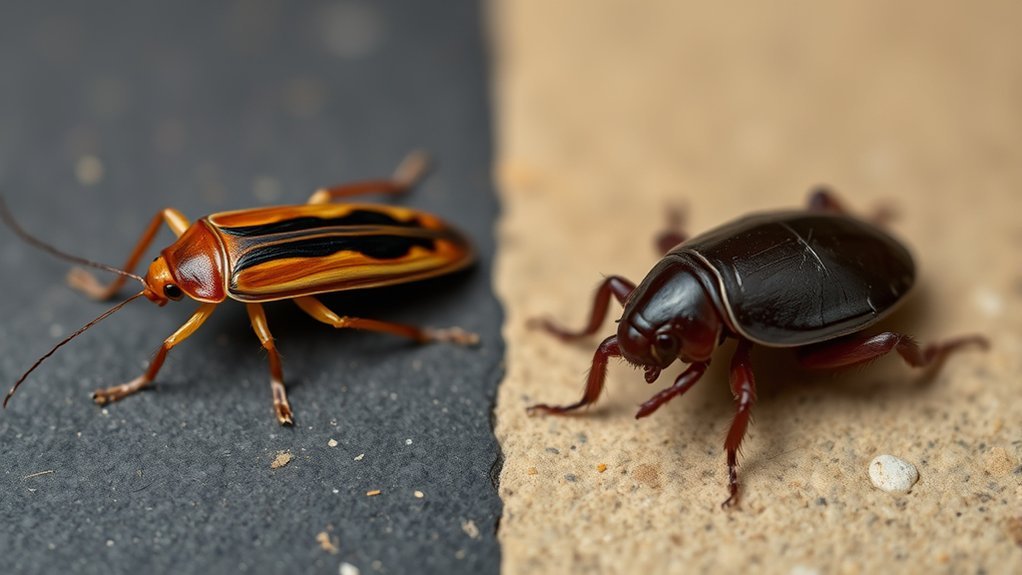
Two key visual differences set German and American cockroach nymphs apart: stripe patterns and color progression. German nymphs display two bold dark stripes running along the back from head toward the abdomen throughout all instars. American nymphs show no stripes at all — their identification relies on the yellowish head marking that develops in later instars and their uniform grayish-brown to reddish-brown coloration without any distinct stripe or band pattern. German nymphs darken to near-black in later instars while retaining the stripe contrast. American nymphs experience uniform color deepening across the whole body without any marking variation.
German Cockroach Nymph Identification
German cockroach nymphs hatch at just 3mm — roughly the size of a rice grain — and are the most likely nymph species encountered in kitchen and bathroom settings. The two parallel dark stripes on the pronotum are visible at every instar, making German cockroach nymph identification straightforward even at the smallest sizes. Cockroach nymphs grow by roughly 12% per molt, meaning by their 6th or 7th instar (the last before adulthood), German nymphs reach approximately 10mm. They are dark brown-black in mid-to-late instars with noticeable contrast between the stripe markings and the body coloration.
American Cockroach Nymph Identification
American cockroach nymphs hatch between 1/4 and 5/16 inch — already comparable to a small adult German cockroach — and grow to approximately 30mm across their 13 to 18 instars before reaching the 35 to 53mm adult size. This large size throughout the nymph stage means American cockroach nymphs are often initially mistaken for adult cockroaches of other species. The yellowish head marking that develops in later instars helps distinguish them from Oriental cockroach nymphs, which are similar in early instar size and coloration but lack the yellow head marking and progress toward jet-black rather than reddish-brown.
Size and Growth Rates
German nymphs complete their nymph stage in approximately 103 days on average — the fastest of any common household cockroach species — cycling through 5 to 7 molts at a rapid pace in warm, humid kitchen and bathroom conditions. American nymphs develop slowly over several months to over a year depending on temperature, with the average lifespan of an American cockroach nymph extending to 400 days under some conditions. Approximately 78% of cockroach nymphs survive to adulthood under ideal conditions — meaning a hatching event from a single ootheca containing 35 German cockroach eggs produces approximately 27 adults capable of breeding within 103 days.
Habitat and Behavior of Cockroach Nymphs
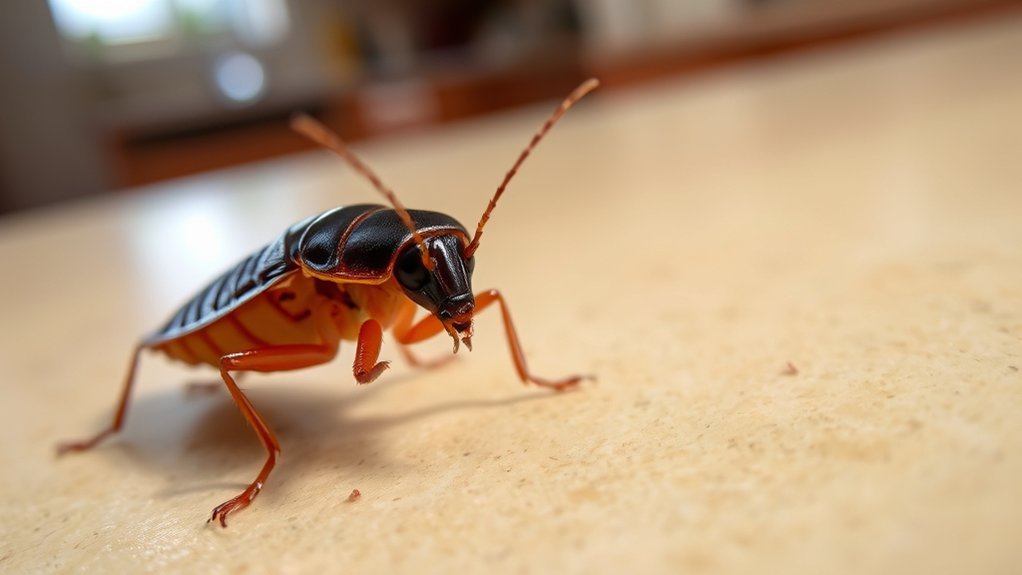
Cockroach nymphs stay close to established harborage sites — typically within 1 to 2 feet of their hatching location — making harborage zone identification the key to understanding where they are concentrated. Unlike adult cockroaches that range more widely during foraging, nymphs depend more heavily on the immediate environment near their hatching site for food, water, and shelter in early instars. German cockroach nymphs are most commonly found in kitchen and bathroom environments, concentrated around appliance motor compartments, inside cabinet bases, along kitchen counter edges where food residue accumulates, around sink plumbing penetrations, and in the narrow gap between appliances and walls. American cockroach nymphs prefer basement environments, floor drains, pipe chases, and utility areas with consistent moisture access rather than the kitchen-centered German cockroach pattern.
Nymphs are nocturnal throughout their development, following the same circadian activity pattern as adults. They are fast-moving relative to their body size and can squeeze through gaps as small as 1/16 inch — smaller than adult cockroaches can access — which is why nymph harborage zones include structural locations inaccessible to adult colony members. Aggregation pheromones from nymph frass and shed skins actively recruit additional nymphs and adults to established harborage zones, concentrating the entire population in the most-protected areas of the kitchen or bathroom structure.
Cockroach Nymph Feeding Habits
Cockroach nymphs eat the same food sources as adults — they are generalist omnivores that consume virtually any organic material available in the home environment. Primary food sources include food crumbs and residue on kitchen counter surfaces, grease accumulation behind appliances and on stovetops, starchy foods including bread, pasta, and cereals, proteins from meat residue and pet food, and sugary materials including soft drink residue, juice spills, and sweet food packaging. In environments with limited primary food sources, nymphs consume non-food organic materials including paper, cardboard, wallpaper paste, soap, and even dead insects or shed skins from other colony members.
Water is as critical as food for nymph survival — cockroaches can survive weeks without food but only approximately one week without water access. Nymphs are particularly dependent on consistent water access because their developing exoskeleton is more susceptible to desiccation than the adult’s hardened exoskeleton. Leaky pipes under sinks, condensation on kitchen counter water lines, and standing water in drip trays are the primary water sources sustaining nymph populations in kitchen and bathroom environments. Eliminating all water sources accessible to cockroaches — fixing plumbing leaks, drying sink surfaces nightly, removing standing water from appliance drip pans — creates conditions that limit nymph survival even when food sources remain available. See our complete cockroach life cycle guide for how feeding behavior changes across egg, nymph, and adult stages.
What Cockroach Nymph Size Reveals About Your Infestation
About 60% of cockroach infestations are first identified through nymph presence rather than adult sightings — which means the diagnostic information that nymph size provides is the most practical early indicator available to homeowners. When you spot nymphs, their size reveals the colony’s current development stage and breeding history:
- 3 to 10mm German nymphs signal an active infestation with ongoing reproduction — cockroach nymphs grow by roughly 12% per molt, so the size tells you which instar you are observing
- American nymphs approaching 30mm confirm multiple generations and advanced colony establishment
- Brown-banded nymphs under 10mm with visible banding indicate recent hatching activity in elevated surface locations
- Mixed nymph sizes within one infestation — from 3mm to 10mm+ — indicate overlapping generations and a well-established colony that has been breeding for weeks or months
- Only tiny nymphs with no large nymphs or adults visible suggests you have caught a new infestation in its earliest phase
If you are seeing only tiny nymphs of a single size cohort, the infestation is at its earliest stage and immediate action gives the highest probability of complete elimination before population growth compounds. Finding a range of sizes from freshly hatched to near-adult means the colony has been active long enough to produce multiple overlapping generations.
Why Seeing Nymphs Means the Colony Is Already Established
Beyond what nymph size reveals about timing, the presence of nymphs at all carries an urgent message — the colony is established and actively breeding. About 60% of cockroach infestations start with nymph presence, confirming that adult males and females are already breeding nearby. Nymphs do not travel far from their hatching site, so where you see one, dozens more are hiding in adjacent cracks, crevices, and wall voids.
The infestation did not start recently. Adults found suitable conditions, established harborage, and completed at least one full reproductive cycle before any nymph became visible to you. Approximately 78% of cockroach nymphs survive to adulthood under ideal conditions — meaning the population growth from the moment of egg laying to the nymphs you are now seeing represents a substantial established colony rather than a handful of wandering individuals. A single female can lay multiple egg cases after just one mating event, each containing 35 to 40 eggs in the case of German cockroaches, ensuring continuous hatching from a single mating event. You are almost certainly dealing with multiple simultaneous life stages — adults breeding, multiple ootheca developing, and nymphs of various instars growing simultaneously.
Signs of Cockroach Nymph Infestation
Identifying nymph-stage infestation evidence requires looking for different physical signs than adult cockroach evidence, because nymphs leave different trace evidence in their harborage zones.
Cast skins (shed exoskeletons): Each nymph sheds its exoskeleton at every molt — these translucent hollow shells accumulate near active harborage zones and are one of the most reliable confirmation signs of active nymph development. Finding multiple cast skins in the same location indicates an established harborage with consistent nymph activity. Cockroach nymphs go through 5 to 7 molts before reaching adulthood, meaning each individual nymph produces multiple cast skins in the same area.
White cockroach sightings: A pale or white cockroach-shaped insect spotted in a kitchen or bathroom almost always indicates a recently-molted nymph in the white phase between molt and exoskeleton hardening. This is active confirmation that molting is occurring in that specific location right now, meaning harborage is nearby and active.
Small nymph-sized droppings: German cockroach nymph droppings are smaller than adult droppings — tiny dark specks nearly indistinguishable from ground black pepper in early instars. Finding these very fine dark specks concentrated in specific locations (cabinet corners, kitchen counter edges, under appliances) points to nymph activity concentrated in those areas.
Ootheca in new locations: Finding egg cases in locations beyond the original primary harborage indicates the infestation has expanded and adults are actively seeking new deposition sites — meaning nymph emergence will begin in new locations shortly. See our complete baby cockroach guide for additional identification details including distinguishing nymph evidence from adult cockroach evidence in the same infested location.
Effective Control Methods for Cockroach Nymphs
Controlling cockroach nymphs requires a different approach from adult cockroach control because nymphs spend approximately 85% of the cockroach life cycle in development — targeting the nymph stage is where population growth can be most effectively disrupted.
Insect Growth Regulators for Nymph Control
Insect growth regulators (IGRs) — particularly hydroprene and pyriproxyfen formulations — are the most effective nymph-specific control tools available. IGRs mimic juvenile hormones that keep nymphs in immature development, preventing them from completing their final molt to adulthood. A nymph that cannot complete the final molt cannot reproduce — meaning IGR programs directly disrupt the population growth that makes cockroach infestations escalate exponentially. Since approximately 78% of cockroach nymphs survive to adulthood under ideal conditions, IGR applications that convert this 78% survival rate to reproductive failure have a profound impact on the next generation population size. Apply IGRs in crack-and-crevice locations within confirmed nymph harborage zones identified by monitoring trap data.
Gel Bait Application for Nymph Populations
Gel baits with active ingredients including fipronil, indoxacarb, or abamectin attract and kill foraging nymphs at the same rate as adults — nymphs feed actively throughout their development and contact bait placements during their frequent kitchen counter and harborage foraging activity. The cascade kill mechanism (cockroaches that consume bait are consumed by other colony members during grooming) is particularly effective against nymph populations because nymphs spend more time in close physical contact with colony members in harborage than adults do. Place gel bait specifically in the locations where nymph cast skins and fine droppings are concentrated — these physical evidence locations are within feet of the primary nymph harborage.
Preventive Measures Against Cockroach Nymphs
Preventing cockroach nymph development requires eliminating the environmental conditions that allow eggs to hatch and nymphs to survive through their 5 to 7 molts to adulthood. Since approximately 78% of nymphs survive to adulthood under ideal conditions, degrading those conditions is the most effective prevention approach.
Temperature and humidity control: Nymph development requires temperatures above 15°C and humidity above 50% to proceed efficiently. Maintaining indoor humidity below 50% using exhaust fans and dehumidifiers in kitchens and bathrooms degrades molting conditions throughout the 95-day average nymph lifespan. Fix all plumbing leaks immediately — the consistent water access from dripping pipes under kitchen counter sinks is the single most important moisture source sustaining nymph survival in residential kitchen environments.
Food elimination: Remove all accessible food residue from kitchen counter surfaces nightly by wiping counters, sweeping floors, and washing dishes promptly. Store all dry goods in sealed hard-sided containers to eliminate the starchy food sources that nymph populations depend on in kitchen cabinet environments. Remove pet food bowls overnight and store pet food in sealed containers.
Physical exclusion: Seal all gaps and cracks in cabinet bases, behind appliances, around pipe penetrations, and along baseboards with silicone caulk. Cockroach nymphs can access gaps as small as 1/16 inch — smaller than adults — making thorough structural sealing the most complete prevention approach. Sticky monitoring traps deployed along kitchen counter edges and wall-floor junctions detect nymph presence at the earliest stage before populations compound to infestation-level density.
Frequently Asked Questions About Cockroach Nymphs
What Is a Cockroach Nymph?
A cockroach nymph is the immature developmental stage of a cockroach — smaller than adults, wingless, and progressing through 5 to 7 molts before reaching adulthood. Nymphs hatch from ootheca (egg cases) looking white or transparent before hardening to species-specific coloration within hours. The average lifespan of a cockroach nymph is about 95 days, though German cockroaches mature as quickly as 103 days and Oriental cockroaches can take up to 800 days. About 60% of cockroach infestations are first identified through nymph sightings rather than adult sightings.
Can Cockroach Nymphs Reproduce?
No — cockroach nymphs cannot reproduce before completing all their molts and reaching adulthood. Reproduction begins after the final molt transforms the nymph into a reproductive adult. German cockroach females begin producing egg cases just 4 to 6 days after reaching adulthood. The approximately 95-day average nymph lifespan before adulthood is the window where insect growth regulators can prevent reproduction by disrupting the final molt — the most effective use of IGRs in cockroach population management.
What Do Cockroach Nymphs Eat?
Cockroach nymphs eat the same foods as adults — they are generalist omnivores consuming food crumbs, grease, proteins, starches, and sugars in the kitchen environment, plus non-food organic materials including cardboard, paper, and dead insects when primary food sources are scarce. Water is critically important for nymph survival — nymphs are more susceptible to desiccation than adults and require consistent water access from leaky pipes, condensation, and standing water near kitchen counter plumbing to survive through their 5 to 7 molts.
Are Cockroach Nymphs Dangerous to Humans?
Yes — cockroach nymphs spread pathogens including Salmonella, E. coli, and Staphylococcus as effectively as adults by contaminating food, kitchen counter surfaces, and food preparation equipment during nighttime foraging. Nymph droppings, shed skins, and body fragments contribute to cockroach allergen loads in the home — the same allergens that trigger asthma and allergic reactions in sensitive individuals. About 60% of cockroach infestations begin with nymph presence, meaning nymph-derived allergen and pathogen contamination is occurring from the earliest stages of an infestation.
Where Do Cockroach Nymphs Typically Hide?
Cockroach nymphs hide in the darkest, most enclosed areas nearest their hatching location: kitchen cabinet bases, behind and beneath refrigerators and stoves, inside cabinet hinge gaps, near kitchen counter plumbing and leaky pipes, inside wall voids adjacent to kitchens and bathrooms, and within cracks as small as 1/16 inch. German cockroach nymphs concentrate in kitchen and bathroom environments within 1 to 2 feet of their harborage site. American cockroach nymphs prefer basement environments, floor drains, and utility areas. Aggregation pheromones in frass and shed skins actively recruit additional nymphs to established hiding locations.
{
“@context”: “https://schema.org”,
“@type”: “FAQPage”,
“mainEntity”: [
{
“@type”: “Question”,
“name”: “What Is a Cockroach Nymph?”,
“acceptedAnswer”: {
“@type”: “Answer”,
“text”: “A cockroach nymph is the immature developmental stage of a cockroach — smaller than adults, wingless, progressing through 5 to 7 molts before adulthood. Nymphs hatch white before darkening to species colors. The average nymph lifespan is about 95 days. About 60% of cockroach infestations are first identified through nymph sightings rather than adult sightings.”
}
},
{
“@type”: “Question”,
“name”: “Can Cockroach Nymphs Reproduce?”,
“acceptedAnswer”: {
“@type”: “Answer”,
“text”: “No — cockroach nymphs cannot reproduce until completing all molts and reaching adulthood. German cockroach females begin producing egg cases just 4 to 6 days after the final molt. The approximately 95-day average nymph lifespan is the window where insect growth regulators can prevent reproduction by disrupting the final molt.”
}
},
{
“@type”: “Question”,
“name”: “What Do Cockroach Nymphs Eat?”,
“acceptedAnswer”: {
“@type”: “Answer”,
“text”: “Cockroach nymphs eat the same foods as adults — food crumbs, grease, proteins, starches, and sugars in the kitchen environment, plus cardboard, paper, and dead insects when primary food is scarce. Water is critically important — nymphs are more susceptible to desiccation than adults and require consistent water access from leaky pipes and condensation near kitchen plumbing.”
}
},
{
“@type”: “Question”,
“name”: “Are Cockroach Nymphs Dangerous to Humans?”,
“acceptedAnswer”: {
“@type”: “Answer”,
“text”: “Yes — cockroach nymphs spread pathogens including Salmonella, E. coli, and Staphylococcus by contaminating food and kitchen surfaces. Nymph droppings, shed skins, and body fragments contribute to cockroach allergens that trigger asthma and allergic reactions. About 60% of cockroach infestations begin with nymph presence, meaning contamination occurs from the earliest infestation stages.”
}
},
{
“@type”: “Question”,
“name”: “Where Do Cockroach Nymphs Typically Hide?”,
“acceptedAnswer”: {
“@type”: “Answer”,
“text”: “Cockroach nymphs hide in the darkest, most enclosed areas nearest their hatching site: kitchen cabinet bases, behind and beneath refrigerators and stoves, inside cabinet hinge gaps, near kitchen counter plumbing, inside wall voids adjacent to kitchens, and within cracks as small as 1/16 inch. German nymphs concentrate in kitchens within 1 to 2 feet of harborage. American nymphs prefer basement environments and floor drains.”
}
}
]
}
