
Best Baits, Gels and Traps for Cockroach Control, Complete Comparison
For fast, lasting cockroach control, use top-tier baits/gels plus traps and IGRs—not just sprays. Choose fipronil (Goliath) for best overall attraction, indoxacarb (Advion) for delayed kill and transfer, dinotefuran (Alpine) for sensitive sites, hydramethylnon (Maxforce) for strong feeding, and abamectin (Avert) for solid control. Apply pea-sized dots in cracks, behind appliances, and rotate actives. Place sticky traps to map hotspots. Fix leaks, seal gaps, and avoid spraying near bait. There’s a simple plan that ties it all together.
Key Takeaways
- Fipronil (Goliath) and indoxacarb (Advion) gels deliver top overall knockdown with strong transfer and efficacy on resistant strains.
- Dinotefuran (Alpine) works fast by contact/ingestion and is suitable for sensitive indoor or outdoor sites.
- Hydramethylnon (Maxforce) and abamectin (Avert) offer high palatability and strong feeding stimulation across varied environments.
- Use pea-sized dots in cracks/behind appliances, multiple placements, weekly monitoring, and rotate actives to prevent resistance.
- Sticky traps are best for monitoring hotspots and allergen reduction; avoid spraying near baits to maintain effectiveness.
How Cockroach Baits, Gels, Traps, Sprays, and IGRs Compare
Think of cockroach control as five tools with different jobs: baits and gels spread slow-acting toxins through the colony for long-term knockdown; sprays give fast, contact kill but fade quickly and miss hidden roaches; sticky traps monitor hotspots and cut allergens without chemicals; IGRs disrupt growth and reproduction over months; and an IPM approach blends these with sanitation, exclusion, and vacuuming for the most durable results with less pesticide. You’ll get the most durable suppression when you combine them. Use baits and gels as your backbone; they minimize exposure, work on hidden roaches, and, with rotation, handle resistant strains. Reserve sprays for quick relief or tight spot treatments, since they don’t reach eggs and raise health and resistance risks. Deploy traps to map activity, guide placements, and reduce allergens, but don’t expect eradication. Add IGRs to stall molting and fertility, recognizing they need months to show population declines. Wrap it all in IPM—seal cracks, dry moisture, clean, and vacuum—to cut pesticide use dramatically and keep units clear long-term. For severe infestations, consider professional services that eliminate cockroaches at the source for long-lasting results.
Top-Rated Cockroach Baits and Gels: Ingredients, Effectiveness, and Placement
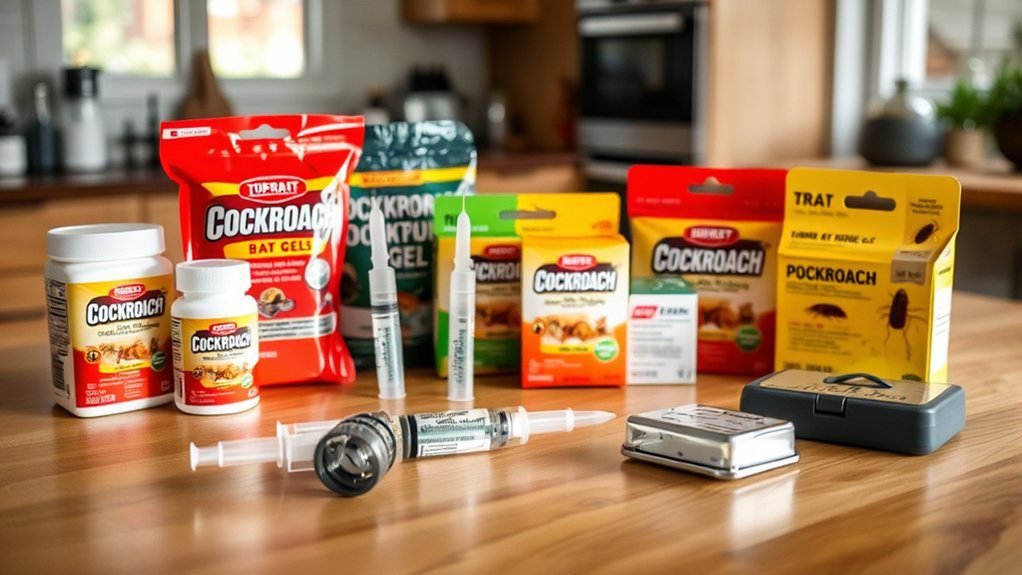
When you pick a cockroach gel or bait, focus on the active ingredient, how quickly it works, and where you’ll place it. Indoxacarb gels (Advion) deliver delayed kills and excellent transfer—great for resistant or bait-averse strains. Dinotefuran (Alpine) acts fast by contact and ingestion and suits sensitive sites like schools and healthcare. Hydramethylnon (Maxforce) and abamectin (Avert) offer strong feeding stimulation; fipronil (Goliath) ranks highest for attraction and overall efficacy. Some gels improve palatability after aging, so don’t discard older placements too soon. Advion’s indoxacarb features a delayed action that enables poison transfer to other roaches before death, boosting colony-level control.
Apply pea-sized dots or thin lines in cracks, crevices, and behind appliances. Space placements to create multiple feeding points, then monitor and replenish. Rotate actives (e.g., indoxacarb with dinotefuran) to slow resistance. Use Alpine gels indoors or out when needed.
| Active | Strength | Notes |
|---|---|---|
| Indoxacarb | Transfer kill | Works on bait-averse strains |
| Dinotefuran | Fast, versatile | Sensitive sites, indoor/outdoor |
| Fipronil | Top attraction | Strong overall efficacy |
Building an IPM Plan: Combining Baits, Traps, IGRs, and Sanitation for Lasting Control
Although a single product can knock numbers down, lasting cockroach control comes from an integrated plan that pairs careful monitoring with targeted actions.
Start with sticky traps in kitchens, pantries, laundry rooms, closets, and staff areas to map hotspots and gauge severity. Use flushing tools like compressed air or gentle heat to reveal hidden pockets, then log counts weekly to track trends and verify progress. Prolonged exposure to cockroach allergens can trigger asthma and allergies, with children especially at risk in multi-family housing.
Cut off survival needs next. Fix leaks, dry damp zones, and vacuum heavy clusters. Remove food residues nightly, containerize storage, and declutter to strip harborage.
Seal cracks, gaps, and wall voids to block movement and entry.
Deploy chemistry judiciously. Place gel or station baits in cracks and along travel routes; rotate actives to limit resistance. Don’t spray repellents near bait.
Add point-source IGRs in harborage to stall development and amplify bait impact, especially on gravid females.
1) Monitor: traps, flushing, logs.
2) Deny resources: dry, clean, seal.
3) Control: bait rotation plus IGRs.
Frequently Asked Questions
Are Cockroach Baits Safe Around Aquarium Fish and Reptiles?
No. You shouldn’t rely on cockroach baits near aquariums or reptiles. They can poison fish via water or air and harm reptiles via secondary ingestion. Use sealed bait stations, strict sanitation, physical exclusion, covers, and prompt roach removal.
Do Baits Attract More Roaches Into My Home?
No. Baits don’t lure new roaches inside; they poison the ones already there. You’ll sometimes see more dying in the open. Place bait near hotspots, remove other food and water, avoid sprays, and refresh placements regularly.
Can I Use Baits in Rental Units Without Landlord Approval?
Usually, no—you shouldn’t use baits without landlord approval. Check your lease and local rules, report the infestation, and request professional IPM service. If permitted, use low-toxicity products carefully, follow labels, document everything, and avoid placing baits near food or pets.
How Do Temperature and Humidity Affect Bait Performance?
Temperature and humidity strongly shape bait performance. You’ll see more hits in warm, moderately humid conditions. Extreme heat or dryness reduces encounters; high humidity boosts activity but risks mold. Store gels appropriately, refresh aged baits, and place near moist, warm microhabitats.
What Disposal Steps Are Needed for Used Bait Stations?
Dispose of empty stations in regular trash or approved recycling; don’t reuse. Keep away from kids and pets. For partly filled or contaminated units, contact hazardous waste programs. Never pour bait down drains. Wash hands and follow label/SDS and local rules.
Conclusion
You’ve got options, but you’ll get the best results when you mix smart tools with consistent habits. Use baits and gels as your backbone, place traps to monitor hot spots, and add IGRs to break the life cycle. Skip broad sprays indoors unless you’re targeting cracks and crevices. Seal entry points, vacuum, and keep food and moisture tight. Track activity weekly and refresh placements. Stay persistent, and you’ll push roaches out—and keep them out.
