

Best DIY Cockroach Treatments That Actually Work at Home
The most effective DIY cockroach treatments are gel baits placed at harborage sites, boric acid dust in dry wall voids and crevices, sugar-and-baking-soda bait in small lids near active areas, and diatomaceous earth along baseboards and under appliances. None of these work in isolation. The right combination, paired with consistent sanitation and sealed entry points, is what actually breaks a roach infestation rather than just reducing it temporarily.
Nearly 42.7% of homeowners try DIY cockroach treatments before calling pest control, and around 47.3% combine multiple methods for better effectiveness. This guide covers every proven option, how each one works, where to apply it, and how to layer treatments so they compound rather than cancel each other out.
Key Takeaways
Here is a quick summary before diving into each method in detail:
- Boric acid bait at 1 part boric acid to 3 to 5 parts sugar or cornmeal, applied in thin dustings along cracks and hidden harborage spots, delivers strong residual roach control with minimal resistance.
- Sugar and baking soda bait placed in small lids near activity is a non-toxic remedy that works through ingestion and is safe around pets and children when placed correctly.
- Gel baits paired with insect growth regulators hit adults fast while shutting down nymph molting and egg production so the colony cannot rebound.
- Diatomaceous earth applied as a thin, flour-like dusting in dry spots kills roaches by physical damage to the exoskeleton rather than chemical toxicity.
- Sanitation and sealing entry points are not optional additions. Without removing food, water, and shelter, no treatment produces lasting results.
How to Identify a Cockroach Infestation Before Treating
Choosing the right DIY treatment starts with confirming you have a cockroach problem, not another pest, and understanding how established the infestation is. Treating a mild roach infestation the same way you would treat a severe one wastes product and time.
The most reliable signs of cockroach activity are droppings that resemble black pepper or coffee grounds clustered near baseboards, cabinets, and appliances; shed exoskeleton skins near walls and furniture; brown egg cases tucked into crevices; smear marks along surfaces at floor level; and a persistent musty odor in enclosed spaces. Seeing roaches during daylight hours in open areas of the house is a sign the colony has grown large enough to crowd individuals out of their normal hiding spots, which signals a serious infestation that may require professional pest control services alongside DIY efforts.
Mapping Hotspots With Sticky Traps
Before placing any treatment, use sticky traps to identify where cockroach activity is concentrated. This step prevents wasted product and makes every other method more effective by directing it to the right places.
Place sticky traps along wall edges, inside cabinets, under sinks, near appliances, and anywhere droppings or smear marks are visible. Check them after 48 hours and note which traps have the highest capture counts. Those locations are your primary harborage zones and should receive the heaviest treatment concentration. Traps are non-toxic and safe around pets and children, making them the best diagnostic tool available for a DIY inspection.
Sugar and Baking Soda Bait
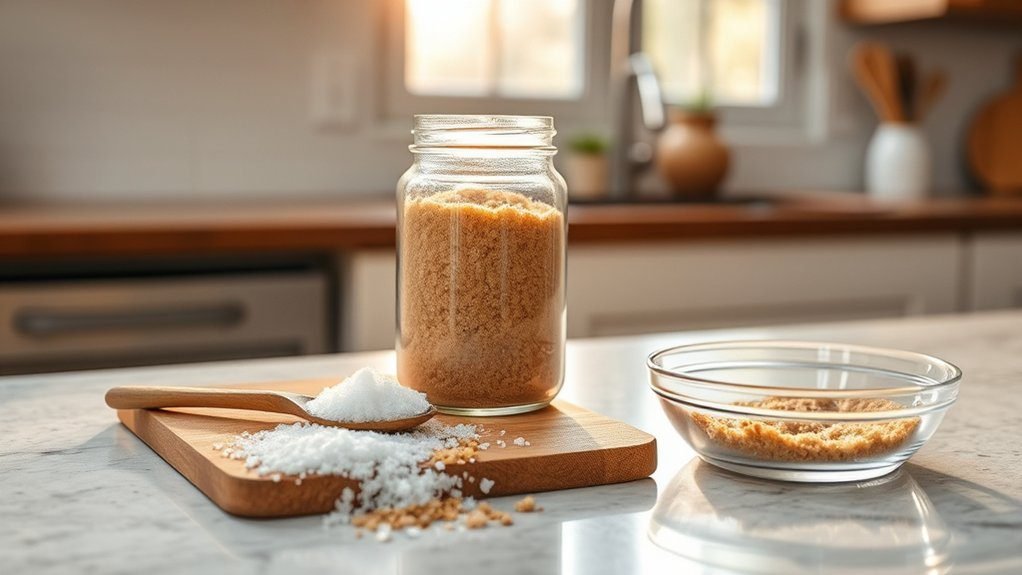
Sugar and baking soda bait is the most accessible DIY remedy for early-stage roach infestations. Every ingredient is already in the kitchen, it carries no chemical risk, and it works through a straightforward biological mechanism rather than toxins.
Mix equal parts baking soda and sugar, roughly one to two tablespoons each. The sugar attracts roaches and the baking soda reacts with acids in their digestive system, releasing carbon dioxide that builds internal pressure and kills them. Keep the ratio close to 50/50 to maintain both attractiveness and lethality. Powdered sugar works better than granulated because the finer texture is more palatable to roaches. Adding a small amount of peanut butter or flour boosts attractiveness further and gives the mixture a texture that adheres to surfaces more easily.
Where to Place Baking Soda Bait
Placement determines whether this remedy reaches the colony or just sits uneaten. Use bottle caps, small jar lids, or folded cardboard as bait stations and position them where sticky trap counts were highest.
- Under sinks and near plumbing pipes where moisture attracts roaches
- Behind and beneath kitchen appliances including refrigerators and stoves
- Along baseboards in kitchens and bathrooms
- Inside cabinet corners near hinges, where droppings indicate roach travel
- Near entry points such as gaps around pipes, doors, and windows
Refresh the bait every few days when it dries or crusts over. Expect results within one to two weeks for light activity. Heavy infestations need this bait as one layer of a broader treatment plan rather than a standalone solution.
Boric Acid Bait Mixes and Paste Baits
Boric acid is one of the most effective DIY cockroach control ingredients available, and it is distinct from borax despite looking similar on a shelf. Boric acid (H3BO3) adheres better to roach bodies, boosting ingestion during grooming, and delivers strong residual control with minimal resistance development compared to conventional insecticides. About 53.8% of DIY treatments use boric acid as a primary ingredient for exactly this reason.
The key to effective boric acid bait is concentration. Too high and the mixture repels roaches rather than attracting them. The correct ratio is approximately 1 part boric acid to 3 to 5 parts food attractant by volume. Use sugar, cornmeal, or flour as attractants. In liquid paste baits, a concentration of 0.5 to 2% boric acid mixed with syrup drives rapid population decline while remaining palatable enough for roaches to carry residue back to the colony.
Dry Bait vs Paste Bait Applications
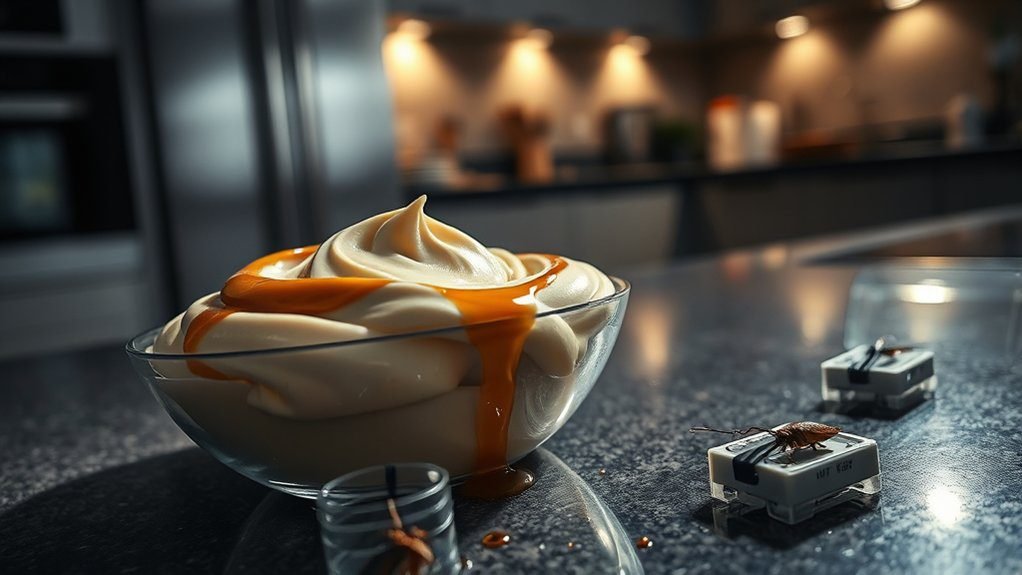
Both forms of boric acid bait work well in different environments. Choosing between them depends on where the infestation is concentrated and how much moisture is present in those areas.
Dry boric acid dust mixed with sugar or cornmeal works best in undisturbed, low-humidity wall voids, inside cabinet crevices, and along baseboards where roaches travel regularly. Apply in very thin layers using a duster or small brush. Thick applications are visible to roaches and cause avoidance, so less is genuinely more effective here. Paste baits made by blending boric acid with corn syrup or another sugar solution are better suited for crevices, cracks, and harborage areas where a thin smear stays in place and roaches contact it repeatedly. Apply pea-sized dots or thin smears using a syringe tip for precise placement that avoids visible white residue which triggers avoidance behavior.
Boric Acid Safety and Limitations
Boric acid is low toxicity to humans and pets when used correctly, but it requires careful application in homes with children and animals. Keep all boric acid placements out of direct reach, inside crevices and wall gaps rather than on open surfaces. It does not affect cockroach eggs, so repeat applications are necessary to catch newly hatched nymphs two to four weeks after the initial treatment. Moisture deactivates dry boric acid, so reapply after cleaning or any water exposure in the treated area.
Natural Remedies: Essential Oils and Other Repellents
Natural repellents including essential oils have a genuine place in a DIY cockroach control plan, though their role is as a deterrent and supplementary layer rather than a primary treatment for an established infestation.
Peppermint oil, eucalyptus oil, and tea tree oil all contain compounds that cockroaches find strongly aversive. Mix 10 to 15 drops of peppermint or eucalyptus essential oil with water in a spray bottle and apply along baseboards, around entry points, inside cabinet corners, and near appliances. Reapply every two to three days since the volatile compounds dissipate quickly. This approach does not kill roaches but makes treated surfaces and spaces less attractive as harborage, which reinforces the effect of baits and traps placed nearby.
A solution of equal parts white vinegar and water applied to surfaces removes pheromone trails that roaches use to navigate and recruit other roaches to harborage sites and food sources. Cleaning with this solution after vacuuming disrupts the signaling that causes roach populations to concentrate in the same spots repeatedly. Do not apply vinegar solution near gel bait stations as it degrades the bait and causes roaches to avoid the area.
Gel Baits and Insect Growth Regulators
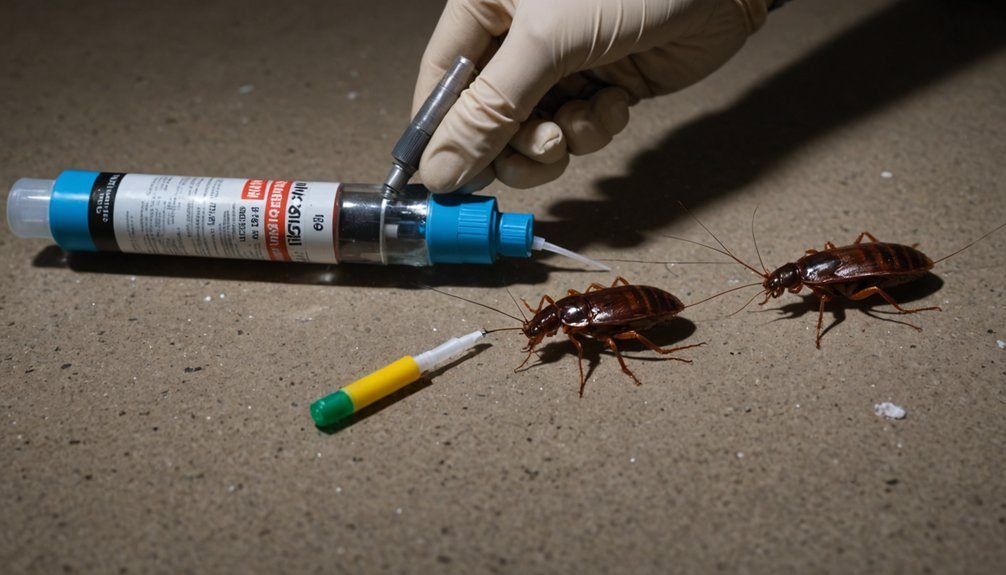
Gel baits are the most effective DIY treatment available for German cockroach infestations and work well against most indoor species. Products containing indoxacarb, such as Advion, use a slow-acting toxicant that gives roaches enough time to return to the colony before dying, where other individuals consume the body and transfer the poison through the population. This secondary kill effect reaches parts of the colony that direct sprays never contact.
Place pea-sized dots of gel bait inside cabinet hinges, along the interior edges of baseboards, behind appliances, under sinks, and in any crevice where sticky trap counts confirmed activity. Do not place gel bait on recently sprayed surfaces or near essential oil applications, since both repel roaches away from the bait and neutralize its effectiveness. Refresh bait every two to three weeks or immediately when it dries out or shows signs of contamination.
Adding Insect Growth Regulators for Colony Collapse
Gel baits knock down active adults, but they do not stop the colony from rebuilding through hatching eggs and maturing nymphs. Insect growth regulators (IGRs) close that gap by disrupting the cockroach life cycle at the developmental stage rather than killing adults directly.
IGRs containing pyriproxyfen or hydroprene mimic juvenile hormones and prevent nymphs from developing into fertile adults. Chitin synthesis inhibitors block exoskeleton formation during molts, causing lethal or sterile outcomes at each instar. The result is that existing adults thin out through normal attrition and gel bait kills, while no new reproductive adults emerge to replace them. Population collapse typically takes four to six months using IGRs alongside baits, but it is sustained rather than temporary.
Placement Rules for Gel Bait Plus IGR Combinations
The two products must stay physically separated to remain effective. Apply gel bait dots at the feeding and travel sites identified by sticky trap inspection. Apply IGR spray separately along baseboards, behind cabinets, and under appliances, treating crevices near but never directly on the bait. Combination products like Advion Trio bundle indoxacarb with IGR compounds in a single application, which simplifies this separation issue and provides multi-stage control in one placement.
Diatomaceous Earth for Dry Applications
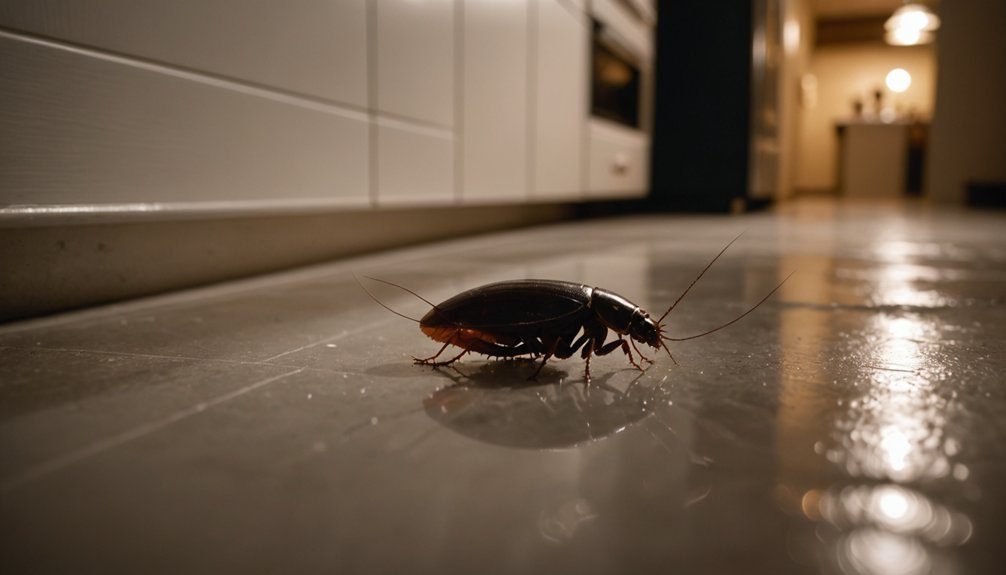
Food-grade diatomaceous earth (DE) kills cockroaches through physical damage rather than chemical toxicity, making it one of the safest long-term treatment options for homes with pets and children. The microscopic sharp edges of DE particles scrape the roach’s exoskeleton, disrupting the waxy lipid layer and causing fatal dehydration over several days to a week.
DE works only when dry and only through contact, so placement and moisture control are everything. Apply a thin, flour-like dusting in dry hotspots: inside cabinet crevices, under and behind appliances, along baseboards in infested rooms, around door thresholds, and in wall void edges accessible from outlets or switch plates. Heavy piles deter roaches rather than killing them, so the goal is a barely visible dusting that roaches walk through without detecting it as an obstacle.
Where DE Works and Where It Fails
DE loses all effectiveness when wet. Bathrooms, under-sink areas with pipe leaks, and any surface that gets wiped down regularly are poor choices for DE as a primary treatment. In these locations, paste baits or gel baits outperform DE significantly. Reserve DE for genuinely dry zones: inside wall voids accessed from outlets, inside dry cabinet corners, beneath furniture on hardwood or tile floors, and along baseboards in low-humidity rooms. Reapply after any cleaning or moisture exposure. Wear a dust mask during application since fine DE particles irritate the lungs on inhalation, even though the material is non-toxic once settled.
Flushing Aerosols for Quick Knockdown
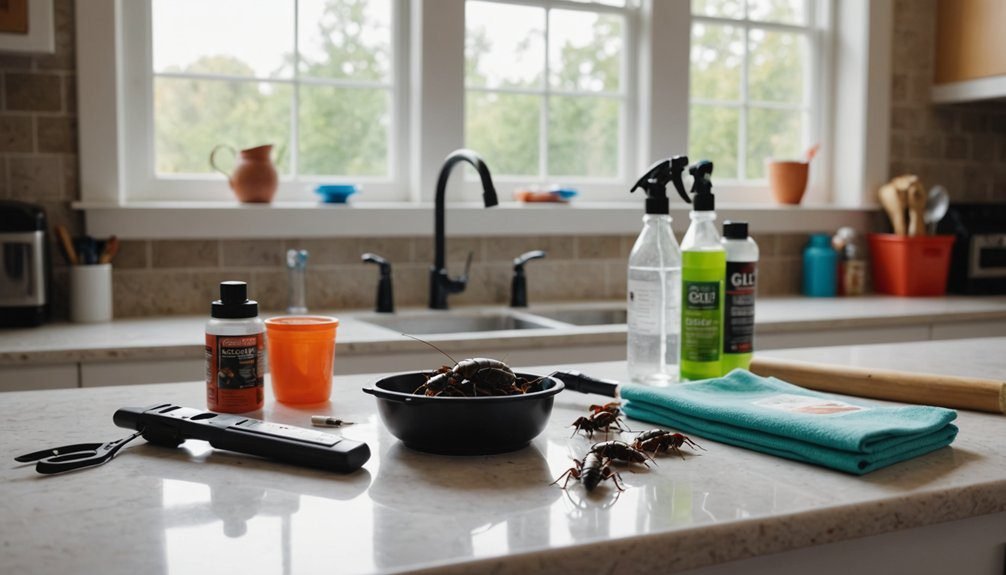
Flushing aerosols containing pyrethrins with piperonyl butoxide (PBO) serve a specific role in DIY cockroach control that other products cannot fill. They do not provide residual control and should not be used as a primary treatment, but they are the correct tool for two specific situations: initial assessment to confirm where roach activity is concentrated, and rapid knockdown when numbers are high enough to interfere with bait placement.
Direct short bursts into cracks, crevices, behind appliances, and inside cabinet gaps. Roaches driven out by the aerosol become visible and confirm which areas are most active, guiding placement of longer-term treatments. Follow immediately with vacuuming to remove incapacitated insects rather than letting them die in place where other roaches will consume them. Ventilate the treated room well, keep pets and children out during application, and wait at least one hour before placing gel bait in the same areas since aerosol residue temporarily repels roaches from treated surfaces.
Sanitation and Sealing Entry Points
No DIY treatment produces lasting results in a house that still offers cockroaches reliable food, water, and shelter. Sanitation is the foundation every other method depends on. Only 18.4% of DIY methods eliminate infestations completely without professional help, and poor sanitation combined with unsealed entry points is the primary reason treatments fail even when the right products are used.
The most impactful sanitation habits are wipe counters, stovetops, and appliance surfaces every night to remove grease and food residue; store all food including pet food in sealed airtight containers since roaches chew through cardboard and thin plastic with ease; empty garbage daily using bins with tight-fitting lids; fix all plumbing leaks under sinks and behind appliances since cockroaches can survive weeks without food but only days without water; and dry sinks, tubs, and pet water bowls before bed to remove overnight moisture access.
Sealing Cracks, Gaps, and Entry Points
Physical exclusion stops new roaches from entering the house or moving between rooms and floors through shared wall voids and plumbing gaps. Work through the property systematically with caulk, steel wool, and copper mesh.
- Seal cracks along baseboards, around door and window frames, and where walls meet floors using silicone caulk.
- Pack steel wool around pipe penetrations through walls before caulking over them. Roaches squeeze through gaps around unsealed pipes even when the surrounding wall is solid.
- Add door sweeps to exterior doors and any interior doors connecting to basements or utility areas, eliminating the gap at the bottom that serves as a primary entry point.
- Check and replace torn window and vent screens, paying particular attention to ground-floor vents.
- Seal gaps around electrical outlets on exterior walls, which connect directly to wall voids used as roach travel routes.
Advantages and Limitations of DIY Cockroach Treatments
DIY cockroach control works well under the right conditions, but it has real limitations that homeowners should understand before committing to a treatment plan. Knowing where DIY methods succeed and where they fall short determines whether you save time and money or lose both to an infestation that keeps growing.
The advantages are clear. DIY treatments using boric acid, gel baits, and diatomaceous earth cost a fraction of professional pest control services. They can be applied at any time rather than waiting for a scheduled visit. Most products are safe for use around pets and children when applied correctly. And for early-stage or moderate infestations, they achieve results comparable to professional treatment when applied consistently and combined with good sanitation.
When DIY Methods Are Not Enough
The limitations become significant when the infestation is large, multi-room, or structurally embedded. DIY products cannot reach deep wall void colonies the way professional equipment can. Infestations in apartment buildings spread through shared plumbing chases that individual unit treatment cannot address. When roaches appear during daylight hours, droppings are found in multiple rooms simultaneously, or four weeks of consistent DIY treatment produces no visible reduction in sightings, the situation has moved beyond what home remedies handle reliably. For a detailed comparison of what professional treatments offer over DIY approaches, the DIY vs professional cockroach extermination guide covers costs, effectiveness, and when each approach makes sense.
How to Combine DIY Treatments for Maximum Effect
Individual DIY treatments each address one part of the cockroach problem. Layering them correctly addresses all parts simultaneously, which is why combining methods produces significantly better results than any single remedy used alone.
Start with sticky trap inspection to map hotspots, then apply flushing aerosol to confirm activity locations and achieve initial knockdown in heavy zones. Place gel bait dots at all confirmed harborage sites and apply IGR spray separately along baseboards and under appliances. Dust boric acid or diatomaceous earth in dry wall voids and crevices away from bait placements. Apply essential oil spray along entry points and surfaces where bait is not placed. Seal all identified cracks, gaps, and pipe penetrations. Clean thoroughly to remove competing food sources. Revisit traps weekly, refresh bait every two to three weeks, and reapply dust after cleaning.
For a broader comparison of professional-grade cockroach treatment options that can supplement a DIY plan when needed, the cockroach treatment and control guide covering both DIY and professional solutions provides a complete overview of available methods across both categories. If DIY approaches plateau and the infestation persists, understanding what professional cockroach treatment options involve helps homeowners make an informed decision about escalating to expert pest control services.
Frequently Asked Questions
What is the most effective DIY cockroach treatment?
Gel bait placed at confirmed harborage sites is the single most effective DIY cockroach treatment for indoor species, particularly German cockroaches. When combined with an insect growth regulator to stop nymph development, it addresses both the current adult population and the colony’s ability to reproduce. For homeowners who want non-chemical options, boric acid bait at the correct concentration of 1 part boric acid to 3 to 5 parts attractant comes closest to gel bait in effectiveness for long-term roach control.
Does baking soda actually kill cockroaches?
Yes, when cockroaches ingest it. Baking soda reacts with the acids in a cockroach’s digestive system and produces carbon dioxide gas, which builds internal pressure and kills the insect. The mixture only works if roaches eat it, which is why pairing baking soda with sugar or another attractant is essential. It is most effective for light roach infestation scenarios and works more slowly than boric acid or commercial gel baits.
Is boric acid safe to use at home around pets and children?
Boric acid is low toxicity when used correctly, but placement matters. Keep all boric acid applications inside crevices, wall voids, and enclosed spaces rather than on open surfaces where pets and children have direct contact. Do not use it inside pet food bowls or near areas where children play on the floor. At the recommended DIY concentrations of 0.5 to 2% in paste form or thin dust applications in dry voids, it poses minimal risk when applied in inaccessible spots.
Can essential oils eliminate a cockroach infestation?
No. Essential oils such as peppermint and eucalyptus act as repellents rather than killers, and they do not penetrate the harborage areas where colonies live. They are useful as a deterrent layer alongside baits and traps, making treated surfaces less attractive to roaches and disrupting pheromone trails when used in a vinegar solution. Relying on essential oils as the primary remedy allows an infestation to continue growing in untreated areas while the repelled roaches simply relocate within the same building.
How long do DIY cockroach treatments take to work?
Over 61.9% of people report a reduction in cockroach sightings within two weeks of starting treatment. Gel baits and flushing aerosols produce the fastest visible results, typically within three to seven days. Boric acid and diatomaceous earth are slower, with most roaches dying over several days to a week of repeated contact. Insect growth regulators work on the longest timeline, with full population decline taking four to six months as adults age out and no new reproductive individuals emerge. A combined approach produces the fastest initial reduction alongside the most durable long-term control.
What are the most common mistakes in DIY roach control?
The most common mistakes are applying contact spray near gel bait stations, which repels roaches from the bait and makes both products ineffective; using too much boric acid dust, which roaches detect and avoid; neglecting sanitation so food sources compete with bait; placing sticky traps and baits in open floor space rather than flush against walls and baseboards where roaches travel; and stopping treatment as soon as visible roaches disappear without accounting for hatching eggs that will produce a new active population two to four weeks later.
When should I stop DIY treatment and call a professional?
Call a licensed pest control service if roaches appear in open areas during daylight hours, if droppings and egg cases appear in multiple rooms simultaneously, if four weeks of consistent combined DIY treatment produces no visible reduction in activity, or if the infestation is in an apartment building where roaches are entering through shared walls and plumbing. Professional exterminators use equipment and formulations that reach wall void colonies and multi-unit pathways that DIY products cannot access effectively.
